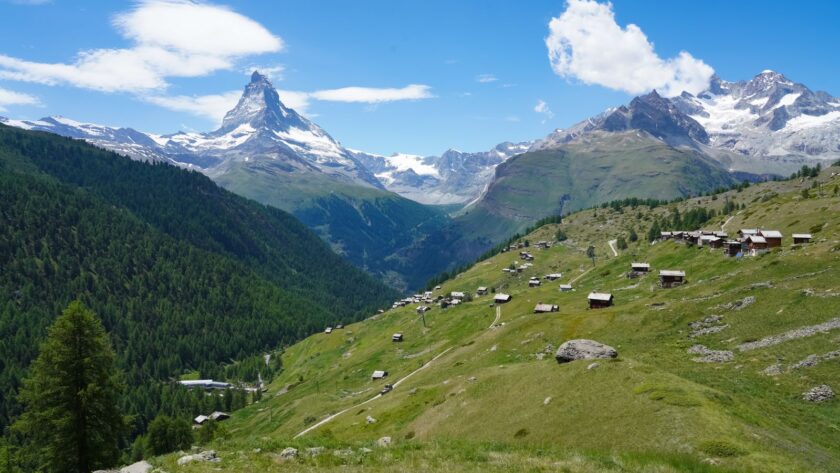
A Switzerland holiday sounds like a dream of Alps, postcard lakes and trains that run to the minute. Then you look at the prices and the dream fades a little. And if you don’t eat meat or cheese, there’s another catch, because every guide to Swiss food starts with fondue and raclette. The good news is that Zurich is home to the oldest vegetarian restaurant in the world, and every Coop and Migros supermarket has its own plant-based range.
Where should you go on a first holiday in Switzerland? When is the best time, and when do the cable cars shut?
Can you get there by night train, and do you need a motorway vignette? Is Switzerland expensive, and what can you actually eat when almost every traditional dish is swimming in cheese? You’ll find the answers below, with prices in Swiss francs and euros.
We haven’t made it to Switzerland together yet, so this isn’t a trip diary. It’s careful research.
In November 2026 we read each restaurant’s own website or menu. We took ticket and vignette prices from official rail and government pages. Francs are converted at the Czech National Bank rate of 30 October 2026 (1 CHF is about 1.09 €). Places we couldn’t verify are left out, even if other sites still recommend them.
Why Switzerland is worth it
It’s worth it for the mountains, the lakes and a public transport network that takes you almost anywhere without a car. Switzerland is small, so a week is enough for a city, a lake and the high Alps. Trains, buses, boats and cable cars connect, and tickets work as one system.
What is Switzerland famous for? Chocolate, cheese, watches, the Alps and trains. For vegans, the first and last are the interesting ones.
Dark chocolate without milk is in every shop, as long as you read the ingredients. And the trains are perfect for a vegan traveller, because they take you to the cities where you’ll eat best.
Switzerland also has four national languages. German is spoken in the north and centre, French in the west around Lake Geneva, Italian in Ticino in the south, and Romansh in parts of the canton of Graubünden. In practice, menus and food labels change language by region, which is why the phrase table at the end covers all three main ones.
Several places in Switzerland are UNESCO World Heritage Sites, and they fit neatly into one trip. They include the Old City of Bern, the Lavaux vineyards above Lake Geneva, the Jungfrau-Aletsch area and the Rhaetian Railway’s Albula and Bernina lines.
Zurich & Lucerne on our vegan map
23 places, 16 fully vegan. Tap a pin to see the details.
Loading the map…
- 100% vegan
- Vegetarian
- Vegan options
See every place from this article on our vegan map.
Where to go first
The best first trip combines one city with one mountain area. The classic pairing is Zurich or Lucerne plus Interlaken, Grindelwald and Lauterbrunnen. If you have longer, add Zermatt under the Matterhorn or the Italian-speaking south around Lugano. Trying to see everything in a week rarely works, because moving between regions takes half a day.
Zurich and Lucerne: the cities where you’ll eat best
Zurich is Switzerland’s largest city and the easiest place to start as a vegan. It has Hiltl, the vegetarian chain tibits, and several fully vegan restaurants that the MICHELIN Guide lists under vegan. Night trains from Central Europe arrive here too. For the sights, real prices and the vegan spots we could verify, see our things to do in Zurich.
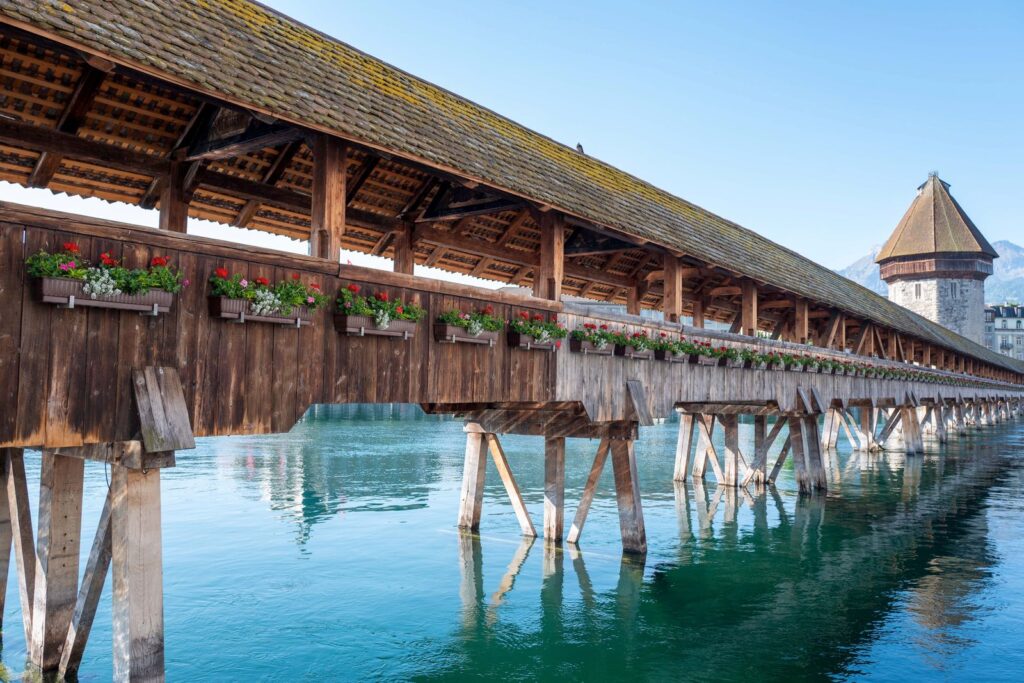
Lucerne sits on Lake Lucerne, has the wooden Kapellbrücke (Chapel Bridge), and is the base for trips up Pilatus and Rigi. For a small city it has a surprisingly good vegan scene, including the fully vegan restaurant Karls Kraut right on the River Reuss. We cover what to see, how to get up Pilatus or Rigi and where to eat in our guide to the things to do in Lucerne.
Bern and Interlaken: the capital and the gateway to the Alps
Bern is the capital, and its arcaded Old City is on the UNESCO list. One day is enough to see it. Tibits has two branches in Bern, one right at the station. For the sights, the bear park, the onion market and every vegan spot, see our things to do in Bern.
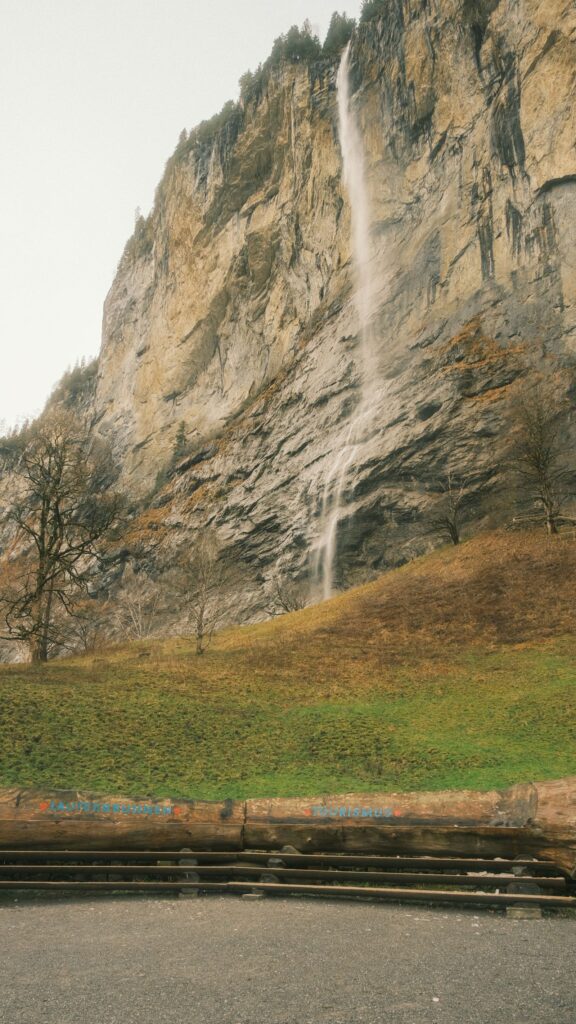
Interlaken lies between Lake Thun and Lake Brienz and is the gateway to the Jungfrau region. From here you head to Grindelwald, to the waterfall-lined Lauterbrunnen valley and up to Mürren. This is the most beautiful area and the hardest for vegans, because mountain huts mostly serve traditional dishes. Accommodation with a kitchen makes a big difference here.
Zermatt, Lake Geneva and Ticino
Zermatt is a car-free village under the Matterhorn, and you arrive by train. There are very few vegan places, so plan on the supermarket and your own cooking.
Lake Geneva is French-speaking Switzerland. Geneva, Lausanne and Montreux sit on the same shore, with the terraced Lavaux vineyards between them. Tibits has a branch in Lausanne right at the station.
Ticino is the Italian-speaking south, with Lugano and its lakes. The food is closer to Italy, so pasta with tomato sauce or polenta is easier to find. If the Italian side of the Alps tempts you, read our guide to naturally vegan food in Italy.
| Region | What to look forward to | How easy is vegan food |
|---|---|---|
| Zurich | biggest city, lake, museums | very easy, dozens of options |
| Lucerne | Chapel Bridge, Pilatus, Rigi | easy, fully vegan restaurants |
| Bern | UNESCO Old City | good, tibits at the station |
| Interlaken, Grindelwald, Lauterbrunnen | Jungfrau, waterfalls, hikes | hard, rely on supermarkets |
| Zermatt | Matterhorn, car-free village | hard, self-cater |
| Geneva, Lausanne, Montreux | the lake, Lavaux vineyards | good in the cities |
| Lugano and Ticino | Italian feel, lakes | medium, Italian dishes without cheese |
When to go on holiday in Switzerland
Go on holiday in Switzerland from June to September for hiking and from December to April for skiing. Cities like Zurich, Lucerne and Bern work all year, so the timing mostly depends on what you want to do.
Summer is high season. In July and August every mountain trail and cable car is open, but accommodation prices peak and Interlaken and Zermatt are busy. June and September are usually calmer and still warm.
Winter means skiing and Christmas markets. Swiss markets pair well with a trip through Basel, which sits right on the French border. If you want a Christmas market with plenty of vegan stalls, read our guide to the Strasbourg Christmas market for vegans.
Watch out for May and November: Many mountain cable cars and railways close for maintenance in these months. Accommodation is cheaper, but plenty of viewpoints are out of reach. Always check the timetable of the specific cable car on its own website before you go.
Switzerland at Christmas: the markets in Zurich, Basel and Montreux
Switzerland at Christmas means Christmas markets, and the best known are in Zurich, Basel and Montreux. Zurich’s markets open on 19 November 2026, Montreux’s on 20 November and Basel’s on 26 November. In Zurich a whole market fills the main station hall, where the night train from Prague arrives. We’ve gathered the dates, vegan stalls and restaurants near the markets in our guide to the Swiss Christmas markets.
How to get to Switzerland
The most comfortable way to reach Switzerland from Central Europe is a direct night train to Zurich. Other options are daytime trains via Germany or Austria, driving with a motorway vignette, a bus, or a flight into Zurich or Geneva.
By night train from Prague to Zurich
Czech Railways’ direct night train to Zurich leaves Prague main station in the evening and runs via Dresden, Leipzig and Basel, arriving in Switzerland the next morning. It has sleeper and couchette cars, and since departure times change with the timetable, check the exact time when you book. According to Czech Railways’ page on trains to Switzerland, tickets start at 98 € including a berth in a three-person compartment.
A night train is handy for vegans for another reason. You bring your own dinner, and in the morning you step off in Zurich, where there are several breakfast options near the station. Women travelling alone can ask for a women-only couchette compartment.
By car: the 40-franc vignette
If you drive to Switzerland, you need a motorway vignette costing CHF 40 (about 44 €). There’s only an annual one. The 2026 vignette is valid from 1 December 2025 to 31 January 2027. You can buy a sticker at the border or an electronic e-vignette online, according to the official Swiss government portal ch.ch.
The drive from Central Europe takes a full day and often runs through Germany. If you go via Bavaria, it’s worth stopping in Munich, which is excellent for vegan food. You can’t drive into Zermatt, which is car-free, so the last stretch is always by train.
By plane or bus
Zurich and Geneva are both well connected by air, and flights are often cheaper than the train if you book early. Overnight buses are the cheapest option but the least comfortable. Prices change by date, so compare them on a flight search site and the operators’ own pages.
Getting around: Swiss Travel Pass or Half Fare Card?
If you’ll take a train almost every day, the Swiss Travel Pass pays off. If you’re driving or only using trains now and then, the one-month Swiss Half Fare Card is enough. The number of journeys and cable cars decides it.
The Swiss Travel Pass covers trains, buses and boats across the country and gives discounts on most mountain railways. Three days in second class cost CHF 254 for an adult, about 276 €, according to the Swiss Travel Pass price list. Youth aged 16 to 24 pay less.
The Swiss Half Fare Card costs CHF 150 (about 163 €) and gives up to 50% off trains, buses, boats and most mountain railways for a whole month. It’s for visitors who don’t live in Switzerland, and you buy it on the Swiss Federal Railways (SBB) website. Children aged 6 to 15 travel free with the Swiss Family Card when they’re with a parent holding one of these passes.
| Ticket | Price | Best for |
|---|---|---|
| Swiss Travel Pass, 3 days, 2nd class | CHF 254 (about 276 €) | travelling by train every day |
| Swiss Half Fare Card, 1 month | CHF 150 (about 163 €) | driving, with the odd train or cable car |
| Swiss Family Card | free | children aged 6 to 15 with a parent |
A train holiday in Switzerland: Glacier Express and Bernina Express
Switzerland is one of the best countries in Europe for a train holiday, and two panoramic routes are among its most famous experiences.
The Glacier Express runs from Zermatt to St. Moritz, and the Bernina Express runs from Chur or St. Moritz over the Alps to Tirano in Italy. Both are slow on purpose, so you can look out of the window, which makes them an experience rather than a quick transfer.
The Glacier Express covers 291 kilometres in about eight hours and is nicknamed the slowest express train in the world. It runs from the foot of the Matterhorn to St. Moritz under Piz Bernina.
According to the official Glacier Express website, traditional Swiss dishes are cooked on board and served at your seat. As a vegan, it’s safer to bring your own food from Coop or Migros than to rely on the onboard menu.
The Bernina Express takes about four hours and crosses the Alps over the Bernina Pass. The Rhaetian Railway’s Albula and Bernina lines are a UNESCO World Heritage Site. The bonus is that it ends in Italy, so you can have an Italian lunch in Tirano and head back, or carry on towards the lakes.
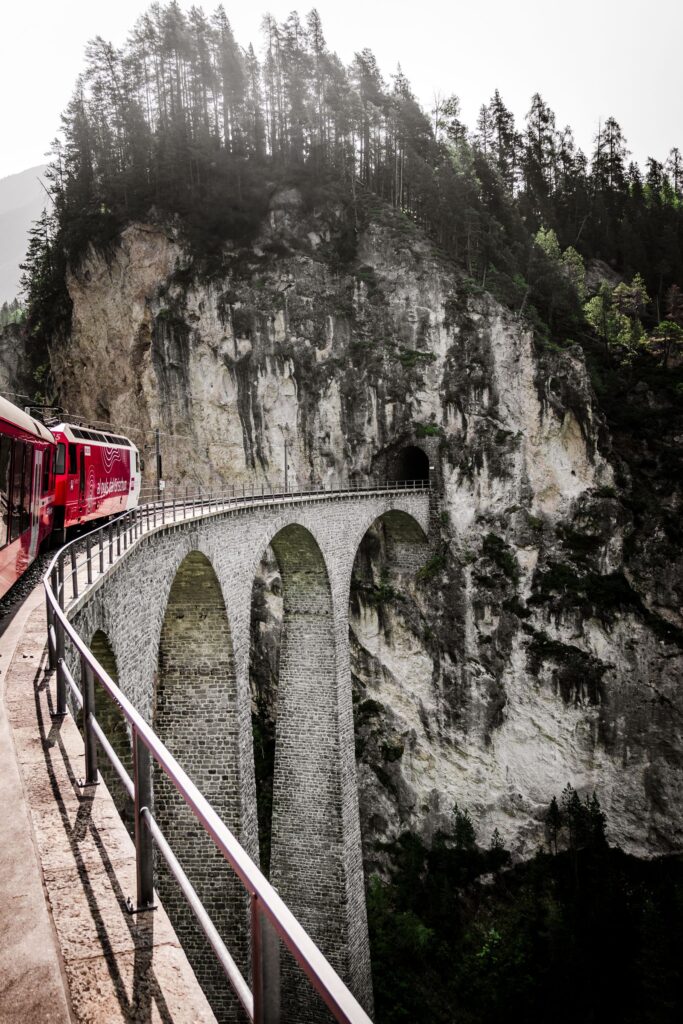
Both the Bernina Express and the Glacier Express need a seat reservation, which you pay on top even with a Swiss Travel Pass. In high season, it’s best to book ahead, and the Glacier Express doesn’t run on some dates in November and December, so check the timetable. To save money, you can ride the same lines on regular regional trains without a reservation, just with changes and without the panoramic windows.
One week in Switzerland: a sample plan for vegans
A week is enough for a first holiday in Switzerland if you combine two bases. This plan uses three nights in a city and three in the mountains. It’s built so that you eat out in the cities and cook in the mountains.
Spend days one and two in Zurich. Walk the old town and the lakeside, and in the evening go to Hiltl or the tibits buffet. On day three take the train to Lucerne, go up Rigi or Pilatus by boat and cogwheel railway, and eat at Karls Kraut or BAYTS in the evening.
On day four, travel from Lucerne to Interlaken and stock up at the station Coop or Migros for three days ahead. Days five and six belong to Grindelwald, the Lauterbrunnen valley and hikes with your own packed lunch, with dinners cooked in your apartment. On day seven, head back to Zurich, with one last stop at tibits for food to go.
Is Switzerland expensive?
Yes, Switzerland is expensive and one of the priciest countries in Europe. Accommodation, restaurants and transport all cost more than in most neighbouring countries. Three things bring a Swiss holiday down to earth, a place with a kitchen, supermarket shopping and the right rail pass.
How much you’ll spend on food
The cheapest way to eat is from the supermarket, with one buffet meal a day. At tibits you pay by weight, and the tibits price list puts the daily buffet at CHF 4.70 per 100 grams. A full plate of around 500 grams comes to roughly CHF 23.50, about 26 €. Takeaway is a little cheaper.
Restaurants with table service cost far more, and tasting menus at vegan restaurants in the MICHELIN Guide are a serious splurge. If you want one special dinner, save it for your last night and eat simply the rest of the time.
What a holiday in Switzerland costs
| Item | Price in francs | About in euros |
|---|---|---|
| Night train Prague to Zurich, one way | n/a | from 98 € |
| Motorway vignette, annual | CHF 40 | 44 € |
| Swiss Travel Pass, 3 days | CHF 254 | 276 € |
| Swiss Half Fare Card, 1 month | CHF 150 | 163 € |
| tibits buffet plate, about 500 g | CHF 23.50 | 26 € |
In Switzerland, the biggest savings are in what you eat. An apartment with a kitchen and a basket from Coop or Migros do more for your budget than any discount card.
Water tip: Don’t buy bottled water. Swiss cities have public fountains with drinking water, so a refillable bottle is all you need.
Traditional Swiss food: what’s vegan and what to watch for
Most traditional Swiss food isn’t vegan, because it’s built on cheese, cream and butter. Some dishes are easy to adapt, though, and others you can make at home in a plant-based version. Here’s what the names on the menu mean.
Rösti is fried grated potato, originally a breakfast for farmers in the canton of Bern. It’s fried in butter or another fat, so ask whether the kitchen can use oil. Fondue and raclette are melted-cheese dishes and aren’t vegan in their classic form. Älplermagronen, or alpine macaroni, is pasta and potatoes with cream, cheese and onions, served with apple sauce.
Birchermüesli was created around 1900 by the Zurich doctor Maximilian Bircher-Benner. The original recipe used soaked rolled oats, apple, nuts, lemon and either cream with honey or sweetened condensed milk. With plant-based yoghurt and no honey, it makes a great vegan breakfast.
Zopf, the braided Sunday bread, is made with flour, milk, eggs and butter. Basler Läckerli, the spiced biscuits from Basel, contain honey.
| Dish | Is it vegan? | What to ask |
|---|---|---|
| Rösti | sometimes | fried in oil or in butter? |
| Fondue, raclette | no | plant-based version at home only |
| Älplermagronen | no | cream and cheese |
| Birchermüesli | no, but easy to adapt | plant-based yoghurt, no honey |
| Zopf | no | milk, eggs, butter |
| Basler Läckerli | no | honey |
| Dark chocolate | often | ingredients, milk and butterfat |
Non-vegans travelling with you can of course order the cheese fondue. Your best strategy is to build the trip around cities where you’ll eat brilliantly and to cook in the mountains. If you’re curious how the cuisine next door compares, read our guide to traditional German food for vegans.
Where to eat vegan in Switzerland
You’ll eat best as a vegan in Swiss cities, especially Zurich, Lucerne, Bern, Basel and Lausanne. In mountain villages the choice is small and often ends at fries and a green salad. So bring food up from the city or stay somewhere with a kitchen.
Zurich: Hiltl and tibits
Hiltl on Sihlstrasse 28 has held the Guinness World Records title of the world’s oldest vegetarian restaurant since 2012. It opened in 1898 and is now run by the fourth generation of the Hiltl family. It’s vegetarian rather than fully vegan, but it serves vegan dishes too, as Hiltl explains on its history page. Always check the labels at the buffet.
Tibits is a Swiss chain of vegetarian buffets with more than 40 vegetarian and vegan dishes every day. You pay by weight, so you take as much as you like.
According to the tibits list of locations, you’ll find it in Zurich, Bern, Basel, Lucerne, Lausanne, Winterthur, Zug, St. Gallen and Aarau. Geneva isn’t on the list.
For a multi-course dinner in Zurich, the MICHELIN Guide Switzerland lists KLE, DAR, Marktküche and blooms under vegan, though blooms only opens in summer. Most are pricier evenings that need a reservation.
Lucerne: Karls Kraut and BAYTS
Karls Kraut is a fully vegan restaurant at St. Karliquai 7, right on the River Reuss. It cooks plant-based food in organic quality, using regional and seasonal ingredients wherever possible. According to the Karls Kraut website, it’s open Tuesday to Saturday for lunch and dinner, with brunch on Sunday morning.
BAYTS at Bireggstrasse 24 is a plant-based restaurant serving multi-course dinners with vegetables in the starring role. According to the BAYTS website, it opens Tuesday to Saturday from 18:00. The MICHELIN Guide also lists it among Switzerland’s vegan restaurants.
Bern, Basel and Lausanne: tibits by the station
In Bern, Basel and Lausanne, the most reliable vegan address is tibits, because its branches sit at or near the station. In Bern, tibits is at Bahnhofplatz 10 by the main station, with a second branch at Gurtengasse 3. Basel has two, Basel Steinen at Stänzlergasse 4 and Basel Gundeli at Meret Oppenheim-Platz 1 behind the station. In Lausanne, tibits is at Place de la Gare 11, opposite the station.
That’s handy on a rail trip. You get off, eat, pick up food to go for the next leg and carry on. According to tibits, the buffet is cleared 30 minutes before closing, so don’t leave a late dinner to the last minute. It also works for non-vegans in your group, because the buffet includes vegetarian dishes too.
The mountains: Interlaken, Grindelwald and Zermatt
Mountain resorts like Interlaken, Grindelwald and Zermatt have very few fully vegan places. Expect huts to serve mainly traditional cheese and meat dishes. The safest plan is to take a packed lunch for hikes from the city and cook in your apartment in the evening.
Mountain tip: Before heading to Grindelwald or Zermatt, stock up at a Coop or Migros in Zurich or Lucerne. Shops at big stations, such as Zurich or Bern, open on Sundays too, when most other shops are closed.
Vegan supermarket shopping: Coop and Migros
Coop and Migros supermarkets are the most important address for vegans in Switzerland. Both chains have their own plant-based range, and both mark suitable products with the international V-Label. Coop’s range is called Karma, and Migros has V-Love.
Most products in both ranges are vegan, but some are only vegetarian. So look for a V-Label that says “vegan”. If the label only says “vegetarian”, the product can contain milk, eggs or honey.
In the supermarket you’ll find plant milks and yoghurts, meat and cheese alternatives, ready meals and sweets. With a plant-based cheese, you can even make your own fondue or raclette in your apartment, so you don’t miss out on the Swiss tradition.
Sunday tip: Most shops in Switzerland close on Sundays. Shops at big train stations and airports usually stay open. Plan your big shop for Saturday.
Where to stay in Switzerland
For vegans, the best place to stay in Switzerland is one with a kitchen, either an apartment or a hotel room with a kitchenette. You save money and you’re not dependent on what the mountain hut cooks. Staying in a valley village and taking the train into the famous resorts is usually cheaper.
If you want a fully vegan hotel, there’s one in Appenzell. The Sonnenberg Health Hotel in Schwellbrunn is purely vegan and gluten-free, sits at 972 metres, and serves a four-course dinner that changes every day. It’s also in our roundup of fully vegan hotels around the world.
Read next: How to travel vegan
Travelling to Switzerland with someone who isn’t vegan? Read our guide on how to travel vegan, even with a non-vegan partner, from planning meals to making restaurant compromises work.
Useful phrases for vegans in Switzerland
In Switzerland you’ll get by in German, French or Italian depending on the region. German helps in Zurich, Lucerne, Bern and Interlaken, French in Geneva and Lausanne, and Italian in Lugano. In the cities, English works almost everywhere.
| English | German | French | Italian |
|---|---|---|---|
| I’m vegan. | Ich bin Veganer / Veganerin. | Je suis végane. | Sono vegano / vegana. |
| Is this vegan? | Ist das vegan? | C’est végan ? | È vegano? |
| Without meat, please. | Ohne Fleisch, bitte. | Sans viande, s’il vous plaît. | Senza carne, per favore. |
| No cheese and no milk. | Ohne Käse und Milch. | Sans fromage ni lait. | Senza formaggio e latte. |
| Is there butter in it? | Ist da Butter drin? | Il y a du beurre ? | C’è burro? |
| Is it fried in oil? | Ist das in Öl gebraten? | C’est frit à l’huile ? | È fritto nell’olio? |
Final thoughts: a vegan holiday in Switzerland works if you pair a city with the mountains
Switzerland is expensive and its cuisine is built on cheese. Even so, it’s a great country for a vegan holiday if you put the trip together the right way. Zurich and Lucerne rank among the best places for plant-based food in Central Europe, and Coop and Migros will equip you for the mountains. And a night train can take you all the way to Zurich without a flight.
If you’re planning more cities nearby, have a look at our roundup of vegan city breaks in Central Europe. Now over to you: have you been to Switzerland, and is there a place we should add? Tell us in the comments.
Frequently asked questions
Is Switzerland in the EU or Schengen?
Switzerland is not a member of the European Union, but it is part of the Schengen Area. That means there are usually no passport checks at its borders, but you should still carry ID. If you’re a UK or other non-EU visitor, normal Schengen entry rules apply.
What currency does Switzerland use?
Switzerland uses the Swiss franc (CHF). Some tourist spots accept euros, but at a worse rate and with change given in francs. Cards are accepted almost everywhere.
What language do they speak in Switzerland?
Switzerland has four national languages, German, French, Italian and Romansh. German dominates in the north and centre, French in the west and Italian in Ticino in the south. In the cities, English is widely spoken.
Do I need a vignette to drive in Switzerland?
Yes, you need a motorway vignette costing CHF 40 to use Swiss motorways. There’s only an annual version, and the 2026 vignette is valid from 1 December 2025 to 31 January 2027. You can buy it at the border or online as an e-vignette.
How much does a holiday in Switzerland cost?
A holiday in Switzerland is one of the most expensive in Europe. The biggest costs are accommodation and transport, for example a three-day Swiss Travel Pass costs CHF 254. You save on food by shopping at Coop and Migros and eating at tibits, where the buffet costs CHF 4.70 per 100 grams.
Newsletter
Get our free e-books
Join the newsletter and download Our Vegan Christmas Kitchen straight away, 10 recipes for Czech cookies, gingerbread and vánočka. Then once a month, new places from the vegan map and new articles. Unsubscribe with one click.