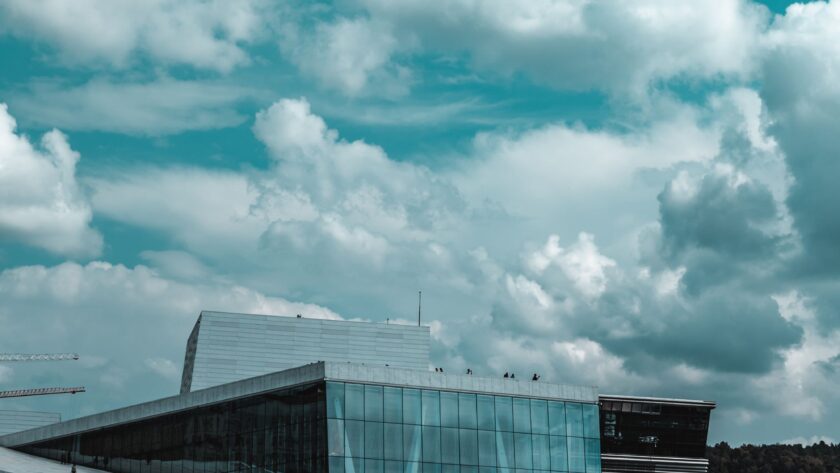
Looking for the best things to do in Oslo on a two or three day trip? Walk up the marble roof of the Opera House, climb through thirteen floors of the MUNCH museum, wander a sculpture park that never closes and step aboard the polar ship Fram on the Bygdøy peninsula. Then take a city ferry to the islands on an ordinary bus ticket, or ride the metro up to the forest at Holmenkollen.
What fewer guides mention is that Oslo is, in our view, the best city in Norway to eat vegan. There’s a plant-based buffet a few minutes from the main street and a falafel shop where the whole menu is free of animal products. Add a fully vegan fast-food joint with proper burgers and an Asian plant-based kitchen in Rosenhoff.
Is Oslo really as expensive as everyone says, and what does a day there actually cost? What can you do in Oslo in winter, when the light lasts only a few hours? And where do you eat when you’re travelling with someone who eats meat? We answer all of it below, with prices in kroner, euros and pounds.
We haven’t been to Oslo together yet, so this isn’t a trip diary. In November 2026 we read every venue’s own website and menu, checked admission prices directly with the museums and ticket prices with the transport operators. Places where we couldn’t find proof that they still cook vegan were left out, even if other sites still recommend them.
Is Oslo worth visiting?
Yes, Oslo is worth visiting, especially as the start of a wider trip around Norway. The main sights sit close together by the fjord and most of them are walkable. The parks, the Opera House roof and the main library are free, so even in an expensive country you can fill a whole day without paying admission.
Oslo is also the country’s front door. You land here, the overnight ferry from Kiel docks here and the train to the fjords leaves from here. How to combine the city with the fjords, Bergen and Lofoten is covered in our guide to planning a Norway holiday as a vegan. For the other end of the railway, here are the best things to do in Bergen.
Oslo is not a cheap weekend break, though. According to Statistics Norway (SSB), prices in Norway run about 29% above the EU average and food costs about a third more. That’s why this article includes a price table and ways to save.
How many days do you need in Oslo?
Plan on two to three days in Oslo. On day one you can cover the waterfront with the Opera House, MUNCH and the library, then Akershus Fortress in the afternoon. Day two belongs to the Bygdøy museums, with Vigeland Park in the evening.
Keep day three for the islands or a sauna in summer, and for Holmenkollen and the Korketrekkeren toboggan run in winter. With just one day, stick to the waterfront, the National Museum and Vigeland Park.
Oslo on our vegan map
5 places. Tap a pin to see the details.
Loading the map…
- 100% vegan
See every place from this article on our vegan map.
Things to do in Oslo first: the Bjørvika waterfront
Start in Bjørvika, the new district on the fjord right next to Oslo Central Station (Oslo S). Within a few hundred metres stand the Opera House, the MUNCH museum and Deichman, the city’s main library. All three are modern landmarks and you can see them from one spot.
Oslo Opera House: walk on the roof
The Oslo Opera House is a building you can walk on. The architects at Snøhetta designed its sloping roof of white Carrara marble as a public space open to everyone. Walk all the way to the top and you get a view over the fjord and the whole city.
You don’t need a ticket for the roof, because it’s public space. The foyer, with its big oak wall, is open Monday to Saturday from 11:00 to 16:00 and Sunday from 12:00 to 16:00, or until the end of a performance. The programme is on the Oslo Opera House website.
Winter tip: The marble on the Opera House roof is smooth and gets slippery in frost and rain. Wear shoes with good grip and go up in daylight, which in December means around midday.
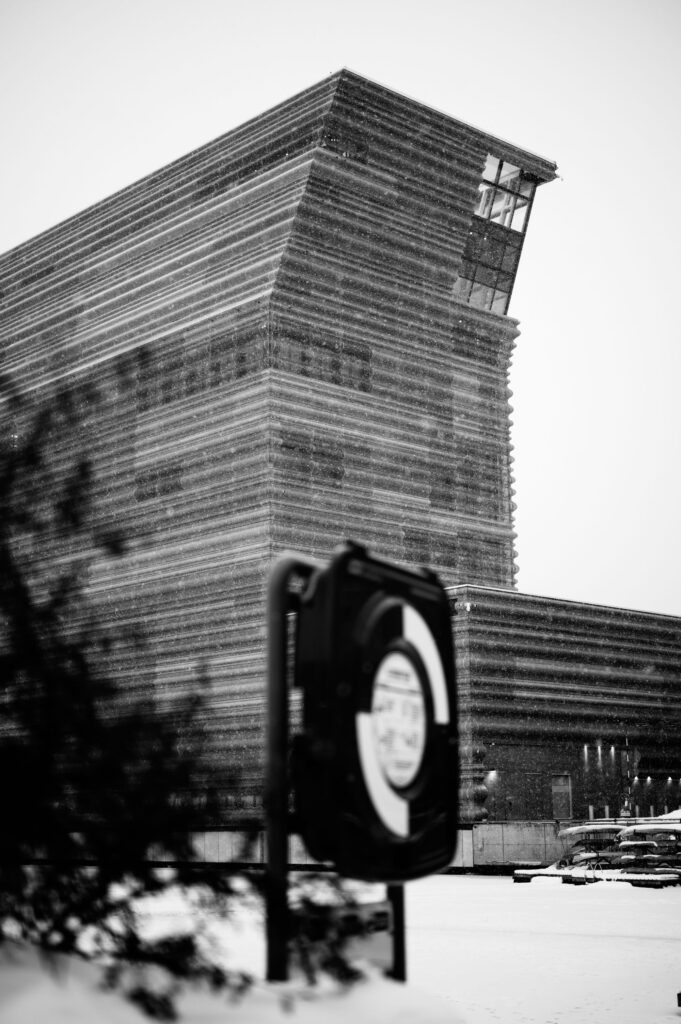
MUNCH: thirteen floors of Edvard Munch
MUNCH is the tall building right next to the Opera House, devoted entirely to the work of Edvard Munch. The collection spreads over thirteen floors and, according to the museum, a version of The Scream is always on display. The upper floors look out over the fjord.
Admission to the MUNCH museum is 220 NOK for adults, about €21 or £17.50. Under-25s pay 100 NOK and under-18s get in free. Entry is free on the first Wednesday of the month from 18:00 to 21:00, except in July, August and September. It’s open until 21:00 Wednesday to Saturday and until 18:00 Sunday to Tuesday.
Deichman Bjørvika library
Deichman Bjørvika is Oslo’s main public library and entry is free. It has six floors of books, reading spaces, a cinema, a games room and workshops. For travellers, it’s the best free place in the city to warm up and sit down when it’s raining.
The library sits on Anne-Cath. Vestlys plass opposite the station. It’s open 08:00 to 22:00 on weekdays and 10:00 to 18:00 at weekends.
Central Oslo: the National Museum, Akershus and Karl Johans gate
Central Oslo is small and you can walk it from Bjørvika in twenty minutes. The main pedestrian street, Karl Johans gate, runs between the station and the Royal Palace. South of it, Akershus Fortress stands by the water, and to the west lies the Aker Brygge waterfront and the National Museum.
The National Museum: The Scream from 1893
The National Museum (Nasjonalmuseet) moved into its new building on the waterfront in June 2022. The collection holds more than 400,000 works, including the first painted version of Munch’s The Scream, from 1893. If you want to see The Scream in both museums, you can do it in a day, as they’re about twenty minutes apart on foot.
The museum is on Brynjulf Bulls plass. Check admission and opening hours on the museum’s website before you go, as they change with exhibitions.
Akershus Fortress
Akershus Fortress is a medieval fortress whose construction began in the 1290s. Its walls stand on a rock right above the fjord and give one of the best views of the harbour and the Opera House. The fortress grounds make an easy stop on the walk from the centre down to the water.
Karl Johans gate and the Royal Palace
Karl Johans gate is Oslo’s main street. It runs from Oslo S through the centre to the Royal Palace on its hill. Along the way you pass the cathedral, the parliament building and the university.
Restaurants right on Karl Johans gate and on Aker Brygge are among the most expensive in the city. You’ll eat for less a few streets away or in Grünerløkka, as we show below.
Free things to do in Oslo: Vigeland and Ekeberg
Oslo’s two biggest sculpture parks are free and always open. If you’re looking for things to do without paying admission, start here.
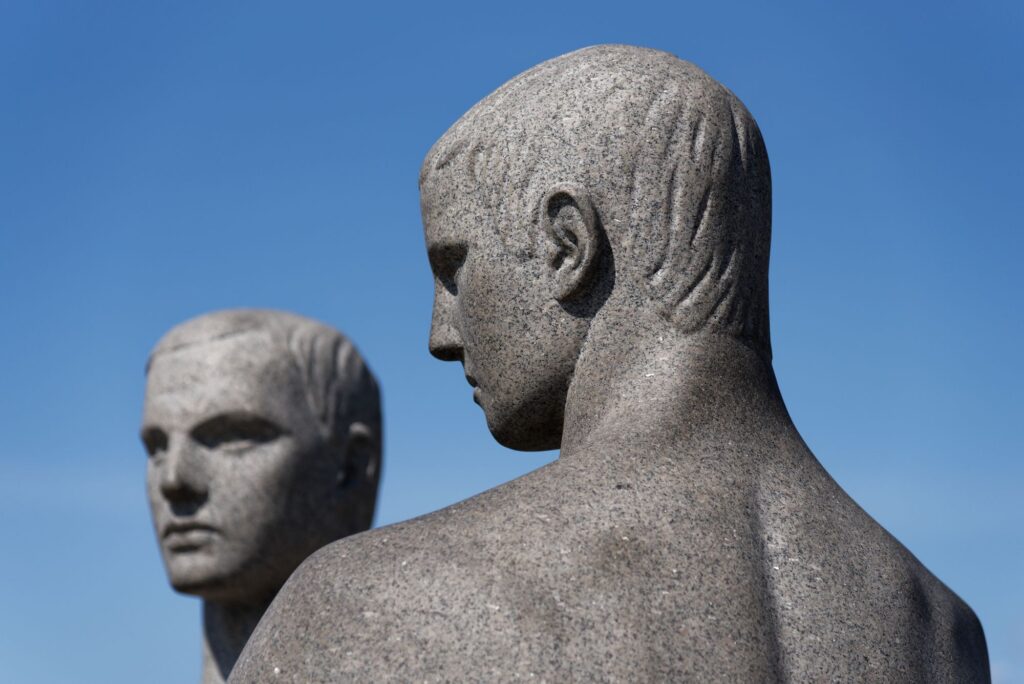
Vigeland Park in Frognerparken
Vigeland Park (Vigelandsparken) is the part of Frognerparken filled with more than 200 sculptures by Gustav Vigeland, from the bridge lined with figures to the tall Monolith of intertwined bodies. Frognerparken is the largest park in Oslo and, according to the museum, the park is always open, day and night.
You reach it by tram to the Vigelandsparken stop or by metro to Majorstuen. It’s at its best early in the morning, or on a summer evening when it stays light late and there are fewer visitors.
Ekebergparken above the city
Ekebergparken is a wooded hill above Bjørvika with modern sculptures and views over the fjord. According to its managers, the park is open around the clock, all year round, and free. It’s less famous than Vigeland Park, so it’s usually quiet.
The museum and shop in the park open Wednesday to Sunday from 11:00 to 16:00. Trams 13 and 19 run from the centre to the Ekebergparken stop.
In Oslo you can spend a whole day at the Opera House, two sculpture parks and the library without paying a single krone in admission.
Bygdøy: polar ships, an open-air museum and the Vikings
The Bygdøy peninsula lies about 5 km from the centre and gathers the museums about seafaring and rural Norway. Allow half a day, ideally a whole one.
Bus 30 runs from the centre to the Folkemuseet stop. From spring to early October a boat also runs from the Rådhusbrygge 3 pier to Dronningen, every 20 minutes in 2026. In winter, take bus 30 or check the Ruter app.
The Fram Museum and Kon-Tiki
The Fram Museum houses the whole polar ship sailed by Nansen and Amundsen. You can go aboard and walk below deck. From October to April it’s open every day from 10:00 to 17:00 (09:30 to 18:00 in summer), and adults pay 180 NOK, about €17 or £14.
Next door is the Kon-Tiki Museum with Thor Heyerdahl’s raft, and a little further on the Norwegian Maritime Museum. You can walk between all three in one afternoon.
Norsk Folkemuseum
Norsk Folkemuseum is an open-air museum with buildings from all over Norway. The star is the medieval stave church from Gol. Admission is 200 NOK, about €19 or £16, and children go free.
From 5 October to 30 April it’s open Tuesday to Sunday from 11:00 to 16:00 and closed on Mondays. In summer the museum opens every day and for longer.
What happened to the Viking Ship Museum?
The Viking Ship Museum, home of the Oseberg and Gokstad ships, is closed. The new Museum of the Viking Age is being prepared on the same site, so check its website for the opening date. Plenty of older guides still recommend the old museum, so watch out for that when you plan.
The fjord, the islands and floating saunas
The Oslofjord starts right at the centre and you can get out on it with a normal public transport ticket. Ruter’s city boats run from the centre to the islands, and the same ticket covers them as for a tram.
Hovedøya island
Hovedøya is the nearest green island, with the ruins of a Cistercian monastery. It’s only about 800 metres across, so you can walk round it in about an hour. Boats B1 and B4 run all year, though in winter only during daylight and less often.
In summer a small café opens by the monastery ruins. For a full day out, though, bring your own food, especially if you eat vegan.
Floating saunas on the fjord
A sauna by the fjord is part of everyday life in Oslo, especially in winter. The Oslo Badstuforening sauna association runs saunas in several places, including the Langkaia pier and Sukkerbiten in Bjørvika. Shared sessions run every day from 07:00 to 23:00 and you just buy a single ticket.
Between rounds, people dip into the fjord, even in winter. If it’s your first time, a few seconds up to your knees is plenty, and nobody will push you further.
Holmenkollen and the Nordmarka forest
Holmenkollen is the ski jump on the hill above Oslo, and the metro takes you there. Line 1 (the Holmenkollen Line) runs from Majorstuen via Holmenkollen to the end of the line at Frognerseteren, on the edge of the Nordmarka forest.
Nordmarka is a huge forest on the city’s northern edge. In summer people hike and swim in its lakes, and in winter they cross-country ski. From the last metro stop you’re in the woods within minutes.
Korketrekkeren: tobogganing with a metro ride back up
Korketrekkeren is a toboggan run from Frognerseteren down towards Midtstuen station that you can ride when there’s snow. You go back up by metro, and sleds are allowed on the train with an ordinary ticket. You can rent a toboggan at the run.
Family tip: Korketrekkeren is one of the best things to do in Oslo with kids in winter. The ride down and the metro back up cost only a transport ticket and the sled hire, with no admission at all.
Things to do in Oslo in winter and December
Winter in Oslo means short days, candles and saunas. Around the winter solstice there are only about six hours of daylight, so plan outdoor sightseeing for the morning and keep museums for the afternoon.
The Jul i Vinterland Christmas market
Oslo’s main Christmas market is Jul i Vinterland in Spikersuppa park, between the parliament and the National Theatre. In 2026 it opened on 7 November and runs until 3 January 2027. Entry is free, and an ice rink opens there in late November.
You’ll find craft stalls, hot drinks and food. Vegan food isn’t guaranteed and depends on the stalls, so ask for plant-based options and plan a restaurant for your main meal. For markets where vegans eat well, see our roundup of the best Christmas markets in Europe for vegans.
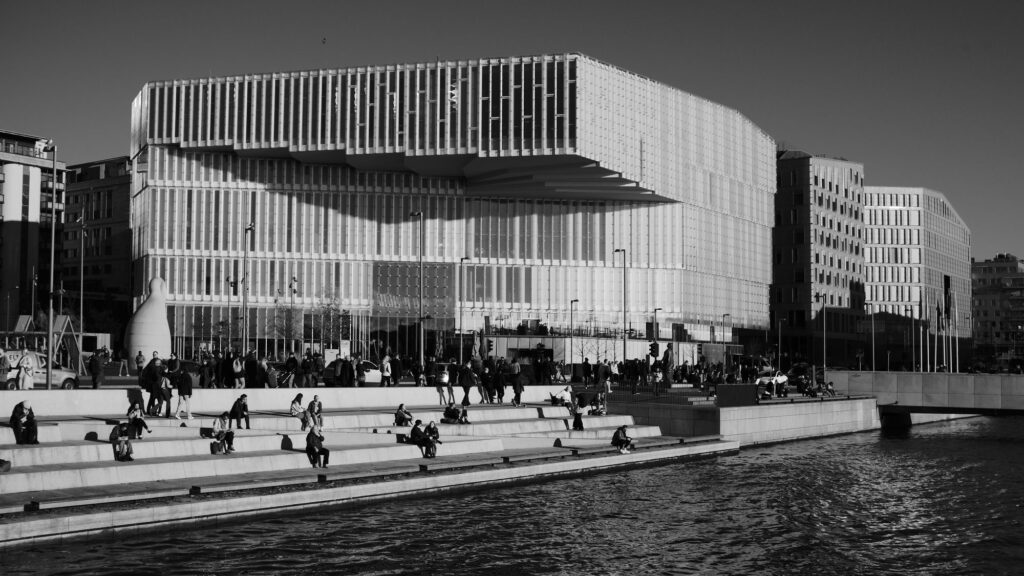
What to do in Oslo when it rains or freezes
Oslo has three sure bets for a wet day. MUNCH, the National Museum and the Deichman library are all walkable along the waterfront, and all three have a café.
The other option is a sauna. A fjord dip after a sauna warms you up better than any café, and in the November dark it’s an experience you won’t forget.
Things to do in Oslo with kids
Oslo with kids is easier on the budget than the prices suggest, because many museums let children in free. Everyone under 18 gets into MUNCH free and children don’t pay at Norsk Folkemuseum. At the Fram Museum, a child ticket is 70 NOK, about €6.70 or £5.50.
The Fram is usually the biggest hit, because children can walk around the polar ship, followed by the open-air museum on Bygdøy with houses they can peek inside. Vigeland Park and Ekeberg give them space to run, and cost nothing.
In winter, the best thing for kids is Korketrekkeren, and in summer the boat to Hovedøya with a picnic. For a family meal, Dirty V with its burgers and fries works best. The food is familiar to children, it’s just all plant-based.
Vegan restaurants in Oslo: where to eat
Oslo has several fully vegan places, and most of them are in the centre and in Grünerløkka. We’ve put them in a table for a quick overview, and we read each one’s own menu.
| Place | Area | What to order | Price | Is it vegan? |
|---|---|---|---|---|
| Nordvegan | centre, Kristian IVs gate | buffet: katsu curry, Thai curry, lasagne | see menu | yes, all of it |
| Jamal’s Falafel | Grünerløkka / Tøyen | falafel with hummus | 99 NOK (about €9.40) | yes, all of it |
| Dirty V | Torggata, Barcode | burger, dirty fries | see menu | yes, all of it |
| EatHappy Vegan | Rosenhoff, Trondheimsveien | Asian plant-based dishes | see menu | yes, all of it |
Nordvegan: a plant-based buffet in the centre
Nordvegan is a buffet at Kristian IVs gate 15B, five minutes’ walk from Karl Johans gate. Everything is plant-based and you build your own plate. The menu changes daily, and dishes on it include Japanese katsu curry, a coconut Thai yellow curry, lasagne, aubergine and pumpkin pie and crispy fried oyster mushrooms.
You can eat in or take it away. It’s the easiest lunch between sights in the centre, because everyone picks their own food and nobody has to explain anything.

Jamal’s Falafel: falafel where everything is plant-based
Jamal’s Falafel at Heimdalsgata 2C, where Grünerløkka meets Tøyen, states on its menu that all its dishes are 100% plant-based. A falafel with hummus in bread costs 99 NOK, about €9.40 or £7.85. The baba ghanoush version with pomegranate is 109 NOK.
It’s one of the cheapest hot meals in Oslo. It works for a quick lunch or as food to take to the islands.
Dirty V: vegan fast food for the whole group
Dirty V is a fully plant-based fast-food restaurant with burgers and loaded fries. In Oslo you’ll find it at Torggata 23 and in the Barcode Street Food hall in Bjørvika. The Torggata branch opens Monday to Thursday from 12:00 to 22:00, and later at weekends.
Dirty V is a good choice when you’re travelling with someone who eats meat and just wants a burger. A pea-protein burger with dirty fries usually surprises people more than they expect.
EatHappy Vegan: Asian plant-based food in Rosenhoff
EatHappy Vegan is a family-run restaurant at Trondheimsveien 139, north of Grünerløkka. It cooks plant-based dishes inspired by Asian cuisine and, according to its website, is meant for vegans and for anyone who just wants to try something new.
It’s closed on Mondays. Tuesday to Friday it opens at 16:00, Saturday at 14:00 and Sunday at 13:00. So don’t plan it for lunch, it’s a dinner tip.
Grünerløkka and the supermarkets
Grünerløkka is a neighbourhood along the Akerselva river north of the centre, with cafés, vintage shops and cheaper bistros. On its edge, in the Vulkan area, stands the Mathallen food hall. It’s a hall of stalls from different cuisines, so ask about vegan options at each stall.
For breakfast and snacks, use supermarkets such as REMA 1000 or Kiwi, where you’ll find plant-based yoghurts, oat milk and bread. Ask before buying pastries, because Norwegian cinnamon buns (kanelboller) are traditionally made with butter and eggs. If you’d like to bake them at home, here’s our recipe for vegan cinnamon rolls.
Tip for mixed groups: If you’re travelling with someone who eats meat, take them to Dirty V or the Nordvegan buffet. Either way they’ll find food they recognise, and you won’t have to decode a menu.
Read next
Want to combine Oslo with Copenhagen or Stockholm? In our article on the best time to visit Scandinavia, we compare seasons, transport and vegan food across the north. If Iceland tempts you too, see our guide to things to do in Reykjavik and where to eat vegan there.
Is Oslo expensive? Prices for food, transport and sights
Yes, Oslo is expensive, but you can get around on a reasonable budget. According to Statistics Norway (SSB, 2025 data), Norway is 28.6% more expensive than the EU average, food 33% more and alcohol and tobacco more than double. The biggest costs are accommodation and restaurant meals. The biggest savings come from transport and free sights.
We converted prices at the Norges Bank rate of 6 November 2026, when 1 euro cost 10.53 NOK and 1 pound 12.62 NOK.
| Item | Price in NOK | About in € | About in £ |
|---|---|---|---|
| Public transport ticket, zone 1 (60 min) | 46 NOK | €4.40 | £3.65 |
| Flytoget airport train to the centre | 276 NOK | €26 | £22 |
| Falafel with hummus (Jamal’s) | 99 NOK | €9.40 | £7.85 |
| MUNCH, adult | 220 NOK | €21 | £17.50 |
| Fram Museum, adult | 180 NOK | €17 | £14 |
| Norsk Folkemuseum, adult | 200 NOK | €19 | £16 |
| Opera roof, Vigeland Park, Ekeberg, library | free | €0 | £0 |
Food prices and how to save
The biggest savings come from buying breakfast and snacks at the supermarket and eating one hot meal out a day. Tap water in Norway is drinkable, so just keep refilling a bottle.
Wine, spirits and stronger beer are sold only by the state-owned chain Vinmonopolet. If you want wine with dinner, check your nearest shop’s opening hours in advance.
Is the Oslo Pass worth it?
The Oslo Pass is worth it if you plan to visit two or more paid museums a day. It’s valid for 24, 48 or 72 hours and includes public transport in Oslo, local Vy trains to and from the airport (not Flytoget) and entry to many museums. It’s sold by Visit Oslo, so check the current price there.
If you mainly plan parks, the Opera House and walks, the pass won’t pay off. Single tickets in the Ruter app are enough. According to Ruter, a 24-hour ticket pays for itself once you make more than three journeys in a day.
Oslo itinerary for 1, 2 and 3 days
The itinerary below pairs sights that sit close together with food on the way. Three days is a relaxed pace, one day is brisk.
| Day | Morning | Afternoon | Vegan food |
|---|---|---|---|
| Day 1 | Opera House, MUNCH, Deichman library | Akershus, Karl Johans gate, National Museum (closed Mondays) | lunch Nordvegan, dinner Dirty V |
| Day 2 | Bygdøy: Fram, Kon-Tiki, Folkemuseum | Vigeland Park | packed snacks, dinner EatHappy Vegan |
| Day 3 | Hovedøya island, or Holmenkollen and Korketrekkeren in winter | Grünerløkka, sauna in Bjørvika | lunch Jamal’s Falafel |
With just one day, take the first row and add Vigeland Park in the evening. For a weekend, the first two days are enough.
Getting to Oslo and where to stay
Most visitors fly into Oslo Airport, Gardermoen, about 35 km north of the city, which has direct flights from many European cities. You can order a plant-based meal on board, and we explain how in our guide to the vegan airline meal (VGML).
The other option is to drive and take the Color Line ferry from Kiel in Germany, which leaves at 14:00 and arrives in Oslo at 10:00 the next morning. You save a hotel night and the long drive through Denmark and Sweden.
From the airport to the city centre
The Flytoget express train runs from the airport to the centre for 276 NOK, about €26 or £22, and regional Vy trains run the route too. With an Oslo Pass you can take local Vy trains to and from the airport, but not Flytoget.
Where to stay in Oslo
The most practical base is the centre around Oslo S or Bjørvika. The Opera House, MUNCH and Karl Johans gate are all walkable, and you’re quickly at the boats to Bygdøy in the morning.
Grünerløkka is a good choice if you want to be close to the vegan places and cafés. The centre is twenty minutes on foot or a few tram stops away. We didn’t find a fully vegan hotel in Oslo. For vegan stays around the world, see our list of fully vegan hotels.
When to visit Oslo
The best time to visit Oslo is May to September, when the days are long, boats run more often and you can swim in the fjord. Around the summer solstice there are more than 18 hours of daylight and it never gets fully dark.
December is the second peak, for the Christmas market, the saunas and the chance of tobogganing. Expect only about six hours of daylight around the solstice. January to March is cheapest for accommodation, and Nordmarka often has snow for cross-country skiing.
| Season | What to expect | Best for |
|---|---|---|
| May to September | long days, islands, swimming, Bygdøy boats | first visit, families |
| October to November | fewer visitors, short days, museums | budget, culture |
| December | Christmas market until 3 January, saunas, darkness | atmosphere, Christmas |
| January to March | snow, cross-country skiing, Korketrekkeren | winter sports |
Norwegian for vegans: phrases for restaurants
You can get by in English almost everywhere in Oslo. A few Norwegian words still help with supermarket labels, which are rarely in English.
| English | Norwegian | When it helps |
|---|---|---|
| I’m vegan. | Jeg er veganer. | at the start of your order |
| Is this vegan? | Er dette vegansk? | with cakes, soups, bread |
| without meat, without fish | uten kjøtt, uten fisk | when adapting a dish |
| without milk, butter and eggs | uten melk, smør og egg | with pastries and desserts |
| Is there cheese in it? | Er det ost i denne? | with pizza, salads, sandwiches |
| plant-based | plantebasert | on labels and menus |
| oat milk | havremelk | in a café, with coffee |
| Thank you. | Takk. | always |
Our verdict
Oslo is only expensive if you treat it like any other city break, with restaurant meals three times a day. Walk the Opera House roof in the morning and spend the afternoon in Vigeland Park. Snack from the supermarket and have one proper meal at the Nordvegan buffet or a falafel at Jamal’s, and a day here costs surprisingly little.
You’ll also eat vegan better here than anywhere else in Norway. That’s why we wouldn’t skip Oslo even on the way to the fjords. Have you been to Oslo? Where did you eat best, and what would you tell the next traveller?
Frequently asked questions
What are the best things to do in Oslo in one day?
With one day in Oslo, walk on the Opera House roof, visit MUNCH and the National Museum with the first painted version of The Scream, then end at Vigeland Park in the evening. Everything except the park sits close together on the waterfront. The Nordvegan buffet in the centre makes an easy lunch.
How many days do you need in Oslo?
Two to three days is enough for Oslo. Two days cover the waterfront, the centre, the Bygdøy peninsula and Vigeland Park. Add a third day for the fjord islands, or Holmenkollen and the toboggan run in winter.
Is Oslo expensive?
Yes, Oslo is one of Europe’s most expensive cities. A public transport ticket costs 46 NOK (about €4.40) and a museum ticket around 200 NOK. You can save a lot, though, because the Opera House roof, the parks and the library are free, and supermarket food costs far less than restaurants.
What is there to do in Oslo in winter?
In winter, visit the Jul i Vinterland Christmas market (until 3 January 2027 this season), a sauna on the fjord and the museums. When there’s snow, ride the Korketrekkeren toboggan run and take the metro back up. Plan outdoor sightseeing around midday, as December has only about six hours of daylight.
Where can you eat vegan in Oslo?
The best places to eat vegan in Oslo are the Nordvegan buffet in the centre, Jamal’s Falafel in Grünerløkka, the vegan fast-food spot Dirty V and the Asian restaurant EatHappy Vegan. All four have fully plant-based menus.
Newsletter
Get our free e-books
Join the newsletter and download Our Vegan Christmas Kitchen straight away, 10 recipes for Czech cookies, gingerbread and vánočka. Then once a month, new places from the vegan map and new articles. Unsubscribe with one click.