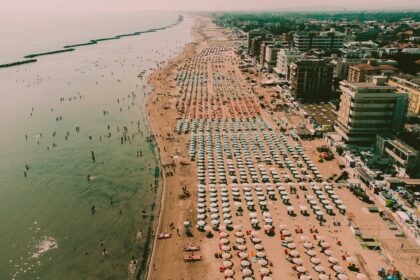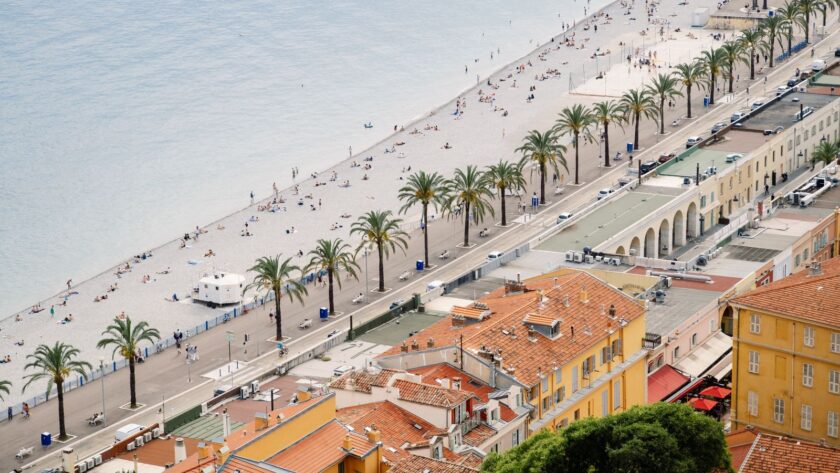
Nice is where English aristocrats learned to spend the winter by the sea, back in the 18th century, and you can still feel why. In January the average high here is around 13 °C. People sit on the blue chairs of the Promenade des Anglais with their faces to the sun. The best things to do in Nice are mostly free.
Wander the ochre old town, buy flowers at the Cours Saleya market, climb Castle Hill for the view over the whole bay, then spend an afternoon with Matisse and Chagall. Half an hour by train and the rest of the French Riviera opens up.
How many days do you need in Nice? Is it worth visiting in November, December or February, when the Carnival takes over the city? What do you do with kids, or when it rains? How do you get from the airport into town by tram, and what does it cost? Is Monaco or Èze the better day trip?
And the question we always ask first, can you eat well as a vegan in a city famous for salade niçoise? We’ve answered all of it below, including food that your meat-eating travel companions will happily share.
We haven’t made it to Nice together yet, so this isn’t a trip diary. In November 2026 we checked prices, opening hours and event dates on the official city, tourism and transport websites, and read each venue’s own website and menu. Places whose address or menu we couldn’t verify didn’t make it into the article.
Is Nice worth visiting?
Yes, Nice is worth visiting if you want a city and the sea in one place. It’s the largest city on the French Riviera, close to the Italian border, with its own international airport just west of the centre. In one day you can walk the old town and the market in the morning, swim or sunbathe in the afternoon and be in Monaco for dinner.
Since 2021 Nice has been on the UNESCO World Heritage List as the “Winter Resort Town of the Riviera”. The listing recognises what European aristocrats built here from the second half of the 18th century onwards, when they came south to escape the northern winter. The villas, grand hotels and the seafront promenade all date from that era.
Nice also wasn’t French for most of its history. It belonged to Savoy and then the Kingdom of Piedmont-Sardinia and only joined France in 1860. That’s why street names sound Italian, the facades look like Genoa and the local food is closer to Liguria than to Paris. If you’re planning a wider trip, our article on whether France is vegan friendly covers Nice alongside Paris, Lyon, Provence and Brittany.
How many days do you need in Nice?
Three days in Nice is ideal. Day one is the old town, the Cours Saleya market, Castle Hill and the promenade. Day two is the museums in Cimiez or a beach day. Day three is a day trip along the coast to Villefranche, Èze or Monaco.
With two days you’ll see Nice itself and fit in one trip. With a week, Nice makes a great base, because coastal trains run often and accommodation in the city is usually cheaper than in Monaco or Cannes.
Nice on our vegan map
4 places, 1 fully vegan. Tap a pin to see the details.
Loading the map…
- 100% vegan
- Vegetarian
- Vegan options
See every place from this article on our vegan map.
Things to do in Nice old town (Vieux Nice)
The top things to do in Nice old town fit into one half-day walk. Start at the Cours Saleya market, get lost in the lanes of Vieux Nice, climb Castle Hill for the view and come down the other side to Port Lympia. Stop for socca on the way.
Wander the lanes of Vieux Nice
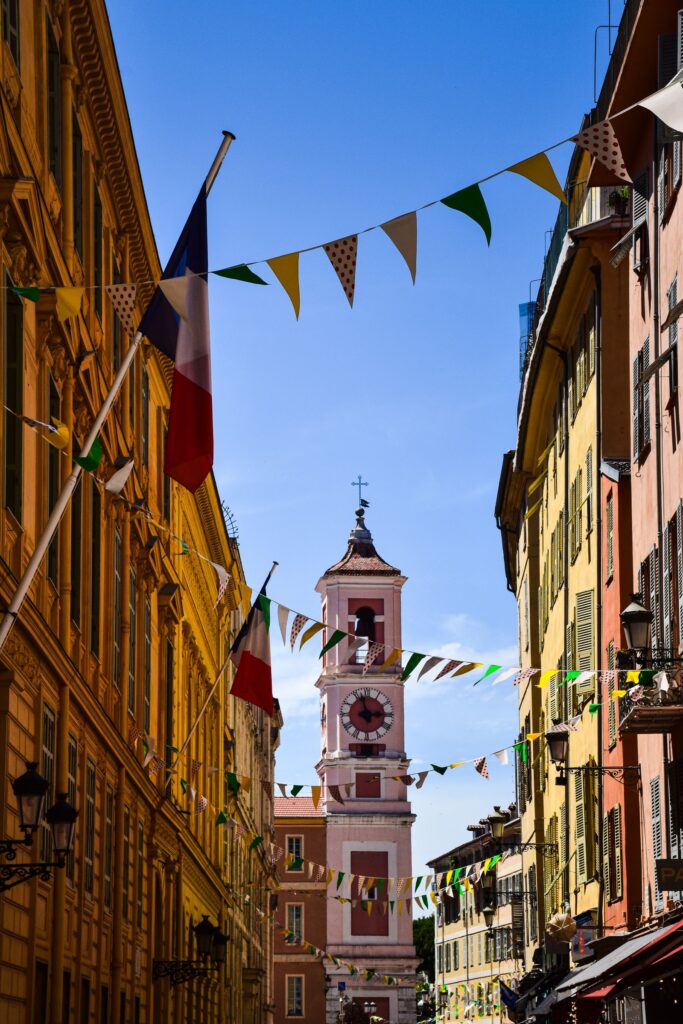
Vieux Nice is the historic centre of Nice, a maze of narrow lanes with ochre, yellow and pink facades and washing strung between the windows. Rue Droite is its main spine, the baroque Sainte-Réparate cathedral stands on Place Rossetti and every few metres there’s a chapel, a small shop or a gelato counter.
The old town is at its best early in the morning, before the crowds, and again in the evening, when it turns into the city’s bar and restaurant quarter. Rue Droite is also home to the Chez Thérésa socca shop at number 28 and the Levantine restaurant Saj by Milla at number 35, so you’ll be back more than once.
Shop the Cours Saleya flower market
Cours Saleya is a long square on the edge of the old town where the flower market and the fruit and vegetable market run every morning from Tuesday to Sunday. According to the Nice tourist office, it ranks among the 100 most picturesque markets in France. On Mondays the flowers make way for antiques and flea-market stalls, and in summer there’s an evening arts and crafts market.
This is where to try socca, a thin pancake of chickpea flour, water, olive oil and salt baked on huge round trays. It’s naturally vegan and loved by everyone, so it’s the perfect first taste of Nice, even for whoever you’re travelling with who eats meat. The best-known socca stall on Cours Saleya belongs to Chez Thérésa.
Climb Castle Hill for the best view in Nice
Colline du Château (Castle Hill) is the wooded hill between the old town and the port, and its viewpoints give the best view of the whole Baie des Anges. The castle that gave it its name is long gone. What you’ll find instead is a park, an artificial waterfall, playgrounds and two old cemeteries.
You reach the top on foot from the old town or the end of the promenade in about 20 minutes. There is a lift, but it’s often out of service, so don’t count on it. The tourist office lists the park as open 8:30 to 18:00 in winter and until 20:00 from April to September, and entry is free.
Romantic things to do in Nice: Go up Castle Hill in the late afternoon, when the sun sets over the airport end of the bay and the promenade turns gold. In winter the park closes at 18:00, so start climbing by 16:00. Then walk down to Port Lympia for dinner.
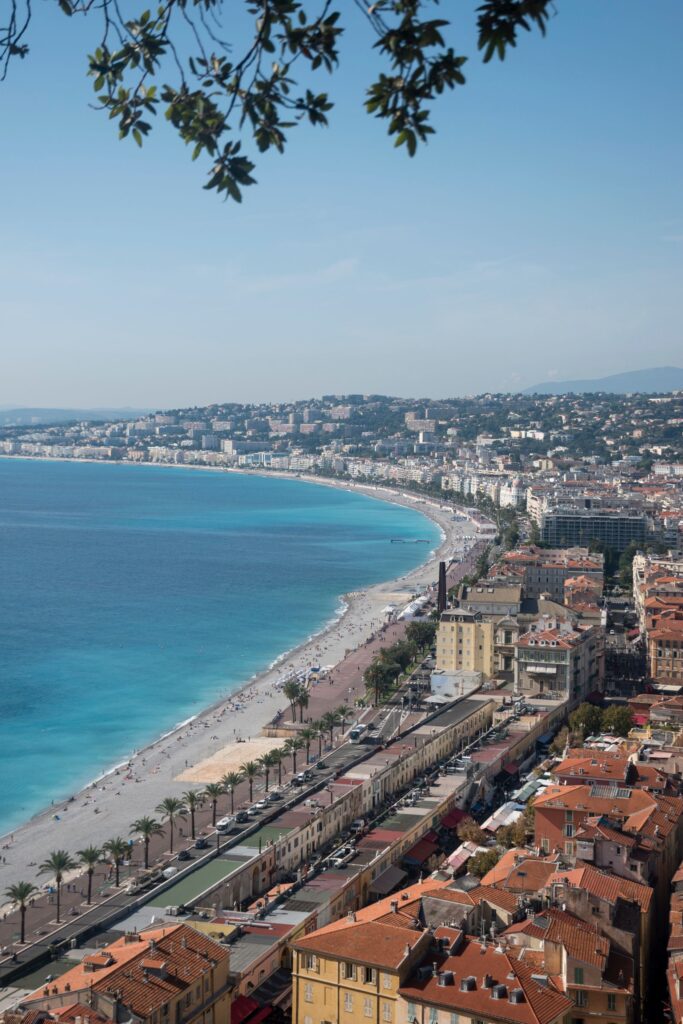
Port Lympia
Port Lympia is the harbour of Nice on the eastern side of Castle Hill, with colourful houses, fishing boats and ferries to Corsica. It’s calmer than the old town and a good place for a coffee. From the port you can walk along the coast towards the viewpoints on Mont Boron.
The Promenade des Anglais, beaches and Place Masséna
The Promenade des Anglais and the beaches below it are why most people come to Nice. The promenade follows the whole bay, the public beaches are free, and right behind them is the modern centre with Place Masséna and the Promenade du Paillon park.
Walk the Promenade des Anglais
The Promenade des Anglais is a seafront promenade about 7 km long, running from the airport in the west to the Quai des États-Unis below the old town. It’s named after the English winter visitors who paid for the first path along the sea in the 1820s.
People walk, run, cycle and sit on the famous blue chairs facing the water. The best-known building is the Hotel Negresco with its pink dome, which opened in 1913. Save the walk for late afternoon, when the light is at its softest.
The beaches in Nice are pebbles, not sand
The beaches in Nice are pebbly, not sandy. Most of them are public and free, with private beach clubs in between that rent loungers and run restaurants. The water is clear and gets deep quickly, so small children need closer watching than on a sandy beach.
You can swim in Nice well into autumn. In August the sea is around 24 °C, and in November it’s still around 17 °C, which keen swimmers manage happily. In summer, swim in the morning before the beaches fill up.
Pack water shoes: Pebbles are hard on bare feet, especially getting in and out of the sea. Buy water shoes before you leave home, because they cost more on the promenade.
Place Masséna and the Promenade du Paillon
Place Masséna is the main square of Nice, with its black-and-white paving and red facades, where the tram from the station arrives and the old town begins. It hosts the Christmas village and the main Carnival parades.
From the square, the Promenade du Paillon park runs over the covered Paillon river, 12 hectares of green space. According to the City of Nice, it has a water mirror with 128 jets and misters and big playgrounds with giant wooden sea creatures. In summer kids splash in the water, in winter they climb the wooden whales.
Museums in Nice: Matisse, Chagall and Cimiez
The best museums in Nice are the Matisse Museum and the Marc Chagall National Museum, both in the hilly Cimiez district above the centre. They’re perfect for a rainy day or an afternoon off from the sun. Both are closed on Tuesdays, so plan around that.
Musée Matisse
The Musée Matisse is set in a 17th-century Genoese villa in the middle of an olive grove in Cimiez. Henri Matisse lived in Nice from 1917 until his death in 1954, and gifts from the artist and his family let the museum follow his work across his whole life. According to the museum’s website, it opens daily except Tuesday, from 10:00 to 17:00 between November and March.
Right next to it are the remains of the Roman town of Cemenelum with its amphitheatre. A short walk away is the Cimiez monastery, with a garden overlooking the city and the sea. Allow half a day for Cimiez.
Marc Chagall National Museum
The Marc Chagall National Museum sits in the lower part of Cimiez and is built around Chagall’s cycle of paintings on biblical themes. It’s a national museum, not a municipal one, so it needs its own ticket. It’s open daily except Tuesday, 10:00 to 17:00 from November to April, with a lunch break from 13:00 to 14:30 in November and December 2026.
The €15 four-day museum ticket
One €15 ticket covers all the municipal museums and galleries in Nice for four days. That includes the Musée Matisse, the Villa Masséna (the history of Nice and the Riviera) and the smaller museums in the old town. The MAMAC modern art museum is closed for renovation, so leave it off your list for now.
Nice with kids: parks, greenhouses and playgrounds
Nice works well with kids because it’s compact, the trams are easy and the best places for children are free or cheap. Parc Phoenix fills a whole day, the Promenade du Paillon park fills an afternoon, and Castle Hill has a playground and a waterfall.
Parc Phoenix is a botanical park in the west of the city with one of the largest greenhouses in Europe, the “Diamant Vert”, which recreates six tropical climates. Lemurs, crocodiles, iguanas and lake birds live there too. Adults pay €5.50 and under-12s go free (up to three per paying adult). Take tram line 2 to the Parc Phœnix stop.
If you’re coming to Nice with toddlers, remember that the beaches are pebbly and deep close to the shore. The water jets in the Paillon park are a much easier way for little ones to splash about in summer.
Things to do in Nice in winter and when it rains
Nice in winter is worth it if you want mild weather without crowds and at lower prices. From November to February the average daily high is between 13 and 17 °C, with plenty of sunny days. The sea is too cold for most people, but you’ll enjoy the old town, the markets and the museums more than in August. Winter also brings two big events, Christmas on Place Masséna and the Carnival.
Nice in December: the Christmas village
The Christmas village “Noël à Nice” fills Place Masséna and the Jardin Albert 1er from late November to 3 January. The official Côte d’Azur tourism listing says entry is free. Socca is on the Christmas food list, which is the best news of the whole market for vegans.
If you’re planning an Advent trip, our guide to the best Christmas markets in Europe will help you choose between stalls in the snow and Christmas in the sun.
The Nice Carnival in February
The Nice Carnival is one of the biggest carnivals in the world, and in 2027 it runs from 9 to 28 February under the theme “Vive l’Amour” (Long Live Love). The main stage is Place Masséna, and the official event listing notes that it’s ticketed. Alongside the night parades of giant figures there are the “battles of flowers”, where costumed performers on decorated floats throw flowers into the crowd.
In the second half of February, the town of Menton near the Italian border holds its Fête du Citron (Lemon Festival), with giant sculptures made of citrus fruit. You can easily combine both in one week.
What to do in Nice when it rains
When it rains in Nice, head up to the museums in Cimiez or into the Parc Phoenix greenhouse. With the €15 four-day municipal ticket you can see Matisse, the Villa Masséna and the old town museums without worrying whether each one is worth the entry fee.
| Month | Average daily high | What’s on | Best for |
|---|---|---|---|
| November | about 17 °C | quiet, low prices, Christmas from late month | city, museums, walks |
| December | about 14 °C | Christmas village on Place Masséna | markets, a frost-free Christmas |
| January | about 13 °C | the quietest month | museums, cheap stays |
| February | about 13–14 °C | Carnival, Menton Lemon Festival | events |
| April to June | 17 to 25 °C | spring, sea warming up | day trips, hikes |
| July and August | about 28 °C | biggest crowds, highest prices | swimming |
| September and October | 21 to 25 °C | warm sea, fewer people | swimming and day trips |
Day trips from Nice along the French Riviera
You can explore the French Riviera from Nice without a car, because TER regional trains run along the coast. Villefranche is a few minutes away, Monaco takes 20 minutes on average according to TER Sud, and Antibes takes around 15 to 25 minutes. There are no seat reservations, so just buy a ticket in the app or at a machine.
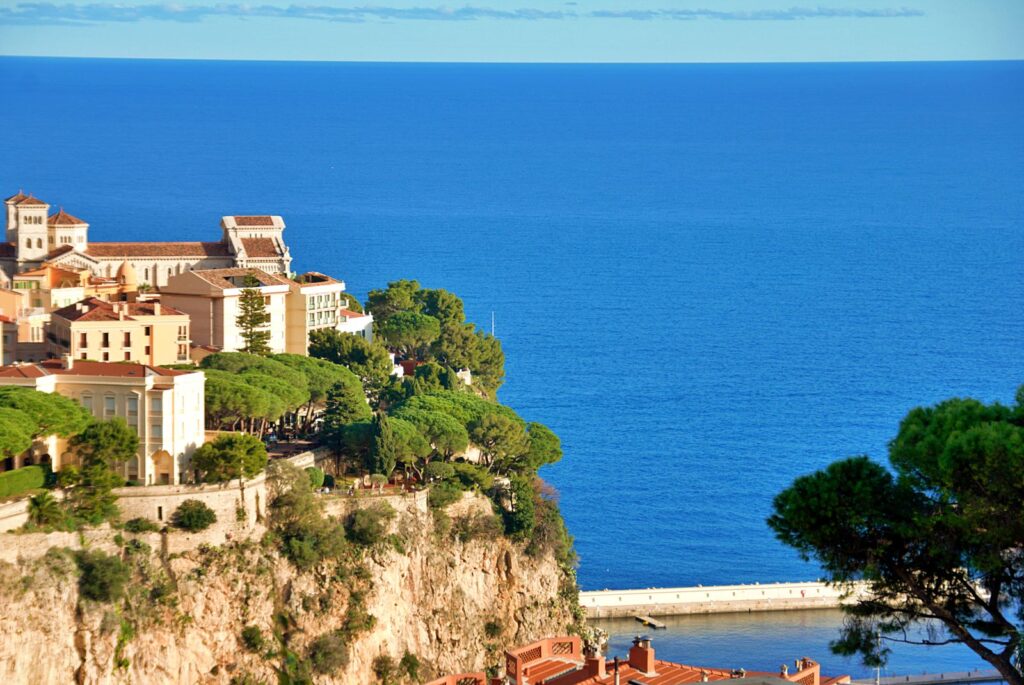
Villefranche-sur-Mer
Villefranche-sur-Mer is a small town of colourful houses above a deep bay, a few minutes by train east of Nice. It has a beach close to the station and an old town built on stairs. It’s the easiest half-day trip when you want the sea and some peace.
Èze, the village on the rock
Èze is a medieval village perched on a rocky spur high above the sea, with a cactus garden and a view along the whole coast. Bus 82 from Nice takes about 30 minutes straight to the village. The alternative is the train to Èze-sur-Mer station by the sea, about 400 metres below the village.
From the station, the Nietzsche Path climbs to the top, named after the philosopher who is said to have walked here to think. The climb takes one to one and a half hours and is steep and rocky. Bring proper shoes and water, and in summer go up early in the morning or walk the path downhill instead.
Monaco
Monaco is the world’s second-smallest country and, on average, 20 minutes by train from Nice to Monaco-Monte-Carlo station. A one-way ticket costs about €6, according to TER Sud. In a day you can see Monaco-Ville on its rock with the Prince’s Palace, the yacht harbour and the Monte-Carlo casino district. Monaco is much more expensive than Nice, so a packed lunch makes sense.
Antibes
Antibes lies west of Nice, around 20 minutes by train, with an old town behind its sea walls, a huge yacht harbour and the Picasso Museum in the Château Grimaldi. It’s a good full-day trip if you want to see a different side of the coast from the stretch towards Italy.
Menton
Menton is the last French town before the Italian border, with lemon trees and a baroque old town above the sea. It hosts the Lemon Festival in February. From Menton it’s a short hop into Liguria, where eating vegan is easier than you might expect. Our article on eating vegan in Italy covers that side of the border.
On the Riviera, the best meal is often from the market. Socca, olives, tomatoes, fruit and fresh bread will carry you through a whole day trip for a fraction of a Monaco restaurant bill.
Vegan Nice: where to eat plant-based
Nice is a smaller and more traditional city for vegans than Paris or Lyon. We could verify only one fully vegan place on its own website, the Amour patisserie. Add vegetarian restaurants with vegan dishes, and above all the local street food that’s vegan by nature, and you won’t go hungry. You just have to choose more carefully.
Socca: the vegan classic of Nice
Socca is a thin, crispy pancake of chickpea flour, water, olive oil and salt, baked in a blazing oven and served hot with black pepper. It’s the signature food of Nice and naturally vegan.
The best known is Chez Thérésa, baking socca since 1925. You’ll find it at a stall on the Cours Saleya market and at a small shop at 28 rue Droite, where it’s baked in a wood-fired oven dating from 1867. The tourist office lists the shop as open Tuesday to Sunday, 9:30 to 15:00.
Watch out for the other local bakes. Pissaladière is an onion tart topped with anchovies, so it isn’t vegan. Tourte de blettes (Swiss chard tart) is usually sweet and often contains egg or cheese, so always ask.
Amour Pâtisserie Végétale: the fully vegan patisserie
Amour Pâtisserie Végétale is a 100% plant-based and gluten-free patisserie at 2 rue Foncet in central Nice. It serves breakfast, brunch and afternoon cakes and has about 20 seats. According to its website it’s open all year, Monday to Saturday from 9:00 (until 16:00 on Thursday, otherwise until 18:00) and on Sunday from 10:00 to 14:00.
A whole cake for four costs €24, for six €36, and you should order it about three days ahead. It’s ideal for a birthday or anniversary on the road, because everyone at the table can eat it, allergies included. You can also take home gluten-free baking mixes.
Saj: Levantine flatbread in the old town
Saj by Milla is a vegetarian and vegan restaurant, café and art gallery at 35 rue Droite in the old town. Its speciality is saj, a Levantine flatbread baked on a domed griddle with different fillings, and the kitchen draws on Lebanese and wider Mediterranean recipes. Its online menu marks the za’atar saj (a thyme and sesame blend) and the sweet saj as vegan, while most savoury ones contain cheese. It describes itself as vegetarian and vegan, so ask which dishes are fully vegan. Its website lists lunch every day except Tuesday and dinner Wednesday to Saturday, but the tourism listing shows different times, so check before you go.
Paper Plane: vegetarian bowls and brunch
Paper Plane is a café and restaurant at 14 rue Gubernatis in central Nice. Its own website says the menu is “essentially vegetarian”, not vegan. The star of the menu is the weekly bowl, created by a vegan chef. Listings show it open Tuesday to Saturday for breakfast and lunch, but check the hours before you go.
What to order in a regular restaurant
In a regular restaurant in Nice, Italian and Provençal dishes are your best bet. Ratatouille, vegetables slow-cooked in olive oil, is a classic of Nice and Provence and is usually vegan. You can order pizza or pasta with tomato sauce without cheese. Soupe au pistou is a vegetable soup with basil paste, but ask whether the pistou contains parmesan.
What should you avoid? Salade niçoise contains tuna and egg, and so does pan bagnat, the local sandwich. Markets and supermarkets sell olives, tapenade, sun-dried tomatoes and fresh bread, so a picnic on the beach is the cheapest vegan lunch in Nice.
The Tuesday rule for Nice: On Tuesdays, Saj, the Musée Matisse and the Chagall museum are all closed, and on Mondays there’s no flower market or socca stall. That makes Tuesday the perfect day for Monaco or Èze.
| Place | Type | Where | Best for |
|---|---|---|---|
| Amour Pâtisserie Végétale | fully vegan patisserie | 2 rue Foncet | breakfast, brunch, cake, every day |
| Saj by Milla | vegetarian with vegan dishes | 35 rue Droite, old town | lunch, dinner Wed–Sat |
| Paper Plane | vegetarian with vegan dishes | 14 rue Gubernatis | breakfast and lunch |
| Chez Thérésa | socca (naturally vegan) | Cours Saleya, 28 rue Droite | mornings, Tue–Sun |
Where next in France
Nice is only the start. Paris is the easiest place in France to eat vegan, and our guide to vegan Paris has the bistros, bakeries and vegan croissants worth crossing the city for.
Getting to Nice and getting around
Most visitors fly into Nice Côte d’Azur Airport, the main airport of the French Riviera, with direct flights from across Europe. You can pre-order a vegan meal on most airlines, and our guide to the vegan airline meal (VGML) explains how to make sure it actually turns up.
The airport sits at the western end of the promenade, and tram line 2 runs from there into the centre. A single ticket on Lignes d’Azur trams and buses costs €1.70 and is valid for 74 minutes including transfers. The airport machines sell a return airport ticket for €10, and a day pass costs €7.
Driving only makes sense if you want to explore inland Provence. Parking in Nice is expensive and the coastal roads are busy in summer, while trains reach every town worth seeing on the coast.
How much does Nice cost?
Nice is pricier than Central Europe but cheaper than Monaco or Cannes. You save the most because the old town, the beaches, the markets and the promenade are free and the trams are cheap.
| Item | Price |
|---|---|
| Tram or bus ticket (74 min) | €1.70 |
| Return airport ticket | €10 |
| Day pass | €7 |
| Train Nice to Monaco, one way | about €6 |
| Municipal museums, 4-day ticket | €15 |
| Parc Phoenix, adult | €5.50 |
| Whole vegan cake for 4 at Amour | €24 |
| Promenade, beaches, old town, Castle Hill | free |
Save on food: Have breakfast and lunch from the Cours Saleya market (socca, fruit, bread) and eat out in the evening. French supermarkets stock plant milks, plant-based yoghurts and hummus.
Where to stay in Nice
The best areas to stay in Nice are between the station and the sea. The old town has the most atmosphere but is noisy at night and has few lifts. The streets around Avenue Jean Médecin and the Musiciens district are quieter, close to both the station and the beach, with the tram on the doorstep. Around Port Lympia you’ll stay like a local, often for less.
We haven’t yet found a fully vegan hotel on the Riviera. If you’d love a holiday in fully vegan accommodation, have a look at our list of vegan hotels in Europe and beyond. Otherwise, the most practical choice in Nice is an apartment with a kitchenette and a morning trip to the market.
Useful French phrases for vegans
In France the word “vegan” is used, but “végétalien” is clearer to waiters. “Végétarien” means vegetarian, so a dish can still contain cheese, butter or egg.
| English | French | Say it like / When it helps |
|---|---|---|
| I’m vegan. | Je suis végétalien / végétalienne. | zhuh swee vay-zhay-tal-yan (nasal “an”). Clearer than “vegan” |
| No meat and no fish. | Sans viande et sans poisson. | son vee-ond ay son pwa-son |
| No milk, butter, cheese or cream. | Sans lait, sans beurre, sans fromage, sans crème. | son lay, son bur, son fro-mahzh, son krem |
| No eggs. | Sans œufs. | son zuh |
| Is there cheese in it? | Il y a du fromage dedans ? | eel ee ah dew fro-mahzh duh-don. For pistou and pizza |
| One socca, please. | Une socca, s’il vous plaît. | ewn so-ka, seel voo play. At the market |
| Thank you. | Merci. | mair-see |
Nice is the best winter city by the sea
Nice is a place to visit outside summer. From November to February you get sunshine, empty old-town lanes and museums without queues, the Carnival in February and a €6 train to Monaco. For vegans it isn’t Paris, but between the Amour patisserie, a Levantine flatbread at Saj and hot socca from the market, you’ll eat well and cheaply.
If you only have one day, do the market, the old town and Castle Hill, and save the coast for day two. Would you go to Nice in winter for the Carnival, or in summer for the sea? Tell us in the comments.
Frequently asked questions
What are the best things to do in Nice?
The best things to do in Nice are wandering Vieux Nice, visiting the Cours Saleya flower market, climbing Castle Hill for the view over the bay, walking the Promenade des Anglais and seeing the Matisse and Chagall museums in Cimiez. The best day trips are Villefranche and Monaco by train and Èze by bus.
How many days do you need in Nice?
Three days is ideal. Spend day one on the old town, market and Castle Hill, day two on the museums or the beach and day three on a coastal day trip. Two days is enough for the city and one trip.
Is Nice worth visiting in winter?
Yes. From November to February Nice usually sees daytime highs of 13 to 17 °C, lower prices and fewer tourists. There’s a Christmas village on Place Masséna in December and the Carnival in February, from 9 to 28 February in 2027.
How do you get from Nice to Monaco?
Take a TER regional train from Nice-Ville station. The journey takes 20 minutes on average and a one-way ticket costs about €6, with no seat reservation needed. The train also stops at Villefranche-sur-Mer and Èze-sur-Mer.
Is Nice vegan friendly?
Nice is moderately vegan friendly. It has a fully vegan patisserie, Amour Pâtisserie Végétale, two vegetarian restaurants with vegan dishes, Saj by Milla and Paper Plane, and naturally vegan socca from Chez Thérésa at the Cours Saleya market. In regular restaurants, look for ratatouille and pizza without cheese.
Newsletter
Get our free e-books
Join the newsletter and download Our Vegan Christmas Kitchen straight away, 10 recipes for Czech cookies, gingerbread and vánočka. Then once a month, new places from the vegan map and new articles. Unsubscribe with one click.