
If you’ve ever stood in a foreign airport, starving, scanning the departures hall for something you can actually eat, you already know: travelling as a vegan takes a little more thought than just booking a flight. But here’s the thing most people get wrong. It’s not hard. It just takes some know-how, a handful of apps, and a willingness to be a bit more adventurous than the average tourist.
We’ve been travelling vegan for years now, across Europe, and beyond. One of us is Czech, the other British, and between us we’ve eaten our way through countries where „vegan“ is a well-known concept and countries where pointing at ingredients on a phone screen is the only way to communicate what we need. We’ve also travelled plenty with non-vegan friends and family members, which comes with its own unique set of challenges (and surprisingly fun moments). Whether you’re a committed vegan, plant-based curious, or the non-vegan partner trying to figure out how this whole trip is going to work, this article is for you.
So where do you actually find vegan food abroad? What happens when the menu is entirely in a different language and you can’t read a single word? How do you pick restaurants that work for everyone when half the group eats meat? And what should you pack so you’re never stuck hungry at a bus station in the middle of nowhere? We’ve got all of that covered right here.
Before You Go: Planning a Vegan-Friendly Trip
The biggest difference between a stressful trip and a smooth one comes down to about 30 minutes of research before you leave. You don’t need to plan every meal, but having a rough idea of what’s available at your destination makes everything easier.
Start with a vegan restaurant-finder app. It’s the single most useful tool for vegan travellers, and we check ours before every trip. These apps map vegan and veg-friendly restaurants worldwide, complete with reviews from actual plant-based eaters. Search your destination and see what comes up. If there are dozens of listings, you know you’ll eat well. If there are only a few, you’ll want to plan a bit more carefully and maybe book accommodation with a kitchen.
Beyond the apps, a simple search like „vegan food in [city name]“ on Instagram or Google will usually turn up blog posts, hashtags, and local recommendations you won’t find in any guidebook. We’ve discovered some of our favourite spots this way, places that were too new or too small to appear on restaurant apps yet. For a head start, here are the vegan travel blogs we still read and what each one is best for.
Check your accommodation options too. If you’re heading somewhere with limited vegan dining, booking an Airbnb or apartment with a kitchen can be a game-changer. Even a mini fridge and a microwave give you flexibility. We always try to stay somewhere with at least basic cooking facilities when we’re in less vegan-friendly areas, and honestly, shopping at local markets and cooking with ingredients you’ve never seen before is one of the best parts of travelling. And if you’d rather not think about food at all, book one of these fully vegan hotels.
The Apps and Tools You Actually Need
You don’t need to download twenty apps. Here are the ones we genuinely use on every trip.
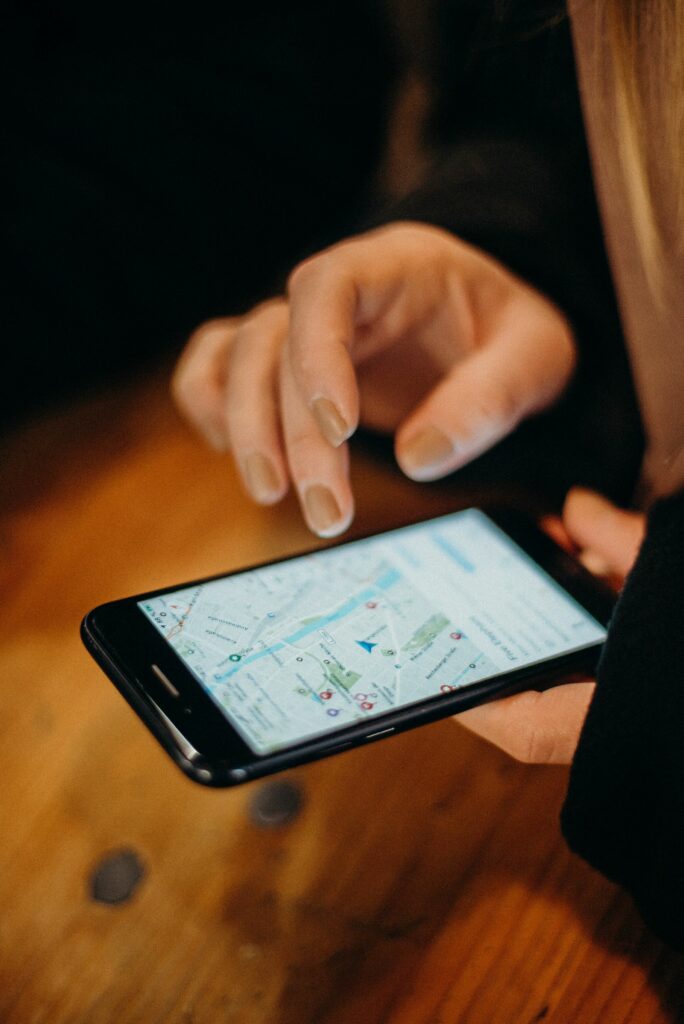
| App | What it does | Cost | Works offline? |
|---|---|---|---|
| Vegan restaurant finder | Find vegan restaurants, cafes, and health stores worldwide, with reviews from other diners | Usually free, with a paid full version | Yes (paid versions) |
| Google Translate | Camera translation of menus, conversation mode for ordering | Free | Yes (download language packs) |
| Google Maps | Save custom lists of vegan spots before your trip, navigate instantly when hungry | Free | Yes (download area maps) |
| Vegan Passport | Explains veganism and dietary needs in 96 languages with culturally adapted text | ~€3 | Yes |
A vegan restaurant finder is non-negotiable. The free versions work fine, though paid ones let you save favourites offline, which is handy when you don’t have data. They cover restaurants, cafes, health food stores, and even bakeries.
Google Translate with downloaded offline language packs is a lifesaver. You can point your camera at a menu and get an instant translation. It’s not perfect, but it’s good enough to spot hidden dairy or eggs in dish descriptions. We’ve used this in Greece and rural Portugal, and it works surprisingly well.
Google Maps with saved lists is something we started doing a couple of years ago and now can’t travel without. Before a trip, we save every vegan restaurant from the apps and our own research into a custom Google Maps list. When you’re wandering around a new city hungry, you just open the map and the nearest saved spots pop up immediately. No searching, no scrolling.
The Vegan Passport by The Vegan Society explains veganism in 96 languages. It’s available as an app or a small physical booklet. It’s incredibly useful in countries where language is a real barrier, because you can simply show the relevant page to a waiter and they’ll understand exactly what you need.
How to Eat Vegan Anywhere in the World
Here’s a truth that experienced vegan travellers know: you can eat plant-based almost anywhere if you know what to look for. Even in countries that aren’t known for vegan food, there are always options. The trick is knowing where to find them.
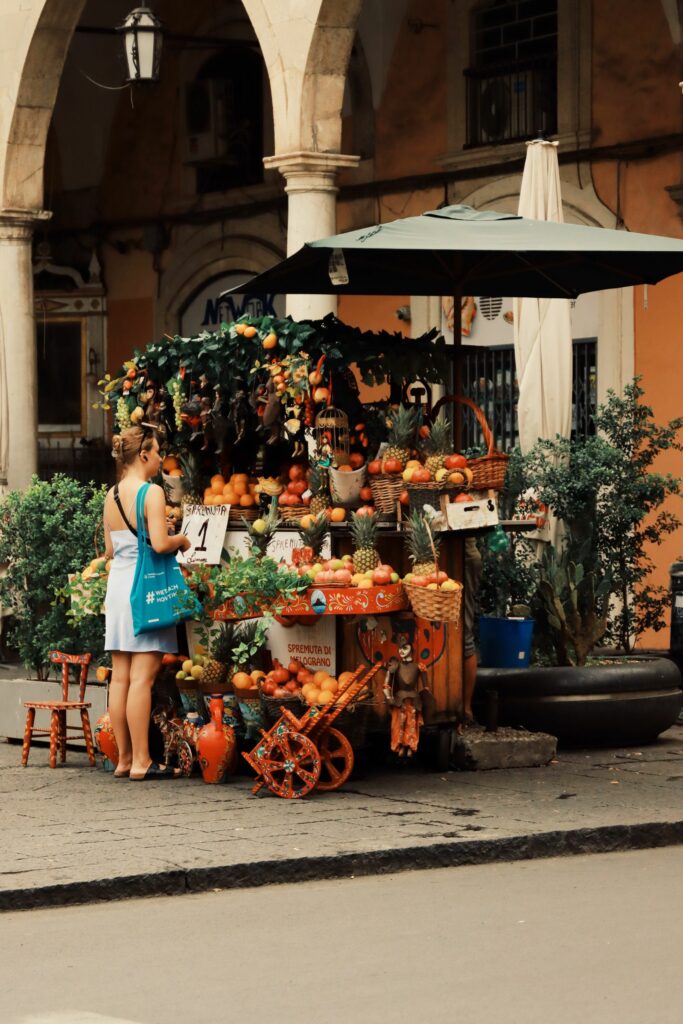
Asian restaurants are almost always your safest bet in any country. Thai, Vietnamese, Chinese, Japanese, and Indian cuisines all have naturally plant-based dishes. A plate of tofu pad thai, vegetable stir-fry with rice, or dal with naan bread exists practically everywhere on the planet. When we’re in a new city and can’t find a dedicated vegan restaurant, we head for the nearest Asian place and we’ve never been let down.
Middle Eastern and Mediterranean food is another goldmine. Hummus, falafel, tabbouleh, baba ganoush, stuffed vine leaves, and countless salads are all naturally vegan. In Greece, we ate incredibly well from taverna side dishes alone: giant beans in tomato sauce, fried courgettes, roasted peppers, and fresh bread with olive oil.
This is exactly how we ate on the Greek island of Zakynthos too. We cover where in our guide to what to see and where to eat vegan on Zakynthos.
Italian restaurants work better than you’d think. Pizza without cheese (ask for „pizza marinara“ or request no cheese with extra vegetables), pasta with aglio e olio or arrabbiata sauce, bruschetta, and grilled vegetables are all standard options. We had some good pizza marinara in Rimini, and a great pizza on the first day we had there.
Local markets and supermarkets are underrated. In almost every country, fresh fruit, vegetables, bread, nuts, and hummus are available cheaply. Some of our most memorable meals have been picnics assembled from local market ingredients, eaten on a park bench with a view.
Airports and planes used to be a nightmare for vegans, but things have improved a lot. Most major airlines now offer a VGML (strict vegetarian/vegan) meal option that you can select when booking your ticket. The catch is that you have to request it in advance, usually at least 24 hours before your flight, and some carriers want longer. If you forget, you might be stuck with a bread roll and a sad side salad. Our step-by-step guide to how to order a vegan airline meal (VGML) has the airline-by-airline deadlines.

For a real example, here’s what we eat at Manchester Airport, from the WHSmith meal deal to KFC’s Vegan Burger, in our guide to where to eat vegan in Manchester and at its airport.
| Airline type | Vegan meal? | How to order | Quality |
|---|---|---|---|
| Full-service (Emirates, Singapore Airlines, Turkish Airlines) | Yes (VGML code) | Select at booking or manage booking 24-72h before | Generally good, sometimes great |
| European carriers (Lufthansa, BA, KLM) | Only on longer flights (VGML code), not in short-haul economy | Manage booking online, 24h before (BA into London 36h) | Hit or miss |
| Budget airlines (Ryanair, Wizz Air, EasyJet) | Limited or none | Buy onboard snacks (check vegan options in advance) | Very limited |
Always bring your own food through airport security. Sandwiches, wraps, fruit, nuts, protein bars, and energy balls all pass through security without issues (liquids like hummus might be confiscated in some airports, so check the rules). We never board a flight without a packed meal and snacks, regardless of whether we’ve ordered a vegan meal on the flight. Airline meals sometimes don’t show up, get given to the wrong person, or are simply not filling enough.
For long bus or train journeys, the same rule applies: pack more food than you think you’ll need. Having a backpack stocked with trail mix, crisps, homemade sandwiches or burritos, and fruit saved us.
Travelling With a Non-Vegan Partner (Without Losing Your Mind)
This is the part nobody talks about enough. If you’re vegan and your partner, friend, or family member isn’t, travelling together requires a bit of give and take from both sides. We know this from experience, not just from our own trips, but from the many trips we’ve taken with non-vegan friends and family.
The golden rule: choose restaurants where everyone can eat well. This doesn’t mean only going to vegan restaurants (unless your companion is up for it, and honestly, many are pleasantly surprised when they try). It means finding places with a diverse menu. Most vegan-friendly restaurants also serve incredible non-vegan dishes, and most good non-vegan restaurants have at least a few plant-based options.
Don’t make every meal a negotiation. Before the trip, have a quick chat about how you’ll handle food. Maybe you agree to alternate: one meal at a fully vegan spot, the next at a place your partner chooses. Or maybe you agree that dinner is always somewhere with options for both, and you each handle breakfast and lunch on your own terms. Whatever works for both of you, just decide it upfront so nobody feels resentful by day three.
Share food. This is genuinely one of the best things you can do. Order a bunch of naturally vegan dishes that everyone can share: hummus and flatbreads, vegetable curries, pasta dishes, rice bowls. When non-vegan friends try vegan food in a casual, no-pressure setting, they almost always enjoy it. We’ve converted more people through a really good plate of food than through any conversation about ethics.
Be chill about it. If your partner orders a steak, that’s their choice. If a waiter brings you the wrong dish, handle it with grace. The calmer and more easygoing you are about your veganism while travelling, the more your travel companions will respect it, and the more likely they are to try your food out of curiosity rather than obligation.
For the non-vegan partner reading this: you’re already a good travel companion just by being here. The best thing you can do is be open to trying vegan restaurants and dishes. You might be surprised how much you enjoy it. And when your vegan partner is struggling to find food in a difficult spot, a little patience goes a long way.
What to Pack: The Vegan Travel Survival Kit
You don’t need to bring a suitcase full of food, but a small stash of essentials can make a big difference, especially during transit and in less vegan-friendly destinations.
| Item | Why you need it | Packs in |
|---|---|---|
| Trail mix (nuts, seeds, dried fruit) | Quick energy, lasts for days, no refrigeration needed | Carry-on |
| Protein bars | Meal replacement when food options are scarce | Carry-on |
| Dark chocolate | Mood booster, easy calories, naturally vegan | Carry-on |
| Instant oatmeal packets | Hot breakfast anywhere with a kettle | Suitcase |
| Nut butter sachets | Protein-rich, pairs with bread or fruit | Carry-on |
| Nutritional yeast (small container) | Transforms plain rice or pasta into a proper meal | Suitcase |
| Reusable container + water bottle | Pack market food, carry leftovers, save money | Day bag |
| B12, vitamin D, omega-3 supplements | Maintain your routine when travel disrupts everything else | Carry-on |
Non-perishable snacks are your best friends. We always pack trail mix, protein bars, dark chocolate, instant oatmeal packets, and nut butter sachets. These take up almost no space and can turn a hungry, grumpy travel day into a perfectly manageable one.
A reusable water bottle and a small container for bringing back leftovers or packing market food are more useful than you’d think. We’ve packed fruit, sandwiches, and even takeaway curry in our containers for bus rides and hikes.
Nutritional yeast in a small container, if you’re into it. It sounds odd, but a sprinkle of nooch can transform a plain bowl of pasta or rice from boring to delicious. We started doing this after a week in rural Croatia where vegan options were limited and we got very creative with basic ingredients.
Supplements. If you normally take B12, vitamin D, or omega-3 supplements, don’t forget them. Routine goes out the window when you’re travelling, and these are easy to overlook when you’re packing.
Communicating Your Dietary Needs Abroad
Language barriers are probably the thing vegan travellers worry about most, but they’re genuinely less of an issue than you’d expect. With a little preparation, you can communicate your needs almost anywhere.
Translation cards are the simplest solution. Write out „I am vegan. I do not eat meat, fish, dairy, eggs, or honey“ in the local language, save it on your phone, and show it to waiters. You can find pre-made vegan translation cards online in dozens of languages, or use Google Translate to create your own. The Vegan Passport app does this in 96 languages with culturally appropriate explanations.
Learn a handful of food words in the local language. You don’t need to be fluent, just know the words for meat, chicken, fish, milk, cheese, eggs, and butter. This lets you scan menus and ask basic questions even without a full conversation.
Be specific and positive. Instead of rattling off a list of what you can’t eat, try framing it positively: „I eat vegetables, rice, beans, tofu, fruit“ alongside the restrictions. Waiters respond better to knowing what you DO want than just hearing a list of restrictions. In many cultures, saying „I don’t eat these things“ can be confusing, but saying „Can you make this with only vegetables and rice?“ gets a clear, happy response.
Pictures help. If all else fails, show pictures on your phone of dishes you’d like, or point to other tables. We once ordered an entire meal in rural Vietnam by pointing at what people at the next table were eating and saying „no meat,“ supplemented by enthusiastic gestures. It worked beautifully, and the whole restaurant was laughing along with us.
Best and Trickiest Destinations for Vegan Travellers
Not every destination is created equal when it comes to vegan food. Here’s a quick honest overview based on our experience.
| Difficulty | Destinations | What to expect |
|---|---|---|
| 🟢 Effortless | Berlin, London, Tel Aviv, Bangkok, Taipei, Bali, Lisbon | Dozens of fully vegan restaurants, vegan options everywhere, no planning needed |
| 🟡 Surprisingly good | Prague, Budapest, Krakow, Athens, South India | Growing vegan scene, plenty of options with light research |
| 🟠 Doable with planning | France (outside Paris), rural Spain, Japan, Eastern Europe | Fewer dedicated spots, but an app + a kitchen in your accommodation = sorted |
| 🔴 Requires creativity | Remote/rural areas in any country | Focus on naturally plant-based ingredients, bring snacks, be flexible |
Easiest destinations: Berlin, London, Tel Aviv, Bangkok, Taipei, Bali, and Lisbon all have incredible vegan scenes. You could eat at a different vegan restaurant every day for a month and not run out of options. If this is your first trip as a vegan, start with one of these to build your confidence. For Berlin, our article on things to do in Berlin and where to eat vegan has the details. For London, see the best vegan restaurants in London, area by area. For what the rest of the country looks like beyond Bangkok, read our guide to whether Thailand is vegan friendly. For Lisbon, see our things to do in Lisbon, with vegan places by neighbourhood. For a longer shortlist with three verified places to eat in each city, see our top 10 vegan-friendly cities.
If Bali is the one calling you, read about the best time to visit Bali and how to eat vegan there.
Surprisingly good: Prague has quietly become one of the best vegan cities in Central Europe, with dozens of fully vegan restaurants. Budapest, Krakow, and Athens are all much better than their reputations suggest. And anywhere in South India is essentially a vegan paradise if you skip the ghee. Slovenia is another pleasant surprise, especially Ljubljana, which has a lot of vegan places for its size.
Trickier but totally doable: France (outside Paris), rural Spain, Japan (hidden fish stock in everything), and most of Eastern Europe require more planning but are absolutely manageable with the right preparation. These are the places where having a kitchen in your accommodation, knowing a few local phrases, and having a good restaurant-finder app on your phone makes the biggest difference. Paris itself is the easy part, as our vegan Paris restaurant guide shows. We looked at Spain in more detail, including where the plant-based scene is surprisingly strong, in our guide to whether Spain is vegan friendly. We also looked at Madrid on its own, and it turned out to be one of the pleasant surprises.
For how France works outside Paris, see our guide to where to go and eat vegan in France.
The real challenge: Very remote or rural areas in any country tend to be harder, not because plant-based food doesn’t exist there, but because the concept of choosing not to eat animal products can be genuinely unfamiliar. In these situations, flexibility and patience are your best tools. Focus on naturally plant-based ingredients rather than trying to explain an entire philosophy.
Budget Tips for Vegan Travellers
Eating vegan while travelling is often cheaper than eating the standard tourist diet. Here’s why, and how to make the most of it.
Markets and street food are where the best value is. A bowl of noodle soup from a street vendor in Southeast Asia costs a fraction of a restaurant meal and is often fresher and tastier. In Europe, assembling a meal from a market (bread, hummus, olives, fresh vegetables, fruit) is cheaper and more enjoyable than sitting in a tourist-trap restaurant.
Cook when you can. Even cooking three or four meals a week in your accommodation kitchen can dramatically cut your food budget. Plus, visiting local supermarkets and markets is a genuinely fun way to experience a new culture. We’ve learned more about local food culture wandering through markets than we ever have in restaurants.
Lunch specials and set menus are your friend in Europe. Many restaurants offer a cheaper lunch menu or „menu del día“ type deal. In places like the Czech Republic, a daily lunch special at a vegan restaurant can cost as little as €5-7 for a full meal.
If you’re curious about reducing your environmental footprint while travelling too, we’ve written about how carbon footprint connects to the choices we make daily, including food and travel decisions.
The Mindset That Makes It All Work
Here’s what we’ve learned after years of vegan travel: your mindset matters more than your destination. If you approach a trip anxious and defensive about finding food, every small challenge feels like proof that vegan travel is impossible. But if you approach it with curiosity and a sense of adventure, those same challenges become stories you laugh about later.
The best vegan travel experiences we’ve had weren’t at fancy plant-based restaurants (though those are great too). They were the unexpected moments: we ordered food from a restaurant in Kladno after watching the hockey, our favourite food..noodles. We got a call a while after saying they cannnot make those dishes vegan due to their sauces containing fish, but they said they could make something special for us. A second call came asking if we could have egg, we realised they probably didn’t have the best knowledge of vegan food, so after confirming no egg, no meat or dairy, we waited, although a little worried.
When the food came, they really did make something special, infact those noodles were some of the nicest noodles we have had! We were both suprised as we didn’t know what to expect, and that restaurant really went above and beyond to make something vegan for us, even when their knowledge of vegan food wasn’t strong. We hope they would add those noodles to their menu, when we go back there we know for sure we would eat them again.
Travelling as a vegan is not about perfection. Some days you’ll eat amazingly well. Other days you’ll have peanut butter sandwiches for dinner because nothing else worked out. Both are fine. What matters is that you’re out there, exploring, eating well most of the time, and showing the world that vegans are adventurous, adaptable, and pretty good company at a dinner table.
If you’re new to the whole concept of plant-based living and want to understand the basics, our article on what veganism actually is and who counts as a vegan is a great place to start. And if you’re thinking about dipping your toe in, Veganuary could be the perfect first step.
So where are you heading next? Drop a comment and tell us your destination. We might just have a recommendation for you.
FAQ
Is it hard to travel as a vegan?
Not at all. With apps that map vegan-friendly restaurants worldwide, finding plant-based food is easier than ever. The key is doing a little research before your trip, packing snacks for transit days, and knowing what types of cuisines naturally offer vegan options (Asian, Middle Eastern, and Italian are great starting points).
What do vegans eat when travelling?
Vegans eat incredibly well while travelling. From pad thai in Bangkok to falafel in Istanbul, pasta in Rome, and curry in Delhi, plant-based options exist practically everywhere. Local markets, street food vendors, and supermarkets are also great sources of fresh, affordable vegan meals. Many vegans also pack snacks like nuts, protein bars, and fruit for transit days.
How do you find vegan food abroad?
A dedicated vegan restaurant-finder app is the most reliable way to find places worldwide. Google Maps with saved lists, Instagram hashtag searches, and local food blogs are also excellent resources. For countries with a language barrier, Google Translate’s camera feature can help you read menus, and the Vegan Passport app explains your dietary needs in 96 languages.
How do you travel with a non-vegan partner?
Choose restaurants where both of you can eat well, rather than insisting on only vegan or only non-vegan spots. Share naturally plant-based dishes like hummus, curries, and pasta. Talk about your food plan before the trip so nobody feels frustrated. The best approach is flexibility and a relaxed attitude, most non-vegan partners enjoy vegan food when there’s no pressure involved.
What are the best apps for vegan travellers?
The must-haves are a vegan restaurant finder, Google Translate (for reading menus and communicating dietary needs), and Google Maps (for saving favourite spots). The Vegan Passport app is invaluable for explaining veganism in 96 languages. These four apps cover nearly every situation you’ll encounter as a vegan traveller.
Can you be vegan and travel anywhere in the world?
Yes, though some destinations require more planning than others. Cities like Berlin, London, Bangkok, and Tel Aviv make vegan travel effortless. Rural areas or countries with heavy meat-based traditions are trickier but still manageable with preparation, cooking facilities in your accommodation, and a willingness to be flexible. Naturally plant-based foods like rice, beans, vegetables, bread, and fruit exist everywhere.
Read next
What Is Veganism? And Who Is a Vegan? Everything you need to know about plant-based living, whether you’re fully vegan or just curious.
Featured photo: Ketut Subiyanto, Pexels.
Newsletter
Get our free e-books
Join the newsletter and download Our Vegan Christmas Kitchen straight away, 10 recipes for Czech cookies, gingerbread and vánočka. Then once a month, new places from the vegan map and new articles. Unsubscribe with one click.