

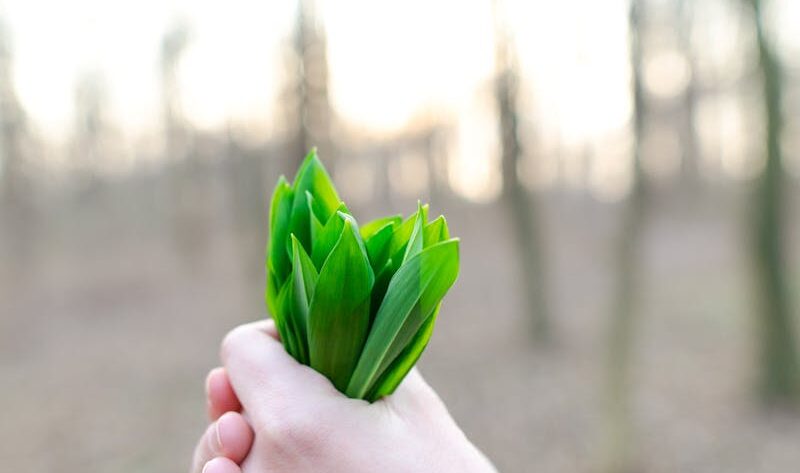
Wild garlic season is one of those fleeting spring moments that makes foraging feel like magic. For a few short weeks between March and May, European woodlands fill with the unmistakable smell of garlic, and if you know where to look, you can fill a bag with bright green leaves that taste incredible in everything from pesto to soup. If you’re vegan, this is your ingredient. No dairy needed, no complicated substitutions. Just fresh leaves, a few pantry staples, and five recipes that turn a free woodland plant into proper meals.
Where exactly does wild garlic grow, and how do you tell it from the poisonous lookalikes? What can you actually make with it beyond pesto? How do you store it so it lasts past the season? And why is it called “bear’s garlic” anyway? We’ve put together 5 easy vegan wild garlic recipes, plus everything you need to know about foraging safely, storing your haul, and getting the most out of this short but brilliant season.
The wild garlic soup is one of the spring soups in our vegan soup recipes by season.
Where to find wild garlic and how to forage safely
Wild garlic (Allium ursinum, also called ramsons or bear’s garlic) grows in damp, shady woodlands across Europe. You’ll find it under deciduous trees like oak, beech and ash, along riverbanks, and in hedgerows. It grows across the UK, Ireland, most of Central Europe, Scandinavia, and as far south as northern Spain. In the Czech Republic (where we’re based), popular foraging spots include the valleys around Prague, South Bohemia, and the Moravian Karst.
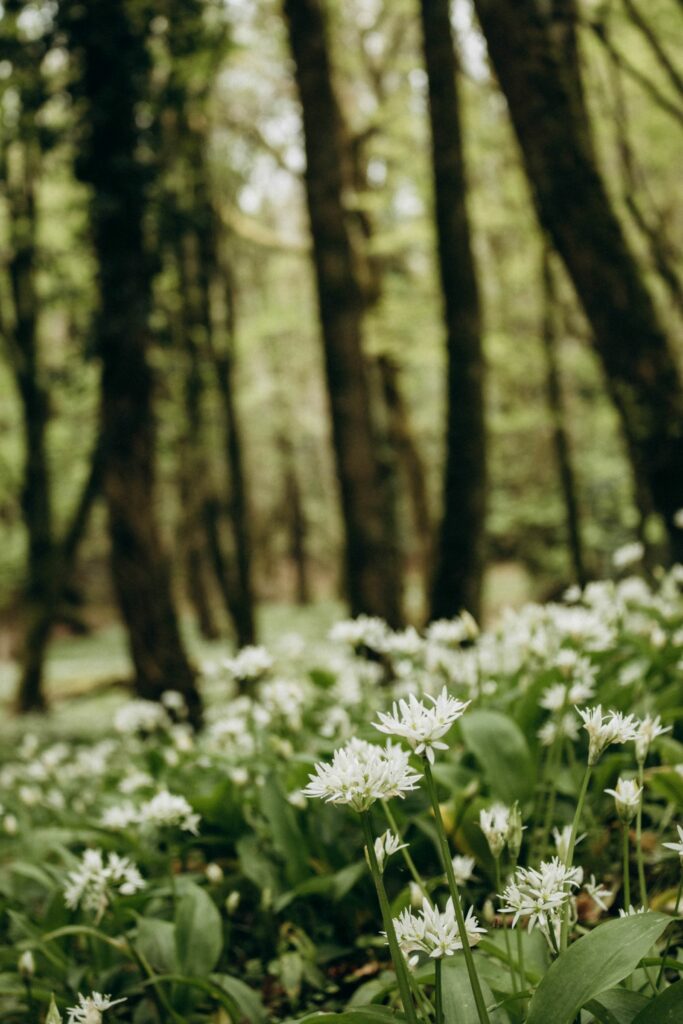
The season typically runs from early March to late May, depending on your location and the weather. The leaves are at their best in April, before the plant flowers. Once the white, star-shaped flowers appear, the leaves become tougher and more pungent. Don’t wait around, the window is only 4 to 6 weeks.
How to tell wild garlic from poisonous lookalikes
This is the most important section of this entire article. Wild garlic can be confused with lily of the valley (toxic) and autumn crocus (potentially fatal). Both grow in similar habitats and their leaves look surprisingly similar at first glance. Poisonings happen every year across Europe.
The smell test is the most reliable identifier. Gently rub a leaf between your fingers. Wild garlic releases a strong, unmistakable garlic scent. Lily of the valley has no garlic smell at all. Never rely on appearance alone. One important warning: if you’ve already been handling wild garlic, your fingers will already smell of garlic, which makes the test unreliable. Wipe your hands on grass before testing each new plant.
| Feature | Wild garlic | Lily of the valley | Autumn crocus |
|---|---|---|---|
| Smell when rubbed | Strong garlic scent | No garlic scent | No garlic scent |
| Leaf growth | Single leaves, each on its own stem | Two leaves from one stem | Multiple leaves from one point |
| Leaf texture | Soft, matte | Firmer, glossy | Firmer, glossy |
| Underside of leaf | Matte, lighter green | Shiny | Shiny |
| Toxicity | Safe to eat | Toxic | Potentially fatal |
If you’re not 100% certain, leave it. No recipe is worth a poisoning. If you’re new to foraging, consider joining an organised walk. Botanical gardens, conservation charities, and foraging groups run them throughout spring across the UK and Europe.
Why wild garlic is so good for you
Wild garlic isn’t just tasty, it’s one of the most nutrient-dense spring greens you can find. It contains allicin (the same compound found in regular garlic), which has strong antibacterial and antiviral properties. Unlike regular garlic, though, wild garlic is milder on the stomach and won’t leave you with garlic breath for hours.
| Nutrient (per 100 g fresh leaves) | Amount | Why it matters for vegans |
|---|---|---|
| Vitamin C | 150 mg | Triple the daily recommended intake |
| Iron | 2.9 mg | One of the harder nutrients to get on a plant-based diet |
| Calcium | 76 mg | Supports bones and teeth |
| Magnesium | 22 mg | Supports muscles and nervous system |
| Allicin | High content | Antibacterial, antiviral, lowers cholesterol |
For vegans, the iron and vitamin C combination is especially valuable, because vitamin C helps your body absorb plant-based iron more effectively. Wild garlic also supports digestion, helps with bloating, and stimulates liver function. It’s basically a free, foraged multivitamin that tastes amazing.
How to store wild garlic so it lasts
Fresh leaves keep in the fridge for 4 to 5 days, wrapped in a damp paper towel inside a loose bag. But the season is short and you’ll want wild garlic in June and July too. Here’s how to make it last.
Freezing fresh leaves: Wash and dry the leaves, chop them roughly, spread on a lined baking tray and freeze flat. Once frozen, transfer to a zip-lock bag. They’ll last 3 to 6 months and work well in soups and sauces.
Pesto (the best preservation method): Make pesto using the recipe below and freeze it in ice cube trays. Pop out the frozen cubes and store in a bag. You’ll have portion-sized pesto for the entire summer.
Wild garlic oil: Finely chop the leaves, cover with good olive oil, and leave in the fridge for 2 to 3 days. Strain and use on salads and pasta. Keeps for about 2 weeks in the fridge.
1. Wild garlic pesto (5 minutes, no cooking)
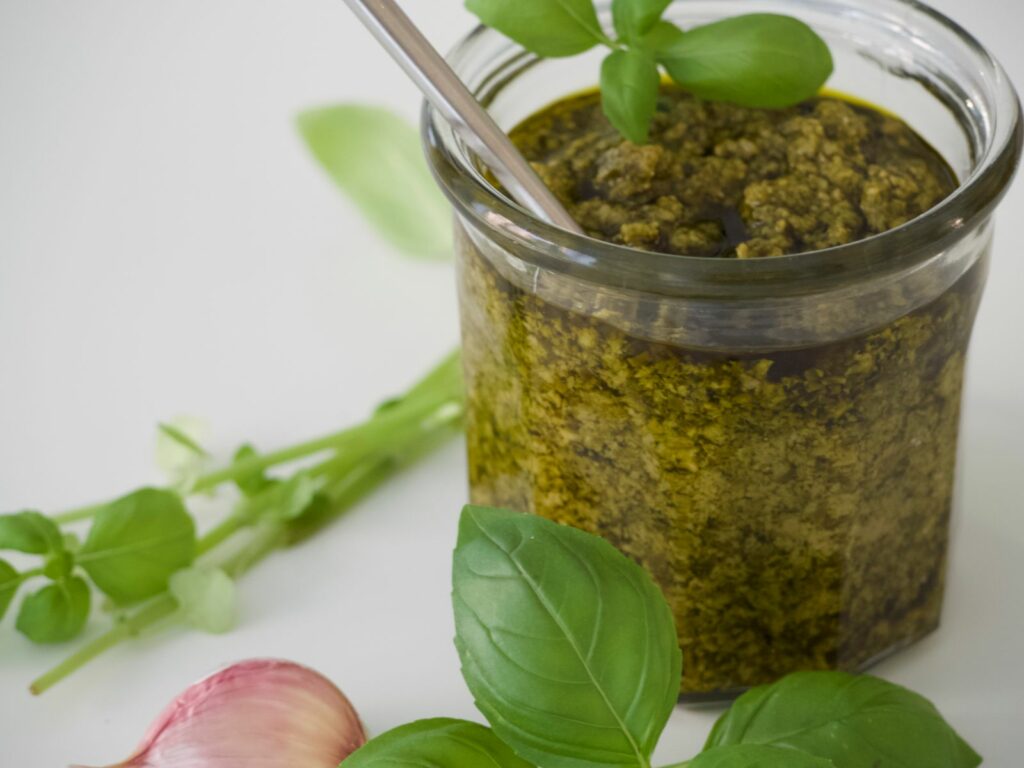
The absolute classic. If you do nothing else with your wild garlic haul, make pesto. It takes 5 minutes, requires no cooking, and the flavour is completely different from regular basil pesto. More intense, slightly peppery, with a bold garlic character that works on pasta, bread, pizza, roasted vegetables, stirred into soup, or eaten straight from the jar with a spoon.
Ingredients
100 g wild garlic leaves (about 2 large handfuls), 50 g walnuts (or cashews, almonds, or pine nuts), 80 ml good olive oil, 2 tablespoons nutritional yeast (replaces parmesan), juice of half a lemon, salt to taste.
Method
Wash and thoroughly dry the wild garlic (important, or the pesto will be watery). Add to a food processor or tall jug with the walnuts, nutritional yeast, and lemon juice. Add about half the olive oil and start blending. Gradually pour in the rest of the oil until you reach the consistency you like. Some people prefer it smooth, others chunky. Season with salt.
Transfer to a clean jar and top with a thin layer of olive oil. Stored this way, the pesto keeps in the fridge for up to 2 weeks. Frozen in ice cube trays, it lasts 3 to 6 months.
| Pesto variation | What to change | Result |
|---|---|---|
| Nut-free (allergies) | Replace nuts with sunflower or pumpkin seeds | Lighter, milder flavour |
| Extra creamy | Add 2 tablespoons soaked cashews | Thicker, silkier texture |
| Spicy | Add dried chilli flakes or fresh chilli | Pesto with a proper kick |
| With rocket | Replace half the wild garlic with rocket | Milder, peppery flavour |
2. Creamy wild garlic soup (25 minutes)
This soup tastes rich and creamy despite having no cream in it at all. Potatoes give it natural body and the wild garlic adds that fresh, spring-green flavour that you simply cannot replicate with regular garlic. It’s one of those meals that fills your kitchen with the most incredible smell and makes you genuinely look forward to soup season.
Ingredients (serves 4)
200 g wild garlic, 3 medium potatoes (about 400 g), 1 onion, 2 cloves of garlic, 800 ml vegetable stock, 200 ml plant-based cream (oat or soy work best), 2 tablespoons olive oil, salt, pepper, pinch of nutmeg.
Method
Heat olive oil in a large pot and sauté the chopped onion until translucent (about 3 minutes). Add crushed garlic and stir for 30 seconds. Add the chopped potatoes and pour in the stock. Cover and simmer for about 15 minutes until the potatoes are soft.
Meanwhile, wash and roughly chop the wild garlic. When the potatoes are tender, add the wild garlic and plant cream. Cook for just 2 more minutes (any longer and the wild garlic loses its colour and flavour). Blend until smooth with a stick blender. Season with salt, pepper, and a pinch of nutmeg.
Serve with toasted bread, a drizzle of olive oil, and a spoonful of wild garlic pesto on top. If you made the pesto from recipe number one, this is the perfect way to use it.
3. Wild garlic pasta with creamy cashew sauce (20 minutes)
A quick lunch or dinner for those days when you don’t have much time but want something that tastes like it came from a proper Italian kitchen. Ready in 20 minutes, needs only a handful of ingredients, and the cashew sauce creates a silky, creamy texture without any dairy.
Ingredients (serves 2)
200 g pasta (linguine, spaghetti, or penne), 80 g wild garlic, 80 g cashews (soaked for at least 2 hours, or 15 minutes in boiling water), 150 ml water, 2 tablespoons nutritional yeast, 1 tablespoon lemon juice, 2 cloves of garlic, 1 tablespoon olive oil, salt and pepper.
Method
Cook the pasta according to packet instructions (save a mugful of the cooking water). Meanwhile, blend the soaked cashews with 150 ml water, nutritional yeast, and lemon juice until completely smooth.
Heat olive oil in a pan and briefly sauté the crushed garlic (30 seconds, don’t let it brown). Add the roughly chopped wild garlic and stir for 1 minute until the leaves start to wilt. Pour in the cashew sauce and stir through. If it’s too thick, add a splash of pasta water.
Toss in the cooked pasta, mix well, and serve immediately. Top with nutritional yeast or toasted walnuts. If you’re a fan of our vegan spaghetti carbonara, think of this as its spring cousin.
4. Wild garlic bread (homemade, yeasted)
Homemade bread with wild garlic running through it is something you’ll never find in a shop. The green leaves thread through the entire loaf, giving it a gentle garlic flavour and beautiful colour on the cut. It works brilliantly alongside soup, as a snack with spread, or simply with a bit of plant butter.
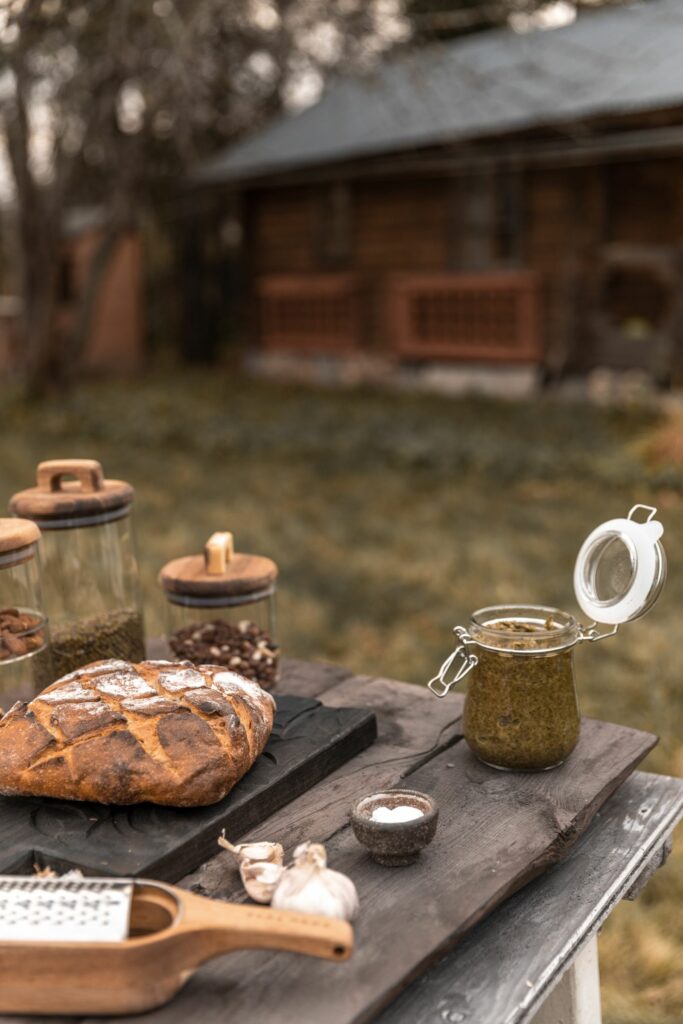
This recipe is based on a simple yeasted bread with wild garlic mixed through the dough. If you’ve tried our vegan homemade bread before, think of this as the spring edition.
Ingredients
400 g plain flour (or a mix of plain and wholemeal), 200 g wild garlic, 7 g dried yeast (or 20 g fresh), 280 ml lukewarm water, 2 tablespoons olive oil, 1 teaspoon salt, 1 teaspoon sugar.
Method
Mix the flour, yeast, salt, and sugar. Add the lukewarm water and olive oil. Knead for 8 to 10 minutes (by hand or in a stand mixer) until the dough is smooth and elastic. Wash, dry, and finely chop the wild garlic. Work it into the dough during the last 2 minutes of kneading.
Cover with a tea towel and leave to rise in a warm place for about 1 hour (until doubled in size). Turn out onto a floured surface, gently shape into a loaf, and place on a lined baking tray. Leave to prove for another 30 minutes. Score the top with a sharp knife and brush with olive oil.
Bake at 210°C for 30 to 35 minutes, until golden and the loaf sounds hollow when you tap the bottom. Cool completely on a wire rack. For even more flavour, brush the finished loaf with a mix of olive oil and finely chopped fresh wild garlic.
Prefer flatbread to a loaf? Try our wild garlic naan, which you can make on a pan in about an hour.
Read next
Vegan focaccia with sun-dried tomatoes and olives
Another brilliant homemade bread recipe. Perfect alongside wild garlic soup.
5. Wild garlic and tofu spread (5 minutes)
If you’re Czech (or have spent time in Czech Republic), you know that pomazánka (spread) is a food group of its own. Wild garlic makes one of the best versions. This tofu-based spread is creamy, fresh, and punchy. Perfect on bread, crackers, as a dip for vegetables, or on little open sandwiches for a spring gathering.
Ingredients
100 g wild garlic, 200 g firm tofu (plain), 3 tablespoons plant yoghurt (soy or oat), 1 tablespoon olive oil, 1 tablespoon lemon juice, salt and pepper to taste. Optional: 1 tablespoon nutritional yeast for a cheesier flavour.
Method
Cut the tofu into chunks and add to a blender with the yoghurt, olive oil, and lemon juice. Blend until smooth. Add the washed wild garlic and pulse briefly. Leave some small pieces of leaf for texture. Season with salt, pepper, and nutritional yeast if using.
The spread keeps in the fridge in an airtight container for 3 to 4 days. For a tofu-free version, swap the tofu for cooked white beans (cannellini) or chickpeas. The result is a little different but equally delicious.
If you love spreads, have a look at our chickpea “egg salad” spread too. Both make a brilliant spring lunch spread.
The best things about spring are free. You just need to walk into the woods and look down.
Interesting facts about wild garlic
Why “bear’s garlic”? According to folklore across Europe, bears seek out wild garlic as their first food after hibernation to cleanse their digestive systems and kickstart their metabolism. That’s where the Latin name Allium ursinum comes from (“ursinum” means “of the bear”). The same story exists in German (Bärlauch), Czech (medvědí česnek), and Scandinavian languages.
Three times more vitamin C than oranges. 100 grams of fresh wild garlic leaves contain about 150 mg of vitamin C. Oranges have about 53 mg per 100 grams. Wild garlic also contains iron, which oranges don’t, making it a far more nutritionally complete spring green.
It was considered a magical herb in Celtic and Slavic traditions. Used not only in cooking but also in folk medicine as a remedy against evil spirits and illness. Medieval monasteries collected and cultivated it as both a healing herb and a kitchen spice.
Wild garlic grows across the entire European continent. In Britain it’s called ramsons, in Germany Bärlauch, in France ail des ours. In all these countries, it’s experiencing a renaissance as a “forgotten” ingredient returning to restaurant menus and home kitchens. That’s why you’ll often spot it on spring menus in vegan restaurants across Europe.
All 5 recipes at a glance
Here’s a quick overview so you know what to make first and what lasts longest.
| Recipe | Time | Shelf life | Best for |
|---|---|---|---|
| Pesto | 5 minutes | 2 weeks fridge, 6 months freezer | Pasta, bread, pizza, soup |
| Soup | 25 minutes | 3 days in the fridge | Lunch, light dinner |
| Pasta | 20 minutes | Eat immediately | Quick lunch or dinner |
| Bread | 30 min + 1.5 h rising | 3 days, or freeze | With soup, snacks, breakfast |
| Spread | 5 minutes | 3-4 days in the fridge | On bread, as a dip, on crackers |
Frequently asked questions
When is wild garlic in season?
Wild garlic season runs from early March to late May across most of Europe, with April being the sweet spot. The leaves are best picked before the plant flowers. Once the white star-shaped flowers appear, the leaves become tougher and more bitter. In the UK, peak season is usually late March to mid-May. In Central Europe, it starts slightly earlier.
How do you tell wild garlic from lily of the valley?
The most reliable method is the smell test. Gently rub a leaf between your fingers. Wild garlic releases a strong garlic scent, while lily of the valley has no garlic smell at all. Also check how the leaves grow: wild garlic leaves emerge individually on separate stems, while lily of the valley produces pairs of leaves from a single stem. Wild garlic leaves are softer and matte, while lily of the valley leaves are firmer and shinier.
How long does wild garlic pesto last?
Wild garlic pesto keeps in the fridge for up to 2 weeks when topped with a thin layer of olive oil in a clean jar. For longer storage, freeze it in ice cube trays. Once frozen, transfer the cubes to a freezer bag. Frozen pesto lasts 3 to 6 months and defrosts in minutes.
Can you freeze wild garlic?
Yes. Wash and dry the leaves, chop them roughly, spread flat on a lined baking tray and freeze. Once frozen, transfer to a zip-lock bag. They keep for 3 to 6 months and work well in soups, sauces, and cooked dishes. For the best flavour, freezing as pesto is even better than freezing the leaves alone.
Is wild garlic good for you?
Very. It contains 150 mg of vitamin C per 100 g (three times the daily recommendation), plus iron, calcium, magnesium, and allicin with antibacterial properties. It supports digestion, helps lower blood pressure and cholesterol, and stimulates liver function. For vegans, the iron and vitamin C combination is especially valuable because vitamin C improves plant-based iron absorption.
Where can you forage wild garlic?
Wild garlic grows in damp, shady woodlands across Europe, typically under deciduous trees like oak, beech, and ash. It’s common along riverbanks and in hedgerows. In the UK, the National Trust lists foraging locations on their website. In Central Europe, it grows widely in lowland and foothill forests. Always check local foraging regulations before picking.
Wild garlic is one of those ingredients that makes spring worth waiting for. A short walk in the woods, a handful of bright green leaves, and you’ve got pesto, soup, bread, or a spread that no supermarket can match. The season won’t last long, so grab it while you can. If you’re looking for more spring recipe inspiration, check out our vegan Easter recipes with Czech traditions for more seasonal plant-based cooking. Wild garlic pesto also makes a brilliant marinade for vegan grilling, from tofu to mushrooms to spring asparagus. If you want to use asparagus in a different way, try our creamy vegan asparagus soup. And for hundreds of vegan recipes from Czech creators, browse Vegmania.cz.
Newsletter
Get our free e-books
Join the newsletter and download Our Vegan Christmas Kitchen straight away, 10 recipes for Czech cookies, gingerbread and vánočka. Then once a month, new places from the vegan map and new articles. Unsubscribe with one click.