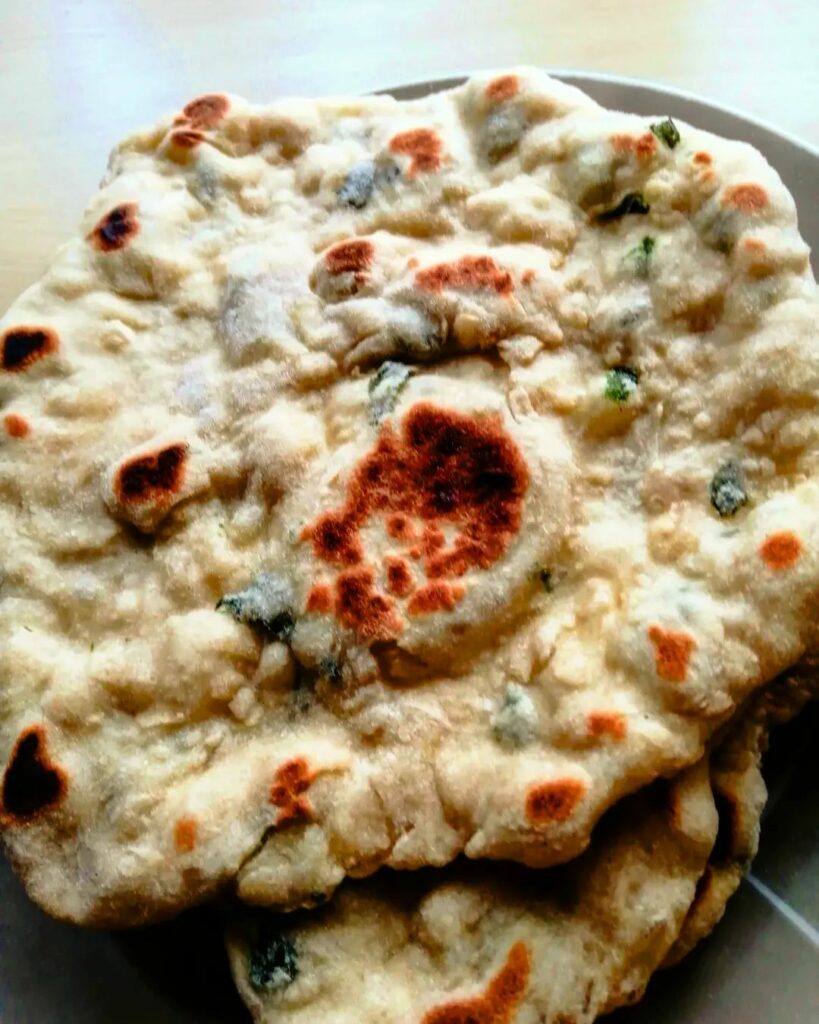
Garlic naan is one of those breads that can transform absolutely any meal into something special. Fragrant, soft, packed with garlic and wild garlic right in the dough. Vegan garlic naan can be made on a pan without an oven, and it tastes like something from an Indian restaurant. All you need is a handful of basic ingredients, some patience while the dough rises, and soon you will have six beautifully puffed, golden flatbreads on the table.
Which flour works best for naan? Can you make it without yeast? And why is naan cooked on a dry pan better than in the oven? We answer all of that, along with tips on variations, nutritional values and the most frequently asked questions about homemade naan bread.
Why you will love this recipe
Homemade naan might sound complicated, but the opposite is true. Here are a few reasons to give it a try.
- Wild garlic in the dough adds a delicate garlicky flavour you will not find in shop-bought naan
- Cooked on a dry pan without oil, quick and the result is beautifully puffed with charred spots
- Only 8 ingredients that you probably already have at home
- Yeast-leavened for a soft and pillowy texture, not flat like a cracker
- Versatile side, perfect alongside curries, soups, hummus or even as a base for mini pizzas
If you have ever wondered whether naan can be made at home on an ordinary pan, the answer is yes, and the result will surprise you.
Interesting facts about naan bread
Naan has its origins in Persia, from where it reached India during the period of the Delhi Sultanate. The word “naan” comes from the Persian word nân, which simply means “bread”. The first written reference to naan on the Indian subcontinent dates back to the 14th century, from the Indo-Persian poet Amir Khusrau, who described two types of naan served to Muslim nobility.
During the Mughal era in the 16th century, naan was considered a delicacy reserved for nobles and the royal family, because preparing leavened bread was demanding and few cooks mastered the art. Traditionally, naan is baked in a tandoor, a beehive-shaped clay oven heated to temperatures around 480 °C. The dough is stuck to the inner wall of the oven and bakes in just a few minutes, giving it those characteristic charred spots and soft centre.
Wild garlic (Allium ursinum), which we use in this recipe, is a plant that grows wild in European forests. Its name comes from the belief that bears eat it to cleanse their digestive system after hibernation. In Central Europe it grows abundantly in floodplain forests and is available at farmers’ markets from March to May. The combination of wild garlic with regular garlic gives the naan a distinctive but not aggressive flavour.
Cooking naan on a dry pan works because the high heat mimics the effect of a tandoor. The dough puffs up quickly thanks to the yeast and steam trapped inside, while the contact with the hot surface creates those typical golden and darker spots. The result is surprisingly close to restaurant-quality naan.
Health benefits of the key ingredients
Naan is primarily a side dish, but the ingredients themselves have something to offer.
Garlic is well known for its antimicrobial and anti-inflammatory properties. It contains allicin, a compound released when garlic is chopped or pressed, which has proven effects on lowering blood pressure and supporting the immune system. The four large cloves in this recipe bring not just flavour but real health benefits.
Wild garlic contains similar active compounds to regular garlic but in a gentler form. It is rich in vitamin C, iron and manganese. In traditional herbal medicine, it was used for blood cleansing and digestive support. Unlike regular garlic, it is easier on the stomach.
Olive oil in the dough gives the naan its soft texture while also providing oleic acid, a monounsaturated fatty acid beneficial for heart health. Extra virgin olive oil also contains polyphenols with antioxidant properties.
Nutritional values
Here are the approximate nutritional values per piece of naan (the recipe makes 6 pieces).
| Nutrient | Amount per serving |
|---|---|
| Calories | ~240 kcal |
| Protein | 6 g |
| Carbohydrates | 42 g |
| Fat | 5 g |
| Fibre | 2 g |
Approximate values per serving. Actual amounts may vary depending on the specific ingredients and quantities used.
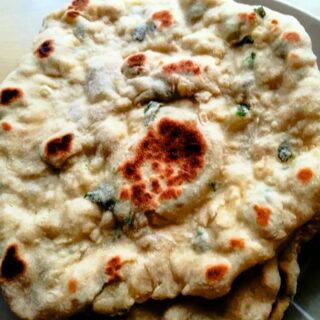
Vegan garlic naan with wild garlic
Ingredients
- 2 tsp Instant dried yeast
- 255 ml Lukewarm water
- 2 tsp Sugar
- 310 g Plain or bread flour
- 1 tsp Salt
- 3 tbsp Olive oil
- 4 Large garlic cloves pressed
- Wild garlic a handful, finely chopped
Instructions
- In a large bowl, combine the flour, salt, sugar and yeast. Add the olive oil, pressed garlic and wild garlic chopped into small pieces. Mix well and add enough lukewarm water to form a slightly sticky dough.
- Knead the dough in the bowl until it forms a smooth ball.
- Cover the bowl with a clean tea towel and leave to rise in a warm place for at least one hour.
- After an hour, lightly flour your work surface, turn out the dough and divide into 6 equal pieces. Roll each piece into a small ball, then use a rolling pin to flatten into a round or oval shape.
- Cook on a dry pan (no oil) for 2 to 3 minutes on each side. Serve with hummus or use as a side dish.
Tips and variations for vegan garlic naan
The basic garlic naan is wonderful, but here are a few ideas for mixing things up.
- No wild garlic? Outside of the season, replace it with fresh flat-leaf parsley, coriander or chives. The flavour will be different but still excellent.
- Garlic butter topping: After cooking, brush the naan with a mixture of melted vegan butter and pressed garlic. It adds an extra layer of flavour.
- Stuffed naan: Before sealing the dough, add a spoonful of vegan cheese or a spinach mixture inside and press the edges closed.
- No yeast: Replace the yeast with 1.5 teaspoons of baking powder and skip the rising time. The naan will be slightly flatter but still tasty.
- Storage: Wrap the finished naan in a tea towel and then in a bag. It keeps at room temperature for 2 days, in the fridge for 5 days. Reheat on a dry pan or in the oven.
If you have a grill or a cast-iron pan at home, try cooking the naan on those. The higher heat gives even more pronounced charring and puffiness.
What to serve it with
Naan is a versatile side that pairs with countless dishes, from Indian curries to simple dips and spreads.
The classic combination is with any curry, hummus or dhal soup. It also works brilliantly as a side for soups or as a base for mini pizzas. If you are looking for more homemade flatbreads, try our classic vegan naan or homemade pita bread. And if you want something to dip the naan into, give our avocado hummus a try.
Frequently asked questions
What flour should I use for naan?
Plain white flour (type 00 or all-purpose) or bread flour works best. Bread flour has more gluten, which makes the naan softer and chewier. Wholemeal flour also works but the naan will be denser and puff up less. You can mix half white and half wholemeal for a balance between flavour and nutrition.
Can I make naan without yeast?
Yes, you can replace the yeast with 1.5 teaspoons of baking powder. Yeast-free naan does not require rising time, so it is quicker to prepare, but it will be slightly flatter and less airy. For the best yeast-free result, add 2 tablespoons of plant-based yogurt, which helps the dough puff up.
Why is naan cooked on a dry pan?
A dry pan mimics the effect of a tandoor oven, using high direct heat without oil. This causes the dough to puff up quickly and develop those characteristic charred spots. If you added oil, the dough would fry rather than bake, resulting in a completely different texture.
Can you freeze naan bread?
Yes, naan freezes very well. Let the pieces cool, place baking paper between them and store in a freezer bag. They keep in the freezer for up to 2 months. Reheat directly from frozen on a dry pan for 1 to 2 minutes per side, or in the oven at 180 °C for 5 minutes.
What can I use instead of wild garlic?
Wild garlic is seasonal (March to May), so outside the season replace it with fresh parsley, coriander or chives. For a more intense garlicky flavour, add an extra clove of regular garlic. You can also use dried wild garlic, but fresh has a much more aromatic flavour.
Vegan garlic naan with wild garlic proves that brilliant Indian bread can be made at home on an ordinary pan. Fragrant, soft and packed with garlic. If you enjoy homemade bread, also try our homemade tortillas or garlic bread. Let us know whether you tried the wild garlic version!
Newsletter
Get our free e-books
Join the newsletter and download Our Vegan Christmas Kitchen straight away, 10 recipes for Czech cookies, gingerbread and vánočka. Then once a month, new places from the vegan map and new articles. Unsubscribe with one click.