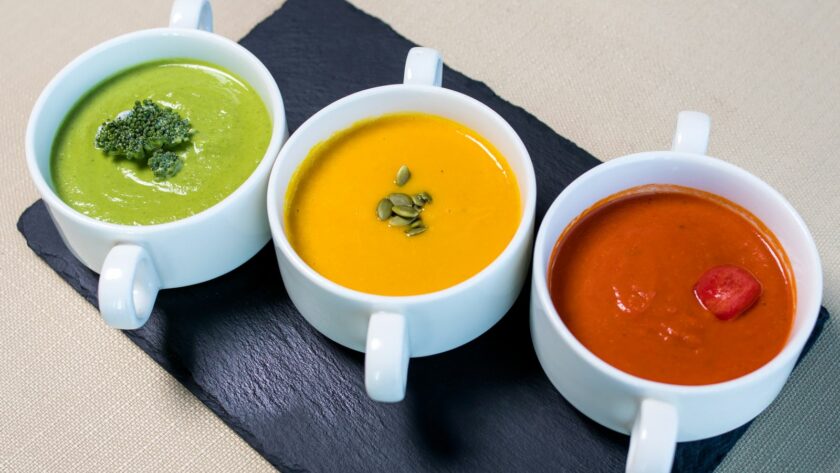
These are the vegan soup recipes we actually cook on repeat, from the first foggy October morning until the wild garlic comes up in spring. A big pot on Sunday means lunches sorted for half the week, and when it turns out right, nobody at the table misses the meat, the cream or the butter. So we’ve gathered all nine soups from our blog in one place, each one tested, with exact ingredients and nutrition.
Which vegan soup will actually keep you full until dinner? Can a creamy soup work without dairy? What do two Czech classics, potato soup and sauerkraut soup, taste like without the meat? Which soups freeze for three months and which are best eaten fresh? And is the miso soup at your local Japanese place really vegan? We answer all of it below, soup by soup.
The list is grouped by what you’re in the mood for. Czech classics first, then the high-protein soups, then the creamy and spring ones. At the end there’s a seasonal table and the tricks that make a vegetable broth taste as rich as a meat one.
Our 9 vegan soup recipes at a glance
This table compares all nine vegan soup recipes on our blog by cooking time, protein per serving and how long they keep. The figures come straight from each recipe and are per serving.
| Soup | Time | Protein per serving | Fridge | Freezer |
|---|---|---|---|---|
| Bramboračka (Czech potato soup) | 30 minutes | 6 g | 3 to 4 days | 2 to 3 months |
| Zelňačka (Czech sauerkraut soup) | 30 minutes | 13 g | up to 4 days | up to 3 months |
| Creamy red lentil with baked tofu | under 40 minutes | 15 g (23 g with tofu) | 3 to 4 days | up to 3 months |
| Lentil with oyster mushrooms | about 30 minutes | 9 g | 4 to 5 days | up to 3 months |
| Chickpea curry soup | 30 minutes | 9 g | 4 to 5 days | 2 to 3 months |
| Miso ramen with tofu | under an hour | 18 g | broth 3 to 4 days | broth 2 months |
| Roasted sweet potato and carrot | roasting + simmering | 11 g | 4 to 5 days | 2 to 3 months |
| Asparagus | 30 minutes | 5 g | 2 to 3 days | not ideal |
| Creamy wild garlic | about 25 minutes | not listed | not listed | not listed |
Czech classics: vegan soup recipes from our grandmothers’ kitchens
Bramboračka and zelňačka are two Czech soups that switch to plant-based without losing anything. Traditionally they’re made with meat stock, bacon or cream, but their real character comes from mushrooms, sauerkraut, garlic and spices. If you’ve never eaten Czech food, these two are the easiest way in.
Bramboračka and zelňačka belong to a bigger family of Czech classics. Svíčková, buchty, vánočka and more are in our vegan Czech food roundup.
1. Vegan bramboračka (Czech potato soup)
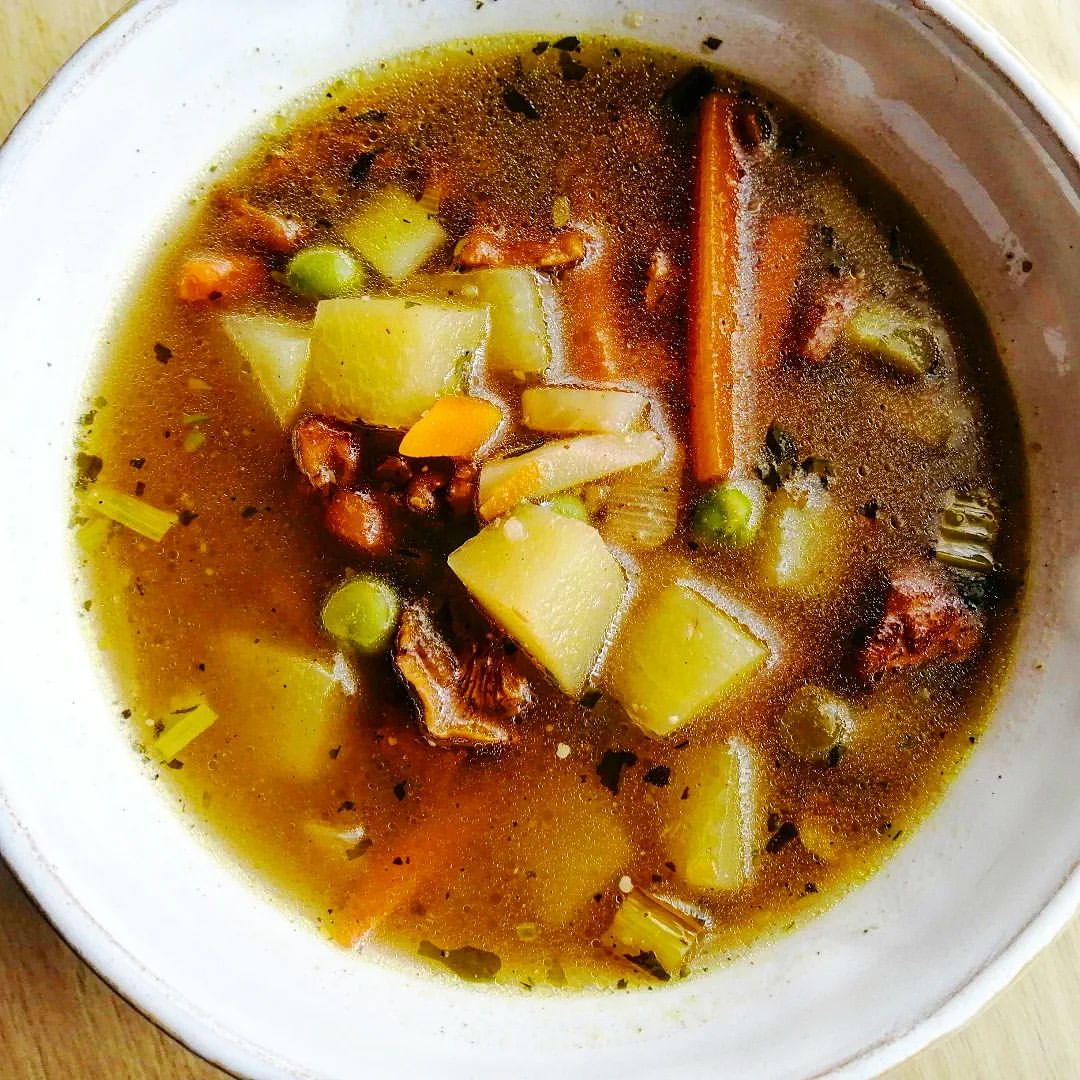
Vegan bramboračka is ready in 30 minutes and thickens itself, with no roux and no cream. The potatoes partly break down as they cook and turn the broth creamy. Mushrooms (button, oyster or dried porcini) give it depth, along with carrot, peas, leek and garlic.
And marjoram. Without it, it isn’t Czech bramboračka.
One serving has around 180 kcal and 6 g of protein. It keeps for 3 to 4 days in the fridge and freezes for 2 to 3 months, although the potatoes soften a little after thawing. The full method is in our vegan bramboračka recipe.
2. Vegan zelňačka (Czech sauerkraut soup) with smoked tofu
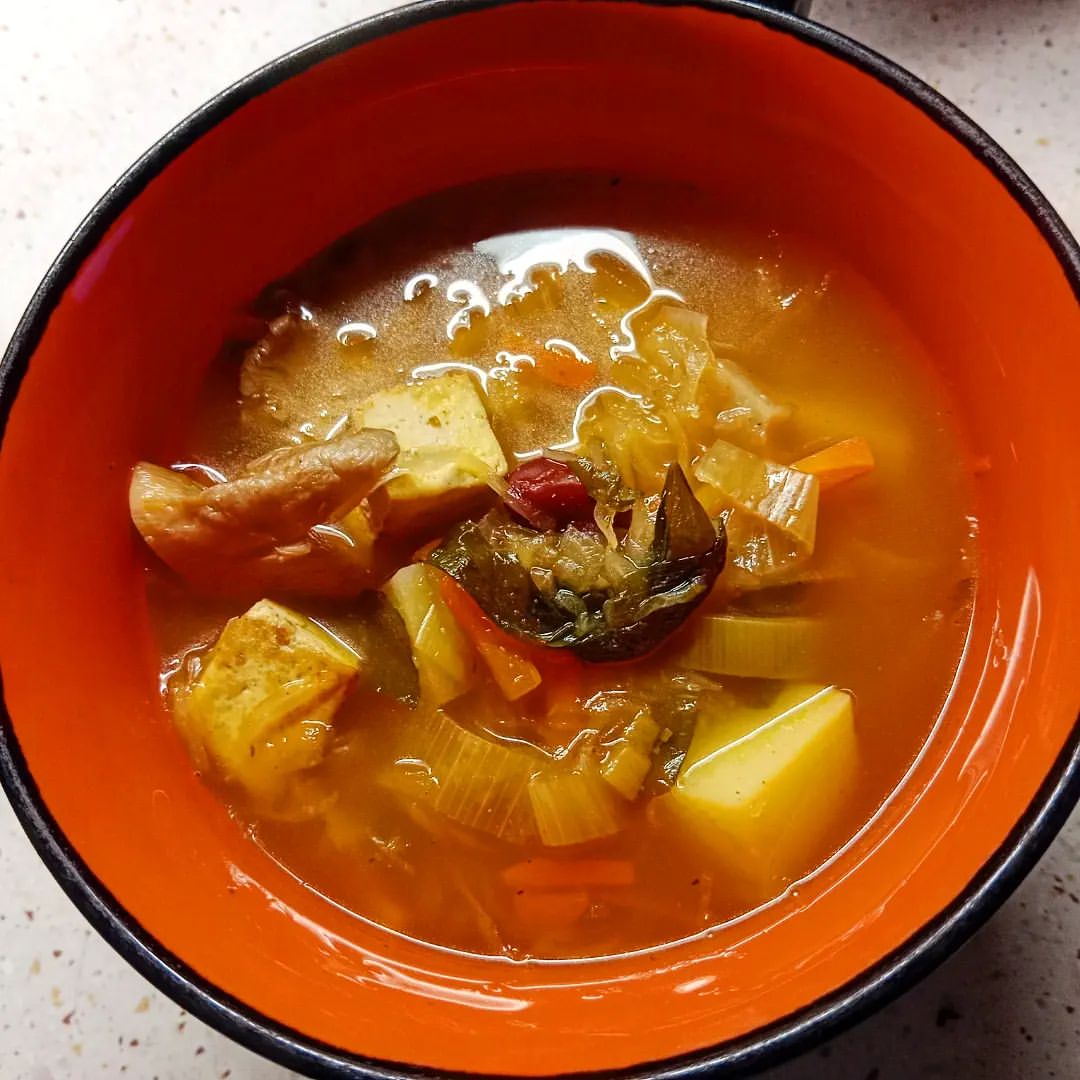
Vegan zelňačka is the most filling of the Czech classics here, with 13 g of protein per serving. The smoky flavour you’d expect from bacon comes from smoked tofu and smoked paprika. Sauerkraut brings the sourness, oyster mushrooms the texture, and red kidney beans and potatoes make it hearty.
It’s ready in 30 minutes, keeps for up to 4 days in the fridge and freezes well in portions. Use a gluten-free stock cube and gluten-free soy sauce and it’s naturally gluten-free. Get the method in our vegan sauerkraut soup recipe, and if you fancy another Czech classic without meat, try our vegan svíčková.
Tip for non-vegans: Cooking for a family that’s used to meaty soups? Start with zelňačka. Smoked tofu and smoked paprika give it the same strong, smoky flavour as the bacon version, so it doesn’t feel like anything is missing.
High-protein vegan soup recipes
The highest-protein vegan soup on our blog is the creamy red lentil soup with baked tofu, at around 23 g per serving. Without extra toppings, the miso ramen leads with 18 g, tofu included. Both work as a full meal. The protein comes from lentils, chickpeas and tofu, all of which you’ll find in any supermarket.
3. Creamy red lentil soup with crispy baked tofu
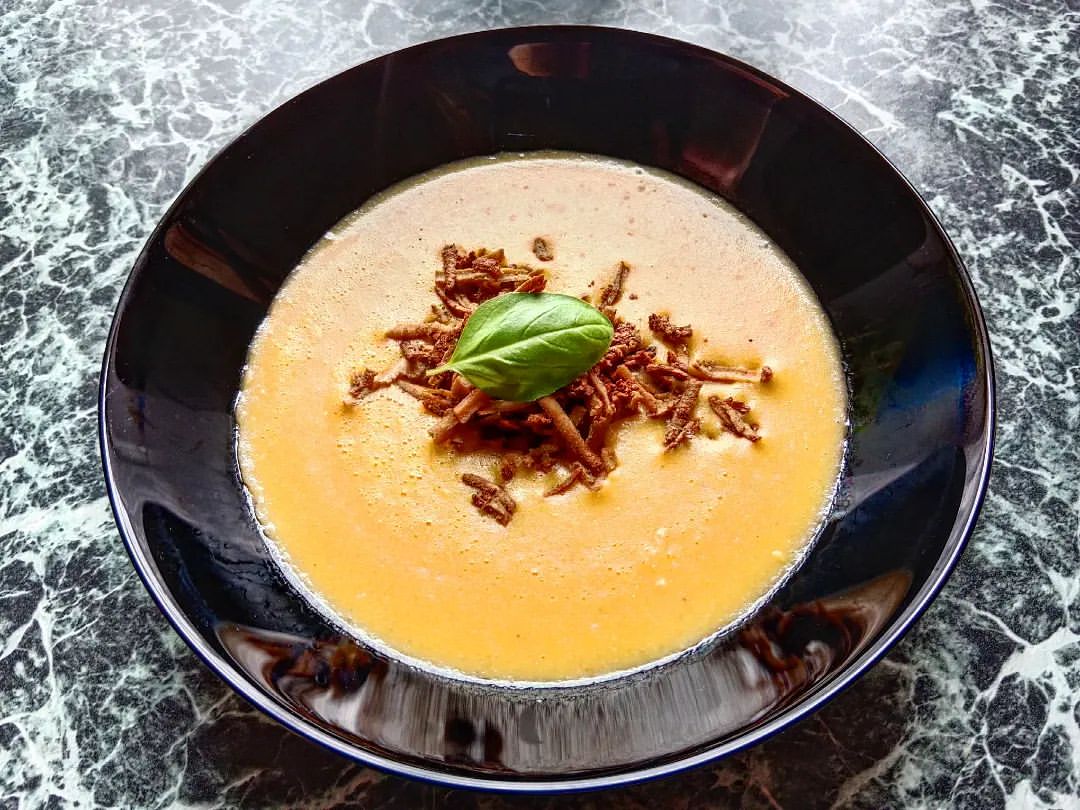
Creamy red lentil soup takes under 40 minutes and doesn’t need a drop of cream. Red lentils collapse as they cook and blend into a silky soup. Unlike beans or chickpeas, they don’t need soaking. Carrots, tomato, leek and a little rice go in too.
A serving has around 280 kcal and 15 g of protein. The baked tofu on top adds roughly 80 kcal and 8 g of protein, plus a proper crunch. It keeps for 3 to 4 days in the fridge and up to 3 months in the freezer. Find it in our creamy red lentil soup with baked tofu.
4. Lentil soup with oyster mushrooms
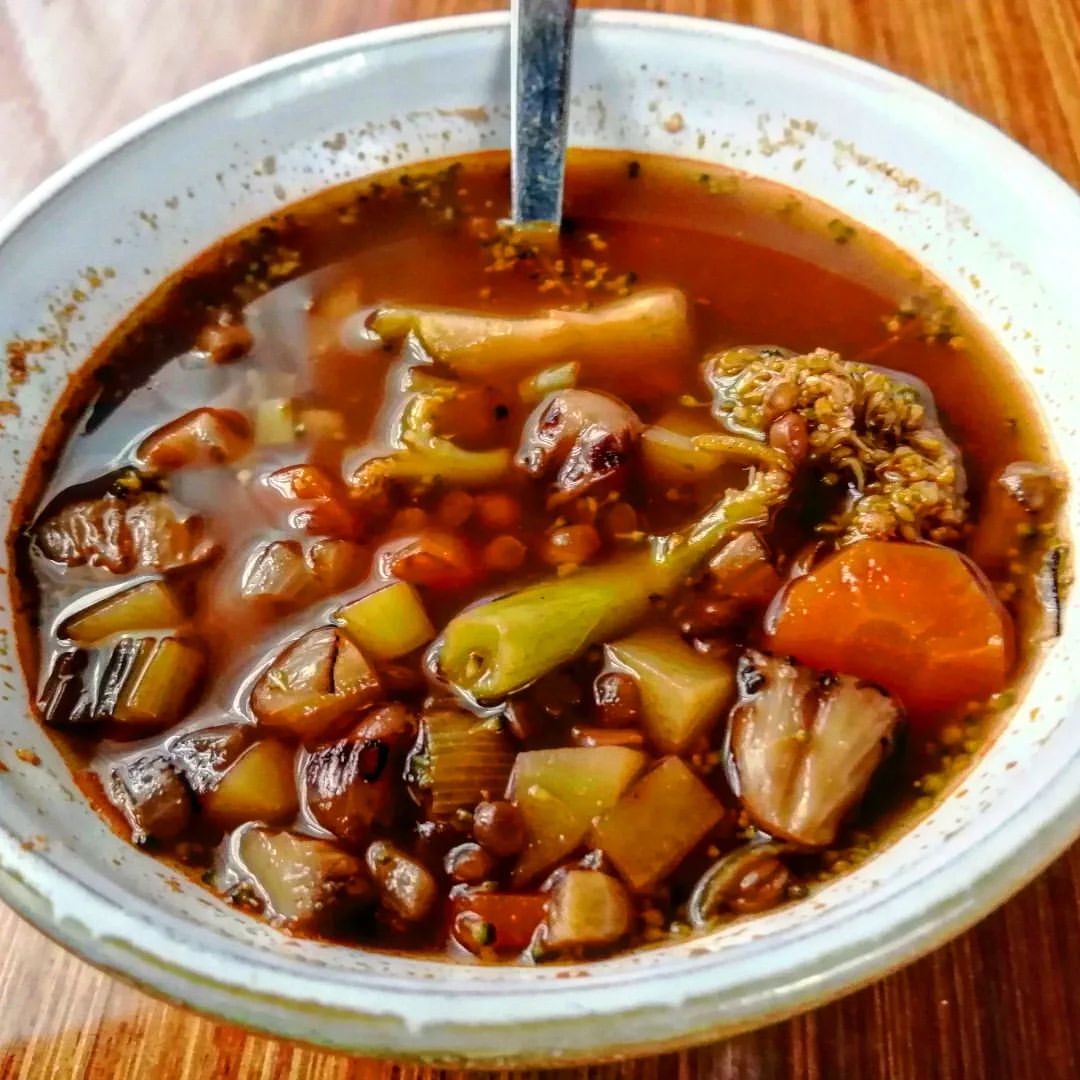
Lentil soup with oyster mushrooms is the quicker, chunkier cousin of the creamy one. It uses tinned lentils, so it’s ready in about half an hour, and the vegetables stay in pieces. Oyster mushrooms, broccoli and potato make it thick, while smoked paprika and soy sauce give it a bold flavour.
A serving has around 160 kcal, 9 g of protein and 6 g of fibre. It keeps for 4 to 5 days in the fridge and up to 3 months in the freezer, which makes it ideal for meal prep. Here’s our lentil soup with oyster mushrooms.
5. Chickpea curry soup with vegetables
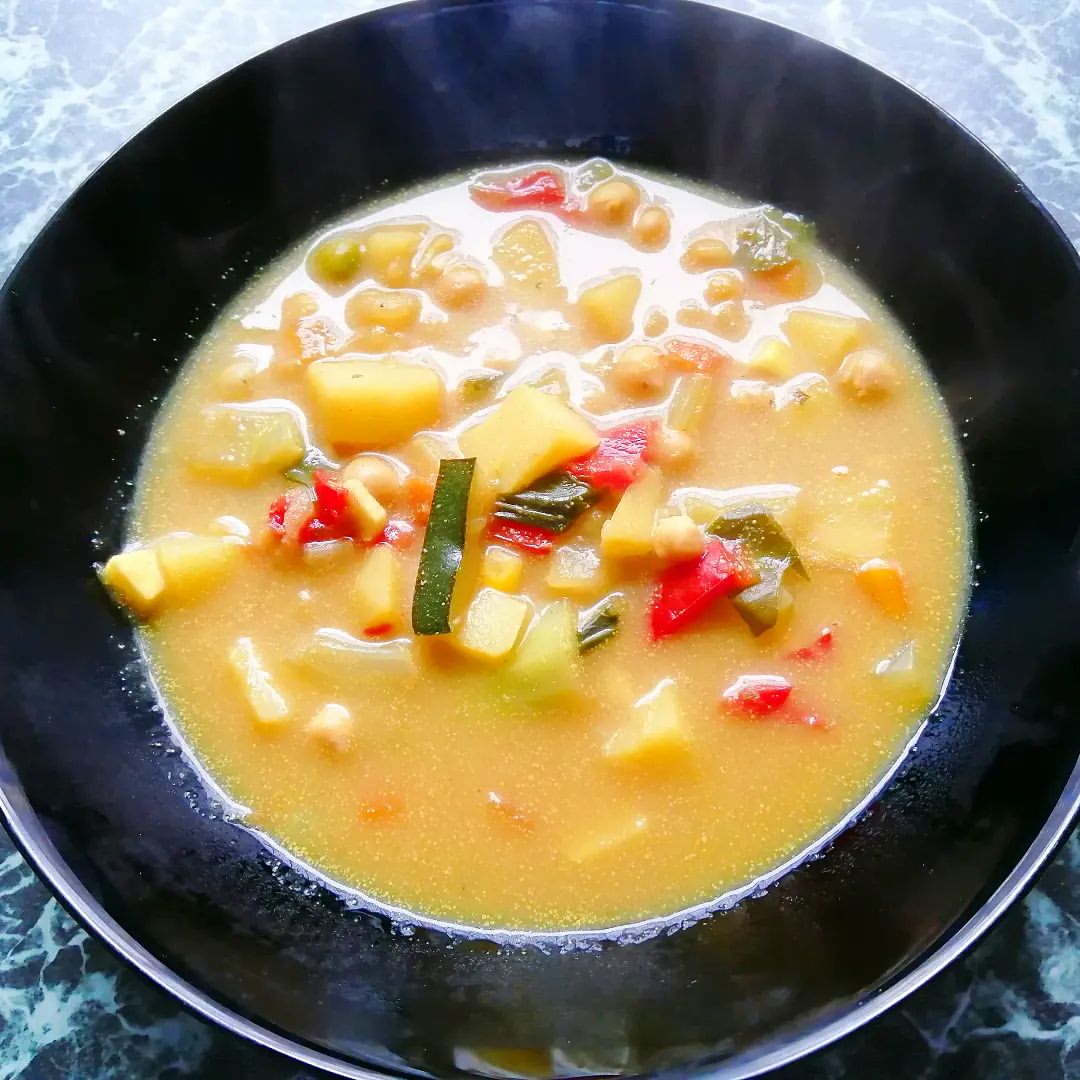
Chickpea curry soup is ready in 30 minutes and warms you up better than a jumper. The base is curry paste, fresh ginger and garlic. A tin of chickpeas goes in with potatoes, carrot, pepper and peas, and 100 ml of plant milk (not coconut milk) makes it creamy.
A serving has around 220 kcal, 9 g of protein and 7 g of fibre. It keeps for 4 to 5 days in the fridge and freezes for 2 to 3 months. Get the recipe for our vegan chickpea curry soup. Three more curries are in our vegan curry recipes roundup.
6. Vegan miso ramen with crispy tofu
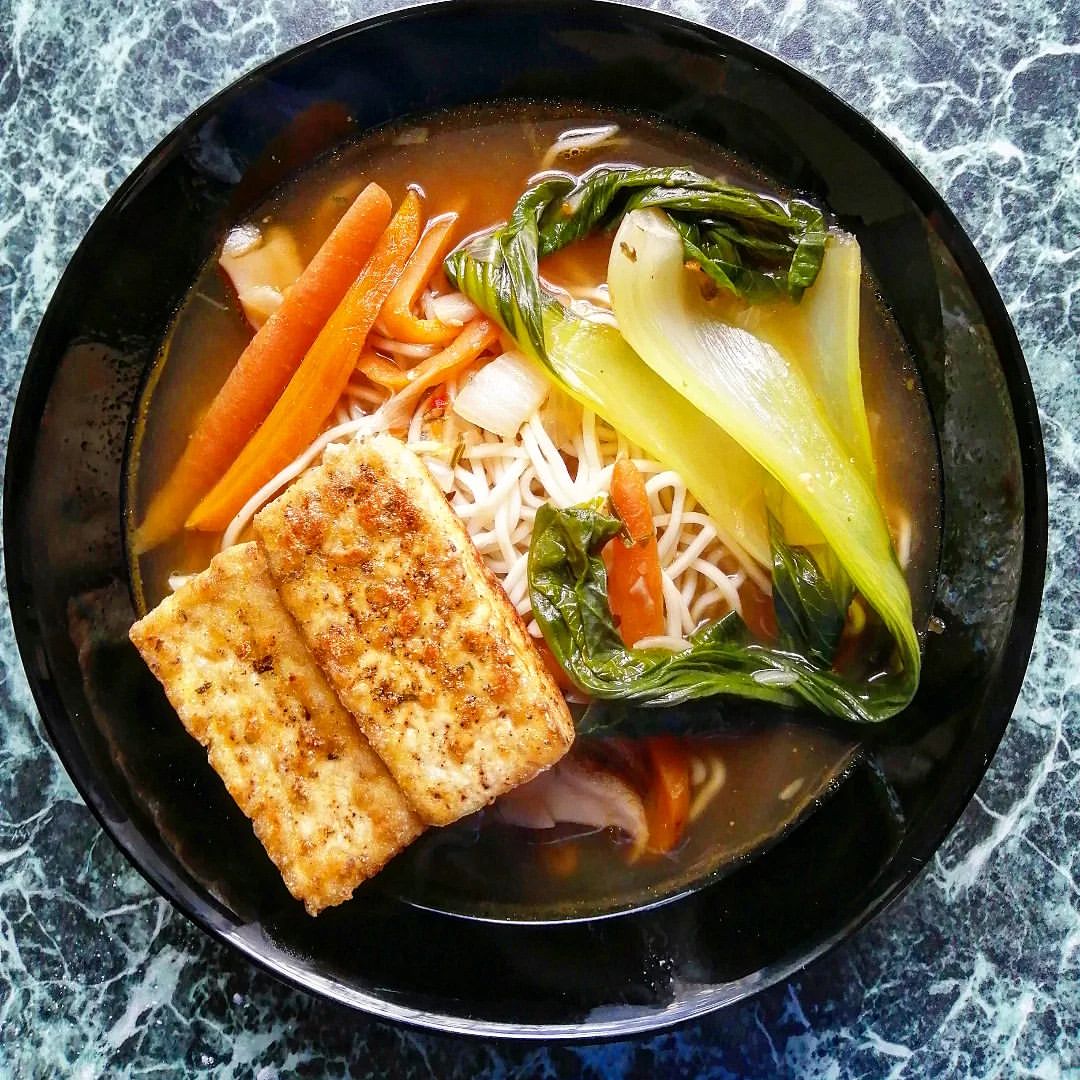
Vegan miso ramen is a whole meal in one bowl, with 18 g of protein and around 380 kcal per serving (tofu included). The broth is built on miso, soy sauce, sesame oil and shiitake mushrooms, which need at least an hour of soaking. Tofu is coated in cornflour, pan-fried until crisp and served with carrot and pak choi.
Add the miso at the very end so it keeps its flavour and live cultures. Check the noodle packet for egg.
Store the broth separately from the noodles, or they’ll soak up every drop. The broth keeps for 3 to 4 days in the fridge and freezes for up to 2 months. The full method is in our homemade vegan miso ramen.
Protein tip: Turn any creamy soup into a main meal by topping it with cubes of baked tofu or a handful of roasted chickpeas. There are more ideas in our best tofu recipes and an overview in 7 best plant-based protein sources.
Creamy vegan soup recipes without dairy
A creamy vegan soup doesn’t need dairy cream. Potatoes, roasted vegetables, red lentils or a splash of soy or oat cream give it a velvety texture. These three are the gentlest soups on the list, and they go down well with people who have never thought about eating vegan.
7. Roasted sweet potato and carrot soup
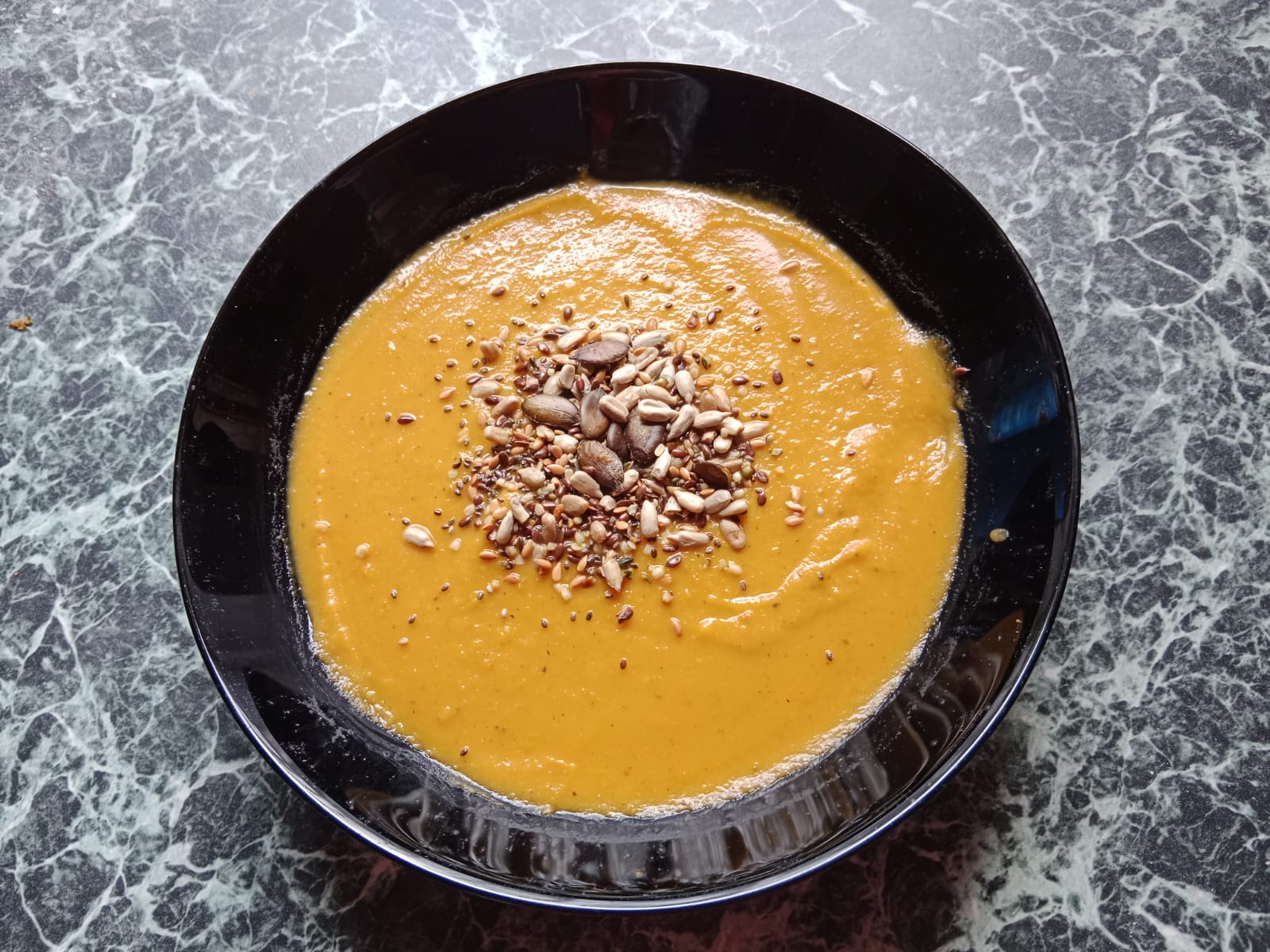
Roasted sweet potato and carrot soup differs from the others in one step. The vegetables are roasted at 225 °C first, then blended with stock and 200 ml of soy cream. Roasting caramelises the sugars in the sweet potato and carrots, so the soup tastes deeper and slightly nutty.
The recipe (800 g of sweet potato and 4 carrots) makes 4 generous servings, each with around 11 g of protein and 12 g of fibre. It’s naturally gluten-free, keeps for 4 to 5 days in the fridge and freezes for 2 to 3 months. Here’s our roasted sweet potato and carrot soup.
8. Vegan asparagus soup
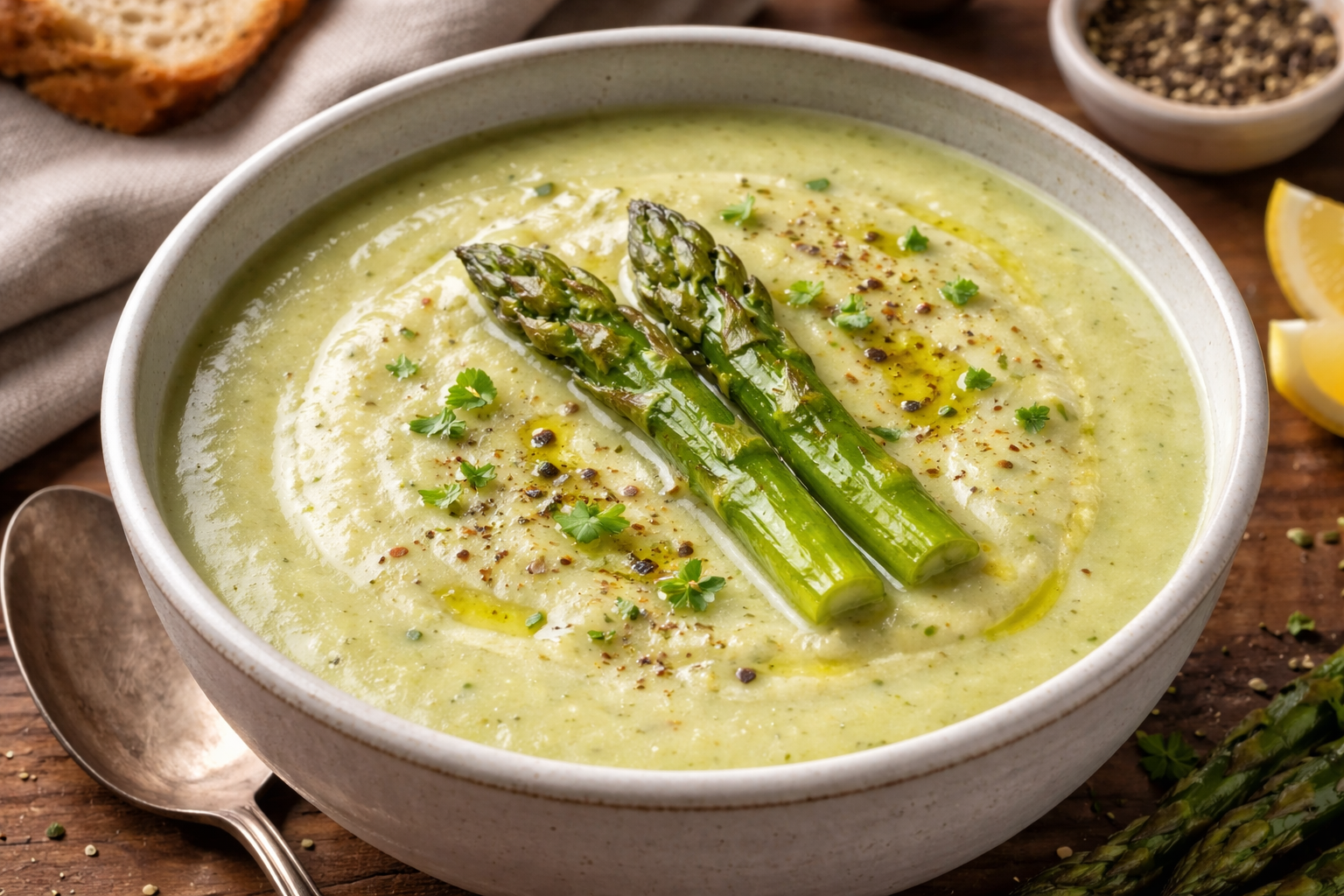
Vegan asparagus soup is a 30-minute spring soup made with ten asparagus spears, potatoes and 200 ml of soy cream. It works with white or green asparagus. Asparagus season starts around mid-April and, by old Central European tradition, ends on St John’s Day, 24 June, so save this one for spring.
A serving has around 185 kcal and 5 g of protein. It keeps for 2 to 3 days in the fridge, but we don’t recommend freezing it, because creamy soups tend to split once thawed. The recipe is in our creamy vegan asparagus soup.
9. Creamy wild garlic soup
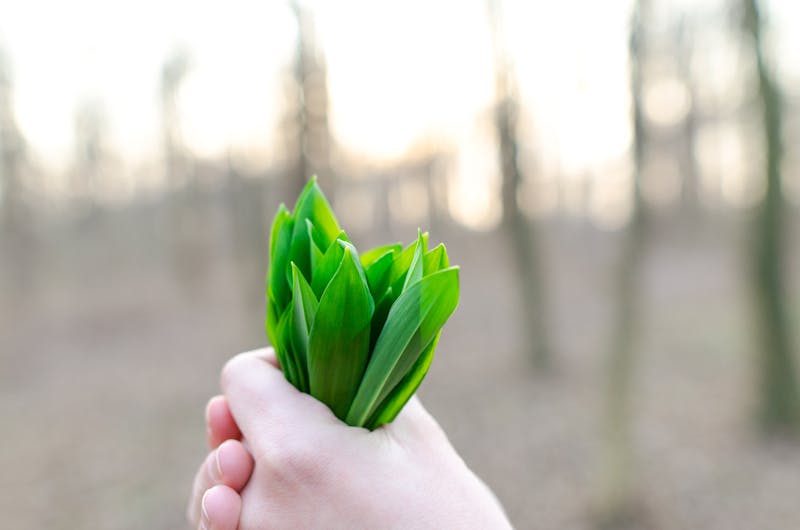
Wild garlic soup tastes like a cream soup even though potatoes do most of the work. For 4 servings you need 200 g of wild garlic leaves, 3 potatoes, 800 ml of stock and 200 ml of plant-based cream. It cooks in about 25 minutes, and the wild garlic only goes in for the last 2 minutes so it keeps its colour and aroma.
Wild garlic season starts in March and lasts just 4 to 6 weeks. Be careful not to confuse it with poisonous lily of the valley or autumn crocus. The reliable test is the garlic smell of a crushed leaf. The soup and a safe foraging guide are both in our 5 vegan wild garlic recipes.
A good soup doesn’t depend on meat. It depends on what goes into the pot first: softened onion, mushrooms, smoked paprika and a bit of patience.
Which vegan soup to make in which season
The best vegan soup is the one that suits the season. In autumn and winter, cook hearty soups with pulses, potatoes and sauerkraut. In spring, go lighter with asparagus and wild garlic.
| Season | Soups | Why now |
|---|---|---|
| March to April | Creamy wild garlic | Wild garlic only grows for 4 to 6 weeks |
| Mid-April to June | Asparagus | Asparagus is traditionally harvested only until 24 June |
| September to November | Roasted sweet potato and carrot, bramboračka | Carrots and mushrooms are in season |
| December to February | Zelňačka, chickpea curry, miso ramen | Hearty and warming, made from sauerkraut and store-cupboard staples |
| All year | Both lentil soups | Lentils are cheap, keep for ages and freeze well |
How to make vegan soup taste rich
A vegan soup tastes full when it has umami, the deep, savoury flavour you’d usually get from meat stock. The same few tricks come up in every one of our recipes, and they work for any soup you make.
Umami without meat
- Mushrooms. Soak dried porcini in warm water and use the soaking liquid as your soup base. Soak shiitake for at least an hour.
- Soy sauce and miso. A spoonful of soy sauce deepens both potato and lentil soup. Add miso at the end and don’t boil it.
- Smoked paprika and smoked tofu. They stand in for the smokiness of bacon in sauerkraut soup and lentil soup.
- Nutritional yeast. It adds a mild, slightly cheesy note, which is why it’s in our asparagus and sweet potato soups.
Thickening without roux or cream
The easiest thickener is potato, which breaks down as it cooks. Red lentils do the same and add protein. For a completely smooth soup, use a stick blender. Roasted vegetables add body and flavour at the same time.
Cooking ahead and freezing
Most vegan soups taste better the next day, once the flavours have mingled. Pulse-based soups thicken as they cool, so add a splash of water or stock when you reheat them. Freeze in portions, without toppings or noodles. Soups with cream, like the asparagus one, are best made fresh.
Read next
Want something to dunk? Bake our vegan garlic bread in 20 minutes. It’s the perfect match for bramboračka and zelňačka.
Is restaurant soup vegan? What to ask
A soup in a restaurant isn’t vegan just because there’s no meat floating in it. A vegetable soup may be made with chicken or beef stock, and a potato soup may be thickened with cream or a butter roux. Vegan food, in the sense the Vegan Society has used since it was founded in 1944, contains no meat, fish, dairy, eggs or other animal products.
Miso soup is the one that catches people out. Miso paste itself is usually vegan, but traditional Japanese dashi stock is often made with katsuobushi (dried, smoked skipjack tuna flakes) or dried anchovies. Vegan dashi uses kombu seaweed or shiitake mushrooms. As Healthline points out in its miso soup explainer, the safest bet is to ask the staff.
Useful phrases when ordering
- Is this soup made with vegetable stock?
- Does it contain cream, butter or egg?
- Je ta polévka vařená na zeleninovém vývaru? (Czech, “is this soup made with vegetable stock?”)
- Is the dashi made with fish? (in a Japanese restaurant)
Travel tip: Abroad, soup is often the dish that looks safest on the menu, and it’s also the one most likely to catch you out. Always ask about the stock, not just the meat. “It’s a vegetable soup” doesn’t mean it was made with vegetable stock.
Our favourite vegan soup for every season
If we could recommend just one of these vegan soup recipes, it would be the creamy red lentil soup with baked tofu. It’s ready in under 40 minutes and costs very little. It has the most protein of the creamy soups, keeps for 3 months in the freezer and suits anyone who thinks they don’t like lentils. For a first taste of plant-based Czech cooking, though, start with bramboračka, because it tastes exactly the way a Czech soup should.
Which soup do you cook most often, and which one should we make vegan next?
Frequently asked questions about vegan soup
Which vegan soup has the most protein?
The creamy red lentil soup with baked tofu has the most protein, at around 23 g per serving. The miso ramen has 18 g with its tofu already counted, and the roasted sweet potato and carrot soup has the most calories, at around 430 to 450 kcal per large serving. The top Czech classic is sauerkraut soup with smoked tofu and beans, at 13 g.
Is miso soup vegan?
Miso soup can be vegan, but often isn’t. Miso paste is usually plant-based, but traditional dashi stock is made with dried tuna flakes (katsuobushi) or dried anchovies. Vegan miso soup uses kombu or shiitake dashi, so always ask in restaurants.
How do you thicken vegan soup without cream?
The best way to thicken vegan soup is with potatoes or red lentils, which break down as they cook. Then blend it with a stick blender. Roasted vegetables such as sweet potato and carrot also add body and flavour.
Can you freeze vegan soup?
Most vegan soups freeze well for 2 to 3 months, and lentil soups for up to 3 months. Freeze them in portions, without toppings or noodles. Soups made with cream, such as asparagus soup, tend to split once thawed, so make those fresh.
Is lentil soup vegan?
Lentil soup is only vegan if it’s made with vegetable stock and without sausage, bacon or butter. Restaurants often use meat stock or add smoked meat, so it’s worth asking. At home it’s easy, and both of our lentil soups are plant-based from the start.
Newsletter
Get our free e-books
Join the newsletter and download Our Vegan Christmas Kitchen straight away, 10 recipes for Czech cookies, gingerbread and vánočka. Then once a month, new places from the vegan map and new articles. Unsubscribe with one click.