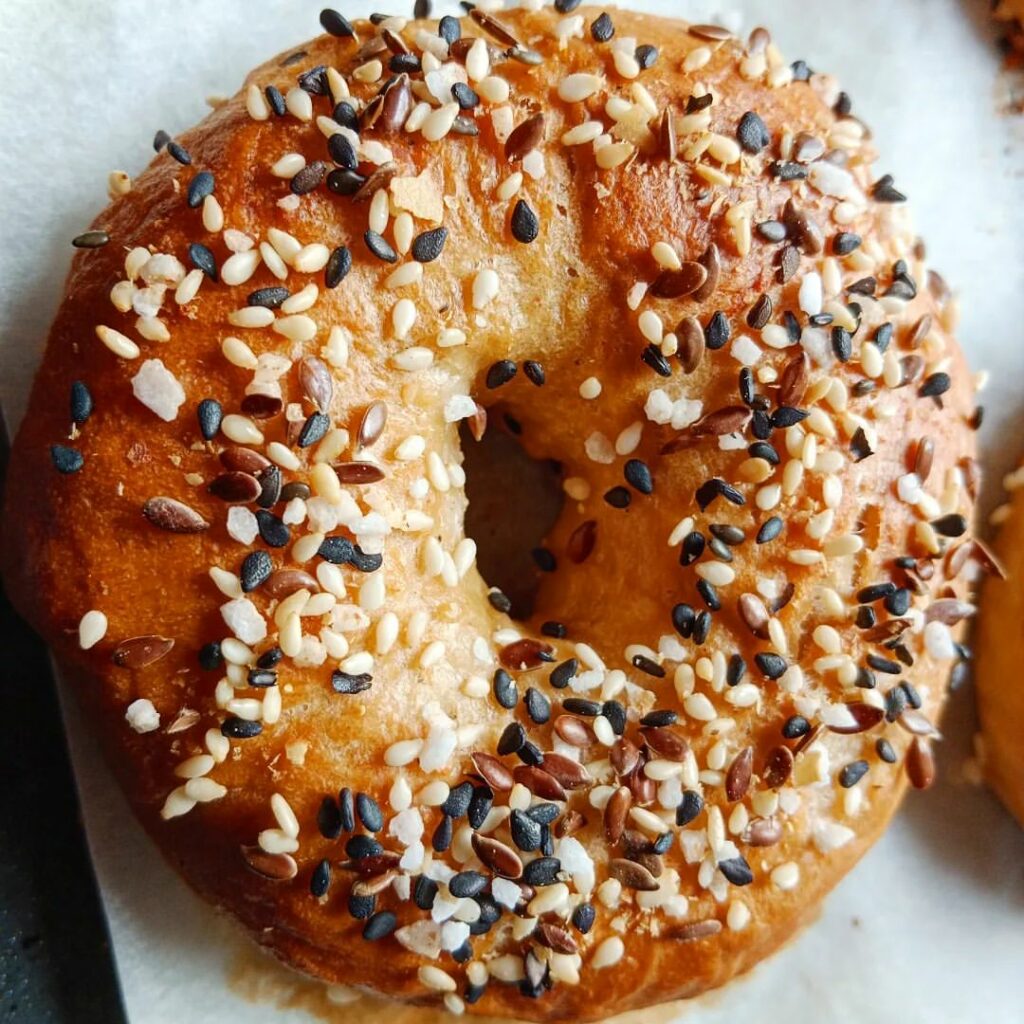
This vegan bagel recipe proves you do not need eggs, dairy, or a professional bakery to get that chewy, glossy, deeply satisfying New York bagel experience at home. The dough has just five ingredients, the technique is simple once you know the steps, and the result is ten golden homemade bagels with a crackling crust and a dense, springy interior that beats any supermarket alternative. Fully plant-based, with no compromise on texture.
Why do bagels need to be boiled before baking, and what actually happens in that pot of water? What flour gives the best chew, and can you freeze homemade bagels for later? We cover all of this here, including the surprising medieval Polish origins of the bagel, the food science behind boiling, the nutritional benefits of making bread at home versus buying it, and practical storage and serving tips. By the end, you will understand this recipe deeply enough to adapt it confidently.
Why You Will Love This Vegan Bagel Recipe
Homemade bagels have real advantages over anything you can buy. Here are five concrete ones worth knowing about:
- Just five ingredients in the dough (flour, water, yeast, sugar, salt) and the result outperforms most shop-bought bagels on both flavour and texture.
- Completely vegan, no eggs, no dairy, no animal products in the dough or on the surface.
- Full ingredient control: no preservatives, no emulsifiers, no hidden additives, just ingredients you can read and recognise.
- Freezer-friendly for up to 3 months, so you bake one large batch and have breakfast ready whenever you need it.
- Makes 10 bagels per batch, ideal for a family, a week of breakfasts, or a brunch spread that will genuinely impress.
Every one of these points reflects real experience with this recipe rather than marketing language. The boiling step that looks intimidating is actually the part that makes everything work, and once you do it once you will wonder why you ever bought bagels instead.
Where Do Bagels Come From? Facts and History
Bagels have a history that surprises most people. Here are three facts worth knowing before you eat.
Bagels come from Krakow, not New York
The earliest written record of the bagel appears in the Krakow Community Regulations of 1610, where bagels are listed as a gift to be given to women after childbirth. The Yiddish word “beygal” derives from the German dialect word “beugel,” meaning ring or bracelet. The bagel’s likely ancestor is the “obwarzanek,” a boiled ring-shaped bread sold on Krakow’s streets since the 14th century.
Obwarzanki are still sold from street carts in Kraków today. For where to eat vegan in the city, see our post on vegan Kraków.
Bagels reached New York with Ashkenazi Jewish immigrants in the 19th century, where the Bagel Bakers Local 338 union, founded in 1907, standardised production and made the city the world’s bagel capital. A popular myth credits a Viennese baker with inventing the bagel in 1683 to honour the Polish King Jan III Sobieski. The problem is that bagels already existed 73 years before that battle.
Boiling is food science, not tradition for its own sake
When raw bagel dough hits boiling water, surface starch gelatinisation begins immediately. The starches absorb water, swell, and form a gel-like barrier within seconds. This simultaneously does three important things: it pre-sets the bagel’s shape so it holds during baking; it partially deactivates the yeast, preventing over-expansion and keeping the interior dense and chewy; and it creates a glossy, protein-rich outer shell that browns dramatically in the oven through the Maillard reaction.
Without boiling, you get a bread roll. Boiling is what makes it a bagel. Adding sugar or baking soda to the boiling water raises the pH and accelerates the Maillard reaction for a darker, shinier, crispier crust.
The New York water myth is mostly marketing
The legend holds that New York bagels taste better because of the city’s exceptionally soft water, low in calcium and magnesium, sourced from the Catskill Mountains. The American Chemical Society tested this in 2015 with side-by-side batches using New York and Massachusetts water.
Heading to the city itself? Here’s where to find tofu cream cheese bagels and the best vegan restaurants in NYC.
The conclusion was that the water difference has a measurable but very minor effect on the final product. What actually matters is cold fermentation (overnight proofing in the fridge develops complex flavour), the boiling technique, high-protein flour, and shaping skill. You can bake genuinely excellent bagels anywhere in the world, including a Czech kitchen, with standard ingredients.
Are Bagels Healthy? Benefits of Baking Them at Home
Homemade vegan bagels are not diet food in the low-calorie sense, but they have real nutritional advantages over their commercial counterparts that are worth understanding.
A solid nutritional profile for bread
An average homemade bagel (approximately 100g) provides around 250 to 260 kcal, 52g of carbohydrates as a sustained energy source, 9 to 10g of protein, and under 2g of fat. That is significantly less fat than most other baked goods or sweet breakfast options. Bagels are also a source of B vitamins (thiamine/B1, folate/B9, niacin) from wheat flour, supporting energy metabolism and healthy cell function.
Because traditional bagels are naturally vegan in their basic form (flour, water, yeast, salt), a homemade vegan recipe loses absolutely nothing nutritionally compared to a conventional one.
Home baking means zero additives
A scientific comparison published in PMC (US National Library of Medicine) found that industrial bread recipes contained an average of seven additives: emulsifiers, hydrocolloids (texture agents), preservatives such as calcium propionate, antioxidants, and dough conditioners.
Many shop-bought bagels also contain added sugars (sometimes high-fructose corn syrup), artificial flavours, and enzymes not listed by name. Making bagels at home means zero preservatives, zero artificial additives, and full control over flour quality, salt content, and sugar type. For families with children or anyone who prefers to know exactly what they are eating, this matters.
Fermentation improves mineral absorption
Even with commercial instant dried yeast and a standard one-to-two-hour rise, fermentation begins and partially breaks down phytic acid, an anti-nutrient in wheat flour that would otherwise inhibit absorption of iron, zinc, and magnesium.
Longer, slower fermentation such as overnight cold proofing in the fridge, which also significantly improves bagel flavour, gives more time for this process. For plant-based eaters who monitor iron and zinc intake, slow fermentation is a small but real nutritional improvement over quick-rise methods.
Approximate Nutritional Values Per Bagel
The table below gives estimated values for one of ten bagels from this recipe. Actual values will vary depending on the flour used, the amount of seeds added, and specific ingredient brands.
| Nutrient | Amount per bagel |
|---|---|
| Calories | ~260 kcal |
| Protein | 9 g |
| Carbohydrates | 52 g |
| Fat | 2 g |
| Fibre | 2 g |
Approximate values per bagel; actual amounts depend on specific ingredients and quantities used.
Homemade Vegan Bagels
Ingredients
Dough
- 500 g plain flour bread flour for best chew
- 300 ml warm water
- 10 ml olive oil
- 2 tbsp coconut sugar or regular sugar
- 2 tsp salt
- 7 g instant dried yeast
Boiling water
- 2 tbsp coconut sugar
- 1 tsp salt
Topping
- seeds and coarse salt sesame, poppy, or everything bagel mix
Instructions
- Mix all dry ingredients in a bowl. Add warm water and olive oil and knead for 8 to 10 minutes until smooth and elastic.
- Cover the dough and leave to rise for 1 to 2 hours at room temperature, until doubled in size.
- Divide the risen dough into 10 equal pieces. Shape each piece into a ball, then poke a hole through the centre and stretch it into a ring about 3 to 4 cm across. Place on a lined baking tray and leave to rest for 15 to 20 minutes.
- Bring a large pot of water to the boil with the coconut sugar and salt. Boil each bagel for about 30 seconds per side, then return to the tray and immediately sprinkle with seeds.
- Bake at 200°C (390°F) for 15 to 20 minutes until golden brown. Cool on a wire rack before slicing.
Notes
Tips and Variations for This Vegan Bagel Recipe
The basic recipe is excellent as written, but a few adjustments can take it further or adapt it to your preferences and what you have at home.
- Toppings and seeds: Classic options are sesame seeds, poppy seeds, or coarse sea salt. For an everything bagel version, combine sesame seeds, poppy seeds, dried onion flakes, dried garlic flakes, and coarse salt in equal parts. Sunflower seeds and caraway seeds also work beautifully.
- Wholemeal bagels: Replace 100 to 150g of white flour with wholemeal flour for a denser bagel with a more complex flavour and higher fibre content. Reduce the water slightly as wholemeal flour absorbs more liquid.
- Overnight method for better flavour: After shaping, place the bagels on a lined baking sheet, cover, and refrigerate overnight (8 to 12 hours) instead of the standard 1 to 2 hour room-temperature rise. Slow cold fermentation develops a noticeably more complex, slightly tangy flavour that is closer to professional bakery bagels.
- How to freeze homemade bagels: Let the bagels cool completely, then wrap individually in cling film or place in freezer bags for up to 3 months. Defrost at room temperature (about one hour) or toast straight from frozen for an immediate crispy result.
- Baking soda in the water: Replace the sugar in the boiling water with one tablespoon of baking soda (or two tablespoons per litre) for a more alkaline bath. This produces a darker, shinier, more pretzel-like crust that some people find even more satisfying than the standard version.
Once you have made bagels a few times, you will find yourself experimenting with every seed combination you can find and making a double batch every time. The recipe scales up easily and the freezer method makes large-batch baking completely practical.
Vegan Bagel Toppings and Fillings Worth Trying
Homemade bagels are satisfying enough to eat plain and warm from the oven, but the right filling turns them into a complete meal for any time of day.
- Classic breakfast: Toast a bagel half and top with mashed avocado, sliced cherry tomatoes, red pepper flakes, and a squeeze of lemon. Simple, filling, and impressive enough for a weekend brunch.
- Vegan cream cheese style: Blend firm tofu with lemon juice, a small garlic clove, fresh chives, and a pinch of salt until very smooth. The result is a convincing cream cheese alternative that spreads beautifully and stores in the fridge for up to 4 days.
- Lunch option: Fill with hummus, roasted vegetables, rocket, and a drizzle of tahini for a protein-packed lunch that comes together in minutes.
- More homemade baking inspiration: If bagels have sparked a baking habit, our vegan rye bread without yeast is the perfect next project when you want a fresh loaf with minimal effort.
Whether you serve them at a relaxed weekend brunch or pack them for a work lunch, homemade bagels bring a level of satisfaction that bought alternatives simply cannot match. Try making them once and see if you do not immediately plan the next batch.
Frequently Asked Questions
Are bagels vegan?
Traditional bagel dough made from flour, water, yeast, salt, and a little sugar is naturally vegan. The problem with bought or café bagels is that some use an egg or milk glaze on the surface, or contain butter in the dough. Homemade bagels made from this recipe are 100% plant-based: no eggs, no dairy, no animal products in the dough or on the crust.
Why do you boil bagels before baking?
Boiling gelatinises the surface starch of the dough, which pre-sets the bagel’s shape, partially stops the yeast from over-expanding (keeping the interior dense and chewy), and creates a glossy protein-rich surface that browns dramatically in the oven. Without this step you get a bread roll, not a bagel. Adding sugar or baking soda to the boiling water deepens the colour and crispness of the final crust.
What flour is best for homemade bagels?
Bread flour (12 to 14% protein) gives the best chewy texture because it develops a stronger gluten network during kneading. Standard all-purpose flour works but produces a softer, more bread-like result. For maximum New York-style chew, professional bakeries use high-gluten flour at 14%+ protein, available from specialist baking suppliers. For most home bakers, strong white bread flour gives excellent results.
How long do you bake bagels and at what temperature?
Bake bagels at 200°C (390°F) for 15 to 20 minutes until deep golden brown all over. Every oven behaves slightly differently, so watch the colour rather than the timer. Bagels are done when the crust sounds hollow when tapped on the bottom. For a darker, crispier crust, increase the temperature to 220°C (430°F) and reduce the baking time to 13 to 15 minutes.
Can you freeze homemade bagels?
Yes, bagels freeze exceptionally well. Allow them to cool completely, then wrap each one individually in cling film or place in zip-lock freezer bags and freeze for up to 3 months. To serve, defrost at room temperature for about an hour, or slice before freezing and toast the halves directly from frozen for immediate results with a perfectly crisp crust.
What toppings can you put on vegan bagels?
Classic toppings include sesame seeds, poppy seeds, coarse sea salt, and nigella seeds. For an everything bagel mix, combine sesame seeds, poppy seeds, dried onion flakes, dried garlic flakes, and sea salt in equal parts. Sunflower seeds, caraway seeds, and pumpkin seeds all work well. Apply toppings immediately after removing the bagels from the boiling water, pressing them gently so they stick before baking.
Ready to make your first batch? We would love to see how yours turn out. Share a photo on Instagram or leave a comment below with any questions or variations you tried. And if you want another easy bake next, our vegan overnight oat buns are waiting for you.
Newsletter
Get our free e-books
Join the newsletter and download Our Vegan Christmas Kitchen straight away, 10 recipes for Czech cookies, gingerbread and vánočka. Then once a month, new places from the vegan map and new articles. Unsubscribe with one click.