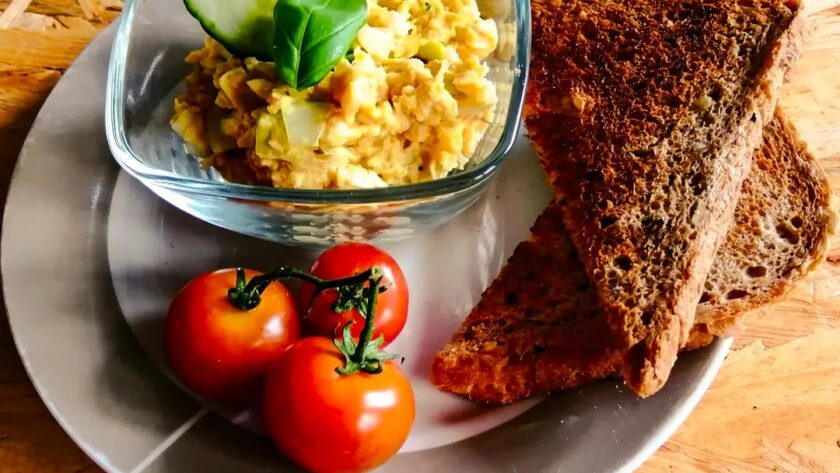
You will love this spread from the very first bite. Vegan chickpea egg salad looks and tastes surprisingly similar to classic egg salad, but it is completely plant-based. The secret is black salt (kala namak), which provides the characteristic sulphurous, “eggy” aroma and flavour. Just mash some chickpeas, add a few ingredients, and you are done in 10 minutes.
Whether you need a quick snack, a spread for open-faced sandwiches, or something that will impress even non-vegan guests, this is exactly the recipe for you. What is black salt and where can you find it? How do you achieve that authentic eggy taste? And how long does the spread keep in the fridge? Let us walk you through it.
Why you will love this recipe
This spread is simple, but genius in how closely it resembles the original.
- Ready in 10 minutes with no cooking, baking, or any heat involved
- Black salt (kala namak) delivers the signature eggy taste and aroma that no other ingredient can replicate
- Only 6 ingredients, all available at regular shops (black salt from health food stores or online)
- Rich in protein and fibre thanks to the chickpeas, making it more filling than traditional egg salad
- Perfect for sandwiches, wraps, and crackers, ideal for parties, picnics, or a quick packed lunch
It is the kind of recipe that surprises even people who would never normally try vegan food.
Interesting facts about egg salad and chickpeas
Egg salad spread is a beloved staple of Czech cuisine, traditionally served on open-faced sandwiches (chlebicky) and canapes. It is classically made from boiled eggs, mayonnaise, mustard, and onion. The vegan chickpea version is a relatively new phenomenon that has gained popularity alongside the rise of plant-based eating. The texture of mashed chickpeas surprisingly closely mimics mashed boiled eggs.
Black salt (kala namak) is the key ingredient that makes this spread taste “eggy”. It originates from the Himalayas and South Asia, where it has been used for thousands of years in Ayurvedic medicine. Its characteristic sulphurous smell comes from sulphur compounds, primarily hydrogen sulphide and iron sulphides. Although it smells intense on its own, when added to food the flavour is gentle and pleasant. In Indian cuisine, black salt is traditionally added to chaat masala spice blends, fruit, and salads.
Chickpeas are one of the oldest cultivated legumes in the world. Archaeological evidence dates their cultivation to over 7,500 years ago in what is now Turkey and Syria. Today, chickpeas are a staple in cuisines from the Mediterranean to India, with global consumption exceeding 17 million tonnes annually.
Turmeric, which gives the spread its yellow colour reminiscent of egg yolk, has been used in India for over 4,000 years not only as a spice but also as a dye and medicinal remedy. Its main active compound, curcumin, is the subject of hundreds of scientific studies examining its anti-inflammatory properties.
Health benefits of the key ingredients
This simple spread is surprisingly nutritious thanks to chickpeas and turmeric.
Chickpeas are an excellent source of plant-based protein and fibre. Per 100 g of cooked chickpeas, you get approximately 9 g of protein and 8 g of fibre with only 164 kcal. They are rich in folate, iron, phosphorus, and manganese. Regular legume consumption is linked to better blood sugar control and a reduced risk of cardiovascular disease.
Turmeric contains curcumin, a powerful antioxidant with anti-inflammatory effects. Studies suggest that curcumin may support joint health, digestion, and brain function. For better curcumin absorption, it is ideal to combine turmeric with black pepper, which increases its bioavailability by up to 2,000%.
Black salt has a lower sodium content than regular table salt and contains trace minerals such as iron, calcium, and magnesium. In Ayurveda, it is used to support digestion and relieve bloating. Unlike regular salt, it may offer certain health benefits when used in small amounts.
Nutritional values
Approximate nutritional values per serving (recipe makes about 4 servings).
| Nutrient | Amount per serving |
|---|---|
| Calories | ~150 kcal |
| Protein | 7 g |
| Carbohydrates | 18 g |
| Fat | 5 g |
| Fibre | 5 g |
Approximate values per serving. Actual amounts may vary depending on specific ingredients and quantities used.

Vegan chickpea egg salad spread
Ingredients
- 1 tin chickpeas drained
- 1/2 small onion or a bit of leek instead
- 1 tbsp vegan mayonnaise
- black pepper
- black salt (kala namak)
- ground turmeric
Instructions
- Drain the chickpeas into a bowl (save the liquid/aquafaba for other recipes like chocolate mousse or whipped cream) and mash them with a fork.
- Finely dice the onion and add it to the mashed chickpeas. Add the mayonnaise, black salt, pepper, and turmeric, then mix everything together.
- Spread onto toast or add to a sandwich and serve.
Tips and variations
The basic recipe is perfect in its simplicity, but here are a few ideas to customise it.
- Add texture: diced radish, celery, or pickles add a pleasant crunch and freshness
- No vegan mayo: Replace it with mashed avocado or hummus. The spread will be different but equally delicious.
- More protein: add crumbled firm tofu along with the chickpeas. The combination creates an even more authentic egg-like texture.
- Spicier version: add a teaspoon of mustard, a dash of hot sauce, or diced jalapeño
- Storage: the spread keeps in a sealed container in the fridge for 3-4 days. Stir before serving as it may release a little liquid.
The key is not to overdo the black salt. Start with a small amount and add gradually, as its flavour is quite intense.
What to serve with chickpea egg salad
This spread is incredibly versatile and goes with practically anything.
The classic choice is toast or open-faced sandwiches, and if you fancy baking your own bread, try our simplest homemade bread. It also works brilliantly as a filling for wraps with fresh vegetables or on crackers as a quick snack. For parties, serve it on canapés topped with paprika and fresh chives. If you enjoy spreads, also check out our chickpea spread for open-faced sandwiches.
Fresh vegetables make the perfect accompaniment: sliced tomatoes, cucumber, radishes, or leafy greens.
This recipe is one of more than twenty Czech classics we cook without meat, eggs or dairy. You’ll find them all in one place in our collection of vegan Czech recipes.
Frequently asked questions
What is black salt (kala namak) and where can I buy it?
Black salt is a Himalayan rock salt with a distinctive sulphurous flavour that closely resembles boiled eggs. You can find it in health food shops, Indian grocery stores, or online. A single packet lasts a very long time as you only need a small amount per recipe.
How do you get an eggy taste without eggs?
The key is black salt (kala namak), which contains natural sulphur compounds that give food a typical eggy aroma and taste. Turmeric then adds the yellow colour reminiscent of yolk. The combination of these two ingredients creates a very convincing egg-like effect.
How long does vegan egg salad keep in the fridge?
In a sealed container, the spread keeps in the fridge for 3-4 days. Stir before serving as chickpeas may release a little liquid. This type of spread is not ideal for freezing as the texture changes significantly.
Is chickpea egg salad gluten-free?
Yes, the spread itself is naturally gluten-free. Chickpeas, mayonnaise, black salt, and turmeric contain no gluten. Simply serve it on gluten-free bread or crackers for a completely gluten-free snack.
How much protein does chickpea egg salad have?
One serving contains approximately 7 g of protein, mainly from the chickpeas. If you want to increase the protein content, add crumbled firm tofu to the chickpeas. This brings the total to 12-14 g of protein per serving.
Vegan chickpea egg salad is one of those recipes that will convince you a plant-based version can be just as good as the original. It is fast, simple, full of protein, and absolutely convincing in flavour. If you are looking for more quick snack ideas, check out our avocado hummus. And if you make this spread, we would love to hear how you liked it!
Newsletter
Get our free e-books
Join the newsletter and download Our Vegan Christmas Kitchen straight away, 10 recipes for Czech cookies, gingerbread and vánočka. Then once a month, new places from the vegan map and new articles. Unsubscribe with one click.