Spain has a reputation problem with vegans. Cured ham hangs in every shop window, tapas counters glisten with chorizo, and it is easy to assume you will be living on bread and olives. The good news is that Spain is far more vegan friendly than its reputation suggests, you just need to know where to go and what to order. We dug through dozens of cities, restaurants and traditional Spanish dishes so you can skip the guesswork and start planning.
It is true that Spain is among the biggest meat-eating countries in Europe, and on a small inland square you may find it trickier than in Greece or Croatia. Yet Barcelona, Madrid and Valencia are packed with fully vegan places, and a surprising number of classic Spanish dishes are plant based all on their own. So is Spain actually vegan friendly? Which cities are best? Can you eat vegan at an all-inclusive resort? And what do you order in an ordinary tapas bar without reading the whole menu? This guide walks you through all of it, region by region.
Is Spain vegan friendly?
Yes, with an asterisk. Spain sits among the highest meat consumers in Europe, and that shows up on a lot of menus. In the big cities, though, the vegan scene is booming, and everyday Spanish cooking is full of plant-based classics you do not have to invent from scratch.
The real difference is city versus small town. In Barcelona, Madrid, Valencia or Granada you can choose from dozens of fully plant-based spots. On small inland squares it takes more planning and a willingness to ask for tweaks. Almost everywhere, though, olives, bread with tomato, roasted vegetables and fried potatoes are close at hand and genuinely good.
Spain is not the easiest vegan country in Europe, but a little planning turns it into one of the most rewarding.
Traditional Spanish dishes that are accidentally vegan
The best way to eat well in Spain is to know a few classics that are plant based by nature. These are not modern mock-meat inventions, they are dishes people have eaten for generations. You just occasionally need to add one request so they do not arrive topped with egg or ham.
| Dish | What it is | What to watch for |
|---|---|---|
| Gazpacho | Cold soup of tomato, cucumber, pepper and olive oil | Reliably vegan |
| Pan con tomate | Toasted bread rubbed with tomato, garlic and oil | Reliably vegan |
| Patatas bravas | Fried potatoes with a spicy tomato sauce | Ask for “sin alioli”, the garlic mayo usually has egg |
| Pimientos de Padrón | Small green peppers fried in oil with sea salt | Reliably vegan |
| Escalivada | Catalan roasted aubergine, pepper and onion | Reliably vegan |
| Pisto manchego | Slow-cooked vegetable stew, like ratatouille | Often topped with a fried egg, say “sin huevo” |
| Espinacas con garbanzos | Andalusian spinach and chickpea stew | Check there is no chorizo added |
| Churros | Fried dough of flour, water and salt | Dough is vegan, but the dipping chocolate usually has milk |
Salmorejo, gazpacho’s thicker cousin, looks innocent too, but it is nearly always finished with chopped egg and ham. The base is plant based, so just ask for “sin huevo, sin jamón”. And if you spot paella, read on, because it is more interesting than you might expect.
Barcelona: Spain’s vegan capital
If you want to make a vegan happy in Spain, send them to Barcelona. According to vegan communities the Catalan capital has one of the fastest-growing vegan scenes in the world, with vegan-friendly businesses up roughly 173 percent since 2022. There are around sixty fully vegan restaurants and hundreds more places with solid plant-based options.
- Mad Mad Vegan (Eixample) for the city’s best vegan fast food, a crispy “chicken” burger with cajun fries.
- Morgentau (Poblenou) for a hearty wholefood, organic brunch.
- Desoriente (Poblenou) for pan-Asian fusion, pad thai and gyoza.
- Grasa (Barceloneta) as a natural-wine bar with creative tapas, a little pricier.
- Gallo Santo (Eixample, with a second branch in Gràcia) for fully vegan Mexican tacos and burritos.
Tip: In tapas bars, lean on the Catalan classics that are almost always plant based. Pa amb tomàquet (bread with tomato), escalivada (roasted vegetables) and patatas bravas without the aioli will save you even where there is no vegan menu.
Check out our full vegan guide to Barcelona.
Madrid: tapas bars and clever bistros
Madrid used to be seen as a tougher nut, but these days it sits around 22nd on the list of the world’s most vegan-friendly cities (from their 2025 ranking). Plant-based spots keep opening across the centre, and traditional bars serve pan con tomate, gazpacho and garlic mushrooms without blinking.
- Mad Mad Vegan (Chueca and Lavapiés) for signature burgers and Nashville “chick’n”.
- Frutas Prohibidas (Malasaña) for a fully plant-based brunch and specialty coffee.
- Bite Me Café (Arganzuela) as a vegan donut shop, perfect for a sweet break.
- Los Andenes Vegan (Chamberí) for vegan Peruvian ceviche and lomo saltado.
- Shlen (Salamanca and Chamberí) for international fusion and crispy mushroom bao.
- Santa y Pura (Lavapiés, close to the Reina Sofía) as a fully vegan bar for pizzas and small plates to share.
Check out our full vegan guide to Madrid.

Valencia: home of paella (and the truth about it)
In Valencia we have to pause on paella, because there is a lot of confusion around it. The original paella valenciana is not seafood, but it is not vegan either, traditionally it is made with rabbit, chicken and beans. What you want is paella de verduras, the vegetable version with artichokes, beans and peppers. When you order it, ask for vegetable stock (caldo de verduras) and check there is no seafood base, because many kitchens default to a fish or meat stock even in the veg version.
- Cor del Pilar (old town) for Thai curry with tofu and a good-value menú del día.
- MESTIZA (El Cabanyal, by the beach) for fully vegan fusion sharing plates like jackfruit tacos and pad thai, mainly in the evenings.
- Let It Bloom (Ruzafa) for chickpea omelette and specialty coffee.
- Café Madrigal (Ruzafa) as an all-day all-rounder with a vegan tortilla.
- Khambú (near Torres de Quart) for quick vegan burgers and hot dogs.
Tip: Valencia’s horchata de chufa, an iced tiger-nut drink, is naturally vegan. Have it at a traditional horchatería with fartons for dunking and you get a local experience most guides overlook.
Read our detailed vegan guide to Valencia.
Seville: tapas that were always vegan
Seville is a lovely reminder that eating vegan can also mean eating local. The Andalusian classic espinacas con garbanzos, spinach and chickpeas with cumin and paprika, is a traditional tapa served in almost every old bar and it is plant based by nature. The easiest area to find food is Alameda de Hércules, the city’s most vegan-friendly neighbourhood.
- Veganitessen (Mercado del Arenal) as a fully vegan market stall for tapas, burgers and some of the best vegan cake in the city.
- Veganí (Feria area) for plant-based tapas and natural wines, portions small and pricier.
- Arte y Sabor (Alameda de Hércules) for fusion tapas. It isn’t fully vegan, but the vegan dishes are clearly marked, think seitan, falafel and croquettes.
- Thank You Mother (Mairena del Aljarafe, about 10 km out, so best if you’re driving) for a vegetarian brunch with vegan options, just check your dish.
- Ananás Coffee & Brunch (Nervión) for smoothie bowls and bagels, check the vegan items.
Beyond espinacas con garbanzos, any ordinary bar will do you pan con tomate, olives or potatoes (again “sin alioli”). Also worth a try is berenjenas con miel de caña, fried aubergine with cane syrup, just confirm it is syrup and not honey.
We have a dedicated guide to what to do in Seville.
Granada: free vegan tapas with every drink
Granada has an ace up its sleeve that has all but vanished elsewhere in Spain. Order a drink here and a free tapa arrives with it, and each successive drink tends to bring something better. The trick for vegans is simple, mention your dietary needs when you order the drink, not afterwards. You will often be handed olives, pan con tomate, gazpacho or espinacas con garbanzos.
- Hicuri Art Vegan (Realejo) for seitan curry and vegan lasagne.
- Wild Food (centre) for vegan paella, cauliflower wings and cheesecake.
- El Piano (Calle Santiago, in the centre) as a fully vegan and gluten-free option.
- La Goma (centre) for a daily changing menu of local produce.
Tip: In Granada, order a caña (small beer) rather than a large drink. Each drink comes with one tapa, so several smaller orders mean more free food.
A full guide to vegan Granada and Andalusia is in the works.
Canary Islands and Tenerife: a vegan winter escape
When it is freezing back home, the Canary Islands offer warmth and a surprisingly strong vegan scene. Santa Cruz de Tenerife consistently ranks among Spain’s most vegan-dense cities per capita. Better still, the local classics are largely plant based. Papas arrugadas, wrinkly salted potatoes served with mojo sauce, are vegan, and both mojo verde and mojo rojo are traditionally made without dairy or egg.
- BuenaVida Vegan (Costa Adeje, Tenerife) for mushroom risotto and vegetable paella.
- El Med Veg (El Médano, Tenerife) for falafel and aubergine lasagne, largely gluten free.
- kVegan (Mercado La Pepa, Los Cristianos, Tenerife) as a fully vegan stall in the food hall, closed at weekends.
- Umami Good Food (Santa Cruz and La Laguna, Tenerife) for buddha bowls and hummus toasts.
- Vegetopía (Las Palmas, Gran Canaria) for a vegan tortilla people rave about, mostly takeaway with just a few tables.
Just watch out for gofio, a toasted grain flour that is vegan by itself but often served as “gofio con leche” with cow’s milk, or in escaldón made with a meat stock. Ask how it is prepared.
Check out our full vegan guide to Tenerife. Of the other islands, we have also covered Fuerteventura, Lanzarote and Gran Canaria. Not sure which island to pick? We compare all eight in which is the best Canary Island.
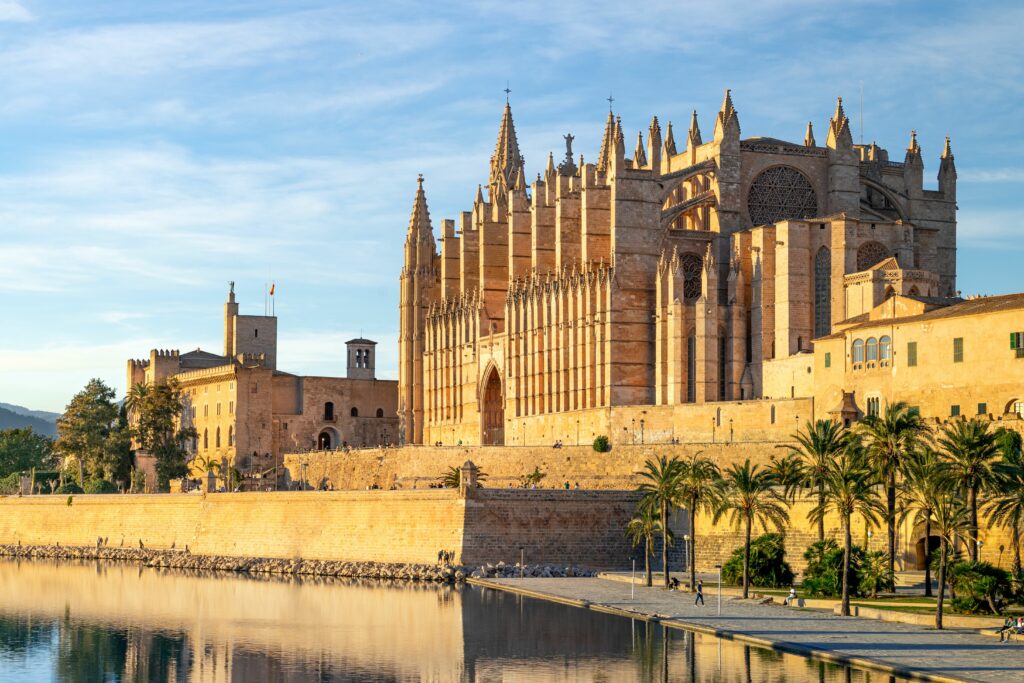
Mallorca: plant-based bistros and the ensaïmada truth
Mallorca is more than parties and beaches, and Palma has a genuinely pleasant vegan scene. The best small spots fill up, so book a table where you can. The classic ensaïmada, that spiral of sweet pastry, sadly is not vegan, because it contains pork lard (saïm). There is a fix, though, a vegan “sinsaimada” is baked by Tiraflecha in Palma’s Santa Catalina district, just order a day ahead. For what to see on the island and where to eat, read what to do in Mallorca.
- Ca n’Ela (Palma, old town) for raw beetroot ravioli and seitan in lemon sauce.
- La Mujer de Verde (Palma) as the plant-based successor to the legendary Bon Lloc bistro.
- Temple Natura (Palma) for burgers and carbonara in a garden setting.
- Alubia Plant Power (Palma) for casual fully vegan burgers, bowls and pinsas.
- Bellaverde (Port de Pollença) as a garden restaurant in the north, usually closed in winter.
A full vegan Mallorca guide is coming.
Practical tips for a vegan holiday in Spain
We verified every venue in this guide in July 2026. Opening hours and menus do change, so double-check your top picks before you go, ideally on GoogleMaps or the venue’s own social media.
When to go
Mainland Spain is most pleasant for vegan wandering in spring and autumn, when it is cooler and cities are less crowded. The Canary Islands work year-round and are a perfect escape from the winter cold.
The menú del día saves money
The best-kept secret of a cheap lunch in Spain is the menú del día, a multi-course set meal with a drink. It now runs around 12 to 17 euros (about 14 on average), and even in a seemingly meat-heavy place you can usually build a plant-based lunch from it. Ask for the vegetable starter option and a main without meat.
Supermarkets and self-catering
If you are staying in an apartment or just topping up snacks, Spanish supermarkets have you covered. Mercadona has its own plant-based Hacendado line and stocks the Heura brand, and Lidl, Consum, Aldi and Carrefour are well stocked too. Tofu, plant milks and vegan cold cuts are all standard on the shelves now.
Family trips and all-inclusive
In southern destinations like Spain, hotel buffets tend to overflow with fruit, vegetables, olives, pulses and bread, so a plant-based plate comes together even at an all-inclusive. If you are travelling with kids or staying somewhere with a fixed menu, message the hotel or restaurant ahead, most will prepare a vegan option on request. For more general advice, see our guide on how to travel vegan.
Still deciding where to go this year? Browse our picks of the best summer holidays for vegans and our rundown of the top 10 vegan-friendly cities.
How to say you’re vegan in Spanish
A few words of Spanish make a huge difference. On its own, “soy vegano” is sometimes not enough, because not everyone knows exactly what a vegan avoids. It pays to spell it out.
| English | Spanish |
|---|---|
| I’m vegan | Soy vegano / Soy vegana |
| I don’t eat meat, fish, eggs, dairy or honey | No como carne, pescado, huevos, lácteos ni miel |
| Does it contain meat, egg or milk? | ¿Lleva carne, huevo o leche? |
| Do you have anything vegan? | ¿Tienen algo vegano? |
| Without aioli, please | Sin alioli, por favor |
Things that might surprise you about Spain
- Even though Spain is among Europe’s biggest meat eaters, Barcelona is one of the fastest-growing vegan cities in the world.
- Many Spanish classics have always been vegan, from gazpacho to escalivada to churros (the dough is just flour, water and salt).
- Granada still keeps the free-tapas-with-every-drink tradition, which makes it one of the cheapest cities for vegan grazing.
Spain may not be the easiest vegan destination in Europe, but that is exactly what makes it fun to explore. With a little planning you get plant-based tapas, warm beaches and cities where being vegan is completely normal. And this is only the beginning, we are working on detailed guides to each city. Where would you go first, Barcelona, or Tenerife for some winter sun?
Frequently asked questions
Is it hard to be vegan in Spain?
In big cities like Barcelona, Madrid and Valencia it is easy, with dozens of fully vegan restaurants. In small inland towns it takes more planning, but traditional dishes like pan con tomate, gazpacho, olives and roasted vegetables will keep you going.
What traditional Spanish dishes are accidentally vegan?
Naturally plant-based options include gazpacho, pan con tomate, pimientos de Padrón, escalivada, espinacas con garbanzos and patatas bravas (without aioli). Churros dough is vegan too. With salmorejo and pisto, ask for “sin huevo”, as they are often served with egg.
Which Spanish city is the most vegan friendly?
Barcelona leads, with one of the fastest-growing vegan scenes in the world and dozens of plant-based spots. Madrid, Valencia and Granada are also excellent, and Tenerife is great for winter sun. Smaller inland towns take more planning.
How do I say I’m vegan in Spanish?
Say “soy vegano” or “soy vegana”, then add “no como carne, pescado, huevos, lácteos ni miel” (I don’t eat meat, fish, eggs, dairy or honey). The question “¿lleva carne, huevo o leche?” (does it contain meat, egg or milk?) is handy too.
Can you eat vegan at an all-inclusive resort in Spain?
Yes. Spanish hotel buffets are usually full of fruit, vegetables, olives, pulses and bread, so a plant-based plate is easy. If you want certainty or are travelling with children, email the hotel in advance, most will prepare vegan food on request.
Newsletter
Get our free e-books
Join the newsletter and download Our Vegan Christmas Kitchen straight away, 10 recipes for Czech cookies, gingerbread and vánočka. Then once a month, new places from the vegan map and new articles. Unsubscribe with one click.