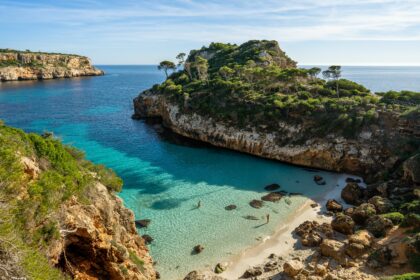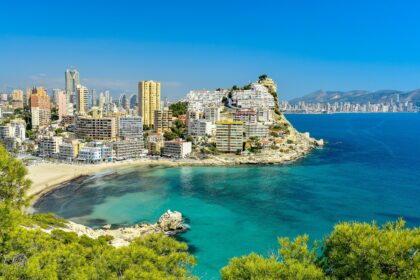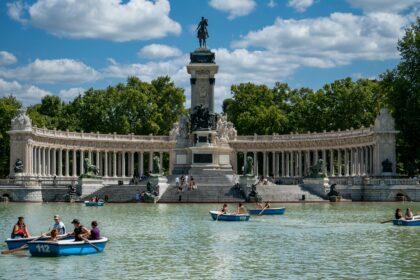
Valencia is the Spanish city everyone skips. Barcelona gets the crowds, Madrid gets the culture budget, and Valencia sits quietly on the coast being the place paella comes from. Which is a shame, because for plant-based travellers it might be the best-value city in Spain. You get a proper Mediterranean beach reachable by public transport, nine kilometres of park where a river used to be, a 1928 market hall, and prices roughly a quarter lower than Barcelona.
We haven’t been to Valencia yet, and we’re not going to pretend otherwise. What we did instead was spend a long time digging through menus, recent reviews and maps to work out what plant-based travellers who have actually been there recommend. Every place in this guide was checked for whether it genuinely exists and is still trading, and one well-known spot got cut because it has closed for good.
So is Valencia worth visiting, or is it just a cheaper Barcelona? Can you actually eat vegan paella in the city that invented paella, or is that a tourist fantasy? Where are the beaches, when should you go, how much does it cost, and what is the situation after the 2024 floods? Here is everything, laid out so you can plan from it.
What Valencia is famous for (and why vegans should care)
Valencia sits on Spain’s eastern Mediterranean coast, roughly halfway between Barcelona and Alicante. It is Spain’s third-largest city but it does not feel like one. The centre is walkable end to end, the beach is twenty minutes away on public transport, and you never get that shuffling-through-a-crowd feeling you know from La Rambla.
Ask what Valencia is famous for and you get three answers. Paella, which was invented here. Horchata, the tiger nut drink that happens to be naturally vegan. And the City of Arts and Sciences, that white futuristic complex on every Instagram feed. All three matter to plant-based visitors, and we will get to each one.
There is a fourth thing that gets less attention. Valencia was European Green Capital in 2024 and World Design Capital in 2022, and those are not just plaques on a wall. The city takes cycling infrastructure, urban green space and local food seriously, and you taste the result. The huerta, the belt of vegetable farmland ringing the city, supplies restaurants with seasonal produce year round, which is why plain vegetables here taste better than they have any right to.
If you are still deciding where in Spain to go, we compared the regions properly in our guide to whether Spain is vegan friendly. It covers which parts are easy and which ones need negotiating at the table.
Valencia on our vegan map
21 places, 13 fully vegan. Tap a pin to see the details.
Loading the map…
- 100% vegan
- Vegetarian
- Vegan options
See every place from this article on our vegan map.
What to do in Valencia in two or three days
Valencia works as a weekend, but three days is better because it lets you add the beach and the Albufera. The city has three clear layers, a Gothic old town, a futuristic Calatrava complex, and a fishing quarter by the sea, with a long green park threaded between them.
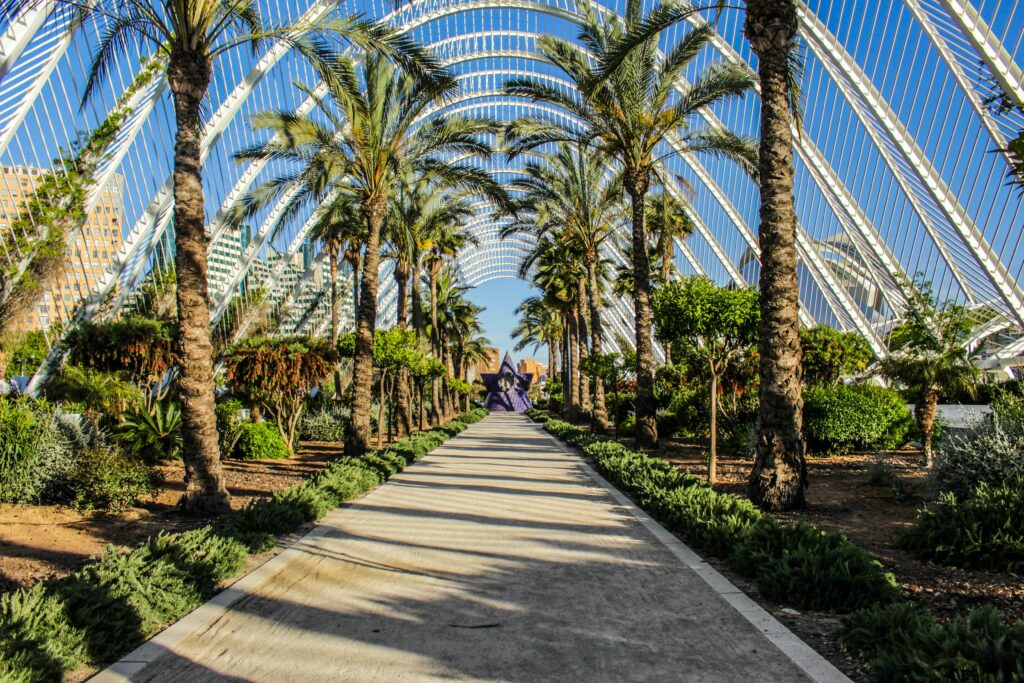
Jardín del Turia is the best thing Valencia ever did. The Turia river flooded the city repeatedly, and after a devastating flood on 14 October 1957 the decision was taken to divert it. The riverbed was rerouted in the 1970s and the empty channel became a park in the 1980s. Today it is roughly nine kilometres of gardens, playgrounds, running tracks and cycle paths running right through the city, from Parque de Cabecera to the City of Arts and Sciences. You can cross Valencia without touching a road.
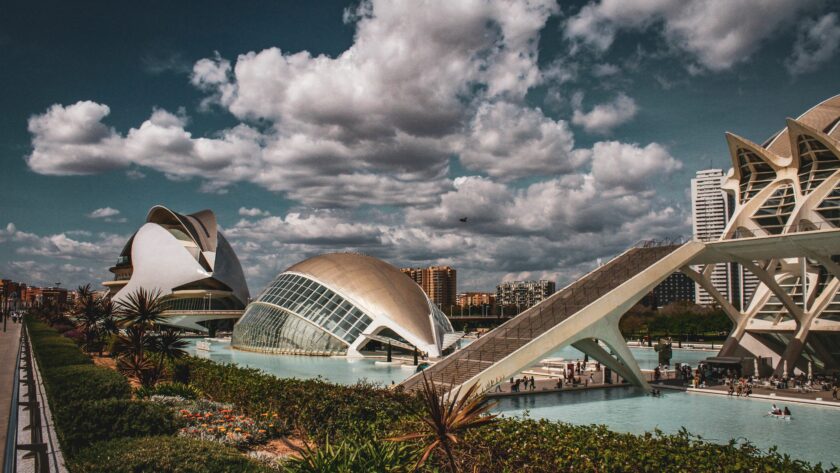
Ciudad de las Artes y las Ciencias is the white sci-fi complex, designed by Santiago Calatrava apart from the Oceanogràfic aquarium by Félix Candela, stretching almost two kilometres along the old riverbed. Inside there is a science museum, a planetarium and an opera house. Even if you skip the ticketed bits, go anyway. Early morning light on those white ribs and reflecting pools is the reason everyone photographs it.
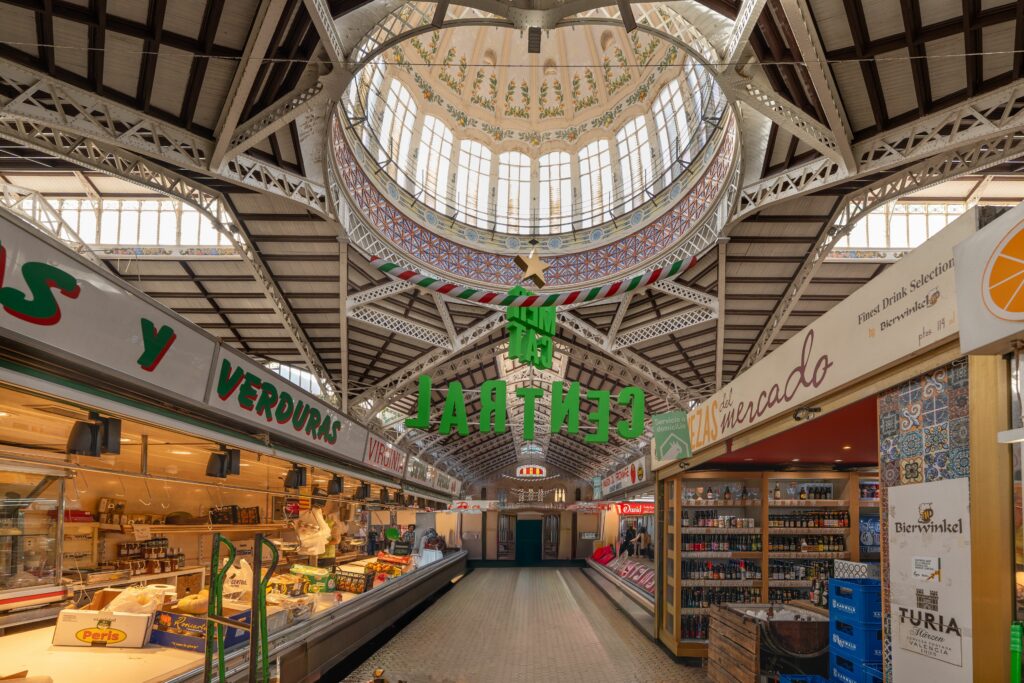
Mercado Central is close to mandatory for vegans. Built in 1928, it is an art nouveau hall of coloured glass and ironwork and one of the largest markets in Europe. Fruit, nuts, olives, dried beans, herbs. There are meat and fish counters too, so if that bothers you, stick to the produce end, which is enormous. Directly opposite stands La Lonja de la Seda, the Gothic silk exchange built in the 15th and 16th centuries and a UNESCO World Heritage Site since 1996. Entry is cheap and that twisted-column hall is worth twenty minutes of anyone’s day.
| What to see | Where | Time needed | Why go |
|---|---|---|---|
| Jardín del Turia | runs across the city | 1–3 h | 9 km of park in a drained riverbed, best by bike |
| City of Arts and Sciences | east end of the park | 1–4 h | Calatrava architecture, museums, planetarium |
| Mercado Central | Ciutat Vella | 45 min | 1928 art nouveau market, great for fruit and nuts |
| La Lonja de la Seda | opposite the market | 30 min | Gothic silk exchange, UNESCO listed since 1996 |
| El Carmen | old town | 2 h | medieval lanes, city gates, street art |
| El Cabanyal | by the beach | 2 h | tiled fishermen’s houses, cafe scene |
| Albufera | 10 km south | half day | rice paddies, lagoon, sunset boat trip |
El Carmen is the oldest quarter, a tangle of narrow lanes between two surviving medieval gates, Torres de Serranos and Torres de Quart. You can climb both, and the rooftop views are worth the stairs. El Cabanyal is the opposite in character, a former fishermen’s neighbourhood by the beach where low houses are faced in coloured tiles. It has been quietly filling up with cafes and small businesses, and it happens to hold one of the best vegan restaurants in the city.
La Albufera is a freshwater lagoon and natural park about ten kilometres south of the centre, ringed by rice fields. This is where paella rice comes from and where paella itself was born. Boats leave from the village of El Palmar, a standard trip runs about 45 minutes and costs a few euros, and sunset is when the flooded paddies turn into mirrors.
Vegan paella in Valencia: where you can actually get it
This is the reason to come, and it is also where most vegan city guides quietly mislead you. So let’s do it properly.
Paella comes from the rice fields around the Albufera, where farm labourers cooked it over open fires at lunchtime. Rice arrived in Spain during the Al-Andalus period, and the earliest written records of Valencian paella date to the 18th century. Now for the part that surprises people. Real paella valenciana contains no seafood at all. The traditional recipe is chicken, rabbit, ferradura (flat green beans), garrofó (a large white butter bean), tomato, olive oil, saffron and Albufera rice. Put prawns in it and call it paella valenciana in this city and you will genuinely offend someone.
Why is that good news for us? Because the foundation of the authentic dish, the rice, beans, tomato, saffron and olive oil, is already plant-based. Taking the chicken and rabbit out is not vandalism of a tradition. It is a return to what was always cheapest and most available in that field. Valencian restaurants call it paella de verduras, vegetable paella, and it is on menus almost everywhere.
Which is exactly where the problem starts.
Your safest bet is La Tavernaire in Ruzafa. It is a fully vegan tapas tavern and it serves its vegan version of Valencian paella on Sundays only. It is cooked to order, so expect to wait, with diners reporting around half an hour. Two warnings worth having in advance. It is cash only, and the menu and staff are in Spanish and Valencian, so English will not get you far. It is also the smallest and most characterful place on this list, with just a handful of tables plus the bar.
Your second option is La Lluna in El Carmen, Valencia’s oldest vegetarian restaurant, running since 1980. Its rice dishes including vegan paella are among the most ordered things on the menu, and the set lunch sits around nine euros. That makes it the cheapest route to this dish in the city. One warning, though. A Google review from early 2026 says it has been closed since August 2025 and its website no longer loads, while nothing newer shows it trading. Check Google Maps or call before you go, and treat La Tavernaire as the safe bet.
You will also see Casa Orxata in Mercado de Colón recommended for vegan paella. Some visitors do mention a vegetable paella there, but we could not confirm it is a permanent menu item, so ask before you make the trip. What is certain there is the organic horchata, which we come to shortly.
| Where for vegan paella | Neighbourhood | Type | What to watch for |
|---|---|---|---|
| La Tavernaire | Ruzafa | 100% vegan | Sundays only, cash only, Spanish menu |
| Casa Orxata | Mercado de Colón | vegan-friendly | paella reported but unconfirmed, ask ahead |
| La Lluna | El Carmen | vegetarian | may have closed in 2025, check first |
| Standard paella restaurant | anywhere | omnivore | high risk of meat stock, ask before ordering |
Two more practical points. In most traditional restaurants paella is cooked for a minimum of two people and brought to the table in the pan, so ordering it solo is often impossible. And Valencians eat paella at lunch, not dinner. Evening paella is a tourist habit, so book a table for the middle of the day if you want the real version.
Taking the chicken and rabbit out of paella is not vandalism of a tradition. It is a return to what was always cheapest and most available in that rice field.
The best vegan restaurants in Valencia
Valencia’s vegan scene is smaller than Barcelona’s but denser than you expect, and it concentrates into three neighbourhoods. Ruzafa is the main event, Ciutat Vella and El Carmen hold the classics, and Cabanyal by the beach has the most interesting dinner.
Ruzafa, where most of it happens
Café Madrigal on Carrer de Puerto Rico has been running since 2018 and is the kind of place you can walk into at almost any hour. Fully vegan, Spanish classics including a chickpea tortilla, salads, cakes, coffee with plant milks. Prices sit roughly between ten and twenty euros a meal, which is very fair for what you get.
Let It Bloom is the newest arrival, opened in August 2024, and it does the best vegan brunch in the city. The chickpea omelette comes up in review after review, alongside avocado toast, tofu scramble, croissants and specialty coffee. If you are a slow starter, begin your Valencia day here (just not on a Wednesday, when it is closed).
Khambú is vegan fast food that grew out of a vegan burger food truck. It started at Carrer de Quart 41B and opened a Ruzafa branch on Carrer dels Tomasos in 2025. Current listings only show the Ruzafa one, so head there. Burgers, tacos, burritos, nuggets, sweet potato fries. It is not fine dining. It is exactly the food you want after a day on your feet.
The old town, for lunch and the classics
Cor del Pilar is currently the strongest vegan address in Valencia according to recent reviews. Entirely vegan, tucked into Ciutat Vella, and on weekdays it runs a menú del día, a three-course set lunch, for around seventeen euros, and it opens for lunch on Saturdays too. Diners single out the Thai curry with tofu, the mushroom croquettes and the vegan carpaccio. Opening hours are narrow and centred on lunch, and it fills up fast, so book ahead and check the hours before you go.
Restaurante Oslo on Carrer dels Catalans in El Carmen has been open since 2014. It is vegetarian, with plenty of vegan dishes on the menu, and it works as a proper tapas bar with a full drinks list, which makes it a good evening option. Lo de Ponxe at Guillem de Castro 80 is an informal vegan food bar with a set menu that changes daily, ideal when you would rather not choose. And Plant Shack on Carrer del Poeta Querol is a vegan coffee and juice bar doing cold-pressed juices and açaí bowls, a useful rescue stop mid-sightseeing.
Cabanyal and Ruzafa for dinner
MESTIZA in Cabanyal has been going since 2020 and it is the reason to head out to the sea in the evening. Fully vegan fusion cooking served as sharing plates, with jackfruit tacos, vegan meatballs and pad thai among the most recommended dishes. It opens mainly in the evenings from Wednesday to Saturday, so plan around that. Copenhagen on Carrer del Literato Azorín in Ruzafa is a vegetarian spot doing modern tapas and vegetable sushi. And La Casa Viva on Carrer de Cadis makes its own vegan cheese, which means pizza and pasta actually work there.
| Restaurant | Neighbourhood | Fully vegan? | Go for |
|---|---|---|---|
| Cor del Pilar | Ciutat Vella | yes | three-course set lunch, Thai curry |
| La Tavernaire | Ruzafa | yes | tapas and Sunday paella, patatas bravas |
| Café Madrigal | Ruzafa | yes | all-day food, chickpea tortilla, cakes |
| Let It Bloom | Ruzafa | yes | brunch, chickpea omelette, specialty coffee |
| Khambú | Ruzafa | yes | burgers, tacos, fast food |
| MESTIZA | Cabanyal | yes | fusion sharing plates, dinner by the sea |
| Lo de Ponxe | Guillem de Castro | yes | daily-changing set menu, no choosing |
| Plant Shack | Poeta Querol | yes | juices, açaí bowls, quick stop |
| Oslo | El Carmen | no, vegetarian | tapas and drinks, plenty of vegan dishes |
| La Lluna | El Carmen | no, vegetarian | oldest veggie place in town, may have closed, check first |
| Copenhagen | Ruzafa | no, vegetarian | modern tapas, vegetable sushi |
| La Casa Viva | Ruzafa | no, vegetarian | house-made vegan cheese, pizza |
One tip outside the restaurant scene. The organic shop chain Herbolario Navarro has several Valencia branches and some of them run a small canteen with a vegan set menu. It is the cheapest and fastest way to eat between sights, and a good place to stock up on snacks for travel days.
Horchata, fartons, and what is quietly vegan already
Beyond paella, Valencia is famous for horchata, orxata in Valencian. And this is one of the nicest things a vegan can discover in Spain. Proper Valencian horchata has three ingredients, water, sugar and chufa, which are tiger nuts, small tubers grown in the fields north of the city. No dairy, no eggs. It is a centuries-old traditional drink that happens to be entirely plant-based, with roots going back to the Moorish period.
Chufa is grown in Alboraya, a town on Valencia’s northern edge, and that is where the most famous horchaterías are. Horchatería Daniel has been making artisan horchata there since 1949. If you would rather not leave the city, Horchatería Santa Catalina sits in the centre near Mercado Central and a glass costs roughly three to five euros. Casa Orxata in Mercado de Colón makes an organic version from just two ingredients, chufa and water, with no added sugar, and around ninety percent of its ingredients are certified organic.
An ice-cold glass of it in thirty-degree heat is reason enough to come in summer.
What else works in Valencia without negotiation? Pan con tomate, bread rubbed with tomato and olive oil, as long as you decline the cheese. Escalivada, roasted peppers and aubergine. Olives, almonds and market fruit. Gazpacho, though check the bread and be wary of salmorejo, which often has egg. And agua de Valencia, the local cocktail of orange juice, cava, vodka and gin, which has no animal ingredients in the recipe and which half of Cabanyal is drinking after dark.
Does Valencia have a beach? Malvarrosa, Patacona and El Saler
It does. Several, in fact, and all of them reachable from the centre on public transport.
This is the single biggest reason we would send a first-time Spain visitor here rather than to Madrid. A major Spanish city with a full swimming season and a Gothic old town is not a common combination.
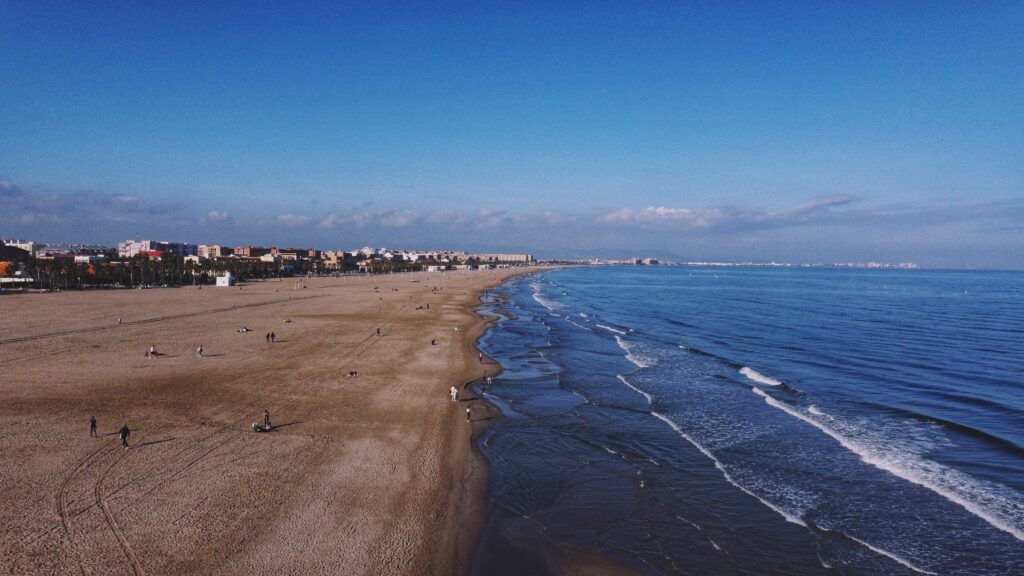
Playa de la Malvarrosa is the main one, running for about a kilometre with wide sand and a long palm-lined promenade full of bars and restaurants. It is a proper city beach with everything that implies, including showers, sunbed hire and August crowds. Playa de la Patacona continues straight on to the north and technically belongs to Alboraya. It is wider, calmer, and the place for beach volleyball and outdoor yoga. If Malvarrosa feels too busy, just keep walking north.
El Saler is a different proposition entirely. It lies south of the port inside the Albufera natural park, a wild beach backed by dunes and pine woods. No promenade, no bar every fifty metres. You get there by bus, and it is the best choice if you want coastline without concrete. Bring water and food, because options there are thin.
The swimming season is longer than most people assume. Sea temperature peaks near 27°C in August and bottoms out around 13.6°C in February, staying above twenty degrees roughly from June to October. That means a September or October beach trip genuinely works here, and those happen to be the nicest months to be in the city.
The best time to visit Valencia, month by month
Valencia has a Mediterranean climate, hot dry summers and mild winters. Daytime temperatures rarely drop below ten degrees even in January, though nights fall to around seven, which means the city works year round, just with a different itinerary.
| Season | Daytime highs | Sea | Best for |
|---|---|---|---|
| December–February | mild by day, around 7°C at night | around 14°C and falling, not swimmable | city breaks, museums, cheap stays |
| March | spring-like | cold | Las Fallas, but packed and expensive |
| April–May | around 20–25°C | still cool | best balance of weather and calm |
| June | around 28°C | above 20°C | beach without the August crush |
| July–August | around 30°C | up to 27°C | swimming, but hot and priciest |
| September | around 28°C | warmest after August | our pick for the best month overall |
| October–November | mid-20s and falling | still above 20°C in October, not November | quiet, cheap, some rain risk |
Valencia’s biggest event is Las Fallas, which runs through the first three weeks of March and climaxes on 19 March when enormous papier-mâché sculptures are burned in the streets. It is genuinely unlike anything else in Europe, and it is also the worst possible timing for a relaxed holiday. Accommodation prices spike, the city is full, and fireworks start in the morning. For vegans there is a further catch, since the street food stalls run heavily on churros and meat, so research where you will eat before you arrive.
Our recommendation is simple. September and early October give you warm sea, tolerable daytime heat and noticeably lower prices than August. April and May are excellent for the city itself, but the sea is still too cold for most people.
Getting there, getting around, and is Valencia expensive?
Valencia Airport (VLC) sits in Manises about eight kilometres west of the centre, and it is one of the more pleasant airports in Spain because it is small and you get out of it fast. It is well connected across Europe, and if you cannot find a direct flight it is often cheaper to route through Barcelona or Madrid, or fly into Alicante and take the train up the coast.
From the airport, the metro is the obvious choice. Lines 3 and 5 both serve the airport, run every fifteen to twenty minutes, and reach the centre in around twenty minutes. A ticket costs about €4.80 plus a one-off card fee. The cheaper alternative is Metrobus line 150, which takes around forty-five minutes depending on traffic. Taxis are quicker but there is really no need.
Once you are in, cycle. Valencia is completely flat and has a bike share scheme called Valenbisi, running since 2010 with roughly 2,750 bikes across 275 stations. The first thirty minutes of every ride are free and a week pass for visitors costs around €13. Combine that with nine kilometres of car-free park running through the middle of the city and it becomes both the cheapest and the most enjoyable way to get around.
So is Valencia expensive? Compared with Barcelona, no. Overall it comes out around twenty percent cheaper, with the biggest gap in accommodation at roughly twenty-seven percent. Restaurant prices are closer, more like ten to fifteen percent lower. A tight budget works out around €65 per person per day. Estimates for a comfortable trip with a hotel and two meals out vary a lot by season, so budget somewhere between €100 and €200. A set lunch at a vegan restaurant runs from nine to seventeen euros, coffee about two, a glass of horchata three to five.
Where to stay in Valencia
Choosing a neighbourhood matters more here than in a bigger city, because Valencia is small enough that your base shapes the whole trip. You cannot really go wrong, but the differences are real.
Ruzafa is our pick for plant-based travellers. It has the best food scene in the city, with Café Madrigal, Let It Bloom, La Tavernaire, Khambú and Copenhagen all within walking distance of each other. It is close to the centre and it is not a tourist theme park. Ciutat Vella, the old town, is the most practical for a first visit because every major sight is on foot. You pay for that in noise and higher rates.
El Carmen sits inside the old town and is the liveliest part, which means medieval atmosphere but also nightlife under your window and old buildings without lifts. El Cabanyal by the beach is the best option if you want to combine city and sea, and it is noticeably cheaper than the centre. The trade-off is distance, so budget for tram or metro journeys.
| Neighbourhood | Best for | Vegan food nearby | Downside |
|---|---|---|---|
| Ruzafa | food, cafes, local atmosphere | excellent | not on the beach |
| Ciutat Vella | first visits, sights on foot | good | noise, higher prices |
| El Carmen | nightlife and history | good | loud, old buildings |
| El Cabanyal | beach, quiet, lower prices | limited but very good | far from the centre |
How to order vegan food in Valencia
Valencia speaks both Spanish and Valencian, a variety of Catalan. Signs are often bilingual and in smaller places the menu may be in Valencian only. English works in the centre and in modern cafes, but in traditional taverns, La Tavernaire included, it will not. A handful of phrases makes an enormous difference.
| English | Spanish | Valencian |
|---|---|---|
| I am vegan | Soy vegano / vegana | Sóc vegà / vegana |
| No meat, please | Sin carne, por favor | Sense carn, per favor |
| No cheese and no egg | Sin queso y sin huevo | Sense formatge i sense ou |
| Does it contain meat stock? | ¿Lleva caldo de carne? | Porta brou de carn? |
| Vegetable stock | Caldo de verduras | Brou de verdures |
| Do you have anything vegan? | ¿Tienen algo vegano? | Teniu alguna cosa vegana? |
One note that matters. In Spain the word vegetariano does not always mean what you think, and in traditional places it can arrive with ham or tuna on the basis that it is “nearly meat-free”. Vegano is much clearer, but it still pays to list what you do not eat. Saying “Sin carne, sin pescado, sin queso, sin huevo” takes five seconds and prevents most misunderstandings. We go into this in more depth in our guide to travelling vegan, including how to handle shared meals when someone in your group is not plant-based.
Four things about Valencia that surprised us
Real paella valenciana never contained seafood. The prawn-and-mussel version sold worldwide is a different dish entirely. The original is chicken, rabbit and beans from the surrounding fields, and Valencians take this seriously enough that local bodies actively work to protect the recipe.
The city’s most-used park is a drained river. Those nine kilometres of greenery exist only because the 1957 flood pushed the city to divert the entire Turia elsewhere. It is arguably the best urban planning decision any Spanish city has ever made.
Valencia’s signature drink was vegan by accident. Horchata has been made from tiger nuts, water and sugar for centuries, long before anyone thought to sell plant milk in a carton. Drink a glass in Alboraya and you are essentially drinking the original version of the whole concept.
It was European Green Capital in 2024. That is not just branding. The cycle network, the urban green space and the focus on seasonal food from the surrounding farmland are visible everywhere. For plant-based visitors that translates into better ingredients and more kitchens that do not blink at the word vegan.
The 2024 floods and how things stand now
Almost everyone considering Valencia asks about this, so we are not going to dance around it. On 29 October 2024 the region was hit by a DANA, an extreme rainfall event that caused catastrophic flooding. More than 220 people died and it was Spain’s worst natural disaster in decades.
The towns south and south-west of Valencia bore the worst of it. The city’s historic centre, the beaches and the main visitor sites were largely spared and are operating normally. Recovery in the affected towns is still ongoing and will be for a long time.
What does that mean for a visitor? You can go, and tourism is one of the things genuinely helping the region get back on its feet. It is also worth going with some sensitivity. If you plan trips outside the city, check the current situation in that specific town first, and do not go looking at damage. Current visitor information is on the city’s official tourism site.
Is Valencia worth visiting? Our verdict
Yes, and especially if you think you already know Spain. Valencia offers a combination you will not easily find elsewhere in the country. A real beach reachable from the centre, a compact historic core, nine kilometres of park you could happily spend a whole day in, and a vegan scene large enough to eat well and small enough to feel personal.
Above all it has the one thing nowhere else can offer, a vegan version of paella in the place paella was invented. You just need to know where to go and what to ask, and now you do. If you remember one single thing from this guide, make it the question about the stock.
Have you been to Valencia? Did you manage to get the vegan paella, or did you run into the stock problem? Tell us in the comments where you would send a first-timer. We would love to add your finds to this list, and Valencia is high on our own travel plans.
FAQ
Is Valencia worth visiting?
Yes, particularly if you want beach and city in one trip without Barcelona’s crowds or prices. Valencia has a walkable Gothic old town, nine kilometres of park in a former riverbed, Mediterranean beaches reachable by public transport, and a genuinely good vegan restaurant scene. It also costs roughly twenty to thirty percent less than Barcelona.
Can you get vegan paella in Valencia?
Yes, but you need to know where. The safest option is La Tavernaire in Ruzafa, a fully vegan tavern that serves it on Sundays. The other traditional choice was the vegetarian La Lluna in El Carmen, but it may have closed in 2025, so check before you go. Ordinary restaurants list “paella de verduras” widely, but it is frequently made with chicken or fish stock, so always ask for “caldo de verduras”.
What to do in Valencia in two days?
Spend day one in the old town, covering Mercado Central, La Lonja de la Seda, the cathedral and El Carmen with its two medieval gates. On day two walk or cycle the Jardín del Turia to the City of Arts and Sciences, then finish on Malvarrosa beach. With a third day, take a boat trip on the Albufera lagoon and stay for sunset.
Does Valencia have a beach?
Several, all reachable from the centre by public transport. Malvarrosa is the main city beach with a long promenade, Patacona next to it is wider and quieter, and El Saler south of the port is a wild dune beach inside the Albufera natural park. The sea stays above twenty degrees roughly from June to October and peaks near 27°C in August.
Is Valencia expensive?
Not by Spanish city standards. Valencia comes out around twenty percent cheaper than Barcelona overall, and roughly twenty-seven percent cheaper on accommodation. Budget travellers manage on around €65 per person per day, while a comfortable trip runs roughly €100 to €200 depending on season. A set lunch at a vegan restaurant costs nine to seventeen euros.
When is the best time to visit Valencia?
September and early October give the best combination of warm sea, comfortable daytime temperatures and lower prices than peak summer. April and May are excellent for sightseeing but the sea is still cold. Las Fallas in March is a remarkable festival and simultaneously the busiest and most expensive time of year.
Featured photo: Dominik, Pexels.
Newsletter
Get our free e-books
Join the newsletter and download Our Vegan Christmas Kitchen straight away, 10 recipes for Czech cookies, gingerbread and vánočka. Then once a month, new places from the vegan map and new articles. Unsubscribe with one click.