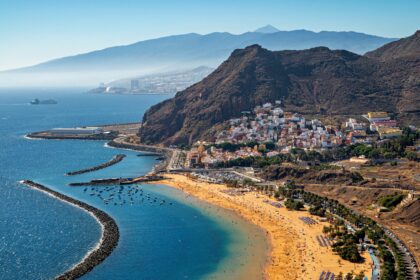
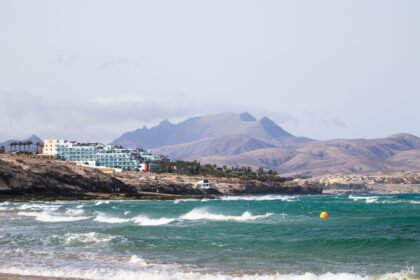
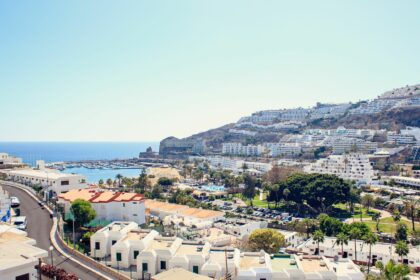
The Canary Islands are one of the few places in Europe where you can land in January and step off the plane into twenty degrees. That part is easy. The hard part comes next, because there are eight inhabited islands sitting a short hop from each other, sharing a flag, a currency and a language, and they are different enough that picking the wrong one can quietly ruin a week.
So we did something most comparison articles skip. We put the climate data for every island side by side, and found something that changes how this question should be answered. In winter, the coasts of all eight are within about one degree of each other. The difference that actually decides your holiday sits somewhere else entirely.
How many Canary Islands are there, and why does almost every article get the number wrong? Which one is actually hottest in December, and does it even matter? Which is greenest, quietest, smallest? And can you eat well as a vegan on a volcanic island in the middle of the Atlantic, or will you be living on chips? We go through all eight, one at a time, with real numbers and honest answers about the places where the food situation is thin.
Where are the Canary Islands?
The Canary Islands sit in the Atlantic off the coast of Morocco and Western Sahara, much closer to Africa than to Europe. Fuerteventura is the nearest to the African mainland at about 97 kilometres, and El Hierro marks the western end of the chain. Further north in the Atlantic lies Portuguese Madeira, with a similarly mild winter, more mountains and fewer beaches, which we cover in our vegan Madeira guide.
They belong to Spain as an autonomous community, so you pay in euros and European health cover applies. They are part of the European Union, but they sit outside its VAT and excise territory, with their own lower sales tax called IGIC instead. That is why alcohol, cosmetics and electronics are noticeably cheaper here than on the mainland, and why your allowances on the way home are the ones you would get coming from outside the EU, even though the islands are inside the customs union. The islands also run an hour behind mainland Spain, which puts them on the same clock as the UK and Ireland all year.
How many Canary Islands are there? Eight, not seven
Open almost any article about the Canary Islands and you will read that there are seven. That has been out of date since 2018. A Senate committee unanimously backed the call on 26 June 2018, and La Graciosa was formally recognised as the eighth inhabited island in the revised Statute of Autonomy that November, upgrading it from an islet to an island in its own right. The archipelago has eight islands and five uninhabited islets, so eight inhabited islands in total.
To be fair, the practical effects were small. La Graciosa is still administered from Lanzarote, under the municipality of Teguise, so this was mostly formal recognition for the seven hundred or so people who live there. It is still useful to know, because it tells you how old the article you are reading is. If a page says seven islands, its information is at least seven years behind.
We cover all eight below. The four big ones everyone knows, the three western islands nobody talks about, and one tiny one you reach by ferry.
Canary Islands weather, and the hottest-island question
This is why most people arrive here, and it is also where most guides go wrong. The islands are nicknamed the islands of eternal spring and there is real truth in it. Temperatures move through a narrow band from about twenty to twenty-nine degrees across the entire year, a range you will struggle to find anywhere else in Europe.
But when we lined the average daily highs up next to each other, the result was not what the search results had led us to expect.
| Island | January high | August high | Annual rainfall | Rainy days |
|---|---|---|---|---|
| Lanzarote | 21 °C | 29 °C | 100 mm | 17 |
| Fuerteventura | 21 °C | 28 °C | 85 mm | 14 |
| Gran Canaria | 21 °C | 28 °C | 135 mm | 21 |
| Tenerife | 21 to 22 °C | 28 to 29 °C | 115 to 220 mm by coast | no data |
| La Palma | 21 °C | 27 °C | 326 mm | 38 |
| La Gomera | 22 °C | 28 °C | 147 mm | 17 |
| El Hierro | 21 °C | 26 °C | 185 mm | 24 |
| La Graciosa | no weather station of its own, expect Lanzarote figures | |||
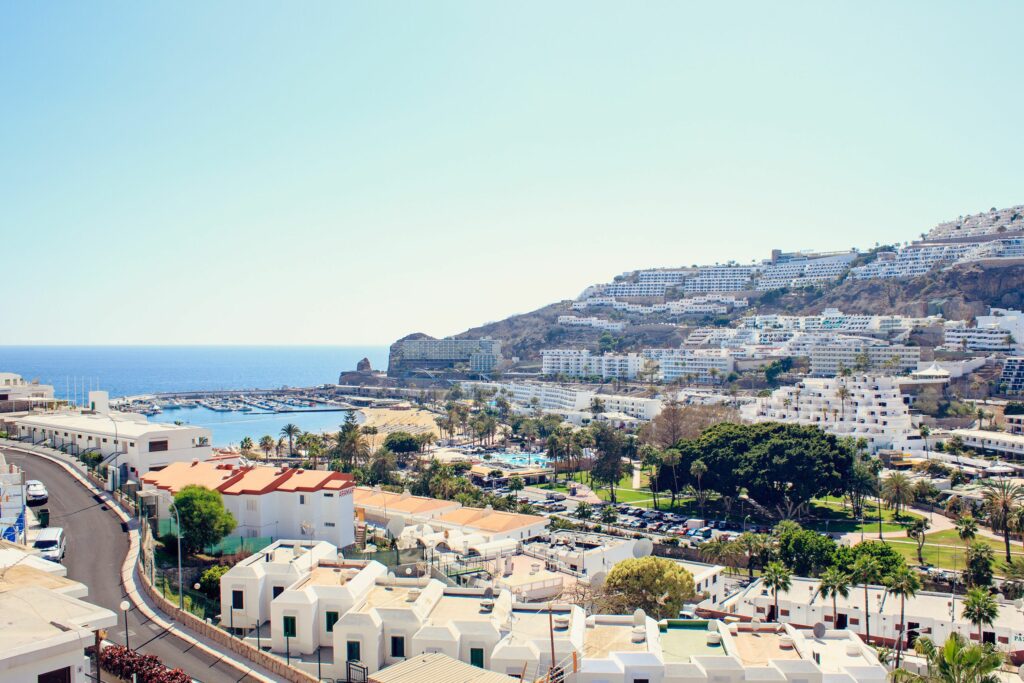
Which Canary Island is hottest in December, January and February?
Look at that first column again. Lanzarote 21 °C, Fuerteventura 21 °C, Gran Canaria 21 °C, La Palma 21 °C, El Hierro 21 °C, La Gomera 22 °C, Tenerife 22 °C on its southern coast. On the coast, in January, every island is effectively the same temperature. The spread is about one degree, which is less than the difference between a sunny and a cloudy hour on the same afternoon. To see how the Canaries compare with Thailand, Sri Lanka or Zanzibar, read our guide to winter sun destinations.
So the question of which Canary Island is hottest in winter has no meaningful answer at island level. Guides answer it confidently anyway, and they contradict each other. Some say Lanzarote, because it lies closest to the Sahara. Others say southern Tenerife or southern Gran Canaria. Both are sort of right, because they are quietly measuring different things. The first group compares whole-island averages, the second compares specific resorts on the southern coast.
Summer is a different story. Lanzarote and Fuerteventura sit nearest the African mainland and run one and a half to three degrees warmer in August than La Palma and El Hierro out west. If you are travelling in July or August and want maximum heat, look east. In December, January and February, it makes no real difference.
In January it does not matter which island you choose. It matters which coast of it you sleep on.
Rain and aspect decide it, not temperature
The last column of that table is the interesting one. Temperatures vary by a single degree, but rainfall varies almost fourfold. Fuerteventura gets around 85 mm a year across fourteen rainy days. La Palma gets 326 mm across thirty-eight. That is a difference you notice immediately on a week’s holiday.
The mechanism is simple. North-easterly trade winds hit the northern slopes, cool, and drop their moisture there. Northern coasts are therefore green, often cloudy and cooler, while southern coasts are dry and sunny. On the mountainous islands, Tenerife, Gran Canaria and La Palma, that north-south split is bigger than the difference between one island and another. Tenerife shows it in the numbers: the southern coast gets about 115 mm of rain a year, Santa Cruz in the north-east gets around 220 mm, and the wettest part of the north around La Laguna gets over 500 mm.
The practical conclusion is this. If you are chasing winter sun, choose by rainfall and by staying on a southern coast, not by average temperature. Fuerteventura and Lanzarote are the driest, La Palma the wettest. If what you actually want is green landscape and hiking, invert all of that advice.
| Season | Daytime highs | Sea temperature | Best for |
|---|---|---|---|
| December to February | 20 to 22 °C | 19 to 21 °C, bracing | escaping northern winter, hiking, lowest prices outside the holidays |
| March to May | 22 to 25 °C | 19 to 20.5 °C | the best balance of weather, quiet and price |
| June to August | 25 to 29 °C | 21.5 to 23 °C | swimming, but peak prices and peak crowds |
| September to November | 24 to 29 °C | 23 to 24 °C in September and October, warmest of the year | swimming and hiking together, our pick |
Timing tip: The sea is at its warmest in September and October, around 23 to 24 °C, and at its coldest in March rather than midwinter, because the ocean lags the air by about two months. The Atlantic here runs cooler than the Mediterranean in summer, so if you are used to Croatia or Greece in August the first swim will surprise you. In winter it is the other way round, and while the Adriatic drops into single figures Canarian water stays around 19 to 20 °C. There is an east-west split too: Lanzarote and Fuerteventura sit about a degree cooler in the water every month of the year than Tenerife, La Palma and El Hierro. The eastern islands give you the warmest air and the coolest sea.
Which is the best Canary Island for you?
Here is the short version to come back to. Each island is covered in more detail underneath, including what the vegan food situation is actually like.
| Island | Stands out for | Best for | Vegan food |
|---|---|---|---|
| Tenerife | largest, highest mountain in Spain | a first visit, variety, hiking | the best in the archipelago |
| Gran Canaria | most landscapes in the least space | dunes, mountains and a city in one week | good, but only in Las Palmas |
| Lanzarote | volcanic landscape and architecture | photographers, a quieter week | thin and badly documented online |
| Fuerteventura | longest beaches, least rain | beaches, wind sports | thin, and only in the north |
| La Palma | greenest, best night sky | hiking, stargazing, quiet | limited, a handful of places |
| La Gomera | laurel forest, silence, whistled language | walking, proper quiet | small but excellent |
| El Hierro | smallest of the seven main islands, diving | divers and hermits | essentially none |
| La Graciosa | smallest inhabited, sand streets | a day or two, not a week | essentially none |
Tenerife, the largest and the safest bet
Tenerife is the biggest of the islands and the hardest one to get wrong. It contains a green, rainy north, a parched sunny south, the UNESCO-listed old town of La Laguna, and in the middle Mount Teide, which at 3,715 metres is the highest point in all of Spain.
For vegans it is comfortably the best address in the archipelago. There are fully vegan places in both the south and the north, covering Italian food, tapas and brunch, so you are not dependent on what a standard menu will adapt for you. If you are choosing your first Canary Island, this is the low-risk answer. We went through it properly in our guide to where to eat vegan in Tenerife and what to see, including the compulsory permits for the Teide summit and the Masca gorge.
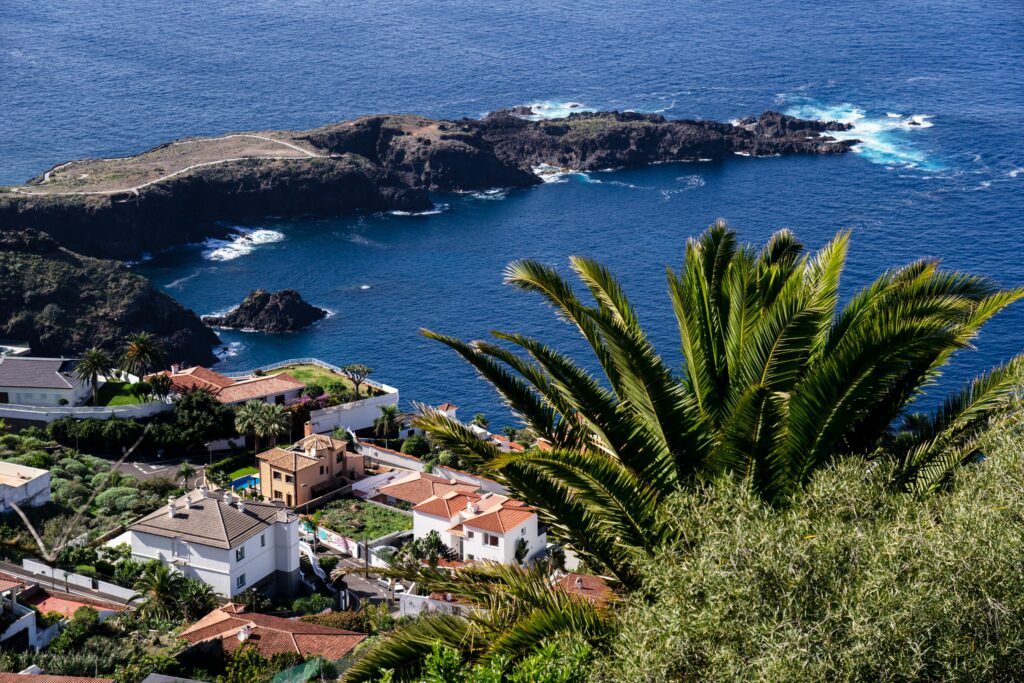
Gran Canaria, a continent in miniature with one catch
Gran Canaria gets called a miniature continent and the nickname earns itself. In roughly 1,560 square kilometres you get the dunes at Maspalomas, the mountains around the Roque Nublo monolith, pine forest, and a three-kilometre city beach at Las Canteras in the capital, Las Palmas.
The catch is food, and it is a significant one. The vegan scene on this island exists almost entirely in Las Palmas in the north. Across the southern resort belt, where most visitors actually stay, we could not find a single fully vegan restaurant. If you are coming for the food, stay in the north. If you are coming for dunes and sunshine, plan on self-catering or on ordering carefully from regular menus. There is more in our piece on things to do in Gran Canaria, including the rule change at Roque Nublo, where booking has been compulsory at peak hours since February 2025.
Lanzarote, lunar landscape and a thin food scene
Lanzarote looks like nowhere else in the chain. Eruptions between 1730 and 1736 buried roughly a quarter of the island in lava, and the result is the black terrain of Timanfaya, the only national park in Spain protected for essentially geological reasons. The whole island has been a UNESCO Biosphere Reserve since 1993, and thanks to rules laid down by the artist César Manrique you will not find high-rise resort hotels on its coast, with one exception in the capital.
Food is a weaker point and it deserves saying out loud. There were never many vegan places here, several have closed, and most guides online have not caught up, so they still recommend restaurants that no longer exist. We worked through which places have a verifiable trail and how to eat well regardless in our piece on what to do in Lanzarote.
Fuerteventura, the longest beaches and the least rain
Fuerteventura has the second-longest coastline in the Canaries after Tenerife, and by a clear margin the lowest rainfall in the archipelago. If your goal is beach, sand and the smallest possible chance of a wet day, this is statistically the best choice on the list.
The price you pay is wind, which the island is famous for and which is exactly why surfers and kitesurfers come from all over Europe. Vegan places are few and all of them sit in the north, while the southern end around Costa Calma, Morro Jable and Jandía has none at all. Where the wind actually drops, and how the free permit for the Isla de Lobos works, is covered in things to do in Fuerteventura.
La Palma, the greenest Canary Island
La Palma is Fuerteventura’s opposite. With 320 mm of rain a year across thirty-seven wet days it is the wettest island in the chain, and that is precisely why it is the greenest. Laurel forest grows here, the whole island has been a UNESCO Biosphere Reserve since 2002, and with almost no light pollution it ranks among the best places in the world for looking at the night sky.
Vegan options are limited and concentrated around Los Llanos de Aridane on the western side. Places do exist, but there are only a few and reviews are mixed, so do not arrive expecting a café scene. Assume you will cook some of your own meals, and treat the food as a bonus rather than the reason for the trip.
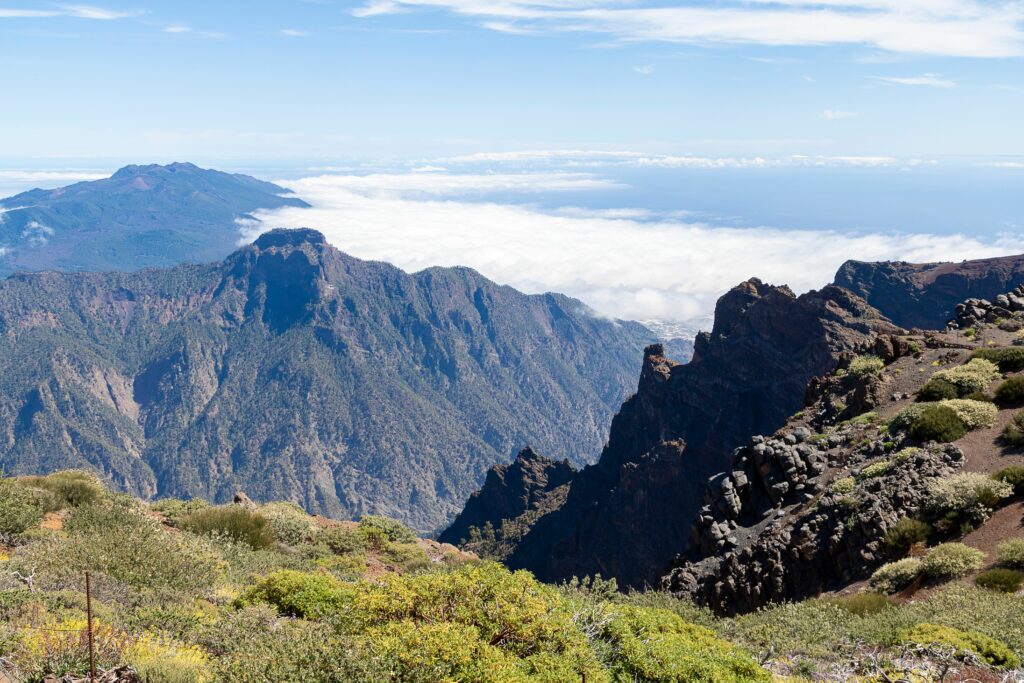
La Gomera, silence, forest and one real surprise
La Gomera is a small, steep island a short crossing from Tenerife, and most visitors only ever see it on a day trip. That is a shame, because it is one of the quietest places in the archipelago. Misty laurel forest covers the high ground, and islanders have long communicated across the deep ravines using a whistled form of Spanish called silbo gomero, now taught in local schools so it does not die out.
The island’s best-known kitchen is in the hamlet of Las Hayas. Casa Efigenia has been cooking there since the 1960s, using vegetables from the family’s own garden. Be clear about what it is, though. There is no meat and no fish on the menu, but it is a vegetarian kitchen rather than a vegan one, and the house signatures are goat’s cheese dishes and almogrote, a hard-cheese paste. Both twelve-euro set menus come with almogrote bread, escaldón de gofio and an almond flan (made with egg) as standard. Say you are vegan when you book and ask them to build the meal around the vegetables and their potaje de berros. It holds a Solete from the Repsol Guide, so this is not a tip scraped off a decade-old blog. Its own site is casaefigenia.com. Opening days change with the season, so check before you drive up.
El Hierro, the smallest and most remote
El Hierro is the smallest of the seven main islands and the furthest west. The entire island has been a UNESCO Biosphere Reserve since 2000, it has spent years working towards covering its energy use from renewables, and among divers it has a reputation as one of the best sites in Europe. It is the quietest island in the chain, which is both its main appeal and its main drawback.
On vegan food, let us be blunt. El Hierro has no dedicated plant-based restaurant at all. There are places that will cook you something without meat if you ring a day ahead, but that is a strategy rather than a scene. If you come here, plan on self-catering and buy your supplies on a larger island first.
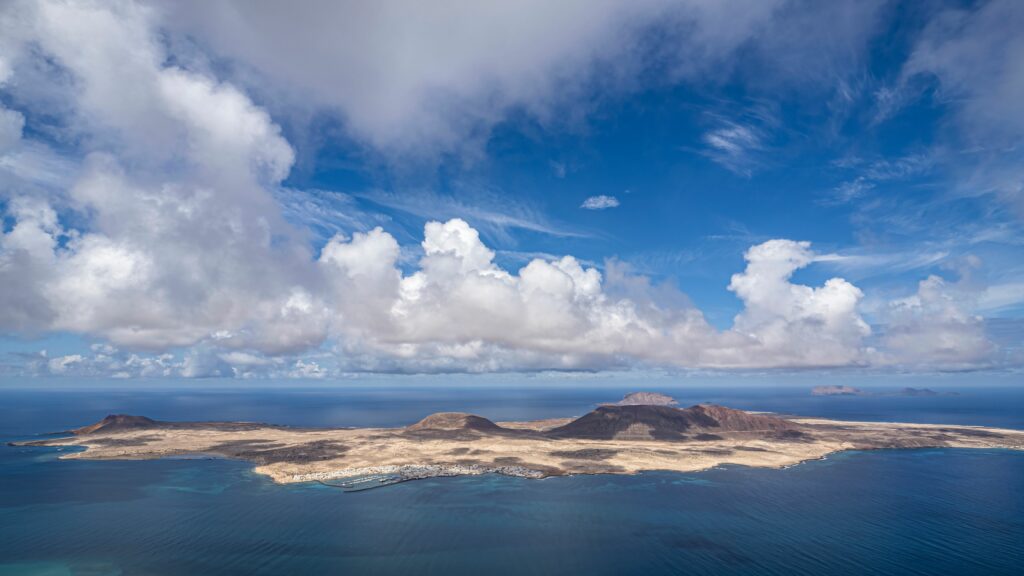
La Graciosa, the eighth island, with sand for streets
La Graciosa covers 27 square kilometres, has around seven hundred residents, and is the smallest inhabited island in the archipelago. You reach it on a twenty-five-minute ferry from Órzola on the north coast of Lanzarote, and you understand the appeal the moment you step off. The streets and roads are not paved, they are sand, and motor vehicles are restricted to a small number of licensed ones. Most people get around on foot or by bike.
Everything is concentrated in the single village of Caleta de Sebo, which has a supermarket, a bakery, a small pharmacy dispensary open mornings only, and a single cash machine. The second settlement, Casas de Pedro Barba, is mostly summer houses. The island forms part of the Chinijo Archipelago Natural Park, and its drinking water has been piped in from Lanzarote along a submarine pipeline since the late 1990s, with a replacement now being built because the old one keeps breaking, which explains the local habit of not wasting a drop of it.
The restaurants are all in Caleta de Sebo, and it is a fishing village, which the menus reflect. There is next to nothing specifically vegan. For a day trip that hardly matters, since you can bring food with you and top up at the shop. Practical detail on ferries and accommodation is on Turismo Lanzarote, the island council’s tourism site.
Eating vegan in the Canary Islands
Canarian cooking is closer to plant-based eating than you might expect. It is built on gofio, potatoes, pulses and vegetables, with fish and goat’s cheese alongside, because the islands were poor for a long time and meat was food for special occasions. The problem is not what gets cooked here. The problem is that a few traditional dishes look vegan and are not.
Your safe order is papas arrugadas, small potatoes boiled in heavily salted water and served with two sauces. Mojo verde is the green one, made with coriander or parsley, and mojo rojo the red one, made with peppers and garlic. Both are plant-based in their traditional form. Beyond that, gazpacho, pan con tomate, grilled vegetables, olives and the local fruit will all serve you well.
Two dishes deserve a warning. Gofio escaldado, which is the most common restaurant preparation of the local toasted flour, is traditionally thickened with fish broth. Gofio as a flour is plant-based, but this particular dish is not. The second trap is bienmesabe, an almond dessert that sounds innocent enough but is bound with egg yolks. Some versions add miel de palma, which is palm syrup rather than bee honey, so it is the eggs that rule it out. Also not vegan: almogrote, queso asado, sancocho, ropa vieja and rabbit in salmorejo sauce. Watch the soups that look like vegetable stews, too. Potaje de berros and rancho canario are normally made with pork or beef.
One more thing guides tend to skip. Canarian wine is good and cheap, but as everywhere it may be fined using gelatine, isinglass, egg white or casein. If that matters to you, ask at the winery directly. There are a lot of small family producers here and they will tell you without any fuss.
We checked the venue information and the island-by-island picture in August 2026. Small places on small islands change their hours and their status often, so confirm before you travel. That is exactly why we name fewer places here and say plainly where you are better off cooking for yourself.
Shopping tip: On Tenerife, Gran Canaria, Lanzarote and Fuerteventura you will find Mercadona, HiperDino, Spar, Lidl and Aldi. Mercadona carries its own line of plant-based products including soy yoghurts, tofu and plant milks. On the western islands the picture thins out fast: La Palma has one Mercadona and one Lidl, La Gomera has essentially only Spar, and El Hierro only HiperDino. Spar is the one chain that reaches almost every island. On El Hierro and La Graciosa the shops are fine but they exist only in the main settlements, so buy what you need before you set off for the day.
Watch out for the island name confusion
This is a practical trap that catches almost anyone searching for restaurants through maps and review apps. Place names repeat across the Canaries and the algorithms cannot tell them apart.
While researching this article, we searched for vegan places on the island of La Palma and got back two restaurants that are actually on Tenerife. A search around La Caleta returned restaurants in Costa Adeje on Tenerife rather than anywhere near Caleta de Sebo on La Graciosa.
The reason is that three similar names collide. La Palma is an island, Las Palmas is the capital of Gran Canaria, La Caleta is also a village on Tenerife, and Santa Cruz de Tenerife is easily confused with Santa Cruz de La Palma. On top of that, La Palma gets mixed up with Palma de Mallorca, which is a different archipelago entirely. Before you set off anywhere, check which island the place is really on. Look at the full address, not just the name of the town.
Getting there and getting around
Flights from the UK take roughly four and a half hours, and from central Europe about five to five and a half. Direct routes serve Tenerife, Gran Canaria, Lanzarote and Fuerteventura most reliably. From smaller departure airports the direct services are often seasonal and sometimes run only once or twice a week, so connecting through Madrid or Barcelona is frequently the better option outside peak season.
La Palma is better connected than most people assume. Alongside Madrid and Barcelona it has direct seasonal flights from Germany, the Netherlands, the UK, Poland and the Czech Republic. La Gomera and El Hierro are the properly remote pair: both have airports, but Binter flies them only from Tenerife North and Gran Canaria, so most people arrive by ferry. La Graciosa can only be reached by boat.
Inter-island ferries run frequently and are a good way to combine two islands into one trip. Lanzarote to Fuerteventura takes 25 to 35 minutes depending on the sailing, Tenerife to La Gomera about fifty. Both work as a day trip, provided you check the last sailing back before you commit.
Hire a car on the large islands, because public transport between the interesting places is slow and sparse. On La Graciosa you neither need one nor can get one. Prices overall are lower than mainland Spain, especially fuel and alcohol, though accommodation in the southern resorts usually costs more than in the north.
Travelling with someone who isn’t vegan: The Canaries are unusually easy for this, because papas arrugadas with mojo, grilled vegetables and the local fruit please everyone and nobody reads them as vegan food. Order several small plates for the middle of the table, the way locals do. It works out cheaper and nobody has to negotiate over what they are allowed to eat.
A word on visiting responsibly
The Canaries have had a difficult few years with tourism. There have been large public protests about the pressure visitor numbers put on housing, water and the landscape, and the islands import a great deal of what they consume while running desalination plants to supply their taps. None of that is a reason to stay away, and local economies depend heavily on visitors.
It is a reason to spend thoughtfully. Eat at locally owned places rather than international chains, stay on marked paths in the dunes and the national parks, where walking off-trail carries a fine, and treat water as the scarce resource it is here. Choosing a smaller island in shoulder season does more good than any amount of good intentions in August.
Four things you probably didn’t know
The name has nothing to do with birds. It runs the other way round. The islands were named after dogs, from the Latin canis, and the canary bird was named after the islands it came from.
On La Gomera, people communicate by whistling. Silbo gomero is a whistled form of Spanish that carries a message across deep ravines for several kilometres. It is now taught in island schools to keep it alive.
The archipelago has two capitals at once. Las Palmas de Gran Canaria and Santa Cruz de Tenerife are joint capitals permanently. What moves between them is the seat of the regional Presidency, which alternates each legislative term, while the Vice-Presidency sits in whichever city the President does not. The regional Parliament stays in Santa Cruz de Tenerife. It is a compromise born of a long rivalry between the two cities.
The sand in the Maspalomas dunes did not blow in from the Sahara. Despite the story you will hear, it is crushed shell and marine debris from the sea floor. What does arrive from the Sahara is fine dust, during the haze the islands call calima.
Asking for vegan food in Spanish
English works fine in the tourist areas, but a few phrases go a long way outside them. Bear in mind that vegetariano is often understood more loosely in Spanish than you would expect, so it pays to be specific.
- Soy vegano or soy vegana means I am vegan, masculine and feminine.
- Sin carne, sin pescado, sin queso, sin huevo covers without meat, fish, cheese or egg. Name the fish separately, because it often is not counted as meat.
- ¿Lleva caldo de pescado? asks whether there is fish stock in it. That one question saves you from gofio escaldado.
- ¿Tienen algo vegano? means do you have anything vegan, a reliable way to open the conversation.
So which island will it be?
If we had to compress it into one line, it would be this. Tenerife for a first trip, Fuerteventura for beaches, Lanzarote for landscape, La Palma or La Gomera for hiking and quiet. And if food is your priority, choose the coast first and the island second.
Whichever you pick, bring a little patience for asking questions in restaurants and some appetite for the things locals actually eat. You can eat well in the Canaries without a vegan restaurant on every corner. Which island is calling you, and are you going for the sun or the mountains? Tell us in the comments.
Frequently asked questions
How many Canary Islands are there?
The archipelago has eight islands and five uninhabited islets, so eight inhabited islands. The eighth is La Graciosa. A Senate committee backed the move on 26 June 2018 and the revised Statute of Autonomy formally recognised it that November. Older guides and a large share of pages online still say seven.
Which Canary Island is the hottest in December?
In practice, none of them stands out. Average January highs sit around 21 °C on every island and the spread is about a single degree, and December is barely different. What varies is rainfall, from 85 mm a year on Fuerteventura to 320 mm on La Palma, and whether you stay on a northern or southern coast. For winter sun, pick a dry island and a southern resort.
Which is the best Canary Island for a first visit?
Tenerife, for most people. It is the largest island, it has the widest range of landscapes from Teide down to the coast, the transport links are the best, and it has by far the strongest vegan food scene in the archipelago. Fuerteventura is the better answer if you mainly want beaches, and Lanzarote if you want the volcanic scenery.
How long is the flight to the Canary Islands?
About four and a half hours from the UK and five to five and a half from central Europe, depending on the island. Direct flights mainly serve Tenerife, Gran Canaria, Lanzarote and Fuerteventura. La Palma also has direct seasonal routes from several European cities. La Gomera, El Hierro and La Graciosa are reached by connecting flight or by ferry from a larger island.
Are the Canary Islands in the EU?
Yes. They are part of Spain and therefore part of the European Union, and they use the euro. They do sit outside the EU VAT and excise territory, with their own lower IGIC sales tax, which is why alcohol, cosmetics and electronics are cheaper here and why allowances apply differently on the way home.
Can you eat vegan in the Canary Islands?
It depends a lot on the island. Tenerife has the best choice, Gran Canaria is good but only in Las Palmas. Lanzarote and Fuerteventura have a handful of places, and El Hierro and La Graciosa have essentially none. Traditional Canarian cooking leans heavily on potatoes and vegetables though, so papas arrugadas with mojo, gazpacho and grilled vegetables are a safe order anywhere.
Read next
The Canaries are only part of what Spain offers vegan travellers. For the whole picture, from Barcelona and Madrid down to the islands, start with our guide to whether Spain is vegan friendly. And if you are considering a package with meals included, we have written up how vegan food actually works at an all-inclusive resort.
Featured photo: Atlantic Ambience, Pexels.
Newsletter
Get our free e-books
Join the newsletter and download Our Vegan Christmas Kitchen straight away, 10 recipes for Czech cookies, gingerbread and vánočka. Then once a month, new places from the vegan map and new articles. Unsubscribe with one click.