The best things to do in Portugal fit into one trip surprisingly well. Ride the yellow trams up Lisbon’s hills and wander the fairy-tale palaces of Sintra. Sip port in the cellars across the river from Porto, stand in a Roman temple in Évora, then finish with a few days on the golden cliffs of the Algarve. It’s a small country, and the fast train links most of it in about three hours.
Then there’s the food. Traditional Portuguese cooking leans on salt cod, pork and egg custard, and most lists of things to do in Portugal stop at “eat a pastel de nata”. That’s not much help if you’re vegan, travelling with someone who is, or just curious about eating more plants on holiday.
So where should you go first, the cities or the coast? When is the weather best, and is it worth going in March, May or December? What do you do when it rains, and what works with kids?
Has anything closed that older guides still recommend? And is Portugal vegan friendly once you leave Lisbon? We’ve answered all of it, region by region, with a verified place to eat in each.
We haven’t travelled around Portugal ourselves yet, so this isn’t a trip diary. In November 2026 we read every restaurant’s own website and menu, or confirmed its details in two independent sources. Ticket prices come from the official sites, and temperatures from the long-term averages of IPMA, Portugal’s weather service. Places we couldn’t confirm are left out, even where other guides still list them.
Things to do in Portugal at a glance: where to go for what
Portugal has five main areas for a holiday. Lisbon and Sintra are for sights, Porto and the Douro valley for wine and city life. Central Portugal has monasteries and Nazaré’s giant waves, the Alentejo has quiet and stars, and the Algarve has the beaches. Then there are the islands of Madeira and the Azores. For a first trip, ten days covers Lisbon, Porto and a few days in the Algarve.
The table shows what each region is best for and how easy it is to eat vegan there. The sections after it run north to south, so you can build the trip as a loop.
| Region | Best for | Best months | Vegan food |
|---|---|---|---|
| Lisbon and Sintra | city sights, palaces, day trips by train | March to June, September and October | the most fully vegan places in the country |
| Porto and the Douro | wine, the river, azulejo tiles | May to September | dozens of places, including vegan francesinha |
| Coimbra, Óbidos, Nazaré | monasteries, the university, big waves | spring and autumn, waves in winter | few, eat in Lisbon or Porto |
| Alentejo and Évora | quiet, Roman sites, stargazing | spring and autumn (summer is hot) | few, plan ahead |
| Algarve | beach holidays, cliffs, coves | May to October | vegan places in Faro, Lagos and Albufeira |
| Madeira and the Azores | hiking, nature | all year | a fully vegan restaurant in Funchal |
Short on time? Lisbon plus the Algarve is the easiest combination. The train from Lisbon’s Oriente station to Faro takes about three hours, so you can leave the city in the morning and be by the sea in the afternoon.
Algarve on our vegan map
6 places, 4 fully vegan. Tap a pin to see the details.
Loading the map…
- 100% vegan
- Vegetarian
- Vegan options
Lisbon and Sintra: trams, Belém and palaces
Lisbon is the best place to start a trip to Portugal, because it has the most sights and the most vegan restaurants in the country. You can walk Alfama, Baixa and Chiado, take the tram to Belém and the train to Sintra. Give the city and Sintra three to four days.
Lisbon: Alfama, Belém and the viewpoints
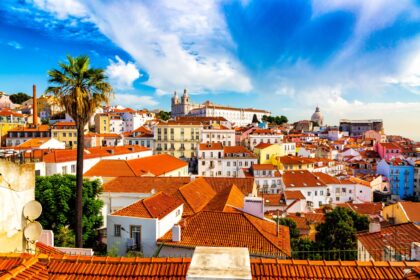
Lisbon sits on hills above the river Tagus and is best explored on foot. Alfama, the oldest quarter, has narrow lanes, São Jorge Castle and the Santa Luzia and Portas do Sol viewpoints. In Belém, to the west, Jerónimos Monastery and Belém Tower have been a UNESCO World Heritage Site together since 1983.
Jerónimos Monastery is closed on Mondays. More importantly, here’s a change most older guides miss. The famous Santa Justa Lift and the Glória, Bica and Lavra funiculars have been out of service since September 2025, with no reopening date announced. For now, you climb the hills on foot or by tram.
For a district-by-district plan, ticket prices and every verified place to eat, see our full list of things to do in Lisbon, with vegan food in every neighbourhood.
Sintra and Cabo da Roca: palaces in the forest and the end of Europe
Sintra is a town of palaces in the wooded hills near Lisbon, and a UNESCO cultural landscape since 1995. The train from Lisbon’s Rossio station takes about 40 minutes. The star is the colourful Pena Palace on a rock above the forest, with the Moorish Castle next door. In town, the gardens of Quinta da Regaleira have a spiral well you walk down into.
How much is Pena Palace? On the official Parques de Sintra site, the Essential Visit to the palace, terraces and park is 20 € for an adult in November 2026. The Complete Visit, which adds the royal family’s private apartments, is 45 €, and the park alone is 12 €.
Palace entry is only at the time slot you book, so leave plenty of time for the climb from the station. The park is open 9:00 to 19:00 and the palace 9:30 to 18:30.
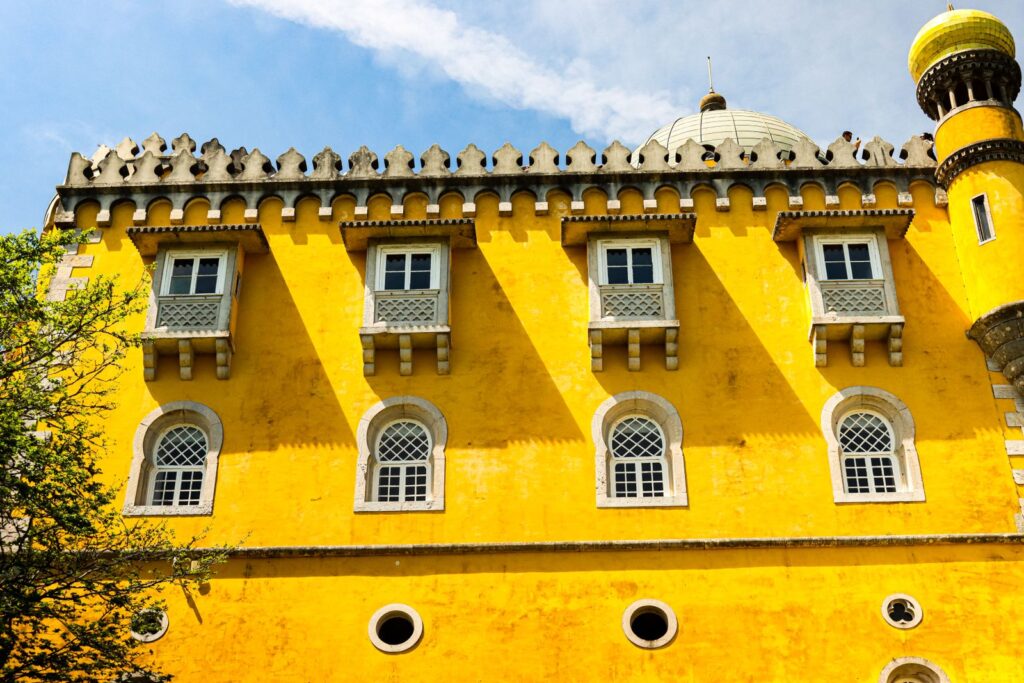
From Sintra it’s a short hop to Cabo da Roca, the westernmost point of mainland Europe, with a lighthouse, cliffs and a wind that will take your hat. On the way back you can stop in the seaside town of Cascais and take the coastal train to Lisbon’s Cais do Sodré station.
Where to eat vegan in Lisbon
Lisbon has dozens of fully vegan places, and some of them cook Portuguese classics with plants. Ao 26 Vegan Food Project on Rua da Horta Seca 5 makes a seitan bifana and a francesinha. A bifana is normally a pork cutlet in a bread roll, so this is a good way to try a Lisbon staple.
For something sweet, go to Vegan Nata Chiado on Rua da Misericórdia 9. This small bakery makes only vegan pastéis de nata, the famous custard tarts, and it’s open every day from 9:00 to 19:00. A classic pastel de nata is made with egg yolks and milk, so a regular bakery won’t help a vegan.
Take a picnic to Sintra. We couldn’t verify a fully vegan place in town well enough to recommend it, and the cafés around the palaces mostly sell coffee and cakes.
Porto and the Douro valley: wine, river and tiles
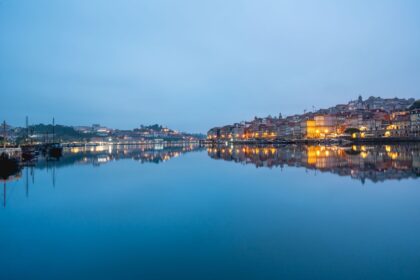
Porto is Portugal’s second city, and its historic centre has been on the UNESCO list since 1996. Think houses covered in blue and white azulejo tiles, bridges over the river Douro and port cellars on the opposite bank in Vila Nova de Gaia. Two days are enough for Porto, and a third is for the Douro valley.
Porto: Ribeira, the Dom Luís I bridge and the Gaia cellars
Porto is best seen from the Ribeira riverfront, where the top deck of the Dom Luís I bridge crosses to the other bank. Vila Nova de Gaia is where the port houses age their wine. Most run tours with tastings, so non-vegans in your group are well looked after too.
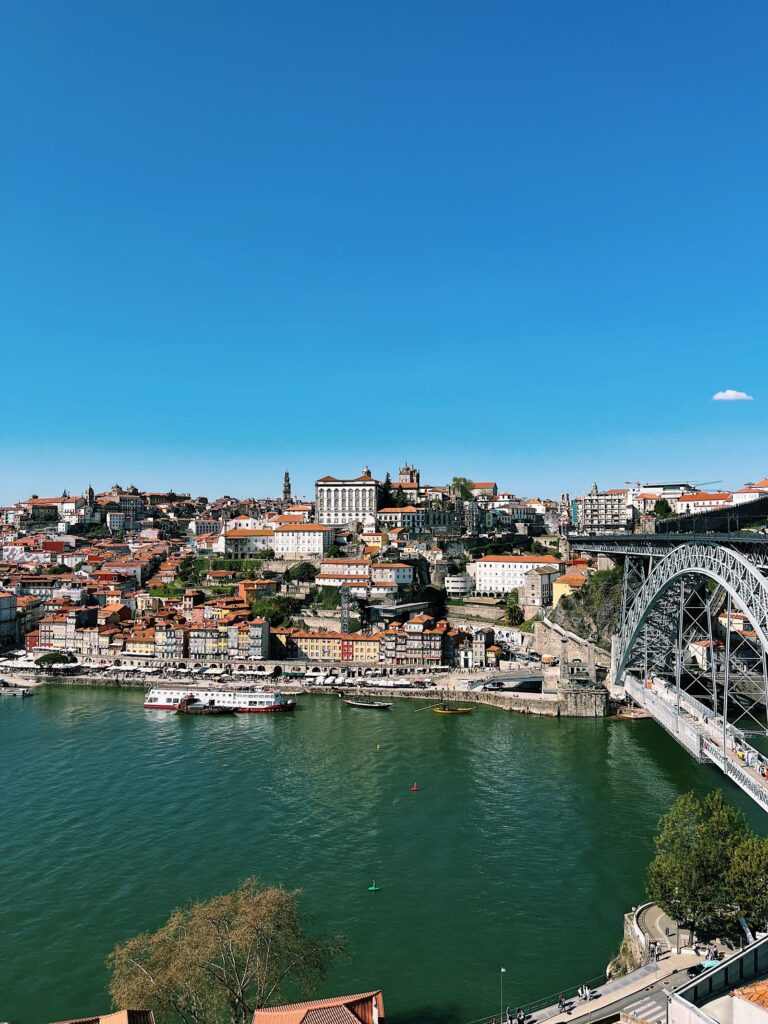
Porto is also the city of the francesinha. It’s a huge sandwich of meat and cheese under a beer sauce, and vegans used to just watch. Today several places make a fully plant-based one. Find them in our guide to vegan Porto and where to try a vegan francesinha.
The Douro valley: terraces, vineyards and a riverside train
The Douro valley is the wine region east of Porto where the grapes for port are grown. It has been a UNESCO cultural landscape since 2001. The vineyards climb in terraces above the river, and it’s at its best in September and October, during the harvest.
You can get there from Porto by train, by car or on a day cruise. With only one day, choose by what you want most. A car lets you see more, and the train lets you taste more, because nobody has to drive.
Where to eat vegan in Porto
Eating vegan in Porto is easy. Kind Kitchen on Rua de Ceuta 80 is fully vegan and open every day, serving tacos, bowls, burgers and its own francesinha with seitan and fries.
The classic francesinha house Santa Francesinha on Praça dos Poveiros 72 serves a 100% vegan francesinha next to the meat versions. Ask for the vegan one, not the vegetarian, and note it’s closed on Tuesdays. It’s ideal for a mixed group where everyone wants something different.
Read next
Portugal pairs well with Spain, especially via Seville and Andalusia. Read our answer to is Spain vegan friendly and plan a trip across the border.
Central Portugal: Coimbra, Óbidos, Nazaré and the monasteries
Central Portugal, between Lisbon and Porto, is the best region for a sightseeing road trip. It has the university city of Coimbra, the walled town of Óbidos, the fishing town of Nazaré with its giant waves, and three UNESCO-listed monasteries. It’s easiest by car, on the way from Lisbon to Porto.
Coimbra: Portugal’s oldest university
Coimbra is a university city on a hill above the river Mondego. Its university, with a baroque library, has been on the UNESCO list since 2013 together with the Alta and Sofia districts. Students still wear black capes, and the city has its own style of fado, sung by men.
Óbidos, Batalha, Alcobaça and Tomar
Óbidos is a small town inside medieval walls you can walk along. Batalha Monastery and the Convent of Christ in Tomar have been on the UNESCO list since 1983, and Alcobaça Monastery since 1989. Tomar was the seat of the Knights Templar, which is a good reason to stop for kids and adults alike.
Nazaré: where surfers ride the world’s biggest waves
Nazaré is a fishing town where surfers ride some of the biggest waves in the world at Praia do Norte. The big-wave season runs roughly from October to March, with the best chances from November to February. There’s no fixed calendar, though, and big swells are forecast only a few days ahead.
The best view is from the Forte de São Miguel Arcanjo on the headland above the beach. The town’s main beach, by contrast, is calm all year and fine for swimming in summer. Stay well back from the water at Praia do Norte on big-wave days, because waves can reach people on the beach.
Be honest with yourself about food in central Portugal. There are few fully vegan places, and we didn’t verify any in the small towns. Ask for vegetable soup (sopa de legumes) or tomato rice, and save dinner for Lisbon or Porto.
The Alentejo: Évora, Monsaraz and dark skies
The Alentejo is a large, sparsely populated region between Lisbon and the Algarve. It has cork oak groves, whitewashed villages and very hot summers. It suits travellers who want quiet, wine and history instead of crowded beaches.
Évora: a Roman temple and a chapel of bones
Évora is a historic town on the UNESCO list since 1986. In the centre stand the remains of a Roman temple, and next to the Church of St Francis is the Capela dos Ossos, a chapel lined with human bones. You can visit as a day trip from Lisbon, but one night gives you a quiet evening without the tour groups.
Monsaraz and Lake Alqueva: a night under the stars
Monsaraz is a medieval hilltop village above Lake Alqueva, near the Spanish border. Alqueva is one of the largest artificial lakes in Western Europe. The area around it was the world’s first certified Starlight Tourism Destination, so go after dark and on a night without much moon.
Summer in the inland Alentejo is far hotter than on the coast, and nothing happens at midday. Visit Évora and Monsaraz in spring or autumn instead, when it’s warm but not scorching.
The Algarve: beaches, cliffs and coastal towns
The Algarve is Portugal’s south coast and its favourite beach holiday region. The west around Lagos has golden cliffs and rock arches. The middle, around Albufeira and Carvoeiro, has the big resorts, and the east around Faro and Tavira has lagoons and long sandy islands. The sea is the Atlantic, so it’s cooler than the Mediterranean.
Lagos: Ponta da Piedade and Sagres
Lagos is a historic town in the western Algarve with old walls and lovely beaches under the cliffs. Right next to town is Ponta da Piedade, a cluster of rock pillars and caves you can see from the clifftop steps or by boat. From Lagos you can also drive to Sagres and Cabo de São Vicente, the far south-western corner of Europe.
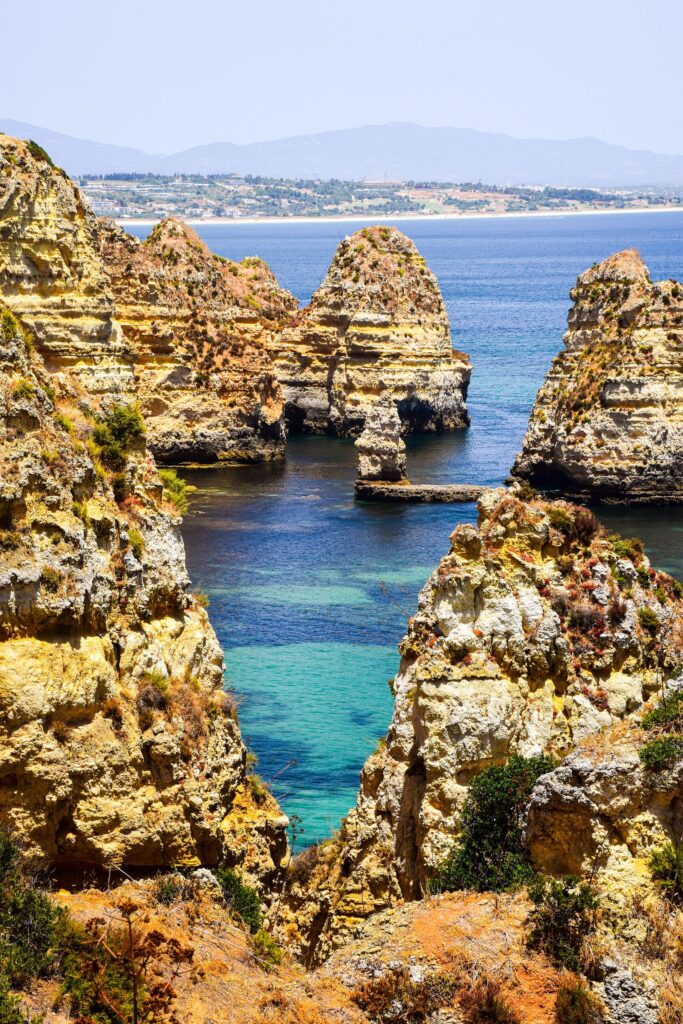
Benagil cave and the Seven Hanging Valleys Trail
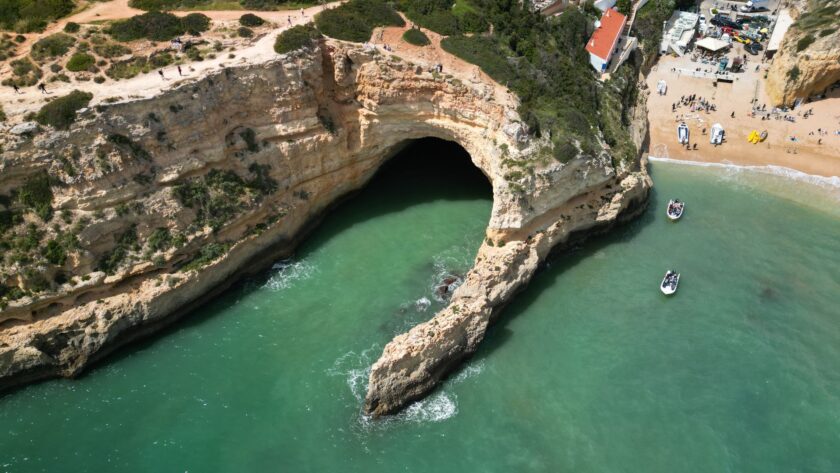
Benagil cave, with its round hole in the roof, is one of the most photographed spots in the Algarve. New rules have applied since 13 August 2024. You can no longer swim or float into the caves, landing on the beach inside is banned, and unguided kayak hire nearby is not allowed. To see the inside, you need a licensed boat trip or a guided kayak tour.
The other option is to look into the cave from above. The Seven Hanging Valleys Trail (Percurso dos Sete Vales Suspensos) runs along the clifftops between Praia da Marinha and Vale de Centeanes, about 6 km one way. There’s no shade, so start early and carry plenty of water.
Albufeira: old town and big resort
Albufeira is one of the Algarve’s best-known resort towns, with an old town above the beach and a long strip of hotels and bars. It’s the most practical base for central Algarve beaches and Benagil boat trips. If you want quiet evenings, stay in the old town end rather than on the main nightlife strip.
Faro and Tavira: old towns and the lagoon
Faro is the Algarve’s capital, with the airport and a pretty old town inside its walls. It sits on the Ria Formosa lagoon, a protected natural park of islets, channels and birdlife. Boats run from Faro to sandy barrier islands where you can swim far from the resorts.
Tavira, just to the east, is a calm little town with a bridge over the river and church towers above the rooftops. For a beach holiday without big hotels, it’s a better pick than Albufeira.
Where to eat vegan in the Algarve
The Algarve’s fully vegan places are mainly in Faro and around Albufeira and Lagos, which answers most “vegan Portugal Algarve” searches in one line. Outro Lado on Travessa da Madalena 6 in Faro is a vegan restaurant cooking Portuguese dishes, including a francesinha and vegan cheeses. Its hours change often, and its own page listed only a few weekdays in November 2026, so book ahead.
Also in Faro is V-GAN Café, a family-run vegan café formerly called Vegan Box. It has moved to R. Filipe Alistão 28/30, so the old address in some guides is out of date. Expect seitan burgers and vegan pastéis de nata.
In Albufeira, Alfarroba Café in Parque da Corcovada is 100% vegan and cooks macrobiotic food from organic produce. The daily special is soup, a main and tea, with salads, wraps and burgers alongside.
West of Lagos, in the village of Barão de São Miguel, Algarvegan is a plant-based hummus bar with falafel and malabi for dessert. In Lagos itself, Estúdio Vegetariano on R. da Oliveira 30 is a vegetarian restaurant open in the evenings from Tuesday to Friday. It isn’t fully vegan, so ask which dishes are free of dairy and egg.
Madeira and the Azores: Portugal for nature lovers
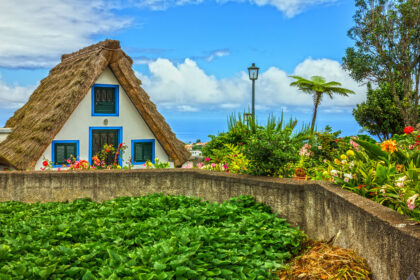
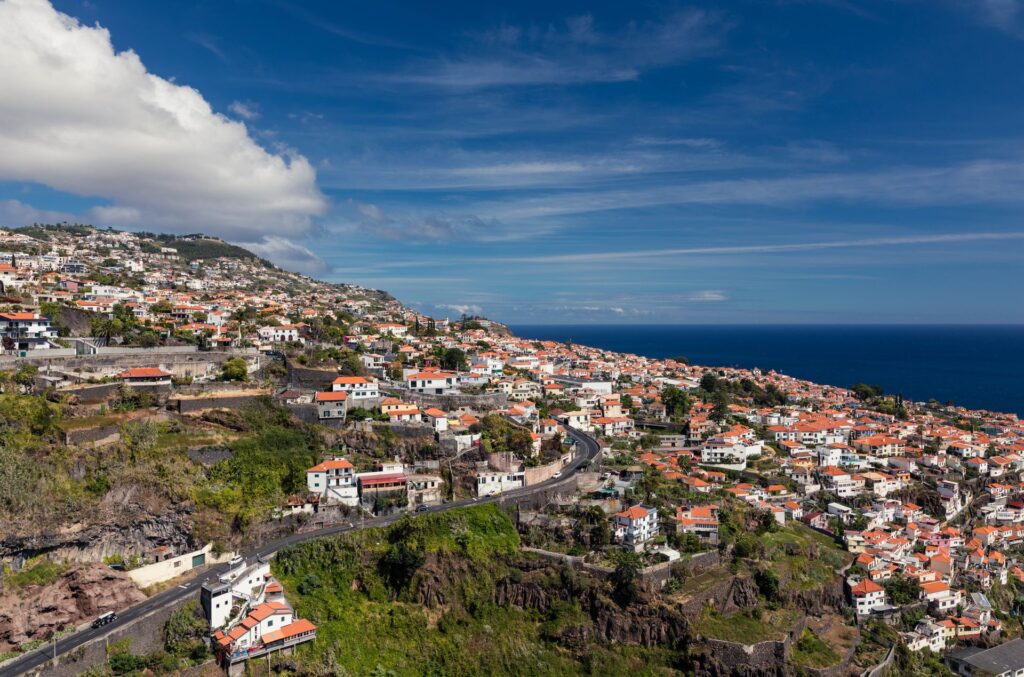
Madeira and the Azores are Portugal’s Atlantic islands, and they’re for hiking more than lying on a beach. Madeira has mild weather all year and its famous walks along the levadas, old irrigation channels. The Azores are green volcanic islands with crater lakes and hot springs.
Madeira: levadas, mountains and a fully vegan restaurant
Madeira’s Laurisilva laurel forest has been on the UNESCO list since 1999, and many levada walks run through it. In Funchal, the fully vegan restaurant Mundo Vegan cooks from scratch, and diners rave about the lasagne. One restaurant directory listed it as temporarily closed in October 2026, so check its Instagram before you go. Our guide to vegan Madeira covers the trails, the fees and where to eat.
The Azores: São Miguel
São Miguel is the largest island in the Azores, with the crater lakes of Sete Cidades and the hot springs of Furnas. It’s for travellers who want nature, whale watching and quiet. We haven’t verified any fully vegan places there yet, so plan on self-catering.
Is Portugal vegan friendly?
Yes in the cities, and with some planning elsewhere. Lisbon and Porto each have dozens of fully vegan places, and Faro, Albufeira and the area around Lagos have vegan restaurants too. In small towns and villages the traditional cooking is built on fish, pork and eggs, and you won’t get a vegan meal without asking.
What’s naturally vegan in Portugal
A few Portuguese foods are vegan as they come or easy to adapt. Tremoços, brined lupin beans, are the salty snack served with beer in every bar. In autumn and winter, street sellers roast chestnuts (castanhas assadas). Tomato rice (arroz de tomate) and vegetable soup (sopa de legumes) are often meat-free, but ask about the stock in the soup.
Here’s something for the non-vegans in your group. Portuguese bread with olive oil, a bowl of tremoços and a glass of vinho verde taste the same to everyone. And most people can’t tell a vegan pastel de nata from Vegan Nata Chiado or V-GAN Café from the classic.
What to watch out for
Caldo verde is a soup of potato and finely shredded kale, but it’s traditionally cooked with chouriço sausage, with a slice on top. The sausage cooks in the soup, so even “sem chouriço” leaves a meaty broth. Ask how it’s made.
The other one is the couvert, the bread, olives, butter or cheese brought to your table before you order. You only pay for it if you eat or touch it, so if you don’t want it, simply send it back.
In Portugal, vegans eat best in the cities and sleep best in the countryside. Plan the trip around that, and you won’t go hungry anywhere.
Best time for things to do in Portugal, month by month
The best time to visit Portugal is April to June and September to October. It’s warm but not hot, and there are fewer visitors than in summer. In July and August, Lisbon and Faro reach about 29 °C by day, and inland it’s hotter still. Winter is mild in the south, with daytime highs around 16 °C in Faro in January.
| Month | Lisbon daytime | Faro daytime | Good for |
|---|---|---|---|
| January | 14 °C | 16 °C | cities, Madeira, Nazaré’s waves |
| February | 16 °C | 17 °C | cities, Carnival |
| March | 18 °C | 19 °C | Lisbon, Porto, first clifftop walks |
| April | 20 °C | 21 °C | a loop round the whole country, Sintra |
| May | 23 °C | 24 °C | the Algarve without crowds, the Douro |
| June | 26 °C | 27 °C | the Algarve, saints’ festivals |
| July | 28 °C | 29 °C | beach holidays, but busy and pricey |
| August | 29 °C | 29 °C | beach holidays, but busy and pricey |
| September | 27 °C | 26 °C | beaches without crowds, the Douro harvest |
| October | 23 °C | 23 °C | cities, the Alentejo, start of the wave season |
| November | 18 °C | 20 °C | Lisbon and Porto off season |
| December | 15 °C | 17 °C | festive Lisbon, Madeira |
Temperatures are average daily highs for 1991 to 2020 from IPMA, Portugal’s weather service, rounded to whole degrees.
Portugal in March: cities and clifftop walks
March is a good month for the cities and the first walks on the Algarve cliffs. Lisbon averages 18 °C by day and Faro 19 °C, the hills are green, and the queues at Sintra are shorter than in summer. It’s too cool for most people to swim in the Atlantic, so treat it as a sightseeing month.
Portugal in May: cities and beaches together
May is one of the best months to visit Portugal, because you can combine city sightseeing with the beach. Faro averages 24 °C by day, the Algarve isn’t crowded yet and the Douro vineyards are green. Book the Alfa Pendular train and Pena Palace ahead, as late spring is busy.
Portugal in December: Lisbon and Madeira
December is for cities and Madeira. Lisbon averages 15 °C and the city is decorated for Christmas, with roasted chestnut sellers on the streets. It’s one of the wettest months, so pair Lisbon with Madeira, which stays mild all year.
What to do in Portugal when it rains
It rains most from October to January, and from November to January Lisbon gets about ten wet days a month. On a rainy day, go to Lisbon’s National Tile Museum, the port cellars in Gaia or the library in Coimbra. Or have a long lunch in a fully vegan restaurant, where you don’t have to check anything.
Things to do in Portugal with kids
Portugal works well with kids, mainly thanks to the calm lagoon beaches in the eastern Algarve and short train journeys. The barrier islands around Faro and Tavira have shallow water, while the cliff beaches in the west have stronger waves. On the Atlantic, always check the beach flags.
For families with little ones, O Ninho Café on R. da Estrema 31 in Lagos has two floors of toys, books and games. The menu covers vegan, vegetarian and gluten-free food, including a vegan pastel de nata. It isn’t fully vegan, so ask for the vegan version.
Older kids love Sintra’s castle and the spiral well at Quinta da Regaleira, the trams in Lisbon and boat trips to the sea caves. Buy Pena Palace tickets ahead, because queueing with children is never worth it.
Pack snacks from a vegan bakery or supermarket for days out with kids. At tourist spots like Sintra or Benagil, vegetarian food is easy, but vegan food often ends at chips.
Getting to Portugal and what it costs
Portugal’s main airports are Lisbon, Porto and Faro, plus Funchal on Madeira, with direct flights from across Europe. On the mainland, the train is the best way between Lisbon, Porto and the Algarve, and a car pays off in the Alentejo and the countryside. Prices are generally lower than in much of Western Europe, but entry to the big sights has risen fast in the last few years.
Flights
From Prague, TAP Air Portugal flies direct to Lisbon, and Smartwings has added Lisbon three times a week (Monday, Wednesday and Friday) from 23 October 2026. Smartwings also flies direct to Porto and Madeira, and Eurowings flies to Faro in summer only (once a week from mid-June to the end of September in 2026). From the UK and most of Western Europe, all three mainland airports have plenty of direct flights.
Order a vegan meal in advance or bring your own. Our guide on how to travel vegan covers flights, packing and the rest.
Getting around by train
The Alfa Pendular fast train takes about three hours from Lisbon to Porto, and about three hours from Lisbon’s Oriente station to Faro. Timetables and tickets are on the website of CP, Portugal’s national railway. Book Alfa Pendular seats ahead, as summer and weekends fill up.
Where to stay and what to budget
Fully vegan hotels are rare in Portugal, but an apartment with a kitchen solves breakfast and dinner in the countryside. If you’d like a hotel where vegan food is a given, see our list of fully vegan hotels.
For sights, budget from 20 € for Pena Palace and 17 € for São Jorge Castle in Lisbon. A meal in a fully vegan restaurant costs about the same as a regular mid-range meal, and the cheapest lunches are the daily set menus (prato do dia).
How to order vegan food in Portugal
You’ll manage in English in Lisbon, Porto and the Algarve, but a few Portuguese phrases save a lot of explaining in the countryside. Portuguese looks a bit like Spanish on paper but sounds very different, with many word endings swallowed.
| English | Portuguese | When it helps |
|---|---|---|
| I’m vegan | Sou vegano / vegana | at the start of ordering |
| Do you have vegan dishes? | Tem pratos veganos? | when the menu has no labels |
| No meat and no fish | Sem carne e sem peixe | in a regular restaurant |
| No eggs and no milk | Sem ovos e sem leite | with pastries, desserts and pasta |
| Does this have milk or egg? | Isto tem leite ou ovo? | at a bakery counter |
| No sausage, please | Sem chouriço, por favor | with caldo verde soup |
| I don’t want the couvert, thank you | Não quero o couvert, obrigado / obrigada | when bread and cheese arrive unasked |
So where should you go in Portugal?
For a first trip, we’d pick Lisbon and Sintra followed by a few days in the Algarve, ideally in May or September. Those two places bring together the best things to do in Portugal with the easiest vegan food. Save Porto for a second trip, or add it if you have ten days or more.
Central Portugal and the Alentejo are beautiful, but plan your meals there. And if nature is what you’re after, fly straight to Madeira.
You’ll find every verified place in the Algarve, Lisbon, Porto and Madeira on our vegan map. Where in Portugal are you heading, and is there a vegan place we’ve missed? Tell us in the comments.
Frequently asked questions
What are the best things to do in Portugal?
The best things to do in Portugal are exploring Lisbon’s Alfama and Belém and visiting Sintra’s palaces. Then taste port in Porto and the Douro valley, and walk the Algarve’s clifftops near Lagos and Benagil. Add Évora for Roman history and Nazaré in winter for the giant waves.
Is Portugal vegan friendly?
Yes, in the cities. Lisbon and Porto have dozens of fully vegan places, and Faro, Albufeira and Lagos have vegan restaurants and cafés. In villages the food is built on fish, pork and eggs, so ask for vegetable soup and tomato rice or bring a picnic.
What is the best month to visit Portugal?
May and September are the best months to visit Portugal. Daytime highs average 23 to 24 °C in May and 26 to 27 °C in September in Lisbon and Faro, and there are fewer crowds than in July and August.
Is the Algarve or Lisbon better?
It depends on the trip. Lisbon is better for sights, day trips and vegan food, while the Algarve is better for beaches and clifftop walks. The train between them takes about three hours, so most first-timers do both.
How many days do you need in Portugal?
Plan three to four days for Lisbon and Sintra and at least three for the Algarve. A loop of Lisbon, Porto and the Algarve fits into ten days by train. Madeira deserves a separate week.
Newsletter
Get our free e-books
Join the newsletter and download Our Vegan Christmas Kitchen straight away, 10 recipes for Czech cookies, gingerbread and vánočka. Then once a month, new places from the vegan map and new articles. Unsubscribe with one click.