The best things to do in Lisbon fit into three or four days. Ride a yellow tram up through Alfama, watch the sun go down from a miradouro, walk the riverfront in Belém and take the train out to the palaces of Sintra. Lisbon is one of Europe’s oldest cities, it sprawls over seven hills and you will spend most of it walking uphill.
Then there’s the food. Portuguese cooking leans hard on salt cod, pork and egg yolks, yet Lisbon has dozens of fully vegan places, including a bakery that makes nothing but vegan pastel de nata.
So what should you actually do in Lisbon, and in what order? Which sights need a ticket booked ahead, and what do they cost now? Is a Sintra day trip from Lisbon worth it, and how do you get there by train? Where can you try a vegan francesinha, bifana or bitoque, the Portuguese classics without the meat?
And is Lisbon in winter worth it, or will it rain the whole time? We cover all of it, including for readers who aren’t vegan themselves and are travelling with someone who is.
An honest note first: we haven’t made it to Lisbon yet, so this isn’t a trip diary. In November 2026 we read every venue’s own website and menu, or confirmed its details in two independent sources. Ticket prices come from the sights’ official websites. Places we couldn’t find recent proof of were left out, even where older lists online still recommend them. That’s also how we know the famous Santa Justa Lift, still a top tip in many guides, has been closed since September 2025.
Things to do in Lisbon: a three-day overview
The top things to do in Lisbon sit in four areas. There’s the flat downtown of Baixa with Praça do Comércio, the old quarter of Alfama with São Jorge Castle and the viewpoints, Chiado and Bairro Alto on the hill opposite, and Belém with Jerónimos Monastery and Belém Tower. You can walk the centre in two days, Belém takes half a day and Sintra needs a full day, so three to four days works well.
The table below shows where each sight is, what it costs to get in and the nearest verified vegan place. We’ve grouped the restaurants further down by neighbourhood too, so you can plan a day without crossing the hills more than you need to. Lisbon is steep and its white stone paving gets slippery after rain, so comfortable shoes matter more than an umbrella.
| Sight | Area | Entry (2026) | Vegan food nearby |
|---|---|---|---|
| Praça do Comércio and Rua Augusta | Baixa | free | Kong, Vegan Nata Chiado |
| Carmo ruins and Santa Justa Lift | Chiado | ruins paid, lift out of service | Nat’elier, Jardim das Cerejas |
| São Jorge Castle | above Alfama | €17 adults | The Food Temple (evenings) |
| Santa Luzia and Portas do Sol viewpoints | Alfama | free | Al Sanpietrino (evenings) |
| Jerónimos Monastery | Belém | €18 cloister, church free | bring a picnic |
| Belém Tower | Belém | paid, max 900 visitors a day | bring a picnic |
| Pena Palace | Sintra | €20 adults | picnic from Green Beans |
Lisbon on our vegan map
16 places, 15 fully vegan. Tap a pin to see the details.
Loading the map…
- 100% vegan
- Vegan options
See every place from this article on our vegan map.
Baixa, Chiado and Bairro Alto: central Lisbon
Baixa is the flat lower town between the river and Rossio square, and it’s the best place to start in Lisbon. It was rebuilt on a neat grid after the earthquake of 1 November 1755, so unlike the rest of the city nobody gets out of breath here. On the hill to the west rise Chiado and Bairro Alto, with cafés, bookshops and the city’s evening bars.
Praça do Comércio and Rua Augusta
Praça do Comércio is a huge square that opens straight onto the River Tagus, lined on three sides by yellow arcades. The royal palace stood here until the 1755 earthquake destroyed it. From the square, the Arco da Rua Augusta triumphal arch leads north onto Rua Augusta, the pedestrian spine of Baixa. Come towards the end of the day, when the sun sets over the river and the 25 de Abril Bridge.
Rossio and the Santa Justa Lift (out of service)
Rossio is Baixa’s other big square, with wave-patterned black and white paving and the station where trains leave for Sintra. A few steps away stands the Elevador de Santa Justa, an iron tower that carried people from Baixa up to Chiado from 10 July 1902.
It has been out of service since September 2025, and so has the viewing platform at the top. It was shut after the fatal crash of the Glória funicular on 3 September 2025, when the historic Glória, Bica and Lavra funiculars stopped running too. No reopening date has been announced. You can still photograph the iron tower from below and walk up to Chiado, for example by the steps past the ruins of the Convento do Carmo.
Chiado, Carmo and the São Pedro de Alcântara viewpoint
Chiado is Lisbon’s elegant quarter of cafés, theatres and old shops, and it leads into Bairro Alto, whose narrow lanes fill with bars and music at night. The earthquake left the Gothic Convento do Carmo without a roof, and its bare arches still frame the sky. A little higher up, the Miradouro de São Pedro de Alcântara looks across the Baixa valley straight at São Jorge Castle.
Vegan food in Baixa and Chiado
Chiado and the streets around Cais do Sodré have the densest cluster of vegan places in central Lisbon. Kong at Rua do Corpo Santo 2 is a fully plant-based restaurant that makes its own bread, “cheese” and ice cream and cooks Portuguese classics without meat.
Organi Chiado at Calçada Nova de São Francisco 2 serves organic food with no animal ingredients and no sugar, on a menu that changes every day. Ao 26 Vegan Food Project at Rua da Horta Seca 5 is 100% vegan, and according to Time Out you’ll find seitan bifanas and a francesinha there. Jardim das Cerejas on Calçada do Sacramento runs a vegan buffet at lunch and dinner, with dishes that change daily.
Alfama, São Jorge Castle and Tram 28
Alfama is Lisbon’s oldest neighbourhood and one of the few to survive the 1755 earthquake, so it kept its tangle of steep lanes, stairways and tiny squares. São Jorge Castle crowns the hill above it, and the city’s most famous viewpoints open up between the houses. Give Alfama a whole morning and wear shoes with good grip.
São Jorge Castle
São Jorge Castle is a walled fortress with towers on the highest point of old Alfama, and from its walls you see the whole city and the river. Adult entry costs €17 according to the official website, ages 13 to 25 pay €8.50 and over-65s pay €14, so older guides quoting €10 or €15 are out of date. From 1 November to the end of February it’s open from 9:00 to 18:00, and from March to October until 21:00.
Santa Luzia, Portas do Sol and Senhora do Monte viewpoints
Lisbon’s viewpoints, called miradouros, are free and among the best things the city has to offer. Miradouro de Santa Luzia has a tiled terrace and a bougainvillea pergola, and a few steps on, Miradouro das Portas do Sol looks over Alfama’s rooftops to the river. Highest of all is Miradouro da Senhora do Monte in Graça, where locals go for sunset.

Tram 28: how to ride it without an hour’s queue
Tram 28 is the old yellow tram that rattles through Baixa, Alfama, Graça and Estrela, and it’s the most famous ride in Lisbon. In season, though, the queue at the Martim Moniz terminus can take an hour and the cars are packed. Board early in the morning, or at a quieter stop along the route. Load your fare onto a Navegante card, because paying the driver costs a lot more.
Watch your pockets too, as Tram 28 is a favourite with pickpockets.
Vegan food in Alfama and Mouraria
Alfama and neighbouring Mouraria have two vegan dinner spots that are an experience in themselves. The Food Temple in the alley of Beco do Jasmim 18 in Mouraria calls itself Lisbon’s first vegan restaurant and has been going for thirteen years. It opens Tuesday to Sunday from 18:30 to 23:30 and is closed on Mondays.
Al Sanpietrino Trattoria at Beco da Lapa 31 is a vegan Italian trattoria where the pasta is made by hand. The menu has carbonara, rigatoni cacio e pepe for €13 and tiramisu for €6.
Tip for a fado night: fado, Portugal’s melancholy folk song, is mostly performed in small restaurants in Alfama and Bairro Alto, where dinner is your ticket. The menus lean on fish and meat, so ask ahead whether they can do a vegan dish. If not, have dinner at The Food Temple first, then ask the fado house whether you can come in just for a drink.
Belém: Jerónimos Monastery, Belém Tower and the explorers
Belém is the riverside district on Lisbon’s western edge where Portugal’s explorers set sail. Jerónimos Monastery and Belém Tower have been listed together as a UNESCO World Heritage Site since 1983. Tram 15 or the train from Cais do Sodré gets you there from the centre, and the visit takes half a day.
Jerónimos Monastery
Jerónimos Monastery is the finest example of Portugal’s Manueline style, with stone ropes, shells and sea motifs carved into pale limestone. The church is free to enter, while the cloister is ticketed and costs €18 in 2026. According to its official website, the monastery opens Tuesday to Sunday from 9:30 to 17:30 and is closed on Mondays. Summer queues for tickets are long, so buy online and arrive right at opening time.
Belém Tower and the Monument to the Discoveries
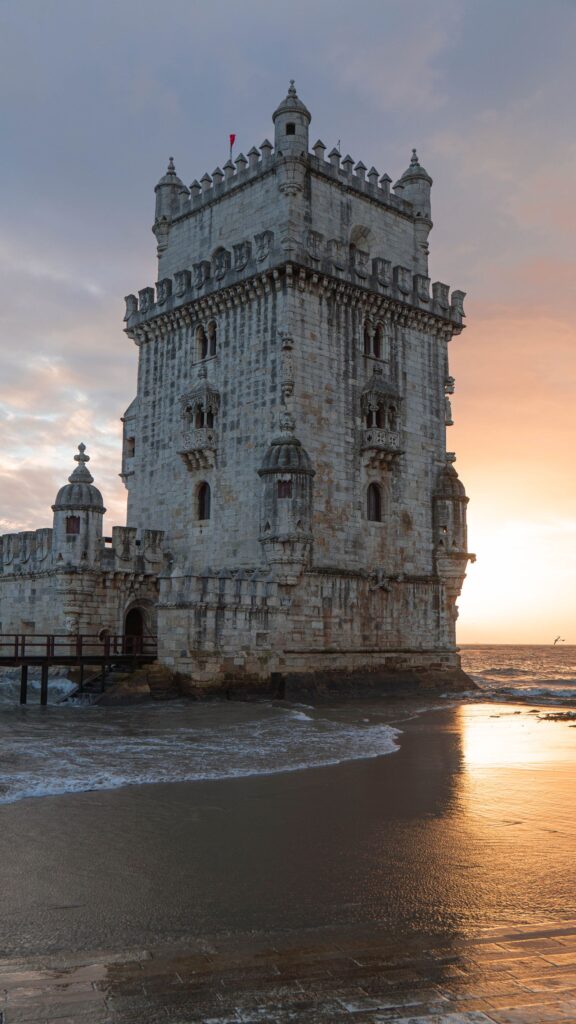
Belém Tower is a small fortified tower right on the bank of the Tagus, and it reopened on 27 May 2026 after a year of restoration. Entry is now capped at 60 people every 30 minutes, which is 900 visitors a day, so book ahead in season. Just upriver stands the Monument to the Discoveries, a white stone ship carved with figures of the explorers, and a riverside promenade links the two.
Pastéis de Belém: why the queue, and why it’s not vegan
Pastéis de Belém, the pastry shop next to the monastery, has been baking custard tarts since 1837 to a recipe from the Jerónimos monastery. The queue outside is famous, and for non-vegans it’s well worth joining. The classic pastel de nata, though, is an egg yolk and milk custard in a buttery pastry, so it isn’t vegan. If you’re heading to Belém with a vegan, pick up the vegan version in Chiado first and eat them together on the promenade.
What is pastel de nata, and where to get a vegan one
A pastel de nata is a Portuguese custard tart: a flaky puff pastry case filled with a thick egg custard, baked until blistered and golden and dusted with cinnamon. The plural is pastéis de nata. Almost every café in Lisbon sells them, but vegan ones are only available in a few places, and they’re worth knowing in advance.
Vegan Nata Chiado
Vegan Nata Chiado at Rua da Misericórdia 9 is a small bakery that makes only vegan pastéis de nata, “the same, but vegan”, in its own words. It’s open every day from 9:00 to 19:00, which makes it handy for breakfast or an afternoon coffee. You’ll find it at the top end of Chiado, a few minutes from the São Pedro de Alcântara viewpoint.
Nat’elier and other vegan desserts
Nat’elier at Rua de Santa Justa 87 in Baixa sells pastéis de nata in lots of flavours. Several are vegan, such as the classic vegan and the vegan crème brûlée. The other flavours contain egg and dairy, so ask clearly for a vegan one at the counter.
For dessert after dinner, Kong serves a vegan nata tart with “nata” ice cream.
In Lisbon, vegans and non-vegans don’t have to eat separately. The same Portuguese classics are now cooked plant-based, from the bifana to the francesinha.
Lisbon food: what to try, vegan style
Traditional Lisbon food means bacalhau (dried salt cod), grilled sardines and the bifana, a pork cutlet in a bread roll. From Porto comes the francesinha, a meat and cheese sandwich drowned in a beer-based sauce. You can now get every one of these in a vegan version, especially at Kong and Ao 26. Portuguese cooking also has a few things that are vegan to begin with.
Portuguese classics, plant-based
Kong’s menu has a francesinha filled with portobello mushroom, seitan, sausages and caramelised onion in the house sauce for €16.90. Their bitoque, the Portuguese steak with an “egg”, rice and fries, is made with seitan and costs €16.50. There’s also a tofu “cod” Gomes de Sá with potatoes and Portuguese croquettes. A Minha Avó, “my grandmother”, is another vegan restaurant cooking Portuguese home food, where you can even order a plant-based “fried egg”.
What’s vegan by nature
In an ordinary Portuguese restaurant, bread, olives and butter or pâté often arrive on the table as the couvert. You only pay for it if you eat some of it. Send it back if you don’t want it.
The bread with olive oil and the olives are vegan. Tremoços, pickled lupin beans, are the salty snack served with beer. Caldo verde is a potato and finely shredded kale soup, but it’s often served with a slice of chouriço sausage, so ask for it “sem chouriço”. The sausage is often cooked in the soup itself and some kitchens use meat stock, so ask about the broth too. In autumn and winter, street sellers roast chestnuts on the corners.
Lisbon food market: what to expect at Time Out Market
Time Out Market in the Mercado da Ribeira at Cais do Sodré is a big food hall with stalls from well-known chefs, and it’s a good pick for non-vegans. Vegans have little choice there, though, because most stalls are built around meat, fish and salt cod. The independent guide site lisbontourism.org said in October 2026 that vegans eat there only if they choose carefully. For a better vegan meal, walk five minutes to Kong.
Tip for non-vegans: if you’re travelling with a vegan and worried about going hungry, try the vegan francesinha or bifana. They’re hearty Portuguese pub classics, and the plant-based versions are almost as filling. You may find a vegan restaurant is one of the best meals of your Lisbon trip.
Vegan restaurants in Lisbon by neighbourhood
For this article we verified sixteen open places in Lisbon where you can eat fully vegan. Most are in the centre, in Anjos and Arroios, and around the newer Avenidas Novas. The table sums up the best ones for a first visit. For each we give the area, what to order and what to watch out for, mainly closing days and the places that only cook in the evening.
| Place | Area | Type | What to order | Good to know |
|---|---|---|---|---|
| Kong | Cais do Sodré | fully vegan | francesinha, seitan bitoque | mains €15.50 to €18.90 |
| Ao 26 Vegan Food Project | Chiado | fully vegan | seitan bifana, francesinha | in the heart of Chiado |
| Organi Chiado | Chiado | fully vegan, organic | daily menu | menu changes every day |
| Jardim das Cerejas | Chiado | vegan buffet | soup and hot dishes | dishes change daily |
| Vegan Nata Chiado | Chiado | vegan bakery | pastel de nata | daily 9:00 to 19:00 |
| Nat’elier | Baixa | vegan flavours | vegan pastel de nata | only some flavours |
| The Food Temple | Mouraria | fully vegan | dinner in an alley | closed Mondays |
| Al Sanpietrino | Alfama | fully vegan | handmade pasta | dinner only, closed Wed and Thu |
| O Gambuzino | Anjos | fully vegan | small plates, cocktails | kitchen 19:00 to 22:30 |
| Legumi Sushi Vegan | Santos | fully vegan | sushi sets | evenings only, closed Sundays |
Anjos and Arroios: Lisbon’s vegan evening quarter
Anjos and Arroios are residential neighbourhoods north of Mouraria, with cheaper places to stay and the biggest cluster of small vegan spots in Lisbon. O Gambuzino at Rua dos Anjos 5A is a 100% vegan restaurant and bar for small plates, fermented ingredients and cocktails. It’s open daily from 17:30 to midnight with the kitchen running from 19:00 to 22:30, and booking is a good idea.
For breakfast, try the vegan café Gal at Rua Forno do Tijolo 54A. Veganeats Caffé in Arroios is a tiny café for vegan cakes that has been going for ten years.
Avenidas Novas and São Sebastião
The newer part of Lisbon around Saldanha and São Sebastião is handy if you’re staying nearby or coming in from the airport. The Green Affair has several places in Lisbon with a fully plant-based menu, including one at Av. Duque de Ávila 30A near Saldanha, from seitan steak with pepper sauce to breaded cauliflower “wings”.
A little further south, near Marquês de Pombal, Vegan Junkies at Rua Luciano Cordeiro 28 is vegan fast food with burgers and tacos. Moko Vegan Bakery is a Taiwanese vegan bakery with sweet and savoury bakes, which reopened in São Sebastião in summer 2025.
Santos, Estrela and São Bento
Legumi Sushi Vegan at Rua Vicente Borga 75 is vegan sushi from a chef who used to run a traditional Japanese restaurant. It’s evenings only, Monday to Saturday, and the sets run from 12 pieces up to a 60-piece boat, so it suits sharing. Nearby at Rua do Poço dos Negros 15-17 is Green Beans, a vegan shop with a small café that has been open since 2016. It’s the best place to stock up on picnic food for a day in Sintra or Belém.
Read next
Want to see more of Portugal? Find out what to see in Porto and where to get a vegan francesinha. Or head out to the Atlantic and read about things to do and vegan food on Madeira. And for the whole country, from Porto to the Algarve, see our things to do in Portugal, region by region.
Day trip from Lisbon: Sintra and Cascais
The best day trip from Lisbon is Sintra, a town of palaces in the wooded hills that has been a UNESCO cultural landscape since 1995. The train from Rossio station takes about 40 minutes. The other classic is the seaside town of Cascais, reached by train from Cais do Sodré along the coast. You can combine the two via Cabo da Roca, the westernmost point of mainland Europe, but that’s a lot for one day.
Sintra day trip: Pena Palace and Quinta da Regaleira
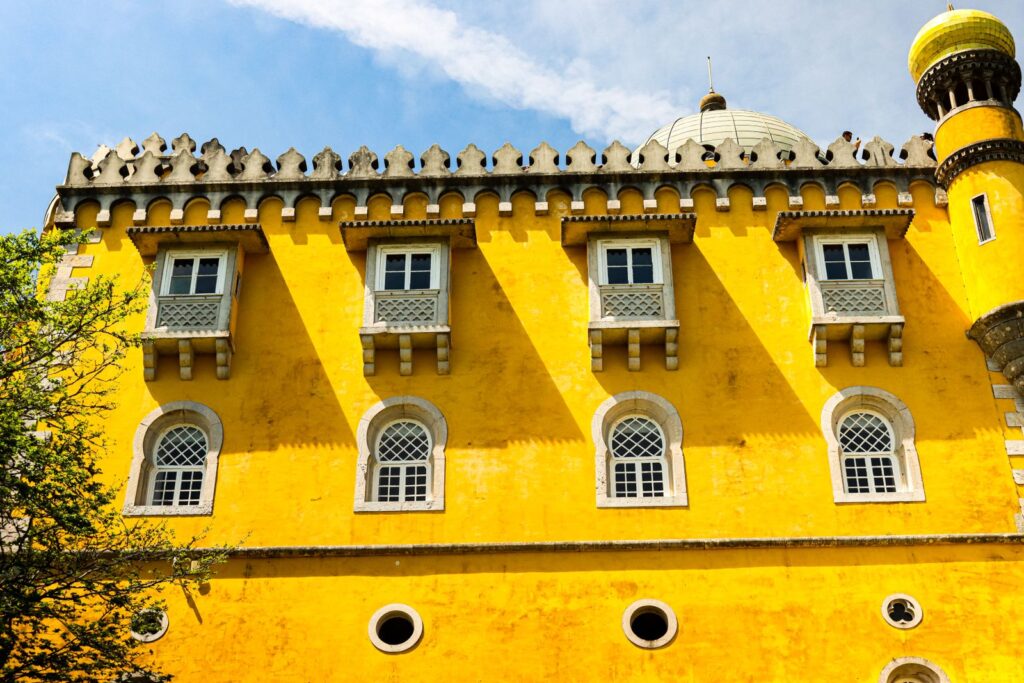
Pena Palace is a brightly painted romantic palace on a hilltop above Sintra, and it’s the most famous photo in Portugal. The “Essential Visit” ticket for the palace and park costs €20 for adults and €18 for ages 6 to 17 and seniors, according to Parques de Sintra. Palace entry is timed, so book online. Sintra’s other star is Quinta da Regaleira, a garden full of grottoes and the so-called initiation well, which you descend by a spiral staircase.
Give Sintra a full day and catch the first train, because by midday queues build in the town centre for the buses up to the palaces. Plan your food ahead as well. Around the palaces it’s mostly standard snack food, so bring a picnic from Lisbon.
Cascais and the beaches near Lisbon
Cascais is a former fishing village turned seaside resort, with small beaches right in town. The train from Cais do Sodré runs along the coast and stops at other beaches on the way, such as Carcavelos, where people go to surf. Lisbon itself has no beach because it sits on a river, so locals head here or across the river to the Costa da Caparica. The Atlantic stays cold even in summer.
Things to do in Lisbon in winter and when it rains
Lisbon in winter is mild and calm. Daytime highs in December and January are around 15 °C, but these are also the rainiest months, with about ten wet days each. In return you get emptier trams, cheaper rooms, and no queues at São Jorge Castle or Jerónimos. It’s a good choice for a winter break, as long as you pack a rain jacket and shoes that don’t slip.
When it rains, head indoors. The National Tile Museum (Museu Nacional do Azulejo) shows five centuries of Portuguese painted tiles in a former convent. The Oceanário de Lisboa in Parque das Nações is one of Europe’s largest aquariums and a great pick for kids. LX Factory, a former factory complex under the 25 de Abril Bridge, is packed with shops, bookshops and cafés, so you can spend a wet afternoon there and stay dry.
Best time to visit Lisbon: weather by month
The best time to visit Lisbon is April to June and then September and October. Daytime highs sit around 20 to 26 °C. May, June and September are fairly dry, April and October see about eight rainy days, and the city is less crowded than in summer. July and August average 28 to 29 °C, but heatwaves above 35 °C aren’t unusual. November to January brings the most rain, but also the fewest tourists.
| Month | Average high | Rainy days | Good for |
|---|---|---|---|
| January | 14 °C | 10 | quiet, low prices, umbrella |
| February | 16 °C | 8 | quiet, first warm days |
| March | 18 °C | 7 | spring, fewer people |
| April | 20 °C | 8 | ideal for walking |
| May | 23 °C | 6 | ideal, Sintra too |
| June | 26 °C | 2 | warm, street festivals |
| July | 28 °C | under 1 | hot, busiest |
| August | 29 °C | 1 | hot, busiest |
| September | 27 °C | 4 | ideal, warmest sea |
| October | 23 °C | 8 | pleasant, some rain |
| November | 18 °C | 9 | quiet, frequent rain |
| December | 15 °C | 10 | Christmas lights, rain |
Practical info: how to get to Lisbon and what it costs
Lisbon Airport has direct flights from most of Europe, and once you’re in the city you can manage on the metro, trams and your own feet. You don’t need a car, not even for Sintra or Cascais. Accommodation is the biggest cost, while eating at vegan restaurants costs about what a nice mid-range meal does in most European capitals.
Flights and getting in from the airport
Lisbon is TAP Air Portugal’s home base, and plenty of other airlines fly in from across Europe. The red metro line runs from the airport into the city. Change at Alameda for the green line to Baixa, or at São Sebastião for the blue line, and you’ll be in the centre in about half an hour. If you want a vegan meal on the plane too, read our guide on how to order a vegan airline meal.
Getting around Lisbon
For the metro, trams and buses, buy a rechargeable Navegante card. A single trip loaded on the card costs €1.90, and a 24-hour ticket for the metro and Carris buses and trams costs €7.25. Paying on board a tram costs more. The Lisboa Card covers transport and entry to many sights, but it only pays off if you pack a lot of them into each day.
Where to stay
For a first visit, Baixa and Chiado are the most convenient, because you can walk almost everywhere and the most vegan places are around the corner. Anjos and Arroios are cheaper and quieter, and they also have the widest choice of small vegan dinner spots. Alfama is charming, but dragging a suitcase uphill over cobbles is hard work. If you’d rather stay somewhere fully vegan, browse our pick of fully vegan hotels around the world.
Tourist tax tip: Lisbon charges a tourist tax of €4 per person per night, for up to 7 nights, and everyone aged 13 and over pays it. Two adults staying four nights pay an extra €32. It’s usually collected on arrival at your hotel or apartment, even if you prepaid the stay, so budget for it.
What three days in Lisbon cost
At vegan restaurants, budget €15 to €19 for a main course at Kong, or eat for less at the Jardim das Cerejas buffet or in cafés. The priciest tickets are São Jorge Castle at €17, Jerónimos at €18 and Pena Palace at €20. The viewpoints, Alfama, Baixa and the riverfront are all free, and they make up half of Lisbon’s charm. On top of that, add transport on a Navegante card and the tourist tax.
Useful Portuguese phrases for vegans
You’ll get by in English in central Lisbon, but a few Portuguese words help in smaller cafés and at markets. Portuguese looks a lot like Spanish on paper but sounds completely different, full of soft “sh” sounds and swallowed vowels. These phrases will help you order without meat, fish, eggs or dairy.
| English | Portuguese | Say it like / When it helps |
|---|---|---|
| I’m vegan. | Sou vegano / vegana. | soh veh-GAH-noo / veh-GAH-nah, to open your order |
| Do you have vegan dishes? | Tem pratos veganos? | tayng PRAH-toosh veh-GAH-noosh, in a regular restaurant |
| No meat and no fish. | Sem carne e sem peixe. | sayng KAR-n ee sayng PAY-sh |
| No eggs and no milk. | Sem ovos e sem leite. | sayng OH-voosh ee sayng LAY-t |
| Does this have milk or egg? | Isto tem leite ou ovo? | EESH-too tayng LAY-t oh OH-voo, for desserts and pastries |
| Without the sausage, please. | Sem chouriço, por favor. | sayng shoh-REE-soo poor fah-VOR, for caldo verde |
| No couvert, thank you. | Não quero o couvert, obrigado / obrigada. | nowng KEH-roo oo koo-VEHR, oh-bree-GAH-doo / -dah |
Is Lisbon worth the trip?
Lisbon is one of Europe’s best cities for vegans travelling with non-vegans. Not because of the number of restaurants, but because its plant-based kitchens cook Portuguese food rather than a substitute for it.
The non-vegan orders a bifana or francesinha, and the vegan orders the same, just made with seitan. Add Alfama in the morning, Belém in the afternoon, a viewpoint at sunset and a day in Sintra, and you have a trip that works for everyone. It’s mild enough for a winter break too, when it’s quieter and cheaper. Which Lisbon neighbourhood would you start with, and do you know a vegan spot we’ve missed? Tell us in the comments.
Frequently asked questions
How many days do you need in Lisbon?
Three days are enough for Lisbon, or four with Sintra. Spend day one on Baixa, Chiado and Bairro Alto and day two on Alfama with São Jorge Castle and the viewpoints. Day three is for Belém, and day four for a Sintra day trip.
What is the best time to visit Lisbon?
The best time to visit Lisbon is April to June or September and October, when daytime highs are around 20 to 26 °C and it rains less than in winter. July and August are hot and the busiest. Winter is around 15 °C with more rain, but prices and queues are lower.
Is Lisbon vegan friendly?
Yes, Lisbon is very vegan friendly. For this article we verified sixteen fully vegan places, from plant-based Portuguese classics at Kong and Ao 26 to the Vegan Nata Chiado bakery. Ordinary Portuguese restaurants have less choice, so a few Portuguese phrases help.
Is pastel de nata vegan?
No, a classic pastel de nata is not vegan, because the custard is made with egg yolks and milk. In Lisbon you can buy a vegan version at Vegan Nata Chiado on Rua da Misericórdia 9, or in selected flavours at Nat’elier in Baixa.
Is a Sintra day trip from Lisbon worth it?
Yes, a Sintra day trip from Lisbon is worth it, and it’s the most popular day trip from the city. The train from Rossio takes about 40 minutes. Book a timed ticket for Pena Palace, start early to beat the midday queues and bring a picnic, as vegan food near the palaces is limited.
Newsletter
Get our free e-books
Join the newsletter and download Our Vegan Christmas Kitchen straight away, 10 recipes for Czech cookies, gingerbread and vánočka. Then once a month, new places from the vegan map and new articles. Unsubscribe with one click.