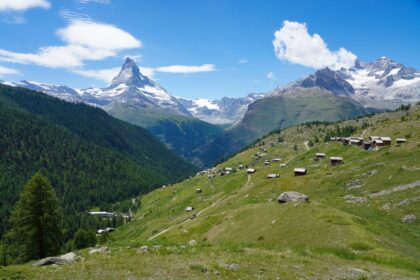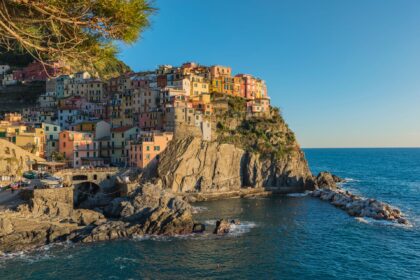
Is France vegan friendly? It’s the country of butter croissants, foie gras and cheese with every course. Plenty of plant-based travellers assume they’ll spend a week living on bread and fries, but the reality is far better.
Lyon, the city of pork sausages and cream sauces, now has a fully vegan fine-dining restaurant listed by Gault&Millau. Nice has a plant-based, gluten-free patisserie open seven days a week, and in Brittany the traditional buckwheat galette is plant-based before anyone has touched it.
So where in France is easiest for vegans, and where will you struggle? Which region should you pick for the sea, which for cities, and how do you get around? What’s the one bakery word that guarantees a vegan baguette, and which “safe-looking” pastry isn’t?
And can a non-vegan travelling with you eat just as happily? We’ve answered all of it below, region by region.
To be upfront, we haven’t travelled France together yet, so this isn’t a trip diary. In November 2026 we read every venue’s own website or its local tourist office listing, checked transport with the operators and driving rules on official French sources. Places we couldn’t confirm with fresh, independent evidence didn’t make the cut.
Is France vegan friendly? The short answer
France is vegan friendly in its big cities and harder in the countryside. Paris, Lyon, Nice, Marseille, Bordeaux and Toulouse all have fully vegan restaurants, cafés or bakeries. In villages and small towns, though, traditional bistros are built on butter, cream, cheese and bacon, and plant-based dishes happen by accident rather than by design.
Cities vs countryside
In the cities, plan around specific places. The Lyon tourist office runs a whole page on where to eat vegetarian and vegan in Lyon, and the Toulouse and Marseille tourist offices list vegan places too. That tells you plant-based food is taken seriously there.
In the countryside, a classic brasserie will usually manage a salad without cheese and a plate of frites. Lebanese, Asian and Indian restaurants are a safer bet because plant-based dishes are already part of their menus. Picnics are even better, because French markets and bakeries are an experience in themselves.
What’s naturally vegan in France
Several French foods are plant-based in their traditional form, and they’re worth knowing before you go. The most useful one is bread. A “baguette de tradition française” is made under French law from flour, water, salt and yeast or sourdough, plus at most tiny amounts of bean, soy or malt flour, so it’s vegan in every bakery in the country.
In the south, try socca, a thin pancake of chickpea flour, water, olive oil and salt that Nice bakes on huge trays and sells hot at the market. Ratatouille is slow-cooked vegetables in olive oil. Sorbets in ice cream shops are usually just fruit, sugar and water, but ask about each one.
Watch out for croissants. A croissant “au beurre” is made with butter, and even the cheaper “croissant ordinaire” made with margarine isn’t a safe bet, because the margarine or the glaze can contain milk or egg. Buy your vegan croissant from a vegan bakery, for example in Paris.
Where to go in France: the regions at a glance
For a first trip, pick one or two regions rather than the whole country. France is the largest country in the EU, and driving from Paris to Nice takes a full day. The table sums up the six regions most travellers choose, with a column for how easy each one is for vegans.
| Region | What to see | Sea | Vegan food | Getting there |
|---|---|---|---|---|
| Paris and the north | Louvre, Montmartre, Versailles, Mont-Saint-Michel | Normandy and Brittany, cooler | easiest in France | flights and Eurostar to Paris |
| Alsace | Strasbourg, Colmar, wine route | no | good in Strasbourg | train from Paris, car from Germany |
| Lyon and the Alps | Old Lyon, Annecy, Mont Blanc | no | excellent in Lyon | TGV from Paris |
| Provence and the Riviera | Nice, Marseille, lavender, Verdon | Mediterranean | good in Nice and Marseille | flights to Nice |
| South-west | Bordeaux, Toulouse, Carcassonne, Dune du Pilat | Atlantic | good in the cities | flights or TGV |
| Corsica | mountains, coves, Gulf of Porto | Mediterranean | limited, plan to cook | flight or ferry |
If it’s your first visit, the easiest pairings are Paris with Normandy or Nice with Provence. Both work in a week without rushing, and both give you plenty of choice as a vegan.
Paris and the north: Normandy, Brittany and the Loire
Northern France is the best pick for a first trip. It combines Paris, the easiest city for vegans in the country, with the coast of Normandy and Brittany and the châteaux of the Loire. From Paris, trains reach almost anywhere.
Paris
Paris is the most vegan friendly city in France. You’ll find vegan bakeries with croissants, bistros serving plant-based boeuf bourguignon and a hotel with a fully plant-based kitchen. The best-known bakery is Land & Monkeys, where everything is made without butter, eggs or milk, from croissants to a plant-based ham baguette.
We’ve given Paris its own article, so here’s just the link. Our vegan Paris restaurant roundup covers bakeries, bistros, prices and the places other sites still recommend that have since closed.
Mont-Saint-Michel, Normandy and Brittany
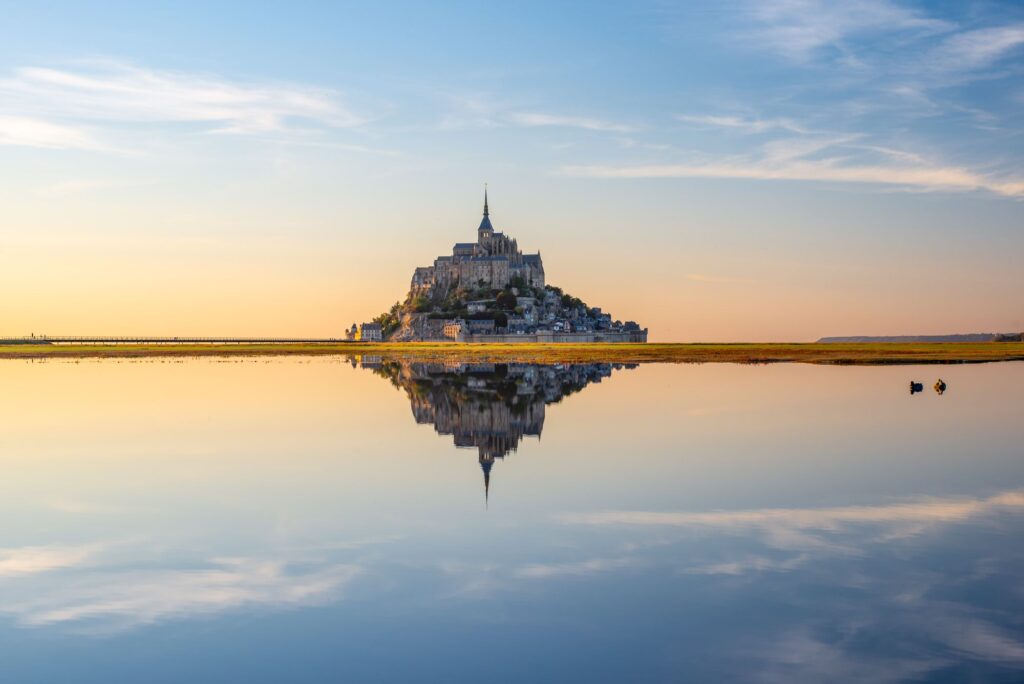
Mont-Saint-Michel is an abbey on a rocky islet in a bay on the Normandy and Brittany border, and the Mount with its bay is a UNESCO World Heritage Site. During the biggest spring tides the sea surrounds it completely. Close by is the walled port town of Saint-Malo in Brittany, and further along the Normandy coast you’ll find the 1944 D-Day landing beaches and the white cliffs of Étretat.
Brittany is a lovely surprise for vegans. According to the Breton galette recipe from the Morbihan tourist board, the traditional buckwheat galette (“blé noir” or “sarrasin”) is just buckwheat flour, water and salt. Purists never add egg. Sweet wheat-flour crêpes, on the other hand, contain egg and milk.
Ask two questions in a crêperie. First, whether the galette is only buckwheat flour and water, and second, whether it’s cooked with butter or the griddle is greased with egg yolk. Say “sans beurre, s’il vous plaît” and fill it with mushrooms, onion, spinach or tomato.
The Loire Valley
The Loire Valley between Sully-sur-Loire and Chalonnes-sur-Loire is a UNESCO World Heritage Site. Its most famous châteaux, Chambord, Chenonceau and Amboise, are all within a day’s drive of each other. Most visitors base themselves in Tours or Orléans.
Eating vegan in Loire villages is harder than in the cities. Plan on market and bakery picnics, and save dinner for Tours, where the choice of restaurants is wider.
Alsace and Strasbourg
Alsace is France’s German-flavoured corner, with half-timbered villages, a famous wine route and much-loved Christmas markets. Strasbourg, seat of the European Parliament, has its historic centre, the Grande-Île, on the UNESCO list, plus a towering cathedral, the canals of Petite France and painted timber houses. Colmar lies an hour south, with the Alsace wine route and its fairytale villages in between.
Most visitors come in December for the Christmas markets. Strasbourg’s are among the oldest in Europe, and we’ve covered which stalls have vegan food and when the markets run this year in our article on the Strasbourg Christmas markets.
Alsatian cooking is meat-heavy (choucroute with sauerkraut and sausages, flammekueche with cream and bacon), but Strasbourg now has a vegan tarte flambée at Mama Bubbele by the river and other plant-based restaurants. We list them in the Christmas market article. Out along the wine route, plan on picnics.
Lyon and the Alps
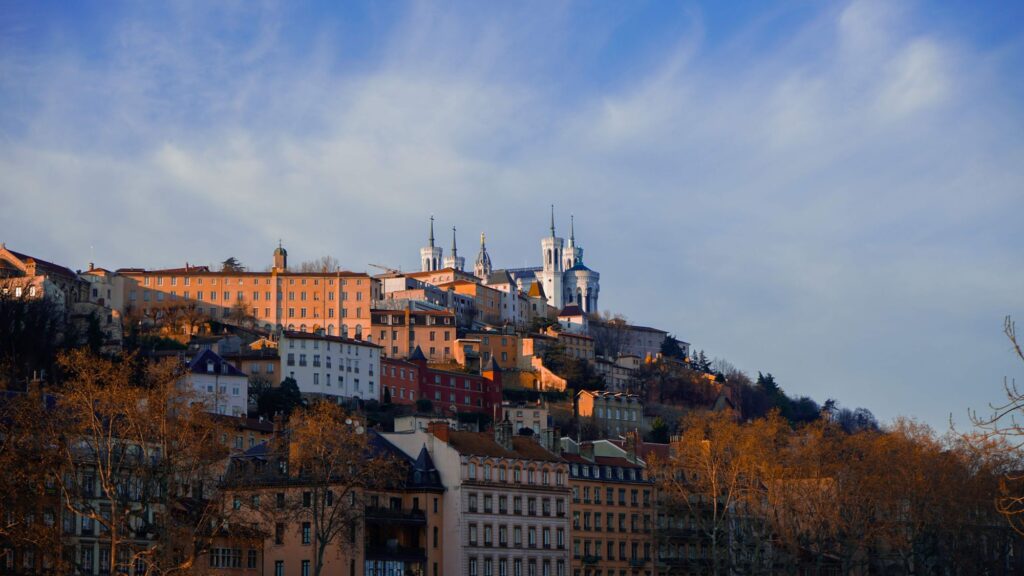
Lyon calls itself the gastronomic capital of France, and it’s also one of the most pleasant French cities for vegans. Its historic centre is on the UNESCO list. Old Lyon has Renaissance houses and “traboules”, passageways that link streets through courtyards, and the Fourvière basilica looks down over both rivers.
Where to eat vegan in Lyon
The best vegan restaurant in Lyon is Trèfle on rue Franklin in the 2nd arrondissement. It’s a fully vegan fine-dining restaurant run by chef Emily Dader and listed by Gault&Millau. According to the Lyon tourist office, the day menu starts at around €34 and the evening tasting menu is €68. Lunch runs Thursday to Saturday, dinner Tuesday to Saturday, and it’s closed on Sundays and Mondays.
On the slopes of the Croix-Rousse, at 11 montée Saint-Sébastien, Like An Elephant cooks fully plant-based bistro food from a seasonal menu that changes often. The tourist office counts it among the city’s key vegan addresses. Book ahead for dinner.
For something sweet, the Lyon tourist office recommends the vegan patisseries Amé, Zoï, Les Belles Âmes and Okara. Lyon’s bistros are also adding plant-based versions of local classics, so read the specials board.
France rewards the traveller who asks. Ask a good bistro “can you make it without butter?” and you’re far more likely to get help than a raised eyebrow.
Annecy and Mont Blanc
Annecy is a canal town on a lake often described as one of the cleanest in Europe, less than two hours’ drive from Lyon. Chamonix, under Mont Blanc, lies beyond it. Summer is for lake swimming and hiking, winter for skiing. In mountain huts, plan to rely on your own supplies for vegan food.
Provence and the French Riviera
The south of France is the best choice for a beach holiday combined with cities, because Nice, Marseille and the Provençal villages are only an hour or two apart. It also has the best vegan food on the Mediterranean coast, concentrated in Nice and Marseille.
Nice and the French Riviera
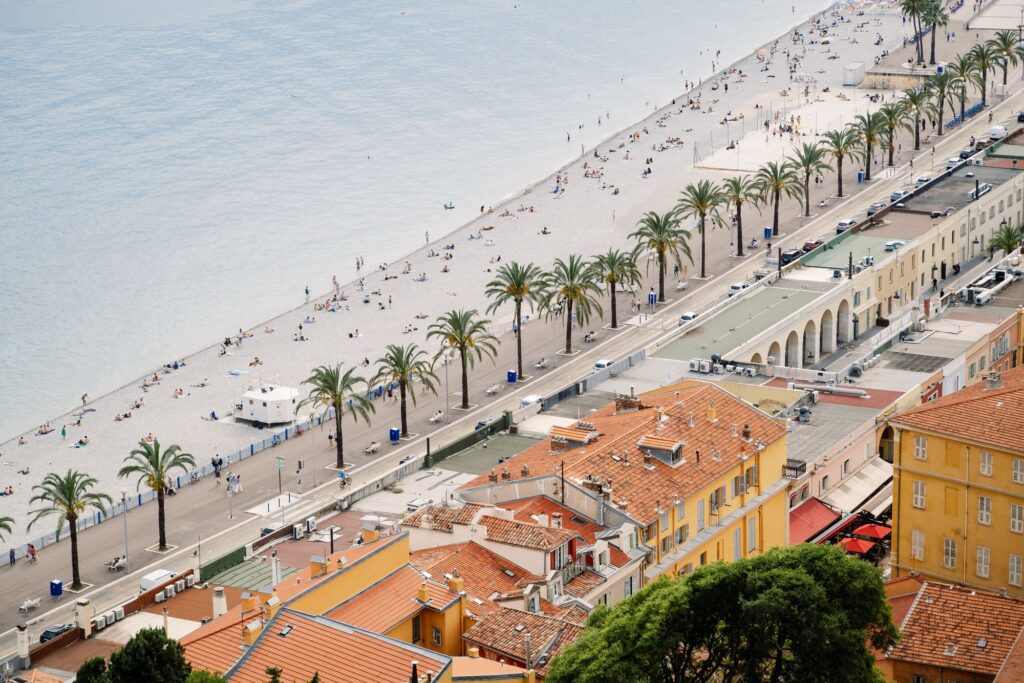
Nice is the largest city on the Riviera and has been on the UNESCO list since 2021 as the Winter Resort Town of the Riviera. Walk the Promenade des Anglais, climb Colline du Château for the view over the bay and stop at the Cours Saleya market in the morning, where socca is cooked. Our guide to the best things to do in Nice covers the Matisse and Chagall museums, the Carnival and day trips to Èze and Monaco. Trains take you to Monaco, Antibes or Cannes in under an hour. Italy starts just past Nice too, so you can add Liguria, and our guide to eating vegan in Italy covers that side of the border.
The must-visit vegan stop in Nice is Amour Pâtisserie Végétale at 2 rue Foncet. It’s a plant-based, gluten-free patisserie serving breakfast, brunch and cake. According to its website it’s open every day, including Sundays until 2 pm, and a whole cake for four costs €24.
Popular café Paper Plane on rue Gubernatis does breakfast and lunch, but its own website calls the menu “essentially vegetarian”, not vegan, so ask which dishes are fully vegan. Listings show it open Tuesday to Saturday for breakfast and lunch, but check before you go.
Marseille and the Calanques
Marseille is often called France’s oldest city and it’s the second largest, founded by Greek settlers around 600 BC, and it’s a port city to its core. Wander Le Panier, the oldest district, the Old Port and up to the Notre-Dame-de-la-Garde basilica. On the south-eastern edge of the city lies the Calanques National Park, limestone cliffs and turquoise coves you can reach on foot or by boat. It was Europe’s first national park on the edge of a big city.
The best-known vegan restaurant in Marseille is Mariposas at 102 cours Julien in the 6th arrondissement. According to the Marseille tourist office it serves 100% plant-based, organic food from local, seasonal produce, the Venezuelan chef’s cooking is “borderless” and it holds the Ecotables sustainability label. The tourist office lists it as open Wednesday to Sunday from noon to 10pm, but check before you go.
Provence and the lavender
Provence is the inland region behind the Riviera, with Roman monuments in Arles and Nîmes, the Papal Palace in Avignon and the Verdon Gorge. Avignon, Arles and the nearby Roman aqueduct of Pont du Gard are all UNESCO sites. Provence is best explored by car, because trains don’t reach villages like Gordes or Roussillon.
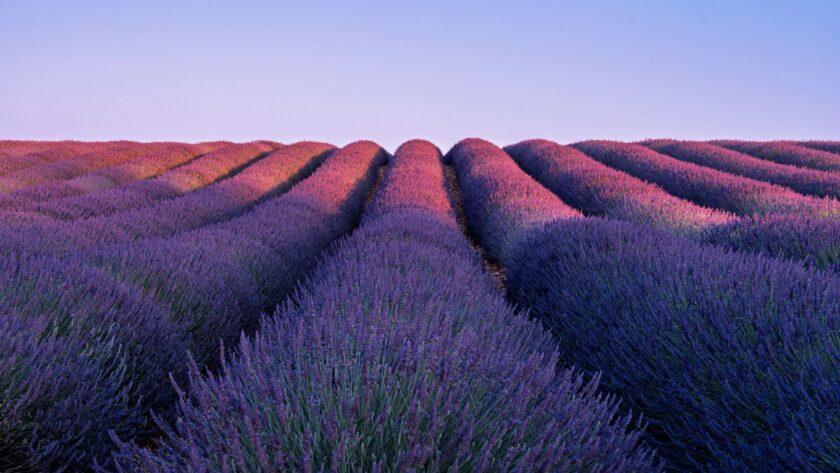
According to the Marseille tourist office, lavender blooms from around mid-June to early August. On the Valensole plateau it’s mid-June to mid-July, and in the Pays de Sault under Mont Ventoux it peaks in the first two weeks of July. Then it’s harvested, so in August you’ll see mostly cut fields.
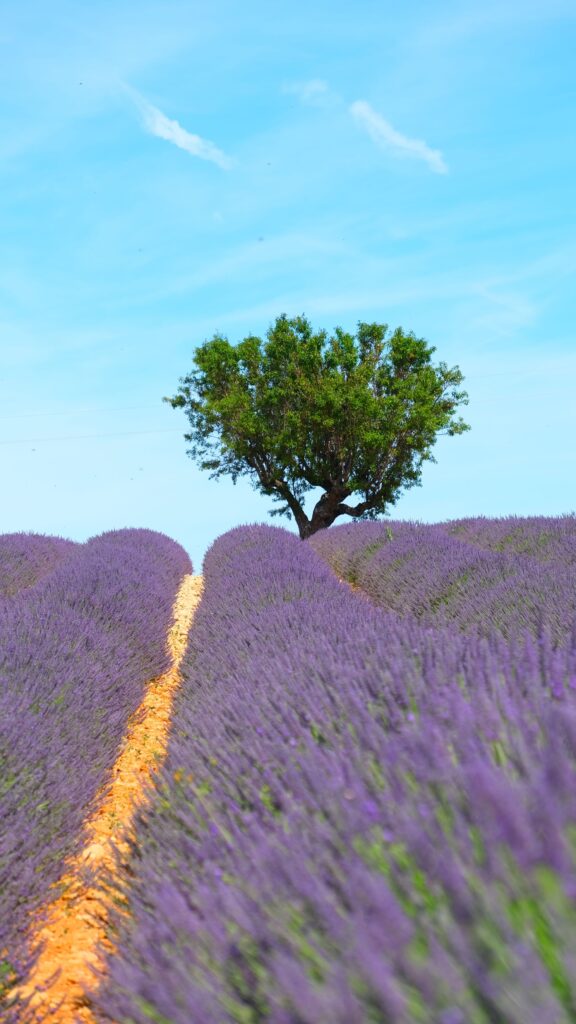
At Provençal markets, buy olives, sun-dried tomatoes, chickpeas, peaches and fresh bread and have lunch outdoors. It’s the cheapest vegan meal of the trip, and often the best.
The south-west: Bordeaux, Toulouse and the Atlantic
South-west France pairs two big cities with good vegan options, Bordeaux and Toulouse, with the wild Atlantic coast and medieval Carcassonne. It suits travellers who want the sea but not Mediterranean calm, because the Atlantic has waves, big tides and cooler water.
Bordeaux and the Dune du Pilat
Bordeaux is a port city on the Garonne whose historic centre, the “Port of the Moon”, is a UNESCO site. An hour south-west lies the Dune du Pilat, considered the highest sand dune in Europe, with views over the Atlantic and the Arcachon basin from the top.
For vegan food in Bordeaux, head to the Saint-Michel district. At 11 rue Camille Sauvageau you’ll find Monkey Mood, which describes its cooking as “100% vegan” and runs a cocktail bar and brunch.
Toulouse and Carcassonne
Toulouse is called the “pink city” for its brick buildings that glow at sunset. It’s the centre of the European aerospace industry, and the Canal du Midi, another UNESCO site, runs through it. An hour’s drive east is Carcassonne, a fortified medieval city with double walls.
In Toulouse, go to Café Brûlé at 12 rue Alexandre Fourtanier near place Saint-Georges. According to the Toulouse tourist office’s vegan and organic list, it’s 100% vegan and was opened in early 2022 by two women. It serves light dishes and desserts during the week and brunch at weekends.
There’s a small vegan grocery corner too, handy for picnic supplies. It’s open roughly Wednesday to Sunday.
Combining countries?
From Strasbourg or Lyon, Switzerland is close by. Our Switzerland holiday planner covers Zurich, Bern and the Alps, with trains and a budget.
Beach holiday in France: which coast to choose
France has four very different coastlines, so choose by what you want from the sea. Warm, calm water is on the Mediterranean, on the Riviera, in Provence and on Corsica. Waves and long sandy beaches are on the Atlantic near Bordeaux. Brittany and Normandy have cooler water and dramatic cliffs.
| Coast | Best for | Sea | Vegan food |
|---|---|---|---|
| French Riviera (Nice, Antibes, Cannes) | city and beach in one | warm, calm, pebble beaches | best choice, Nice |
| Provence (Marseille, Calanques) | hiking and rocky coves | warm, calm | good in Marseille |
| Atlantic (Arcachon, Biarritz) | sand, waves, surfing | cooler, tidal | Bordeaux |
| Brittany and Normandy | cliffs, harbours, cooler summers | cold, big tides | galettes, smaller choice |
| Corsica | mountains and wild coves | warm, crystal clear | limited, self-catering |
For families, the Atlantic with its gently sloping sandy beaches is usually easiest, or the sandy beaches of Languedoc near Montpellier, which are less crowded than the Riviera. Riviera beaches are often pebbly, so pack water shoes.
Getting to France and getting around
Most travellers reach France by plane or train, and drive once they’re there. Paris is served by flights from almost everywhere and by Eurostar from London. Nice is the main airport for the south, and the TGV high-speed trains link Paris with Lyon in about two hours.
By plane and train
Paris Charles de Gaulle and Orly are the main gateways, with Nice, Lyon, Marseille, Toulouse and Bordeaux as regional airports. From the UK, Eurostar runs from London St Pancras to Paris Gare du Nord. ÖBB’s Nightjet trains from Vienna and Berlin to Paris stopped in December 2025 when French funding ended, but since March 2026 European Sleeper runs a night train from Berlin to Paris three times a week.
Ordering a vegan meal for the flight works with the code VGML. Our guide on how to order a vegan airline meal covers the main airlines.
By car
Most French motorways are toll roads, and you pay the “péage” at toll booths by card. The motorway speed limit is 130 km/h, 110 km/h in rain, and 110 km/h for drivers on a probationary licence.
The low-emission zones (“ZFE”) of big cities such as Paris and Lyon only let you in with a Crit’Air clean-air sticker, and that includes foreign cars. Order it only from the official certificat-air.gouv.fr site, in the section for foreign-registered vehicles. It costs about €5 including postage, while reseller sites charge far more for the same sticker.
Order your Crit’Air sticker at least two to three weeks before you travel, because it arrives by post. The fine for driving in a low-emission zone without one is usually €68 and can reach €450, according to the official service-public.fr. Parliament tried to scrap the zones in 2025–26, but the Constitutional Council struck that measure down in May 2026, so they still apply.
When to visit France
The best time to visit France is May to June and September to October, when it’s warm, quieter and cheaper to stay. July and August are the hottest and busiest months, because the French take their holidays then too and southern beaches are packed. December belongs to the Alsace Christmas markets.
| Month | Where | Why |
|---|---|---|
| April to May | Paris, Loire, Provence | spring gardens, few crowds |
| June | Provence, Normandy, Brittany | lavender starts, long days |
| July to August | Atlantic, Alps, Brittany | swimming and mountains, Riviera at its busiest |
| September to October | Riviera, Corsica, Bordeaux | warm sea, grape harvest, fewer people |
| November to March | Paris, Lyon, Nice | cities, museums, mild Riviera winter |
| December | Strasbourg, Colmar | Christmas markets |
The Alsace markets are easy to combine with markets in Germany and Switzerland. Where to eat vegan at markets across the continent is in our guide to the best Christmas markets in Europe for vegans.
Where to stay in France as a vegan
France has two hotels with fully vegan kitchens that we know of and have checked. In Paris it’s HOY on rue des Martyrs in the 9th, a hotel with a yoga studio and Mesa, a restaurant with a 100% plant-based kitchen. In rural Limousin, in the village of Magnac-Laval, the small vegan Blue Dot hotel has a few rooms, a pool and half board.
You’ll find both alongside 23 others in our list of fully vegan hotels around the world. Beyond those two, we’d book an apartment or a room with a kitchenette. Buy a baguette and fruit in the morning, and cook French market vegetables in the evening, which are a reason to travel in themselves.
Shopping, money and tipping
Vegan shopping in France is easy in cities and in organic shops. Big supermarkets like Carrefour and Monoprix stock plant milks, tofu, hummus and ready salads. The organic chains Biocoop and Naturalia in the cities carry more, such as tempeh, nutritional yeast and vegan ice cream, and in the countryside look for La Vie Claire.
In French restaurants, service is included in the price by law, and menus must say “prix service compris”. Tipping is optional. If you were happy, round up or leave some coins.
Fast food is no shame when you need a quick meal on the motorway. What’s actually vegan at the big chains is in our breakdown of the McDonald’s menu.
French phrases for vegans
A few sentences of French will open more doors than English. The French know the word “vegan”, but it’s more reliable to say what you don’t eat. These phrases work in a bakery, a bistro and at the market.
| English | French | Say it like / When it helps |
|---|---|---|
| I’m vegan. | Je suis végétalien / végétalienne. | zhuh swee vay-zhay-tal-yan / -yen. Clearer than “vegan” |
| No meat and no fish. | Sans viande et sans poisson. | sahn vee-ahnd ay sahn pwa-sohn |
| No milk, butter, cheese or cream. | Sans lait, sans beurre, sans fromage, sans crème. | sahn lay, sahn bur, sahn fro-mahzh, sahn krem |
| No eggs. | Sans œufs. | sahn zuh |
| Is there bacon in it? | Il y a des lardons dedans ? | eel ya day lar-dohn duh-dahn. For salads and quiche |
| Can you make it without butter? | C’est possible sans beurre ? | say po-see-bluh sahn bur. In a crêperie or bistro |
| A traditional baguette, please. | Une tradition, s’il vous plaît. | oon tra-dee-syohn, seel voo play. Always vegan |
| With oat milk, please. | Avec du lait d’avoine, s’il vous plaît. | a-vek dew lay da-vwahn. In a café |
Travelling with a meat eater?
France makes it easy, because every restaurant has something for both of you. More tips for travelling together are in our guide on how to travel vegan, even with a non-vegan partner.
So, is France vegan friendly enough for a holiday?
Yes, as long as you choose your region well. France rewards travellers who pair a big city with the landscape around it. Paris with Normandy, Lyon with Annecy, Nice with Provence or Bordeaux with the Atlantic give you the best mix of sights, sea and vegan food. In the countryside, the market, the bakery and a kitchen of your own do the heavy lifting.
Expect a vegan menu in every village brasserie and you’ll go home disappointed. Learn ten words of French, eat socca, galettes and a tradition from the bakery on the corner, and you’ll be planning your return. Where in France would you go first, north or south?
Frequently asked questions
Is France vegan friendly?
France is vegan friendly in big cities like Paris, Lyon, Nice, Marseille, Bordeaux and Toulouse, which all have fully vegan restaurants, cafés or bakeries. It’s harder in villages, where traditional cooking relies on butter, cream and cheese. Markets, bakeries and international restaurants fill the gap.
Which French city is best for vegans?
Paris has the most vegan restaurants and bakeries, followed by Lyon, which has a fully vegan fine-dining restaurant, Trèfle, and a tourist office page dedicated to vegan food. Nice, Marseille, Bordeaux and Toulouse are also easy for a few days.
Is French bread vegan?
The “baguette de tradition française” is vegan, because French law only allows flour, water, salt and yeast or sourdough in it, plus tiny amounts of bean, soy or malt flour. An ordinary baguette isn’t guaranteed, and croissants aren’t vegan unless they come from a vegan bakery. Ask for “une tradition”.
How do you say vegan in French?
“Vegan” is understood, and the French word is “végétalien” (or “végétalienne” for a woman). It’s often more reliable to list what you don’t eat, for example “sans viande, sans lait, sans beurre, sans œufs”.
Do I need a Crit’Air sticker to drive in France?
Yes, if you drive into the low-emission zones of big cities such as Paris or Lyon, and that applies to foreign cars too. Order it only from the official certificat-air.gouv.fr site, and allow a few weeks for postal delivery.
Newsletter
Get our free e-books
Join the newsletter and download Our Vegan Christmas Kitchen straight away, 10 recipes for Czech cookies, gingerbread and vánočka. Then once a month, new places from the vegan map and new articles. Unsubscribe with one click.