If you pictured your dream vegan holiday, Thailand might not be the first place that springs to mind. It probably should be. Is Thailand vegan friendly? Very. It is one of the easiest countries in the world to eat vegan, often easier than at home. Thai cooking is built on rice, tofu, vegetables, coconut milk and herbs, and the country has its own tradition of fully plant-based food called “jay”, which you can spot by a bright yellow flag on food stalls and in shops.
The useful part is everything that comes next. How do you order so your curry arrives without fish sauce? Which Bangkok restaurants are fully vegan, and where in Chiang Mai do you get a vegan khao soi for under 100 baht? Which island has a whole village of vegan cafés? And what changed for travellers in September 2026? We walk you through the food, the phrases, nearly forty verified places to eat across Bangkok, Chiang Mai, Koh Phangan, Phuket, Krabi and Koh Samui, plus the seasons and the new entry rules.
One honest note first. We haven’t made it to Thailand ourselves yet, so this is a research guide rather than a travel diary. We read the menus, checked in October 2026 which places are open, and left out everything we couldn’t confirm.
Is Thailand really vegan friendly?
Yes, Thailand is one of the most vegan-friendly countries you can visit. So much of Thai cuisine is built on ingredients vegans love. Rice, noodles, tofu, tempeh, mountains of vegetables, fresh herbs, peanuts, cashews, lime, chilli and coconut milk form the base of countless dishes. Meat and fish do play a big role, but a plant-based version of almost every classic exists, and you will often find it even at an ordinary local eatery. Sri Lanka is just as easy, except there you watch for Maldive fish in the coconut sambol instead of fish sauce.
The second reason is cultural. Thailand has a long tradition of plant-based eating that came with its Chinese community. It has its own word, its own flag, and once a year a whole festival during which entire towns switch to vegan food for nine days. Because of that, a vegan in Thailand is never the odd traveller with strange requests. People know exactly what you mean.
If you are new to this or travelling with someone who is not vegan, Thailand is a brilliant place to start. The food is bold, colourful and delicious in its own right, so nobody at the table feels they are missing out. For the bigger picture on eating plant-based on the road, have a look at our tips on how to travel vegan, which work anywhere in the world.
Thailand on our vegan map
46 places, 38 fully vegan. Tap a pin to see the details.
Loading the map…
- 100% vegan
- Vegetarian
- Vegan options
- Stays
- Sanctuaries & charities
See every place from this article on our vegan map.
What “jay” means and how to spot vegan food
Jay (in Thai เจ, pronounced roughly “jay”) is the single most useful word in Thailand, because it means food that is completely plant-based. No meat, no fish, no eggs, no dairy. You will recognise jay food by its flag, red lettering on a bright yellow background, on stalls, in restaurants and on packaged products in shops.
Two more words help so that nothing catches you out. Mangsawirat means vegetarian and may include eggs, dairy or even fish sauce, so it is not automatically safe for a vegan. Wigan (from the English “vegan”) is a newer word for plant-based food without the religious context. Jay has one small catch. It traditionally also leaves out garlic and onion, along with other pungent vegetables. So when you ask for jay you get vegan food, possibly without garlic and onion too. If you want the garlic and onion, use the word wigan or simply say which ingredients to leave out.
Save a photo of the jay flag to your phone: when you are standing in a 7-Eleven looking for soy milk or a snack and everything is written in Thai, you just match the red-on-yellow sign and you know the product is plant-based.
What to watch out for as a vegan in Thailand
The one real trap of Thai cooking is the sauces and pastes. Even a dish that looks completely plant-based often hides animal ingredients. It is not big chunks of meat, but the condiments that give Thai food its signature flavour. Once you know what to look for, you avoid ninety percent of the problems.
- Fish sauce (nam pla) is the backbone of Thai cooking and turns up where you would never expect it, including salads and stir-fried vegetables.
- Oyster sauce (nam man hoi) is added to many stir-fries and sauces.
- Shrimp paste (kapi) hides in curry pastes and in som tam salad. If you want to cook Thai curry at home, check which shop-bought curry pastes are vegan.
- Eggs are added by default to pad thai and fried rice, even when you order them with vegetables.
The fix is simple. Learn a few phrases (they are in the next section), look for the yellow jay flag, and ask whenever a dish seems doubtful. In fully vegan restaurants, which most of the places in this article are, you don’t have to worry at all. It is the same good habit as carrying a few of your own supplies, which we cover in our piece on vegan travel food.
How to order vegan food: useful Thai phrases
A few Thai phrases are enough to order vegan, and you can simply show them on your phone. The strongest is “gin jay”, which tells people you eat fully plant-based in the jay tradition. If you want to keep garlic and onion, lean on the individual “without” phrases in the table instead.
| What you want to say | Thai (transliteration) | Meaning |
|---|---|---|
| I eat vegan | gin jay | I eat fully plant-based, jay tradition |
| No fish sauce | mai sai nam pla | do not add fish sauce |
| No oyster sauce | mai sai nam man hoi | do not add oyster sauce |
| No egg | mai sai kai | do not add egg |
| Thank you | khob khun (ka / khrap) | women say “ka”, men say “khrap” |
Vegan cards work brilliantly too. They are small slips that explain in Thai what you don’t eat. You show one to the staff and there is no room for a misunderstanding. You can download them for free from several vegan websites and restaurant-finder apps.
What to eat: the best vegan Thai dishes
Most famous Thai dishes can be made vegan, often just by saying “jay” or by skipping the fish sauce and shrimp paste. In the vegan restaurants below they arrive vegan by default.
| Dish | What it is | Watch out for |
|---|---|---|
| Pad thai | Stir-fried rice noodles with tofu, peanuts and lime | Usually has egg and fish sauce, ask for “jay” |
| Green and red curry | Coconut curry with vegetables and tofu | Shrimp paste and fish sauce in the curry paste |
| Khao soi | Northern Thai curry noodle soup, a Chiang Mai speciality | Usually made with chicken, vegan in the places below |
| Som tam | Spicy green papaya salad | Dried shrimp and fish sauce |
| Pad pak boong | Stir-fried morning glory greens | Oyster sauce |
| Massaman curry | Mild curry with potato and peanuts | Sometimes has meat, ask for the tofu version |
| Mango sticky rice | Sticky rice with mango and coconut milk | Naturally vegan, the perfect dessert |
Add fresh tropical fruit, mango and coconut smoothies, stir-fried tofu with vegetables or a plant-based tom yam soup. For breakfast, the vegan cafés in Bangkok, Chiang Mai and on the islands serve everything from chia puddings to acai bowls. A vegan in Thailand does not go hungry, far from it.
Learn one single word, gin jay, and a whole new world of food opens up to you in Thailand.
Vegan food at 7-Eleven and convenience stores
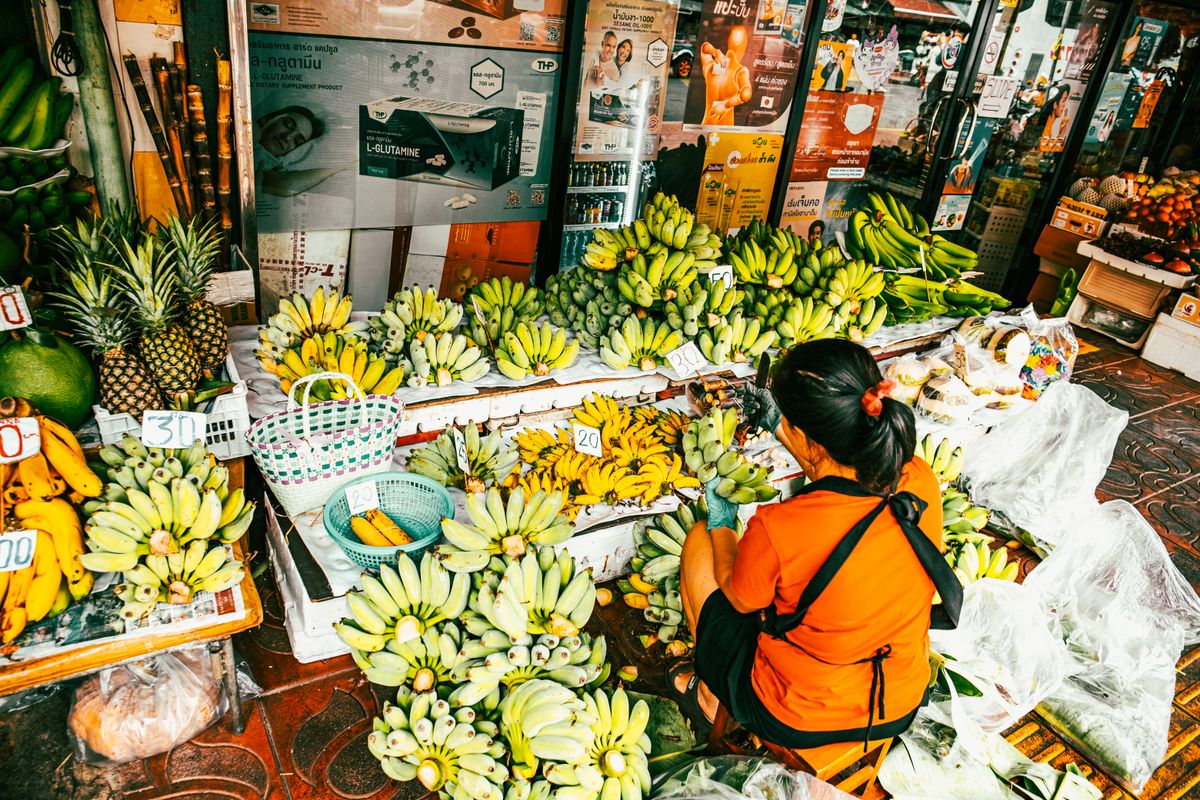
7-Eleven is a decent backup for vegans in Thailand. You will find soy and rice milk, coconut water, fresh fruit, nuts, crisps, dried seaweed and the occasional packaged plant-based snack. Here again the yellow jay sign helps, since brands use it to mark their plant-based products.
The range is at its best during the autumn Vegetarian Festival, when 7-Eleven fills up with jay products. Outside the festival it is more modest, but for a snack or an emergency dinner between island hops you will always find something.
Vegan restaurants in Bangkok
Bangkok has a fully vegan restaurant for almost every craving, from Thai heritage cooking to brunch cafés and a cocktail bar. They cluster in three areas. Sukhumvit has the most, the old town around Khao San Road has the cheapest, and the riverside has the most atmospheric.
For the sights to pair them with, and a vegan place to eat by each one, see our list of the best things to do in Bangkok.
Sukhumvit: brunch, burgers and bowls
Broccoli Revolution opened next to Sukhumvit Soi 49 in 2015 and is still one of Bangkok’s best-known plant-based restaurants. Its fully plant-based menu covers a broccoli quinoa charcoal burger, Thai curries and homemade ice cream, and it opens daily from 08:00 to 21:00. It is popular with non-vegans too, which makes it a safe pick for a mixed group.
Two fully vegan places sit on Sukhumvit Soi 24, near BTS Phrom Phong. Veganerie Concept, behind Benjasiri Park, was founded by a vegan family and serves over 150 recipes, from pancakes to a burger with fries, daily from 09:30 to 22:00. Vistro serves global comfort food such as chilli bao and vegan crab croquettes, with breakfast from 08:00 and the main menu until 22:00.
Golden State Vegan on the third floor of RR Space on Sukhumvit Soi 33 is a Japanese-Californian vegan restaurant and cocktail bar, open daily from noon to midnight, known for its sushi rolls and a quinoa burger with skinny fries. Plantiful at 27 Sukhumvit 61 does bowls, wraps, sushi and maki. Nature’s Charm Cafe on Sukhumvit Soi 51, run by the makers of Nature’s Charm coconut products, serves banana blossom fish and chips and poke bowls, daily from 09:00 to 20:00.
For Thai classics in vegan form, May Veggie Home on the second floor of Prasarnmit Plaza on Sukhumvit Soi 23 has served 100% vegan food since 2011, including vegan pad thai and kraphao (holy basil stir-fry), daily from 10:00 to 21:00. Carrots The Vegan Kitchen off Sukhumvit 46 is a small casual kitchen where dishes cost 150 to 340 baht, cooked to order, daily from 10:00 to 23:00.
Old town and Khao San Road
May Kaidee on Samsen Soi 5 started as a street cart near Khao San Road in 1988. It now serves Thai vegan food and runs cooking classes, daily from 10:00 to 21:00. On Tanao Road at the end of Khao San, Vegan Pranakhon puts a modern spin on Thai classics with house-made mock meats, such as a vegan “pork” belly with garlic rice. A few steps away in a lane off Tanao Road, Ethos is a vegetarian restaurant with labelled vegan dishes, and all its home-baked desserts are vegan, from apple crumble to mango sticky rice.
Riverside and Chinatown
Vegan Mahanakhon serves heritage Thai dishes in fully plant-based form inside a restored old house on Arun Amarin Road in Bangkok Noi, across the river from the Grand Palace. It opens daily from 10:30 to 21:00, and booking is a good idea. In Chinatown, So Vegan on the second floor of the I’m Chinatown mall on Charoen Krung Road has an all-vegan Thai menu, including Jain dishes cooked without onion and garlic. Broccoli Revolution’s second branch is further down Charoen Krung in Bang Rak, open daily from 11:00 to 21:30.
| Area | Fully vegan picks | Best for |
|---|---|---|
| Sukhumvit | Broccoli Revolution, Veganerie Concept, Vistro, Golden State Vegan, May Veggie Home | Brunch, burgers, Thai classics, cocktails |
| Khao San Road | May Kaidee, Vegan Pranakhon | Cheap Thai food, cooking classes |
| Riverside and Chinatown | Vegan Mahanakhon, So Vegan | Heritage Thai cooking near the temples |
Bangkok temples and lunch in one go: Vegan Mahanakhon is across the river from the Grand Palace and Wat Pho, a short cross-river ferry hop away, so book it for lunch on your temple day.
Vegan restaurants in Chiang Mai
Chiang Mai is the most relaxed vegan city in Thailand, with fully vegan cafés all over the Old City and vegan khao soi, the northern curry noodle soup, for well under 100 baht. Most places sit inside the old moat, so you can walk between them.
Inside the Old City
Goodsouls Kitchen on Sinharat Road Soi 3 is 100% plant-based and open daily from 08:00 to 22:00, with mains around 150 to 300 baht. Order the khao soi or the mushroom steak, or chocolate banana pancakes for breakfast. Reform Kafé is the vegan restaurant of Green Tiger House near the North Gate, open daily from 09:00 to 22:30, with a mushroom burger, vegan khao soi and Thai curries. Rad Rabbit Vegan Pizzeria on Moon Muang Road Soi 9 is an all-vegan pizzeria and brunch spot with cashew cheese pizzas, eggs Benedict and carrot cake, daily from 08:30 to 22:00.
For a cheap local meal, Begin Vegan on Moon Muang Road by the eastern moat serves some of the cheapest vegan khao soi in the Old City, with dishes from about 65 to 89 baht, so bring cash to be safe. Near Chiang Mai Gate, the family-run Aum Vegetarian Restaurant makes a vegan khao soi too, daily from 11:00 to 20:00.
Asa Vegan Kitchen at 217 Tha Phae Road is a vegan café with a yoga studio upstairs, serving French toast, chia pudding and smoothie bowls daily from 09:30 to 19:00. On Chang Moi Kao Road, May Kaidee’s Chiang Mai branch cooks Thai and northern Thai vegan dishes, and it is closed on Saturdays.
Nimman and the road to Doi Suthep
Free Bird Café on Sirimangkalajarn Soi 9 is a not-for-profit vegan café founded in 2009. Its profits fund Thai Freedom House, a learning centre for refugees from Myanmar, so you eat Shan and Burmese curries, tea-leaf salad or vegan khao soi and back a good cause at the same time. It is closed on Mondays.
In the Nimman area, Anchan Vegetarian Restaurant cooks vegetarian and vegan Thai food, including a purple butterfly-pea pad thai when it is in season and a banana flower tom yum. In the basement food court of the MAYA mall on Nimmanhaemin Road, Imjai Vegan is the one fully vegan stall, where rice with three dishes costs about 55 baht.
Visiting elephants near Chiang Mai? Choose a sanctuary where you watch the animals rather than ride or bathe them. Elephant Nature Park, on our vegan map, is a rescue park north of the city, and you can book visits on its own website.
Vegan food on Koh Phangan
Koh Phangan has the biggest vegan café scene we found on the Thai islands, centred on the village of Srithanu on the west coast. You might know the island for its Full Moon parties on the other side, but Srithanu is its yoga and wellness hub, and the food follows.
Eat.Co in Srithanu serves 100% vegan dishes made from scratch, such as spaghetti carbonara with tempeh bacon and cashew-tofu sauce, from the morning until 22:00 or later (its website and listing differ on hours). Orion Cafe at the Orion Healing Centre serves food without dairy, eggs or refined sugar, daily from 08:30 to 22:00. Just outside the village, Deli Devi is an all-vegan deli known for its house-made vegan cheeses, so order the cheese platter or the Farmer’s Platter.
On the north coast, Foods & Roots is a vegan restaurant on Chaloklum Beach, open from noon to 22:00 and closed on Thursdays. The Thai vegan chain Pure Vegan Heaven has two branches on the island, a restaurant in Wok Tum and an air-conditioned café in the Thong Sala and Baan Tai area, with tempeh sushi, bean burgers and vegan cheesecake.
Vegan food in Phuket
Phuket Old Town is the best part of the island for vegans, with a fully vegan restaurant, a jay buffet and a vegetarian Thai kitchen within a short walk of each other. It is also the home of Thailand’s biggest Vegetarian Festival.
The Vegan Table at 106 Ratsada Road has served 100% vegan Thai and international food since 2018, with wood-fired pizzas, smoked tofu summer rolls and a sweet and sour dish with cashews. It opens from 13:00 to 22:00 and closes on Wednesdays. On Ranong Road, Hesan Vegetarian is a jay buffet with vegan curries, soups and mock meats over white or brown rice, and during the festival it serves over a thousand people a day. Dok Bua (Lotus Vegetarian) on Soi Ratchaphruek in Phuket Town cooks vegetarian Thai dishes with mock meats.
Away from the Old Town, Pure Vegan Heaven has a café on Soi Ta-iad in Chalong, close to the southern beaches, with gluten-free pancakes and juices.
For the sights to pair with these meals, from the Old Town to the Big Buddha and boat trips into Phang Nga Bay, see our pick of the best things to do in Phuket.
Vegan food in Krabi and Koh Samui
Krabi and Koh Samui have only a handful of verified vegan places, so plan your meals there a little more. In Ao Nang, Krabi’s beach town, Pure Vegetarian Govinda’s Restaurant has served Indian, Thai and international vegetarian food with many vegan dishes since 2016, daily from noon to 23:30.
For the sights around these meals, from Railay to Tiger Cave Temple, see our pick of the best things to do in Krabi.
On Koh Samui, Pure Vegan Heaven has an all-vegan café on Had Lamai Road in Lamai, with smoothie bowls and som tam. Vikasa Life Cafe sits on a clifftop between Chaweng and Lamai and opens daily from 09:00 to 21:00. Its menu mixes many vegan, raw and gluten-free dishes, such as a vegan burger, coconut curry and raw tiramisu, with some meat and seafood.
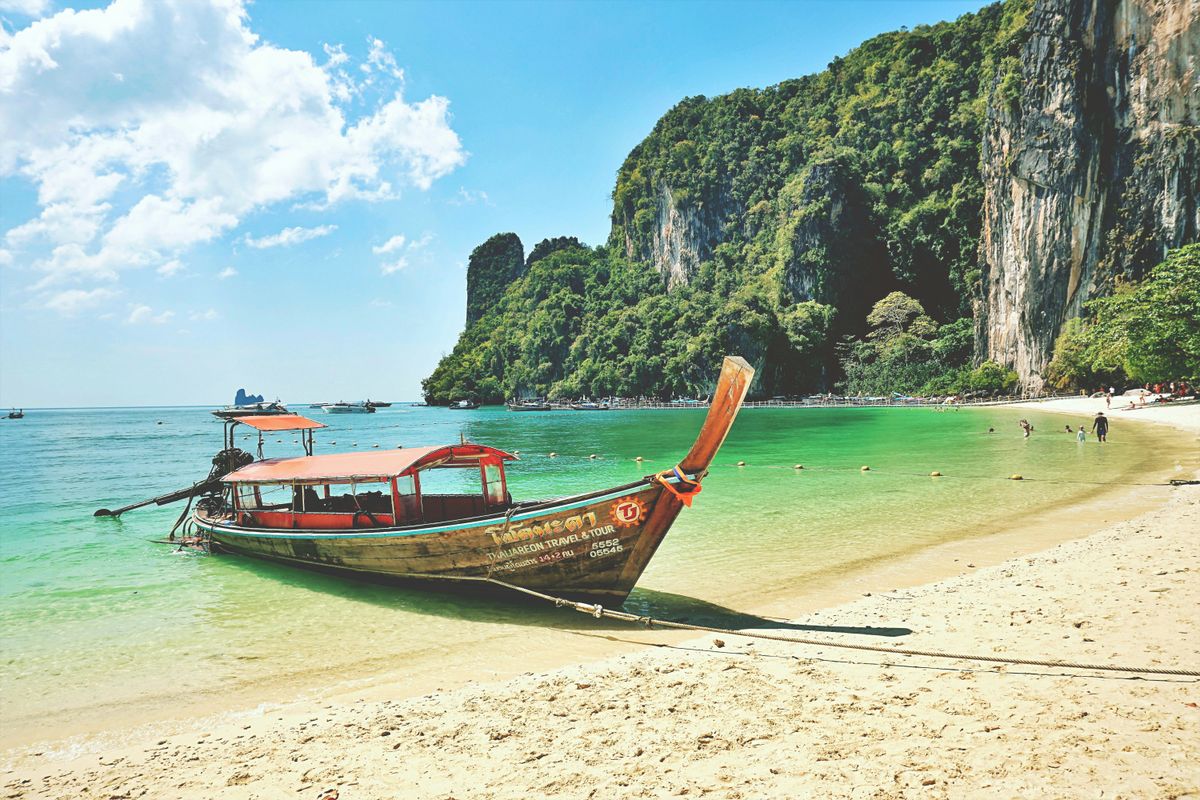
When to visit Thailand: weather and seasons
The best time to visit Thailand for most people is November to February, the cool and dry season. Thailand has essentially three seasons, and each has its upsides and downsides.
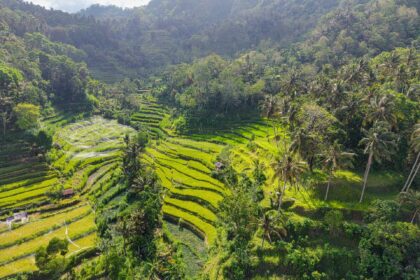
Bali runs almost the other way round, with May, June and September at their best. More in best time to visit Bali.
| Season | Months | Weather | Best for |
|---|---|---|---|
| Cool and dry | November to February | Most pleasant, around 26 to 32 °C, little rain | High season, ideal for most trips |
| Hot | March to May | Very hot, easily over 35 °C, hottest in April | Beach lovers and lower pre-season prices |
| Rainy (green) | June to October | Short afternoon downpours, lush green scenery | Fewer crowds if you don’t mind rain |
The rainy season rarely means rain all day. It is usually a heavy downpour in the afternoon, and the rest of the day is bright. Watch the regional differences, though. The west-coast islands (Phuket, Krabi) tend to be wettest from around May to October, while the Gulf islands (Koh Samui, Koh Phangan) get most of their rain from about September to December.
Thailand is a classic escape from a European winter: while it is freezing back home from November to February, Thailand is in its dry, warm high season. That is also the busiest and priciest time, so book flights and accommodation well in advance. For more warm options with vegan restaurants, see our winter sun destinations guide.
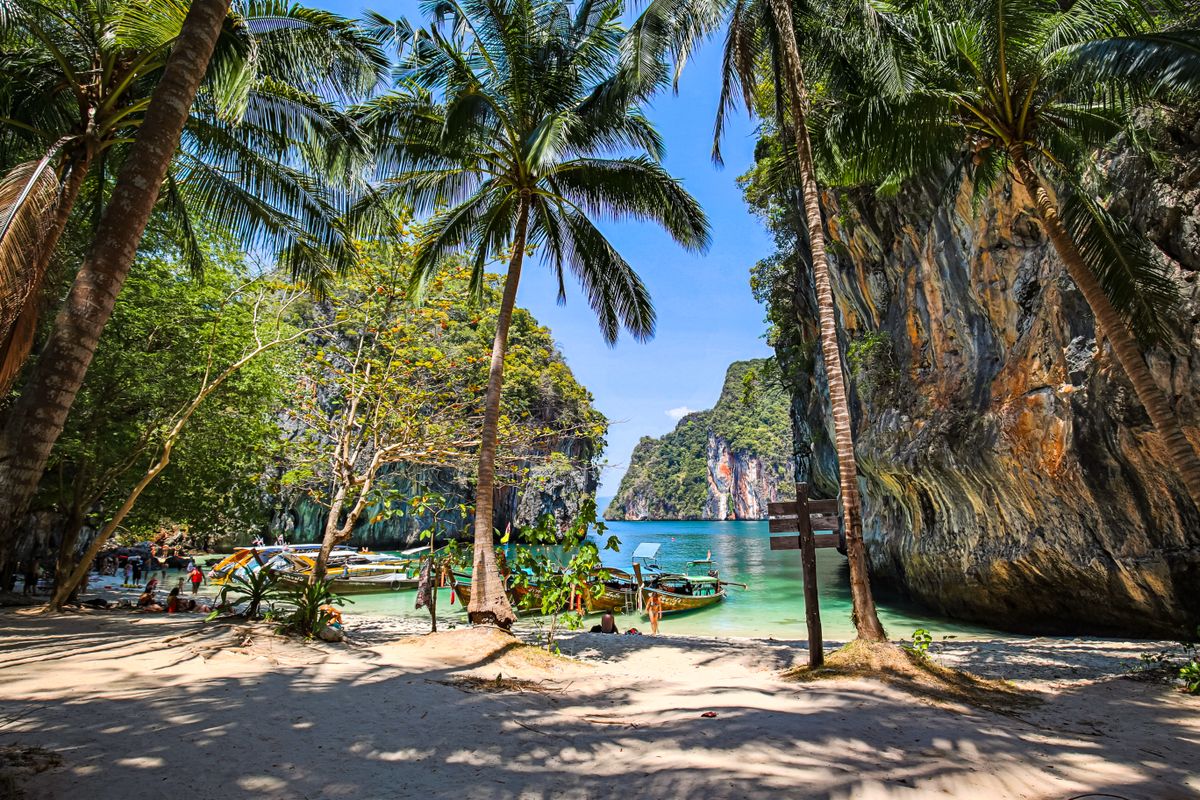
Where to stay in Thailand as a vegan
Chiang Mai has Thailand’s best-known vegan stay. Away Chiang Mai Thapae Resort, near Tha Phae Gate, is a four-star vegan and alcohol-free resort whose Moreganic restaurant serves vegan Thai and Western food. Green Tiger House, home of Reform Kafé, describes itself as Chiang Mai’s first plant-based hotel. You’ll find both kinds of stay, and more fully vegan hotels around the world, in our list of 25 fully vegan hotels.
Elsewhere, stay where the food is. In Bangkok that means Sukhumvit between Soi 23 and Soi 49, where you can walk to Broccoli Revolution, Veganerie, Vistro and May Veggie Home. On Koh Phangan, base yourself in or near Srithanu. In Phuket, the Old Town puts The Vegan Table and Hesan on your doorstep, though the beaches are a drive away.
What to see in Thailand
Thailand is just as rewarding beyond the plate, and the vegan hotspots happen to sit next to the main sights.
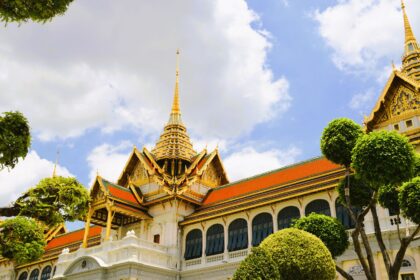
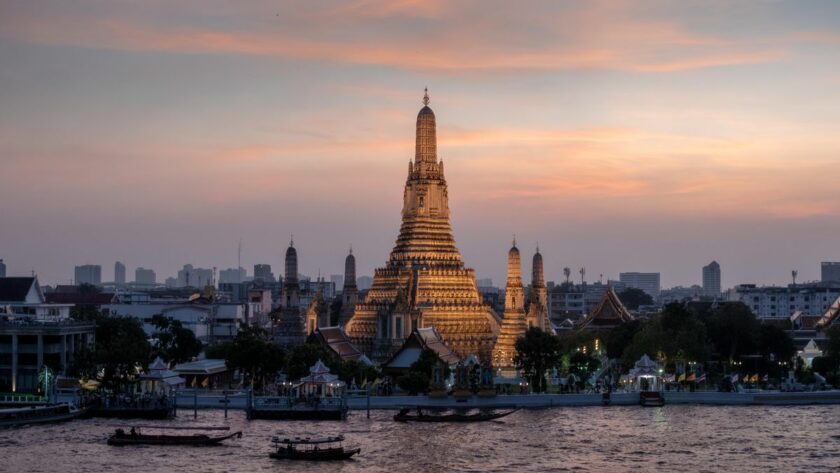
- Bangkok for the Grand Palace, Wat Pho and Wat Arun, floating markets and endless food.
- Chiang Mai in the north for its Old City temples, the mountain temple of Doi Suthep and the night markets.
- Krabi for limestone cliffs, beaches and island-hopping boat trips.
- Phuket, the largest island, for its beaches and the Sino-Portuguese houses of the Old Town.
- The Gulf islands of Koh Samui, Koh Phangan and Koh Tao for beaches, yoga and diving.
Practical tips: entry rules, safety and budget
Visa-free stays are now 30 days
Since 15 September 2026, Czech, other EU and UK passport holders can stay in Thailand visa-free for up to 30 days, down from the previous 60 days, for tourism only. The Tourism Authority of Thailand and the Royal Thai Embassy in London announced the change. Every visitor, visa-free or not, must also fill in the free Thailand Digital Arrival Card (TDAC) online within three days before arrival, on the official site tdac.immigration.go.th. Rules change, so check your own country’s Thai embassy before you book, and you’ll find general travel information on the official Thailand tourism website.
Safety
Thailand is generally a safe country for tourists. The usual precautions apply. Keep an eye on your belongings, watch for pickpockets in crowds, and go easy on very spicy food if you have a sensitive stomach. Drink bottled water, and take care if you rent a scooter.
How much vegan food costs in Thailand
Vegan food in Thailand is cheap, especially in Chiang Mai. Rice with three dishes at Imjai Vegan costs about 55 baht, dishes at Begin Vegan about 65 to 89 baht, and mains at Goodsouls Kitchen around 150 to 300 baht. Bangkok’s Sukhumvit cafés cost more, with dishes at Carrots between 150 and 340 baht. The bigger costs are flights and, in high season, accommodation on the islands. All prices and opening days in this article were checked in October 2026.
Getting around
Cheap domestic flights, night trains and buses connect Bangkok with Chiang Mai and the south, and ferries reach the islands. Ride-hailing apps are handy in towns.
Fascinating facts about vegan Thailand
Thailand has a whole vegan festival. The Vegetarian Festival, linked to the Chinese celebration of the Nine Emperor Gods, runs for about nine days in autumn, usually in September or October, and its dates follow the lunar calendar. In 2026 it ran from 10 to 18 October. It is most famous in Phuket, where the Old Town switches to jay food and processions fill the streets.
Jay comes from Chinese tradition. Thailand’s Chinese community brought this way of eating, which leaves out not only animal products but also pungent plants like garlic and onion. That is exactly why vegan food has such firm cultural footing in Thailand.
Tofu came with Chinese immigrants too. Thanks to the Chinese-Thai community, Thailand has worked with soy and tofu for generations, so plant protein is not a new trend here but part of the cuisine.
Planning more warm-weather trips?
Our roundup of the best summer holidays for vegans compares the easiest beach destinations for plant-based travellers.
Is Thailand worth it for vegans?
Thailand is one of the best trips a vegan can take, and an easy one for a non-vegan travel partner too. Bangkok has a fully vegan restaurant for every mood, Chiang Mai feeds you vegan khao soi for the price of a coffee at home, and Srithanu on Koh Phangan is practically a vegan village. Away from those places, two words do the work. Say “gin jay”, watch out for fish and oyster sauce, and keep the 30-day visa limit in mind when you plan the route. So, where would you head first, Bangkok for the food scene or Koh Phangan for yoga and bowls?
Frequently asked questions
Is Thailand vegan friendly?
Yes, very. Thai cooking is built on rice, tofu, vegetables and coconut milk, and the country has a plant-based tradition called jay, marked by a yellow flag with red lettering. Bangkok and Chiang Mai both have many fully vegan restaurants. The main trap is fish sauce and oyster sauce, which you avoid with a couple of phrases.
How do I eat vegan in Thailand?
The easiest way is to say “gin jay”, which means you eat fully plant-based. Add “mai sai nam pla” (no fish sauce) and “mai sai kai” (no egg). Look for the yellow jay flag and, to be safe, carry a vegan card explaining your diet in Thai.
Where is the best vegan food in Thailand?
Bangkok and Chiang Mai have the most fully vegan restaurants, such as Broccoli Revolution, Veganerie and Vistro in Bangkok and Goodsouls Kitchen, Reform Kafé and Free Bird Café in Chiang Mai. Among the islands, Koh Phangan’s Srithanu village has the most vegan cafés.
How long can I stay in Thailand without a visa?
Since 15 September 2026, Czech, other EU and UK citizens can stay up to 30 days visa-free for tourism, down from 60 days. Every visitor must also submit the free Thailand Digital Arrival Card online within three days before arrival.
When is the best time to visit Thailand?
The most pleasant time is the cool, dry season from November to February. March to May is very hot, and June to October is the rainy season with short afternoon downpours, lower prices and fewer tourists.
Are there vegan options at 7-Eleven in Thailand?
Yes, though the range is modest. You can usually buy soy milk, coconut water, fruit, nuts and crisps, and you can identify plant-based products by the yellow jay sign. During the autumn Vegetarian Festival, the choice of jay food grows a lot.
Newsletter
Get our free e-books
Join the newsletter and download Our Vegan Christmas Kitchen straight away, 10 recipes for Czech cookies, gingerbread and vánočka. Then once a month, new places from the vegan map and new articles. Unsubscribe with one click.