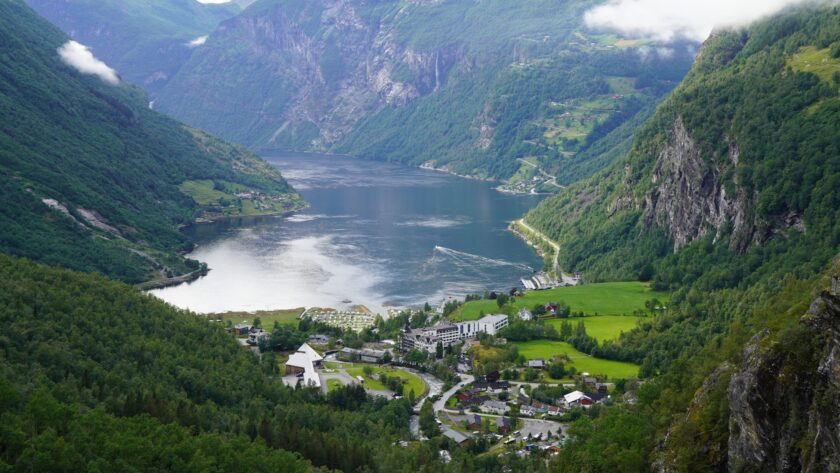
The best time to visit Scandinavia depends on whether you want the sun that never sets or the sky that turns green. Most people picture the summer version, with fjords, lakeside cabins and long, light evenings. Others picture the winter one, with snow, saunas and the northern lights. Lenka travelled to Norway twice as a child with her dad, by bus and ferry. The main thing she took away was that you can reach the far north without a flight and without a huge budget, as long as you plan a little.
We haven’t yet travelled the Nordic countries as vegans, so this isn’t a “when we visited” story. Instead, we read restaurant menus on the restaurants’ own websites, went through train and ferry timetables and official tourism sources, and checked it all in November 2026. The result is a practical starting point for your first trip north, whether you eat plant-based or just like good food.
Which month is best for the midnight sun, and which for the northern lights? Which countries actually count as Scandinavia? How do you get there and around without flying everywhere? Is Scandinavia as expensive as everyone says, and can you eat well on plants without spending a fortune? We answer all of it below, season by season and country by country.
The best time to visit Scandinavia is June to August for long days, open mountain roads and lake swimming. May and September are quieter and cheaper. For the northern lights, go between late September and March, far north and on a dark, clear night. No month is a bad month; each one is simply good for something different.
| Season | What to expect | Best for | For plant-based eaters |
|---|---|---|---|
| June to August | long days, midnight sun in the far north, biggest crowds and highest prices | fjords, hiking, islands, road trips | everything open, terraces, markets, wild berries |
| May and September | mild weather, fewer tourists, spring green or autumn colour | cities, hiking, cheaper stays | restaurants in full swing, no queues |
| October to March | short days, snow, polar night in the far north | northern lights, Lapland, sauna | some places cut their opening days |
| December | darkness, fairy lights, Christmas markets | Advent city breaks | plant-based Christmas buffets |
Summer and the midnight sun
The midnight sun only happens above the Arctic Circle, and only in summer. According to Visit Norway, the sun doesn’t set at the North Cape from 14 May to 29 July. In Tromsø it stays up from 20 May to 22 July, and in Lofoten from 28 May to 14 July. Further south, in Copenhagen, Oslo or Stockholm, the sun does set, but June nights never get properly dark.
Summer is also the busiest season. Ferries, cabins and famous viewpoints fill up, so book ahead. The reward is being able to head out for a walk at ten in the evening in full daylight.
Spring and autumn for a quieter trip
May and September are the best compromise for a first trip to Scandinavia. Cities are fully open, accommodation is usually cheaper than in July, and the hiking trails are quieter. In September the Swedish forests also turn autumn colours and the mushroom and wild berry season is at its peak.
Copenhagen & Helsinki & Oslo & Reykjavík & Stockholm on our vegan map
17 places, 13 fully vegan. Tap a pin to see the details.
Loading the map…
- 100% vegan
- Vegetarian
See every place from this article on our vegan map.
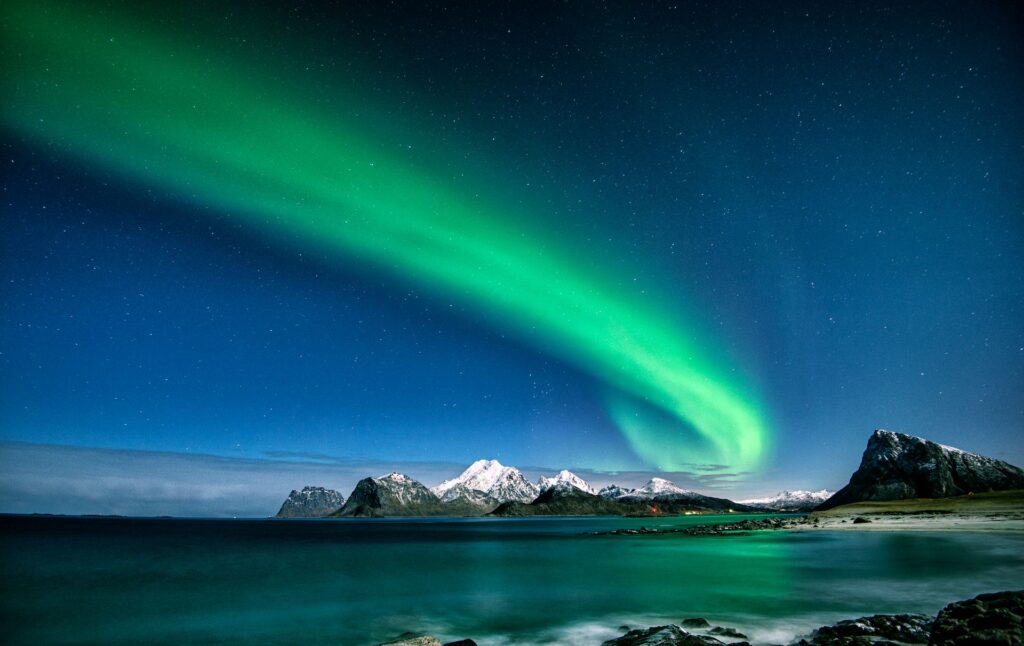
The best time to see the northern lights in Scandinavia is late September to March. Visit Norway says you can see them from late August until late March, with statistically the most activity in September and October and again in March and April. You need darkness and a clear sky, so head above the Arctic Circle, to Tromsø or Lofoten in Norway, Kiruna in Sweden or Finnish Lapland.
Winter trips north take a little more food planning than summer ones. Small Arctic towns have fewer plant-based restaurants than the capitals, and some cafés cut their opening days in the dark months. A self-catering cabin or a room with a kitchenette makes life much easier, and our list of vegan backpacking food works just as well for a week of aurora chasing.
Strictly speaking, Scandinavia is three countries: Denmark, Norway and Sweden. That’s how Norway’s national encyclopedia, Store norske leksikon, defines it. Add Finland and Iceland (plus the Faroe Islands, Greenland and Åland) and you have the Nordic countries. In everyday English, though, “Scandinavia” often means the whole Nordic region, so all five countries are in this article.
The Nordic countries at a glance
Every Nordic country has its own currency except Finland, which uses the euro. All five are in the Schengen area, so borders between them are open to travellers from other Schengen countries. Denmark, Sweden and Norway currently run temporary border checks, though, so always carry your passport or ID card. Norway and Iceland are not members of the European Union.
| Country | Capital | Currency | EU | Go for |
|---|---|---|---|---|
| Denmark | Copenhagen | Danish krone (DKK) | yes | Copenhagen, cycling, New Nordic food |
| Sweden | Stockholm | Swedish krona (SEK) | yes | lakes, forests, islands, fika |
| Norway | Oslo | Norwegian krone (NOK) | no | fjords, mountains, Lofoten, midnight sun |
| Finland | Helsinki | euro (EUR) | yes | lakes, sauna, Lapland |
| Iceland | Reykjavík | Icelandic króna (ISK) | no | volcanoes, glaciers, geysers, northern lights |
Where Scandinavia is, and its highest mountain
Scandinavia sits in northern Europe, above Germany and Poland, between the North Sea and the Baltic. Denmark is the southernmost and flattest country, while Norway and Sweden share the Scandinavian Peninsula and both reach beyond the Arctic Circle. The highest mountain in Scandinavia is Norway’s Galdhøpiggen in the Jotunheimen range. At 2,469 metres, it’s also the highest peak in all of northern Europe.
You can reach Scandinavia by train, by car and ferry, or by plane. Trains and ferries are slower, but the journey becomes part of the holiday and the carbon footprint is far smaller. We explain why that matters in our piece on what a carbon footprint is and how to reduce it.
By train from mainland Europe
Hamburg is the main rail gateway to Scandinavia, and from there trains continue to Copenhagen. Since 14 June 2026 Czech Railways has run direct trains from Prague to Copenhagen up to three times a day, via Berlin and Hamburg, in about 11 hours. If you’re coming through Berlin, it’s worth a stop; our things to do in Berlin and where to eat vegan has the details.
For Stockholm, the RDC EuroNight sleeper runs from Berlin and Hamburg a few times a week. According to the operator’s timetable, it also stops at Copenhagen Airport and Lund and arrives at Stockholm Central in the morning. It only runs on set days, so check the calendar before you buy a ticket.
Scandinavia road trip: car and ferry routes
A Scandinavia road trip from mainland Europe means driving through northern Germany and choosing a ferry. The shortest crossing is Scandlines from Puttgarden to Rødby in Denmark, at about 45 minutes. Scandlines also sails from Rostock to Gedser in about two hours. From Denmark, the Øresund Bridge takes you across to Malmö in Sweden.
For Norway, the overnight Color Line ferry from Kiel to Oslo leaves daily at 14:00 and arrives at 10:00 the next morning. You spend the night in a cabin rather than behind the wheel. A tunnel is being built under the Fehmarn Belt that will cut the Puttgarden to Rødby crossing to 10 minutes by car, but it’s still under construction.
Tip: Pack your own food for the ferry. Onboard buffets are pricey and rarely have much that’s plant-based. Bread, a spread, fruit and a flask of tea from home save you money and stress.
Flying, and travelling between the Nordic countries
Flying is the fastest way to reach Iceland and the Arctic. If you do fly, order your plant-based meal in advance; our guide to the vegan airline meal (VGML) explains how.
Getting around between the Nordic countries is easy by land and sea. Trains cross the bridge from Copenhagen to Malmö, rail links run from Stockholm to Oslo and Gothenburg, and Tallink Silja runs overnight ferries between Stockholm and Helsinki all year round. From Helsinki it’s a short ferry hop to Tallinn in Estonia too.
A week is enough for a first trip to Scandinavia if you stick to one or two countries. Here are three routes by length, each doable with or without a car, and each passing through cities where eating plant-based is easy. Trying to “do all of Scandinavia” usually ends with most of the holiday spent driving, because distances in the north are far longer than they look on a map.
7 days: Copenhagen and Malmö
The seven-day Scandinavia itinerary starts in Copenhagen, with four days for cycling, the Nyhavn waterfront, dinner at Bistro Lupa and a weekend brunch at Beyla. On day five, take the train across the Øresund Bridge to Malmö and see how different two countries less than an hour apart can feel. Head home the same way, perhaps with a stop in Hamburg or Berlin.
10 days: Copenhagen, Stockholm and Helsinki
The ten-day route links three capitals. From Copenhagen, continue by train to Stockholm for lunch at Hermans and breakfast at Mahalo. Then sail overnight from Stockholm to Helsinki, which saves a hotel night and means you wake up in Finland. In Helsinki, try the Karelian pies at Kahvila Rakastan, then fly home or return by ferry and train.
14 days: a Norway road trip
The two-week Norway road trip begins with the overnight ferry from Kiel to Oslo. From Oslo, the road climbs over the mountains to the fjords and Bergen, and you can return along the coast or via Sweden. Your own car means your own boot full of food, which helps in rural Norway, where plant-based restaurant meals are much rarer than in Oslo. A supermarket shop and a camping stove mean you’ll eat well even beside a fjord.
Each Nordic country offers something different, so one or two are plenty for a first trip. For one week, pick a capital and one slice of nature nearby. The short summaries below will help you choose.
Denmark
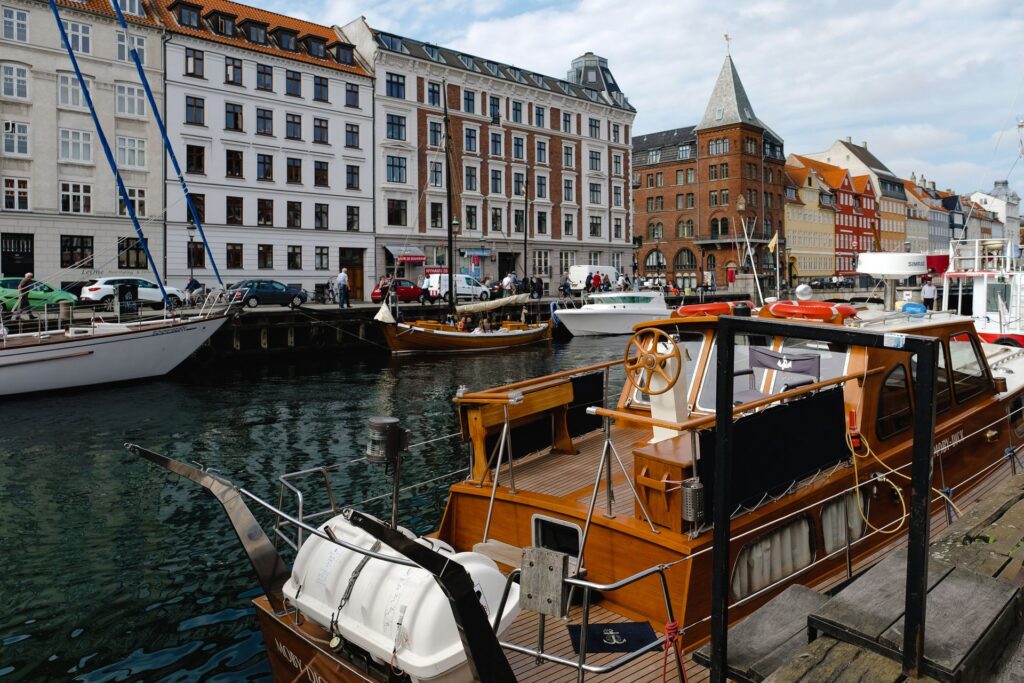
Denmark is the closest and most accessible Nordic country, and the only one that shares a land border with Germany. Copenhagen is perfect for a long weekend. Hire a bike, stroll along Nyhavn and book dinner at one of the plant-based restaurants the city is known for. With more time, carry on to the islands or along the Jutland coast. For regions, routes, prices and vegan places beyond the capital, see our things to do in Denmark and where to eat vegan.
Sweden
Sweden is a country of forests, lakes and islands, and it’s wonderful for nature lovers thanks to the allemansrätten, the right of public access. According to the Swedish Environmental Protection Agency, Naturvårdsverket, you can roam freely, pick berries and pitch a tent, as long as you don’t damage nature or disturb others. Stockholm is a city on the water, with boats from the centre out into the archipelago. Families with children love the Astrid Lindgrens Värld park in Vimmerby, full of places from her books. For regions, costs and vegan places in Gothenburg and Malmö, see our guide to the best things to do in Sweden.
Norway
Norway is the land of fjords and mountains, and the best Scandinavian country for a road trip. The classic route runs from Oslo over the mountains to Bergen and on to the Sognefjord and Geirangerfjord. With two weeks, you can keep going north to Lofoten or Tromsø. For a 7 to 14-day route, real costs and plant-based places in Oslo, Bergen, Stavanger and Trondheim, see our Norway holiday planner. What to see in Bergen itself is in our guide to things to do in Bergen.
Lenka travelled around Norway twice as a child with her dad, by bus and ferry, and that combination still works today. Along the fjord coast, ferries are simply part of the road network. For which fjords to put on the route, see our guide to the best fjords in Norway.
Finland
Finland is the land of lakes and saunas. Finnish sauna culture has been on UNESCO’s intangible cultural heritage list since 2020. Helsinki is compact and easy to explore on foot. In winter, Lapland draws visitors with snow, northern lights and a darkness that has its own magic. We go deep on it, from Helsinki to Lapland, in our Finland holiday article on things to do, costs and vegan food.
Iceland
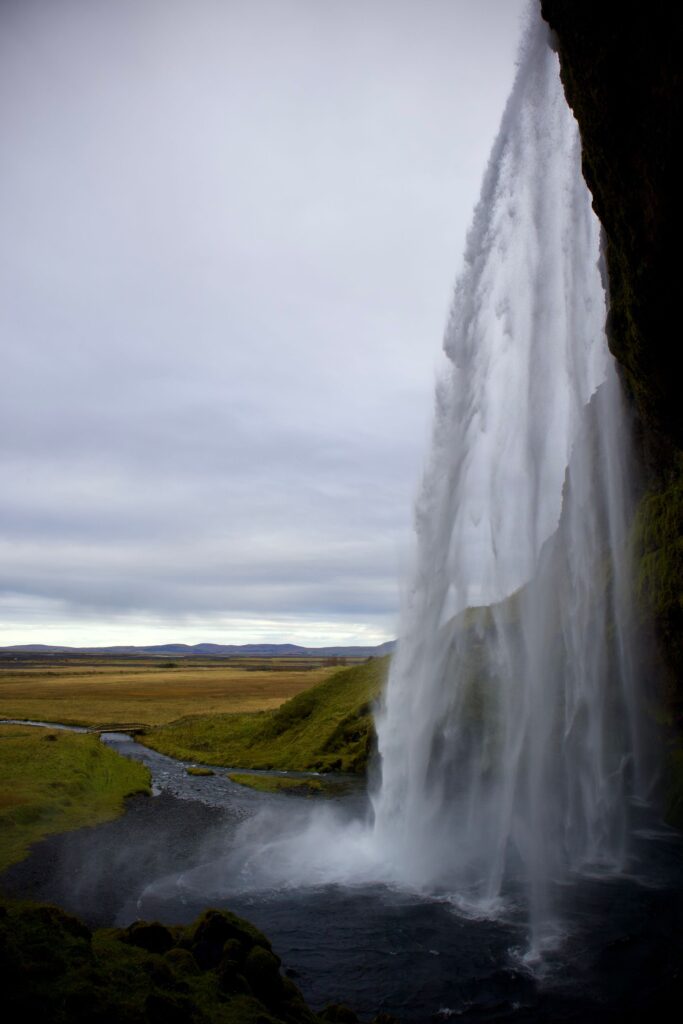
Iceland is Nordic but not Scandinavian, and its landscape is unlike the rest of the north. Expect volcanoes, lava fields, glaciers, geysers and waterfalls. Most visitors hire a car for the ring road around the island. Reykjavík is a small city with good plant-based food, and it makes a handy base for your first two or three days. Our guide to things to do in Reykjavik covers its sights, pools and vegan places. For when to go, what the Ring Road costs and where to eat beyond Reykjavík, see our guide to the best time to visit Iceland.
Read next
Travelling with someone who eats meat and not sure how to make it work? Our guide on how to travel vegan, even if your partner isn’t has practical tips on planning, restaurants and compromises that actually work.
Scandinavian food is built on rye bread, potatoes, root vegetables, mushrooms and wild berries, which makes it closer to plant-based eating than you might expect. Fish, meat and dairy play a big part, but many of the core ingredients come from the field and the forest. You just need to know where to look.
Traditional Scandinavian food and its plant-based versions
Danish smørrebrød is an open sandwich on dark rye bread, and plant-based restaurants serve it with roasted vegetables or mushrooms. Swedish fika is a coffee break with something sweet, typically a kanelbulle cinnamon bun. A classic kanelbulle is baked with butter, but vegan cafés make plant-based ones. Finnish karjalanpiirakka, Karelian pies with a rye crust, are traditionally filled with barley porridge or potato and served with egg butter.
Lingonberries and blueberries, dill, pickled vegetables and mushrooms appear everywhere. Anyone who has eaten at IKEA knows lingonberry jam with potatoes, and the jam itself is plant-based. On an Icelandic farm or in the Norwegian mountains, though, expect cooking built around lamb and fish, and that’s where your own supplies come in handy.
New Nordic cuisine
New Nordic cuisine is the movement that made Copenhagen one of Europe’s most exciting food cities. It’s built on seasonal, local and foraged ingredients, which is exactly why vegetables suit it so well. Copenhagen’s Bistro Lupa cooks entirely plant-based and, according to its website, holds a Green Michelin Star and a Bib Gourmand. It’s proof that plant-based food in the north is no compromise.
Rye bread, potatoes, mushrooms and lingonberries. The backbone of Nordic cooking was plant-based long before anyone called it vegan.
One to try even if you’re not vegan
If you’re travelling with someone who eats everything, take them to Kahvila Rakastan in Helsinki for plant-based Karelian pies with a rye crust. The mother and daughters who run the café bake to their Karelian grandmother’s tradition, just without animal ingredients. It’s a Finnish classic that tastes exactly as it should, and few people can tell the difference.
All five Nordic capitals have fully plant-based restaurants, cafés and buffets. We picked two or three places in each city and read every menu on the venue’s own website. For each one, we tell you whether it’s fully vegan or a vegetarian place with vegan dishes.
| City | Place | Type | What to order |
|---|---|---|---|
| Copenhagen | Bistro Lupa | fully plant-based | seasonal dinner menu |
| Copenhagen | Beyla | fully plant-based | weekend brunch |
| Stockholm | Hermans | fully vegan buffet | lunch buffet with a view |
| Stockholm | Mahalo | fully plant-based | breakfast, bowls |
| Oslo | Nordvegan | fully vegan buffet | katsu curry, lasagne |
| Helsinki | Kahvila Rakastan | fully plant-based | Karelian pies |
| Helsinki | Vegalicious Pastry | vegan bakery | cakes and pastries |
| Helsinki | Yes Yes Yes | vegetarian, vegan menu | vegan tasting menu |
| Reykjavík | Mama | fully plant-based | dhal, breakfast |
| Reykjavík | Kaffihúsið Garðurinn | vegetarian and vegan | soup and dish of the day |
Menus and opening hours checked on the venues’ websites in November 2026. They change, so check before you go.
Vegan Copenhagen
Bistro Lupa in Østerbro (Marstalsgade 8) is entirely plant-based and opens for dinner, plus lunch on Saturdays. Its sister restaurant Beyla sits in the new Carlsberg Byen district (Købkes Plads 34). Beyla is a casual plant-based eatery with weekend brunch and dinner, so it suits a relaxed Saturday morning too.
Vegan Stockholm
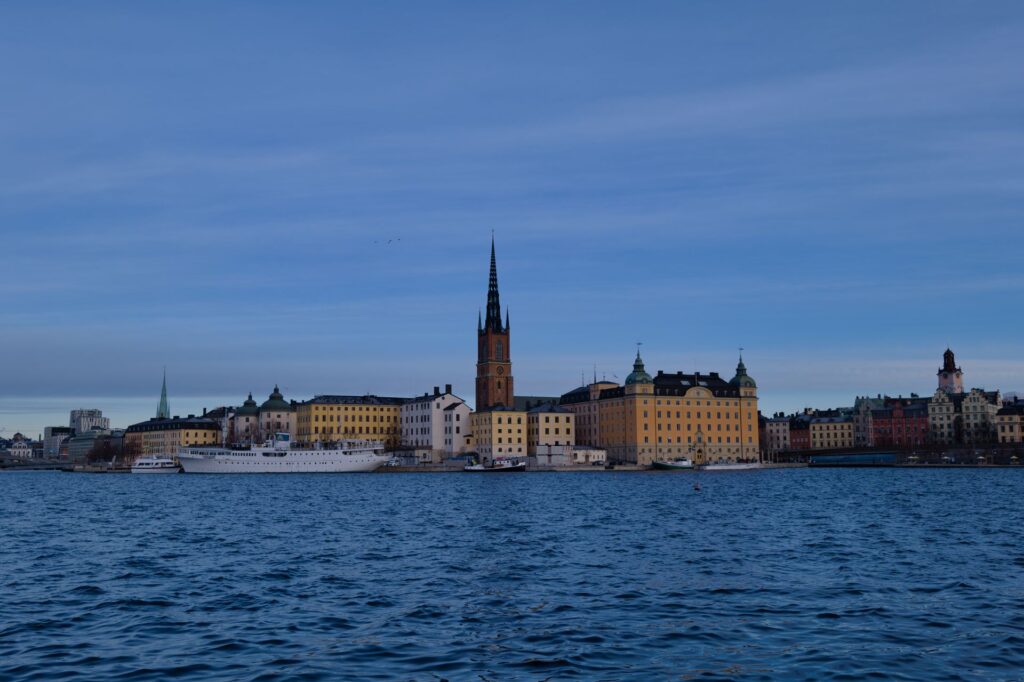
Hermans on Södermalm (Fjällgatan 23B) is a fully vegan buffet with a view over Stockholm and the water. The lunch buffet costs 195 SEK and the dinner and weekend buffet 285 SEK, with coffee and tea included. Expect their vegetable lasagne with red lentils, a stew or two, salads, homemade bread and hummus. For breakfast or lunch, try Mahalo, plant-based since 2015, with three cafés in Kungsholmen, Södermalm and Vasastan. For more places to eat and everything else to see in the city, read our things to do in Stockholm article.
Vegan Oslo
Nordvegan in central Oslo (Kristian IVs gate 15B, five minutes’ walk from Nationaltheatret station) is a vegan buffet open every day. The menu includes Japanese katsu curry, Thai yellow curry, lasagne, aubergine and pumpkin pie and Buddha bowls. You can take food away too, which is handy before an afternoon trip out on the fjord. For more vegan places, sights and prices, see our list of things to do in Oslo.
Vegan Helsinki
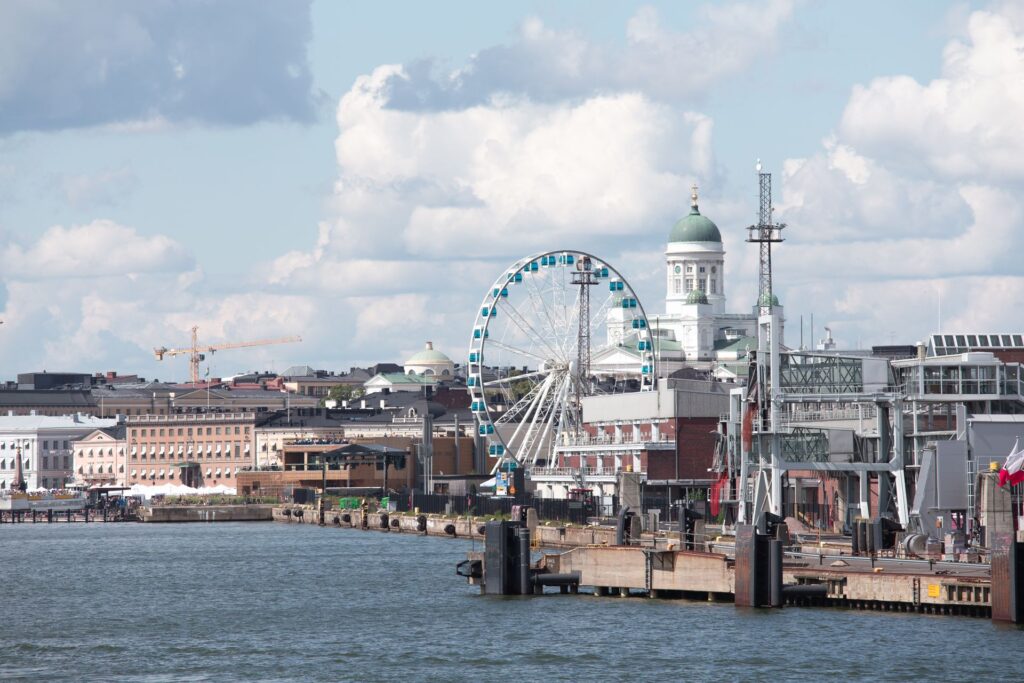
Kahvila Rakastan at Mannerheimintie 13 B bakes plant-based Karelian pies filled with barley or potato, and it’s closed on Mondays. Vegalicious Pastry at Laivurinkatu 37 is a dedicated vegan patisserie. From November to January it opens only Friday to Sunday.
For dinner, book Yes Yes Yes (Iso Roobertinkatu 1). It’s a vegetarian restaurant, but it has a vegan tasting menu for €56 and marks vegan dishes with a “v”.
Vegan Reykjavík
Mama at Bankastræti 2 is a 100% plant-based restaurant, open daily from 9:00 to 21:00. Its warming red lentil dhal with coconut milk and rice costs 4,190 ISK. Nearby, at Klapparstígur 37, Kaffihúsið Garðurinn is a vegetarian and vegan café with homemade soups and cakes. It’s closed on Sundays.
Christmas tip: After a year’s break, Stockholm’s Hermans is bringing back its fully plant-based Swedish Christmas buffet, the julbord. It runs from 18 to 20 December 2026 and costs 695 SEK, or 550 SEK for Friday lunch and for students. If you’d like Christmas markets too, see our pick of the best Christmas markets in Europe for vegans.
Yes, Scandinavia is expensive, mostly in restaurants, but plant-based travellers can save more than they’d expect. Eating out and accommodation are the biggest costs, while nature is free, and in Sweden the right of public access even lets you camp. Your budget depends mostly on when and where you eat.
What eating out costs
Real menu prices give a better picture than general averages. The lunch buffet at Hermans costs 195 SEK and the evening buffet 285 SEK. The dhal at Mama in Reykjavík costs 4,190 ISK. The vegan tasting menu at Yes Yes Yes in Helsinki is €56.
As a rule, lunch in the north is noticeably cheaper than dinner, and many restaurants offer a fixed-price lunch deal or buffet.
How to travel Scandinavia on a budget
Supermarkets are where you save most. Plant milks, tofu, hummus and ready-made meat alternatives are common and clearly labelled in Swedish, Danish and Finnish shops. Buy breakfast and dinner at the supermarket and make lunch your main restaurant meal. A hostel, apartment or cabin with a kitchen pays for itself within two or three days.
Tip: Watch the closing days. Garðurinn in Reykjavík is closed on Sundays, Rakastan in Helsinki on Mondays, and Vegalicious opens only Friday to Sunday in winter. Sundays and Mondays are the days to plan your plant-based meals in advance.
The best-value places to stay in Scandinavia are ones where you can cook. Hostels, apartments and cabins with a kitchen let you shop at the supermarket and eat plant-based without explaining yourself. When you search for a cabin, the local words help. Look for a stuga in Sweden, a hytte in Norway, a mökki in Finland and a sommerhus in Denmark. In cities, stay near public transport, since prices outside the centre are usually lower.
Hotel breakfasts in the north tend to be generous and often include plant milk, porridge, bread and vegetables. Email the hotel beforehand to say you eat plant-based and ask what they can offer. Fully vegan hotels are still rare; the ones we know are in our list of fully vegan hotels around the world. In Sweden, the allemansrätten also means you can sleep in a tent in the countryside.
You can get by in English almost everywhere in the Nordic countries. A few words in the local language still go down well, though, and knowing the word for “vegan” helps when you read labels in the supermarket. Pronunciations are approximate.
| English | Local language | Say it like / When it helps |
|---|---|---|
| I’m vegan (Danish) | Jeg er veganer | “yai air veh-GAH-ner”, at a restaurant |
| Is it vegan? (Danish) | Er det vegansk? | “air deh veh-GAHNSK”, at a counter |
| I’m vegan (Swedish) | Jag är vegan | “yah air veh-GAHN”, at a restaurant |
| Without milk or eggs (Swedish) | Utan mjölk och ägg | “OO-tan myulk oh egg”, when ordering |
| I’m vegan (Norwegian) | Jeg er veganer | “yai air veh-GAH-ner”, at a restaurant |
| Is it vegan? (Norwegian) | Er det vegansk? | “air deh veh-GAHNSK”, at a counter |
| I’m vegan (Finnish) | Olen vegaani | “OH-len VEH-gah-nee”, at a restaurant |
| Is this vegan? (Finnish) | Onko tämä vegaaninen? | “ON-ko TA-ma VEH-gah-ni-nen”, at a counter |
| I’m vegan (Icelandic) | Ég er vegan | “yeh air VEH-gan”, at a restaurant |
| Thank you | tak / tack / takk / kiitos / takk | Danish, Swedish, Norwegian, Finnish, Icelandic |
On packaging, look for vegansk (Danish and Norwegian), vegansk or växtbaserad (Swedish), vegaaninen (Finnish) and vegan (Icelandic).
Scandinavia makes a brilliant first trip north, and an even better one for plant-based eaters than most people expect. You can reach Copenhagen by train, every Nordic capital has places to eat well, and supermarkets stock plant milks, tofu and ready meals. It isn’t cheap, but lunch buffets, a kitchen of your own and free nature balance the budget. For a first visit, we’d pick Copenhagen or Stockholm in May or September, plus one extra day out in nature.
Which Nordic country would you pick first, and have you already been north? Tell us in the comments, we’d love to hear your tips.
Frequently asked questions
What is the best time to visit Scandinavia?
The best time to visit Scandinavia is June to August for long days and nature, or May and September for fewer crowds and lower prices. For the northern lights, go between late September and March, above the Arctic Circle and on a clear night.
Which countries are in Scandinavia?
Scandinavia strictly means Denmark, Norway and Sweden. Together with Finland and Iceland (plus the Faroe Islands, Greenland and Åland), they form the Nordic countries. In everyday English, “Scandinavia” is often used for the whole Nordic region.
When is the best time to see the northern lights in Scandinavia?
The northern lights season in Norway runs from late August to late March, according to Visit Norway. Activity is statistically highest in September and October and again in March and April. Head above the Arctic Circle, for example to Tromsø, Lofoten, Kiruna or Finnish Lapland, and wait for a dark, clear night.
Is Scandinavia expensive to visit?
Yes, Scandinavia is expensive, especially for restaurant dinners and accommodation. You can keep costs down by making lunch your main meal out, using supermarkets for breakfast and dinner, and staying somewhere with a kitchen. A vegan lunch buffet at Hermans in Stockholm, for example, costs 195 SEK.
Is it easy to eat vegan in Scandinavia?
Yes, all five Nordic capitals have fully plant-based restaurants, such as Hermans in Stockholm, Nordvegan in Oslo and Mama in Reykjavík. Plant milks, tofu and meat alternatives are common in supermarkets. Rural areas are harder, so carry some supplies of your own there.
Newsletter
Get our free e-books
Join the newsletter and download Our Vegan Christmas Kitchen straight away, 10 recipes for Czech cookies, gingerbread and vánočka. Then once a month, new places from the vegan map and new articles. Unsubscribe with one click.