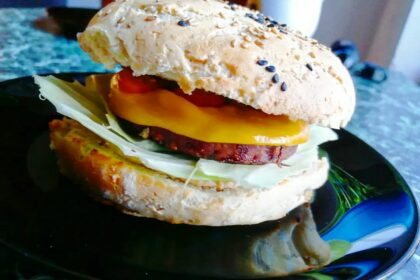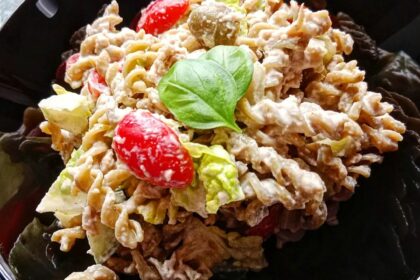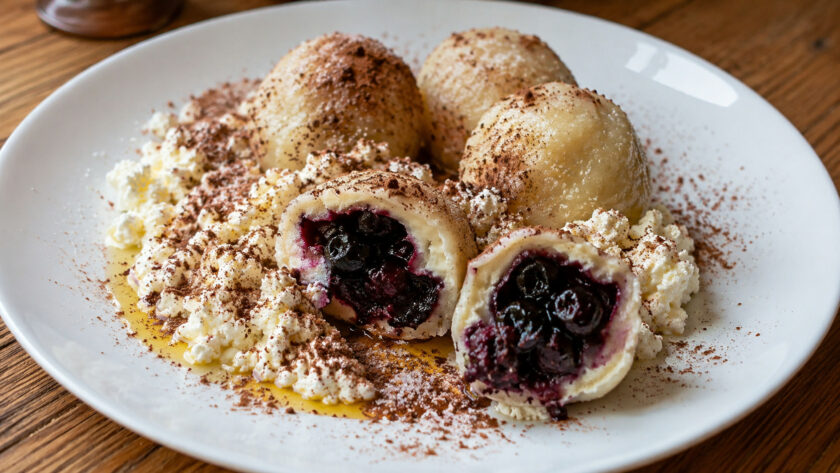
Vegan Czech food started for us with one plate of svíčková. Elle, who grew up in Britain, tasted it for the first time at Vegan’s Prague, just below Prague Castle, and fell for it on the spot. Lenka has been cooking it at home ever since. Then came buchty, bramboračka, vánočka and šunkofleky, and suddenly we had more than twenty Czech classics on the blog with no meat, eggs or dairy. Every one is tested, with exact ingredients, and every one tastes the way a Czech grandmother would expect.
Is Czech food vegan friendly at all? What is svíčková, and how do you make a cream sauce without cream? What replaces the quark in Czech sweet buns, or the eggs in a pasta bake? Which dishes can a complete beginner pull off, and which are weekend projects? And what do you cook for a Czech Christmas when half the table “doesn’t do vegan”? We answer all of it below, course by course.
The recipes follow the order of a Czech meal. Soups come first, then mains, spreads and cold dishes, sweet and yeasted bakes, and finally the holidays. Right at the start you’ll find an overview table. Below it sits our Czech swap table, which shows what replaces each animal ingredient in a traditional Czech recipe.
Vegan Czech food at a glance: 21 classics in one place
Almost every traditional Czech dish works vegan, because most classics are built on a sauce, a dough, potatoes or vegetables rather than on the meat itself. Svíčková, potato soup, sauerkraut soup, sweet buns, Christmas bread and fruit dumplings all work fully plant-based once you swap the cream, butter, eggs and quark. The table lists all 21 recipes on our blog and the swap each one relies on.
| Dish | What it is | The vegan swap |
|---|---|---|
| Bramboračka | Potato and mushroom soup | Mushrooms instead of sausage, vegetable stock |
| Zelňačka | Sauerkraut soup | Smoked tofu and smoked paprika instead of sausage |
| Svíčková | Root vegetable cream sauce | Soy cream and plant-based sour cream |
| Šunkofleky (classic) | Ham and pasta bake | Smoked tofu, chickpea flour instead of eggs |
| Šunkofleky (lazy) | Quick pasta bake | Smoked tofu, ready-made plant “scrambled egg” |
| Francouzské brambory | Layered potato bake | Chickpea flour, plant milk, smoked tofu |
| Řízek | Breaded schnitzel | Tofu, chickpea flour batter instead of egg |
| Vajíčková pomazánka | Egg spread | Chickpeas, black salt and turmeric |
| Chlebíčky spread | Spread for open sandwiches | Chickpeas, vegan cheese and mayo |
| Mrkvový salát | Carrot and pickle salad | Tofu instead of hard-boiled egg |
| Hemenex | Ham and eggs | Chickpea flour, vegan ham or smoked tofu |
| Ovocné knedlíky | Fruit dumplings | Tofu dough instead of quark dough |
| Buchty | Filled sweet buns | Tofu and plant yoghurt instead of quark |
| Loupáky | Soft crescent rolls | Vegan butter, syrup glaze instead of egg wash |
| Perník | Gingerbread traybake | Almond milk, coconut oil, no eggs |
| Krtkův dort | “Mole cake” with banana and cream | Coconut milk whipped cream |
| Palačinky | Thin crêpes | Plant milk, no eggs |
| Langoše | Fried flatbread from the funfair | Plant yoghurt in the dough, vegan cheese |
| Vánočka | Braided Christmas bread | Plant milk and butter, syrup instead of egg |
| Mazance | Easter sweet buns | Plant milk and vegan butter |
| Czech Easter menu | Lamb cake, jidáše, Easter stuffing | No eggs, no butter |
Where to start if you’re new to vegan Czech cooking
If plant-based cooking is new to you, start with the egg-style chickpea spread or bramboračka. Both take minutes and need nothing you can’t find in an ordinary supermarket. Save svíčková, vánočka and buchty for the weekend, when the dough has time to rise.
Is Czech food vegan friendly?
Traditional Czech food is rarely vegan as served, but it adapts to plant-based cooking better than its reputation suggests. Meat, butter, cream and eggs run through most restaurant menus. The flavour of Czech cooking, though, comes from root vegetable sauces, potatoes, sauerkraut, mushrooms, caraway, marjoram and yeasted dough. Change the fat and the dairy, and most classics keep everything that makes them Czech.
A meatless tradition Czechs already have
Meat-free cooking has deep roots in Czech culture, where it used to be called “fasting food”. The best-known example is Christmas Eve. Legend says that whoever fasts all day will see a golden pig (zlaté prasátko) in the evening. Few people keep the full fast now, as Radio Prague International explains in its guide to Czech Christmas traditions. Many families still eat a meatless lunch, such as houbový kuba, a dish of barley and mushrooms.
Houbový kuba is almost vegan in its traditional form. Cook it in oil instead of lard or butter and it’s done. Potato pancakes and braised cabbage are the same story, one small swap away. We’ve put kuba, potato salad and schnitzel together into a full vegan Czech Christmas dinner, course by course.
The cookbook Czechs still cook from
Czech home cooking has its own founding text. Magdalena Dobromila Rettigová’s Domácí kuchařka (The Home Cookbook) was first published in 1826. According to the Czech tourism portal Kudy z nudy (in Czech), it was written in Czech for ordinary households. It was full of dishes made simply from what people had at hand.
Our recipes follow the same rule. Nothing in them needs a specialist shop.
The Czech swap table: replacing eggs, quark, cream and lard
Chickpea flour replaces eggs, tofu replaces quark (tvaroh), soy or oat cream replaces dairy cream, and oil replaces lard. This is our Czech swap table. We built it from our own recipes, so each swap shows exactly which dish it works in.
| Traditional ingredient | Its job in the dish | Plant-based swap | Where to use it |
|---|---|---|---|
| Eggs in dough or batter | Binding and setting | Chickpea flour whisked with plant milk | Šunkofleky, potato bake, hemenex, schnitzel |
| Hard-boiled eggs | Flavour and texture | Chickpeas or tofu, black salt, turmeric | Egg spread, chlebíčky, carrot salad |
| Tvaroh (quark) | Fillings and dough | Tofu blended with plant yoghurt (filling), tofu mashed with flour and starch (dough) | Buchty, fruit dumplings |
| Cooking cream | Creamy sauce | Soy cream plus plant-based sour cream | Svíčková |
| Whipped cream | Lightness | Chilled coconut milk | Mole cake, svíčková garnish |
| Butter | Soft, rich dough | Vegan butter or coconut oil | Vánočka, loupáky, mazance, perník |
| Egg wash | Shine and colour | Plant milk with chicory syrup | Vánočka, loupáky, mazance |
| Bacon, sausage, ham | Smoky flavour | Smoked tofu and smoked paprika | Zelňačka, šunkofleky |
| Lard (sádlo) | Frying and braising | Rapeseed or sunflower oil | Kuba, cabbage, potato pancakes |
| Milk | Liquid in dough | Soy, oat or almond milk | Palačinky, perník, every yeasted dough |
The hardest-working ingredient in vegan Czech cooking is black salt (kala namak). Its sulphur notes smell like egg, so a pinch in a chickpea spread or a pasta bake does more than any expensive egg substitute. Health food shops and Asian grocers usually stock it.
Tip if you’re not vegan: You don’t have to change everything at once. Swap one ingredient first, such as the cream in svíčková for soy cream. Most people at the table won’t notice, and you’ll find out that a Czech classic never really depended on dairy.
Czech soups made vegan: bramboračka and zelňačka
Bramboračka (potato soup) and zelňačka (sauerkraut soup) are the two most Czech soups there are, and both are as easy to make vegan as with meat. Bramboračka gets its depth from mushrooms and marjoram, zelňačka from sauerkraut and smoked tofu. All nine of our vegan soups, including the lentil and creamy ones, are collected in our vegan soup recipes roundup.
Vegan bramboračka (Czech potato soup)
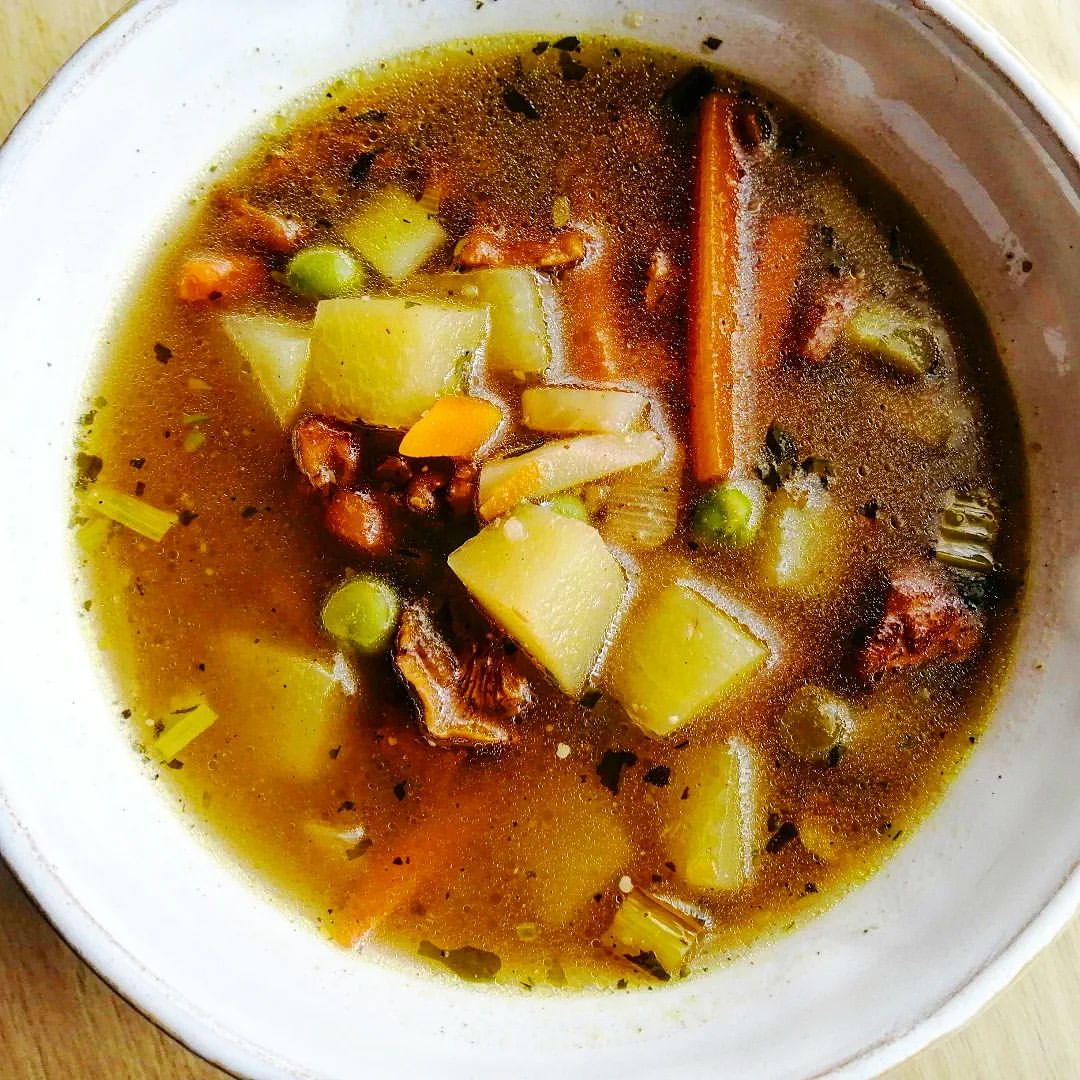
Vegan bramboračka is a potato soup with mushrooms, carrot, peas, leek and garlic, cooked in vegetable stock. The potatoes partly break down and thicken the soup, so you need no roux and no cream. The mushrooms bring the savoury depth that sausage gives the traditional version.
Add marjoram too. Without it, it simply isn’t Czech bramboračka. The full method is in our vegan bramboračka recipe.
Vegan zelňačka (sauerkraut soup)
Vegan zelňačka is a hearty soup of sauerkraut, oyster mushrooms, smoked tofu, red kidney beans and potatoes. Smoked paprika and smoked tofu give it the smoky edge Czechs know from the sausage version. With beans and tofu in the pot, it works as a full meal. The recipe is in our vegan sauerkraut soup.
Czech mains without meat: svíčková, šunkofleky and schnitzel
Svíčková, šunkofleky, francouzské brambory and řízek are the four mains every Czech family recognises, and we have all four in plant-based form. The pasta bake and the potato bake rely on smoked tofu and chickpea flour, svíčková on root vegetables and plant cream. The schnitzel is breaded tofu.
Vegan svíčková
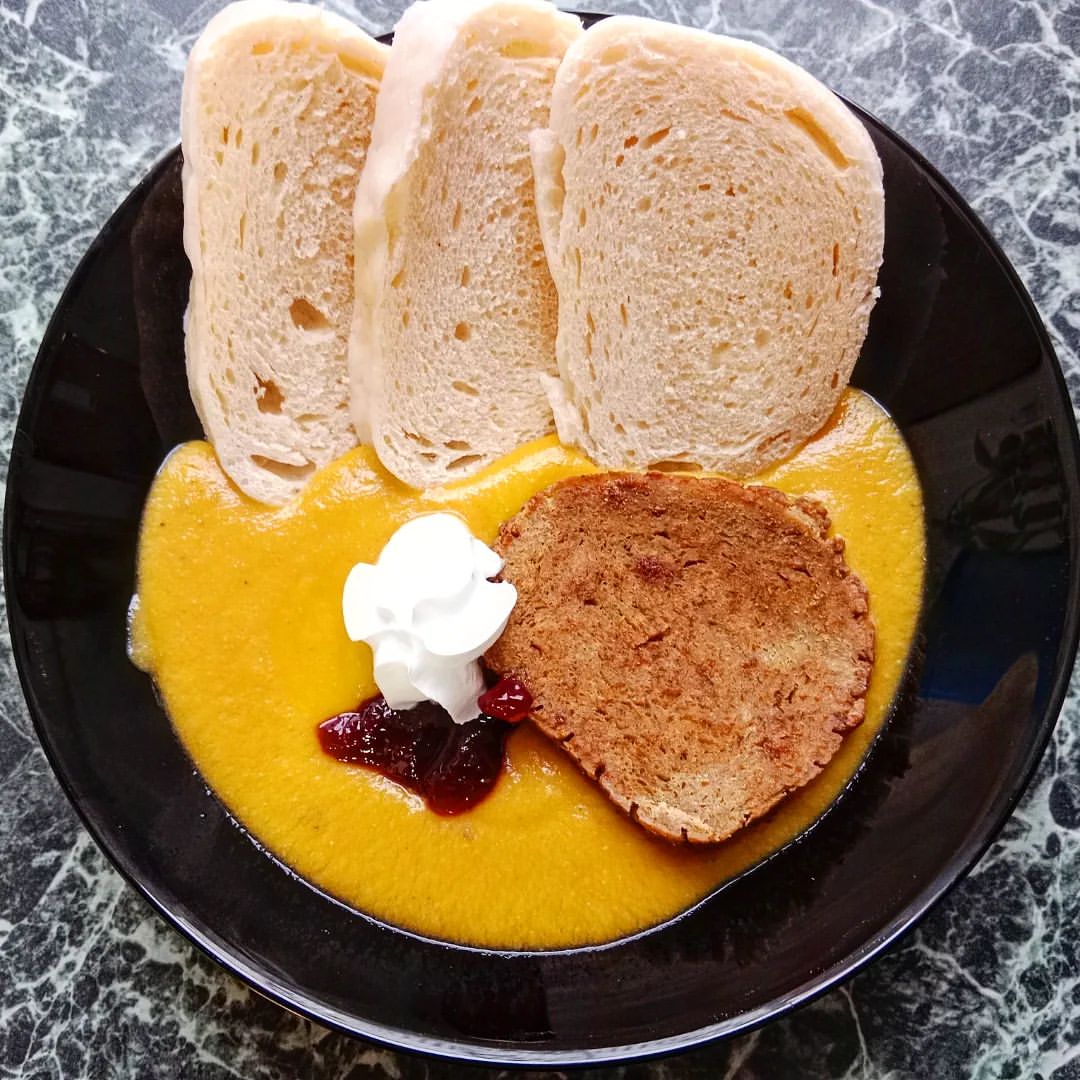
Svíčková is a creamy sauce of puréed root vegetables, usually served over beef, and one of the best-loved dishes in Czech cooking. Our vegan svíčková takes 40 minutes, and the sauce is a vegetable sauce exactly as in the original. The base is root vegetables (a frozen svíčková mix is fine), onion or leek, bay leaves, allspice and pepper. Soy cream and plant-based sour cream make it creamy, lemon juice gives it its gentle tang.
Serve it the Czech way, with bread dumplings, cranberries and a dollop of plant-based whipped cream. The full recipe is in our vegan svíčková in 40 minutes.
Vegan šunkofleky, two ways
Šunkofleky is a baked dish of small pasta squares, ham and egg, and we make it two ways because we each do it a little differently. The classic bake sets thanks to chickpea flour whisked into plant milk, with smoked tofu, mushrooms and peas in place of the ham. It’s in our vegan ham pasta bake (šunkofleky).
The lazy version is for evenings when you have no time or patience. Pasta, smoked tofu, peas, vegan cheese and a ready-made plant-based “scrambled egg” go into a dish with plant milk and straight into the oven. You’ll find it in the same post, right under the classic recipe card.
Vegan francouzské brambory (Czech potato bake)
Francouzské brambory, literally “French potatoes”, is a Czech layered potato bake and a school-canteen favourite. Our vegan version layers smoked tofu, mushrooms and vegetables between the potatoes and pours over plant milk mixed with chickpea flour, which sets in the oven like an egg custard. Grated vegan cheese goes on top. The recipe is in our vegan potato bake with smoked tofu.
Vegan tofu schnitzel (řízek)
A vegan řízek is a slice of tofu coated in a batter and breadcrumbs, with chickpea or plain flour mixed with plant milk in place of the egg. A soy-sauce marinade and black salt in the batter give the tofu flavour before it goes into the oven, because our schnitzel is baked, not fried. Crushed cornflakes instead of breadcrumbs make it extra crunchy. The method is in our crispy vegan tofu schnitzel.
Czech classics were never really about the meat. They’re about the sauce, the dough, and how long you’re willing to let an onion soften.
Czech spreads, chlebíčky and cold dishes
Czech cold cuisine runs on eggs and mayonnaise, and this is where the vegan version is easiest of all. The egg spread, the chlebíčky spread and the carrot salad all come together from chickpeas or tofu in about ten minutes, and black salt makes them taste of egg. Chlebíčky, by the way, are the open sandwiches that appear at every Czech party, office celebration and family gathering.
Vegan egg-style chickpea spread
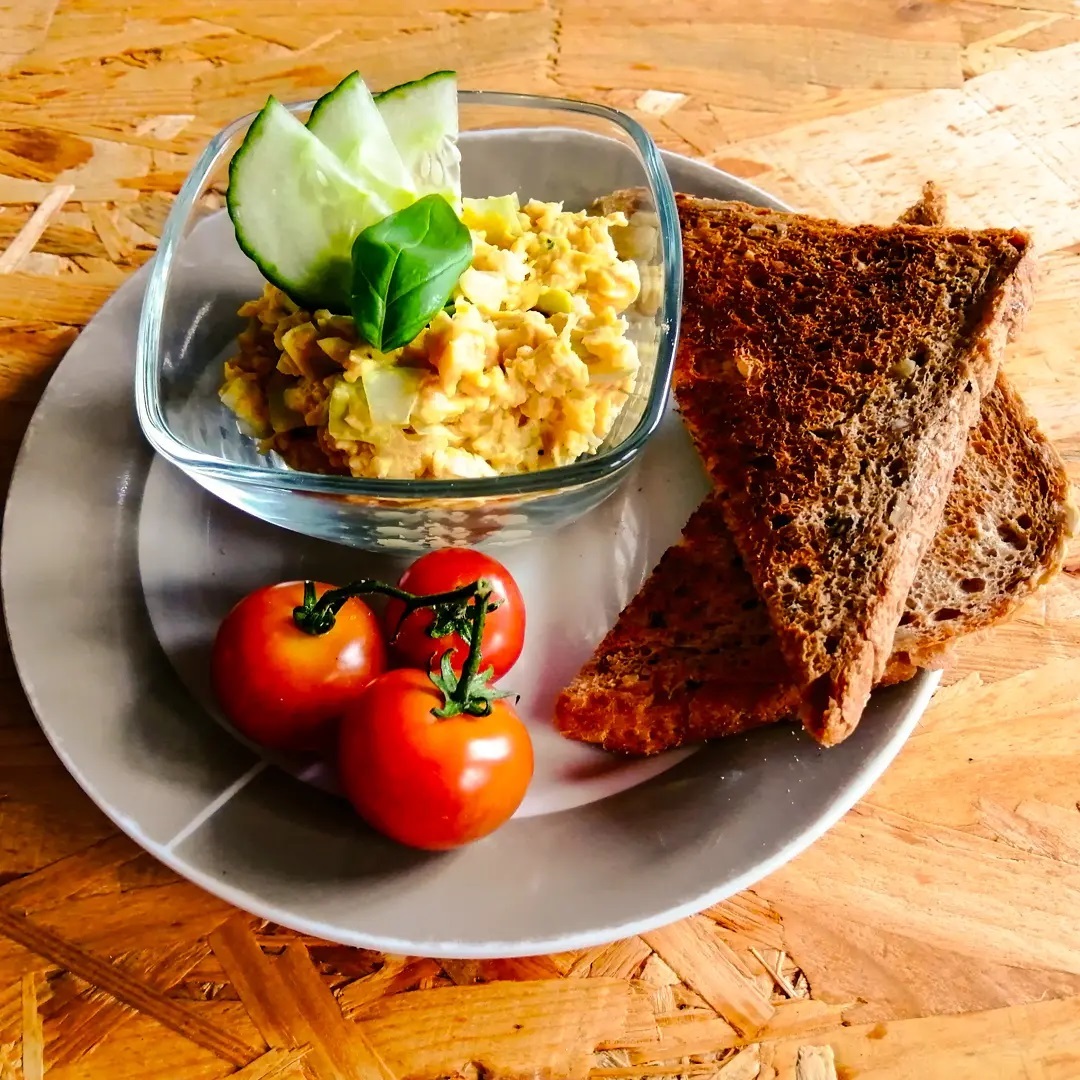
Our vegan “egg” spread is mashed chickpeas with onion, vegan mayo, turmeric and black salt. Turmeric gives the colour, black salt the eggy smell. It’s ready in ten minutes, and one tin of chickpeas covers dinner for the whole family. The recipe is in our vegan chickpea egg salad.
Vegan spread for chlebíčky
A plate of chlebíčky with no ham and no egg still counts as a small revolution at a Czech party. Our chlebíčky spread starts with chickpeas and adds red onion, pickled gherkins, vegan cheese and mayo. It’s firmer than the egg spread and holds well on sliced baguette. Find it in our vegan chickpea spread for open sandwiches.
Vegan Czech carrot salad
Mrkvový salát, a salad of cooked carrot, gherkins and mayonnaise, is the dish you’d find in any Czech grandmother’s fridge. In our version, tofu with black salt and turmeric replaces the hard-boiled egg, and everything else stays, mustard and leek included. The recipe is in our vegan carrot salad with tofu.
Vegan ham and eggs (hemenex)
Hemenex, the Czech spelling of “ham and eggs”, is a classic breakfast, and the vegan version is made with chickpea flour. Whisked with plant milk, turmeric and black salt, it cooks in the pan much like eggs. Slices of vegan ham or smoked tofu go underneath and vegan cheese on top. The recipe is in our vegan ham and eggs.
Read next
Visiting rather than cooking? Our guide to the best vegan restaurants in Prague shows where to eat vegan svíčková and other Czech classics in the city.
Vegan Czech desserts and sweet bakes
Czech sweet baking is the easiest way into vegan Czech food, because eggs and butter are simple to replace. Yeasted dough works beautifully with plant milk and vegan butter, and the quark for buns and dumplings comes from tofu. Here are seven sweet classics, from fruit dumplings to funfair langoše.
Vegan Czech fruit dumplings (ovocné knedlíky)
Ovocné knedlíky are boiled dumplings wrapped around whole fruit, a Czech summer staple, and we make ours with a tofu dough. Tofu mashed with plain flour, a little starch and plant milk replaces the quark dough and holds together in the pot. One dough carries you through the whole summer, from strawberries in June to plums in September, served with poppy seeds and sugar. The recipe is in our vegan Czech fruit dumplings.
Vegan Czech buchty
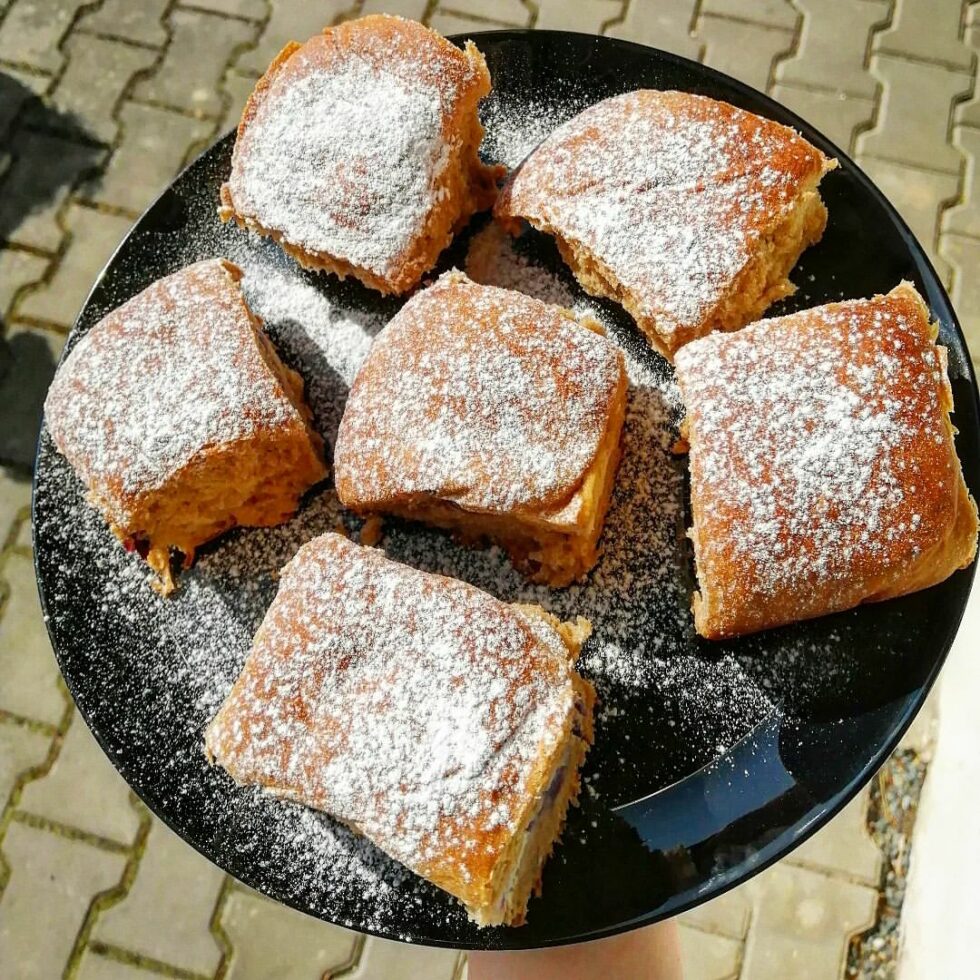
Buchty are soft yeasted buns baked side by side in one tin, and ours use almond milk and vegan butter with a blueberry and “quark” filling. The quark is tofu blended with plant yoghurt, lemon juice and vanilla. One batch makes 20 buns. The method is in our vegan Czech buchty.
Vegan loupáky with chocolate
Loupáky are soft rolled crescents of yeasted dough, and our version is filled with chocolate. The dough is plant milk and melted vegan butter. Instead of egg wash, brush them with plant milk and chicory syrup and they come out of the oven glossy. The recipe is in our vegan chocolate-filled rolls.
Vegan perník (Czech gingerbread cake)
Gingerbread is so central to Czech food culture that Pardubický perník, the gingerbread of the town of Pardubice, has held EU protected geographical indication status since 2008. As Czech Television’s ČT24 reported (in Czech), producers must follow a fixed method and set ingredients. Our home perník is different, a soft traybake, and it doesn’t need a single egg.
The batter is almond milk, coconut oil, cocoa and gingerbread spice, with a layer of jam in the middle and chocolate glaze and walnuts on top. The recipe is in our vegan gingerbread cake.
Vegan krtkův dort (mole cake)
Krtkův dort, the “mole cake”, is a Czech children’s birthday classic of chocolate sponge, banana and whipped cream. Ours uses chilled coconut milk for the cream and plant milk, cocoa and coconut oil for the sponge. The recipe is in our vegan mole cake.
The bananas stay. Without them it wouldn’t be a mole cake.
Vegan palačinky (Czech crêpes)
Vegan palačinky need only plain flour, plant milk, a little sugar, salt and vanilla. You don’t need eggs, because thin crêpes hold together thanks to the flour and milk. Fill them with jam, plum butter (povidla) or fresh fruit. The recipe is in our vegan Czech crêpes.
Vegan langoše
Langoš is a fried yeasted flatbread, and as Wikipedia’s lángos entry notes, it comes from Hungary. In the Czech Republic it became a fixture at Czech funfairs and outdoor swimming pools. Our dough rises with plant yoghurt, and the classic Czech toppings go on top, garlic, ketchup and grated vegan cheese. The recipe is in our vegan langos.
Yeasted dough tip: Warm the plant milk only until lukewarm before adding the yeast, never hot. Add the vegan butter melted and cooled. Without eggs the dough rises just as well, it’s simply a little stickier, so resist the urge to keep adding flour.
Vegan Czech food for the holidays: Christmas and Easter
At Christmas we bake a vegan vánočka, and at Easter mazance, a lamb-shaped cake and jidáše, all without eggs, milk or butter. Holidays are the hardest time for a vegan in a Czech family, because traditions are strong and grandmothers are stronger. What helps is putting something on the table that looks and tastes exactly as it always has. For the cookies, our vegan Christmas cookies guide covers every Czech classic from Linzer rings to wasp nests.
Vegan vánočka (Czech Christmas bread)
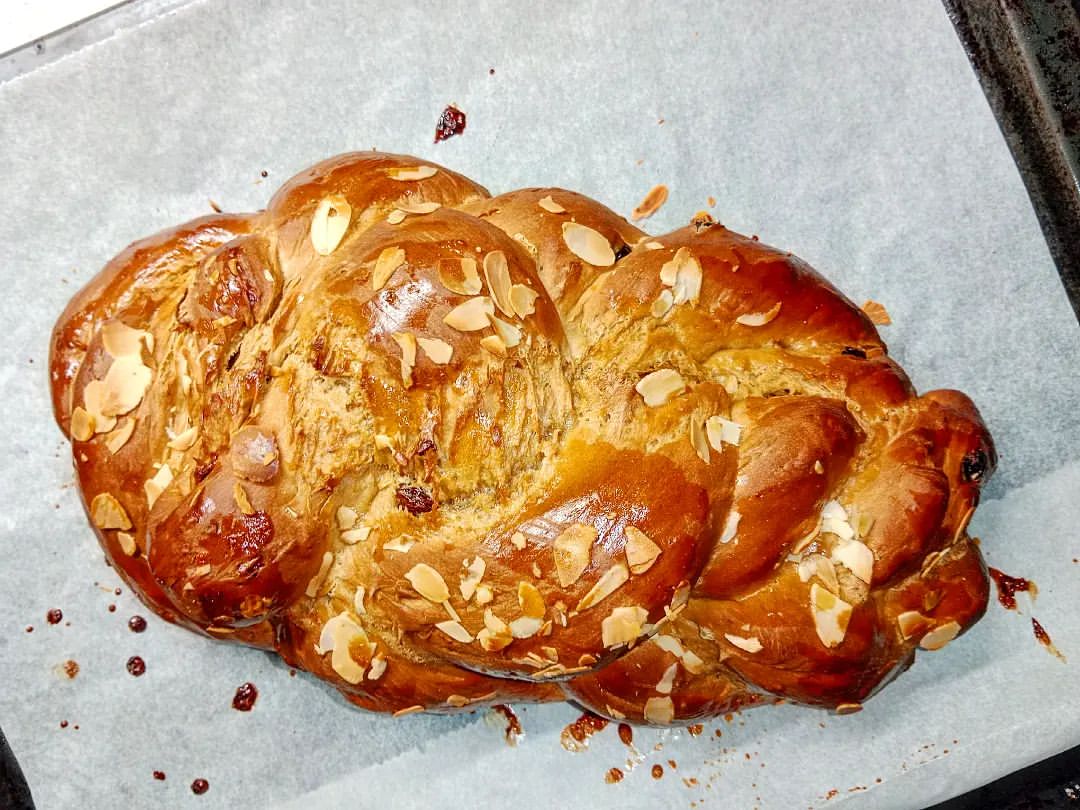
Vánočka is a braided sweet bread baked for Christmas, and the vegan version uses plant milk and melted vegan butter, with almonds and rum-soaked raisins. Plant milk and chicory syrup give it its shine instead of egg. The recipe is in our vegan vánočka.
The traditional Czech Christmas Eve dinner is carp with potato salad. Vegan potato salad is easy to make with plant-based mayo. A crisp tofu schnitzel looks right at home in place of the carp.
Vegan Czech Easter and mini mazance
Czech Easter is a festival of eggs, and you can still do all of it plant-based. Our vegan Czech Easter recipes cover the lamb cake, jidáše (spiral Easter pastries), an Easter stuffing with smoked tempeh and a Good Friday menu. Mazance, the round sweet Easter buns, also have their own recipe as small individual buns with chocolate chips and rum-soaked raisins, in our vegan Czech Easter mazance.
Eating vegan Czech food in restaurants: what to watch for
In an ordinary Czech pub or restaurant, vegan dishes are still rare, and “bezmasá jídla” (meat-free dishes) on the menu does not mean free of animal products. Vegetable soup can be made with meat stock, cabbage is braised in lard, and dumplings contain egg or milk. Smažený sýr, the famous fried cheese, is vegetarian, not vegan.
So ask about three things, the stock, the lard and the eggs. In Prague you’ll find restaurants that cook Czech classics entirely vegan, and Vegan’s Prague is where Elle had her first svíčková. Outside the big cities, the easiest way to taste these dishes is to cook them yourself.
Useful Czech phrases for ordering
“Jsem vegan, nejím maso, mléko, vejce ani máslo.” (I’m vegan, I don’t eat meat, milk, eggs or butter.) “Je ta polévka na zeleninovém vývaru?” (Is the soup made with vegetable stock?) “Je zelí na sádle, nebo na oleji?” (Is the cabbage cooked in lard or oil?) “Jsou v knedlíku vejce?” (Are there eggs in the dumplings?) “Můžu to dostat bez sýra a bez smetany?” (Can I have it without cheese and cream?) Write them on a card before your trip.
Travel tip: Planning more than one city? Our vegan cities in Central Europe overview shows how to combine Prague with Vienna, Budapest or Kraków. Each is a short trip away, with plenty of vegan places to eat.
Which Czech classic to cook first
If you cook one thing, cook svíčková. It wins Czechs over fastest, because its flavour lives in the sauce, and that sauce was made of vegetables even in grandmother’s recipe. After that come buchty and vánočka, and somewhere along the way you realise how much of what you thought of as “Czech food” never depended on meat at all.
Vegan Czech food isn’t a substitute. It’s the same cuisine, just a little more honest about the ingredients that always carried it.
Over to you. Which Czech classic would you like to see us make vegan next? Tell us in the comments.
FAQ about vegan Czech food
Is Czech food vegan friendly?
Traditional Czech food is rarely vegan in restaurants, because meat, butter, cream and eggs appear in most dishes. At home it adapts well. Svíčková, potato soup, sauerkraut soup, sweet buns and Christmas bread all work fully plant-based with simple swaps, and Prague has restaurants that serve vegan Czech classics.
Can svíčková be made vegan?
Yes. The svíčková sauce is made from puréed root vegetables, so it’s vegan once you replace the dairy cream with soy cream and plant-based sour cream. Serve it with bread dumplings, cranberries and a plant-based whipped cream, as Czechs do.
Are Czech dumplings vegan?
Not always. Czech dumplings often contain egg or milk, and fruit dumplings are traditionally made with quark. Ask in restaurants. At home, fruit dumplings work with a dough of tofu, flour and plant milk.
What can I use instead of eggs in Czech recipes?
Chickpea flour whisked with plant milk replaces eggs in batters and bakes. For hard-boiled egg in spreads and salads, use chickpeas or tofu with black salt and turmeric. For an egg wash on sweet bread, brush with plant milk and syrup.
Which Czech desserts are vegan?
Few traditional Czech desserts are vegan as sold, because most use butter, eggs or quark. Made at home with plant milk, vegan butter and tofu, buchty, loupáky, perník, mole cake, palačinky, fruit dumplings and vánočka all work fully vegan.
Newsletter
Get our free e-books
Join the newsletter and download Our Vegan Christmas Kitchen straight away, 10 recipes for Czech cookies, gingerbread and vánočka. Then once a month, new places from the vegan map and new articles. Unsubscribe with one click.