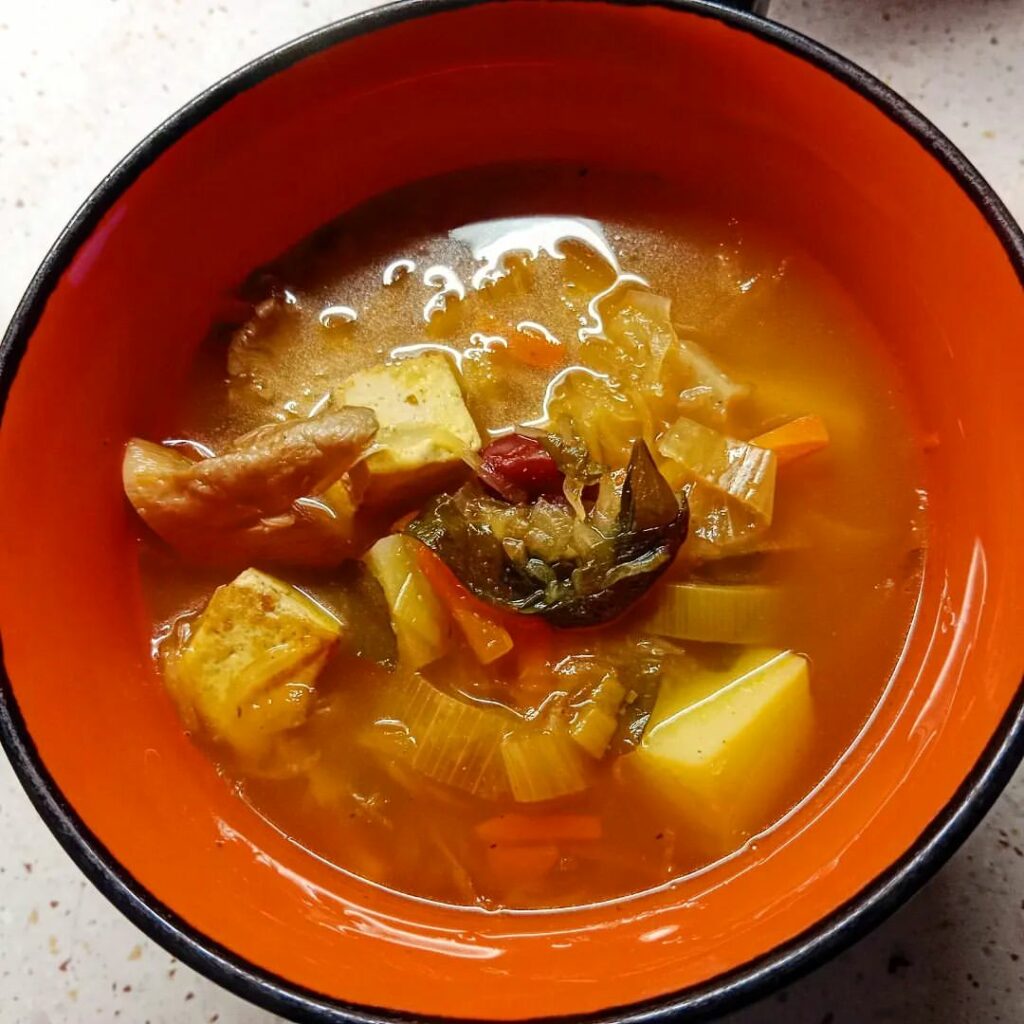
Vegan sauerkraut soup known in Czech as zelňačka, is one of those dishes that tastes like it has been simmering all day, even when it is ready in 30 minutes. Smoky, tangy, deeply satisfying and entirely plant-based. Smoked tofu, oyster mushrooms and kidney beans give this traditional Czech soup all the richness it needs without a scrap of meat.
Zelňačka is a staple of Czech winter cooking, a thick and warming bowlful that appears on family tables from November through to spring. Adapting it for a vegan diet is surprisingly easy and the result is every bit as hearty as the original. What makes the best version? When should you add the sauerkraut? Can you freeze it? All the answers are below.
For more Czech classics and high-protein soups, see our 9 easy vegan soup recipes.
Why You’ll Love This Vegan Sauerkraut Soup
Traditional zelňačka is made with pork, but this plant-based version holds its own and then some.
- Deep, smoky flavour – smoked tofu and smoked paprika give the soup its characteristic richness.
- Hearty and filling – potatoes, beans and tofu keep you full for hours.
- Ready in 30 minutes – no slow cooking required.
- Naturally gluten-free – use tamari instead of soy sauce and a gluten-free stock cube.
- Even better the next day – like all good soups, the flavours deepen overnight.
This is a soup that works as a main course for lunch or dinner, and it stores and freezes brilliantly.
Interesting Facts About Zelňačka and Sauerkraut
Zelňačka is one of the oldest soups in Czech culinary tradition. For centuries, it was a winter staple precisely because sauerkraut kept through the cold months without refrigeration. The smoky flavour came originally from salted pork or bacon, but in this vegan version it comes from smoked tofu and smoked paprika and works just as well.
Sauerkraut itself has a fascinating history. Fermenting cabbage is a practice more than 2,000 years old, with origins in China. It spread across Europe and became central to the winter larder in Central and Eastern Europe, including Bohemia, where zelňačka was born. The process of lacto-fermentation not only preserves the cabbage but transforms it, increasing its nutritional value and creating its characteristic sour flavour.
Oyster mushrooms (Pleurotus ostreatus) are one of the most versatile ingredients in plant-based cooking. Their mild, slightly chewy texture absorbs the flavours of stock and spices beautifully, making them ideal for hearty soups. They are also a natural source of beta-glucans, compounds with well-documented immune-supporting properties.
Smoked tofu is the ingredient that makes this soup sing. Producers cold-smoke the tofu over wood, which means the smoky flavour is genuinely infused into the protein, not just painted on the surface. It is the closest plant-based equivalent to smoked meat in terms of depth and aroma.
Health Benefits
This soup is not just comforting, every main ingredient brings real nutritional value.
Sauerkraut is a fermented food rich in probiotics, vitamin C and vitamin K. The lactic acid bacteria produced during fermentation support a healthy gut microbiome. One important note: heating sauerkraut destroys most of its probiotics. For maximum gut benefit, add the sauerkraut at the very end of cooking or stir it directly into your bowl.
Oyster mushrooms contain approximately 3.5g of protein per 100g and just 33 kcal, one of the lowest-calorie protein sources you can add to a soup. They are rich in B vitamins and the beta-glucans in their cell walls are among the most studied natural immune modulators.
Smoked tofu is an excellent source of plant-based protein. 100g of smoked tofu contains around 14g of protein, along with calcium, iron and magnesium. Because smoked tofu has a lower water content than regular tofu, the nutrient density per gram is higher.
Red kidney beans are packed with fibre and protein. A 100g serving of cooked kidney beans provides around 9g of protein and 7g of fibre, a combination that slows digestion and keeps you feeling full well after the bowl is finished.
Nutritional Values
Approximate values per serving, based on 4 servings from this recipe.
| Nutrient | Amount per serving |
|---|---|
| Calories | ~190 kcal |
| Protein | 13g |
| Carbohydrates | 26g |
| Fat | 4g |
| Fibre | 5g |
Approximate values per serving, depending on specific ingredients and the amount of water added.
Vegan Sauerkraut Soup (Zelňačka)
Ingredients
- 150 g Sauerkraut
- 125 g Oyster mushrooms
- 1 block Smoked tofu approx. 200g
- ½ can Red kidney beans drained
- 4 Small potatoes diced
- 1 Carrot sliced
- Piece of leek sliced
- 2 cloves Garlic minced
- 1 cube Vegetable stock cube
- to taste Smoked paprika
- to taste Herb salt
- to taste Black pepper
- to taste Soy sauce
- to taste Dried garlic
- to taste Olive oil
Instructions
- Dice the tofu, tear or slice the oyster mushrooms, and slice the garlic, leek and carrot. Heat a pot with a little olive oil over medium-high heat and sauté everything together. Season with salt, pepper and smoked paprika.
- After a few minutes, add the sauerkraut and the diced potatoes.
- Add the stock cube and the remaining spices to taste, then pour over enough water to cover the vegetables. The amount of water depends on how thick you like your soup.
- Just before the soup is done, add the drained kidney beans. The soup is ready when all the vegetables are tender.
Notes
Tips and Variations
Zelňačka is a forgiving recipe that welcomes substitutions. Here are a few tips to get the best result.
Add the sauerkraut towards the end of cooking if you want to preserve some of its probiotic content. If you add it early, the flavour will be deeper and more integrated into the broth but most of the beneficial bacteria will not survive the heat. Both approaches taste great.
Adjust the water to your preferred consistency. Zelňačka is traditionally a thick soup rather than a thin broth, so start with less water and add more if needed. The starch from the potatoes will naturally thicken the soup as it cooks.
Smoked tofu can be swapped for smoked tempeh or for plain firm tofu that you fry with smoked paprika and soy sauce until golden. For a soy-free version, use tamari or coconut aminos instead of soy sauce.
The kidney beans can be replaced with lentils, chickpeas or white beans. White beans give the soup a creamier character, while lentils create a thicker, more substantial texture. All work well.
What to Serve With Vegan Sauerkraut Soup
Zelňačka is hearty enough to stand alone as a main course, but a few simple sides make it even better.
Crusty bread is the classic pairing, something to tear and dip into the thick broth. For a quick homemade option, try our vegan naan, which takes just minutes to cook on a dry frying pan and pairs wonderfully with any hearty soup.
A spoonful of vegan sour cream or plain coconut yogurt stirred in at the table adds a creamy, tangy finish that balances the smokiness of the tofu beautifully.
If you love warming vegan soups and want more inspiration, try our vegan creamy red lentil soup with crispy baked tofu, another bowl of comfort that works brilliantly as a midweek dinner.
This recipe is one of more than twenty Czech classics we cook without meat, eggs or dairy. You’ll find them all in one place in our collection of vegan Czech recipes.
Frequently Asked Questions
What is zelňačka?
Zelňačka is a traditional Czech sauerkraut soup. The classic version is made with pork or smoked meat, but this vegan sauerkraut soup uses smoked tofu, oyster mushrooms and kidney beans instead, producing the same hearty, smoky depth of flavour without any animal products.
Can I make vegan sauerkraut soup without tofu?
Yes. You can replace the smoked tofu with smoked tempeh, seitan, or simply omit it and add more beans. To keep the smoky flavour, increase the smoked paprika or add a small dash of liquid smoke to the broth.
When should I add the sauerkraut to the soup?
For the best probiotic benefit, add the sauerkraut in the last few minutes of cooking, or stir it directly into your bowl. If probiotics are not your priority, add it earlier, the flavour will develop more deeply and become fully integrated into the broth.
Is vegan sauerkraut soup gluten-free?
The recipe is naturally gluten-free as long as you use a gluten-free stock cube and swap regular soy sauce for tamari or coconut aminos. Standard soy sauce contains wheat, so this substitution is important for anyone with a gluten intolerance.
Can you freeze vegan sauerkraut soup?
Yes, this soup freezes very well. Let it cool completely, transfer to freezer containers or bags and freeze for up to 3 months. Defrost overnight in the fridge and reheat on the hob. Note that potatoes can change texture slightly after freezing, they may become a little softer.
How long does vegan sauerkraut soup keep in the fridge?
Stored in a sealed container in the fridge, this soup keeps well for 3 to 4 days. It actually tastes better on day two, as the flavours have more time to meld together and the broth deepens in intensity.
This vegan sauerkraut soup is proof that traditional Czech comfort food translates beautifully into plant-based cooking. Smoky, tangy and filling, it is exactly the kind of meal you want on a cold day, and it takes barely half an hour from start to finish. If you enjoy warming vegan soups, our vegan roasted sweet potato and carrot soup is another bowl worth bookmarking. Will you be adding a spoonful of vegan sour cream on top, or keeping it simple?
Newsletter
Get our free e-books
Join the newsletter and download Our Vegan Christmas Kitchen straight away, 10 recipes for Czech cookies, gingerbread and vánočka. Then once a month, new places from the vegan map and new articles. Unsubscribe with one click.