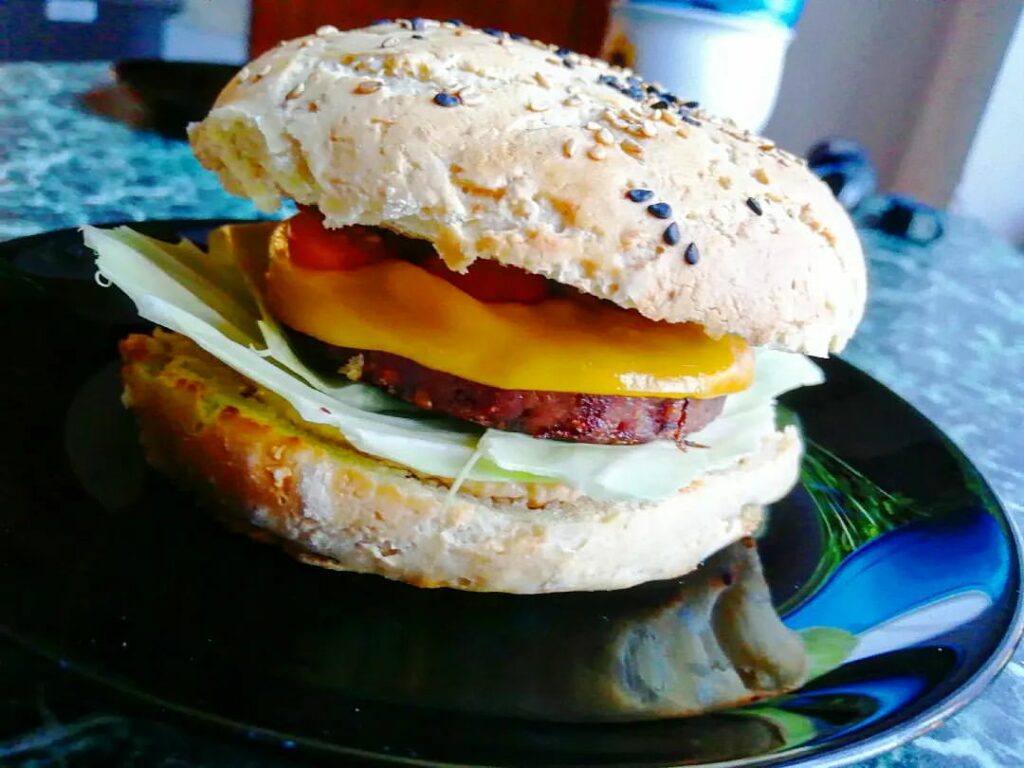
If you have ever tasted a freshly baked burger bun straight from the oven, you know that shop-bought ones just cannot compare. These vegan burger buns are soft, fluffy, and beautifully golden, yet they need no eggs, no dairy, and no complicated techniques. With just a handful of pantry staples and a bit of patience for rising, you will have ten perfect buns ready to take your homemade burgers to a whole new level.
How do you get the dough just right so the buns come out perfectly fluffy? What should you brush them with for that gorgeous glossy finish? And can you freeze them for later? This article answers all of that, along with tips on variations, storage, and the best ways to serve them.
Why you will love this recipe
Here are five reasons to bake your own vegan burger buns at home.
- Simple recipe with everyday ingredients: nothing special or hard to find
- Soft and fluffy results: that hold their shape under a loaded burger
- 100% plant-based: no eggs, no dairy, no butter, suitable for vegans and anyone with dairy or egg allergies
- Beautiful golden crust: from brushing with a plant milk and agave syrup glaze
- Freezer-friendly: so you can always have fresh buns ready for weekend barbecues
Best of all, even a complete beginner can nail this recipe on the first try.
Interesting facts about burger buns
The history of the burger bun is surprisingly fascinating. The modern hamburger bun as we know it today originated in the United States in the early 20th century. Originally, hamburgers were served between two slices of regular bread. It was around 1916 when Walter Anderson, later co-founder of the White Castle chain, began baking specially shaped round buns designed specifically for hamburgers. That simple innovation changed American food culture forever.
Yeast is the secret behind fluffy buns. The dried yeast used in this recipe is actually a single-celled organism called Saccharomyces cerevisiae. During rising, it produces carbon dioxide gas, which creates tiny air pockets throughout the dough. These pockets are what make the buns light and springy. Interestingly, yeast is also a natural source of B vitamins, particularly B1, B2, and folic acid.
The sesame seeds sprinkled on top have a culinary history stretching back thousands of years. Sesame is one of the oldest oilseed crops in the world, cultivated for over 3,000 years. 100 g of sesame seeds contain approximately 18 g of protein and 975 mg of calcium, which is actually more than cow’s milk. So they are not just there for looks, they add real nutritional value too.
Ever wondered why burger buns are brushed before baking? The mixture of plant milk and syrup caramelises in the oven, giving the buns their characteristic golden colour and subtle shine. This is a trick that professional bakers use as well.
Health benefits
Homemade burger buns have one huge advantage over shop-bought ones: you know exactly what is in them. No preservatives, no emulsifiers, no unnecessary additives. And while these are made with white flour, several ingredients add genuine nutritional value.
Dried yeast is a natural source of B vitamins, which are essential for energy metabolism and proper nervous system function. Even the 12 g of yeast in this recipe contributes meaningful amounts of thiamine (B1) and riboflavin (B2). The plant milk used in the recipe is typically fortified with calcium, vitamin D, and vitamin B12, making it a great choice for vegan baking.
Sesame seeds are a nutritional powerhouse. They contain healthy unsaturated fatty acids and minerals including calcium, magnesium, zinc, and iron. Regular consumption of sesame has been linked to supporting bone health and reducing inflammatory processes in the body. Even the small amount scattered on top of the buns adds valuable micronutrients to your meal.
Nutritional values
Here are the approximate nutritional values per bun (recipe makes 10).
| Nutrient | Amount per serving |
|---|---|
| Calories | ~280 kcal |
| Protein | 8 g |
| Carbohydrates | 51 g |
| Fat | 4 g |
| Fibre | 2 g |
Approximate values per serving. Actual values may vary depending on specific ingredients and quantities used.
Vegan Homemade Burger Buns
Ingredients
- 680 g all-purpose flour
- 150 ml warm water
- 150 ml warm plant-based milk
- 2 tsp salt
- 2 tsp sugar
- 12 g dry yeast
- 2 tbsp plant-based butter melted
For brushing:
- 4 tbsp plant-based milk
- 2 tsp agave syrup or maple syrup
- 2 handfuls sesame seeds
Instructions
- Combine all dry ingredients in a large bowl. Add warm water, warm plant milk, and melted butter. Knead into a smooth dough for about 8-10 minutes.
- Cover the bowl with a clean tea towel and let the dough rise in a warm place for approximately 1 hour, or until doubled in size.
- Turn the risen dough onto a lightly floured surface, divide into 10 equal portions, and shape each into a round bun.
- Place buns on a baking tray lined with parchment paper, leaving space between them. Let rise for another hour. Brush with a mixture of plant milk and agave syrup, then sprinkle with sesame seeds.
- Bake in a preheated oven at 200°C (390°F) for approximately 15 minutes, until golden brown.
Tips and variations
The basic vegan burger bun recipe is brilliant on its own, but a few tweaks can take it even further.
- Wholemeal version: Replace one third of the plain flour with wholemeal flour. The buns will be slightly denser but more nutritious, with higher fibre content.
- No agave syrup? Use maple syrup, golden syrup, or even sugar dissolved in the plant milk instead. The result will be equally glossy.
- Brioche-style: Add 2 extra tablespoons of plant butter and a tablespoon of sugar to the dough for richer, softer buns that are perfect for smash burgers.
- Storage and freezing: Store cooled buns in a sealed bag at room temperature for up to 3 days. For longer storage, freeze them for up to 3 months. Defrost at room temperature or warm in the oven at 150°C (300°F) for 5 minutes.
- No sesame: Top with poppy seeds, sunflower seeds, or leave them plain.
If you want to experiment with flavours, try adding garlic powder, dried herbs, or a pinch of turmeric to the dough for a beautiful golden colour.
Serving suggestions
Homemade burger buns are obviously perfect for burgers, but their uses go well beyond that.
The classic choice is a homemade vegan burger with an oyster mushroom patty, lettuce, tomato, and vegan mayo. They also work brilliantly as a base for pulled jackfruit sandwiches or breakfast sandwiches with tofu scramble. Try them as a side with soups or stews, sliced in half and lightly toasted in a pan with a drizzle of olive oil.
If you are looking for more homemade vegan breads, check out our vegan homemade oat buns or vegan homemade bagels. And if you fancy trying your hand at bread, our vegan olive bread is a great place to start.
Not in the mood for baking? We’ve rounded up where to get a vegan burger at the big chains at home and abroad in our post on vegan fast food.
Frequently asked questions
How to make vegan burger buns fluffy?
The key to fluffy buns is proper rising and the right liquid temperature. Both the water and plant milk should be lukewarm (around 37°C / 98°F) to activate the yeast. Let the dough rise in a warm, draught-free spot and do not skip the second rise, which gives the buns their volume and lightness.
Can you freeze vegan burger buns?
Yes, once cooled, you can freeze the buns in a sealed bag for 2 to 3 months. Defrost at room temperature or pop them in the oven at 150°C (300°F) for 5 minutes. They taste almost as fresh as the day they were baked.
What replaces eggs in vegan burger buns?
This recipe does not need any egg replacer at all. The yeast combined with plant milk and butter provides the right structure and moisture. If you want even softer buns, add a tablespoon of ground flaxseed mixed with 3 tablespoons of water as an optional egg substitute.
What is the best plant milk for baking burger buns?
Soy milk works best because its higher protein content helps create a more elastic dough. Oat milk is another excellent choice thanks to its natural sweetness. Avoid canned coconut milk, which is too rich and can alter the dough texture.
How long do homemade vegan burger buns stay fresh?
Stored at room temperature in a sealed bag, the buns will stay fresh for 2 to 3 days. For longer storage, freezing is the best option. Day-old buns can be refreshed by lightly warming them in the oven or on a grill.
Homemade vegan burger buns are one of those recipes that will permanently change how you feel about shop-bought bread. They are soft, fluffy, smell incredible, and you can make them with ingredients you probably already have at home. Whether you are planning a summer barbecue or just want to upgrade your Saturday burger night, these buns deliver. Give them a try and let us know how they turned out in the comments, or tag us on social media so we can see your creations.
Newsletter
Get our free e-books
Join the newsletter and download Our Vegan Christmas Kitchen straight away, 10 recipes for Czech cookies, gingerbread and vánočka. Then once a month, new places from the vegan map and new articles. Unsubscribe with one click.