These vegan curry recipes are the dinners we fall back on whenever the evenings turn grey. All it takes is half a leek, a tin of chickpeas and a handful of spinach. Twenty minutes later there is a pot of fragrant sauce on the table, and all it needs is rice or a warm naan. Nobody at the table asks where the chicken went. So we have gathered all four curries from our blog in one place, with exact ingredients, nutrition per portion and how long each one keeps.
How do you make a curry sauce creamy without dairy cream? Which curry should you cook for a family that is not sold on vegan food yet? Is the curry paste in your supermarket actually vegan, or is there shrimp hiding in the jar? And what should you ask in a Thai or Indian restaurant so you do not end up with fish sauce or clarified butter in your bowl? We answer all of it below, one recipe at a time.
We start with a table that compares all four curries. Each recipe follows on its own, then an explanation of how a vegan curry sauce works. After that comes our curry paste check of jars sold in Czech shops, with a label-reading method that works anywhere. The last sections cover sides, storage and ordering curry on your travels.
Vegan curry recipes at a glance: all 4 compared
The table compares our four vegan curry recipes by what makes the sauce creamy, calories and protein per portion, and how long each curry keeps. The values come straight from the individual recipes and are per portion, without rice or bread.
| Curry | Sauce base | Calories per portion | Protein per portion | Fridge | Freezer |
|---|---|---|---|---|---|
| Chickpea curry with jackfruit | coconut milk + yellow curry paste | about 420 kcal | 14 g | 3 to 4 days | 2 to 3 months |
| Light chickpea curry | soy milk + tinned tomatoes | about 390 kcal | 18 g | 3 to 4 days | up to 3 months |
| Roasted aubergine and tofu curry | soy cream + tinned tomatoes | 280 to 320 kcal | 11 to 13 g | 3 to 4 days | up to 3 months |
| Curry soup with chickpeas | vegetable stock + plant milk | about 220 kcal | 9 g | up to 5 days | 2 to 3 months |
The light chickpea curry has the most protein, the curry soup the fewest calories. The jackfruit curry is the creamiest, thanks to the coconut milk. The roasted aubergine and tofu curry is the one to make when you want something with a bit of crunch.
Our 4 vegan curry recipes
All four vegan curries follow the same method (soften the vegetables, bloom the spices, add liquid, simmer), yet each one tastes different. The difference comes from the liquid that makes the sauce creamy and from the ingredient that brings the protein.
1. Vegan chickpea curry with jackfruit and coconut milk
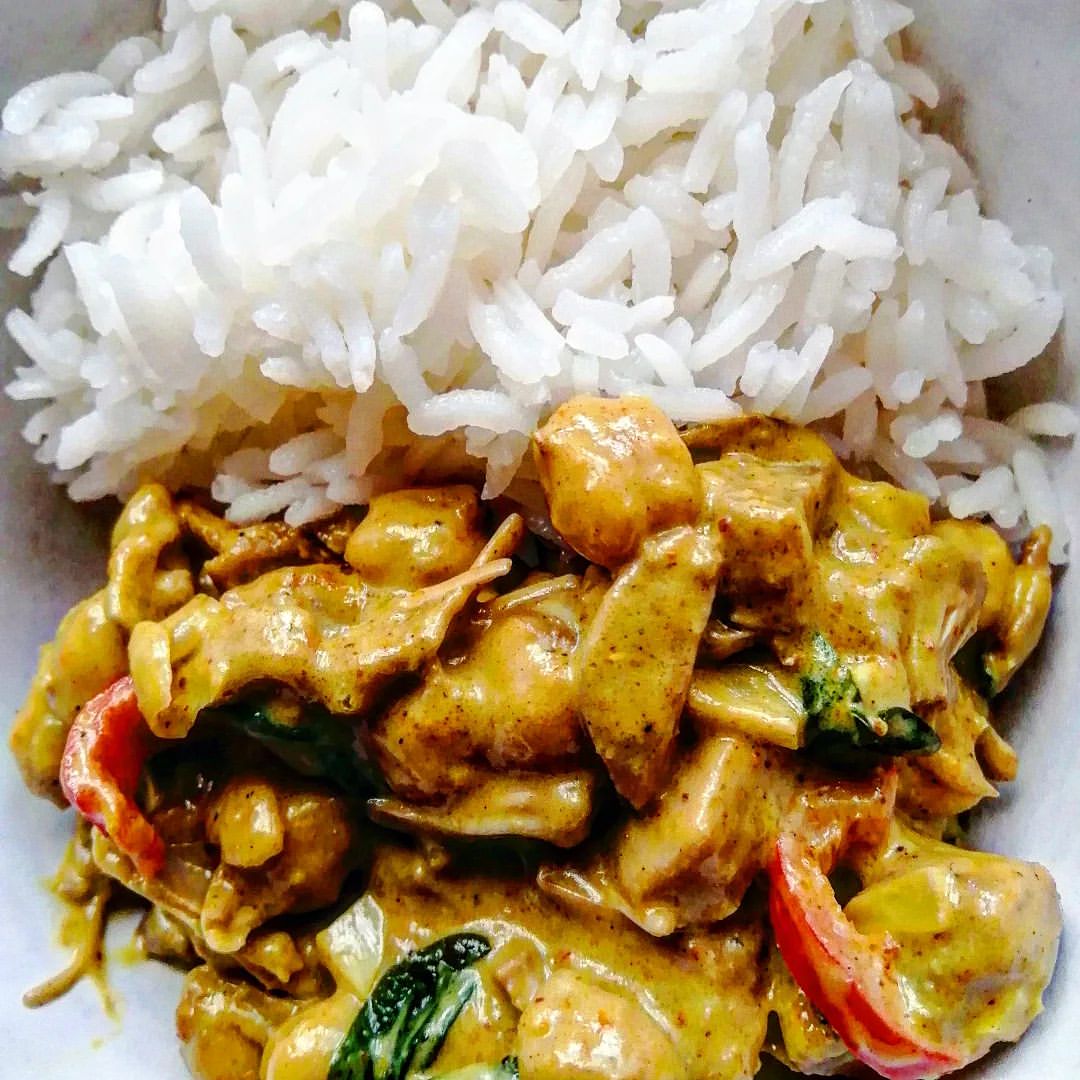
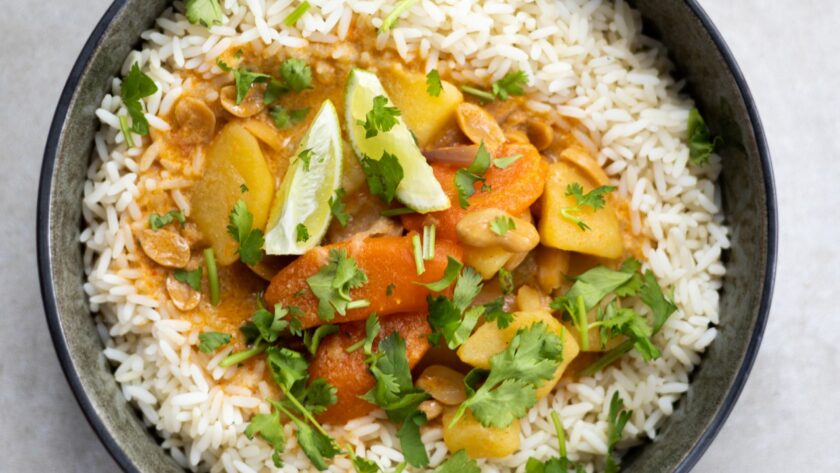
The chickpea and jackfruit curry is our creamiest curry. The sauce is a 400 ml tin of coconut milk and three teaspoons of yellow curry paste, lifted with curry powder, turmeric, smoked paprika and soy sauce. Once marinated and fried, young jackfruit pulls apart into shreds that look a lot like pulled meat. Chickpeas make it filling, and a handful of spinach at the end adds colour.
One portion has around 420 kcal and 14 g of protein. The jackfruit tastes best marinated overnight in oil with soy sauce and spices. In a hurry, fry it straight in the spices over a higher heat for 5 to 7 minutes. The full method is in our vegan chickpea curry with jackfruit and coconut milk.
2. Light vegan chickpea curry without coconut milk
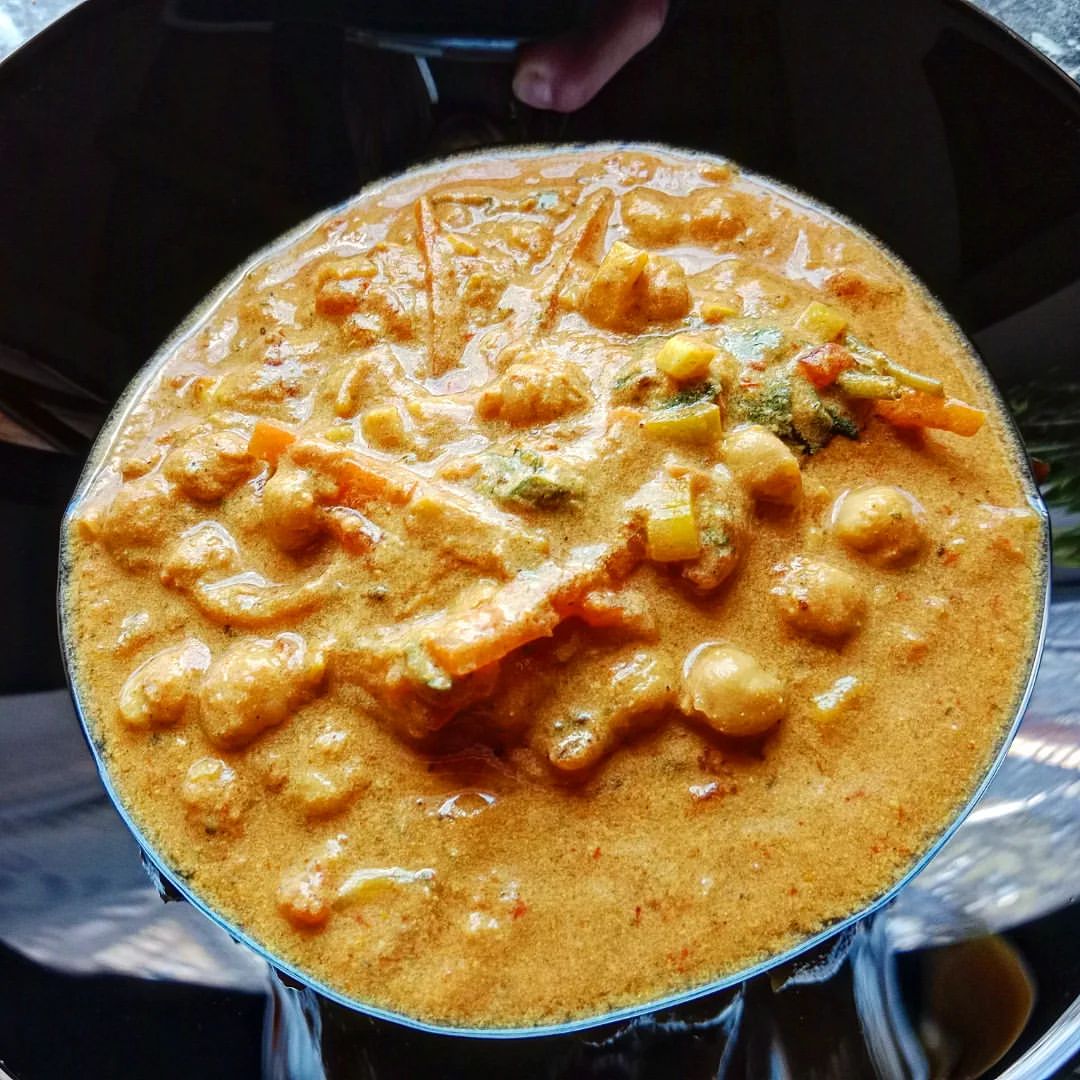
The light chickpea curry is ready in 20 minutes and has the most protein of all four recipes, 18 g per portion. Instead of coconut milk it uses 400 ml of soy milk and a tin of chopped tomatoes. The sauce is lighter, less sweet and much lower in saturated fat. The spices match the jackfruit curry, plus cumin and a drop of chicory syrup to round off the acidity of the tomatoes.
This is the curry we cook most often on weeknights, because everything except the fresh veg lives in the cupboard. A portion has around 390 kcal and 10 g of fibre. Our light vegan chickpea curry without coconut milk is also the one to try if you simply do not like coconut.
3. Vegan curry with roasted aubergine and tofu
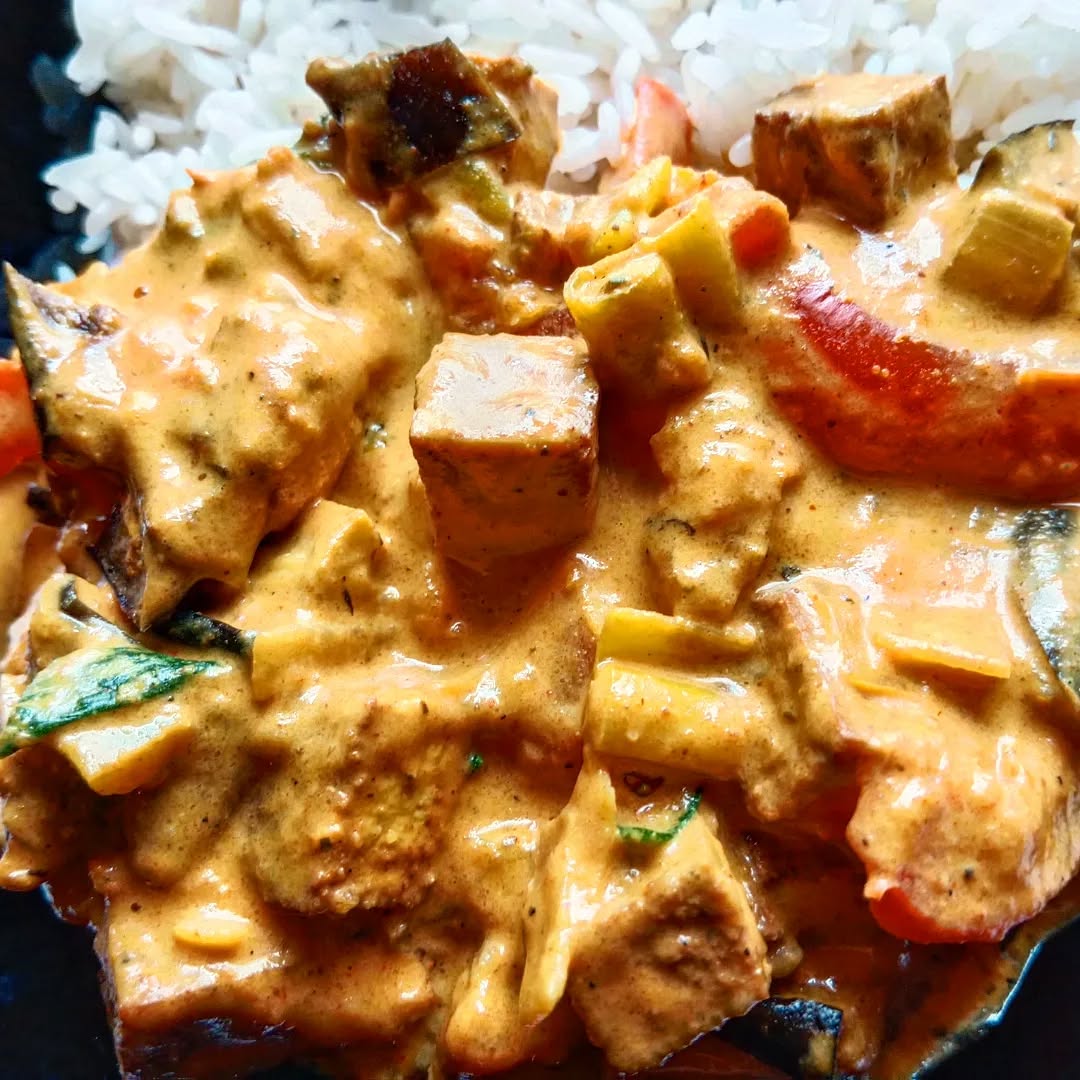
The roasted aubergine and tofu curry is the one for people who want something to bite into. Cubes of aubergine and 180 g of firm tofu go into the oven at 200 °C with herb salt, nutritional yeast and garlic powder until crisp. Only then do they join a sauce of tinned tomatoes and 250 ml of soy cream.
Soy cream makes the sauce rich without the sweetness of coconut and adds a little protein. A portion has 280 to 320 kcal and 11 to 13 g of protein. This curry is at its best the next day, once the aubergine has soaked up the sauce. The step-by-step method is in our vegan curry with roasted aubergine and tofu.
4. Vegan curry soup with chickpeas and vegetables
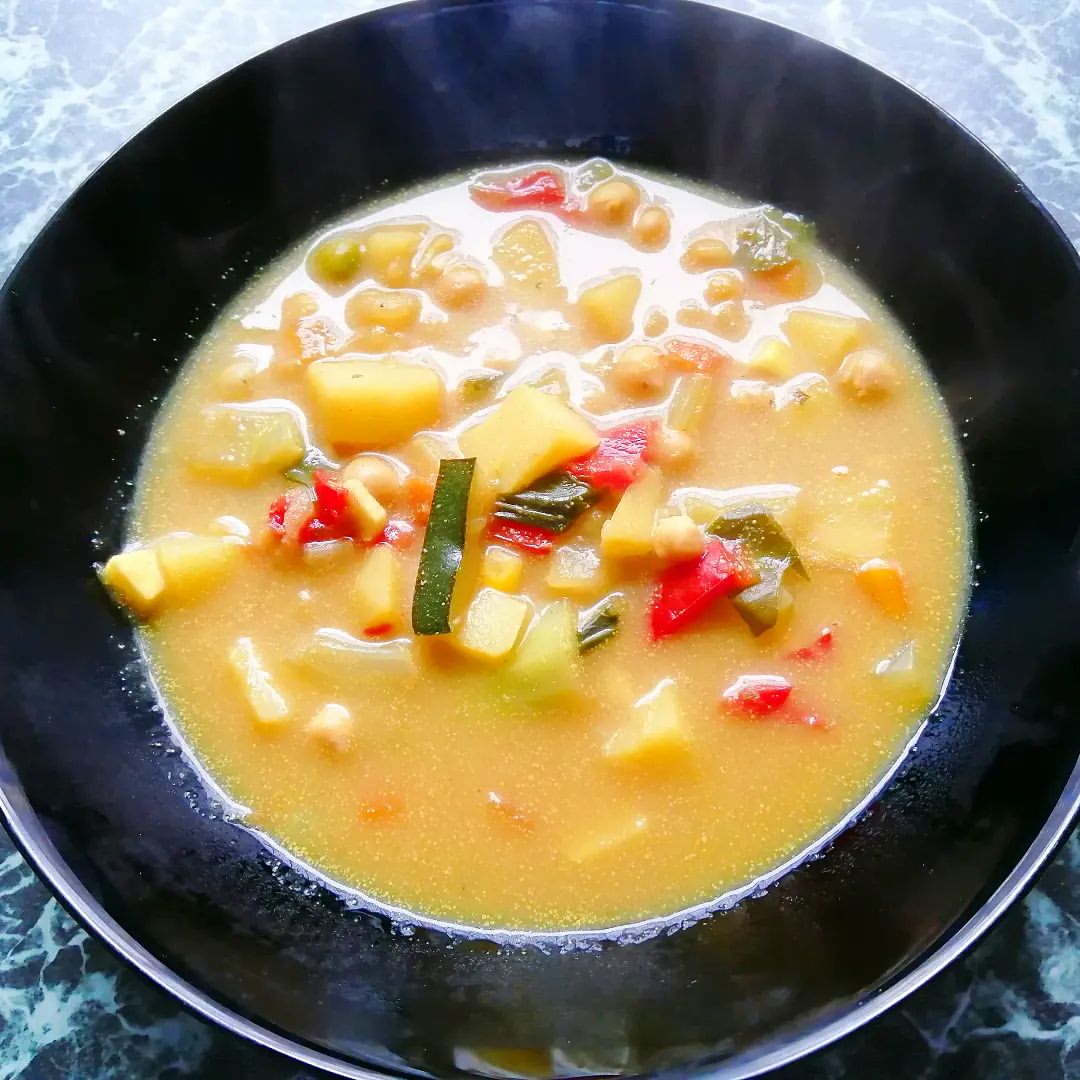
The curry soup with chickpeas is a curry you eat with a spoon. The base is 750 ml of vegetable stock and 100 ml of plant milk, with two teaspoons of curry paste, fresh ginger and curry powder. Potatoes, carrot, pepper and peas make it a proper meal, and chickpeas bring 9 g of protein per portion. It takes about 30 minutes.
Of the four recipes, the curry soup has the fewest calories (around 220 kcal) and keeps longest in the fridge. We make a big pot at the start of the week. You will find our vegan curry soup with chickpeas in our roundup of vegan soup recipes for every season too.
Tip for non-vegans: Cooking for a family raised on chicken curry? Start with the jackfruit curry. The coconut sauce tastes just like your favourite Thai takeaway. The shredded jackfruit looks so much like pulled meat that plenty of people mistake it for chicken at first glance.
How to make a vegan curry sauce without cream
A good vegan curry sauce rests on vegetables softened until golden, spices bloomed in hot oil, and a liquid that makes the sauce creamy. You will not miss the meat, because in a curry the flavour comes from the spices.
The method behind all our curries
- The base. Soften leek or shallots, garlic and carrot in a little olive oil for 3 to 5 minutes.
- Spices into the oil. Add curry powder, turmeric, cumin and smoked paprika and stir for a minute. Spices release far more aroma in hot oil than in water. Add curry paste at the same moment.
- The liquid. Pour in coconut milk, soy milk with tomatoes, soy cream or stock. Add chickpeas, tofu or jackfruit.
- Simmer and season. Let the sauce bubble gently for 10 to 15 minutes. Season with salt, soy sauce and a drop of syrup. Stir in spinach right at the end.
What makes a vegan curry sauce creamy
Coconut milk gives the creamiest, sweetest vegan curry sauce, but it is not the only way. The table shows how each base behaves and which of our recipes uses it.
| Base | What the sauce is like | When to use it | Our recipe |
|---|---|---|---|
| Coconut milk (400 ml) | thick, creamy, slightly sweet | Thai-style curries, weekend cooking | jackfruit curry |
| Soy milk + tomatoes | lighter, fresher, less fat | quick dinners, fewer calories | light chickpea curry |
| Soy cream + tomatoes | creamy without coconut sweetness | Indian-style curries | aubergine and tofu curry |
| Stock + plant milk | thinner, soup-like | light lunches, meal prep | curry soup |
How to thicken curry sauce without cream
The easiest way to thicken a curry sauce without cream is to simmer it a few minutes longer with the lid off. Another trick is to mash a few spoonfuls of chickpeas with a fork right in the pan. The starch thickens the sauce without changing the flavour. In curry soup, potatoes do the same job as they partly break down.
A curry does not depend on meat. It depends on spices that get a full minute in hot oil, and on the patience to let the sauce bubble.
Is curry paste vegan? Our curry paste check
Shop-bought curry paste is sometimes vegan, but often it is not. Traditional Thai curry pastes contain shrimp paste (kapi in Thai), even the ones that look like nothing more than chilli and herbs. So in October 2026 we read the ingredient lists of a selection of curry pastes sold by the Czech online grocer Rohlík, plus one Thai brand for comparison. We call this comparison our curry paste check.
The curry pastes we checked
| Curry paste | Animal ingredients | Watch out for | Verdict |
|---|---|---|---|
| Živina Vietnamese yellow curry paste | none | labelled vegan by the maker | vegan |
| Živina Thai red curry paste | none | labelled vegan by the maker, contains soy, very hot | vegan |
| Alnatura BIO Thai Curry Paste (red) | none | contains soy, not labelled vegan on Rohlík | plant-based ingredients |
| Exotic Food red curry paste | none | may contain traces of fish | plant-based ingredients, fish traces |
| Mae Ploy Red Curry Paste | shrimp paste | shrimp listed in the ingredients | not vegan |
Both curry pastes from the Czech brand Živina are labelled vegan on the maker’s own website. Živina’s Vietnamese yellow curry is medium hot and made from carrot, rapeseed oil, onion, yellow pepper, lemongrass, ginger and spices. Živina’s Thai red curry is built on red onion and chilli and is extra hot. It contains soy sauce, which the maker lists as gluten-free. Besides Živina’s own shop, Rohlík stocks both.
Alnatura’s organic red curry paste lists garlic, soy sauce, chilli, tomatoes, lemongrass, galangal and other spices, with no animal ingredients. Exotic Food’s red curry paste from Thailand is plant-based too, but the label warns it may contain traces of fish. For us it is the paste we buy when we cannot find another.
Why Thai curry pastes from Asian shops often are not vegan
Thai curry pastes from Asian supermarkets often contain shrimp paste, because kapi belongs in the traditional recipe. A typical example is Mae Ploy red curry paste, which lists shrimp paste (80 % shrimp) in its ingredients. The same goes for ready-made Thai curry sauces, which often contain fish sauce (nam pla in Thai).
Label tip: Scan the curry paste ingredients for these words. Shrimp paste, kapi, fish sauce, anchovy, krill. If none of them appear and the allergens list no crustaceans or fish, the paste is plant-based in its ingredients.
Ordering vegan curry in restaurants and on your travels
A restaurant curry is not vegan just because it has no meat in it. Thai curries are usually seasoned with fish sauce, and their paste often contains shrimp. Indian curries are often cooked in ghee, which is clarified butter, and finished with yoghurt or cream.
Thai curry: fish sauce and shrimp paste
Thai green, red and massaman curries in restaurants are usually made with a paste that contains shrimp and seasoned with fish sauce. In Thailand, look for food marked jay (เจ in Thai). Jay is a Chinese-Thai tradition of fully plant-based food with Buddhist and Taoist roots, which usually leaves out garlic and onion too. You can spot it by a yellow symbol with red Thai characters. In an ordinary restaurant, saying “mai sai nam pla” (no fish sauce) and “mai sai nam man hoi” (no oyster sauce) goes a long way.
Indian curry and dairy
Indian curry is often easier for vegans, because so many dishes are built on lentils, chickpeas and vegetables.
The catch is the cooking fat and the dairy.
Ghee (clarified butter) is widely used in Indian cooking. Korma is traditionally braised with yoghurt. Paneer, which looks a lot like tofu, is a fresh cheese made from cow or buffalo milk. In an Indian restaurant, ask whether the kitchen cooks with oil or ghee, and whether the sauce contains yoghurt or cream.
One of the best curries we have had on the road was in Vienna. We each ordered a vegetable curry with rice, plus naan and samosas. When the naans arrived, we could not believe the size of them. And everything tasted great. Our whole vegan weekend in Vienna, including what it cost, is in Vienna: cheap ticket, expensive stay?.
Read next
Heading to the home of green curry? Our article Is Thailand vegan friendly? has the ordering phrases, the jay symbol explained and the Thai dishes that are vegan from the start.
What to serve with vegan curry and how long it keeps
We usually serve vegan curry with jasmine or basmati rice, or with homemade naan. Cooked curry keeps for several days in the fridge and freezes well, so it pays to cook a double batch.
Sides for curry
Thick curries made with coconut milk or soy cream go best with rice, which soaks up the sauce. With the light chickpea curry or the curry soup, bake our vegan naan bread without yoghurt and dip away. For more protein, add cubes of roasted tofu. You will find more ideas in our best tofu recipes for lunch and dinner.
How long does vegan curry last in the fridge?
Vegan curry keeps in a sealed container in the fridge for 3 to 4 days according to our recipes, and curry soup for up to 5. The UK Food Standards Agency is stricter. It advises eating leftovers within two days or freezing them, with the fridge set between 0 and 5 °C. If you are not sure how cold your fridge runs, go with two days.
In the freezer, all four curries keep for 2 to 3 months. Thaw them overnight in the fridge and reheat in a pan with a splash of water or stock, as the sauce thickens in the freezer. Add the spinach when you reheat, it tastes better fresh.
Meal prep tip: Always cook the rice for your vegan curry fresh and keep it separate. The curry improves overnight as the spices deepen, but cooked rice loses flavour and texture quickly in the fridge.
Which vegan curry to cook first
If you only cook one vegan curry, make it the light chickpea curry. It is ready in 20 minutes, has the most protein, runs on cupboard staples and needs neither curry paste nor coconut milk.
Once you are hooked, add the jackfruit curry for the weekend and the aubergine curry for evenings when you have time for the oven. And when you buy a jar of paste, turn it round and read the label. Shrimp turns up where you would least expect it.
What curry do you cook at home, and is there a curry paste you would like us to add to our check? Tell us in the comments.
Vegan curry FAQ
Is curry sauce vegan?
Curry sauce is vegan only when it contains no cream, yoghurt, ghee or fish sauce. At home it is easy to make vegan with coconut milk, soy milk and tomatoes, or soy cream. With jarred sauces and in restaurants, always check the label or ask, because cream and yoghurt are common in curry sauces.
Is Thai red curry paste vegan?
Thai red curry paste is often not vegan, because the traditional recipe includes shrimp paste (kapi). Mae Ploy red curry paste, for example, lists shrimp in its ingredients. Plant-based red curry pastes do exist, and in Czech shops you will find them from brands such as Živina, Alnatura and Exotic Food.
How do you thicken vegan curry without cream?
The easiest way to thicken vegan curry is to simmer it for a few more minutes with the lid off. You can also mash a few spoonfuls of chickpeas into the sauce, and their starch does the rest. For creaminess, swap dairy cream for coconut milk, soy milk or soy cream.
How long does vegan curry last in the fridge?
Vegan curry keeps for 3 to 4 days in a sealed container in a fridge at 5 °C or below, and curry soup for up to 5 days. The UK Food Standards Agency is stricter and advises eating leftovers within two days or freezing them. Frozen, vegan curry keeps for 2 to 3 months.
Which curries are usually vegan in restaurants?
No restaurant curry is automatically vegan. Chana masala (chickpeas), aloo gobi (potato and cauliflower) and many dals are built on vegetables and pulses, so they are the easiest to get made vegan. Ask for them cooked in oil rather than ghee, with no cream or yoghurt. In Thai restaurants, ask for curry without fish sauce and check whether the paste contains shrimp.
Featured photo: Filipp Romanovski, Pexels.
Newsletter
Get our free e-books
Join the newsletter and download Our Vegan Christmas Kitchen straight away, 10 recipes for Czech cookies, gingerbread and vánočka. Then once a month, new places from the vegan map and new articles. Unsubscribe with one click.