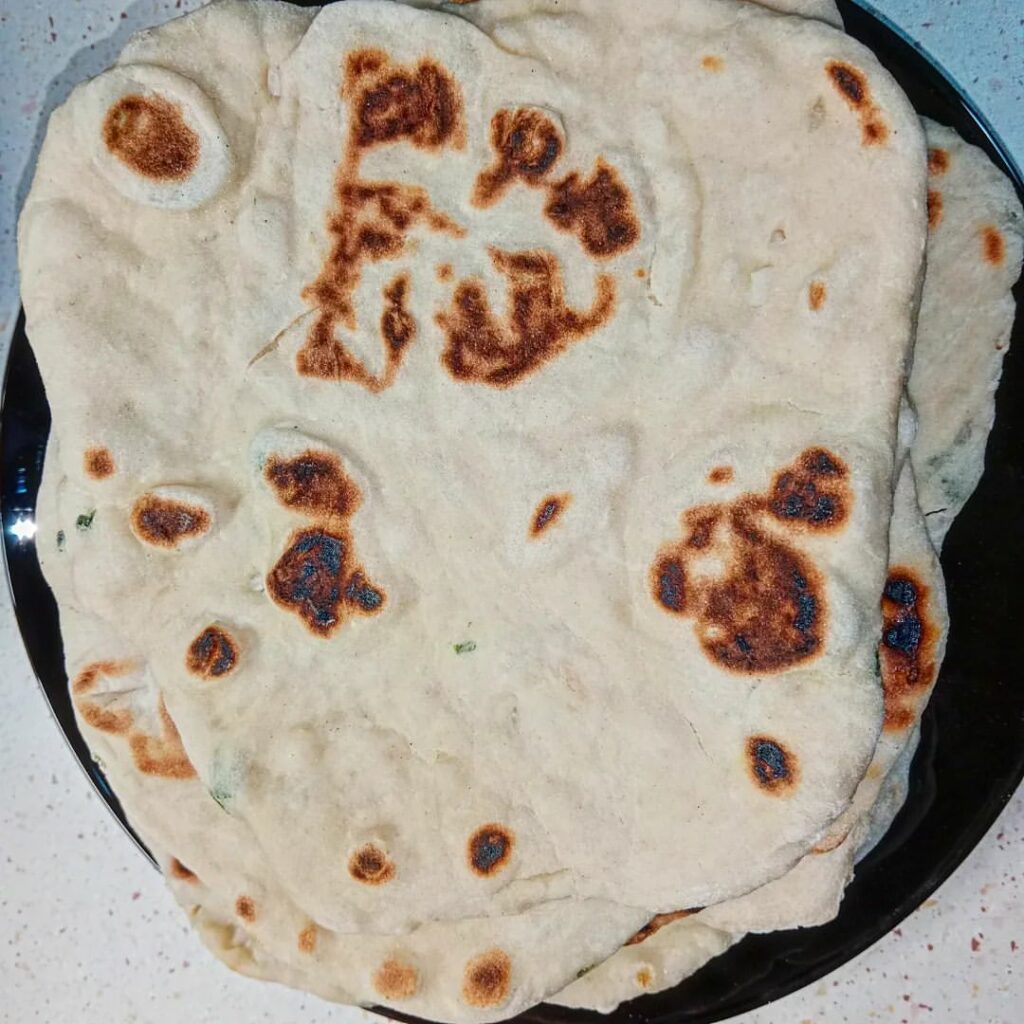
Naan is one of the world’s most beloved flatbreads. These soft, slightly charred rounds from India are perfect alongside curry, soups, hummus, or as a base for simple open sandwiches. The problem? Most naan you’ll find in restaurants is made with yogurt and ghee, making it anything but vegan. Homemade vegan naan solves this beautifully: same soft texture, same delicious taste, made entirely from plant-based ingredients you probably already have at home.
Can you really make naan without a tandoor oven? How do you get the dough to rise properly? And what do you actually serve it with beyond curry? We’ve answered all of that in this recipe. Simple ingredients, minimal effort, and a result that genuinely beats anything you’d buy in a packet.
Why You’ll Love This Recipe
Homemade naan has a clear advantage over shop-bought versions, whether you’re vegan or not. It’s softer, more fragrant, and in a completely different league from the packaged naan you find in most supermarkets.
- Completely plant-based: no yogurt, no butter, no eggs
- Simple ingredients: flour, water, plant milk, olive oil, yeast and salt
- No tandoor needed: a well-heated pan works perfectly
- Ready in about 90 minutes: most of which is hands-off rising time
- Easy to customise: garlic, fresh herbs, sesame seeds, or chilli
Make it once and you’ll understand why homemade naan becomes a regular staple in your kitchen.
Interesting Facts About Naan
The word “naan” comes from Persian and simply means “bread”. This leavened flatbread was being baked across what is now Iran and Afghanistan long before it reached India. It arrived with Muslim rulers during the Delhi Sultanate period, around the 13th and 14th centuries.
The earliest written record of naan in India dates back to 1300 CE, documented by the Indo-Persian Sufi poet Amir Khusrau, who described two varieties: naan-e-tunuk (light, thin bread) and naan-e-tanuri (bread baked in a tandoor). During the Mughal era from the 1520s onwards, naan was a delicacy reserved for nobility and the royal court. The labour-intensive process of making leavened bread in a tandoor meant it was too complex for everyday cooking and was enjoyed exclusively by the privileged.
Today naan is enjoyed worldwide in countless variations: garlic naan, stuffed aloo naan with spiced potato, cheese versions, and simple homemade flatbreads like this one. Interestingly, a dairy-free version of naan, without yogurt and butter, is actually closer to the original Persian flatbread than the dairy-heavy restaurant version most of us know.
Traditional tandoor ovens reach temperatures above 400°C, giving naan its characteristic charred spots and slightly smoky flavour. At home, a well-preheated heavy pan achieves a very similar result. The dough puffs up beautifully, forming those airy pockets you know from restaurant naan, right on your stovetop.
Health Benefits
Homemade naan isn’t a “health food” in the low-calorie sense, but compared to packaged alternatives it has real advantages. You know exactly what’s in it, with no preservatives, no stabilisers, and no added sugars.
Olive oil is one of the key ingredients here. It contains oleic acid, a monounsaturated fatty acid linked to heart health, and is a natural source of vitamin E and polyphenols with antioxidant properties. The quantity in this recipe (20ml for the whole batch of eight) is modest, so each naan contains very little added fat.
Plant-based milk replaces dairy milk without any compromise in texture. If you use a fortified plant milk, you’ll also be adding calcium and vitamin D, both important nutrients in a vegan diet. Oat milk or soy milk work best because of their neutral flavour and good consistency.
Wheat flour provides energy through complex carbohydrates. If you want to increase the fibre content, replace 100-150g of the plain flour with wholemeal flour. The result will be slightly denser but still delicious. At approximately 240 kcal per piece, this homemade naan is a satisfying but not excessive side dish.
Nutritional Values
Approximate values per 1 naan (from a batch of 8). Values vary depending on specific ingredients used.
| Nutrient | Amount per serving |
|---|---|
| Calories | ~240 kcal |
| Protein | 7 g |
| Carbohydrates | 44 g |
| Fat | 3 g |
| Fibre | 2 g |
Vegan Naan
Ingredients
- 500 g Plain flour
- 150 ml Warm water
- 150 ml Warm plant-based milk oat or soy works best
- 20 ml Olive oil
- 1 tsp Salt
- 7 g Dried yeast
- Fresh herbs and garlic, to taste
Instructions
- Mix all the dry ingredients in a bowl. Add the warm water, plant-based milk, and olive oil, then knead into a smooth dough.
- Cover the dough and leave to rise in a warm place for at least one hour.
- Divide the risen dough into 8 equal pieces. Roll each piece out into a thin flatbread and cook in a dry pan over medium-high heat until golden and slightly charred on both sides.
Notes
Tips and Variations
The base recipe is deliberately simple so you can adapt it to whatever mood you’re in or what you have available. Here are the most popular variations.
- Garlic naan: add 2-3 crushed garlic cloves to the dough, or fry garlic in oil and brush over the warm naan straight from the pan
- Herb naan: fold in finely chopped fresh coriander or flat-leaf parsley before rolling
- Wholemeal version: replace 100-150g plain flour with wholemeal flour for extra fibre and a nuttier flavour
- No-yeast version: replace yeast with 2 teaspoons baking powder (no rising time needed, but less fluffy result)
- Sesame version: sprinkle sesame seeds or nigella seeds on top before cooking
Leftover naan keeps well wrapped in a tea towel or airtight container at room temperature until the next day. To reheat, place in a dry pan for 30 seconds or wrap in a damp kitchen towel and microwave briefly. You can also prepare the dough a day ahead and let it rise slowly in the fridge overnight. A slow cold rise develops the flavour even further.
What to Serve It With
Naan is one of the most versatile flatbreads you can make. The obvious pairing is curry, but there are plenty of other ways to enjoy it. Here are the four vegan curries we bake naan for.
- With our vegan roasted aubergine and tofu curry: the naan soaks up the sauce beautifully and makes it a complete meal
- As a base for open sandwiches: spread with hummus, top with fresh vegetables and a squeeze of lemon
- Alongside our creamy red lentil soup instead of regular bread
- Simply with olive oil, garlic and salt as a quick side for any dinner
Naan also works brilliantly at breakfast: spread with peanut butter and banana slices, or load it with hummus and fresh vegetables for something quick and satisfying before a long day.
Frequently Asked Questions
Is naan vegan?
Traditional naan from Indian restaurants is not vegan. It typically contains dairy yogurt, butter or ghee, and sometimes eggs. Homemade vegan naan replaces these with plant-based milk and olive oil. The result is just as soft and flavourful, and you know exactly what went into it.
Can you make vegan naan without yeast?
Yes, you can replace yeast with approximately 2 teaspoons of baking powder per 500g of flour. This skips the rising time and makes the recipe quicker, but the naan will be less fluffy and airy. For the best result, we recommend using yeast and allowing the full hour of rising time.
How long does homemade vegan naan last?
Wrapped in a tea towel or kept in an airtight container at room temperature, naan stays good until the next day. In the fridge, it keeps for 2-3 days. Reheat briefly in a dry pan or in the microwave wrapped in a damp kitchen towel to keep it soft rather than stiff.
Can you make gluten-free vegan naan?
Classic naan is not gluten-free as it’s made with wheat flour. For a gluten-free version, you can try a gluten-free flour blend with xanthan gum, but the result will differ from the original. The texture tends to be less stretchy and pliable. If you need a gluten-free flatbread to serve with Indian dishes, rice flour chapati is worth exploring.
Why is my vegan naan tough instead of fluffy?
The most common reason is insufficient rising time. Yeast needs warmth and time (at least one hour) and the liquid must not be too hot or it will kill the yeast. Lukewarm liquid at around 37°C is ideal. Rolling the dough too thin or using an insufficiently preheated pan can also lead to a flat, tough result.
Can you make vegan naan dough ahead of time?
Yes, absolutely. Prepare the dough the day before and let it rise slowly in the fridge overnight. A slow cold rise develops the flavour of the dough even further and the naan will be more aromatic. Before rolling and cooking, let the dough come to room temperature for about 30 minutes.
Homemade vegan naan is one of those recipes that proves plant-based cooking is never about compromise. Simple ingredients, minimal effort, and a result that genuinely beats anything you’d buy ready-made. Try it the next time you’re making curry, soup, or just need an easy side for dinner. We’d love to hear how yours turned out and whether you added garlic or kept it plain. Share it with someone who thinks vegan baking is complicated. This recipe will change their mind.
Newsletter
Get our free e-books
Join the newsletter and download Our Vegan Christmas Kitchen straight away, 10 recipes for Czech cookies, gingerbread and vánočka. Then once a month, new places from the vegan map and new articles. Unsubscribe with one click.