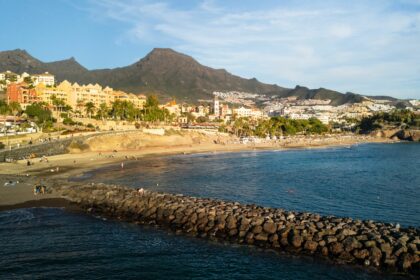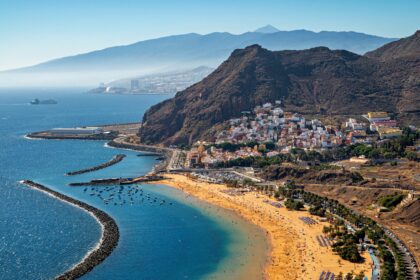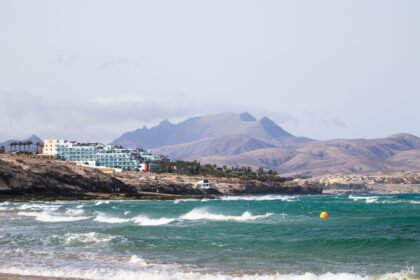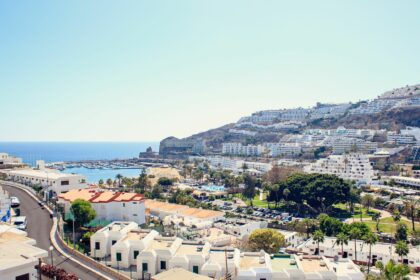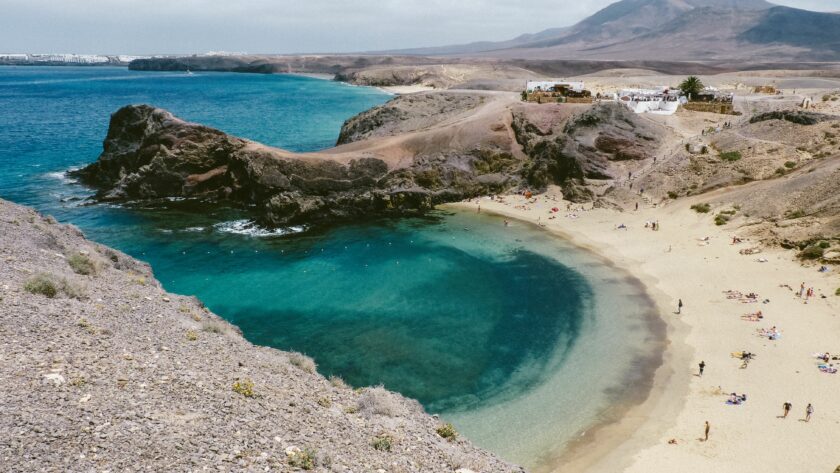
Lanzarote looks like a mistake in the best possible way. Black lava running straight into the Atlantic, whitewashed houses with not a single tower block among them, palm trees planted in pits dug into volcanic ash, and volcanoes that look like they stopped burning last week. They actually burned for six years straight, between 1730 and 1736, and redrew the map of the entire island. If you are expecting another Canary Islands package holiday with a hotel strip and a pool bar, this one is going to surprise you.
We have not been to Lanzarote yet and we are not going to pretend otherwise. What we did instead was work through climate data, the island’s official visitor centres, menus and reviews, and put together the things that turned out to be surprisingly hard to find. The food side was the biggest surprise. Almost every vegan guide to Lanzarote currently online was last updated two or three years ago, and several of them send you to places that have since closed. We will come back to that, because it is the most useful thing in this article.
So what is there actually to do here beyond lying on a beach? Is it as windy as everyone says? Which resort should you pick, and can you eat well as a vegan on a small volcanic island where half the recommended restaurants no longer exist? Here is everything laid out so you can plan around it. If you are comparing Lanzarote with the other islands, start with which Canary Island is best for you.
Where is Lanzarote and why does it look so different?
Lanzarote is the most northeasterly of the main Canary Islands, which puts it nearer to Europe than any of its neighbours. It is the fourth largest island in the archipelago, small enough to drive around in a single day, and about an hour and a half from end to end. There is one airport, just outside the capital Arrecife, and it is named after César Manrique.
That name explains almost everything about how the island looks. César Manrique was a Lanzarote-born artist and architect who spent the 1970s fighting what was happening everywhere else on the Spanish coast. While the mainland filled up with concrete hotel towers, Manrique lobbied the local government for the opposite. He pushed through strict building rules, low whitewashed houses, woodwork traditionally painted green, blue or brown and a ban on high-rise development. By the time he died in 1992 the island’s look was locked in, and the very next year, in 1993, the whole of Lanzarote became a UNESCO Biosphere Reserve.
In practice that means no twenty-storey hotels and almost no roadside billboards or neon signs. Villages look much as they did fifty years ago. Some people find it uniform and a little controlled. We think it is one of the smartest things an island has ever done for itself.
If you are still deciding where in Spain to go, we compare the regions in our guide to whether Spain is vegan friendly. And if you are torn between Canary Islands, we cover the largest one in vegan Tenerife, which offers a noticeably different sort of holiday. We have also written up Gran Canaria, the roundest and most varied of the group.
Lanzarote on our vegan map
4 places. Tap a pin to see the details.
Loading the map…
- Vegan options
- Stays
- Sanctuaries & charities
See every place from this article on our vegan map.
What to do in Lanzarote: volcanoes, lava caves and Manrique
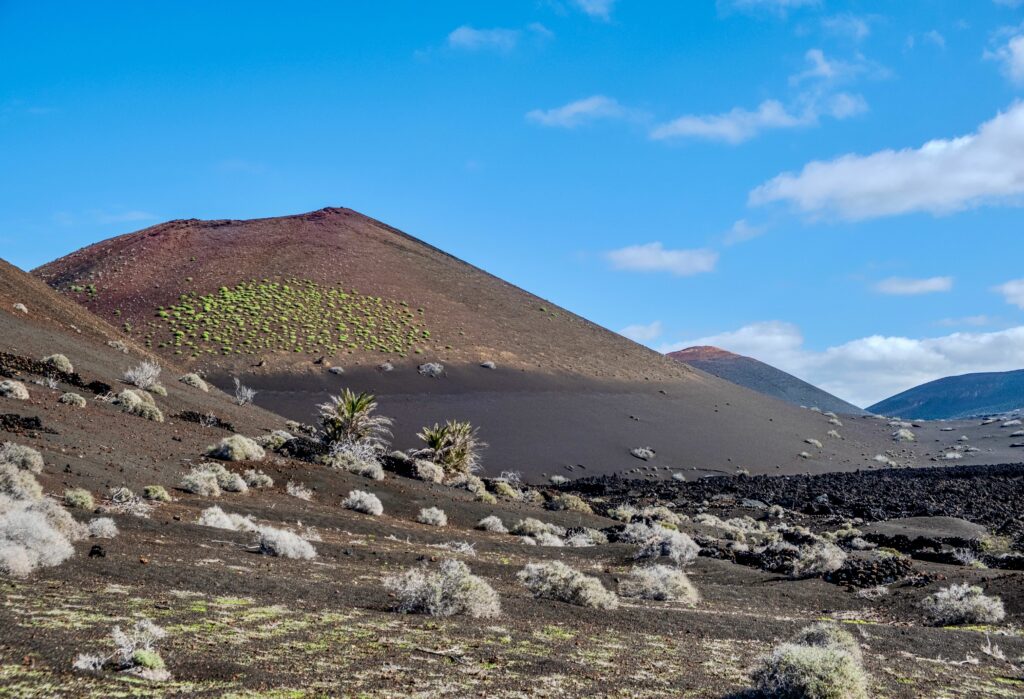
Timanfaya National Park is the main reason people fly here. It was created by the eruptions between 1730 and 1736, which ran for six full years and swallowed around a dozen villages along with much of the island’s best farmland. The park was declared in 1974, covers roughly 5,100 hectares, and is the only one of Spain’s sixteen national parks that is geological rather than biological in nature. Nobody lives inside it and you cannot wander freely, so visits run by coach along the Ruta de los Volcanes.
The landscape looks like another planet, but it is not dead. More than a hundred species of lichen grow here, and old fig trees survive among the volcanic cones. Visits include geothermal demonstrations, where the ground a few metres down is still hot enough to set dry brush alight.
Cueva de los Verdes and Jameos del Agua are two parts of the same lava tube, formed by the Corona volcano in the north. Cueva de los Verdes is the cave section, used for centuries by islanders hiding from pirate raids. Jameos del Agua is the collapsed section, which Manrique turned into a concert hall, restaurant and pool. The natural underground lake is home to tiny blind white crabs found nowhere else on earth.
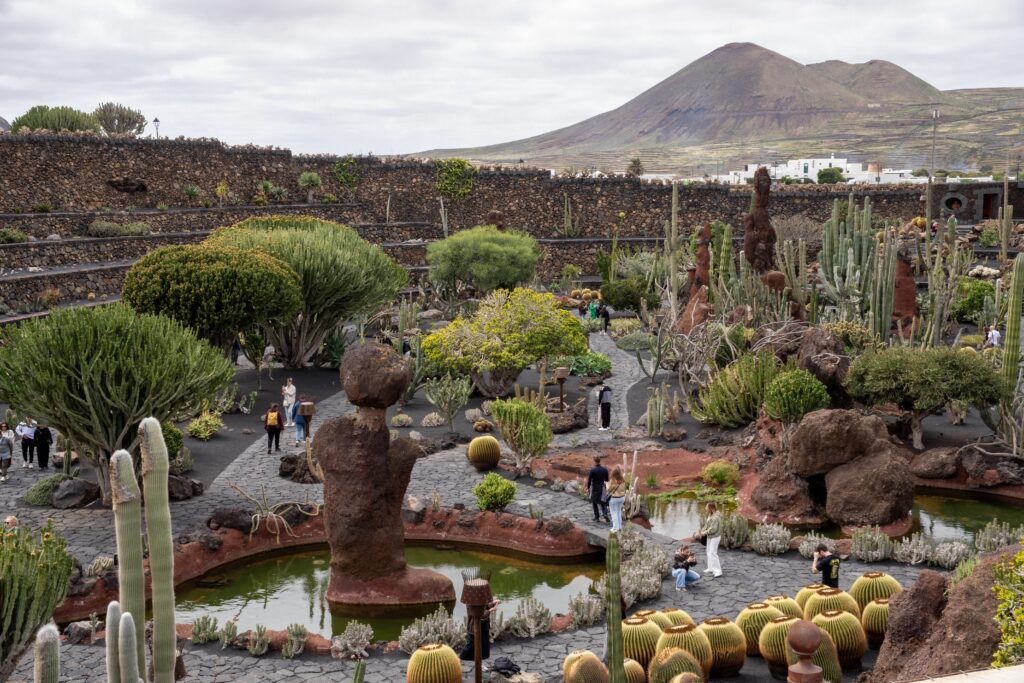
Mirador del Río is Manrique’s clifftop viewpoint in the north, carved into the rock and looking across the strait to the little island of La Graciosa. Jardín de Cactus in Guatiza was his last major work, a cactus garden built inside a former volcanic ash quarry. And Teguise, the island’s old capital, is worth timing for a Sunday, when it hosts the biggest market on the island.
| What to see | Where | Time needed | Why go |
|---|---|---|---|
| Timanfaya National Park | southwest | 2–3 h | lava fields from the 1730–1736 eruptions, geothermal demos |
| Jameos del Agua | north | 1.5 h | lava tube reworked by Manrique, endemic blind crabs |
| Cueva de los Verdes | north | 1 h | caves used as a hiding place from pirates |
| Mirador del Río | northern cliffs | 1 h | views over La Graciosa, Manrique architecture |
| La Geria | island centre | half day | vines grown in pits of volcanic ash |
| Jardín de Cactus | Guatiza | 1 h | Manrique’s final major project |
| Teguise | inland | 2–3 h | old capital, Sunday market |
| Papagayo beaches | southern tip | half day | the island’s best beaches, inside a protected area |
La Geria: vineyards that look like a moonscape
This is the part of Lanzarote we find most remarkable. After the eruptions buried much of the island under volcanic ash, islanders had to work out how to grow anything at all. The solution is still there to see. A shallow pit is dug into the ash, a single vine planted at the bottom, and a semicircular wall of lava stones built around it to shelter the plant from the trade winds. The ash traps moisture overnight and releases it slowly to the roots, so vines survive in a place that barely sees rain.
The result is a valley filled with thousands of black hollows, each with one green plant at its centre. Malvasía is the main grape, and the wineries along the main road run tastings.
Vegan tip: Wine is not automatically vegan. Fining traditionally uses gelatine, egg white, casein from milk or isinglass from fish, and none of it has to appear on the label. La Geria is one of the few places where you can ask the person who actually made the wine, so you get a straight answer. Just say ¿Es apto para veganos?, meaning is this suitable for vegans.
The best beaches in Lanzarote
Papagayo is the answer to where the postcard beaches are. It is not one beach but five small coves curling around the southern tip of the island, inside the protected Los Ajaches area. The water is calm and clear because the coves sit in the lee of the headland. Getting there means a dusty unsurfaced road and a small entry fee, which filters out most of the crowds. Facilities are minimal, so bring water and food.
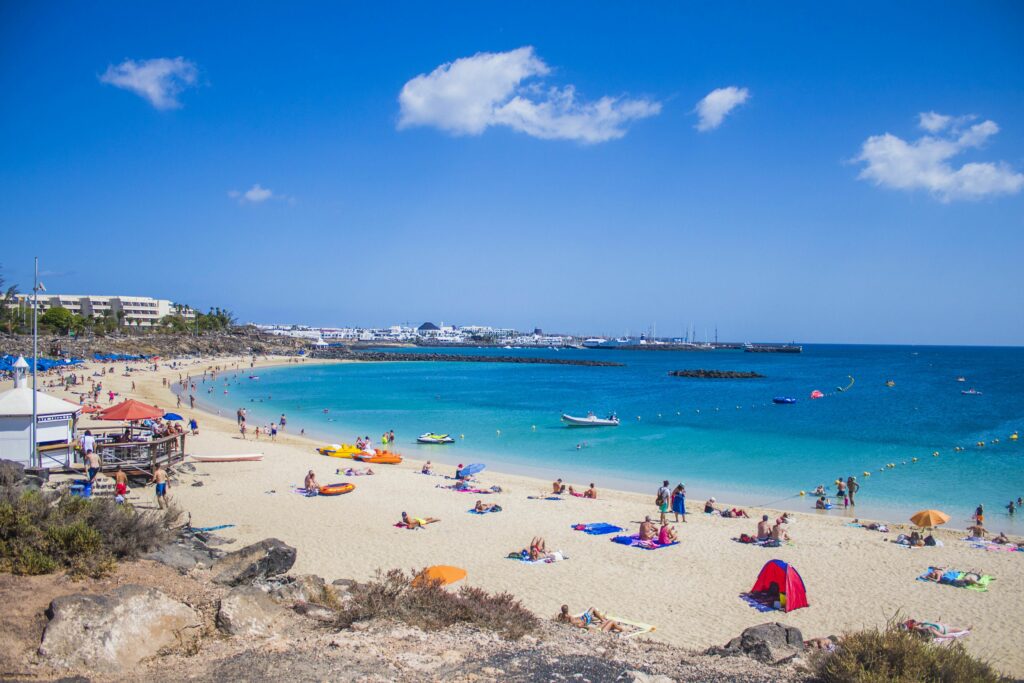
Playa Dorada at Playa Blanca is the opposite, the resort’s largest beach with fine sand, shallow calm water and sunloungers for hire. It is the safest choice for families with small children. Playa Flamingo next door is smaller and even more sheltered.
Playa de Famara in the northwest is a different world entirely. Several kilometres of golden sand beneath the Risco de Famara, a cliff wall several hundred metres high, with strong wind, big waves and surfers everywhere you look. Currents make it a poor choice for swimming with children, but for a walk at sunset it is the most dramatic place on the island.
Playa Blanca: the island’s most popular resort
Playa Blanca sits on the southwestern tip of the island and is the calmest of the three big resorts. It grew from a fishing village into a resort over the last few decades, but Manrique’s building rules kept it low-rise, so you never get that wall-of-concrete feeling along the seafront.
The heart of it is a long coastal promenade that links the beaches on foot, running from the old harbour past Playa Dorada and Playa Flamingo. At the western end is Marina Rubicón, a smart marina with restaurants and a market on Wednesdays and Saturdays. It is the most pleasant evening walk in the resort, and it stays sheltered when the north of the island is being battered.
Playa Blanca is also the jumping-off point for Fuerteventura. The ferry across to Corralejo takes around twenty-five minutes, which makes a day trip to the dunes entirely doable. On a clear day you can see the neighbouring island across the La Bocayna strait from the promenade.
For vegans, Playa Blanca has one advantage and one drawback. The advantage is the number of international restaurants, Indian, Italian and Asian, where plant-based food is far easier to find than in traditional Canarian cooking. The drawback is that we could not find a fully vegan restaurant in the resort, so you will always be asking questions and adapting dishes.
Planning tip: Playa Blanca is the furthest resort from the airport and from the northern sights, so if you are staying here, plan the north of the island as one long day out rather than several short trips. Timanfaya, La Geria and Papagayo are all comfortably close. Jameos del Agua and Mirador del Río are not.
Is Lanzarote windy? Honestly, yes
Almost everyone asks this before booking, and the honest answer is yes. The northeast trade winds blow across the Canaries, and Lanzarote has no high mountains to slow them down, so it is one of the windiest islands in the group. The breeze is close to constant and strongest in the afternoons.
Do not read that as a warning. The wind is exactly what keeps the island comfortable in August, and it is why surfers come here from across Europe. It just means two practical things. Pack a layer even for hot days, because it will feel cooler than the thermometer suggests. And where you stay matters more here than on most islands.
The northwest coast around Caleta de Famara is wild, windy and full of big waves, which is why it is the island’s surf centre. The south and east, meaning Playa Blanca, Puerto del Carmen and Costa Teguise, are markedly more sheltered. Beach days with young children point you south. Waves and empty sand point you north.
Lanzarote weather and when to go
This is why people fly here in December. Lanzarote sits on roughly the same latitude as southern Morocco, so winter in any meaningful sense does not happen. Daytime highs run between about 21 and 29 °C across the year, and rain falls on only about 17 to 19 days a year, mostly between November and February.
| Season | Daytime highs | Sea | Best for |
|---|---|---|---|
| December–February | around 21 °C, January coolest | around 19 °C, chilly for swimming | winter sun, walking, lower prices |
| March–May | 22–25 °C | 18.5–19.5 °C | the best balance of weather, quiet and price |
| June–August | 27–29 °C | 21–22 °C | swimming, but windiest and most expensive |
| September–October | 26–28 °C | warmest of the year, around 22 °C | our pick for the best months overall |
| November | around 24 °C | 21 °C and falling | quiet, warm, start of the winter season |
The sea is colder than the air temperature suggests. The Atlantic ranges from about 18.5 °C in late winter and spring to 23 °C in September, so even in August the first few seconds are bracing. Anyone used to the Mediterranean in August will notice the difference immediately.
Is Lanzarote vegan friendly? The honest answer
We have to be straight with you here, otherwise this article is no use at all. Lanzarote’s vegan restaurant scene is small and it turns over fast. Working through the English-language lists of the island’s best vegan restaurants, we found that the top-ranking ones were years out of date and contradict each other. Several places they recommend as open have since closed according to other sources. We are not sending you to an address that is now an estate agent.
So we are doing it the other way round. First the things that do not go out of date, meaning what you can order almost anywhere on the island, and only then a few specific addresses to check before you travel.
On a small island it is far more useful to know what you can order in any bar than to carry a list of five restaurants, three of which have closed.
Canarian dishes that are vegan already
Papas arrugadas con mojo is the national dish and your safest bet anywhere. Small potatoes are boiled in heavily salted water until the water evaporates and the skins wrinkle. They come with two sauces. Mojo verde is green, made from coriander or parsley, garlic, oil and vinegar. Mojo rojo is red and spicier, built on paprika, garlic, cumin, oil and vinegar. Both are plant-based in their traditional form.
Beyond that you can usually rely on gazpacho, olives, pan con tomate, grilled vegetables and fruit. The island grows potatoes, onions, squash and grapes, and the markets, especially the Sunday one in Teguise, are excellent.
The one trap nobody warns you about
It is called gofio. This is toasted grain flour, a staple of Canarian cooking going back to the islands’ original inhabitants, and on its own it is entirely plant-based. The problem is how it reaches your table. Gofio escaldado, the form you are most likely to be served as a starter, is traditionally made by mixing the flour into fish broth. It looks like a harmless brown paste of flour and water. It usually is not. Ask about it the same way you would ask about soup.
| Dish | Vegan? | What to watch for |
|---|---|---|
| Papas arrugadas | yes | potatoes, water and salt, nothing else |
| Mojo verde and mojo rojo | yes | plant-based traditionally, check labels on jarred versions |
| Gofio (the flour itself) | yes | toasted grain flour, nothing added |
| Gofio escaldado | usually not | traditionally made with fish broth, always ask |
| Gazpacho | usually yes | seasonings vary, worth a quick question |
| Sancocho, ropa vieja | no | fish and meat classics |
| Queso asado, almogrote | no | cheese specialities |
Places worth trying, with one condition
We picked these two because there is a more recent trail for them than for the rest of the lists. Even so, one rule applies. Check each one is open before you travel, ideally through their social media, because opening hours on a small island shift with the season.
Esquina Teguise in the old capital is a café in an old house in the historic centre, and it is still one of the most recommended vegan addresses on the island. Expect tapas-style plates, burgers, toasts and homemade cakes. Be aware that it is no longer a plant-based kitchen, as it now also serves meat, so treat it as a place with good vegan options and ask about the specific plate.
You will also see El Sibarita in Caleta de Famara on older lists. A current listing shows it as permanently closed and we could not confirm otherwise, so we have left it out.
Surf Corner in Costa Teguise is a café with a mixed menu (it serves meat too) where, according to reviews, burgers and sandwiches can be made vegan on request. Its homemade lentil burger turns up in reviews year after year.
Where to stay, and why a kitchen helps here
Lanzarote is built far more around apartments and villas than around large hotel complexes. For vegans that is mostly good news. When you know there is no vegan restaurant round the corner, your own fridge is the best insurance you can have.
| Where to stay | Best for | Wind | Drawback |
|---|---|---|---|
| Playa Blanca | families, calm beaches, Fuerteventura ferry | lowest | furthest from the north of the island |
| Puerto del Carmen | first visits, most restaurants and services | low | the most touristy, close to the airport |
| Costa Teguise | central base for day trips | moderate | less character |
| Caleta de Famara | surfers and wild scenery | high | few services, strong currents |
| Inland (Teguise, Haría) | quiet, authentic villages | variable | you will need a car |
Shopping is straightforward. The island has Mercadona, HiperDino, Spar, Lidl and Aldi. Mercadona is best for a big shop and carries its own plant-based range, HiperDino is the Canarian chain with the densest network of stores, and Spar is usually nearest the beaches and the priciest. There is a cluster of big supermarkets in Playa Honda near the airport, so it is worth stopping on the drive from arrivals.
Shopping tip: Do one big Mercadona shop on day one and top up in smaller stores after that. Resort minimarkets near the beach will charge noticeably more for the same items. Plant milk, hummus, tofu and dairy-free yoghurt are easy to find, while mock meats and ready meals are a thinner selection than you may be used to at home.
If you are travelling for longer or with children, a few things from home earn their space in the suitcase. We go through what is worth packing in our guide to vegan food for travel. And if you would rather have full board after all, we cover how that works on a plant-based diet in vegan all inclusive resorts.
Useful Spanish for ordering vegan food
English will get you a long way in the resorts. Inland and in smaller villages it is less certain, and a few phrases help everywhere, especially the one about broth.
| English | Spanish | Roughly pronounced |
|---|---|---|
| I am vegan | Soy vegano / vegana | soy veh-GAH-no / veh-GAH-na |
| No meat and no fish, please | Sin carne y sin pescado, por favor | seen KAR-neh ee seen pes-KAH-do |
| No cheese and no egg | Sin queso y sin huevo | seen KEH-so ee seen WEH-vo |
| Does it contain fish broth? | ¿Lleva caldo de pescado? | YEH-va KAL-do deh pes-KAH-do |
| Do you have anything vegan? | ¿Tienen algo vegano? | TYEH-nen AL-go veh-GAH-no |
| Is this suitable for vegans? | ¿Es apto para veganos? | es AP-to PA-ra veh-GAH-nos |
Things about Lanzarote that surprised us
The eruption lasted six years. Most volcanic eruptions are measured in days or weeks. Timanfaya burned from 1730 to 1736 and turned close to a quarter of the island into lava field. People living here watched their landscape disappear for six years running.
It is Spain’s only geological national park. Spain has sixteen national parks, and Timanfaya is the only one that protects not plants or animals but the volcanic landscape itself.
Jameos del Agua has a resident found nowhere else. The natural underground lake inside the lava tube is home to tiny blind white crabs adapted to total darkness. They are endemic, meaning they exist there and nowhere else on the planet.
The whole island is protected. The UNESCO Biosphere Reserve designation does not cover one region but all of Lanzarote and its surrounding waters, and has done since 1993. That is precisely why there are no tower blocks or roadside billboards.
Practical tips
Getting around. You can manage without a car only if you plan to stay in one resort. Buses connect the resorts, but they will not get you to Timanfaya, La Geria or Papagayo. Car hire in the Canaries is cheap and the whole island can be driven in a day.
Time zone. The Canary Islands run one hour behind mainland Spain, which puts them on the same time as the UK and Ireland.
Booking ahead. Tickets for Timanfaya (Montañas del Fuego) and Cueva de los Verdes are sold online only, for a set date and time, so book before you go. Jameos del Agua does not need a time slot. Current prices and opening hours are on the official CACT Lanzarote site, with wider practical information on the island tourism portal.
When we checked this. Everything in this article was last checked in October 2026. The weather, the volcanoes and the beaches will hold for years. The restaurants will not, which is exactly why we flag it so heavily above. If you are reading this much later and something no longer matches, tell us in the comments and we will fix it.
Lanzarote picked its own path a long time ago and has stuck to it. No hotel towers, no billboards, just black lava, white houses and a wind that never quite drops. The vegan scene is small and takes a bit of preparation, but between papas arrugadas, a fridge of your own and a few words of Spanish, you will do far better here than those out-of-date restaurant lists suggest.
Have you been to Lanzarote? We would particularly like to know whether the wind bothered you or quietly saved your August afternoons. Tell us in the comments what you found there.
Frequently asked questions
What is there to do in Lanzarote?
The essentials are Timanfaya National Park, the Jameos del Agua and Cueva de los Verdes lava tubes, the Mirador del Río viewpoint, the vineyards of La Geria, the Sunday market in Teguise and the Papagayo beaches. The island is small enough that you can reach most of it from a single base with a hire car.
Is Lanzarote vegan friendly?
Moderately, with planning. There are only a handful of fully vegan places and the scene changes quickly, so verify any address before you travel. Your reliable options everywhere are papas arrugadas with mojo, gazpacho and grilled vegetables, and self-catering makes life considerably easier. Watch out for gofio escaldado, which is traditionally made with fish broth.
Is Lanzarote windy?
Yes. Northeast trade winds blow across the island and there are no high mountains to block them, so a breeze is close to constant and strongest in the afternoons. Famara and the northwest are the windiest, while Playa Blanca and the southern resorts are noticeably sheltered.
Where is Lanzarote and is it in Spain?
Lanzarote is the most northeasterly of the Canary Islands, in the Atlantic off the northwest coast of Africa. It is part of Spain, and the Canary Islands are an autonomous community of the country, though they sit roughly a thousand kilometres from the Spanish mainland.
Where should I stay in Lanzarote?
Playa Blanca suits families and anyone wanting calm beaches, Puerto del Carmen has the widest choice of restaurants and services for a first visit, Costa Teguise makes a central base and Caleta de Famara is for surfers. Most accommodation is apartments and villas with kitchens, which helps a great deal on a plant-based diet.
When is the best time to visit Lanzarote?
September and October give the best combination, with air temperatures still above 26 °C and the sea at its warmest for the year. Winter stays around 21 °C, which is why it is a popular winter sun destination, though the sea drops to about 18.5 °C by early spring. January is the coolest month and December the likeliest for rain, though that still means only a few days.
Featured photo: Atypeek Dgn, Pexels.
Newsletter
Get our free e-books
Join the newsletter and download Our Vegan Christmas Kitchen straight away, 10 recipes for Czech cookies, gingerbread and vánočka. Then once a month, new places from the vegan map and new articles. Unsubscribe with one click.