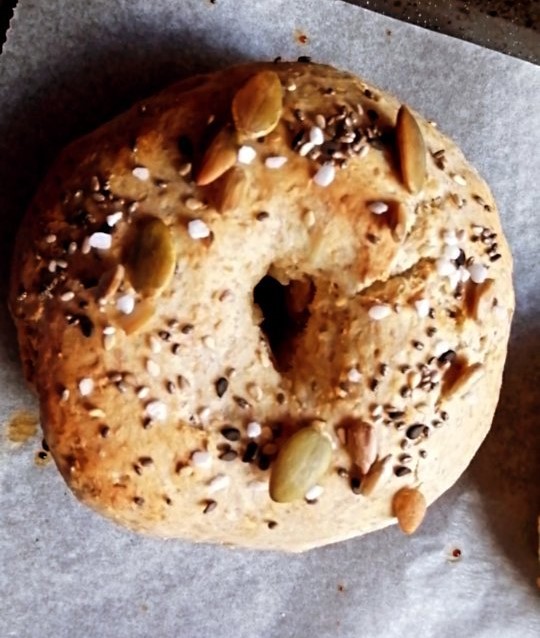
Vegan protein bagels are the kind of homemade bread that earns its place in your weekly rotation. Made with just six everyday ingredients, no yeast, and no rising time, these bagels come together in about 40 minutes from start to finish. The base is whole wheat flour combined with plant-based Greek yogurt, which adds moisture and naturally boosts the protein content. Each bagel packs roughly 15 g of protein, making it an ideal breakfast, post-workout snack, or the foundation for a hearty sandwich.
How do you get bagels that are soft inside and crispy on the outside without yeast? Can you make them without protein powder? Which plant-based yogurt works best? And what toppings turn them from simple bread into something that looks bakery-worthy? We’ve got all the answers below.
Why you’ll love this recipe
These bagels combine minimal effort with a result that looks and tastes like it came from a professional bakery.
- No yeast, no waiting: the dough is mixed in one bowl and shaped straight away. No rising, no kneading for ages.
- Approximately 15 g of protein per bagel: thanks to the combination of whole wheat flour, plant-based yogurt, and sunflower protein.
- Whole grain and filling: whole wheat flour ensures slow energy release and a high fibre content.
- Customisable toppings: seeds, salt, garlic, sesame, poppy seeds, or an “everything bagel” mix.
- Great fresh or frozen, so you can meal-prep a batch for the entire week.
If you’re used to buying bagels from the shop, be warned: once you’ve tried these homemade ones, you won’t want to go back.
Interesting facts about bagels and plant-based protein
Bagels originated in 17th-century Polish Jewish communities, where they served as an everyday bread. They were traditionally made from wheat flour, water, yeast, and salt, with their characteristic chewy centre created by briefly boiling the dough in hot water before baking. Modern protein versions simplify this process because the yogurt in the dough replaces part of the liquid and binding agent.
Sunflower protein, which boosts the protein content in this recipe, is one of the lesser-known plant proteins. It’s extracted from sunflower seeds after oil pressing and contains roughly 45–55 g of protein per 100 g. Unlike soy protein, it’s hypoallergenic and has a neutral flavour that practically disappears in baked goods.
It’s worth noting that plant-based Greek yogurts have improved dramatically in the last five years. While first-generation products based on coconut or almond had minimal protein content (1–2 g per serving), newer products using soy, oat, or pea bases now deliver 8–12 g of protein per 150 g serving. In baking, they work almost identically to dairy Greek yogurt, providing moisture, acidity to activate baking powder, and a creamy texture.
The trend towards high-protein baked goods has surged globally, with searches for “protein bagels” more than doubling in the past two years. People are looking for ways to add more protein to everyday meals without relying on shakes or supplements.
Health benefits of protein-rich baking
Whole wheat flour, which forms the base of these bagels, is significantly more nutritious than white flour. 100 g of whole wheat flour contains roughly 13 g of protein, 10 g of fibre, and significant amounts of iron, magnesium, and zinc. The fibre slows down sugar absorption, so you won’t get the blood sugar spikes that come with refined-flour bagels.
The combination of flour, plant-based yogurt, and sunflower protein creates a complete amino acid profile, which is key when working with plant-based proteins. Each ingredient contributes different amino acids, and together they cover the body’s needs similarly to animal sources. For both athletes and everyday eaters, this means one bagel after a workout genuinely supports muscle recovery.
Plant-based yogurts also often contain added probiotic cultures that support gut health. While the live cultures are destroyed during baking, the fermentation process has already broken down complex sugars and made minerals more bioavailable. If you’d like to learn more about plant-based protein sources, check out our article on the 7 best plant-based proteins.
Nutritional values
Approximate values per bagel (recipe makes 8 bagels).
| Nutrient | Amount per serving |
|---|---|
| Calories | ~275 kcal |
| Protein | 15 g |
| Carbohydrates | 42 g |
| Fat | 4 g |
| Fibre | 5 g |
Approximate values per serving. Actual amounts may vary depending on specific ingredients and quantities used.

Vegan protein bagels
Ingredients
For 8 large bagels:
- 500 g whole wheat flour
- 400 g plant-based Greek yogurt
- 75 g sunflower protein optional
- 1 packet baking powder
- 2 tsp salt
- 1 tsp coconut sugar
Instructions
- Mix all the dry ingredients together, then add the yogurt and knead into a dough.
- Divide the dough into 8 pieces and shape each into a bagel. (Form a ball, flatten into a disc, poke a hole in the centre with a chopstick or your finger, and stretch it into a ring.)
- Brush with a mixture of water and chicory syrup (or maple syrup), then sprinkle with seeds and salt.
- Bake at 200°C (390°F) for approximately 30 minutes until golden.
Tips and variations
The base recipe is intentionally simple, but you can customise it in dozens of ways depending on what you have in the kitchen.
- Without protein powder: you can skip the sunflower protein and replace it with the same amount of flour. The bagels will have less protein (about 10 g) but the texture will stay practically the same.
- Different protein: pea, hemp, or rice protein all work. Each changes the flavour slightly, so start with a smaller amount and adjust.
- Savoury toppings: before baking, brush the bagels with a mix of water and maple syrup, then top with coarse salt, sesame seeds, poppy seeds, garlic flakes, or an “everything bagel” seasoning blend.
- Cheesy version: mix 2-3 tablespoons of plant-based parmesan or shredded vegan cheese into the dough.
- Air fryer version: bake at 180 °C (350 °F) for about 15-18 minutes. The result is slightly crispier on the outside.
Store finished bagels in a sealed bag at room temperature for 2-3 days. For longer storage, slice them in half and freeze. They’ll keep for up to a month. Just pop them in the toaster before serving.
What to serve with protein bagels
A protein bagel is filling on its own, but with the right topping it becomes a complete meal.
- With vegan avocado hummus, sliced tomatoes, and fresh rocket.
- With peanut butter, sliced banana, and a sprinkle of seeds for a sweet breakfast option.
- As a bagel sandwich base with smoked tofu, vegan mayo, and pickled cucumber.
- Simply toasted with a thin layer of vegan butter and jam.
If you enjoy homemade bread, also try our classic vegan bagels with a yeasted dough. Or stay yeast-free with the other seven recipes in our vegan no yeast bread collection.
Frequently asked questions
Can you make protein bagels without protein powder?
Yes. You can replace the sunflower protein with the same amount of whole wheat flour. The bagels will have a lower protein content (roughly 10 g instead of 15 g per bagel), but the taste and texture will remain very similar.
What plant-based yogurt is best for bagels?
Thick, Greek-style plant-based yogurts work best, especially those based on soy or coconut. The yogurt needs to be thick enough to form a workable dough. Avoid thin or runny yogurts as they’ll make the dough too sticky. A neutral or slightly tangy flavour is ideal.
How long do homemade protein bagels last?
At room temperature in a sealed bag, they’ll keep for 2-3 days. For longer storage, slice them in half and freeze them. They’ll last up to a month in the freezer. Just pop them in the toaster or warm them in the oven at 180 °C (350 °F) for 5 minutes before serving.
How much protein do vegan protein bagels have?
Each bagel from this recipe contains approximately 15 g of protein. The protein comes from three sources: whole wheat flour, plant-based Greek yogurt, and sunflower protein. Without the protein powder, the content drops to about 10 g per bagel.
Can you make these bagels in an air fryer?
Yes. Bake them at 180 °C (350 °F) for about 15-18 minutes. They’ll come out slightly crispier on the outside compared to a conventional oven. We recommend flipping them halfway through for even baking.
Homemade protein bagels are one of the most practical recipes you can add to your meal prep routine. They’re quick, require no yeast, and deliver a solid dose of protein and fibre. Try them with different toppings and fillings to find your favourite combination. And if you’re looking for more high-protein snack ideas, check out our vegan protein bars.
Newsletter
Get our free e-books
Join the newsletter and download Our Vegan Christmas Kitchen straight away, 10 recipes for Czech cookies, gingerbread and vánočka. Then once a month, new places from the vegan map and new articles. Unsubscribe with one click.