Baking bread does not have to mean hours of kneading and waiting for dough to rise. This vegan oat bread proves that a brilliant homemade loaf can be made from just five basic ingredients, with no yeast, no kneading, and practically no waiting. All you need is rolled oats, water, baking powder, salt, and caraway seeds, and in one hour you will have a fragrant, moist bread packed with fibre on your table.
Which oats work best for oat bread? Does the dough need to rest? And how should you store the bread to keep it fresh as long as possible? This article covers the full method, practical tips on variations, and answers to the most common questions.
Why you will love this recipe
Here are five reasons to try this oat bread at home.
- No yeast and no rising time: thanks to baking powder the bread is done in one hour from start to finish
- Only 5 ingredients: that you probably already have in your kitchen
- Naturally gluten-free: (when using certified gluten-free oats)
- Rich in fibre and beta-glucan: from the oats, supporting digestion and heart health
- No kneading required: just mix wet and dry ingredients together and pour into a tin
This is the perfect recipe for anyone who wants homemade bread but does not have the time or patience for traditional yeast baking.
Interesting facts about oat bread
Oats are one of the oldest cultivated crops in Europe. They were first grown approximately 3,000 years ago, originally appearing as a weed among wheat and barley. Over time, however, oats proved remarkably hardy and nutritious, earning a place of their own. In Nordic countries and Scotland, oat bread has been baked as a staple food for centuries.
Oats are one of the few cereals that contain beta-glucan, a soluble fibre with scientifically proven health benefits. Both the European Food Safety Authority (EFSA) and the US FDA have officially recognised that oat beta-glucan helps lower cholesterol levels. Just 3 g of beta-glucan per day is enough, which is roughly equivalent to 75 g of rolled oats.
The caraway seeds used in this recipe are not just about flavour. In traditional Czech baking, caraway has been added to bread for centuries, not only for its distinctive aroma but also for its beneficial effects on digestion. Caraway contains essential oils that help relieve bloating and support a healthy gut microbiome.
Interestingly, yeast-free oat bread has a long tradition worldwide. Scottish oatcakes, Irish soda bread with oat flakes, and Norwegian havrebrød all prove that you really do not need yeast to make great bread.
Health benefits
Oat bread is one of the healthiest types of bread you can bake at home. The main credit goes to the rolled oats that form the base of this recipe.
Rolled oats are an excellent source of soluble fibre, particularly beta-glucan. Studies show that regular consumption of 3 g of beta-glucan per day can reduce LDL cholesterol by 3 to 5%. Beta-glucan also helps stabilise blood sugar levels after meals, which benefits everyone, not just diabetics. In 100 g of oats you will find approximately 13 g of protein, 10 g of fibre, and valuable minerals including magnesium, phosphorus, iron, and zinc.
Pumpkin and sunflower seeds, which we add to the recipe, are rich in healthy unsaturated fatty acids, vitamin E, and minerals. Pumpkin seeds are one of the best plant-based sources of zinc, which is important for immune function. Sunflower seeds stand out for their high vitamin E content, a powerful antioxidant.
Nutritional values
Approximate nutritional values per slice (recipe makes approximately 10 slices).
| Nutrient | Amount per serving |
|---|---|
| Calories | ~205 kcal |
| Protein | 8 g |
| Carbohydrates | 34 g |
| Fat | 5 g |
| Fibre | 6 g |
Approximate values per serving. Actual values may vary depending on specific ingredients and quantities used.
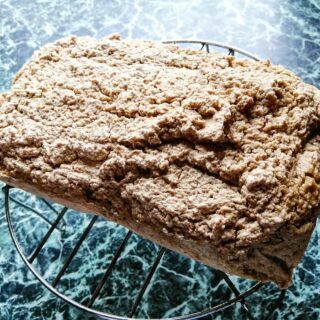
Vegan Oat Bread
Ingredients
- 500 g rolled oats
- 500 ml warm water
- 2 tsp salt
- 1 packet baking powder about 12g
- 1 tbsp caraway seeds
Optional:
- 1 tbsp sunflower seeds
- 1 tbsp pumpkin seeds
Instructions
- Grind the rolled oats into flour using a blender or food processor. Mix the oat flour with baking powder, seeds, caraway, and salt in a large bowl. Add warm water and stir until combined.
- Pour the dough into a loaf tin lined with baking paper. Smooth the top and cover with aluminium foil.
- Preheat the oven to 180°C (350°F).
- Bake for 30 minutes with the foil on, then remove the foil and bake for another 30 minutes until golden and firm.
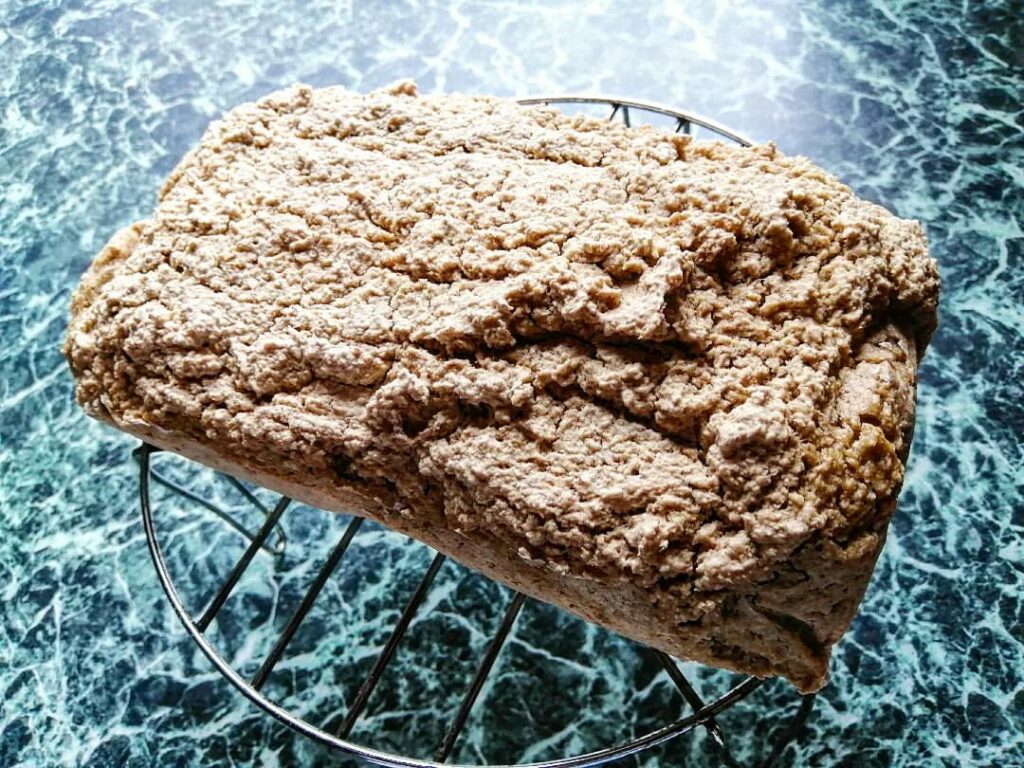
- Let the bread cool completely on a wire rack before slicing.
Tips and variations
The basic vegan oat bread recipe is great in its simplicity, but a few tweaks can help you customise it to your taste.
- Fine vs. coarse texture: For a finer crumb, grind the oats into a smooth flour. For a more rustic texture, leave some oats coarser, which gives the bread an interesting bite.
- No caraway? If you are not a fan, leave it out and add dried rosemary, oregano, or garlic powder instead.
- Protein boost: Add 2 tablespoons of hemp seeds or ground flaxseed for extra protein and omega-3 fatty acids.
- Storage: Wrap the cooled bread in a tea towel or place in a cotton bag. It keeps for 3 to 4 days at room temperature. You can also slice and freeze the bread, then pop individual slices straight into the toaster.
- Seed topping: Before baking, sprinkle the top with a mix of sesame, poppy, and sunflower seeds, pressing them lightly into the dough.
For an even richer flavour, try stirring a tablespoon of nutritional yeast into the dough for a subtle cheesy note.
Serving suggestions
Oat bread is incredibly versatile and works beautifully with both sweet and savoury toppings.
For breakfast, it is wonderful with avocado and cherry tomatoes, with peanut butter and banana, or simply with jam. At lunch, it makes an excellent side for soups, pairing especially well with lentil or pumpkin soup. For a snack, try it with homemade hummus or a spread.
If you enjoy homemade baking, make sure to try our vegan rye bread without yeast or vegan olive bread. And if you are after buns for burgers, check out our vegan homemade burger buns. All eight of our yeast-free bakes are compared side by side in our no yeast bread recipes roundup.
Frequently asked questions
Is oat bread gluten-free?
Oats themselves do not contain gluten, but standard rolled oats are often cross-contaminated with wheat during processing. If you need gluten-free bread, use certified gluten-free oats. The recipe stays exactly the same.
What type of oats is best for oat bread?
Regular whole rolled oats (not instant) work best. Grind them into flour in a blender or food processor before baking. Instant oats are too fine and can make the bread gummy.
Why does my oat bread not hold its shape?
Oat dough is naturally wetter and softer than wheat dough. Always bake in a loaf tin to give the bread structure. If the dough seems too runny, add a few extra tablespoons of oat flour. Covering with foil for the first 30 minutes helps the bread set without drying out the surface.
How long does homemade oat bread stay fresh?
Wrapped in a tea towel or cotton bag at room temperature, it stays fresh for 3 to 4 days. Sliced bread can be frozen for 2 to 3 months. Individual slices go straight from the freezer into the toaster with no need to defrost.
Can I make oat bread without baking powder?
Yes, but the bread will be denser and more compact. Baking powder gives it lightness and lift. If you do not have any, you can try a mix of bicarbonate of soda (1 teaspoon) with lemon juice (2 tablespoons), though the result will not be quite the same.
Vegan oat bread is a recipe you will come back to again and again. It is incredibly simple, quick, and the result tastes fantastic whether you serve it fresh with butter or toasted with avocado. Plus it is packed with fibre and valuable nutrients, so you do not need to feel guilty about reaching for a second slice. Give it a try and let us know in the comments how it turned out.
Newsletter
Get our free e-books
Join the newsletter and download Our Vegan Christmas Kitchen straight away, 10 recipes for Czech cookies, gingerbread and vánočka. Then once a month, new places from the vegan map and new articles. Unsubscribe with one click.