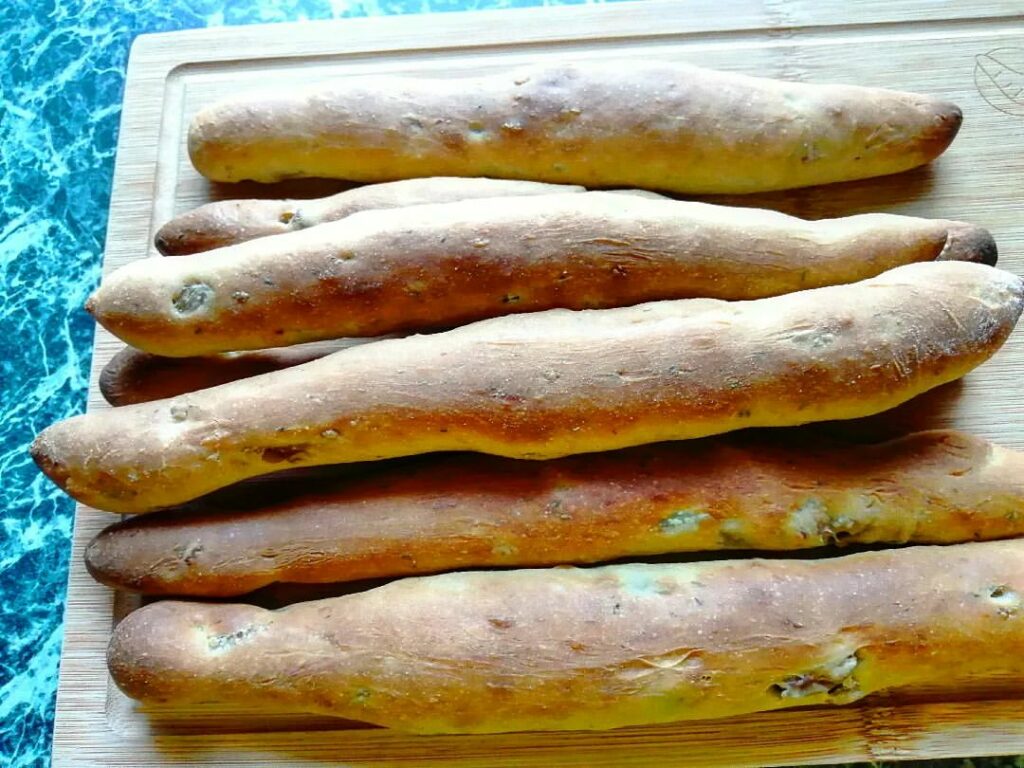
Vegan olive breadsticks are the perfect accompaniment to soup, wine or any gathering with friends. This yeasted dough made with bread flour, chunks of olives and thyme creates breadsticks that are crispy on the outside and beautifully soft inside. Unlike shop-bought versions that often contain dairy ingredients or unnecessary additives, these homemade breadsticks need just 8 ingredients and the result is incomparably better. Bread flour with its higher gluten content ensures the dough has excellent structure and the breadsticks hold their shape even after baking.
How do you work olives into yeasted dough without it falling apart? How long should the breadsticks rise and at what temperature should you bake them? Can you prepare them a day ahead? And which olives work best? You will find all the answers here, along with a tried-and-tested recipe that will surprise you with its simplicity.
Why you will love this recipe
These olive breadsticks will quickly earn a spot in your baking repertoire, and here is why.
- Just 8 ingredients that you probably already have in your kitchen
- Crispy crust and chewy centre thanks to bread flour with higher gluten content
- Perfect as a wine snack, alongside soup or as part of an antipasti platter
- Naturally vegan, the dough contains no eggs, butter or dairy
- Fragrant thyme and olives deliver Mediterranean flavour without complicated techniques
All you need is a little patience during the rise and you will have bread that looks like it came from an Italian bakery.
Interesting facts about olive breadsticks
Yeasted breadsticks have their origins in the Italian region of Piedmont, where the traditional version is called grissini. According to legend, they were invented in the 17th century by Turin baker Antonio Brunero for the young prince Vittorio Amedeo II, who had digestive problems and needed easily digestible bread. Grissini gradually spread across all of Italy and today you will find them in virtually every Italian restaurant as part of the bread service.
Olives have been cultivated for over 7,000 years and are among the oldest crops in the world. They originally come from the Mediterranean, specifically the region that is now Greece and Turkey. Today there are over 2,000 olive varieties, each with a different flavour, size and oil content. For baking, olives with a more pronounced flavour work best, such as kalamata or black olives.
The bread flour used in this recipe differs from plain flour in its higher protein content (typically 12 to 14%). More protein means a stronger gluten network, which helps the dough hold its shape better and gives the baked breadsticks a pleasantly chewy texture. This is why bread flour is the ideal choice for yeasted bakes where you want a crispy crust and a springy centre.
Thyme, which we add to the breadsticks, is one of the most widely used herbs in Mediterranean cooking. In ancient Greece it symbolised courage and strength, and the Romans used it to flavour cheeses and alcoholic drinks. Today it is prized not only for its taste but also for its thymol content, a natural compound with antibacterial properties.
Health benefits
Olives are a genuine source of healthy fats. They contain primarily oleic acid, a monounsaturated fatty acid linked to a reduced risk of heart disease that helps lower LDL cholesterol. A typical olive contains 11 to 15% fat, with the rest made up of water and fibre. Olives are also rich in vitamin E, iron and copper.
One of the most significant properties of olives is their high antioxidant content. They contain polyphenols such as oleuropein and hydroxytyrosol, which have proven anti-inflammatory effects. Studies suggest these antioxidants may help protect cells from oxidative stress and support healthy ageing.
The olive oil used in this recipe adds another dose of healthy unsaturated fatty acids. The combination of olives and olive oil in these breadsticks creates a bake that is not only delicious but also more nutritionally valuable than ordinary breadsticks. It is worth noting, however, that olives (especially those preserved in brine) contain higher amounts of sodium, so it is sensible to adjust your overall salt intake accordingly.
Nutritional values
Approximate values per breadstick (when the dough is divided into 8 pieces).
| Nutrient | Amount per serving |
|---|---|
| Calories | ~195 kcal |
| Protein | 5 g |
| Carbohydrates | 28 g |
| Fat | 7 g |
| Fibre | 2 g |
Approximate values per serving, depending on the specific ingredients and quantities used.

Vegan olive breadsticks
Ingredients
- 270 g bread flour
- 150 ml lukewarm water
- 100 g olives, roughly chopped
- 40 ml olive oil
- 2 tsp salt
- 1 tsp sugar
- 4 g instant yeast
- 1 tbsp dried thyme
Instructions
- Mix the flour with the yeast and salt in a large bowl. Add the lukewarm water and olive oil, then knead the dough until smooth.
- Add the chopped olives and thyme to the dough, mix to combine, then cover the bowl and let rise for 2 hours.
- Divide the dough into 8 equal pieces and roll each one into a breadstick shape. Place on a baking tray lined with parchment paper and let rise for another hour.
- Bake at 240°C (465°F) for approximately 10-15 minutes until golden and crispy.
Tips and variations for vegan olive breadsticks
Olive breadsticks are a brilliant base for experimenting. Here are some tips to customise the recipe.
- Green vs. black olives: Black olives have a milder flavour and lower sodium content, while green olives are sharper and more tangy. Both work well, it simply comes down to your preference.
- Rosemary instead of thyme: If you love rosemary, use it as an alternative to thyme. The combination of rosemary and olives is a classic Mediterranean pairing.
- Sun-dried tomatoes: Add 50 g of chopped sun-dried tomatoes along with the olives for a more intense flavour.
- Garlic variation: Mix 3 crushed garlic cloves into the dough, or sprinkle garlic powder over the breadsticks before baking.
- Storage: Store the breadsticks in a paper bag at room temperature, where they will stay fresh for 2 to 3 days. For longer storage, freeze them and reheat for 5 minutes in the oven at 180°C (350°F) before serving.
Each variation will produce a slightly different result, so do not be afraid to try new combinations.
What to serve them with
Olive breadsticks are a versatile bake that suits many occasions.
- With soup: They pair beautifully with any creamy soup, such as our vegan curry soup with chickpeas
- As antipasti: Serve with hummus, olive tapenade and sun-dried tomatoes
- With wine: An ideal snack alongside a glass of red or rosé
- With dips: Try them with tomato salsa, guacamole or vegan avocado hummus
If you want to expand your home baking skills, also try our vegan olive bread with herbs, which uses similar ingredients but in a different format.
Frequently asked questions
How to make homemade olive breadsticks?
Mix bread flour with instant yeast, salt and sugar. Add lukewarm water and olive oil, knead the dough, then fold in chopped olives and thyme. Let the dough rise for 2 hours, divide into 8 pieces, shape into breadsticks and after another hour of rising, bake at 240°C (465°F) for 10 to 15 minutes.
What flour is best for breadsticks?
Bread flour with a higher protein content (12 to 14%) is the best choice, as it creates a stronger gluten network that helps the breadsticks hold their shape. You can use plain flour as a substitute, but the result will not be as chewy and crispy.
How to store homemade breadsticks?
Store olive breadsticks in a paper bag at room temperature, where they will stay fresh for 2 to 3 days. For longer storage, freeze them and reheat for 5 minutes in the oven at 180°C (350°F). Avoid storing them in a plastic bag, as they will become soggy and lose their crispness.
Can you make olive breadsticks without yeast?
Yes, you can replace the yeast with baking powder, but the result will be different. Yeasted dough gives the breadsticks their characteristic chewiness and crispness. Without yeast, they will be more like crispy crackers.
Which olives are best for baking?
Olives with a strong flavour work best for baking, such as kalamata or black olives. Green olives are also fine but have a more tart profile. Make sure to drain and pat the olives dry before adding them to the dough so they do not add too much moisture.
Homemade olive breadsticks are a recipe that will impress at any occasion. Whether you serve them alongside soup, as part of an antipasti spread or simply with a glass of wine, their aroma and taste will never disappoint. If you enjoy homemade baking, be sure to check out our vegan savoury puff pastry sticks for an even quicker variation. We would love to hear how your breadsticks turned out!
Newsletter
Get our free e-books
Join the newsletter and download Our Vegan Christmas Kitchen straight away, 10 recipes for Czech cookies, gingerbread and vánočka. Then once a month, new places from the vegan map and new articles. Unsubscribe with one click.