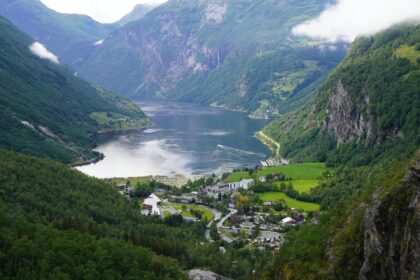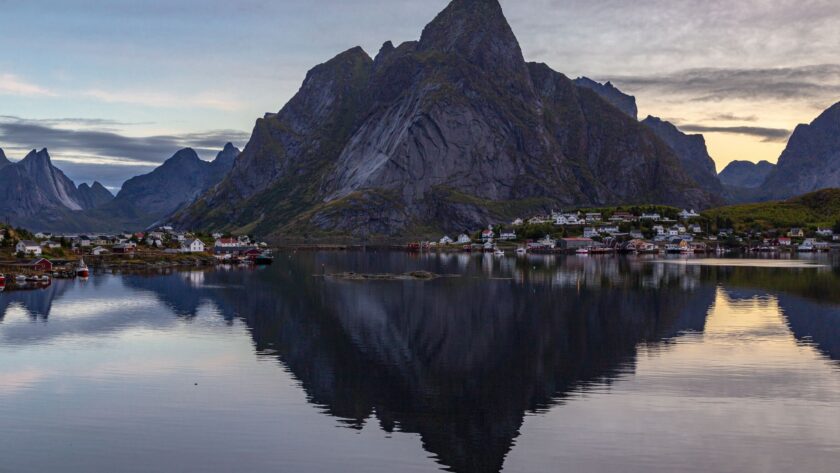
A Norway holiday usually starts with a photo. A green fjord squeezed between cliffs, a red wooden house at the water’s edge, and summer light that refuses to set. Then the second thought arrives. Can you afford it, and what will you eat if fish and meat aren’t on your plate? Lenka went to Norway twice as a child, with her dad, by bus and ferry. She still remembers the fjords, and she knows you can get there without a big budget, as long as you plan well.
We haven’t travelled Norway as vegans yet, so this isn’t a “when we visited” story. We read restaurant menus on the restaurants’ own websites. We checked laws, prices, exchange rates and timetables against official sources, and verified everything in November 2026. It’s the plan we’d want in our own hands if we were leaving tomorrow.
What should you see in Norway if you have a week, and what changes with two? When is the best time to visit for fjords, and when for the northern lights? Do you need a car, or will trains and boats do? Is Norway really as expensive as everyone says, and where can you eat plant-based without living on bread? And what traditional Norwegian food is worth trying even if you do eat meat? It’s all below, from getting there to the phrase that asks a Norwegian café whether the cake is vegan.
Things to do in Norway: the regions at a glance
For a first trip, Norway splits into four areas: Oslo, the western fjords around Bergen, Stavanger with the Lysefjord, and the Arctic north with Lofoten and Tromsø. Most first-timers pick Oslo and the western fjords, because they’re closest and connected by rail. The north is a separate trip that most people fly to.
Oslo: a capital on a fjord
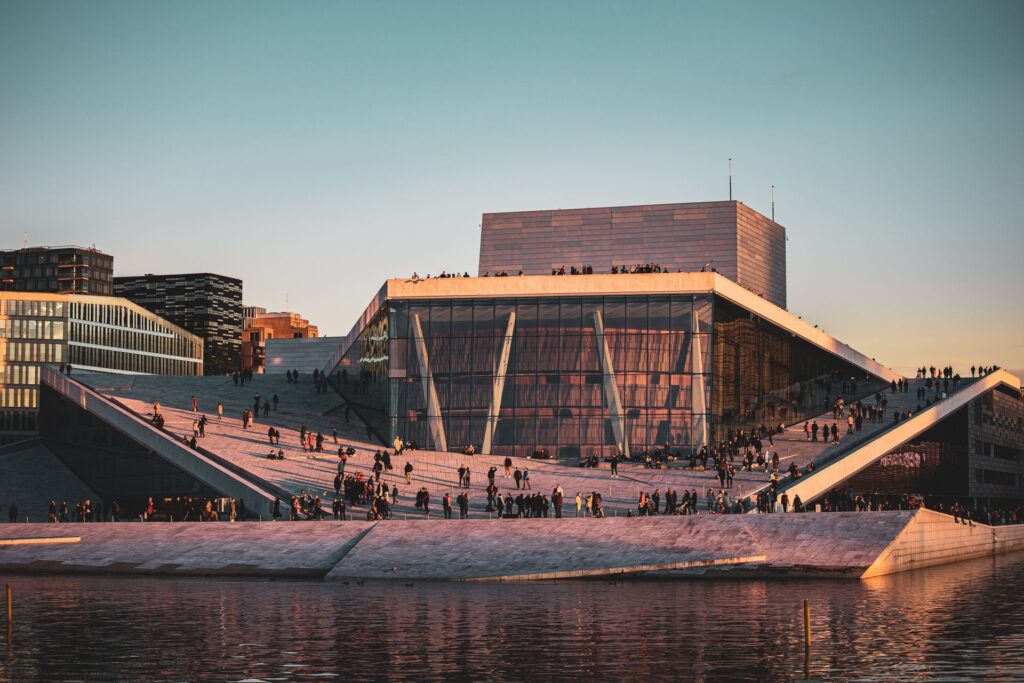
Oslo is the easiest way into Norway. It has the main international airport, and the overnight ferry from Kiel in Germany docks here. The city sits at the head of the Oslofjord and is easy to walk or cover by tram. For plant-based eaters, Oslo is the best city in the country. There’s a vegan buffet, a falafel shop where the whole menu is plant-based, and fast food with pea-protein burgers. For food, head to Grünerløkka north of the centre and to Torggata, the street that leads there. One or two days in Oslo is a good start before you head for the fjords. For sights, costs and a 3-day plan, see our article on the best things to do in Oslo.
Bergen and the western fjords
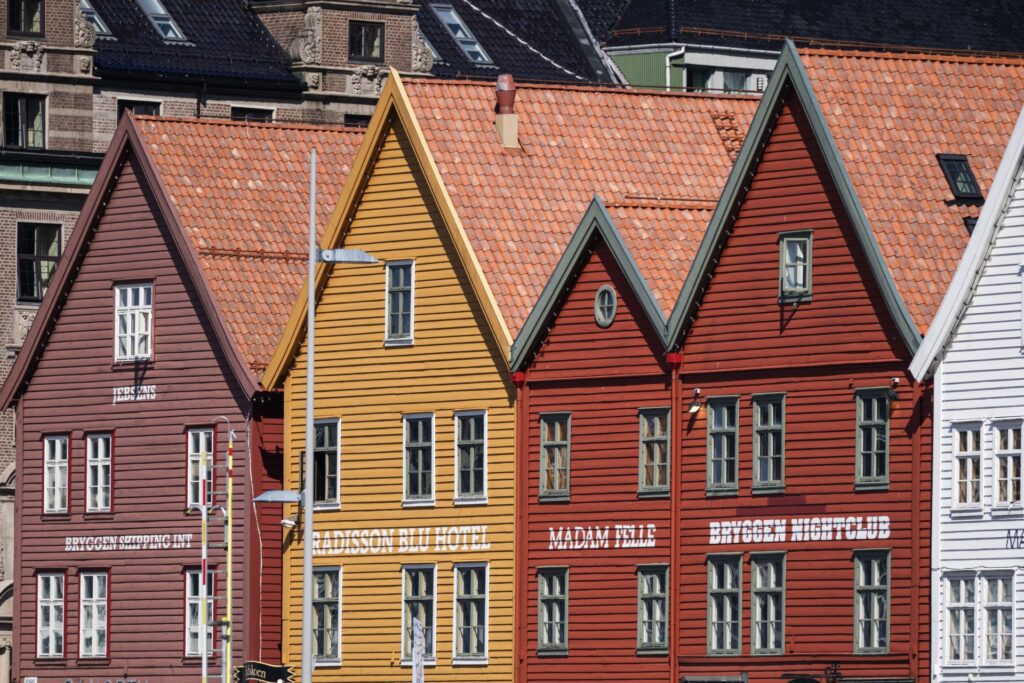
Bergen is the gateway to Norway’s most famous fjords. Its Hanseatic wharf, Bryggen, with its wooden buildings, is a UNESCO World Heritage Site. Two western fjords share that status, Geirangerfjord and Nærøyfjord. Nærøyfjord is close to the village of Flåm, at the bottom of the Flåm Railway. The line takes about an hour to drop from Myrdal, a mountain station on the Oslo–Bergen railway, down to the fjord. Geirangerfjord lies further north and suits a road trip better. For the city itself, see our guide to things to do in Bergen and where to eat vegan. Which fjords to pick and how to see them by boat, train or car is in our guide to the best fjords in Norway.
Stavanger and Preikestolen
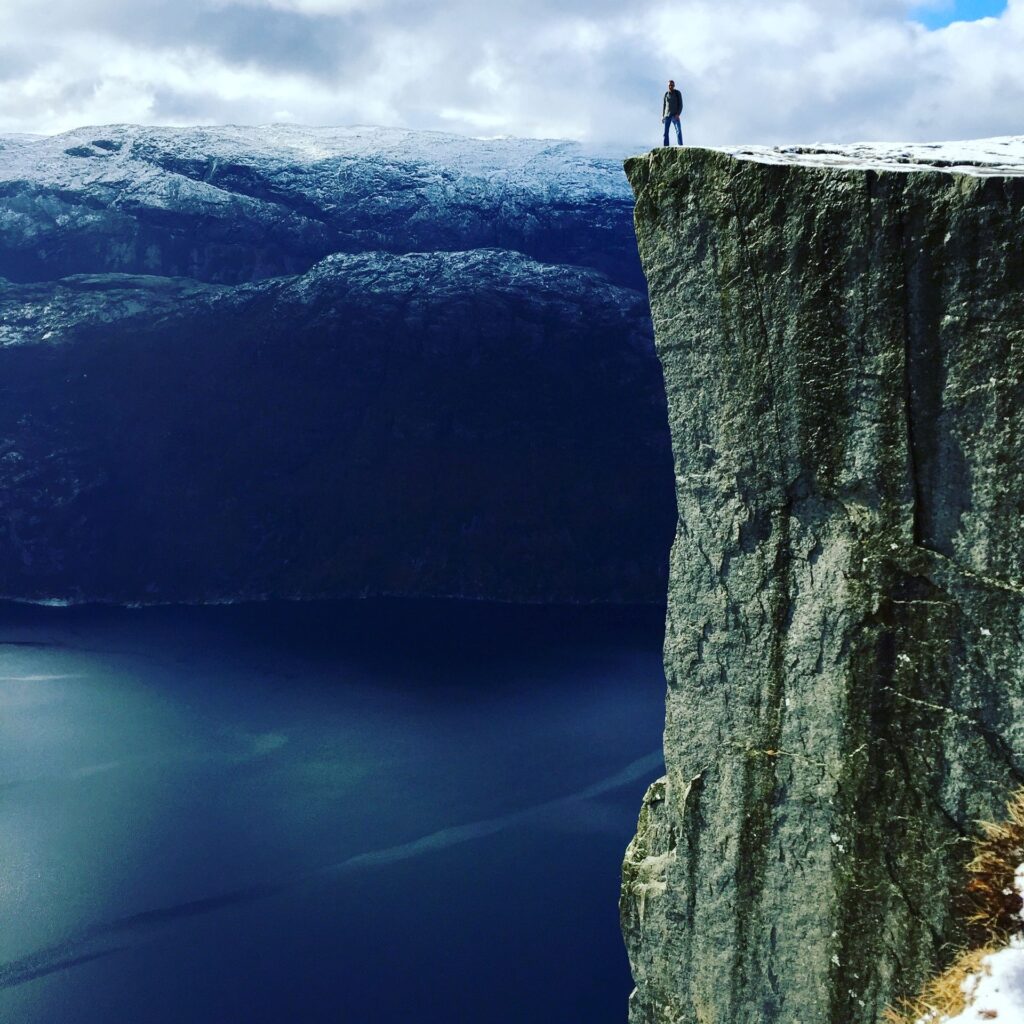
Stavanger is the base for Preikestolen (Pulpit Rock), a flat rock platform 604 metres above the Lysefjord. According to the national tourist board, Visit Norway, the return hike is eight kilometres. Allow about four hours for around 500 metres of climbing. The season runs from May to October, and from November to April you need special equipment and a guide. A bus runs from Stavanger to the trailhead. Stavanger also has one of the most interesting plant-based restaurants in the country.
The north: Lofoten, Tromsø and North Cape
Northern Norway is for the midnight sun in summer and the northern lights in winter. Lofoten is a chain of islands with mountains rising straight out of the sea. Tromsø is where most people go to chase the northern lights. North Cape is the famous cliff at the top of Norway that you can drive to. Plant-based restaurants are rare up here, though. In Lofoten and the smaller towns, expect to cook a lot of your own meals. How to get there, when to go and four places with vegan dishes on the menu are in our Lofoten Islands holiday planner.
Oslo & Bergen & Stavanger & Trondheim on our vegan map
11 places, 8 fully vegan. Tap a pin to see the details.
Loading the map…
- 100% vegan
- Vegan options
See every place from this article on our vegan map.
Best time to visit Norway for your holiday
The best time to visit Norway is June to August if you want fjords, hiking and long days. For the northern lights, head north between September and March. May and September are a good compromise, when most tourist services are running and the roads are quieter. The table shows what to expect when.
| When | What you get | Where to go | Vegan note |
|---|---|---|---|
| June–August | long days, hiking, ferries in full swing, midnight sun in the north | western fjords, Preikestolen, Lofoten | rural cafés and kiosks open, most choice |
| September–October | autumn colours, northern lights season begins | Oslo, Bergen, Tromsø | city restaurants run all year |
| November–February | short days, snow, northern lights | Tromsø, the north, Oslo | many rural places closed, self-cater |
| March–April | northern lights plus longer days, skiing | the north, mountains | same as winter |
| May | hiking season starts, midnight sun at North Cape from 14 May | fjords, Stavanger | some seasonal places still opening |
Midnight sun and northern lights
According to Visit Norway’s midnight sun page, the sun stays up at North Cape from 14 May to 29 July. In Tromsø it shines from 20 May to 22 July, and in Lofoten from 28 May to 14 July. Northern lights season runs roughly from late August to late March. According to Visit Norway’s northern lights page, activity peaks in September and October and again in March and April. Nobody can guarantee the lights. You need darkness, clear skies and a bit of luck. For northern lights over volcanic landscapes instead of fjords, see our guide to the best time to visit Iceland.
Why the season matters for food too
The season also decides where you’ll eat. City restaurants in Oslo, Bergen, Stavanger and Trondheim open all year. Cafés by the fjords, in Lofoten and in mountain villages often run only in summer. Travel off-season and you’ll be cooking in the countryside. A room with a kitchen then becomes a necessity rather than a perk.
How to get to Norway
Most visitors fly into Oslo, the fastest way to get there. For a road trip through the fjords, though, your own or a hired car is the most practical choice, and from continental Europe you can drive and take a ferry. Lenka travelled as a child with her dad by bus and ferry, so it’s possible without a car or a plane ticket. It just takes longer.
Flying in
Oslo Airport is the main hub, with direct flights from many European cities. Bergen and Tromsø are usually reached with a connection, most often in Oslo, and Lofoten usually via Bodø. Order a plant-based meal before you fly, as we explain in our guide to ordering a vegan airline meal.
By car and ferry from Kiel
The most relaxed driving route from central Europe runs to Kiel in northern Germany, then overnight by ferry to Oslo. Color Line sails from Kiel daily at 14:00 and arrives in Oslo at 10:00 the next morning. You save a hotel night and a long drive through Denmark and Sweden. The alternative is driving overland through Denmark and Sweden with shorter ferry hops, which takes longer but lets you add stops. If you’d like to stop in Sweden on the way, see our things to do in Sweden guide. For a stop on the Danish side, there are plenty of things to do in Denmark, from Copenhagen’s canals to Tivoli.
Tip: Bring your own dinner and breakfast on the overnight ferry. Onboard restaurants are pricey and plant-based dishes are scarce. Bread, hummus, veg, fruit and a flask of tea are enough, and you’ll save the cost of a whole meal for everyone.
Norway by car or campervan
A car or campervan makes sense mainly for the fjords, where trains don’t go. Expect road tolls and ferries, which are a normal part of Norwegian roads and add to the cost of the trip. A campervan or tent saves on accommodation and gives you your own kitchen, which is worth gold for vegans in Norway.
If you sleep outdoors, Norway’s right to roam (allemannsretten) applies. Under the Norwegian Outdoor Recreation Act, you may camp in open country, but no closer than 150 metres to an inhabited house or cabin. You can stay in one spot for up to two nights without the landowner’s permission, except in the high mountains and places far from homes. The same law lets you pick wild berries and mushrooms. In the far north, landowners can ban cloudberry picking on their land, but you can always eat cloudberries on the spot.
Norway itinerary: 7, 10 or 14 days
Seven days is enough for a first Norway trip if you stick to Oslo, Flåm and Bergen. Ten days lets you add Stavanger and Preikestolen. With fourteen days you can fit in Geiranger and Trondheim too. Save the Arctic north for a separate trip, because just getting there from the south overland takes several days.
| Length | Route | Transport | Where to eat well plant-based |
|---|---|---|---|
| 7 days | Oslo, train to Myrdal, Flåm Railway, Nærøyfjord, Bergen | train, boat, no car | Oslo, Bergen |
| 10 days | 7-day route + Stavanger and Preikestolen | train, bus or car | Oslo, Bergen, Stavanger |
| 14 days | 10-day route + Geirangerfjord, Ålesund, Trondheim | car | Oslo, Bergen, Stavanger, Trondheim |
| The north (5–7 days) | fly to Tromsø or Lofoten, northern lights or mountain trips | plane, car locally | self-catering, a few places with plant-based options |
A week without a car: Oslo, Flåm and Bergen
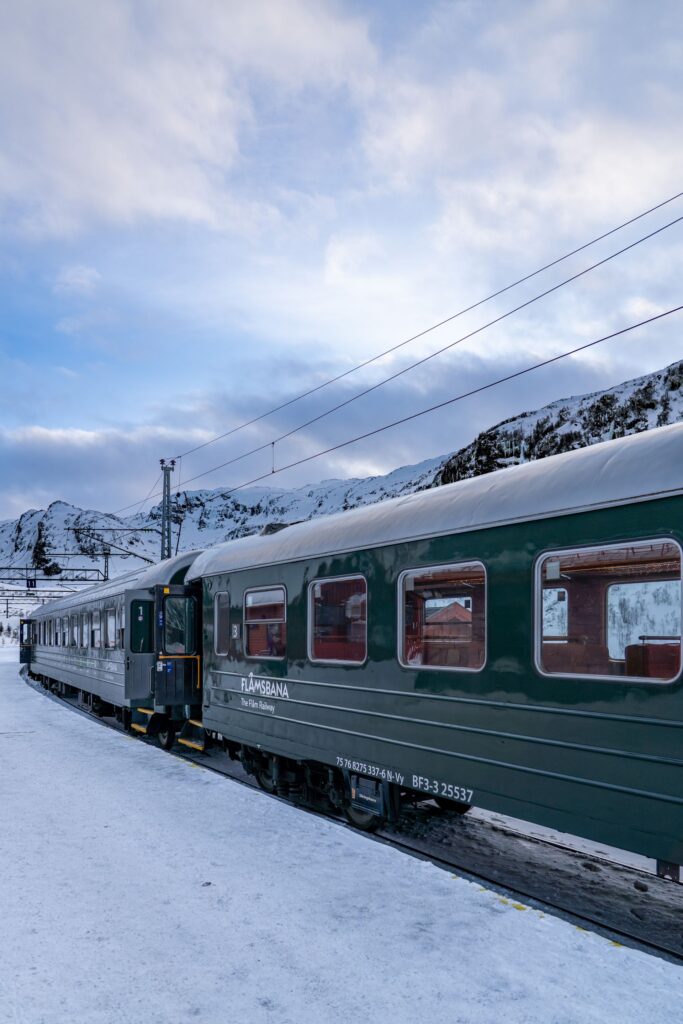
The one-week Oslo, Flåm and Bergen route works with no car at all. From Oslo you take the Bergen line to the mountain station at Myrdal. There you change to the Flåm Railway, which runs down to Flåm. From Flåm you can continue by boat along the Nærøyfjord to Gudvangen, then by bus to Voss and train to Bergen. Boat and bus timetables change with the seasons, so check them ahead in winter. The route starts and ends in cities where you’ll eat well. Pack food for the days in between.
A longer Norway road trip
With a car and ten to fourteen days, you can head south from Bergen to Stavanger and Preikestolen, or north to Geirangerfjord and Ålesund. A Norway road trip involves ferries, mountain passes and slower roads than most of Europe. Plan shorter daily stretches than the map suggests. Trondheim, at the end of the route, has a plant-based buffet restaurant before you fly or drive home.
How much does a Norway holiday cost?
Yes, Norway is expensive. According to Statistics Norway (SSB), household prices in 2025 were 28.6% above the EU average. Food and soft drinks cost 33% more, and alcohol and tobacco more than double. Restaurants and alcohol hurt most. Supermarkets are pricey too, but if you cook for yourself, a holiday in Norway works on a mid-range budget.
What eating out costs
On 6 November 2026, according to Norges Bank, one euro bought about 10.5 Norwegian kroner and one pound about 12.6. To give you a feel, we converted prices from the menus of the plant-based places we recommend in this article.
| What | Where | Price in NOK | Roughly in € / £ |
|---|---|---|---|
| falafel in bread with hummus | Jamal’s Falafel, Oslo | 99 kr | €9.40 / £8 |
| plant-based burger | Mat fra Hagen, Trondheim | 179 kr | €17 / £14 |
| all-you-can-eat buffet | Mat fra Hagen, Trondheim | 229 kr | €22 / £18 |
| 6-course Saturday lunch | Bellies, Stavanger | 650 kr | €62 / £52 |
| 9-course tasting dinner | Bellies, Stavanger | 980 kr | €93 / £78 |
How to save money in Norway
The biggest saving is breakfast and dinner from your own supplies, with one hot meal out a day. If you drive, bring dry staples from home, such as oats, pulses, rice, pasta and spices. Buy bread, veg and plant milk locally. Fill your own water bottle, because bottled water is money down the drain. A cheaper room with a kitchen beats a hotel with a breakfast you won’t eat.
Alcohol is its own story. Wine, spirits and strong beer can only be sold to consumers by the state-owned chain Vinmonopolet. Supermarkets only sell weaker beer. That’s one big reason why Norway feels so expensive to visitors who like a glass of wine with dinner.
Tip: If you only eat out once a day, make it a buffet. At Nordvegan in Oslo or Mat fra Hagen in Trondheim you take as much as you can eat. After a full day of hiking, that’s one of the best-value meals you’ll find in Norway.
Norway on a budget: where the big savings are
A budget Norway trip comes down to four decisions. The overnight ferry from Kiel to Oslo saves a hotel night, because you sleep in a cabin and wake up there. The Oslo, Flåm and Bergen route works by train and boat, so you skip car hire, tolls and fuel. The right to roam lets you camp for free in open country, as long as you stay 150 metres from homes and no more than two nights in one place. And every meal cooked from a supermarket shop makes a big difference compared with a restaurant, whatever you eat.
Where to stay in Norway
For plant-based travellers, the best place to stay in Norway is one with a kitchen. Apartments, hostels with shared kitchens, campsite cabins and campervans let you cook, which saves more than any discount. We didn’t find a fully vegan hotel in Norway. If you’d like at least one night with a plant-based breakfast and no negotiating, browse our list of fully vegan hotels in Europe and beyond. If your hotel includes breakfast, email ahead. Many will prepare a plant-based option if they know in advance.
Traditional Norwegian food and what you can eat
Traditional Norwegian food is built on fish, lamb and dairy, so most classic dishes aren’t vegan. Underneath, though, sits a plant-based layer that works for you too. Potatoes, rye and barley, cabbage, mushrooms and berries from Norwegian forests. Once you know what to look for, you’ll find things in the traditional kitchen you can enjoy without worry.
Traditional dishes that aren’t plant-based
The best-known Norwegian dishes include fårikål, lamb stewed with cabbage, and lutefisk, dried fish soaked in lye. Norwegians love brunost, a brown cheese made from whey that’s sliced onto bread. It’s dairy, so not for vegans. Lefse, a thin potato or flour flatbread, is often made with butter and milk. Skillingsboller, Norwegian cinnamon buns, usually have butter in the dough. If you miss them at home, try our recipe for vegan cinnamon rolls.
How to order in a regular restaurant
In a regular Norwegian restaurant, start with the vegetarian dish and ask what can be left out. It’s usually cheese, cream in the sauce, butter on the vegetables or egg in the dough. Staff in Norway are generally used to questions about allergies and ingredients, and asking isn’t rude. It helps to say it in Norwegian, for example “uten melk, smør og egg”. The full phrase list is at the end of this article.
Norwegian food you can eat
Flatbrød, a thin crispbread, is often made from just flour, water and salt. Some recipes add milk, though, so check the label. Cloudberries (multe) and lingonberries (tyttebær) are Nordic forest berries you can pick yourself in summer. Potatoes and cabbage are the backbone of rural cooking. And in Oslo, Bergen and Stavanger, plant-based restaurants now cook their own takes on Nordic food, so you can taste the tradition without the meat.
In Norway you eat best where you have your own kitchen and a lunchbox in your bag. Restaurants are the bonus, not the plan.
Is Norway vegan friendly? Where to eat
In the big cities, yes. In the countryside, not really. Oslo, Bergen, Stavanger and Trondheim all have fully plant-based restaurants. In smaller towns and by the fjords, you’ll usually rely on one plant-based dish on the menu, a café with plant milk and the supermarket. Every place below has a fully plant-based menu, which we read on their own websites in November 2026.
| Place | City | Type | What to order |
|---|---|---|---|
| Nordvegan | Oslo | vegan buffet | katsu curry, Thai yellow curry |
| Jamal’s Falafel | Oslo | vegan falafel | falafel with hummus in bread |
| Dirty V | Oslo, Bergen | vegan fast food | burger and fries |
| Bellies | Stavanger | vegan tasting-menu restaurant | seasonal menu from a wood-fired oven |
| Mat fra Hagen | Trondheim | plant-based buffet and burgers | all-you-can-eat buffet |
Oslo: Nordvegan, Jamal’s Falafel and Dirty V
Nordvegan at Kristian IVs gate 15B is a vegan buffet a few minutes from Nationaltheatret station. You fill your plate with Japanese katsu curry, Thai yellow curry, fried oyster mushrooms or spring rolls, and you can eat in or take away. Among the small bites, try the arancini, sweet potato tempura or fried dumplings. Jamal’s Falafel at Heimdalsgata 2C, between Grünerløkka and Tøyen, says on its own menu that every dish is 100% plant-based. Falafel with hummus in bread costs 99 kroner, and the version with baba ganoush and pomegranate 109. Not in a falafel mood? Get the roll with fried aubergine, fries and muhammara. It’s open daily from 10:00 to 23:00, and owner Jamal, who comes from Syria, cooks from family recipes.
Bergen: Dirty V
Dirty V at Nøstegaten 81 in Bergen is fully plant-based fast food, formerly known as Dirty Vegan. The burgers use Beyond pea protein, and the “chickn” and “bacon” are soy-based. In Oslo you’ll find it at Torggata 23. Dirty V says on its own website that most of its guests aren’t vegan. That makes it a good choice if you’re travelling with someone who eats meat and just wants a burger and fries.
Stavanger: Bellies
Bellies at Støperigata 6 in Stavanger cooks only with plant ingredients and buys as much as it can from local farmers. The menu follows the seasons, with plenty of fermenting and cooking in a wood-fired oven. The nine-course tasting dinner costs 980 kroner, and the six-course Saturday lunch 650. It opens Wednesday to Saturday evenings, so book a table ahead. Bellies warns that its kitchen can’t cater for soy or coconut allergies.
Trondheim: Mat fra Hagen
Mat fra Hagen at Thomas Angells gate 10b in central Trondheim has served plant-based food since 2014. Its menu lists the all-you-can-eat buffet at 229 kroner, or 199 for students. The buffet includes roasted vegetable dishes, burgers, sweet potato fries, rolls, quinoa salad and tofu salad. If you don’t want the buffet, there’s a chipotle burger, a falafel roll or an acai bowl. Check opening hours on their website before you go, as different sources disagree.
Fjords, Lofoten and Tromsø: plan to cook
In fjord villages, in Lofoten and in Tromsø, we couldn’t find a fully plant-based place we could verify from its own website. That doesn’t mean going hungry. Restaurants in tourist spots often have a vegetarian dish that can be adapted, and cafés have plant milk. Ask for “vegansk”, and the phrases below will help. For a longer stay in the north, though, plan on supermarket shopping and your own kitchen.
Read next
Want to combine Norway with Sweden, Denmark or Finland? Our guide on the best time to visit Scandinavia covers all five Nordic countries, getting there overland and plant-based picks in every capital.
Supermarkets and self-catering in Norway
For vegans in Norway, the supermarket is the most reliable restaurant. The chains you’ll see most are Rema 1000, Kiwi, Coop and Meny. Plant milk, tofu, pulses, bread, veg and meat alternatives are easy to find in the larger branches. Small rural shops tend to have less choice, so stock up in town.
What to look for on labels
Look for “vegansk” (vegan) and “plantebasert” (plant-based) on packs. Watch out for “melk” (milk), “smør” (butter), “egg” (egg), “ost” (cheese) and “myse” (whey). Whey turns up in baked goods as well as brunost. “Vegetar” means vegetarian, not vegan.
Cafés and bakeries
In a Norwegian café, ask for “havremelk” (oat milk) with your coffee. Pastries are trickier. The cinnamon and cardamom buns you’ll see in every bakery often contain butter and milk. Before you choose, ask “Er dette vegansk?”. In the cities you’ll sometimes find a vegan version clearly labelled, in the countryside less so. The safer snack is bread and a spread from your own shopping.
Food for hikes and travel days
For Preikestolen, a fjord drive or a ferry, pack food, because there may be nothing open on the way. Flatbrød with a spread, nuts, dried fruit, plant-based bars and a flask all work well, and in summer you can add blueberries picked along the trail. Our list of vegan backpacking food has more ideas. Campervan travellers have the advantage here. A dinner cooked by a fjord is the best restaurant with a view you can afford in Norway.
Tip if you eat meat: Try Dirty V in Bergen or Oslo. A pea-protein burger with dirty fries might surprise you more than you expect.
Norwegian phrases for vegans
You’ll get by in English almost everywhere in Norway, including the countryside. A few Norwegian words still help, especially when reading packaging and menus. We picked these phrases to tell you what’s in your food.
| English | Norwegian | When it helps |
|---|---|---|
| I’m vegan. | Jeg er veganer. | at the start of your order |
| Is this vegan? | Er dette vegansk? | cakes, soups, pastries |
| without meat, without fish | uten kjøtt, uten fisk | adapting a dish |
| without milk, butter and eggs | uten melk, smør og egg | baked goods and desserts |
| Is there cheese in it? | Er det ost i? | pizza, salads, sandwiches |
| plant-based | plantebasert | on packs and menus |
| oat milk | havremelk | in cafés, with coffee |
| Thank you. | Takk. | always |
Is a Norway holiday worth it?
It is, if you treat it as a nature trip rather than a foodie break. Fjords, Preikestolen and the midnight sun are experiences that justify the prices. You solve food with a mix, whether you’re vegan or just travelling with one. In the cities, you’ll enjoy a handful of plant-based restaurants worth the stop. In between, your own kitchen, the supermarket and a lunchbox carry you. Plan your route through Oslo, Bergen, Stavanger or Trondheim, and you’ll have a hot plant-based meal to look forward to every few days. Have you been to Norway? Where did you eat best, and what would you tell us about the north?
Frequently asked questions
Is Norway expensive to visit?
Yes, Norway is one of Europe’s most expensive countries. Statistics Norway puts prices 28.6% above the EU average in 2025, and food 33% above. You save most by cooking for yourself and staying somewhere with a kitchen. Plant-based buffets in Oslo and Trondheim are among the cheaper hot meals out.
When is the best time to visit Norway?
For fjords and hiking, go between June and August, when days are long and everything is open. For the northern lights, head north between September and March. May and September are a quieter compromise.
How many days do you need in Norway?
Seven days covers Oslo, Flåm and Bergen on a first trip, and you can do it without a car. Ten days adds Stavanger and Preikestolen. With fourteen days and a car, you can add Geirangerfjord and Trondheim.
Is Norway vegan friendly?
In the cities, yes. Oslo, Bergen, Stavanger and Trondheim have fully plant-based restaurants such as Nordvegan, Dirty V, Bellies and Mat fra Hagen. In the countryside, by the fjords and in the north, plan on supermarkets and cooking for yourself.
What is traditional Norwegian food?
Traditional Norwegian food is based on fish, lamb and dairy, with dishes like fårikål (lamb and cabbage), lutefisk and brunost (brown whey cheese). The plant-based side includes potatoes, cabbage, flatbrød crispbread and forest berries such as cloudberries and lingonberries.
Newsletter
Get our free e-books
Join the newsletter and download Our Vegan Christmas Kitchen straight away, 10 recipes for Czech cookies, gingerbread and vánočka. Then once a month, new places from the vegan map and new articles. Unsubscribe with one click.