
Vegan cauliflower couscous with vegetables and tofu is a quick, light, and surprisingly flavourful lunch you can have on the table in under 20 minutes. Instead of traditional wheat couscous, you’ll use grated or pulsed cauliflower, which has a similar texture but a fraction of the calories and carbs. Add crispy smoked tofu, colourful vegetables, and bold seasoning with curry and gyros spice, and you’ve got a meal that feels light yet leaves you completely satisfied.
How do you make cauliflower couscous without it turning mushy? What spices work best with it? And can you meal-prep this for the whole week? This article answers all of those questions, plus covers interesting facts about cauliflower, nutritional information, and plenty of variations to keep things exciting all year round.
Why you’ll love this recipe
Cauliflower couscous is one of those recipes that surprises you with how simple and delicious it is. Here’s why it deserves a spot in your weekly rotation.
- Ready in under 20 minutes in a single pan with minimal prep
- Low-calorie and low-carb, perfect as a light lunch or a side dish
- Naturally gluten-free and grain-free, suitable for paleo diets too
- High in protein thanks to smoked tofu, which adds a bold, smoky flavour and satisfying texture
- Endlessly versatile base that works with any seasonal vegetables you have on hand
If you’ve never tried cauliflower couscous, this recipe is the perfect place to start.
Interesting facts about cauliflower
Cauliflower belongs to the Brassica family alongside broccoli, cabbage, and kohlrabi. It originally comes from the Mediterranean region and has been cultivated in Europe since the 16th century. Interestingly, “cauliflower couscous” as a concept only emerged around 2012, when it became popular as part of the low-carb and paleo movements. Today, it’s one of the most widely used grain alternatives in the world.
What we eat is actually the undeveloped flower buds of the plant. A single cauliflower head can contain more than 100,000 individual buds that together form the characteristic compact “curd”. Cauliflower comes in several colour varieties, not just white. Purple cauliflower contains anthocyanins (the same antioxidants found in blueberries), orange is richer in beta-carotene, and green cauliflower (also called broccoflower) combines properties of both vegetables.
Using cauliflower as a grain substitute is far more than a passing trend. One serving of cauliflower couscous (100 g) contains just 25 kcal and 5 g of carbs, while the same amount of traditional wheat couscous has approximately 112 kcal and 23 g of carbs. That’s nearly a fivefold difference in calories and more than four times the carbs.
Cauliflower is also one of the few vegetables that absorbs the flavour of spices and sauces beautifully, thanks to its mild, neutral taste. That’s exactly why it pairs so well with bold curry and gyros seasoning, as in this recipe.
Health benefits of the main ingredients
Cauliflower couscous with vegetables and tofu is not only easy on the stomach but also offers a range of health benefits from its main ingredients.
Cauliflower is an excellent source of vitamin C. A single serving (100 g) covers approximately 80% of the recommended daily intake. It also contains sulforaphane and other glucosinolates, compounds that studies suggest may help in the prevention of certain types of cancer. Cauliflower is rich in fibre too, supporting healthy digestion and helping you feel full.
Smoked tofu is an excellent source of plant-based protein. Depending on the brand, it has 13 to 19 g of protein per 100 g (figures from the Tofoo, Taifun and Lunter labels). Tofu is one of the few plant-based sources that contains all essential amino acids, making it a complete protein.
Curry spice contains curcumin (from turmeric), which is renowned for its anti-inflammatory properties. Combining curry with black pepper increases curcumin absorption by up to 2,000%. This spice combination is not only about flavour but also offers genuine health benefits.
Nutritional values
Here are the approximate nutritional values per serving (the recipe makes approximately 2 servings).
| Nutrient | Amount per serving |
|---|---|
| Calories | ~250 kcal |
| Protein | 18 g |
| Carbohydrates | 15 g |
| Fat | 12 g |
| Fibre | 5 g |
Approximate values per serving. Actual amounts may vary depending on specific ingredients and quantities used.
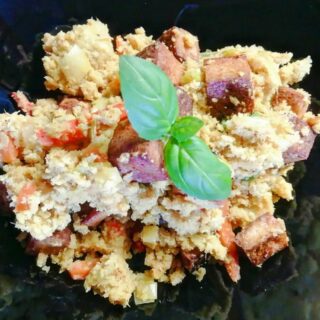
Vegan Cauliflower Couscous with Vegetables and Tofu
Ingredients
- 1/2 cauliflower
- 1 small onion
- 75 g frozen mixed vegetables
- 1 pack smoked tofu
- curry powder
- herb salt
- black pepper
- soy sauce
- garlic powder
- gyros seasoning
Instructions
- Cut the cauliflower into pieces and pulse in a food processor until it resembles couscous. Alternatively, grate it on the coarse side of a box grater.
- Dice the onion and tofu. Heat a pan with a little olive oil and sauté along with the frozen vegetables and cauliflower couscous. Season to taste with curry powder, herb salt, pepper, soy sauce, garlic powder, and gyros seasoning.
- Cook until the vegetables are tender and the cauliflower couscous is lightly golden. Serve immediately.
Tips and variations
The basic recipe is simple and quick, but here are a few tips to level it up or adapt it to the seasons.
- Getting the right texture: Pulse the cauliflower in short bursts, not continuously. You want small granules similar to couscous, not a paste. Alternatively, grate the cauliflower on the coarse side of a box grater.
- Instead of smoked tofu: Try diced tempeh, chickpeas, or roasted chickpeas for extra crunch.
- Seasonal swaps: In summer, add fresh courgette and cherry tomatoes. In autumn, try pumpkin and kale. In winter, use root vegetables.
- Meal prep: Cauliflower couscous keeps in the fridge for 3 days in a sealed container. Reheat in a pan with a splash of water rather than the microwave.
- Extra nutritious version: Add a tablespoon of hemp seeds or pumpkin seeds and a sprinkle of nutritional yeast for a cheesy flavour and bonus protein.
Cauliflower couscous is an ideal base for experimenting. It works with practically any vegetable and spice combination.
What to serve with cauliflower couscous
Cauliflower couscous with vegetables and tofu is a complete meal on its own, but if you want to add something extra, here are some tried and tested options.
- A dollop of hummus or vegan avocado hummus for extra creaminess
- A fresh side salad with a lemon-tahini dressing
- As a side dish alongside vegan baked stuffed peppers
- With homemade vegan naan bread for scooping
For a lighter meal, serve it on its own. For something more substantial, add flatbread or rice on the side.
Frequently asked questions
How do I make cauliflower couscous without it getting watery?
The key is not to over-process the cauliflower. Use short pulses in a food processor or grate it on a coarse grater. When cooking, don’t add too much oil and let the cauliflower cook long enough for the moisture to evaporate. If using frozen cauliflower, thaw it first and squeeze out excess water.
Is cauliflower couscous suitable for a low-carb diet?
Absolutely. Cauliflower couscous is one of the best low-carb alternatives to grains. 100 g of cauliflower couscous has just 5 g of carbs compared to 23 g in traditional couscous. It’s perfect for keto, low-carb, paleo, and gluten-free diets.
Can I use a different protein instead of smoked tofu?
Of course. Tempeh, roasted chickpeas, edamame, or vegan chicken pieces all work brilliantly. For a milder flavour, try marinated plain tofu or white beans. Each alternative changes the character of the dish, but they all pair well with the cauliflower base.
How long does cauliflower couscous last in the fridge?
Prepared cauliflower couscous keeps in a sealed container in the fridge for 2 to 3 days. We recommend reheating in a pan rather than the microwave to maintain the texture. Add a splash of water and heat over medium heat.
Can you freeze cauliflower couscous?
Plain cauliflower couscous (without the tofu and vegetables) can be frozen for 1 to 2 months. Spread it on a tray to freeze first, then transfer to a bag. When ready to use, heat it straight from frozen in a pan, no need to thaw beforehand.
Vegan cauliflower couscous with vegetables and tofu proves that healthy, light meals don’t have to be boring. It’s quick, simple, and bursting with flavour. If you’re looking for more light lunch inspiration, try our vegan fried rice with tuna and avocado or explore our other quick recipes. And if you give this cauliflower couscous a go, we’d love to hear about it in the comments.
Newsletter
Get our free e-books
Join the newsletter and download Our Vegan Christmas Kitchen straight away, 10 recipes for Czech cookies, gingerbread and vánočka. Then once a month, new places from the vegan map and new articles. Unsubscribe with one click.