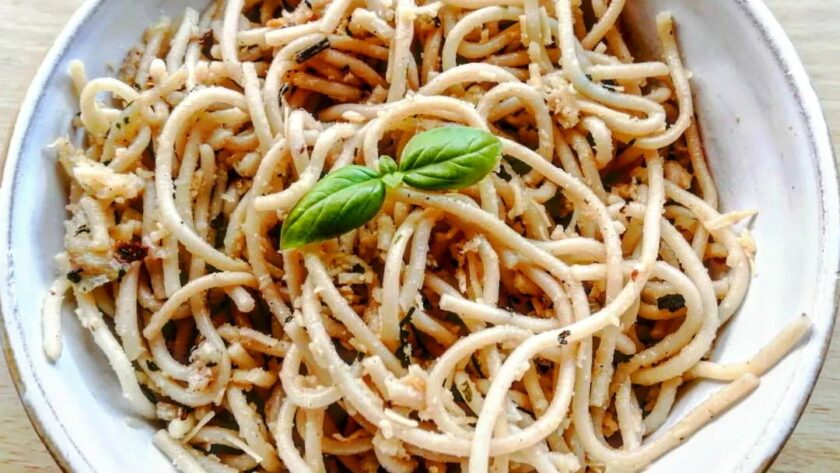
Spaghetti aglio e olio is one of those Italian recipes that proves you do not need a long list of ingredients to create an incredible meal. Garlic, quality olive oil, a touch of chilli, and pasta. That is it. This recipe originated from the Neapolitan “cucina povera” (poor kitchen), where families created amazing dishes from the cheapest available ingredients. And the best part? Vegan aglio e olio is naturally plant-based, so you do not need any complicated substitutions. Simply skip the parmesan or replace it with vegan cheese and nutritional yeast. On nights when you want something richer, our creamy pasta Toscana with sun-dried tomatoes is ready in 20 minutes.
How do you sauté garlic without making it bitter? How much olive oil is just right? Can you upgrade aglio e olio with vegetables or tofu? And why is this recipe ready in just 15 minutes? In this article, you will find answers to all of these questions, plus tips on variations, nutritional values, and fascinating facts about the history of this iconic Italian dish.
Why you will love this recipe
Aglio e olio is a recipe you will come back to again and again. It is the perfect meal for those days when you do not want to spend hours in the kitchen but still want something truly delicious.
- Ready in 15 minutes from the moment you put the pot of water on the hob
- Naturally vegan, the classic recipe contains no animal products (just swap out the parmesan)
- Minimal ingredients that you probably always have at home: pasta, garlic, olive oil, chilli
- Intense flavour thanks to a whole head of garlic sautéed in quality olive oil
- Easily customisable, add vegetables, mushrooms, tofu, or tempeh for a more substantial version
This is one of those recipes that absolutely anyone can make, yet the result tastes like it came from an Italian restaurant.
Interesting facts about aglio e olio that might surprise you
Spaghetti aglio e olio (which translates to “garlic and oil”) originates from Naples and the surrounding Campania region in southern Italy. This recipe was born as part of the so-called “cucina povera” or poor kitchen, where families created flavourful and filling meals from the cheapest available ingredients. Garlic and olive oil were always abundant and affordable in southern Italy, making them the foundation of Italian cooking. More peasant dishes that have always been vegan are in our list of naturally vegan Italian dishes.
Interestingly, aglio e olio was originally created as a simplified version of linguine alle vongole (pasta with clams). Families who could not afford seafood began preparing pasta with just garlic and oil instead. Over time, this “emergency” dish became one of the most famous Italian recipes in the world, appearing on restaurant menus from New York to Tokyo.
In Italy, aglio e olio is traditionally prepared as a late-night meal that Italians enjoy after an evening out. It is sometimes called “spaghetti della mezzanotte” (midnight spaghetti). Thanks to its simplicity and short cooking time, it is the ideal dish after a long day when you have no energy for elaborate cooking. To taste it, and other naturally vegan dishes, in Italy itself, see our guide to vegan Rome. The recipe has been around since at least the 16th century, and was famously featured in the film “Chef” (2014), which introduced it to millions of viewers worldwide.
Health benefits of the main ingredients
Aglio e olio may be a simple dish, but its key ingredients have surprisingly impressive health properties. Let us look at the two essential ingredients that form the foundation of this recipe.
Garlic contains a compound called allicin, which is released when cloves are chopped or pressed. Allicin has proven antimicrobial, antiviral, and antifungal properties. Garlic also contributes to lowering blood pressure and supports cardiovascular health. One whole head of garlic (approximately 30 g) contains about 45 kcal, 2 g of protein, and is rich in manganese, vitamin B6, and vitamin C.
Extra virgin olive oil is rich in polyphenols, antioxidants, and vitamins A, D, E, and K. Oleic acid, the main component of olive oil, helps reduce inflammatory processes in the body. Regular consumption of quality olive oil is associated with a lower risk of heart disease. For aglio e olio, using a high-quality cold-pressed oil is essential because its flavour forms the backbone of the entire dish.
Nutritional values
One serving of vegan aglio e olio (recipe makes 2 servings) contains approximately the following values.
| Nutrient | Amount per serving |
|---|---|
| Calories | ~480 kcal |
| Protein | 14 g |
| Carbohydrates | 62 g |
| Fat | 18 g |
| Fibre | 3 g |
Approximate values per serving. Actual values depend on specific ingredients and amount of olive oil used.
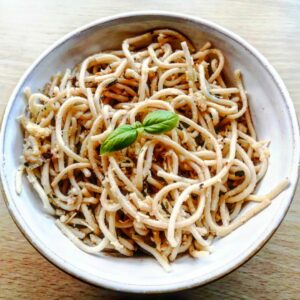
Vegan Aglio e Olio
Ingredients
- 250 g spaghetti
- 50 g vegan cheese grated
- 1 head of garlic
- chilli flakes to taste
- dried Italian herbs
- salt and pepper to taste
- soy sauce a splash
- nutritional yeast
- garlic powder
- extra virgin olive oil good quality
Instructions
- Cook the spaghetti according to the package instructions.
- Sauté the pressed garlic and chilli flakes in olive oil over medium-low heat until golden and fragrant, then toss with the cooked spaghetti.
- Add the seasonings listed above to taste, mix well, and serve immediately.
Tips and variations for perfect aglio e olio
Classic aglio e olio is perfect on its own, but with a few tweaks you can make it even more interesting. Here are some tips that work beautifully.
- Do not burn the garlic: sauté it over medium-low heat only until it turns golden and fragrant. Burnt garlic is bitter and will ruin the entire dish
- Add pasta water: 2-3 tablespoons of starchy cooking water will emulsify with the oil and create a creamy sauce that clings beautifully to the pasta
- Broccoli or spinach version: add vegetables to the pan along with the garlic for a more nutritious variation
- With smoked tofu or tempeh: dice and sauté with the garlic for extra protein
- Storage: aglio e olio tastes best fresh, but leftovers can be stored in the fridge and reheated in a pan with a splash of olive oil
The quality of your olive oil is absolutely crucial in this recipe. Use the best extra virgin oil you have, because its flavour is the dominant element of the entire dish.
What to serve with aglio e olio
Aglio e olio is a complete meal on its own, but if you want to add something extra, here are a few suggestions.
A fresh rocket and cherry tomato salad pairs wonderfully alongside. If you want to add some bread, try our vegan focaccia or vegan homemade whole wheat pizza as a side. For protein, you can top the pasta with marinated tofu or roasted tempeh. And if you enjoy bold flavours, try starting with vegan avocado hummus as an appetiser before your aglio e olio.
Aglio e olio also makes a brilliant quick weeknight dinner when you want something warm and satisfying but do not have time for lengthy cooking.
Frequently asked questions
Is aglio e olio naturally vegan?
Classic aglio e olio is almost entirely vegan. The only non-plant ingredient in the traditional recipe is parmesan cheese, which is sometimes added at the end. Simply leave it out or replace it with vegan cheese or nutritional yeast and you have a fully vegan meal.
How to stop garlic from going bitter in aglio e olio?
The key is low to medium heat and constant stirring. The garlic should be golden, never dark brown. As soon as it starts to darken, immediately add the pasta or cooking water to stop the browning process. Burnt garlic is the main cause of bitter-tasting aglio e olio.
How much garlic should you use for aglio e olio?
The traditional Italian recipe uses a whole head of garlic for 250 g of spaghetti. If the garlic flavour seems too strong for you, start with half a head and adjust to taste. Garlic is the star ingredient of this dish, so do not be afraid to be generous.
What olive oil is best for aglio e olio?
Always use extra virgin, cold-pressed olive oil. In aglio e olio, the oil is the main component of the sauce, so its quality directly affects the final flavour. Refined or cheap oil will not deliver the fruity, aromatic taste that aglio e olio needs.
Can you add vegetables to aglio e olio?
Absolutely. Broccoli, spinach, sun-dried tomatoes, or mushrooms all work beautifully. Add them to the pan alongside the garlic or sauté them separately. Vegetables make aglio e olio a more nutritious meal without disturbing its elegant simplicity.
Vegan aglio e olio is proof that the best Italian dishes are the simplest ones. Garlic, olive oil, chilli, and pasta. Nothing more needed. You can make this recipe in 15 minutes and the result will delight you every time with its intense garlic flavour and fragrant olive oil. If you are looking for more quick pasta recipes, try our vegan spaghetti carbonara. Cook up some aglio e olio and let us know which variation you tried!
Newsletter
Get our free e-books
Join the newsletter and download Our Vegan Christmas Kitchen straight away, 10 recipes for Czech cookies, gingerbread and vánočka. Then once a month, new places from the vegan map and new articles. Unsubscribe with one click.