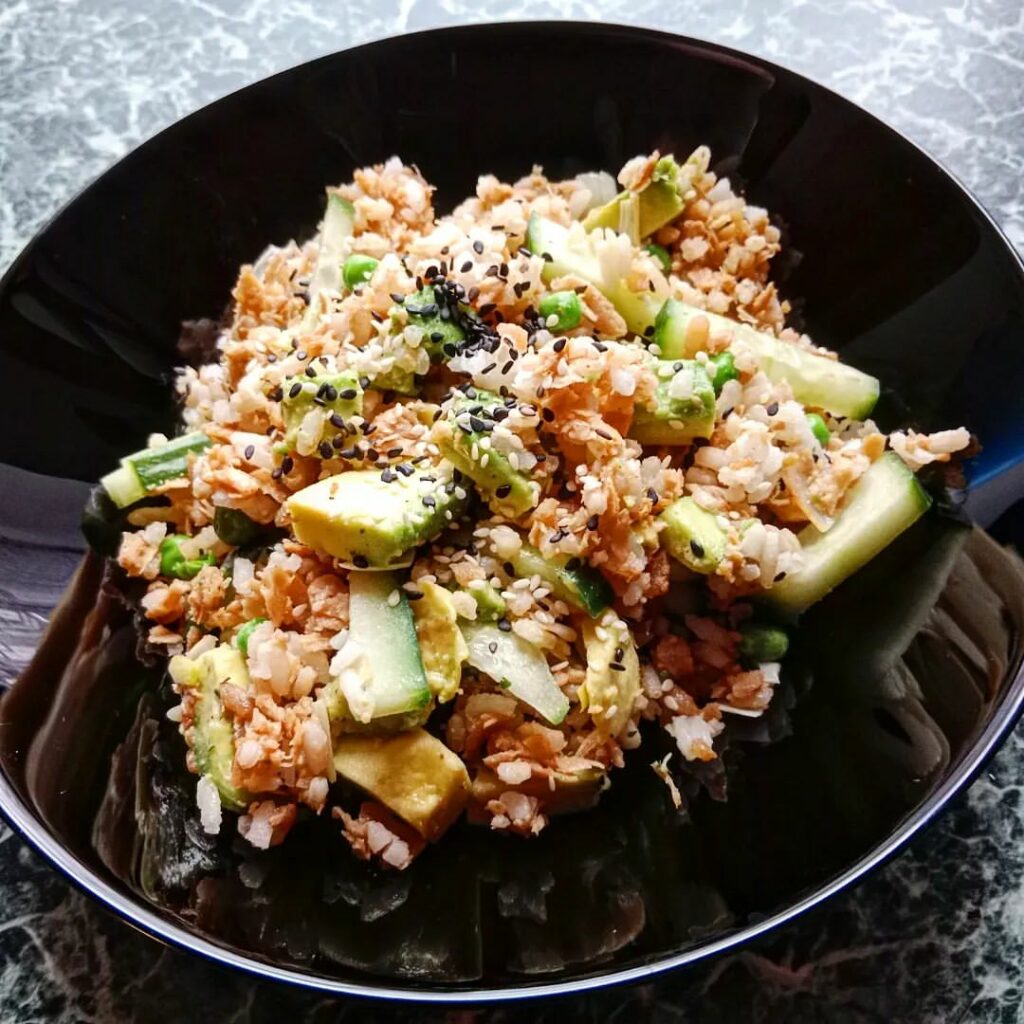
Vegan fried rice with vegan tuna and avocado is the kind of weeknight dinner you will actually look forward to. The combination of umami-rich plant-based tuna, creamy avocado, sweet frozen peas and toasted sesame creates a dish with real depth of flavour, and it comes together in about 20 minutes. It also happens to be the perfect way to use up leftover rice from the day before. For a version with crispy tofu instead, try our vegan fried rice with peanut sauce.
What makes fried rice not stick together? What exactly is vegan tuna and what is it made from? Why is avocado such a valuable addition nutritionally? And how can you adapt this recipe to suit whatever you have in the fridge? All of that is here, along with the recipe, variations, and answers to the most common questions we get about vegan fried rice.
Why You’ll Love This Recipe
This recipe earns its place in the regular rotation because it ticks every box for a genuinely good weeknight meal. Here is what makes it worth making.
- Ready in about 20 minutes, perfect for quick lunches or easy weeknight dinners.
- Brilliant way to use leftover rice, day-old rice makes the best fried rice, so this is practical as well as delicious.
- Vegan tuna delivers genuine umami depth that reminds you of the ocean without a single fish involved.
- Avocado adds creamy texture and healthy monounsaturated fats.
- Easily adaptable, make it spicy, swap the vegetables, or make it gluten-free with tamari.
We also love it as a packed lunch, stored in a sealed container it keeps well in the fridge and tastes just as good the next day, if not better once the flavours have had time to meld.
Interesting Facts About Fried Rice
Fried rice is one of the most widely eaten dishes in the world, yet most people know surprisingly little about its history. Here are a few things worth knowing.
Fried Rice Was Invented in the Sui Dynasty
Fried rice originated in China during the Sui dynasty (589–618 AD), specifically in the city of Yangzhou in eastern China. It was not invented by a chef trying to be clever, it was born out of practical necessity. In Chinese culture, wasting food was considered deeply unacceptable, and fried rice was the ingenious solution to what to do with yesterday’s leftover rice that had hardened in the pot. Today, Yangzhou fried rice (Yangzhou chǎofàn) is recognised internationally as the classic standard of the dish.
Day-Old Rice Is the Secret to Non-Sticky Fried Rice
The insistence on day-old rice in fried rice recipes is not food snobbery, it is genuine kitchen science. Freshly cooked rice is too moist and the individual grains stick together, so when they hit the hot pan they steam rather than fry. Rice that has been refrigerated overnight loses moisture and the grains separate naturally, frying up into individual pieces with a pleasant slight crispness on the outside. If you only have fresh rice, spread it thinly on a tray and let it cool and dry out for at least 30 minutes before using.
Fried Rice Has Conquered the Entire World
From Chinese kitchens, fried rice spread to virtually every corner of the planet, adapting to local ingredients and tastes along the way. In Japan it became chahan (炒飯), developed from Chinese immigrant influence in the 19th century. In Indonesia it is nasi goreng, often served with a fried egg and prawn crackers. In Peru there is arroz chaufa, reflecting the significant Chinese diaspora that arrived in the 19th century. Each culture took the same base idea and made it entirely their own, which is exactly what we are doing here with a vegan tuna and avocado version.
Health Benefits of the Key Ingredients
This recipe is not just quick and tasty, it is also a genuinely well-balanced meal from a nutritional perspective. Here is a closer look at what the main ingredients contribute.
Vegan Tuna: Plant-Based Protein with Real Depth
Vegan tuna is typically made from jackfruit or chickpeas, both of which mimic the flaky, slightly dense texture of canned tuna surprisingly well once properly seasoned. Chickpea-based vegan tuna delivers approximately 8g of protein and 9g of fibre per serving, along with iron, calcium, and B vitamins. Jackfruit-based versions are rich in vitamin A, vitamin C, potassium, and antioxidants that help reduce inflammation. Both are naturally gluten-free and dairy-free. If you want to explore more plant-based protein options beyond vegan tuna, we have a full breakdown in our guide to the best plant-based protein sources.
Avocado: Healthy Fats and Vitamin E
Avocado is genuinely unusual in the plant world, it is one of the very few fruits that contains significant amounts of fat, and almost all of it is the good kind. One average avocado provides approximately 15g of monounsaturated fats (oleic acid), the same heart-healthy fat found in olive oil, along with roughly 10g of fibre, vitamin E, vitamin K, and folate. In this recipe, the fat in avocado also helps the body absorb fat-soluble vitamins from the other vegetables, making the whole dish more nutritious than the sum of its parts. For more ways to use tofu and avocado in satisfying vegan meals, take a look at our best tofu recipes.
Rice: Easy-to-Digest Sustained Energy
Rice is one of the most easily digestible carbohydrate sources and provides clean, sustained energy without the blood sugar spikes associated with more refined grains. What is particularly interesting is that day-old chilled rice has a lower glycaemic index than freshly cooked rice. During the cooling process, some of the starch undergoes a change called retrogradation, transforming into resistant starch that is digested more slowly and feeds beneficial gut bacteria. In other words, making fried rice from leftovers is not just convenient, it is nutritionally slightly better than using fresh rice.
Nutritional Values
Approximate nutritional values per serving (recipe makes 2 portions):
| Nutrient | Amount per serving |
|---|---|
| Calories | ~420 kcal |
| Protein | ~14 g |
| Carbohydrates | ~52 g |
| Fat | ~16 g |
| Fibre | ~8 g |
Approximate values per serving; exact figures depend on specific ingredients and the brand of vegan tuna used. Nutritional content varies between chickpea-based and jackfruit-based vegan tuna products.
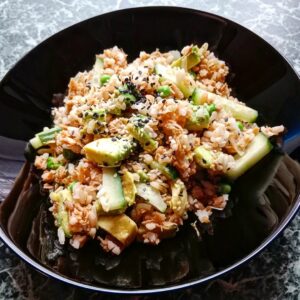
Vegan Fried Rice with Vegan Tuna and Avocado
Ingredients
- 100 g Rice (one packet)
- 1 can Vegan tuna
- 1 Avocado
- 2 handfuls Of frozen peas
- 1 Small Piece of cucumber
- 1 small Piece of leek
- Soy sauce
- Herb salt
- Nutritional yeast
- Pepper
- Lemon juice
- Sesame seeds
Instructions
- Cook the rice according to the instructions on the package.
- Fry the tuna and leek, add the can of vegan tuna and the small piece of leek to a pan and fry together. Then add the cooked rice and 2 handfuls of frozen peas. Season with soy sauce, herb salt, nutritional yeast. Then set aside.
- Prepare the avocado by cutting into pieces and season herb salt, lemon juice, 1 pinch of pepper, and nutritional yeast. Then mix into the rice.
- Finish and serve, cut the small piece of cucumber into small strips and add to the rice. Garnish with sesame seeds and serve.
Notes
Tips and Variations
Fried rice is one of the most flexible recipes in any kitchen. Here are our favourite ways to adapt and expand it depending on what you are working with.
- Make your own vegan tuna: if you cannot find store-bought vegan tuna, mash half a tin of chickpeas with capers, nori flakes, soy sauce and lemon juice, the result is genuinely close to the real thing.
- Spicy version: add a teaspoon of Sriracha or finely chopped fresh chilli when frying the leek.
- Different vegetables: carrot, red pepper, corn, courgette or baby spinach (added in the final minute) all work brilliantly.
- Gluten-free version: swap soy sauce for tamari or coconut aminos.
- Storage: keeps in the fridge for 2 to 3 days; the avocado may darken slightly but the flavour stays good.
If you love this kind of Asian-inspired vegan bowl, the avocado and sesame combination works beautifully in other rice-based dishes too. The key is to add the avocado at the very end so it stays creamy rather than turning mushy from the heat.
What to Serve With Vegan Fried Rice
The dish is substantial enough to eat on its own, but these additions can round it out into a larger spread or add an extra layer of texture and flavour.
- Miso soup – the classic Japanese accompaniment, warm and soothing alongside the bold flavours of the fried rice.
- Edamame – lightly salted and served on the side or scattered over the top for extra protein.
- Kimchi – adds fermented heat and acidity that cuts through the richness of the avocado.
We always finish this dish with a generous scatter of sesame seeds and a small drizzle of sesame oil just before eating. If you have fresh spring onions or coriander, add those too, it takes the presentation from good to genuinely restaurant-worthy in under ten seconds.
Frequently Asked Questions
What is the best rice for fried rice?
Long-grain rice such as jasmine or basmati works best because it is naturally less sticky and the grains stay separate when fried. Short-grain rice (like sushi rice) tends to clump together in the pan. Brown rice also works well but takes longer to cook and has a slightly firmer texture in the finished dish.
What is vegan tuna made from?
Most vegan tuna products are made from either chickpeas or jackfruit, both of which replicate the flaky texture of canned tuna when prepared correctly. Seasonings like nori (seaweed) flakes, capers, lemon juice and soy sauce bring in the briny, oceanic flavour. Many supermarkets now stock ready-made vegan tuna in tins or pouches.
Can I use freshly cooked rice for fried rice?
You can, but the result will not be as good. Fresh rice is too moist and tends to clump and steam in the pan rather than fry. If you only have freshly cooked rice, spread it on a tray and let it cool and dry out for at least 30 minutes before using. Day-old refrigerated rice is genuinely the best option.
How do you make fried rice without eggs?
This recipe does not use eggs at all, the vegan tuna and avocado provide protein and fat in their place. If you want a scrambled egg effect in fried rice generally, crumbled firm tofu seasoned with black salt (kala namak), turmeric and nutritional yeast is an excellent substitute that gets close to the flavour and texture.
Is vegan fried rice healthy?
This version is genuinely well-balanced nutritionally. It provides around 14g of plant protein per serving, 8g of fibre, and healthy monounsaturated fats from the avocado. Using day-old rice also lowers the glycaemic index compared to fresh rice. It is a complete, satisfying meal that covers carbohydrates, protein, healthy fats, and several key vitamins and minerals.
How long does vegan fried rice keep in the fridge?
Stored in a sealed container, vegan fried rice keeps for 2 to 3 days in the fridge. The avocado may discolour slightly but the flavour remains good. If you want to keep the avocado looking its best, store it separately and add it when reheating or serving.
This vegan fried rice with vegan tuna and avocado is fast food in the best possible sense, genuinely fast, genuinely good, and genuinely good for you. It is the kind of meal that makes weeknight cooking feel effortless. Give it a try, let us know what variations you come up with in the comments, and feel free to tag us if you share it on Instagram. We love seeing your versions.
Newsletter
Get our free e-books
Join the newsletter and download Our Vegan Christmas Kitchen straight away, 10 recipes for Czech cookies, gingerbread and vánočka. Then once a month, new places from the vegan map and new articles. Unsubscribe with one click.