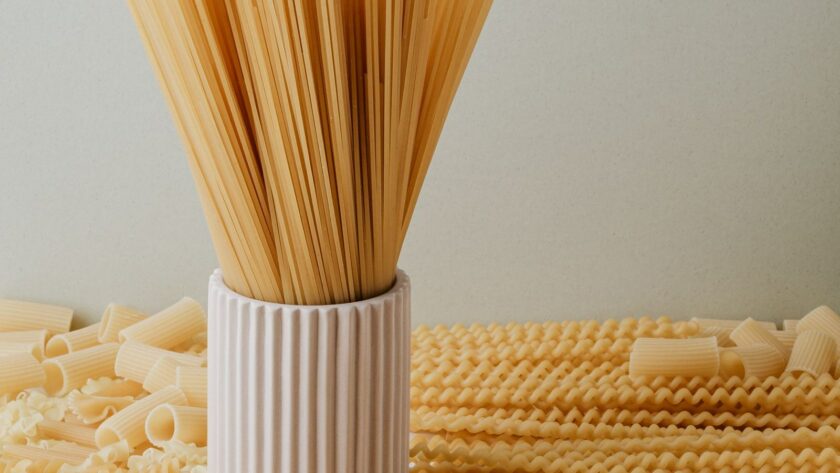
Is pasta vegan? It’s one of the most common questions about vegan food, usually asked by someone standing in a supermarket aisle or squinting at an Italian menu. The short answer is yes, most of the time. But “most of the time” is exactly why it pays to know where the exceptions hide.
For many of us, pasta was the first meat-free meal we ever cooked without thinking about it. Spaghetti with tomato sauce, penne with broccoli, a quick aglio e olio after a long day. Yet egg pasta sits on the same shelf as eggless pasta, sometimes from the same factory and in nearly identical packaging. Fresh pasta from the chilled aisle plays by different rules altogether.
So how do you tell which pasta is vegan at a glance? What does the law in Italy actually say about egg pasta, and why are lasagne sheets, fresh tagliatelle and filled tortellini the usual troublemakers? Which pasta sauces are vegan, and what do you order in a trattoria when you don’t eat cheese or eggs?
We checked real ingredient labels and the actual legal texts to answer all of that.
This article is for vegans, for anyone cutting down on eggs or dairy, and for parents looking for egg-free pasta for a child with an allergy. You don’t need to be vegan to get something out of it.
Is pasta vegan? The short answer
Yes, most dried pasta is vegan, because it’s made from just flour (or durum wheat semolina) and water. Egg pasta and most fresh pasta from the chilled aisle aren’t vegan. Neither is filled pasta like tortellini and ravioli with cheese or meat, or black pasta coloured with squid ink. The ingredient list on the packet is the only thing that gives you certainty.
Dried pasta is the easy win. Dairy is not a normal ingredient in dried pasta, so a packet of dried spaghetti, penne or fusilli with no egg in the ingredients is almost always vegan. The rare exception is a speciality product with added cheese or another animal ingredient, and that will show up in the ingredient list.
Here’s a quick reference by pasta type. It covers the everyday products you’ll find in European supermarkets and in Italy.
| Pasta type | Usually vegan? | Watch out for |
|---|---|---|
| Dried pasta (spaghetti, penne, fusilli, orzo) | Yes, almost always | Nothing, just check the label |
| Whole wheat and legume pasta | Yes, usually | Check the label |
| Egg pasta and egg noodles | No | Contains egg or dried egg |
| Lasagne sheets | Often not | Many lasagne sheets are made with egg |
| Fresh pasta from the chilled aisle | Mostly not | Usually made from egg dough |
| Tortellini, ravioli, filled pasta | Mostly not | Cheese or meat filling, egg in the dough |
| Black pasta | Not if it’s squid ink | Squid ink is an animal product |
| Gnocchi | Sometimes | Many recipes and products contain egg |
Egg pasta vs eggless pasta: what’s the difference?
Eggless pasta is made from flour and water, while egg pasta also contains eggs or egg products. For vegans, that’s the only difference that matters. Shape, colour and brand don’t tell you which group a pasta belongs to.
Is dried pasta vegan? What Italian law says
Classic Italian dried pasta is egg-free by law. Italy’s Presidential Decree No. 187 of 2001 says that “pasta di semola di grano duro” (durum wheat semolina pasta) can only be made from durum wheat semolina and water. That’s the line you’ll see on the packet of almost every classic Italian dried pasta.
Egg pasta in Italy can only be sold under the name “pasta all’uovo”. The same decree requires at least four whole hen’s eggs, with a total weight of at least 200 g of egg for every kilogram of semolina. So if you see “all’uovo” on a packet in an Italian supermarket, you know there’s egg in it without reading any further.
Egg pasta outside Italy can contain very little egg
Outside Italy the rules are looser, and egg pasta can contain surprisingly little egg. Take the Czech Republic, where one of us is from. Its Decree No. 18/2020 defines egg pasta simply as pasta made with eggs or egg products. The definition sets no minimum amount.
Zátkovy egg spaghetti, a Czech supermarket brand, lists wheat flour and 2% dried egg. That’s still an egg product for a vegan, however small the amount.
Asian-style egg noodles usually contain more. Shan Shi Mie egg noodles, a German product we found in Czech shops, list egg at 10%. Mie noodles look like ordinary wheat noodles, so they’re an easy mistake to make in a stir-fry.
Tip: Remember one Italian word. Avoid “all’uovo” on packets and menus, and look for “semola di grano duro” on dried pasta. That alone sorts out most pasta shopping in Italy without reading the small print.
How to tell if pasta is vegan in the supermarket
You can tell if pasta is vegan by checking the ingredient list for egg, milk or cheese. In the UK and the EU, those allergens have to stand out from the rest of the ingredients, so it takes about five seconds.
The same five-second check works on biscuits, sweets and crisps, and our list of accidentally vegan snacks shows which ones pass.
Is pasta vegan in the UK? Read the bold words
In the UK and the EU, eggs and milk are highlighted in the ingredient list. Article 21 of Regulation (EU) No 1169/2011 requires allergens from its Annex II to stand out. In the regulation’s words, they must be emphasised “through a typeset that clearly distinguishes it from the rest of the list of ingredients”, for example by font, style or background colour. Eggs and milk are both on that list, and the UK kept the same rule in its own law after Brexit.
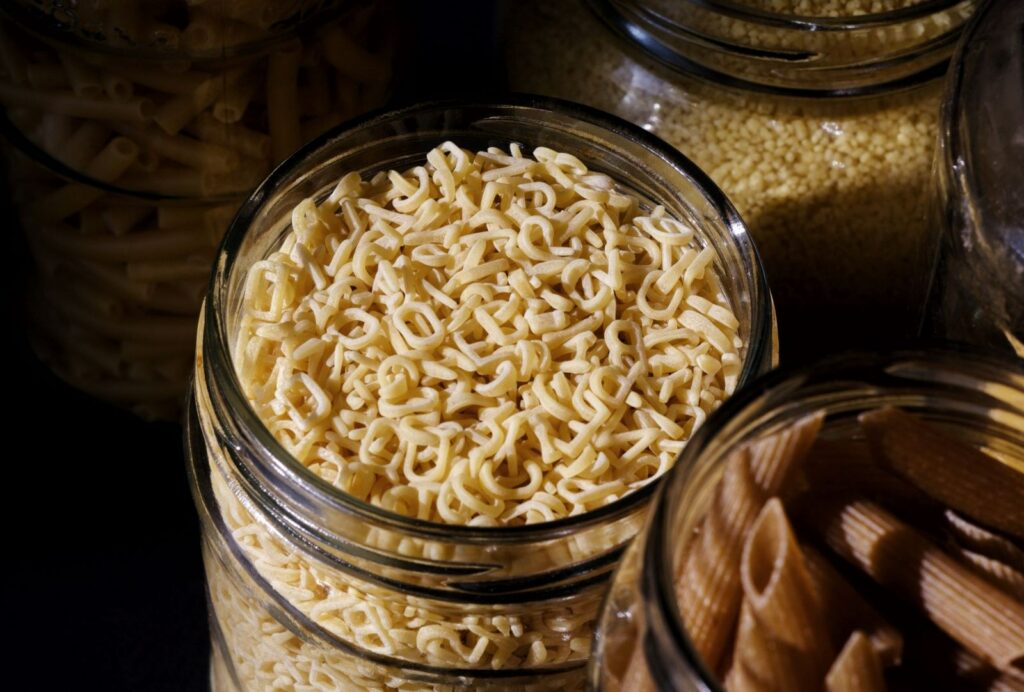
In practice, most UK packaging prints allergens in bold. Run your eye down the ingredients and look for “egg”, “milk” or “cheese”. If none of them is there, the pasta is very likely vegan. Squid and cuttlefish are molluscs, which are also on the allergen list, so squid ink in black pasta should legally be highlighted too. Look for “squid ink” or “nero di seppia” anyway.
“May contain traces of egg” is a different thing. It doesn’t mean egg is an ingredient. The manufacturer is warning allergy sufferers that egg pasta is made on the same line. Many vegans happily eat these products, because nobody added egg on purpose, but it’s an important warning for anyone with an egg allergy.
Real labels we checked
We checked these ingredient lists in October 2026 on the product pages of Rohlík, a Czech online supermarket that copies them straight from the packaging. Recipes can change, so the label on the packet always has the final word.
| Product | Ingredients on the label | Vegan? |
|---|---|---|
| Japavo Spaghetti (eggless) | wheat flour, drinking water | Yes |
| Japavo Small Fusilli (eggless) | wheat flour, drinking water | Yes |
| Rosické Penne (eggless) | wheat flour | Yes |
| Rosické Fleky (eggless) | wheat flour | Yes |
| Zátkovy Egg Spaghetti | wheat flour, dried egg 2% | No |
| Zátkovy Fine Egg Noodles | wheat flour, dried egg 2% | No |
| Shan Shi Mie Egg Noodles | wheat flour, semolina, egg 10% | No |
Same factory, two kinds of pasta
A brand name on its own guarantees nothing. Czech pasta maker Japavo, founded in 1993, calls itself a leader in eggless pasta but also makes egg pasta. CEREALIS in Litovel makes both Rosické (eggless in our check) and Zátkovy (egg in our check). Both companies say on their websites that they also produce pasta for supermarket own brands.
The same goes for the big Italian names. Barilla’s egg lasagne sheets, which we found listed by an Austrian online supermarket, contain durum wheat semolina and egg. Always check the specific packet, not the brand.
Why is some pasta not vegan?
Some pasta isn’t vegan because it contains egg, cheese, meat or squid ink. In the shop, that usually means egg pasta, lasagne sheets, fresh chilled pasta and filled pasta. Here’s where animal ingredients most often hide.
Is lasagne pasta vegan?
Lasagne sheets are the biggest trap among dried pastas. Many manufacturers make their lasagne sheets with egg, including dried ones, and Vegan Food & Living singles them out as the main exception among dried pasta in UK supermarkets. Eggless sheets exist, but you’ll only find them by reading the label.
Is fresh pasta vegan?
Fresh pasta from the chilled aisle is mostly not vegan, because it’s usually made from egg dough. Fresh tagliatelle, pappardelle and fettuccine are almost always egg pasta. There are exceptions, but they’re rare, and the pack will say so.
Tortellini, ravioli and other filled pasta
Filled pasta like tortellini, ravioli and cappelletti usually has cheese or meat in the filling and egg in the dough. Even “vegetable” ravioli with spinach is often filled with ricotta. Some supermarkets now sell filled pasta labelled vegan, but ordinary tortellini won’t be.
Black pasta and gnocchi
Black pasta is often coloured with squid ink, which is an animal product. Some black pasta uses charcoal or black rice instead, so again the label decides. With gnocchi it depends on the recipe. Potato gnocchi are typically made from potato, flour, salt and often egg, though egg-free recipes exist, so check before you buy.
Whole wheat pasta and legume pasta made from lentils or chickpeas are usually vegan, since they’re made from flour and water. They’re a good pick for gluten-free eating (in the case of legume pasta) or for adding protein to a meal. The ingredient list is still your only reliable source.
The pasta itself is rarely the problem. The problem is usually what goes on top of it.
What pasta sauce is vegan?
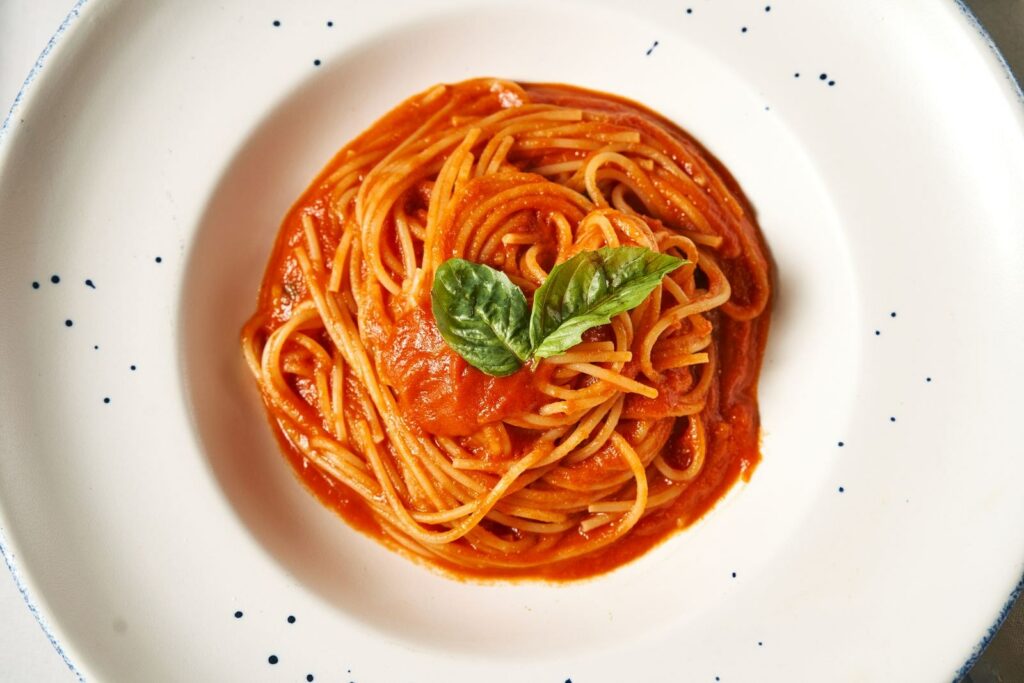
Tomato-based pasta sauces are usually vegan, while creamy sauces and pesto almost never are. The sauce, not the dough, is what most often turns a vegan plate of pasta into a non-vegan one. These are the classic Italian sauces you’ll see on menus and in jars.
| Sauce | Traditionally contains | Vegan? |
|---|---|---|
| Aglio, olio e peperoncino | garlic, olive oil, chilli, parsley | Yes |
| Arrabbiata | tomatoes, garlic, chilli, olive oil, parsley | Yes |
| Marinara | tomatoes, garlic, onion, basil, oregano | Usually (some versions add anchovies) |
| Pesto alla genovese | basil, olive oil, Parmesan or Grana Padano, pecorino | No |
| Carbonara | guanciale or pancetta, pecorino romano, eggs | No |
| Cacio e pepe | pecorino romano, black pepper | No |
| Puttanesca | tomatoes, olives, capers, anchovies | No |
| Alla Norma | tomato, aubergine, ricotta salata | No, but yes without the ricotta |
Is pesto pasta vegan?
Classic pesto pasta isn’t vegan, because pesto alla genovese is made with Parmesan (or Grana Padano) and pecorino. Jarred pesto almost always contains hard cheese too. Vegan pesto is sold in many supermarkets, but you’ll only spot it by the label and the ingredients.
Jarred tomato sauces are usually vegan, as long as the name doesn’t mention meat or cheese. Watch out for “bolognese”, “quattro formaggi” and anything “with cheese”. At home, veganising your favourites is easy. Our vegan spaghetti carbonara replaces both the egg and the pork, and pesto is gorgeous with roasted aubergine in our spaghetti with roasted aubergine, smoked tofu and pesto.
For non-vegans: Spaghetti aglio, olio e peperoncino is a typical Neapolitan dish, and the original recipe is vegan. Garlic, good olive oil, chilli and parsley. It takes 15 minutes, and nobody at the table will feel anything is missing.
Is Italian pasta vegan? How to order in Italy
Italian dried pasta is almost always vegan, because the law only allows semolina and water for plain dried pasta. Restaurants are trickier. Many trattorias make their own fresh pasta, which is often egg pasta, and your plate may arrive already dusted with Parmesan. For where to eat in the capital, including vegan carbonara, see our guide to vegan restaurants in Rome.
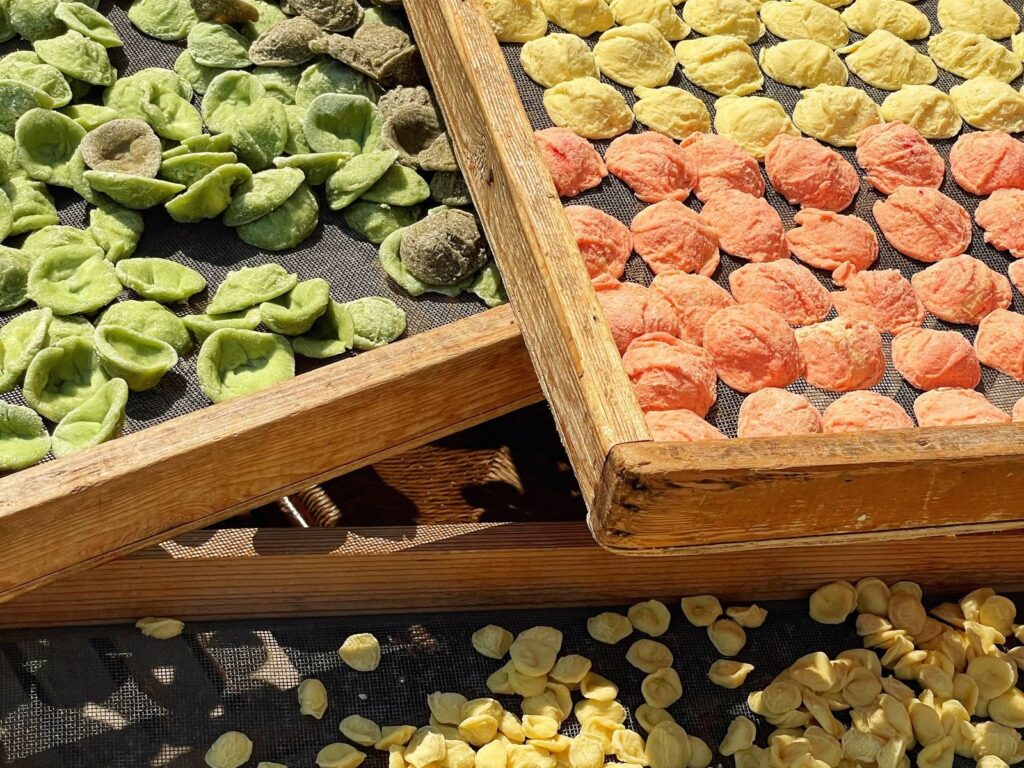
Italian pasta shapes traditionally made without egg
Several traditional Italian pasta shapes are made from eggless dough. Orecchiette, the little “ears” from Puglia, are made from durum wheat semolina, water and salt, and eggs are rarely used. Tuscan pici, thick hand-rolled spaghetti, are made from flour and water, with egg added only in some family recipes. Ligurian trofie, short twists from the coast near Genoa, are flour and water, sometimes with a little potato, but no egg.
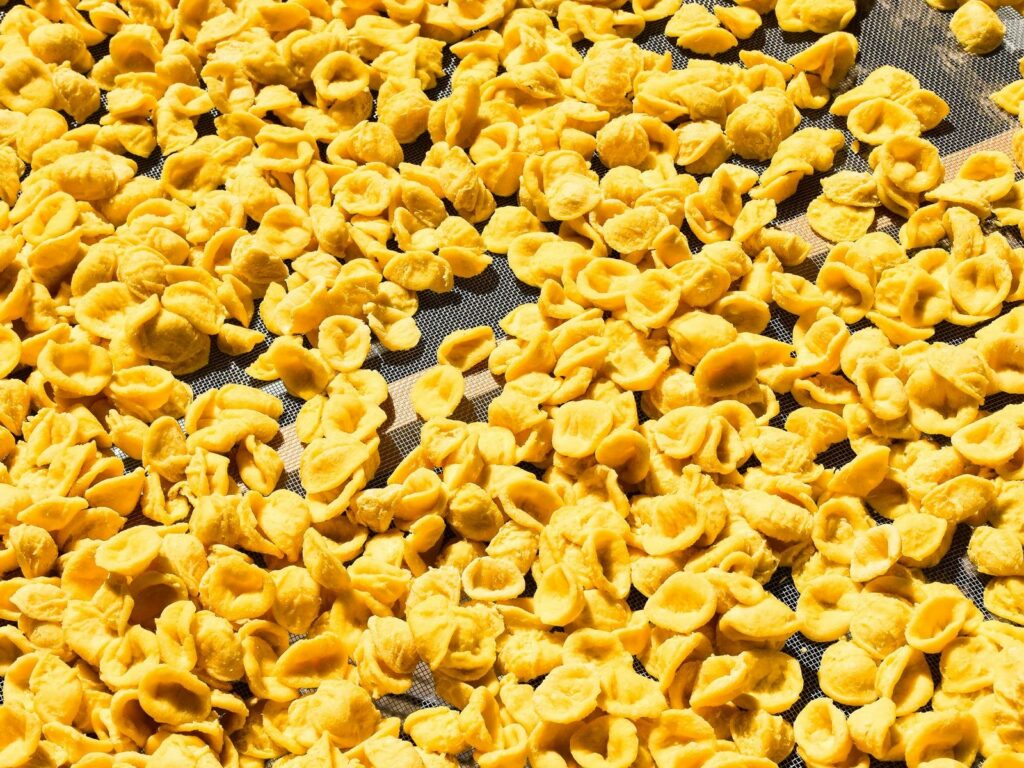
By contrast, tajarin from Piedmont, thin ribbons similar to tagliatelle, are made from egg dough. As a rough rule, fresh flat ribbons like tagliatelle and pappardelle are usually egg pasta in restaurants, while hand-shaped short pasta from southern Italy usually isn’t. Always ask anyway.
What to ask in an Italian restaurant
In an Italian restaurant, ask two things. Is the pasta fresh egg pasta (“pasta fresca all’uovo”) or dried (“pasta secca”)? And will the dish come with cheese on top?
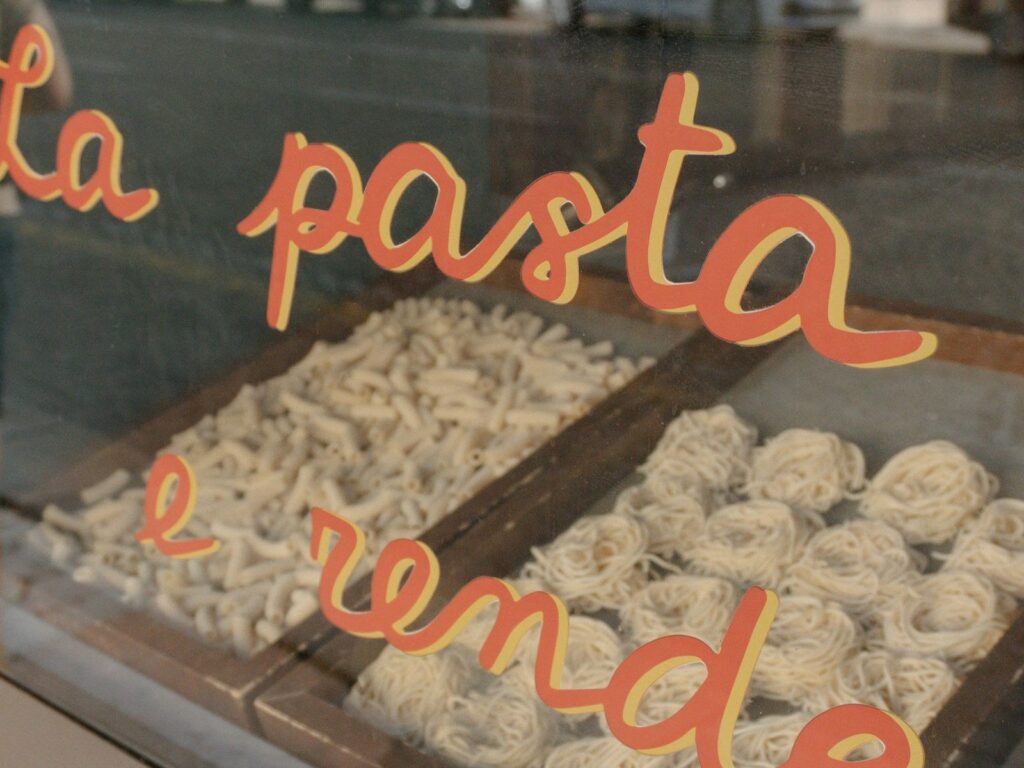
It’s also worth asking about the stock in soups with pasta, such as minestrone, because recipes vary from region to region and from kitchen to kitchen. Vegetable stock in Italian is “brodo vegetale”.
Useful Italian phrases
| Italian | English |
|---|---|
| Sono vegano / vegana. | I’m vegan (male / female). |
| La pasta è all’uovo? | Is the pasta made with egg? |
| Senza formaggio, per favore. | No cheese, please. |
| Senza uova, latte, burro e formaggio. | No eggs, milk, butter or cheese. |
| È fatto con brodo vegetale? | Is it made with vegetable stock? |
| Avete pasta secca? | Do you have dried pasta? |
Heading to the coast? Our vegan guide to Rimini covers where to eat well without meat, dairy or eggs in this Adriatic resort. Rimini is in Emilia-Romagna, so “la pasta è all’uovo?” will come in handy there.
Travel tip: In an Italian supermarket, the name on the packet does the work for you. Classic dried pasta (“pasta di semola di grano duro”) is semolina and water by law, unless the name adds another ingredient, such as “al nero di seppia”. If your apartment has a kitchen, a safe dinner costs a few euros.
Vegan pasta recipes we love
Eggless pasta works in every pasta dish, baked ones included, because the sauce does the binding. Egg in the dough mainly adds colour and richness, but nobody misses it under a good sauce. These recipes from our blog put vegan pasta front and centre.
For a Czech classic, try our vegan šunkofleky (Czech ham pasta bake), made with eggless pasta squares and plant-based ham. For a family dinner, our vegetable lasagne is a crowd-pleaser, as long as you buy eggless sheets. And if you’re curious how other Czech classics turn out without meat or eggs, browse our vegan Czech food roundup.
For Asian dishes, swap egg noodles for rice noodles or eggless wheat noodles. They work beautifully in our vegan miso ramen with crispy tofu.
Read next
Travelling with someone who eats meat? Here’s how to travel vegan, even with a non-vegan partner, including ordering in restaurants abroad.
Pasta: the easiest way into plant-based eating
Pasta is the easiest way to try plant-based food, even if you’re not vegan. Most people have eaten vegan pasta without realising it. Spaghetti with tomato sauce, penne arrabbiata and aglio e olio are vegan in their original Italian recipes, with nothing swapped out. For the rest of the menu, see our guide to eating vegan in Italy.
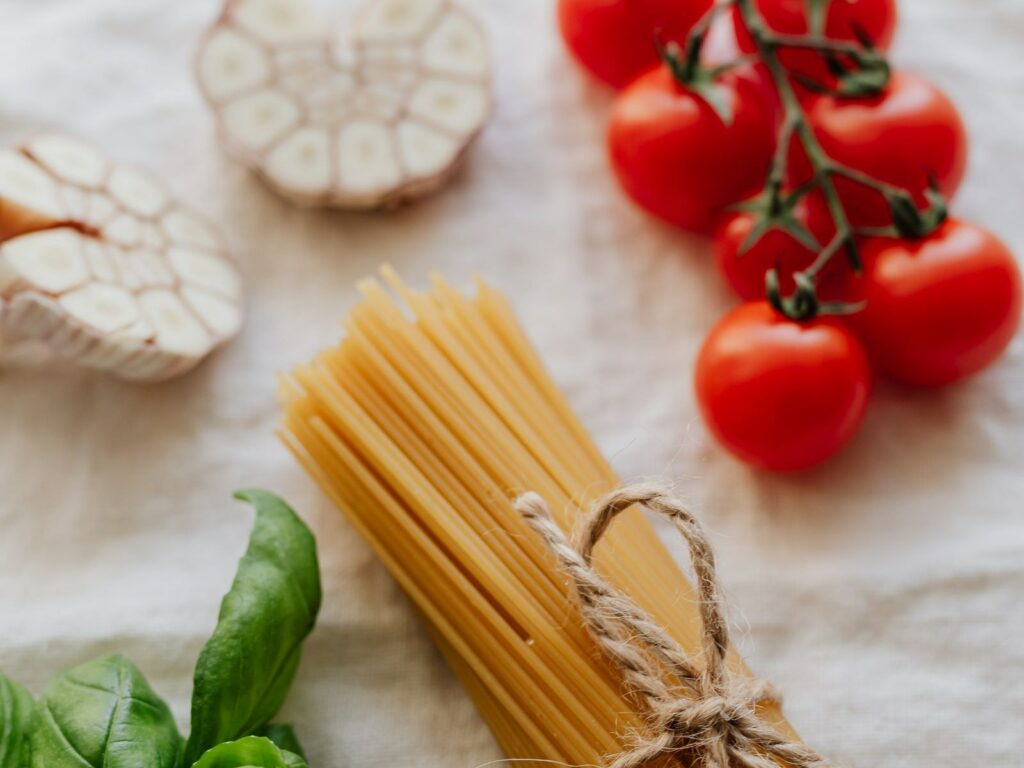
That’s good news for mixed groups, too. If you’re travelling with a friend or family member who’s vegan, an Italian restaurant is almost always a safe bet for everyone. You order the carbonara, they order penne arrabbiata without Parmesan, and you both leave happy.
For long-time vegans, the useful bit is knowing where things change. Manufacturers tweak recipes, supermarket own brands switch suppliers, and egg and eggless pasta from the same factory look almost identical on the shelf. Checking the label takes five seconds and saves you a nasty surprise at the stove.
So, is pasta vegan?
Pasta is vegan far more often than not, and in Italy classic dried pasta is egg-free by law. The real risks aren’t spaghetti or penne. They’re egg noodles, lasagne sheets, fresh chilled pasta and, above all, the cheese and anchovies in the sauce.
Learn two words, “all’uovo” on Italian packets and “egg” in bold on everything else. Get into the habit of reading the label, and pasta becomes one of the easiest vegan meals anywhere. In an Italian restaurant, one sentence does the job: “la pasta è all’uovo?”
Which pasta brand do you always reach for? And have you ever found egg in a pasta where you least expected it? Tell us in the comments.
Frequently asked questions
Is pasta vegan?
Most dried pasta is vegan, because it’s made only from flour or semolina and water. Egg pasta, most fresh pasta, filled pasta with cheese or meat, and black pasta made with squid ink are not vegan. Always check the ingredient list on the packet.
Is dried pasta vegan?
Yes, dried pasta is almost always vegan. In Italy, plain dried durum wheat pasta can by law only contain semolina and water. The main exceptions are egg pasta and many lasagne sheets, which contain egg.
Is fresh pasta vegan?
Fresh pasta from the chilled aisle is usually not vegan, because it’s made from egg dough. Exceptions exist but are rare. In Italy, hand-shaped pasta such as orecchiette, pici and trofie is traditionally made without egg.
What is the difference between egg pasta and eggless pasta?
Egg pasta contains eggs or egg products, while eggless pasta is made from flour and water. In Italy, “pasta all’uovo” must contain at least 200 g of egg per kilogram of semolina. Elsewhere it can contain very little, such as 2% dried egg.
Is gnocchi vegan?
Gnocchi is sometimes vegan and sometimes not. It’s based on potato and flour, but many recipes and shop-bought products add egg, and some add cheese. Check the ingredients before you buy, and ask in restaurants.
Featured photo: Karola G., Pexels.
Newsletter
Get our free e-books
Join the newsletter and download Our Vegan Christmas Kitchen straight away, 10 recipes for Czech cookies, gingerbread and vánočka. Then once a month, new places from the vegan map and new articles. Unsubscribe with one click.