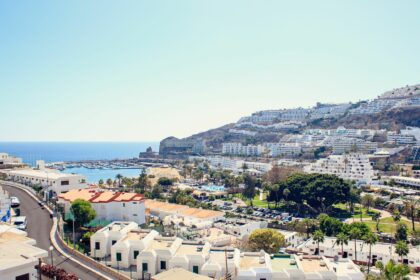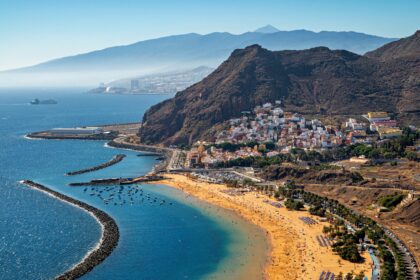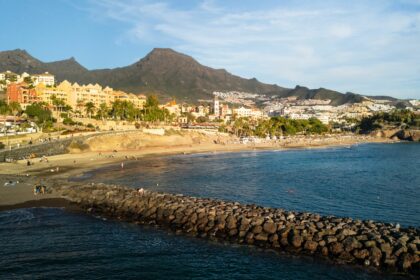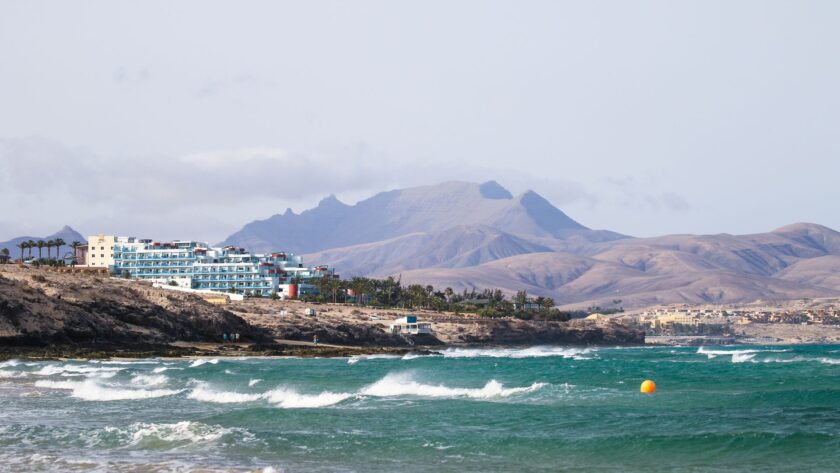
Fuerteventura is the Canary Island that looks most like a desert. No thick forests, no cloud hanging over mountain ridges. Just ochre and rust coloured land, and low hills worn smooth by millions of years of wind. Then suddenly a beach five kilometres long where you might pass five people. The African coast sits around a hundred kilometres away and you can feel it in everything, in the colour of the soil, in the dry air, in the sand the wind carried across the ocean.
We haven’t been to Fuerteventura yet and we’re not going to pretend otherwise. What we did instead was work through climate data, the island council’s own pages, bus timetables, menus and recent reviews, and put together the guide we couldn’t find ourselves. It answers the two questions this island throws up more than any other in the Canaries. Where exactly does the wind drop, because on Fuerteventura that decides how your holiday feels more than anything else. And can you actually eat well as a vegan here, when most travel guides to the island skip food entirely.
So when is it worth going, and what is the weather really like in winter? Where should you stay if you don’t want to spend a week fighting a beach towel? What’s worth seeing beyond the sand, and why can’t you just turn up on Isla de Lobos? And on an island whose most famous product is goat’s cheese, can you eat plant based without living on chips for a week? Here’s everything you need to plan it properly. If you have not settled on Fuerteventura yet, we compare all eight islands in which Canary Island to choose.
Where is Fuerteventura and what makes it different
Fuerteventura is part of the Canary Islands, which belong to Spain but sit in the Atlantic off the northwest coast of Africa. It’s the second largest island in the archipelago after Tenerife, and geologically the oldest of them all. It formed through volcanic activity roughly twenty million years ago, which is remarkable by Canarian standards and explains exactly how it looks today.
Younger islands still have sharp volcanic cones and black lava fields. On Fuerteventura, wind, rain and time have had long enough to round everything off into soft, worn shapes. The last volcanic activity here happened something like four to five thousand years ago, so unlike Lanzarote or Tenerife there are no fresh lava fields to walk across.
Its closeness to Africa isn’t just a fact for the map. It means a dry, warm climate, very little rainfall, and occasionally a calima, when wind off the Sahara carries fine dust across the island, the sky turns yellow and visibility drops. It usually lasts a few days and it’s a normal part of the weather here.
UNESCO declared the entire island a Biosphere Reserve in 2009, recognising its unusual mix of semi desert landscape, marine ecosystems and species found nowhere else. The Jandía peninsula in the south was once a separate island altogether, joined to the main body later by lava flows. Drive the narrow strip between the two and you can see ocean on both sides at once.
Fuerteventura on our vegan map
2 places. Tap a pin to see the details.
Loading the map…
- 100% vegan
See every place from this article on our vegan map.
Fuerteventura weather and the best time to go
This is the whole reason most people come. In January, when northern Europe is dark by four in the afternoon, Fuerteventura sits at around twenty one degrees during the day with roughly six hours of sunshine. The island doesn’t really have seasons in the European sense. Temperatures move within a fairly narrow band and the coldest month is only about seven degrees cooler than the warmest.
| Period | Daytime highs | Sea temperature | Who it suits |
|---|---|---|---|
| December–February | 20–21 °C, January coolest | 19–20 °C, bracing for swimming | winter sun, walking, sightseeing |
| March–May | 21–24 °C | 19–20 °C | best balance of weather, quiet and price |
| June–August | 26–28 °C | 21–22 °C | swimming, but strongest wind and highest prices |
| September–November | 24–27 °C | warmest of the year, around 23 °C | the best all round months on the data |
Sea temperature deserves its own look. The Atlantic around the Canaries ranges roughly between seventeen and twenty three degrees across the year, noticeably cooler than the Mediterranean in summer. If you’re used to Greece or Croatia in August, that first step into the water will surprise you even in peak season. The sea is at its warmest in late summer and early autumn, so September and October.
It rains rarely here, but not never. Between November and January there’s an average of about seven days of rain a month, and December is the wettest month of the year. We’re still talking about short showers rather than a week under cloud, but if you’re booking for Christmas, expect a day or two of grey.
Is Fuerteventura windy? Yes, and here’s where it isn’t
Yes, it’s windy. The northeast trade winds blow across the whole Canary archipelago, and Fuerteventura, which has no high mountains to slow them down, is exposed to them along almost its entire length. Wind is a permanent feature of the weather here rather than an occasional event, and it’s usually strongest on summer afternoons.
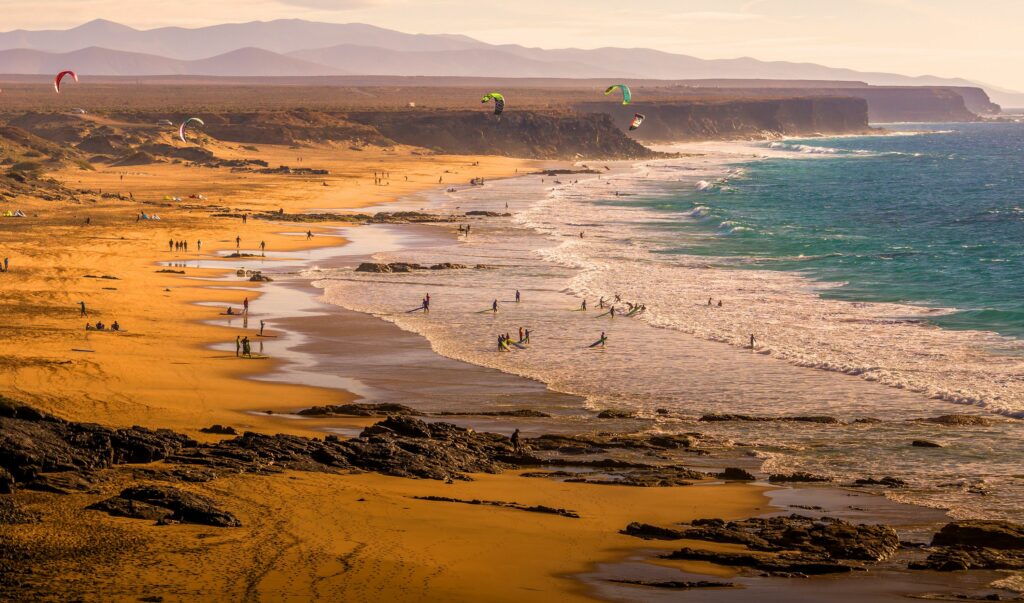
Don’t let that put you off the island, though. The wind is exactly why Fuerteventura hosts a round of the Windsurfing and Kiteboarding World Cup every year, and for a lot of visitors it’s the entire reason for coming. But if what you want is a quiet week on a lounger, choosing the right base matters enormously.
The general rule is that the west coast is windier than the east. The calmest part of the island is the east side, with one big exception, the Sotavento and Costa Calma area in the south, where the wind is the whole point and the competitions are held. So if you want shelter, head east but not south.
| Place | Wind | Best for |
|---|---|---|
| Playa del Castillo, Caleta de Fuste | sheltered horseshoe bay, calm water | families, easy swimming |
| La Concha, El Cotillo | protected lagoon, calm | quiet swimming with village atmosphere |
| Playa Chica, Puerto del Rosario | calm year round | a short stop or stopover |
| Corralejo and the dunes | moderate, open to the ocean | those who’ll trade wind for scenery |
| Sotavento and Costa Calma | windiest, competition conditions | windsurfing and kitesurfing |
| Cofete and the west coast | strong wind, dangerous currents | looking, not swimming |
Where to stay in Fuerteventura
Your choice of base carries more weight here than on other islands. Fuerteventura is around a hundred kilometres long and driving end to end takes an hour and a half to two hours. Choose badly and you’ll spend a lot of the week in the car.
Corralejo in the north is the clear winner for vegans. It’s the island’s biggest resort town and it sits beside the enormous dune national park. Ferries leave from here for both Lanzarote and Isla de Lobos, and crucially two of the island’s four fully vegan places are here. If you want food sorted without planning, stay here.
El Cotillo on the northwest coast is a smaller, quieter former fishing village with dramatic cliffs on one side and sheltered lagoons on the other. Far fewer hotels, much calmer evenings, and one very good vegan address. It suits people who don’t want a resort.
Caleta de Fuste on the east coast is the calmest option for wind and the closest to the airport. It’s a purpose built resort without a great deal of character, but the bay is sheltered and the water is calm, which makes it a sensible choice with small children. Vegan options here mean ordering carefully in ordinary restaurants.
Costa Calma and Jandía in the south are large resort hotel territory and the heart of the windsurfing scene. The beaches here are the longest and most spectacular on the island, the wind is the strongest, and you’re furthest from the vegan places. There is not a single fully vegan place anywhere in the south, from Costa Calma through Morro Jable to Gran Tarajal. If you’re heading south, plan on eating at your hotel or self catering. It’s also the area where all inclusive dominates, and we’ve written separately about how vegan all inclusive actually works in practice.
Puerto del Rosario is the capital and most visitors simply drive through it on the way from the airport. There’s not much reason to stay, with one exception covered in the food section below.
Things to do in Fuerteventura
The Corralejo dunes are what brings a lot of people to the island in the first place. The national park is a vast stretch of pale sand running straight down into turquoise ocean, and seen from the coast road it looks more like the Sahara than Europe. The sand is thought to be partly wind blown across the ocean and partly the ground down remains of shells and coral.
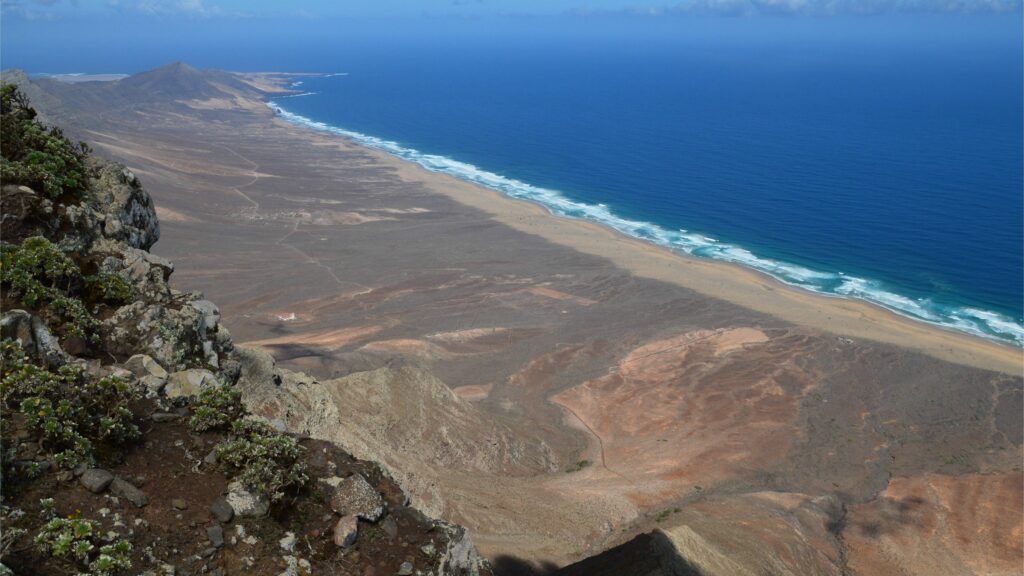
Cofete is the wildest beach on the island and one of the most striking anywhere in the Canaries. It runs for twelve kilometres along the west side of the Jandía peninsula with steep mountains at its back and almost nobody on it. The only access is an unsurfaced mountain track, and hire car companies often prohibit driving it, so check your rental agreement before you set off. Don’t swim here. The currents are strong and there are no lifeguards.
Betancuria is the island’s oldest town and its original capital. It sits inland in the mountains, has only a few hundred residents and is the greenest place on an otherwise parched island. The drive over the hills to reach it is one of the best on Fuerteventura.
Ajuy on the west coast has black lava beaches and sea caves reached by a clifftop footpath. The rock here is among the oldest exposed stone in the entire archipelago.
El Cotillo is worth the trip even if you’re not staying there. Sheltered lagoons with calm water on the north side, wild cliffs and sunsets on the south, and a small harbour in between.
Surfing, kitesurfing and getting off the beach
What puts one group of people off Fuerteventura is precisely why the other group comes. Steady wind and open Atlantic swell have made this one of the best watersports destinations in Europe, and the season runs all year.
Kitesurfing and windsurfing are centred in the south, around Sotavento and Costa Calma. Sotavento is a long shallow lagoon that becomes an enormous waist deep expanse of water at low tide, which makes it unusually good for beginners. It’s also where the World Cup round is held, so you may well be sharing the water with professionals.
Surfing belongs to the north, around Corralejo and El Cotillo. The north coast has more surf spots than any other part of the island and waves suitable for complete beginners as well as experienced surfers. There are plenty of schools and a week long course is a common reason to come, often more than once.
There’s decent walking here too. The island has no high mountains like Tenerife, but it has dry hills with long views in every direction and almost no traffic away from the main roads. Trails run near Ajuy, across the Jandía peninsula and around Betancuria. Take water with you. There’s very little shade and the midday sun is strong even in winter.
Isla de Lobos and the permit people forget
The small island of Lobos sits between Corralejo and Lanzarote and makes one of the best day trips on Fuerteventura. It’s a protected nature reserve with clear water, a couple of beaches and a circular walk you can do in a morning.
The catch is that you can’t just show up. Visiting requires a free permit from the island council, and numbers are capped at four hundred people per day split across two shifts, morning from ten until two and afternoon from two until six. Permits are only released five days before the date of your visit, so in high season they disappear almost immediately. You apply online through LobosPass, the official site the council set up for it.
The ferry is booked separately. Some operators offer to handle the permit as part of your ticket for a small fee, but we wouldn’t rely on that without confirming it directly. Without a valid permit you won’t be allowed to land.
Fuerteventura isn’t an island you visit for the vegan scene. It’s an island you visit for the emptiness, and you assemble the food around it.
Vegan food in Fuerteventura
Let’s be honest about this. Fuerteventura is not Barcelona or Lisbon. There are only a handful of fully vegan places on the whole island and all but one are in the north. That said, you won’t go hungry, because Canarian cooking is closer to plant based than you’d expect and the supermarkets are well stocked.
We checked each of the places below against current reviews and all were trading in 2026. Island businesses change quickly, though, so always confirm opening hours before you make a trip for one.
| Place | Where | What to expect |
|---|---|---|
| Baobab | Corralejo old town | fully vegan, old town, seasonal menu, risotto arancini, chilled raw soups, closed Sundays and Mondays |
| H2O Juice Bar & Vegan Cafe | Corralejo, Plaza Patricio Calero | breakfast and brunch, fresh juices, bowls, burgers, salads, very good coffee, listings disagree on the closing day, so check first |
| Happy Cactus | El Cotillo | small organic shop and cafe, short menu built on local produce, much praised burger and lasagne, usually closed Sundays and Mondays and sometimes for weeks out of season |
| El Invernadero | Puerto del Rosario | vegan set menu, entirely gluten free, lunch Tue to Fri, dinner Wed and Thu only, booking essential |
El Invernadero deserves a note of its own, because it’s the one reason to drive into Puerto del Rosario if you’re not staying there. It serves a single multi course set menu that changes weekly, a large share of the produce comes from its own garden, and the whole kitchen is gluten free. Its own website gives lunch from Tuesday to Friday and dinner only on Wednesday and Thursday, so booking ahead isn’t a suggestion, it’s a requirement.
What to order in an ordinary restaurant
On a small island this is a more useful skill than a list of restaurants. Canarian cooking rests on a few dishes that are plant based in their original form.
Papas arrugadas are the most typical Canarian dish there is. Small potatoes boiled in heavily salted water until the water evaporates and the skins wrinkle. They come with mojo sauces, green and red. Mojo verde is made from coriander or parsley, garlic, oil and vinegar, mojo rojo from red pepper and chilli. Both are normally free of animal products, though tourist restaurants sometimes add mayonnaise or cream, so it’s worth asking.
Gofio is toasted grain flour that Canarians were eating long before the Spanish arrived, and on its own it’s plant based. Watch out for gofio escaldado though, which is gofio mixed with stock. That stock is traditionally made from fish, so this particular dish is not vegan. The same goes for sancocho, which sounds harmless but is a fish stew.
Beyond that you can usually rely on ensalada mixta without cheese or tuna, grilled vegetables, pimientos de padrón, which are small fried peppers with salt, and chips. Goat’s cheese is the island’s most famous product and appears on nearly every menu, so say explicitly that you don’t want it when you order a salad.
Supermarkets and self catering
You’ll find Mercadona, HiperDino and Lidl on the island and all three carry a decent range. Plant milks, hummus, tofu, pulses and plant based yoghurts are easy to find, while meat and cold cut substitutes are thinner on the ground than you may be used to at home. Thanks to the Canary Islands’ separate tax regime, prices are usually lower than on the Spanish mainland.
Resort minimarkets right by the beach will charge you roughly double for the same items, so it pays to do one big shop at a proper supermarket on your first day. What’s worth packing from home and what isn’t, we go into properly in our guide to vegan food for travelling.
Getting there and getting around
Flights from the UK take around four hours and there are direct services from most major airports, as well as from across northern and central Europe. The Canaries run one hour behind central European time and are on the same clock as the UK. There’s a single airport, just outside Puerto del Rosario roughly midway down the east coast, which puts it within easy reach of almost everywhere.
Corralejo is about thirty eight kilometres from the airport. A taxi runs somewhere in the region of fifty one to sixty seven euros, which is steep for two people but reasonable for four. The cheaper option is the bus, run by TIADHE, with timetables on their official site. There’s no direct service from the airport, so you take line 3 to the bus station in Puerto del Rosario and change there onto line 6 for Corralejo. The whole journey comes in under five euros.
We’d hire a car here without hesitating. The island is long, public transport between smaller places is sparse, and without a car you won’t reach Betancuria or Ajuy at all. Alongside the international chains there’s Cicar, a Canarian company you’ll see at the airport and in every resort, which has a strong following among returning visitors. Whoever you book with, check in advance whether the unsurfaced road to Cofete is permitted under your agreement.
Ferries leave Corralejo for Playa Blanca on Lanzarote in twenty five to thirty five minutes, with fares from around seventeen euros and more than twenty crossings a day. It’s the cheapest way to add a second island to your trip, and Lanzarote looks nothing like this one, black lava instead of sand. What’s worth seeing over there is covered in our guide to what to do in Lanzarote.
Is Fuerteventura expensive?
It’s one of the cheaper Canary Islands, particularly outside peak season. Treat the figures below as a rough guide, since prices move and August and Christmas run considerably higher.
| Item | Rough cost |
|---|---|
| Apartment for two, per night | 50–90 € |
| Lunch at a vegan cafe | 10–16 € |
| Coffee | 1.50–2.50 € |
| Car hire, per day | 25–45 € |
| Ferry to Lanzarote, one way | from 17 € |
| Isla de Lobos permit | free |
Four things you probably didn’t know about Fuerteventura
It’s the oldest Canary Island. It formed roughly twenty million years ago, long before Tenerife or La Palma. The last volcanic activity was some four to five thousand years back, which is why you won’t find the fresh lava fields that define Lanzarote.
Jandía used to be a separate island. The southern peninsula, home to the island’s highest ground, was originally detached and was joined to the main body by later lava flows. The narrow strip connecting them is the slimmest point on the whole island.
The entire island is a UNESCO Biosphere Reserve. Not a section of it but all of Fuerteventura, including the surrounding marine areas, designated in 2009. It’s part of why you won’t find development here on the scale of some other islands.
Its most famous product is goat’s cheese. Not good news for vegans, but worth knowing, because goat herding underpins traditional agriculture here and Majorero cheese turns up on practically every menu. If you’re ordering a salad or a starter, assume cheese is in it unless you say otherwise.
Fuerteventura suits people who don’t mind emptiness and a bit of wind. It doesn’t have the volcanic drama of Lanzarote or the mountains and forests of Tenerife. What it does have is beaches you can walk along for half an hour without meeting anyone, and twenty degrees in January while the rest of Europe is dark by teatime. The vegan scene is small and concentrated in the north. But with a few Spanish phrases, an apartment with a fridge and a sense of what’s already plant based in Canarian cooking, you’ll eat perfectly well.
Still deciding which island to pick? We’ve compared the others in our guides to vegan Tenerife and things to do in Gran Canaria. And if you’re weighing up the mainland too, start with is Spain vegan friendly.
Have you been to Fuerteventura? We’d love to know whether the wind bothered you or whether you stopped noticing it after a few days. And if you found a vegan spot we’ve missed, tell us in the comments and we’ll add it.
Frequently asked questions
Where is Fuerteventura and is it in Spain?
Fuerteventura is one of the Canary Islands, which are Spanish territory but sit in the Atlantic Ocean off the northwest coast of Africa. It’s around a hundred kilometres from the Moroccan coast and over a thousand from mainland Spain. It’s the second largest island in the archipelago after Tenerife.
How long is the flight to Fuerteventura?
Around four hours from the UK, with direct flights from most major airports. From central Europe it’s closer to four and a half hours. The Canary Islands keep the same time as the UK and run an hour behind central European time.
Is Fuerteventura windy all the time?
Largely yes. The northeast trade winds blow across the island year round and there are no mountains high enough to block them, with wind usually strongest on summer afternoons. The east coast is the calmest side, apart from Sotavento and Costa Calma in the south where the wind is strongest. The most sheltered beaches are Playa del Castillo at Caleta de Fuste, the La Concha lagoon at El Cotillo and Playa Chica at Puerto del Rosario.
Is Fuerteventura safe?
Yes. Crime levels are low and the island is generally very relaxed. The genuine risks here are natural rather than criminal. Atlantic currents on the west coast, including at Cofete, are strong and there are no lifeguards on the remoter beaches, so only swim where it’s supervised. The sun is also stronger than it feels in the wind, which catches a lot of people out.
When is the best time to visit Fuerteventura?
On the climate data September and October come out best, with air temperatures still above twenty five degrees and the sea at its warmest all year. For pure winter sun, January and February work well, sitting around twenty one degrees by day with the lowest prices of the year. December is the wettest month, though that still only means a handful of days with rain.
Can you eat vegan in Fuerteventura?
Yes, with some planning. There are four fully vegan places on the island and three of them are in the north, in Corralejo and El Cotillo. In ordinary restaurants you can rely on papas arrugadas with mojo sauce, grilled vegetables, pimientos de padrón and salads ordered without cheese. Mercadona, HiperDino and Lidl all stock plant milks, tofu and hummus, so an apartment with a kitchen is a real advantage here.
Featured photo: Fuka jaz, Pexels.
Newsletter
Get our free e-books
Join the newsletter and download Our Vegan Christmas Kitchen straight away, 10 recipes for Czech cookies, gingerbread and vánočka. Then once a month, new places from the vegan map and new articles. Unsubscribe with one click.