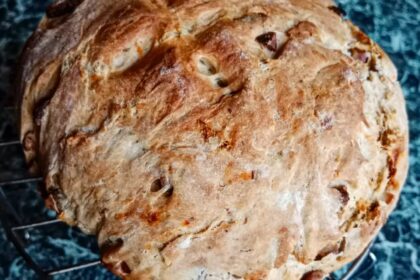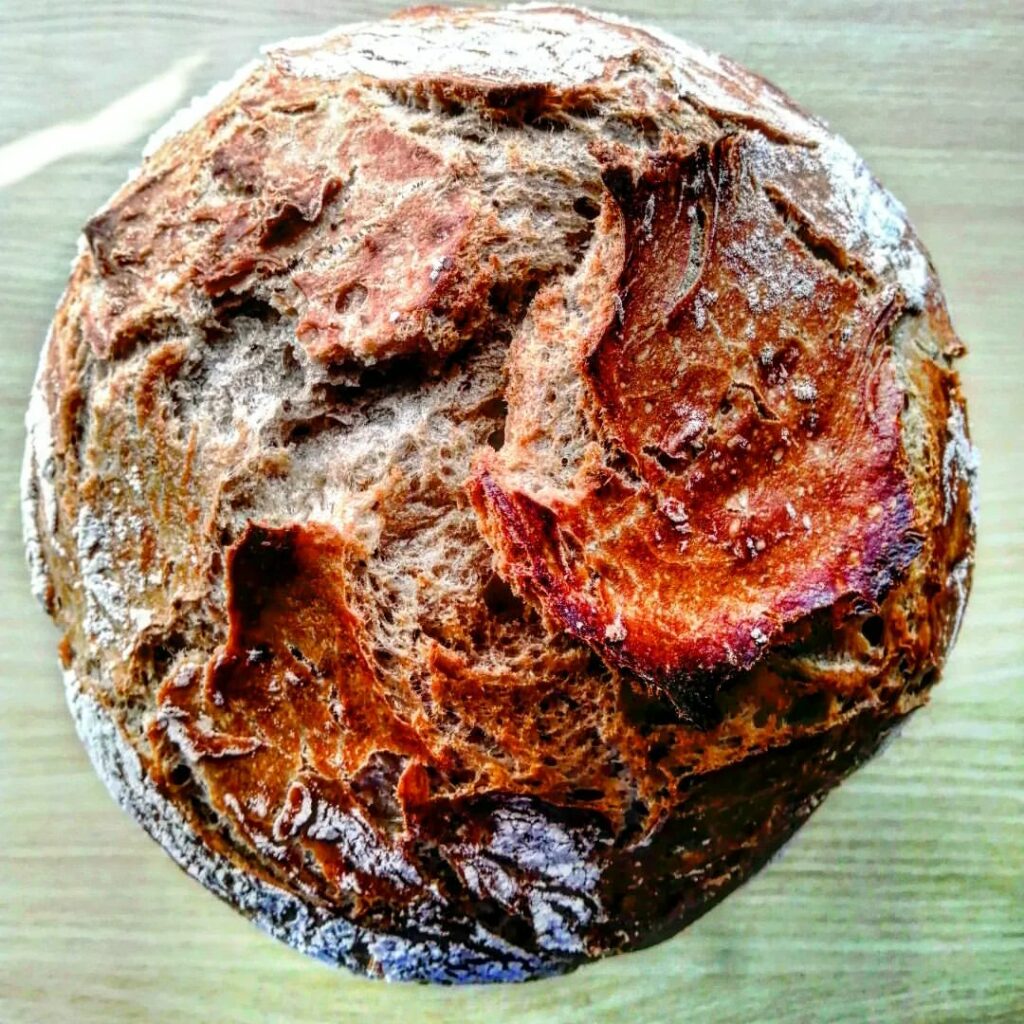
There is something deeply satisfying about baking your own bread from scratch. The smell of a freshly baked loaf filling your kitchen, the crackle of a crispy crust as you slice into it, the soft crumb inside. This vegan homemade bread delivers all of that with minimal effort. You do not need a bread machine, a stand mixer, or any special skills. Just a bowl, an oven, and a Dutch oven or any heavy pot with a lid.
Can you really bake great bread without eggs or dairy? Will it actually taste like proper bread and not some sad, dense brick? And what if you have never baked bread in your life? The answer to all of these is a resounding yes. This recipe uses a mix of rye flour and all-purpose flour with caraway seeds and a handful of flax and sunflower seeds for a loaf that tastes like it came from a Central European bakery. Let’s get baking.
Why you will love this recipe
This bread has become a staple for a few very good reasons.
- Almost zero hands-on work, just mix the dough in a bowl, no kneading required
- Overnight rise does the heavy lifting, mix it in the evening and bake it fresh in the morning
- Rye and wheat flour blend gives the bread a full, complex flavour and a soft crumb
- Caraway and seeds add a classic Central European character plus extra fibre
- Naturally vegan, no eggs, no dairy, no butter, and still wonderfully moist and flavourful
Eight simple ingredients and a little patience are all you need.
Interesting facts about homemade bread
Bread baking at home has a history stretching back thousands of years. Here are a few things you might not know.
Rye has deep roots in Central Europe. While wheat dominated in Western Europe, rye was the grain of choice in Central and Eastern Europe for centuries. It thrives in cooler climates and poorer soils, making it perfectly suited to regions like the Czech Republic, Poland, and Germany. Czech bread without rye would be like French bread without wheat, almost unthinkable.
Slow overnight rising improves both flavour and digestibility. When dough ferments for 12 hours at room temperature, the yeast has time to break down complex sugars and create much deeper, more nuanced flavours compared to a quick rise. The long fermentation also partially breaks down phytic acid, which improves your body’s ability to absorb minerals like iron and zinc from the grain.
A Dutch oven works like a professional baker’s steam oven. The preheated pot with its lid traps steam released from the dough, creating the conditions needed for a beautifully crispy crust. Professional bakeries use steam-injected ovens for the same effect. Your cast iron pot achieves essentially the same result at home.
Caraway seeds are a Czech bread signature. In many countries, bread is simply flour, water, salt, and yeast. In Czech baking, caraway is almost mandatory. Beyond its distinctive aroma and warm flavour, caraway has a practical benefit too: it aids digestion and can help reduce the bloating that fresh bread sometimes causes.
Health benefits of the main ingredients
This bread is not just delicious. The combination of ingredients gives it a genuinely solid nutritional profile.
Rye flour contains significantly more fibre than standard wheat flour, roughly 15 g of fibre per 100 g. Research shows that regular rye consumption helps stabilize blood sugar levels and may reduce the risk of type 2 diabetes by up to 31%. Rye flour also provides about twice as much vitamin B2 (riboflavin) as wheat flour.
Flax seeds are one of the best plant-based sources of omega-3 fatty acids (ALA). Just one tablespoon provides approximately 2.3 g of omega-3. Flax seeds also contain lignans, natural antioxidants that may support heart health and help reduce cholesterol levels.
Sunflower seeds are an excellent source of vitamin E, selenium, and magnesium. 100 g of sunflower seeds provides roughly 35 mg of vitamin E, more than double the daily recommended intake. The magnesium in sunflower seeds supports proper muscle and nerve function.
Nutritional values
Approximate values per serving (1 slice, based on dividing the loaf into 12 slices).
| Nutrient | Amount per serving |
|---|---|
| Calories | ~165 kcal |
| Protein | 5 g |
| Carbohydrates | 28 g |
| Fat | 3 g |
| Fibre | 3 g |
Approximate values per serving. Actual amounts may vary depending on specific ingredients and portions.
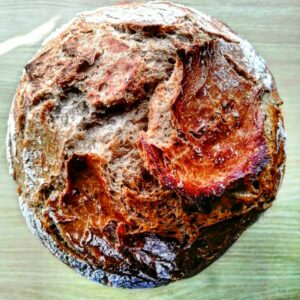
Vegan Homemade Bread
Ingredients
- 1 cup rye flour
- 2 cups all-purpose flour plus extra for dusting
- 1½ cups water lukewarm
- 2 tsp dried yeast
- 2 tsp salt
- 2 tsp crushed caraway seeds
- 1 handful flax seeds
- 1 handful sunflower seeds
Instructions
- In a large bowl, mix the flour with the yeast, seeds, caraway, and salt. Pour in the water and knead until you have a rough dough.
- Cover the bowl with a clean kitchen towel and leave to rise at room temperature for about 12 hours (overnight).
- The next day, stir the risen dough a few times in the bowl and dust with all-purpose flour. Let it rest for another 30 minutes.
- Meanwhile, preheat your oven to 200°C (390°F). Place a cast iron Dutch oven or heavy pot with a lid inside to heat up.
- Carefully transfer the dough into the hot Dutch oven. Bake covered at 200°C (390°F) for 30 minutes, then remove the lid and bake for another 20 minutes until golden and crusty.
Tips and variations
The recipe is great as written, but here are some ideas to make it your own.
- No Dutch oven? Use any oven-safe pot with a lid, a ceramic bread pan, or simply place a bowl of water in the oven to create steam for a crispy crust.
- Whole wheat version: swap one of the cups of all-purpose flour for whole wheat flour. The bread will be slightly denser but even richer in fibre.
- Different seeds: try pumpkin seeds, sesame seeds, or chia seeds. Each combination gives the bread a slightly different flavour and texture.
- Storage: the bread stays fresh for 2 to 3 days at room temperature wrapped in a clean cloth. For longer storage, slice and freeze. Individual slices reheat perfectly in a toaster.
- Skip the caraway: if caraway is not your thing, simply leave it out or replace it with dried rosemary or oregano for a Mediterranean twist.
Do not be afraid to experiment. Homemade bread is a forgiving recipe that tolerates small variations well.
What to serve with homemade bread
Freshly baked bread deserves great company on the plate.
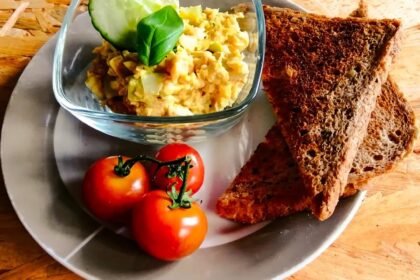
It tastes best still warm with quality olive oil and a pinch of sea salt. It pairs beautifully with vegan mushroom spread, which is creamy and full of flavour. For breakfast, try it with vegan avocado hummus and sliced tomatoes. This bread is also perfect alongside soup, especially vegan creamy lentil soup with crispy baked tofu.
If you have leftovers the next day, slices are excellent pan-fried in a little olive oil until golden.
Frequently asked questions
Can you bake vegan bread without a Dutch oven?
Absolutely. Use any oven-safe pot with a lid, a ceramic bread pan, or simply place a bowl of water in the bottom of your oven. The steam helps create a crispy crust. The result will be slightly different but still very good.
How long does homemade vegan bread stay fresh?
Wrapped in a clean cloth at room temperature, it stays fresh for 2 to 3 days. For longer storage, slice the bread and freeze it. Frozen slices go straight into the toaster or can be reheated in the oven.
Can I use only wheat flour instead of rye flour?
You can, and the bread will still turn out fine. However, rye flour gives the bread its distinctive flavour and aroma, which is characteristic of Central European bread. If you do not have rye flour, whole wheat flour makes a good compromise.
Why does the dough need to rise for 12 hours?
The long overnight fermentation gives the yeast time to work slowly, resulting in better flavour, aroma, and texture. It also partially breaks down phytic acid, improving mineral absorption. If you are short on time, 8 hours in a warm room will also work.
Is homemade rye bread gluten-free?
No. Rye flour contains less gluten than wheat flour, but it still contains gluten. This recipe is not suitable for people with coeliac disease or severe gluten sensitivity. A gluten-free version would require a completely different recipe with specialist gluten-free flours.
Homemade bread is one of those things that will make you wonder why you did not start sooner. No complicated techniques, no fancy ingredients, just flour, water, yeast, and a little patience. The moment you open the oven and that aroma hits you, it makes the whole thing worth it. Give it a try and let us know how yours turned out. If you are looking for more baking inspiration, check out vegan olive bread or vegan focaccia. What will you spread on your fresh loaf?
Newsletter
Get our free e-books
Join the newsletter and download Our Vegan Christmas Kitchen straight away, 10 recipes for Czech cookies, gingerbread and vánočka. Then once a month, new places from the vegan map and new articles. Unsubscribe with one click.