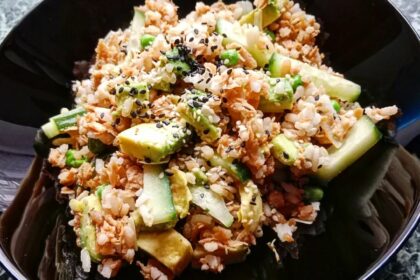
Vegan baked aubergine with hummus, tomatoes and vegan cheese is a quick and simple main course you can prepare in under thirty minutes. Aubergine rounds are seasoned with olive oil, garlic and nutritional yeast, spread with hummus, topped with a tomato slice and sprinkled with grated vegan cheese. After 25 minutes in the oven you have a crispy, juicy dish with rich flavour that works as a light lunch, dinner or side dish for a barbecue. Got a second aubergine? Roast it for our spaghetti with roasted aubergine, smoked tofu and pesto.
How do you prepare aubergine so it is not bitter? Can the recipe be made without hummus? What can you use instead of vegan cheese and what goes best with baked aubergine? Here you will find the complete step-by-step recipe, interesting facts about aubergine, nutritional values and answers to the most frequently asked questions.
Why you will love this recipe
Baked aubergine with hummus is one of those recipes you will come back to again and again.
- Ready in 30 minutes including baking time, with minimal hands-on work
- Hummus instead of béchamel provides a creamy layer rich in chickpea protein without the need to cook a sauce
- Nutritional yeast adds a bold cheesy flavour along with B vitamins
- Aubergine is naturally low in calories with high fibre content and antioxidants
- All ingredients are widely available in any supermarket, no special substitutes needed
The perfect dish for warm summer days when you do not want to spend all afternoon in the kitchen.
Interesting facts about aubergine
Aubergine is one of the most fascinating vegetables (botanically a fruit) with a remarkable history. Here are a few facts that might surprise you.
Aubergine (Solanum melongena) is botanically a berry and belongs to the nightshade family alongside tomatoes, peppers and potatoes. It originates from southern and eastern Asia, where it has been cultivated for over 2,000 years. It reached Europe through Arab traders during the Middle Ages. The name “eggplant” (used in American English) comes from early European varieties that produced small white fruits resembling eggs.
The purple colour of aubergine comes from nasunin, a powerful antioxidant from the anthocyanin group. Nasunin is found mainly in the skin and protects cell membranes from damage by free radicals. Research suggests that nasunin may support brain health by improving blood flow and helping remove waste products from brain cells. This is why it is recommended to eat aubergine with its skin on.
In many countries, aubergine is a staple ingredient that forms the base of countless classic dishes such as baba ganoush, moussaka, ratatouille and imam bayıldı. In Turkish cuisine alone, there are over 200 different recipes featuring aubergine. Its mild, slightly smoky flavour when baked makes it one of the most versatile vegetables in Mediterranean and Middle Eastern cooking.
Health benefits of aubergine
Thanks to its nutritional profile, aubergine is an excellent choice for a light and healthy meal.
Aubergine contains just 25 kcal per 100 g while being rich in fibre (approximately 3 g per 100 g). The high fibre content supports healthy digestion, helps regulate blood sugar levels and contributes to a feeling of fullness. This makes aubergine a popular choice for those looking to reduce calorie intake without feeling hungry.
Chlorogenic acid, naturally present in aubergine, is one of the most potent antioxidants found in plants. Studies suggest it may help lower LDL cholesterol levels and has anti-inflammatory properties. Aubergine is also a good source of potassium, which supports healthy blood pressure.
The hummus in this recipe adds protein from chickpeas (approximately 8 g per 100 g), healthy fats from tahini and iron. The combination of aubergine and hummus creates a more nutritionally balanced meal than aubergine alone.
Nutritional values
Approximate nutritional information per serving (recipe makes approximately 2 servings).
| Nutrient | Amount per serving |
|---|---|
| Calories | ~260 kcal |
| Protein | 11 g |
| Carbohydrates | 18 g |
| Fat | 15 g |
| Fibre | 8 g |
Approximate values per serving. Actual amounts may vary depending on specific ingredients and quantities used.

Vegan baked aubergine
Ingredients
- 1 large aubergine
- 3 tomatoes
- 120 g hummus
- 75 g vegan cheese grated
- 3 garlic cloves
- herb salt
- black pepper
- nutritional yeast
- olive oil
Instructions
- Slice the aubergine into rounds, salt them and leave to sweat. Then place in a bowl, add olive oil, garlic, herb salt, pepper and nutritional yeast, and mix well.
- Place the aubergine rounds on a baking tray lined with baking paper. Spread each round with hummus, add a slice of tomato and sprinkle with grated vegan cheese.
- Bake at 225 °C (440 °F) for approximately 25 minutes.
Tips and variations
The basic recipe is great, but here are a few ideas to adapt it to your taste or whatever you happen to have on hand.
- Without hummus: Replace it with homemade tomato sauce or a thin layer of tahini thinned with a little lemon juice and garlic. Both alternatives work beautifully.
- Without vegan cheese: Sprinkle the aubergine with a mix of nutritional yeast and breadcrumbs, which creates a crispy, cheesy crust when baked.
- With added protein: Add a layer of sliced smoked tofu or tempeh between the hummus and tomato. This increases the protein content and makes the dish more filling.
- Mediterranean variation: Add sliced olives, capers and fresh basil on top. A drizzle of balsamic vinegar after baking adds a lovely sweet-sharp contrast.
- Storage: Baked aubergine keeps in the fridge for 2-3 days in a sealed container. Reheat in the oven at 180 °C (350 °F) for 10 minutes for the best result.
An important step is to salt the aubergine slices and leave them for 10-15 minutes to draw out excess moisture. This removes any bitterness and helps the aubergine absorb the seasoning better.
Serving suggestions
Baked aubergine with hummus is great on its own as a light lunch, but combined with other dishes it becomes part of a feast.
- With fresh homemade pita or our vegan naan for dipping into the aubergine juices
- With couscous or bulgur as a more filling side
- With a large green salad and tahini dressing
- As a side at a barbecue alongside roasted peppers and courgettes
If you enjoy aubergine, also try our vegan aubergine lasagne or vegan curry with roasted aubergine, where aubergine plays the lead role in a completely different style.
Frequently asked questions
Do you need to salt aubergine before baking?
We recommend it. Salting aubergine for 10-15 minutes draws out excess moisture and removes any bitterness that some varieties may have. After sweating, pat the aubergine dry with kitchen paper and continue with the recipe. Modern supermarket varieties tend to be less bitter, but salting still improves the texture.
How to choose a good aubergine at the shop?
A good aubergine should feel firm to the touch with smooth, glossy skin and no brown spots. It should feel heavier than it looks. A light aubergine contains more seeds and may be more bitter. The stem should be green and fresh, not brown and dried out.
Can baked aubergine be frozen?
Yes, baked aubergine can be frozen for up to 2 months. Let it cool completely first, then store in a freezer-safe container. Defrost in the fridge overnight and reheat in the oven. The texture will be slightly softer than freshly baked, but the flavour remains excellent.
How many calories does baked aubergine with hummus have?
One serving of baked aubergine with hummus and vegan cheese from this recipe contains approximately 260 kcal, 11 g of protein and 8 g of fibre. Aubergine itself is very low in calories (25 kcal per 100 g); most of the calories come from the hummus and vegan cheese.
What can I use instead of hummus in baked aubergine?
Instead of hummus, use tomato sauce, tahini thinned with lemon juice, or a white bean spread. All of these provide a creamy layer for the aubergine. For an even simpler version, just brush the aubergine with olive oil mixed with garlic.
Vegan baked aubergine with hummus, tomatoes and cheese is one of those recipes that is incredibly simple yet absolutely delicious. The aubergine turns creamy in the oven, the hummus adds rich flavour, and the melted vegan cheese on top brings everything together. Make it for a quick weeknight dinner or as a side dish at your next barbecue. And if you enjoy Mediterranean flavours, check out our vegan focaccia, which pairs beautifully with baked aubergine. How did you enjoy it? Let us know in the comments!
Newsletter
Get our free e-books
Join the newsletter and download Our Vegan Christmas Kitchen straight away, 10 recipes for Czech cookies, gingerbread and vánočka. Then once a month, new places from the vegan map and new articles. Unsubscribe with one click.