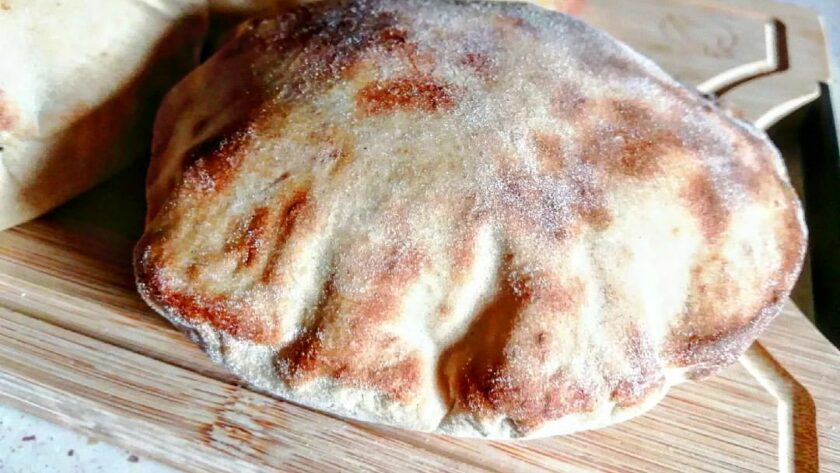
Vegan pita bread made with wholemeal flour is a soft, fluffy pocket bread you can bake at home in under ninety minutes from just six basic ingredients. The dough is mixed in a stand mixer, left to rise once in a warm spot and then baked in a very hot oven where it puffs up into the classic shape with a hollow centre. The result is incomparably better than shop-bought pita, smells of freshly baked bread and is perfect for stuffing with vegetables, hummus or falafel.
How do you get pita to actually puff up? Can the recipe be made without a stand mixer? How many minutes exactly does it bake and what is the best way to serve it? Here you will find the complete step-by-step recipe, practical tips for variations, interesting facts about pita bread, nutritional values and answers to the most frequently asked questions.
Why you will love this recipe
Homemade vegan pita bread has everything you want from freshly baked bread, yet it is surprisingly simple to make.
- Just 6 ingredients you most likely already have at home: wholemeal flour, water, yeast, olive oil, sugar and salt
- Wholemeal flour provides higher fibre content, more minerals and a lower glycaemic index than white flour
- Puffing effect in the oven creates a natural pocket that you simply cut open and fill with whatever you like
- Ready in 90 minutes including rising time, with actual baking taking just 5 minutes per batch
- Naturally vegan recipe without eggs, milk or butter, no substitutes needed
The recipe makes 10 pita breads, so you have a supply for the whole week.
Interesting facts about pita bread
Pita bread is one of the oldest types of bread in the world. Here are a few facts that might surprise you.
Archaeological finds from Jordan show that a predecessor of pita bread was baked over 14,000 years ago. This makes it one of the oldest documented types of bread in existence. The name “pita” comes from Greek and simply means “flatbread” or “cake”. Variations of pita are baked across the Middle East, North Africa, the Balkans and Turkey, where it is called “pide”.
The characteristic pocket inside pita forms thanks to steam. When thinly rolled dough enters an extremely hot oven (230-250 °C / 450-480 °F), the water in the dough rapidly turns to steam, which expands and separates the top and bottom layers. This is why it is crucial that the oven is properly preheated and the dough is thin enough. If the dough is too thick or the oven not hot enough, the pita will not puff up.
In many Western countries, pita bread became popular mainly through kebab and falafel shops, but in countries like Lebanon, Syria and Greece it is a fundamental part of every meal. In Greece, pita is served with every main course, much like regular bread in Central Europe. Interestingly, Greek pita tends to be thicker and without a pocket, while Lebanese and Syrian versions are thinner with a pronounced hollow inside.
Health benefits of wholemeal pita
Homemade wholemeal pita has several nutritional advantages over shop-bought white pita that are worth knowing about.
Wholemeal flour retains the bran and germ of the grain, where most of the fibre, B vitamins, iron and magnesium are found. One wholemeal pita bread (approximately 60 g) contains around 3-4 g of fibre, which is double compared to the white version. Fibre supports digestion, helps maintain stable blood sugar levels and contributes to a feeling of fullness.
The glycaemic index of wholemeal pita is around 50-55, while white pita has a GI of approximately 68. This means the wholemeal version raises blood sugar more slowly and evenly, which is appreciated not just by diabetics but by anyone who wants to avoid energy crashes after eating.
Olive oil in the recipe adds healthy monounsaturated fats that support heart and cardiovascular health. Each pita contains very little fat (approximately 1-2 g), making it a light bread suitable even for those watching their calorie intake.
Nutritional values
Approximate nutritional information per pita bread (recipe makes approximately 10 pieces).
| Nutrient | Amount per piece |
|---|---|
| Calories | ~165 kcal |
| Protein | 5 g |
| Carbohydrates | 31 g |
| Fat | 2 g |
| Fibre | 4 g |
Approximate values per serving. Actual amounts may vary depending on specific ingredients and quantities used.

Vegan pita bread
Ingredients
Dough:
- 400 g wholemeal flour
- 200 ml water lukewarm
- 10 g sugar
- 20 ml olive oil
- 5 g salt
- 4 g instant yeast
Instructions
- Mix the yeast with a little lukewarm water and sugar and let the starter activate.
- Add all remaining ingredients, the rest of the water and the starter to a stand mixer. Mix until combined and leave to rise in a warm place for about 1 hour.
- Divide the dough into 10 equal balls and let them rest for 20 minutes. Meanwhile, preheat the oven to 250 °C (480 °F).
- Roll each dough ball into an oval shape. They must be quite thin, approximately 0.5 cm.
- Place on a baking tray lined with baking paper and bake for about 5 minutes. Serve plain or fill with vegetables and tofu.
Tips and variations for vegan pita bread
The basic recipe is great on its own, but here are a few tweaks that can take it even further.
- Without a stand mixer: Feel free to make the dough by hand. Combine the dry ingredients, add the water with oil and the yeast starter, and knead by hand for about 8-10 minutes until the dough is smooth and elastic.
- Spelt flour: You can replace the wholemeal wheat flour with wholemeal spelt flour in a 1:1 ratio. The spelt version will be slightly more crumbly but tastes excellent.
- Herb variation: Add a teaspoon of dried oregano, rosemary or za’atar to the dough. Herbed pitas work brilliantly with hummus and salad.
- Stovetop instead of oven: You can also cook the pitas in a dry hot pan (no oil). Cook each side for about 2 minutes over medium-high heat until they puff up and develop golden spots.
- Storage and freezing: Store cooled pitas in a sealed bag or container. They keep at room temperature for 2 days or in the freezer for up to 2 months. Before serving, briefly warm the defrosted pita in the oven or on a dry pan.
For the best results, roll the dough really thin (0.5 cm) and let the oven preheat for at least 15 minutes at maximum temperature.
Serving suggestions
Homemade pita bread is incredibly versatile and pairs well with almost anything, but here are a few combinations that work best.
- With homemade hummus, fresh vegetables and falafel for a classic Middle Eastern lunch
- Stuffed with grilled vegetables, smoked tofu and tahini sauce as a hearty wrap
- Cut into triangles and baked with olive oil and za’atar for homemade pita chips
- Alongside soups as an alternative to regular bread, for example with our vegan lentil soup with crispy baked tofu
If you enjoy homemade bread, also try our vegan naan or vegan focaccia with tomatoes and basil, which complement pita beautifully on a shared table. No yeast in the cupboard? Our no yeast bread collection has eight vegan breads that rise without it.
Frequently asked questions
Why did my pita bread not puff up?
The most common cause is an insufficiently preheated oven or dough that is rolled too thick. The oven must be heated to 230-250 °C (450-480 °F) for at least 15 minutes beforehand. Roll the dough to a maximum thickness of 0.5 cm. Also make sure your yeast is fresh and the starter has risen properly.
How to store homemade pita bread?
Store cooled pitas in a resealable bag or airtight container. At room temperature they stay fresh for 2 days. For longer storage, freeze them; they keep in the freezer for up to 2 months. Before serving, simply warm them briefly in the oven at 180 °C (350 °F) for 2-3 minutes or on a dry pan.
Can vegan pita bread be made with white flour?
Yes, you can use plain white flour in the same quantity. Pita made with white flour will be softer and fluffier but will have less fibre and fewer minerals. For a compromise, try a mix of half wholemeal and half white flour.
How to cook pita bread on the stovetop?
Heat a dry (no oil) non-stick pan over medium-high heat. Place the rolled pita on the pan and cook for approximately 2 minutes on each side. The pita should puff up similarly to the oven method. Once golden spots appear, it is done.
How many calories does homemade wholemeal pita have?
One homemade wholemeal pita bread from this recipe contains approximately 165 kcal, 5 g of protein, 31 g of carbohydrates, 2 g of fat and 4 g of fibre. It is a lighter alternative to regular bread and works well even for those watching their calorie intake.
Homemade vegan pita bread made with wholemeal flour is a simple recipe that even a complete beginner can master, and the result will genuinely impress you. Once you taste freshly baked pita straight from the oven, you will never want to go back to shop-bought. Make them for a weekend lunch, a barbecue with friends, or as a weekly batch. And if you are looking for more homemade bread inspiration, check out our vegan homemade tortillas. How did your pitas turn out? Let us know in the comments!
Newsletter
Get our free e-books
Join the newsletter and download Our Vegan Christmas Kitchen straight away, 10 recipes for Czech cookies, gingerbread and vánočka. Then once a month, new places from the vegan map and new articles. Unsubscribe with one click.