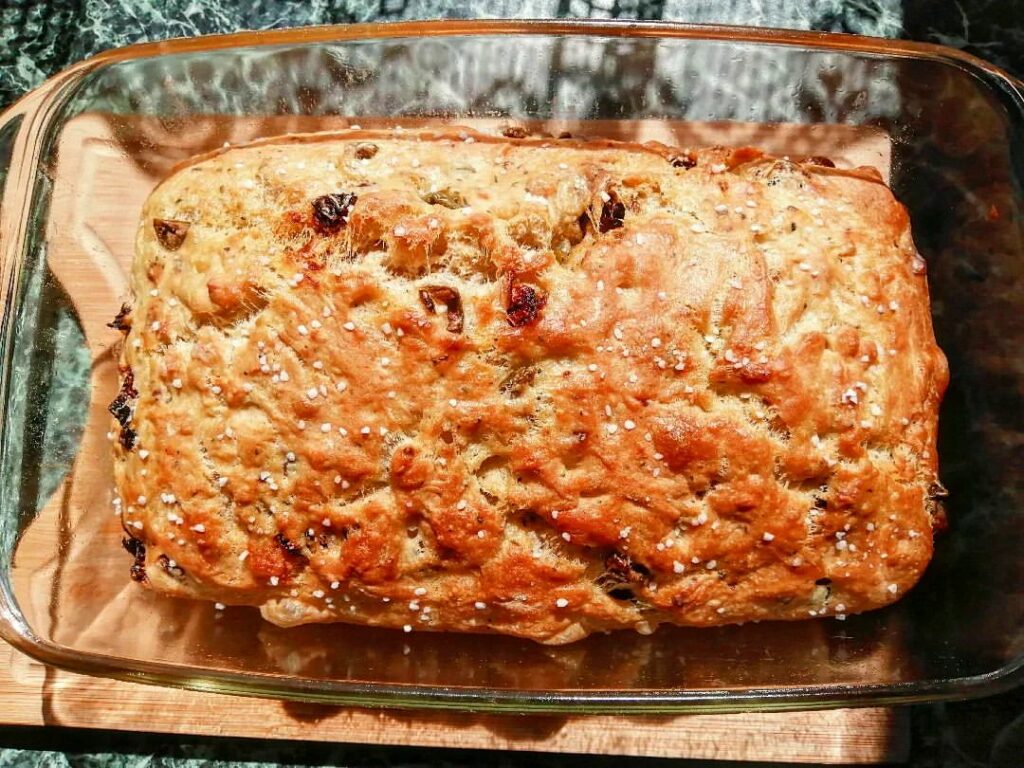
Vegan focaccia is the kind of bread that makes you wonder why you ever bought it from a shop. Crispy golden crust on top, soft and pillowy inside, loaded with olive oil, sun-dried tomatoes and olives. The best part? Traditional Italian focaccia is naturally plant-based. No eggs, no butter, no dairy needed. Just flour, water, yeast, salt and good quality olive oil. The result is a Mediterranean bread that fills your kitchen with the most incredible aroma and tastes even better than it smells.
How do you make focaccia really fluffy and not flat? Why is olive oil so important? Can you use fresh herbs instead of dried? And how do you make those signature dimples on the surface? You will find all the answers in this article, along with fun facts about the history of focaccia, health benefits of the key ingredients, and practical tips for customising this Italian bread to your taste.
Why you will love this recipe
Focaccia is a simple bread, but the result looks and tastes absolutely professional. Here are a few reasons why this recipe will become a regular in your kitchen.
- Naturally vegan, no egg replacers or dairy substitutes needed at all
- Minimal effort, the yeast does most of the work for you, with only about 15 minutes of hands-on time
- Sun-dried tomatoes and olives mixed right into the dough for flavour in every single bite
- Crispy crust, soft crumb thanks to a generous amount of olive oil in the baking tray
- Endlessly customisable, add rosemary, garlic, capers or cherry tomatoes depending on the season
Simply put, this is the kind of bread you will want to make every single week.
Interesting facts about focaccia
Focaccia has a history stretching all the way back to ancient Rome, where a similar flatbread was baked on stone hearths and flavoured with olive oil and herbs. The name comes from the Latin word focus, meaning “hearth” or “fireplace”. It was originally a bread of the poor, made from the most basic ingredients available in every household. Simple ingredients go just as far in our crispy homemade grissini with olives, made from only six.
In the Liguria region, home to the most famous version of focaccia, this bread is traditionally baked with generous amounts of extra virgin olive oil. Ligurian focaccia di Genova is so iconic that it has its own protected designation. Locals eat it for breakfast dipped in cappuccino, which might sound unusual, but in Italy it is a completely normal thing to do.
The signature dimples on the surface of focaccia are not just decorative. They serve a practical purpose. They catch olive oil and salt, so the flavour is evenly distributed across the entire surface. They also help regulate the rise, preventing the dough from puffing up unevenly. This simple trick is one of the reasons focaccia has such a characteristic taste.
Focaccia has spread across all of Italy over the centuries, and every region has added its own twist. In Bari, it is baked with tomatoes and olives. In Recco, it is stuffed with fresh cheese (which works beautifully with vegan cheese too). In Piedmont, they add cornmeal for a crunchier texture.
Health benefits of key ingredients
Focaccia is not just tasty, some of its ingredients bring genuinely interesting nutritional benefits. It is still bread and not a superfood, of course, but it is good to know what this Italian flatbread offers.
Olive oil is the foundation of every good focaccia and one of the healthiest fats you can eat. It is rich in monounsaturated fatty acids, particularly oleic acid, which helps lower LDL cholesterol levels. It also contains antioxidants, polyphenols and vitamin E. One tablespoon of olive oil provides approximately 120 kcal and 14 g of healthy fats.
Olives are an excellent source of iron, fibre and vitamin E. Both green and black olives contain approximately 115-145 kcal per 100 g and are naturally rich in beneficial fats. They also add a salty, punchy flavour to focaccia without needing to add extra salt.
Sun-dried tomatoes are a concentrated source of lycopene, a powerful antioxidant that supports heart and skin health. Compared to fresh tomatoes, sun-dried tomatoes have significantly higher levels of potassium, iron and fibre. 100 g of sun-dried tomatoes contains approximately 258 kcal, 14 g of protein and 12 g of fibre.
Nutritional values
Here are the approximate nutritional values per serving of focaccia (when divided into 8 pieces).
| Nutrient | Amount per serving |
|---|---|
| Calories | ~280 kcal |
| Protein | 7 g |
| Carbohydrates | 45 g |
| Fat | 8 g |
| Fibre | 2 g |
Approximate values per serving. Actual amounts may vary depending on specific ingredients and quantities used.

Vegan focaccia
Ingredients
- 500 g flour
- 400 ml lukewarm water
- 2 tsp salt
- 1 packet of dried yeast (7 g)
- 1 handful of chopped sun-dried tomatoes
- 1 handful of chopped olives
- 2 tsp dried basil
- 2 tsp dried oregano
- 50 ml olive oil
- coarse salt
Instructions
- Mix the flour, yeast and salt together in a large bowl. Pour in the water and knead the dough.
- Add the chopped sun-dried tomatoes, olives, basil and oregano. Mix well and leave to rise for about 2 hours.
- Turn the risen dough out into a baking tray greased with olive oil. Cover with a tea towel and leave to rise for another 10 minutes.
- Preheat the oven to 180°C. Make dimples in the dough with your fingers, drizzle with olive oil and sprinkle with coarse salt.
- Bake for about 30 minutes until golden brown.
Tips and variations
The basic focaccia recipe is brilliant on its own, but with small tweaks you can make it a slightly different experience every time.
- Rosemary focaccia: add fresh rosemary sprigs on top of the dough before baking. The combination of rosemary, coarse salt and olive oil is the most classic version.
- Garlic focaccia: mix 3-4 crushed garlic cloves into the olive oil you brush on the surface. For a milder flavour, use roasted garlic instead.
- Gluten-free focaccia: replace the regular flour with a gluten-free bread flour blend. The dough will be stickier, but the result is surprisingly good.
- Storage: focaccia is best fresh, but it keeps for 2-3 days in an airtight container. Reheat briefly in the oven at 180 °C for 5 minutes to restore the crispiness.
- Freezing: cut into portions, wrap in cling film and freeze. It keeps for up to a month. Defrost at room temperature or directly in the oven.
Experiment with seasonal toppings. In summer, add cherry tomatoes and fresh basil. In autumn, try roasted pumpkin and sage.
What to serve with focaccia
Focaccia is wonderful on its own, but it shines even brighter as a side dish or part of a bigger meal. Try it with vegan curry soup, where it works perfectly instead of regular bread. It also pairs beautifully with vegan mushroom spread, which you can smear directly onto warm focaccia.
If you want to turn focaccia into a main meal, slice it in half and fill it with grilled vegetables, hummus and rocket. It also makes a great base for bruschetta with tomatoes and basil, or simply dip it into quality olive oil with balsamic vinegar.
Frequently asked questions
Why is my focaccia flat and not rising?
The most common cause is inactive yeast. Check the expiry date and use lukewarm water (about 37 °C) when preparing the dough. Hot water kills the yeast, while cold water does not activate it. Let the dough rise in a warm, draught-free spot for at least 2 hours.
What flour is best for focaccia?
The best choice is plain white flour (or standard all-purpose). You can also try bread flour for a chewier texture. Wholemeal flour works, but the focaccia will be denser and heavier. In that case, add a little more water to compensate.
How do you make the dimples in focaccia?
Dip your fingers in olive oil and gently press them into the risen dough. Do not push all the way to the bottom of the tray, shallow dimples are enough. The oil on your fingers prevents sticking and adds extra crispiness to the crust. Make the dimples just before baking.
Can you make focaccia the night before?
Yes, and it actually improves the flavour. Prepare the dough, place it in an oiled baking tray, cover with cling film and let it rise overnight in the fridge. In the morning, take it out, leave for 30 minutes at room temperature, make the dimples and bake. The slow cold rise develops a deeper, more complex flavour.
How to store focaccia and how long does it last?
Fresh focaccia is best on the day it is baked, but it keeps for 2-3 days in an airtight container at room temperature. Reheat it briefly in the oven before serving. Frozen focaccia keeps for up to a month. Do not store it in the fridge, as it dries out and loses its texture quickly.
Focaccia is one of those breads that anyone can make, yet it always looks and tastes like it came straight from an Italian bakery. Try it alongside vegan olive bread as part of a homemade brunch spread and you will see that home baking does not have to be complicated. If you enjoyed this recipe, share it with friends who think vegan baking is difficult. This is the best proof that it really is not.
Newsletter
Get our free e-books
Join the newsletter and download Our Vegan Christmas Kitchen straight away, 10 recipes for Czech cookies, gingerbread and vánočka. Then once a month, new places from the vegan map and new articles. Unsubscribe with one click.