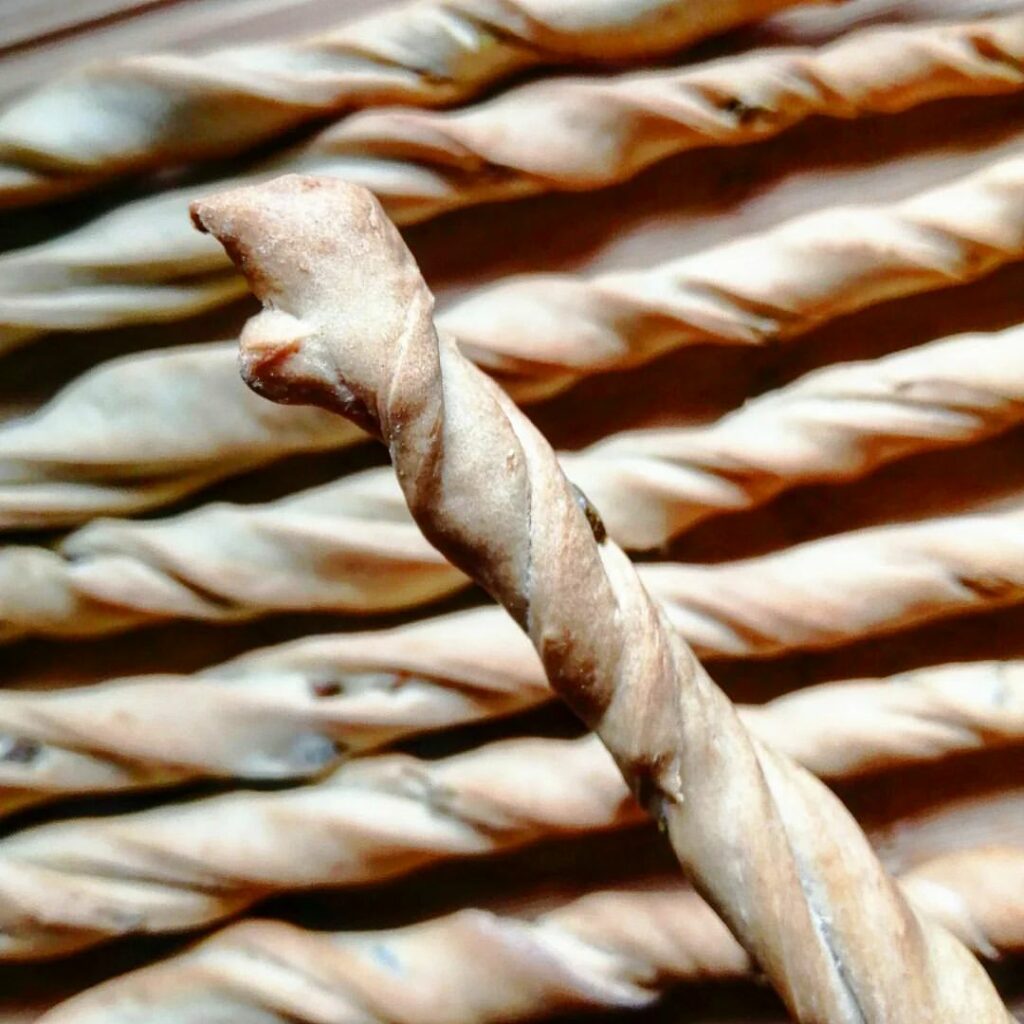
Vegan Italian grissini with olives are one of the simplest homemade breads you can make. Just six ingredients, no long rising time, and in under 40 minutes you’ll have crispy, thin breadsticks with olives that taste exactly like they came from an Italian restaurant. The dough is foolproof, even a complete beginner will get perfect results every time.
How do you get grissini really crispy? Can you make them without olives? What can you add for more interesting flavours? And how do you store them so they don’t go soft? In this article you’ll find answers to everything you need to know about homemade grissini, plus fascinating history and serving tips.
Why you’ll love this recipe
Homemade grissini have several advantages over shop-bought ones, and here are the main reasons.
- Six ingredients, no special equipment, just a bowl, rolling pin, and oven
- Naturally vegan, traditional grissini never contained milk or eggs
- Olives add a salty, Mediterranean flavour that turns simple bread into something special
- Perfect as a snack, appetiser, or soup companion, they suit every occasion
- Fun for the whole family, children love shaping and twisting the sticks
Once you bake grissini at home for the first time, you’ll probably never buy the packaged version again.
Interesting facts about grissini you might not know
Grissini have a surprisingly rich history. They were invented in 1679 in Turin, Italy, when baker Antonio Brunero created thin, easily digestible breadsticks for the young Duke Vittorio Amedeo II, who suffered from digestive problems. Physicians believed that thin, thoroughly baked bread would be gentler on the Duke’s stomach than a traditional loaf, and they were right.
Napoleon Bonaparte was reportedly a huge fan of grissini, calling them “les petits bâtons de Turin” (the little sticks of Turin) and having them regularly delivered from Piedmont. Traditional grissini torinesi are hand-stretched to the width of the baker’s arms (roughly 80 cm) and baked directly on the oven floor. Today grissini are popular worldwide and come in dozens of varieties, from sesame and garlic to rosemary and everything in between.
The basic grissini dough is inherently vegan, as it contains only flour, water, yeast, olive oil, and salt. Unlike many other breads, eggs and milk were never part of the traditional recipe. This makes grissini one of the few Italian breads that is vegan in its original form.
Health benefits of homemade grissini
Homemade grissini have one major advantage over shop-bought ones: you know exactly what’s in them. No preservatives, emulsifiers, or palm oil.
Olive oil, a key ingredient in this recipe, is rich in oleic acid and polyphenols. Regular olive oil consumption is linked to a reduced risk of cardiovascular disease. The four tablespoons in this recipe are divided among roughly 20 breadsticks, so each one contains just a small amount of healthy fats.
Olives contribute vitamin E, iron, and healthy monounsaturated fatty acids. They’re also a source of antioxidants, including oleuropein, which has anti-inflammatory properties. One serving of grissini (4–5 sticks) is a light snack with a moderate carbohydrate content that satisfies without weighing you down.
Nutritional values
Approximate values per serving (4–5 breadsticks out of 20 total).
| Nutrient | Amount per serving |
|---|---|
| Calories | ~200 kcal |
| Protein | 5 g |
| Carbohydrates | 30 g |
| Fat | 6 g |
| Fibre | 1.5 g |
Approximate values per serving, depending on specific ingredients and quantities used.
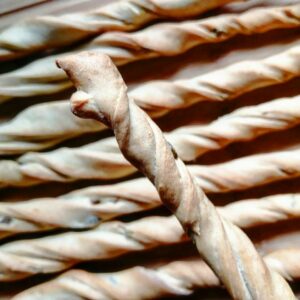
Vegan Italian grissini with olives
Ingredients
- 400 g Plain flour
- 200 ml Lukewarm water
- 4 tbsp Olive oil
- 2 tsp Salt
- 1 Packet of dried yeast (7 g)
- 1 Handful of chopped olives
Instructions
- Mix the flour with the yeast and salt in a bowl. Add the water and olive oil and knead the dough.
- Add the chopped olives, mix in, and let the dough rest for 10–15 minutes.
- Roll the dough into a thin sheet and cut into roughly 20 strips. Join the two ends of each strip together and twist gently.
- Preheat the oven to 180°C (350°F) and bake for approximately 20 minutes until golden and crispy.
Tips and variations for homemade grissini
The basic recipe is wonderful on its own, but grissini can be adapted in almost endless ways.
- Without olives: Skip the olives and add sun-dried tomatoes, seeds (sesame, poppy, sunflower), or fresh rosemary instead.
- Garlic grissini: Mix 1 teaspoon of garlic powder into the dough, or add 2 cloves of freshly pressed garlic.
- Whole wheat version: Replace half the white flour with whole wheat. The dough will be slightly stiffer, but the grissini will have a more robust flavour and extra fibre.
- Crispier results: Shape the sticks as thin as possible and bake 2-3 minutes longer. The thinner they are, the crispier they get.
- Storage: Keep baked grissini in an airtight container at room temperature. They stay crispy for 4-5 days. If they soften, pop them back in the oven at 150°C for 5 minutes.
Before baking, brush the sticks with a little olive oil and sprinkle with coarse salt or sesame seeds for extra texture.
What to serve with homemade grissini
Grissini are versatile bread that suits all sorts of occasions.
The most classic way is to serve them as an appetiser with hummus, olive oil, and balsamic vinegar. They also work brilliantly as a side with soup, try them with our vegan curry soup or creamy red lentil soup. For parties or picnics, stand them in a jar and offer with various dips. And if you love Italian breads, check out our vegan olive breadsticks too, a slightly different recipe but equally addictive.
Frequently asked questions
How do you make grissini really crispy?
The key to crispy grissini is thin shaping and thorough baking. Stretch the sticks as thin as possible (roughly pencil thickness) and bake until evenly golden. If they’re still soft after baking, leave them in the oven for 3-5 more minutes with the door closed and the heat turned off.
Does grissini dough need to rise?
The dough in this recipe doesn’t need a long rise. Just let it rest for 10-15 minutes so the yeast activates and the dough becomes more pliable. If you want a more developed flavour, you can let it rise for up to an hour, but it’s not necessary.
Can you freeze grissini?
Yes, baked grissini can be frozen in a sealed bag for 2-3 months. After thawing, place them in the oven at 150°C for 5 minutes to restore their crispness. You can also freeze unbaked dough and bake fresh grissini whenever you need them.
Are shop-bought grissini vegan?
Most commercially produced grissini are vegan, since the traditional recipe doesn’t include animal products. However, always check the ingredients list, as some brands add butter, milk solids, or honey. Making them at home gives you full control over every ingredient.
What flour is best for grissini?
Plain white flour (or all-purpose) gives the best results. For a more rustic version, mix half white and half whole wheat flour. Pure whole wheat grissini will be denser and less crispy, but more flavourful.
Homemade vegan grissini are one of those recipes that are so simple, you’ll wonder why you haven’t been making them all along. Crispy, fragrant, and with olives absolutely irresistible. Give them a try and let us know what variations you come up with. And if you’re looking for more homemade bread inspiration, take a look at our vegan olive bread. You’ll be amazed how easy it is to bake at home without any animal ingredients.
Newsletter
Get our free e-books
Join the newsletter and download Our Vegan Christmas Kitchen straight away, 10 recipes for Czech cookies, gingerbread and vánočka. Then once a month, new places from the vegan map and new articles. Unsubscribe with one click.