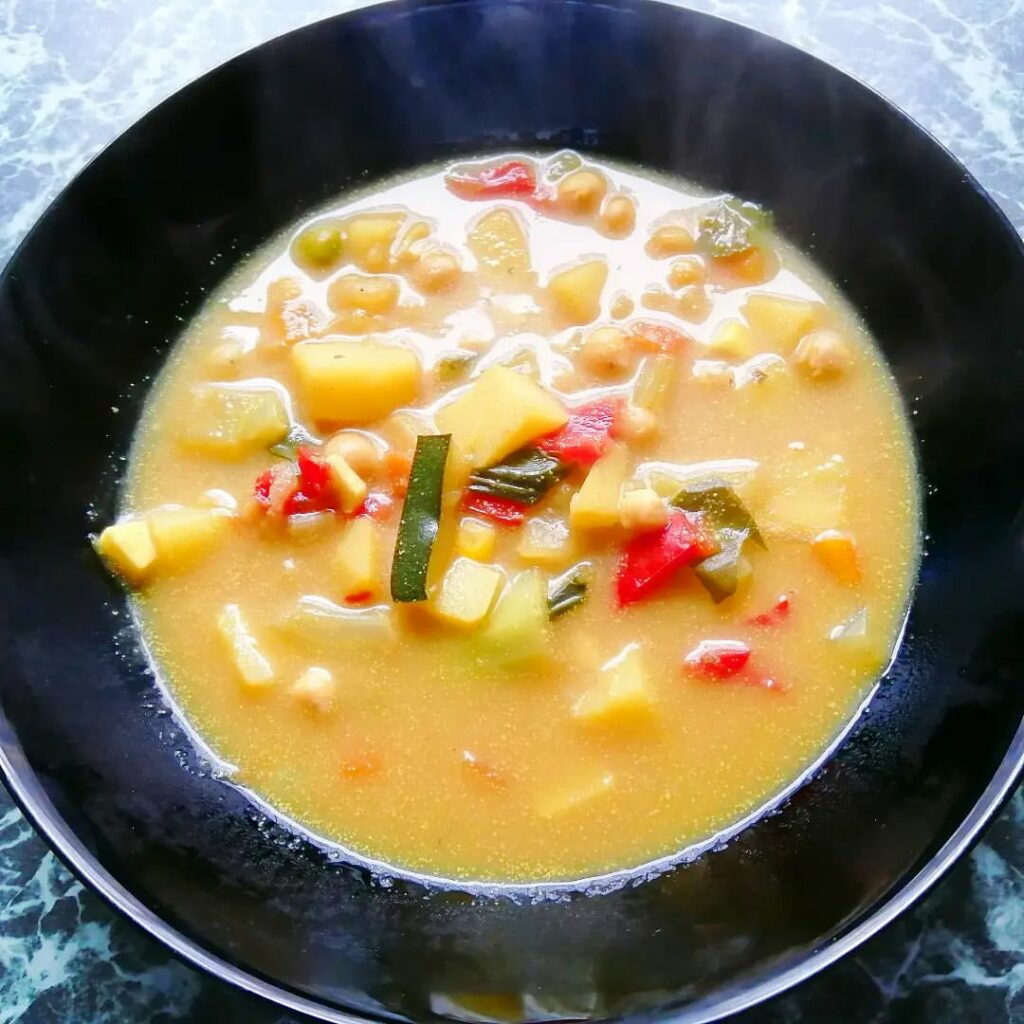
Vegan curry soup is the kind of meal you’ll want on repeat all winter long (and honestly, the rest of the year too). Fragrant, warming and loaded with chickpeas, potatoes and vegetables, this soup brings the best of Indian-inspired flavours to your kitchen in about 30 minutes. Curry paste, fresh ginger and garlic give it a depth of flavour you wouldn’t expect from such a simple recipe. Whether you’re looking for a quick weeknight dinner or a batch-cooking staple, this one delivers every time.
How do you make curry soup properly creamy without coconut milk? Can you swap out the vegetables for whatever you have at home? And how do you season it so it tastes like it came from a restaurant? You’ll find all of that in this article, along with tips for variations, nutritional info and answers to the most common questions.
This curry soup is one of the high-protein picks in our list of vegan soups.
Why you’ll love this recipe
This soup works every single time, even if you make it three times a month.
- Ready in 30 minutes: no complicated techniques, just chop, sauté and simmer.
- High in protein thanks to chickpeas: one tin of chickpeas adds roughly 15 g of protein per serving, making this soup genuinely filling.
- Warming spices: the combination of curry paste, ginger and chilli warms you up from the inside on cold days.
- Flexible recipe: works with sweet potatoes instead of regular ones, coconut milk instead of plant milk, or tofu instead of chickpeas.
- Great for meal prep: keeps in the fridge for 4–5 days and the flavour only gets better over time.
If you’re after a soup that’s both light and satisfying, with the kind of aroma that fills your entire kitchen, this is it.
Interesting facts about curry and soup
The curry powder we know in Europe doesn’t actually exist as a single spice blend in India. The word “curry” comes from the Tamil word “kari”, which simply means “sauce” or “dish with sauce”. British colonists in the 18th century created a universal spice blend they called “curry powder” so they could recreate the flavours of Indian cooking back home. In reality, every Indian household mixes spices differently depending on the dish and the region.
The main ingredient in most curry blends is turmeric, which gives them their distinctive golden colour. Curcumin, the active compound in turmeric, is one of the most studied natural antioxidants in the world. Research shows it may support joint health, digestion and immune function. To help your body absorb curcumin more effectively, all you need is a pinch of black pepper, which can increase its bioavailability by up to 2,000%.
Ginger, another key ingredient in this recipe, has been used in traditional medicine for thousands of years. Gingerol, the main bioactive compound in ginger, has powerful anti-inflammatory and antioxidant effects. Fresh ginger also helps with nausea and supports digestion, making it an ideal addition to winter soups.
Curry soups are cooked across Southeast Asia, from Thai versions with coconut milk and lemongrass to Indian varieties with lentils and yogurt. This recipe combines readily available ingredients with authentic flavours, proving that a brilliant curry soup doesn’t require a trip to a specialist shop.
Health benefits of vegan curry soup
This soup isn’t just tasty. Thanks to its combination of ingredients, it also offers some real nutritional benefits worth knowing about.
Chickpeas are one of the best plant-based sources of both protein and fibre. One tin (roughly 240 g drained) contains approximately 18 g of protein and 12 g of fibre. Chickpeas also have a low glycaemic index, meaning they won’t cause sharp spikes in blood sugar. They’re also rich in folate, iron and manganese, minerals important for energy metabolism.
Potatoes often get a bad reputation, but it’s undeserved. They’re an excellent source of potassium (one medium potato contains more potassium than a banana), vitamin C and vitamin B6. In soup, they also act as a natural thickener thanks to the starch they release during cooking.
Curry spices and ginger work together to create a synergistic effect. Curcumin in curry supports anti-inflammatory processes in the body, while gingerol in ginger aids digestion and may help reduce muscle soreness after exercise. Both compounds are antioxidants that help protect cells from oxidative stress.
Nutritional values
One serving of vegan curry soup contains approximately these nutritional values.
| Nutrient | Amount per serving |
|---|---|
| Calories | ~220 kcal |
| Protein | 9 g |
| Carbohydrates | 35 g |
| Fat | 4 g |
| Fibre | 7 g |
Approximate values per serving. Actual amounts may vary depending on specific ingredients and quantities used.
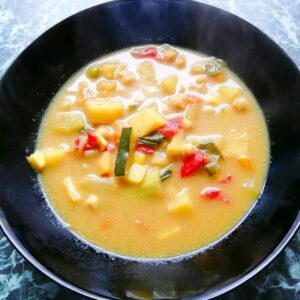
Vegan curry soup
Ingredients
- 750 ml vegetable broth
- 100 ml plant milk
- 1 tin of chickpeas drained
- 2 small potatoes peeled and diced
- 1 carrot diced
- 1 bell pepper diced
- 1 onion diced
- 1 handful of peas
- 4 cloves of garlic minced
- 2 tsp curry paste
- curry powder to taste
- herb salt to taste
- black pepper to taste
- fresh ginger grated, to taste
- chilli to taste
Instructions
- Dice the onion and mince the garlic. Sauté in a large pot until softened. Sprinkle with grated ginger and curry powder.
- Dice the carrot, potatoes and bell pepper and add to the pot. Add the peas, curry paste, vegetable broth and plant milk.
- Season to taste with the spices listed above. Add the drained chickpeas.
- Simmer until the vegetables are tender, about 15-20 minutes. Serve hot with naan or crusty bread.
Tips and variations
The basic recipe is great on its own, but a few tweaks can take it even further.
- Creamy version: after cooking, blend half the soup with a stick blender and pour it back in. You’ll get a creamy consistency while keeping some vegetable chunks.
- With coconut milk: replace the plant milk with full-fat coconut milk for a richer, Thai-inspired version.
- Sweet potatoes instead of regular: sweet potatoes add a natural sweetness that beautifully complements the heat of the curry.
- Extra protein: add 200 g of cubed tofu or tempeh, pan-fried separately and added at the end.
- Storage and meal prep: store in a sealed container in the fridge for up to 5 days. Freeze for 2-3 months. When reheating, add a splash of broth if the soup has thickened.
Don’t be afraid to experiment with spices. A pinch of cinnamon, cumin or garam masala will give you a slightly different flavour every time.
What to serve with curry soup
Curry soup is wonderful on its own, but with the right bread on the side it becomes a complete meal. This soup is one of our four vegan curry recipes.
It pairs beautifully with homemade vegan naan that you can dip straight into the bowl. For something simpler, try it with a slice of vegan olive bread or fresh homemade oat buns. You can also serve the soup over cooked rice, just pile it into the bowl and ladle the soup around it.
For toppings, we recommend a drizzle of olive oil, fresh coriander (if you’re a fan) and a sprinkle of chilli flakes for extra warmth.
Frequently asked questions
Is vegan curry soup gluten-free?
Yes, this recipe is naturally gluten-free as long as you use a curry paste without added gluten. Most curry pastes are gluten-free, but always check the label. All other ingredients (chickpeas, potatoes, vegetables, spices) are naturally gluten-free.
How do you thicken vegan curry soup?
The easiest way is to blend part of the soup with a stick blender and pour it back into the pot. The potatoes in the recipe act as a natural thickener. If you want it even thicker, stir a tablespoon of cornstarch into cold water, add it to the soup and simmer briefly.
Can you freeze vegan curry soup?
Yes, this soup freezes brilliantly. Let it cool completely, transfer to airtight containers and freeze for up to 2-3 months. When reheating, warm it over medium heat and add a splash of broth, as the soup tends to thicken slightly after freezing.
What can I use instead of chickpeas in curry soup?
Red lentils are an excellent substitute as they break down during cooking and naturally thicken the soup. You can also use white beans or cubed tofu. Red lentils cook in just 10-15 minutes and don’t need soaking beforehand.
Which curry paste is vegan?
Most yellow and red curry pastes sold in supermarkets are vegan, but always read the ingredients. Some Thai curry pastes contain shrimp paste or fish sauce. Safe choices include Indian curry pastes from brands like Patak’s, or Thai pastes specifically labelled as vegan. You can also use curry powder instead, just add a bit more. You will run into the same issue in Thai restaurants, which we cover in our guide to whether Thailand is vegan friendly.
Vegan curry soup is exactly the kind of meal you want in your rotation for cold days, quick lunches and those evenings when you’d rather not spend more than half an hour in the kitchen. It’s simple, affordable and tastes slightly different every time depending on what vegetables you have at home. If you love soups, try our vegan roasted sweet potato and carrot soup or creamy red lentil soup with crispy tofu next. And if you enjoyed this recipe, we’d love it if you shared it with friends or let us know how yours turned out.
Newsletter
Get our free e-books
Join the newsletter and download Our Vegan Christmas Kitchen straight away, 10 recipes for Czech cookies, gingerbread and vánočka. Then once a month, new places from the vegan map and new articles. Unsubscribe with one click.