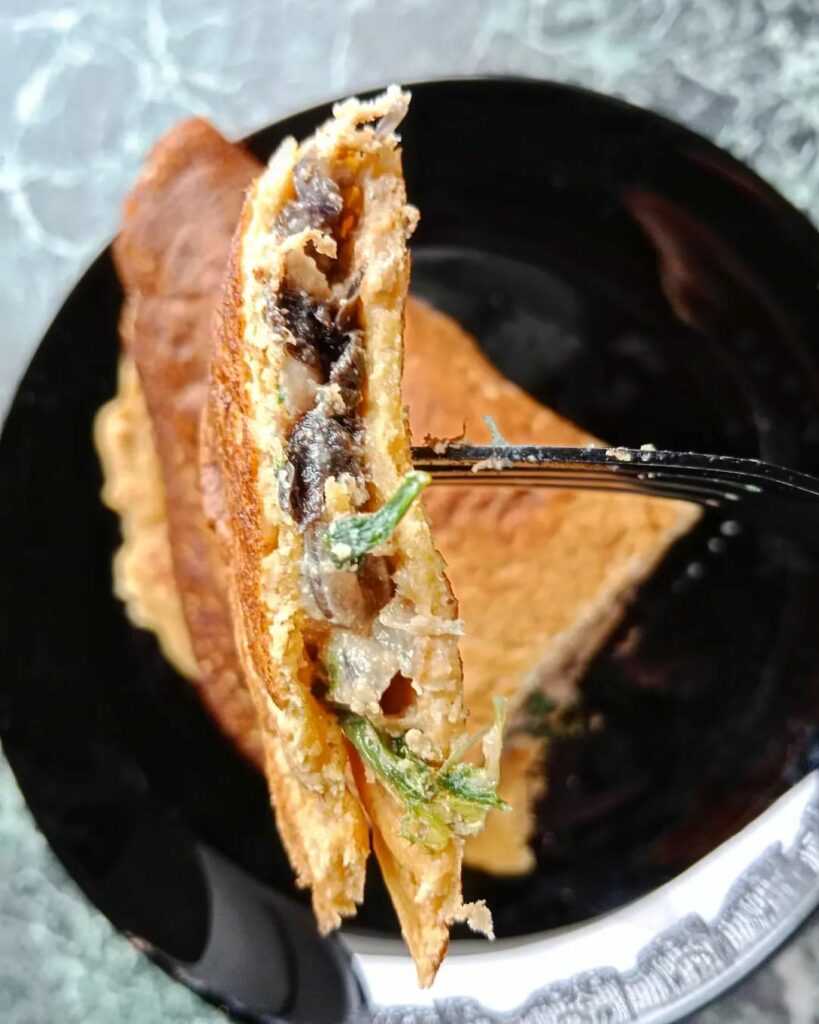
Vegan chickpea pancakes with spinach are one of those recipes that proves plant-based eating does not have to mean compromise. The batter comes together in minutes from chickpea flour, water and a handful of spices, and after twenty minutes you have firm, flavourful pancakes filled with sautéed spinach, mushrooms and a generous layer of creamy hummus. They work for breakfast, brunch or a light lunch, and they are just as satisfying for non-vegans as they are for committed plant-based cooks.
What makes this recipe stand out is the chickpea flour itself. It is naturally gluten-free, with around 22 g of protein per 100 g of dry flour, a low glycaemic index and a naturally savoury, slightly eggy flavour that comes from nutritional yeast. You do not need eggs, dairy or any special egg replacer: the flour does all the work on its own. For more high-protein pancake ideas, try our vegan savoury oat pancakes or, on a sweet day, the protein pancakes with cacao and cinnamon.
Why you will love this recipe
Here are five reasons this recipe earns a permanent place in the weekly rotation.
- Naturally gluten-free – with no substitutions needed chickpea flour handles everything
- Around 14 g of protein per serving – from the batter alone, before the filling
- Ready in 20 minutes – including the filling, a genuinely fast meal
- Packed with vegetables -spinach and mushrooms in the filling add iron, fibre and B vitamins
- Filling without heaviness – hummus adds healthy fats and creaminess without weighing you down
Convinced? Here is what you probably did not know about chickpea flour.
Things about chickpea flour that might surprise you
Chickpea flour, known as besan or gram flour in South Asia, has been used in cooking for at least 7,000 years. The pancakes made from it called besan chilla are one of the most popular street foods in India and Pakistan, eaten for breakfast across the subcontinent and sold at every corner stall. The recipe you are making today is essentially the same dish, just with a European twist.
Chickpeas themselves are among the oldest cultivated crops in the world. Archaeological evidence from Turkey and the Middle East places their domestication at over 10,000 years ago. Today they are the third most widely consumed legume on the planet and a primary protein source for more than a billion people who eat little or no meat.
Nutritionally, chickpea flour outperforms wheat flour quite significantly. It contains approximately 22 g of protein per 100 g, 10 g of fibre and 4 mg of iron. It also has a low glycaemic index, meaning it does not cause the blood sugar spike that refined wheat flour can produce, making it a particularly good choice for sustained energy throughout the morning.
One more thing worth knowing: chickpea flour acts as a natural binder when mixed with water, behaving in much the same way as eggs in a batter. This is why you can make firm, structured pancakes from it without adding any egg substitute. The flour holds everything together on its own. It is also why they sit among the savoury flatbreads in our no yeast bread collection.
Why these pancakes are so good for you
A serving of these pancakes delivers around 14 g of plant-based protein from the chickpea flour alone. For context, a medium egg contains around 6 g of protein, so two pancakes give you the protein equivalent of more than two eggs, with zero cholesterol and no saturated fat.
Spinach is one of the most nutrient-dense vegetables available. It is rich in iron, magnesium, vitamin K, vitamin C and folate. Cooking spinach briefly actually makes its iron more bioavailable by breaking down oxalic acid, which otherwise inhibits absorption, so the sautéed filling here is nutritionally better than raw spinach would be.
The hummus filling adds healthy fats from tahini and olive oil, along with additional plant-based protein from chickpeas. If you want to know more about getting enough protein on a vegan diet, our guide to plant-based protein sources covers exactly that. The mushrooms round out the filling with B vitamins, selenium and a deep umami flavour that makes the whole thing taste rich and satisfying without any cheese or cream.
The combination of protein, fibre and healthy fats in this meal means it will keep you full for hours, exactly what you want from a breakfast or lunch dish.
Nutritional values (approximate per serving)
| Nutrient | Amount per serving |
|---|---|
| Calories | 310 kcal |
| Protein | 14 g |
| Carbohydrates | 38 g |
| Fat | 9 g |
| Fibre | 7 g |
Approximate values per serving. Will vary depending on specific ingredients and quantities used.

Vegan Chickpea Pancakes with Spinach
Ingredients
Batter:
- 300 ml Water
- 200 g Chickpea flour
- 20 ml Olive oil
- Half a packet of baking powder
- 1 tsp Salt
- Nutritional yeast
- Garlic powder
- Black pepper
Filling:
- 1 Tub of hummus
- 50 g Fresh spinach
- 50 g Button mushrooms
- 1 Red onion
- Herb salt
- Black pepper
- Soy sauce
- A splash of water
Instructions
- Mix all the batter ingredients together until smooth. Let the batter rest for 5–10 minutes while you prepare the filling. Cook the pancakes in a non-stick pan over medium-high heat until golden on both sides. The first pancake is always a test, don't worry if it's imperfect.
- Sauté the spinach, sliced onion and mushrooms in a pan. Add a splash of water and season with herb salt, pepper and soy sauce. Cook until the spinach has wilted and the mushrooms are soft.
- Spread each pancake with a generous layer of hummus, add the spinach and mushroom filling, and fold or roll. Serve warm.
Tips and variations
The recipe is straightforward, but a few small details make a real difference to the result.
- Let the batter rest for 5-10 minutes: after mixing, the chickpea flour absorbs the water and the batter becomes firmer and easier to handle.
- The first pancake is always a test: the pan needs time to reach the right temperature. Do not panic if it sticks or looks uneven.
- Filling variations: swap hummus for tahini sauce, mashed avocado or roasted red pepper spread.
- For certified gluten-free: check the chickpea flour label, as some products are processed in facilities that also handle gluten
- Make-ahead friendly: unfilled pancakes keep in the fridge for 3-4 days: reheat in a dry pan for 1-2 minutes each side
These pancakes are also excellent cold, which makes them a great packed lunch option for work or school.
What to serve with them
These pancakes are a complete meal on their own, but a few simple additions make them even better.
A simple green salad with lemon dressing or sliced tomatoes with fresh herbs works perfectly alongside. If you are serving them as a light dinner for guests, put a bowl of extra hummus, some olives and cherry tomatoes on the table and let everyone fill their own pancakes. Serve them warm, straight from the pan, while the edges are still crispy.
Frequently asked questions
Can I bake chickpea pancakes in the oven instead of a pan?
The pan gives a much better result. The direct contact with a hot surface creates crispy edges and a firm structure that the oven cannot replicate. In the oven, the pancakes tend to come out flat and rubbery rather than light and crisp.
What can I use instead of hummus in the filling?
Tahini sauce, mashed avocado or a simple scrambled tofu spread all work well. Hummus gives the best creamy texture and balances the saltiness of the spinach, which is why we recommend it as the base.
How long do chickpea pancakes keep in the fridge?
Unfilled pancakes keep for 3-4 days in the fridge. Store the filling separately. Reheat in a dry non-stick pan for 1-2 minutes per side. Avoid reheating in oil or they will become greasy.
Are these pancakes suitable for coeliacs?
Chickpea flour is naturally gluten-free, but it can be cross-contaminated during production. Look for products labelled as certified gluten-free if you are cooking for someone with coeliac disease.
Can I make the batter the night before?
Yes. The batter thickens overnight in the fridge but a quick whisk and a splash of water brings it back to the right consistency. The result will be just as good.
Chickpea pancakes with spinach are the kind of recipe you make once and then add to permanent rotation. They are fast, filling and genuinely delicious, and they work equally well for an experienced vegan cook and someone who has never made a plant-based meal before. Give them a try, and if you share the result on Instagram please tag us at @thevegantravelbible. For more ideas on building a protein-rich plant-based diet, our guide to the best vegan protein sources is a good place to start.
Newsletter
Get our free e-books
Join the newsletter and download Our Vegan Christmas Kitchen straight away, 10 recipes for Czech cookies, gingerbread and vánočka. Then once a month, new places from the vegan map and new articles. Unsubscribe with one click.