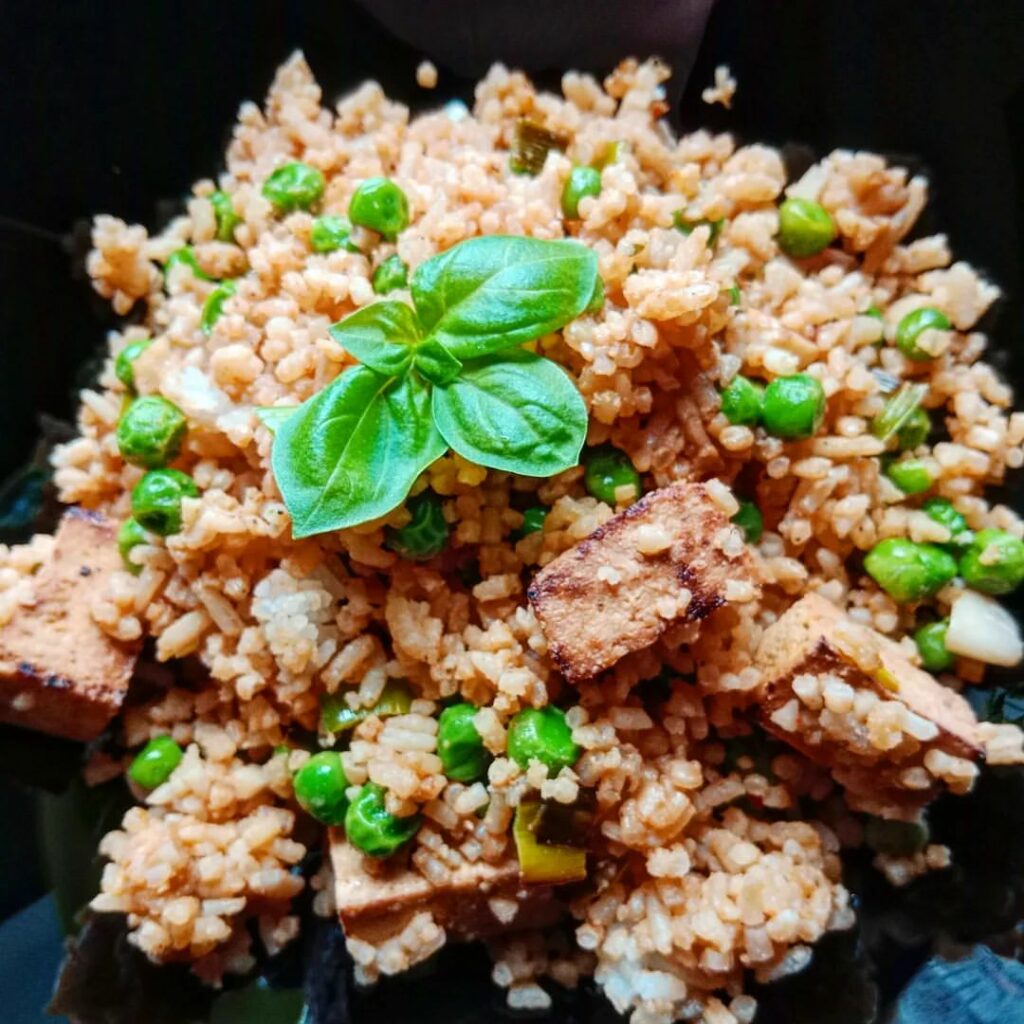
This vegan fried rice with peanut sauce is one of those weeknight recipes that comes together in 20 minutes and leaves everyone at the table genuinely satisfied. Crispy tofu coated in cornstarch, stir-fried rice, sweet peas, and garlic are brought together by a rich, silky peanut sauce that coats every grain. It is bold, deeply flavoured, and completely plant-based. Whether you are a long-time vegan or just looking for a quick and satisfying meatless dinner, this dish delivers every time.
In this article you will find the full recipe, interesting background on fried rice and peanut butter, the health benefits of the key ingredients, practical tips for getting the crispiest tofu and the smoothest sauce, and answers to the most common questions about making great vegan fried rice.
Why you will love this recipe
This is not a bland bowl of plain fried rice. The peanut sauce transforms it into something genuinely crave-worthy. Here are five specific reasons to add this to your weekly rotation:
- Ready in 20 minutes using ingredients you likely already have at home or in the freezer
- The peanut sauce adds approximately 8 g of protein per serving from peanut butter alone, alongside healthy fats and bold flavour
- Cornstarch-coated crispy tofu has a texture that even tofu sceptics tend to love
- Naturally vegan and easily adapted to be gluten-free by swapping soy sauce for tamari
- A brilliant use for leftover cooked rice, which actually fries better than freshly cooked rice
It is also a recipe that works for the whole family. With the chilli reduced or omitted, it is mild enough for children, and the combination of flavours is approachable enough to win over guests who are new to plant-based cooking.
Interesting facts about fried rice and peanut sauce
Fried rice (called “chao fan” in Mandarin) is one of the oldest dishes in Chinese cuisine, with a history dating back to around the 4th century AD. It originated as a way to use up leftover cooked rice from the previous day, since day-old cold rice fries far better than freshly cooked rice because it has lower moisture content. Today fried rice is a staple across the whole of Southeast Asia, with hundreds of regional variations including Thai khao phat, Indonesian nasi goreng, and Japanese yakimeshi.
Peanut butter, the base of the sauce, is a relatively modern invention despite peanuts themselves being cultivated in South America for over 7,000 years. Modern peanut butter was first patented by Marcellus Edson in Canada in 1884. In Asian cooking, however, peanut paste has been used in sauces for centuries, particularly in Thai, Indonesian, and Chinese cuisines. The satay sauce family, to which our peanut sauce belongs, is now one of the most popular condiment categories in global cooking.
The technique of coating tofu in cornstarch before pan-frying originates from Japanese cooking, where it is known as “karaage tofu”. The starch creates a thin, crispy shell that browns beautifully in a hot pan while keeping the inside soft and tender. Crucially, the crispy coating also helps the tofu absorb the flavour of the peanut sauce rather than letting it slide off, which is why the two elements work together so well.
The combination of rice, tofu, and peanut sauce was intuitively constructed as a nutritionally complete meal long before anyone counted macronutrients. Rice provides sustained energy from complex carbohydrates, tofu delivers complete plant protein with all essential amino acids, and peanut butter contributes healthy fats along with vitamin E and magnesium. It is a genuinely balanced plate built entirely from plants.
Health benefits of vegan fried rice with peanut sauce
Beyond being delicious and quick to make, this dish is also genuinely good for you. Here is what the key ingredients contribute to your health.
Peanut butter is a nutritional powerhouse. Two tablespoons (around 30 g) provide approximately 8 g of protein, 16 g of predominantly monounsaturated fats, and about 190 calories. It is rich in vitamin E, magnesium, phosphorus, and niacin (vitamin B3). Peanut butter also contains resveratrol, an antioxidant associated with cardiovascular health. Choose versions with no added sugar or palm oil for maximum benefit, ideally 100% peanut paste.
Tofu is an excellent source of complete plant protein. 100 g of firm tofu provides approximately 8 to 10 g of protein, 4 to 5 g of fat, and just around 76 calories. It is a good source of calcium, phosphorus, and manganese, and it is one of the very few plant foods that contains all essential amino acids, making it nutritionally comparable to animal protein sources.
Frozen peas are one of the most underrated ingredients in vegan cooking. They contain approximately 5 g of protein and 4 g of fibre per 100 g, and freezing actually preserves more nutrients than canning. Peas are rich in vitamin K, vitamin C, thiamine (vitamin B1), and folate. They add gentle sweetness, colour, and nutritional density to the fried rice without any preparation time, making them one of the best convenience foods available.
Together, this dish delivers a complete mix of protein, healthy fats, complex carbohydrates, and micronutrients in one bowl. It is the kind of meal where your body genuinely feels nourished rather than just full.
Nutritional values
| Nutrient | Amount per serving |
|---|---|
| Calories | ~520 kcal |
| Protein | 22 g |
| Carbohydrates | 58 g |
| Fat | 20 g |
| Fibre | 6 g |
Approximate values per serving. Exact values depend on specific ingredients and quantities used.
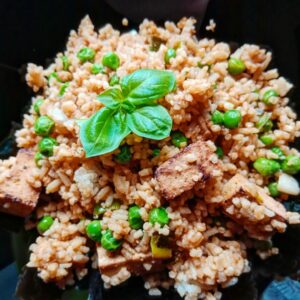
Vegan Fried Rice with Peanut Sauce
Ingredients
- 150 g cooked rice
- 1 pack of firm tofu
- 3 handfuls of frozen peas
- 4 garlic cloves
- piece of leek
- cornstarch
Sauce:
- 2-3 tbsp peanut butter
- 3-4 tbsp soy sauce
- herbal salt
- black pepper
- chilli
- water (as needed)
Instructions
- Cook the rice according to the instructions on the package.
- Cut the tofu into pieces, coat in cornstarch and fry in a pan. Then set aside.
- Cut the leek and garlic into pieces and sauté until golden. Add the peas, tofu and rice.
- Mix all the sauce ingredients together and pour over the rice mixture.
- Fry for a little while, then stir thoroughly and serve.
Notes
Tips and variations
This recipe is extremely forgiving and adapts beautifully to whatever you have in the fridge or freezer. Here are our favourite tips for making it even better:
- For the crispiest tofu: press it dry with a clean towel, cut into cubes, toss in cornstarch, and let it rest for 10 to 15 minutes before frying so the starch dries slightly on the surface, this gives you a much crunchier result.
- Gluten-free version: swap soy sauce for tamari or coconut aminos, which have a very similar flavour profile without the gluten.
- Add more vegetables: stir-fried bell pepper, sweetcorn, broccoli florets, or baby spinach all work beautifully and add colour, crunch, and extra vitamins.
- How to store vegan fried rice: keep in a sealed container in the fridge for up to 3 days; when reheating, add a splash of water or extra peanut sauce to keep it moist and flavourful.
- Mild version without chilli: simply omit the chilli or replace it with sweet smoked paprika for a version that works well for children or anyone with a low heat tolerance/
An extra tip for maximum peanut flavour: stir a few drops of toasted sesame oil into the finished sauce just before serving. It adds a deep, nutty aroma that takes the whole dish to another level. You can also scatter toasted sesame seeds and sliced spring onions on top for colour and crunch.
What to serve with it
Vegan fried rice with peanut sauce is a complete meal in a bowl, but it pairs beautifully as part of a larger Asian-inspired spread. A simple cucumber salad with rice vinegar, sesame oil, and sesame seeds is the perfect refreshing counterpoint to the richness of the peanut sauce. Edamame in the pod with sea salt or a small bowl of miso soup also complement it well.
If you enjoy Asian-inspired vegan recipes, our vegan fried rice with vegan tuna and avocado is another excellent option for variety. For more tofu-based inspiration, browse our full collection of best tofu recipes which covers everything from marinades to baking techniques.
Serve the fried rice in deep bowls with the peanut sauce drizzled generously over the top, alongside small dishes of sliced chilli, lime wedges, and extra soy sauce so everyone can adjust the heat and saltiness to their taste. It makes for a genuinely interactive and enjoyable meal.
Frequently asked questions
How do I keep fried rice from going mushy?
The single most important tip is to use rice that was cooked the day before and has been refrigerated. Day-old cold rice has significantly lower moisture content than freshly cooked rice, which means it fries rather than steams in the wok. Make sure your pan or wok is very hot before adding the rice, and add it in batches rather than all at once to maintain the temperature of the pan.
Is vegan fried rice with peanut sauce gluten-free?
The base recipe is not gluten-free because standard soy sauce contains wheat. To make a gluten-free version, simply substitute tamari (a Japanese soy sauce made without wheat) or coconut aminos, which have a very similar flavour. Both are widely available in supermarkets and health food stores. Check the peanut butter label too to ensure it is produced in a gluten-free facility if you have coeliac disease.
Can I use a different protein instead of tofu?
Yes, several alternatives work well here. Tempeh, which is fermented soy with a firmer, nuttier flavour, is an excellent substitute and has an even higher protein content than tofu. Pan-fried chickpeas work well for a lighter option, and edamame can be stirred directly into the rice for a softer, sweeter protein component. If you use tempeh, cut it into small cubes and treat it the same way as the tofu.
Can I freeze vegan fried rice?
Yes, fried rice freezes well. Let it cool completely to room temperature before transferring to freezer-safe containers or bags. It keeps for up to 2 months frozen. Defrost overnight in the fridge and reheat in a hot pan with a small splash of water or soy sauce to restore moisture. The peanut sauce can also be frozen separately but may separate slightly on thawing; just whisk it while reheating to bring it back together.
What rice is best for vegan fried rice?
Jasmine rice or long-grain white rice works best because it has lower starch content and stays fluffy and separate after cooking rather than clumping together. Basmati rice is also excellent. Avoid short-grain or sushi rice, which have high starch content and tend to clump during frying. The key principle is always the same: cook it ahead of time, let it cool completely, and refrigerate before frying.
We hope this vegan fried rice with peanut sauce earns a regular spot in your weeknight meal rotation. It is proof that plant-based food can be fast, bold, and deeply satisfying without any complicated techniques. Once you try it, we think you will come back to this recipe again and again. Let us know in the comments how it turned out and which variations you explored, and find more quick, flavour-packed vegan recipes at thevegantravelbible.com.
Newsletter
Get our free e-books
Join the newsletter and download Our Vegan Christmas Kitchen straight away, 10 recipes for Czech cookies, gingerbread and vánočka. Then once a month, new places from the vegan map and new articles. Unsubscribe with one click.