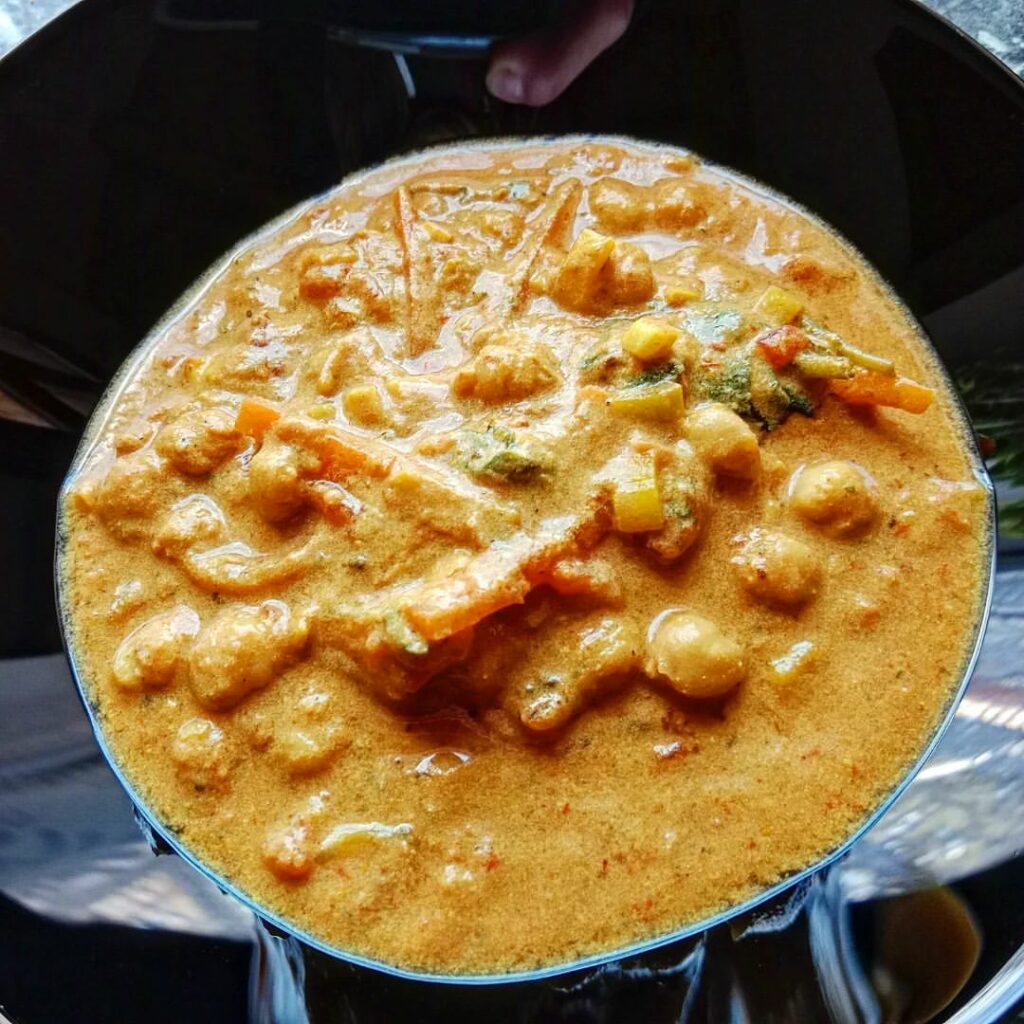
Most chickpea curry recipes call for a tin of coconut milk. It is rich, creamy and delicious, but it also adds a significant amount of saturated fat that can make the dish feel quite heavy. This vegan chickpea curry without coconut milk takes a lighter approach: soy milk steps in as the creamy base, delivering a velvety texture without the heaviness of coconut. The result is a warming, flavourful curry packed with chickpeas, spinach, carrot and tomatoes, seasoned with turmeric, cumin, smoked paprika and chilli.
Is chickpea curry without coconut milk actually any good? Can it really be creamy without a tin of coconut? What goes well with it and how do you store leftovers? We have got you covered on all of it.
Why You’ll Love This Recipe
There are plenty of good reasons to make this one on repeat.
- Lighter than classic curry: Soy milk cuts the saturated fat dramatically without sacrificing creaminess.
- Ready in 20 minutes: A genuine weeknight dinner that is faster than a takeaway.
- High in plant protein: Chickpeas bring around 9 g of protein per 100 g cooked, keeping you full for hours.
- One-pan recipe: Everything comes together in a single pan, which means minimal washing up.
- Customisable heat: Adjust the chilli to your taste, from barely-there to properly fiery.
This recipe is naturally vegan, dairy-free and easy to make gluten-free with one simple swap.
Interesting Facts About Chickpeas and Curry
Chickpeas are one of the oldest cultivated crops in human history. Archaeological evidence places their cultivation in the Middle East over 10,000 years ago, making them older than most written languages. Today they are a cornerstone of cuisines across India, the Mediterranean and Latin America, with each culture preparing them in a completely different way. In Indian cooking they form the base of chana masala; around the Mediterranean they become hummus; and across Europe they are finding their way into soups, salads and curries like this one.
Coconut milk is a staple in many curry recipes but it comes with a significant amount of saturated fat. Full-fat coconut milk contains around 20 g of saturated fat per 100 ml. Soy milk, by contrast, contains approximately 0.5 g per 100 ml, which is roughly forty times less. This swap makes the dish noticeably lighter on the stomach while keeping the sauce rich and satisfying.
Turmeric, a key component of curry powder, contains an active compound called curcumin. Curcumin is fat-soluble, meaning your body absorbs it far more effectively when it is eaten alongside a fat. The olive oil in this recipe does exactly that job, which is why adding both together is more than just a flavour decision.
The chicory syrup in this recipe is worth a mention too. Chicory root is rich in inulin, a prebiotic fibre that feeds beneficial gut bacteria. It adds a subtle natural sweetness while quietly supporting digestive health, making it a smarter sweetener than plain sugar.
Health Benefits
Chickpeas are an exceptional source of plant-based protein. A 100 g serving of cooked chickpeas provides around 9 g of protein and 7 g of fibre, with a low glycaemic index that helps keep blood sugar stable. They are also a solid source of folate, iron and magnesium, making them one of the most nutritionally complete legumes you can cook with.
Spinach is added at the very end of cooking, which means it retains far more of its nutrients than it would if cooked for a long time. A 100 g serving of fresh spinach contains around 2.7 mg of iron, plus vitamin K, magnesium and antioxidants including beta-carotene. It is also one of the richest plant sources of folate, which is essential for the production of red blood cells.
Tomatoes provide lycopene, a powerful antioxidant that actually becomes more bioavailable through heat. A cooked tomato sauce is a better source of lycopene than raw tomatoes, which makes this a surprisingly good choice from a nutrition standpoint. The whole dish is naturally gluten-free if you use tamari or gluten-free soy sauce, and entirely free of dairy.
Nutritional Values
Approximate values per serving. Exact amounts will vary depending on your specific ingredients and quantities used.
| Nutrient | Amount per serving |
|---|---|
| Calories | ~390 kcal |
| Protein | 18 g |
| Carbohydrates | 45 g |
| Fat | 13 g |
| Fibre | 10 g |
Light Vegan Chickpea Curry Without Coconut Milk
Ingredients
- 400 ml Soy milk
- 200 g Cooked chickpeas
- 1 Tin of chopped tomatoes
- 100 g Baby spinach
- 1 Carrot peeled and sliced
- ½ Leek sliced
- 4 Garlic cloves minced
- Chicory syrup to taste
- Ground cumin to taste
- Curry powder to taste
- Dried garlic to taste
- Ground turmeric to taste
- Chilli flakes to taste
- Salt to taste
- Black pepper to taste
- Smoked paprika to taste
- Soy sauce
- Olive oil a drizzle
Instructions
- Heat a drizzle of olive oil in a pan over medium heat. Add the sliced leek, minced garlic and sliced carrot and sauté for 3 to 4 minutes until softened.
- Add the curry powder, cumin, turmeric, smoked paprika, chilli flakes and dried garlic. Stir well to coat the vegetables in the spices, then add the chickpeas, tinned tomatoes, soy milk, soy sauce and chicory syrup. Stir to combine and leave to simmer for 10 to 15 minutes.
- Add the fresh baby spinach and stir until wilted. Taste and adjust the seasoning with salt and pepper. Serve immediately with rice or naan.
Notes
Tips and Variations
This is a flexible recipe that adapts easily to what you have in the fridge or your dietary preferences.
- Soy-free version: Replace soy milk with oat milk or cashew cream. Swap soy sauce for coconut aminos or add a pinch of extra salt and smoked paprika.
- Richer texture: Stir in 2 tablespoons of tahini or cashew cream at the end for a thicker, more indulgent sauce.
- More vegetables: Courgette, peas, sweet potato or extra leafy greens all work beautifully in this curry.
- Storage: The curry keeps well in the fridge for 3 to 4 days and reheats perfectly. It also freezes for up to 3 months; add the spinach fresh when reheating from frozen.
- More depth of flavour: Grate fresh ginger into the pan alongside the leek and garlic at the start. It pairs wonderfully with the turmeric and chilli.
If you want to boost the protein content further, add a handful of cubed firm tofu pan-fried separately and stirred through at the end.
What to Serve With It
This curry is filling and nutritious on its own, but the right accompaniment makes it even better. The most classic choice is basmati or jasmine rice, cooked simply so it soaks up all the sauce. For a higher-protein option, try quinoa instead. If you want something a bit more special, serve the curry alongside homemade vegan naan bread, which you can make while the rice cooks. For more weeknight ideas, browse our vegan curry recipes, where we compare all four.
For a broader plant-based spread, this curry pairs really well with vegan chickpea pancakes with spinach for a chickpea-forward feast. It also works brilliantly as a filling for wraps or burritos the following day, when the flavours have had time to deepen.
If curry has won you over, in Thailand you’ll find it on almost every corner, plant-based versions included. What to watch out for and how to order without fish sauce is all in our post is Thailand vegan friendly?.
Frequently Asked Questions
Can I make chickpea curry without coconut milk?
Absolutely. This recipe uses soy milk as a lighter alternative that still gives the sauce a creamy, rich texture. Oat milk, almond milk or cashew cream all work well too. The flavour profile changes slightly but the curry is just as satisfying.
Is chickpea curry without coconut milk healthy?
Yes, it is a genuinely nutritious meal. Chickpeas are high in plant protein and fibre, spinach adds iron and antioxidants, and using soy milk instead of coconut milk significantly reduces the saturated fat content. Each serving comes in at around 390 kcal.
How long does vegan chickpea curry keep in the fridge?
Stored in an airtight container, this curry will keep for 3 to 4 days in the fridge. Reheat gently on the hob or in the microwave, adding a splash of water or plant milk if the sauce has thickened. The flavour actually improves after a day or two.
Can I freeze this chickpea curry?
Yes, it freezes well for up to 3 months. We would recommend freezing the curry without the spinach and adding fresh spinach when you reheat it, as frozen spinach can become watery and lose its texture. Defrost overnight in the fridge before reheating gently on the hob.
What can I use instead of soy sauce in this recipe?
Coconut aminos are the most straightforward substitute and have a similar depth of flavour with a slightly sweeter note. Tamari is a good gluten-free option that works equally well. Alternatively, a little extra salt and a dash of smoked paprika will give a similar umami quality.
What is chicory syrup and can I leave it out?
Chicory syrup is a natural sweetener made from chicory root, rich in inulin, a prebiotic fibre. It adds a subtle sweetness that balances the acidity of the tomatoes. If you cannot find it, a small amount of maple syrup or agave works just as well. You can also simply leave it out if you prefer.
A Final Word
This light vegan chickpea curry without coconut milk is exactly the kind of recipe that earns a permanent spot in your weekly rotation. It is quick, genuinely nutritious and packed with flavour without feeling heavy or overly rich. If you enjoy chickpea-based dishes, you might also love our vegan chickpea pancakes with spinach, which are a great way to use up any leftover chickpeas in a completely different way. Give this recipe a try and let us know how it goes in the comments below, or tag us on social media so we can see your creations!
Newsletter
Get our free e-books
Join the newsletter and download Our Vegan Christmas Kitchen straight away, 10 recipes for Czech cookies, gingerbread and vánočka. Then once a month, new places from the vegan map and new articles. Unsubscribe with one click.