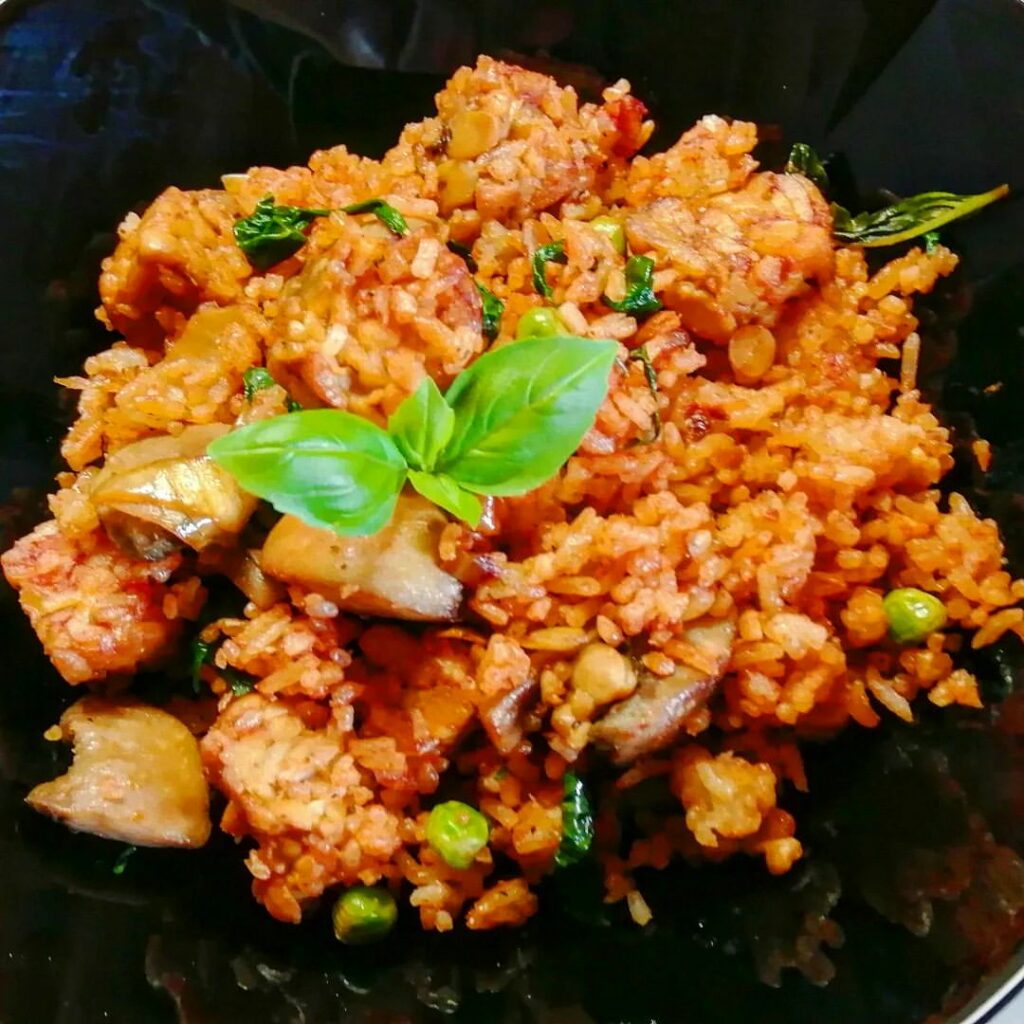
Vegan tempeh tomato rice is a quick and filling lunch that you can have on the table in under 30 minutes. The combination of crispy pan-fried tempeh, a juicy tomato base, and fragrant garlic with herbs creates a meal that satisfies, tastes wonderful, and delivers a serious amount of plant-based protein. Tempeh brings a distinctive chewy texture and nutty flavour that pairs beautifully with the rich tomato sauce.
How do you pan-fry tempeh so it is crispy and not rubbery? Can you use a different grain instead of rice? How long does the dish keep in the fridge and is it good for meal prep? Here you will find the complete recipe, practical tips for variations, interesting facts about tempeh, and answers to the most frequently asked questions.
Why you will love this recipe
Tempeh tomato rice is simple, but the combination of flavours and textures makes it genuinely satisfying.
- Ready in 25 minutes including cooking the rice, perfect for a quick lunch or weeknight dinner
- High in protein, 200 g of tempeh delivers approximately 40 g of quality plant-based protein per batch
- Naturally gluten-free if you use tamari instead of regular soy sauce
- Simple ingredients that you can find in most supermarkets, with tempeh available in health food shops or larger stores
- Great for meal prep, keeps in the fridge for 3-4 days and tastes just as good reheated
The perfect choice when you want a fast meal with a solid dose of protein and flavour.
Interesting facts about tempeh
Tempeh is a traditional fermented food that has been eaten in Java for centuries. Here are a few facts that might surprise you. For what it is made of, how it tastes and where to buy it, see what tempeh is and where to buy it.
Tempeh originates from the Indonesian island of Java, where it has been an everyday protein for centuries. Unlike tofu, which is made by coagulating soy milk, tempeh is prepared by fermenting whole soybeans using the mould Rhizopus oligosporus. This fermentation binds the beans into a compact block and simultaneously increases the bioavailability of nutrients. In Indonesia, tempeh remains a staple food to this day and is consumed several times a week on average.
The fermentation of tempeh significantly improves the digestibility of soy protein. During the process, phytates and trypsin inhibitors are broken down, compounds that otherwise reduce the absorption of minerals and proteins. As a result, the body can absorb more iron, zinc, and calcium from tempeh compared to unfermented soy. Some studies also suggest that fermentation produces natural antibiotics that may protect against intestinal infections.
Tomato paste, which forms the base of the sauce in this recipe, is one of the richest sources of lycopene. Interestingly, heating tomatoes actually increases the bioavailability of lycopene by 50-80% compared to raw tomatoes. This is why tomato sauce is nutritionally more valuable than fresh tomatoes for lycopene intake. Combining tomatoes with olive oil further enhances lycopene absorption because lycopene is fat-soluble.
Health benefits of tempeh
Tempeh is one of the healthiest plant-based protein sources available and fermentation gives it unique nutritional properties.
Tempeh is a complete protein source, meaning it contains all nine essential amino acids. 100 g of tempeh provides approximately 20 g of protein, 11 g of fat (mostly unsaturated), 8 g of carbohydrates, and significant amounts of manganese, phosphorus, and vitamin B2 (riboflavin). Unlike many other plant-based protein sources, tempeh is highly digestible thanks to fermentation.
Tomato paste is a concentrated source of lycopene, a powerful antioxidant that protects cells from oxidative stress. Regular consumption of lycopene-rich foods is associated with a reduced risk of heart disease. One tablespoon of tomato paste contains approximately 3 mg of lycopene and just 13 kcal.
Peas are an understated but nutritionally rich ingredient. 100 g of frozen peas contains approximately 5 g of protein, 5 g of fibre, and is a good source of vitamin K, vitamin C, and folate. Combined with tempeh and rice, they help create a complete and balanced meal.
Nutritional values
Approximate nutritional information per serving (recipe makes 2 servings).
| Nutrient | Amount per serving |
|---|---|
| Calories | ~450 kcal |
| Protein | 25 g |
| Carbohydrates | 48 g |
| Fat | 15 g |
| Fibre | 6 g |
Approximate values per serving. Actual amounts may vary depending on specific ingredients and quantities used.
Vegan tempeh tomato rice
Ingredients
- 150 g cooked rice
- 200 g tempeh
- 50 g mushrooms
- 50 g frozen peas
- 4 tsp tomato paste
- 1 onion
- 4 cloves of garlic
- fresh basil a handful
- wild garlic optional
- herbal salt
- pepper
- oregano
- soy sauce
- gyros seasoning
- garlic powder
- nutritional yeast
- olive oil
Instructions
- Cook the rice according to package directions.
- Cut the tempeh into cubes. Heat olive oil in a large pan and fry the tempeh, sliced mushrooms, diced onion, minced garlic, and peas until the tempeh is golden and the vegetables are soft.
- Add the tomato paste, soy sauce, gyros seasoning, oregano, garlic powder, nutritional yeast, herbal salt, and pepper to taste. Stir in the cooked rice, mix everything thoroughly, and serve topped with fresh basil and wild garlic if available.
Tips and variations
The base recipe is excellent, but there are plenty of ways to adjust it to suit your preferences.
- Crispy tempeh: Slice the tempeh thinly and dry-fry it in a pan (without oil) on both sides until golden. Only then add it to the vegetables. The result will be much crunchier than cooking everything together.
- Instead of rice: This recipe works equally well with couscous, bulgur, quinoa, or pasta. Couscous is the quickest option since you only need to pour over boiling water.
- Soy-free: If you avoid soy, replace the tempeh with chickpeas or white beans. Tomato sauce with legumes is a classic combination that never disappoints.
- Storage: The finished dish keeps in a sealed container in the fridge for 3-4 days. Ideally store the rice and the tempeh sauce separately so the rice does not absorb all the sauce.
- Spicy version: Add half a teaspoon of chilli flakes or a fresh chopped chilli pepper while frying the vegetables. The heat pairs beautifully with the tomato sauce.
Feel free to experiment, as tempeh tomato rice takes well to many variations and always turns out great.
Serving suggestions
Tempeh tomato rice is a complete meal on its own, but if you want to add something extra, here are a few ideas.
- With a fresh vegetable salad, such as our vegan carrot salad
- With a slice of fresh bread or homemade vegan focaccia
- With sliced avocado sprinkled with sesame seeds
- With a dollop of vegan yoghurt or hummus on top for a creamy contrast
If you enjoy rice dishes, make sure to also try our vegan kimchi fried rice, which offers a completely different flavour profile but the same quick preparation time.
Frequently asked questions
How do you pan-fry tempeh so it is crispy?
The key is a sufficiently hot pan and patience. Cut the tempeh into thin slices or cubes and fry on medium-high heat for 3-4 minutes on each side until golden. Do not overlap the pieces. If your tempeh tastes bitter, simmer it in salted water for 10 minutes before frying.
Where can I buy tempeh?
Tempeh is available in health food shops, larger supermarkets in the vegan or chilled section, and online from specialist retailers. Popular brands vary by country, so check what is stocked locally. In the UK, look for Better Nature and Tiba; in the Czech Republic, Kalma and Sunfood are the easiest to find.
Can you freeze tempeh tomato rice?
Yes, tempeh tomato rice freezes well for 2-3 months. We recommend freezing the sauce with tempeh separately from the rice, as rice can change texture after thawing. Defrost overnight in the fridge and reheat in a pan or microwave.
What can I use instead of tempeh?
The closest substitute is smoked tofu cut into cubes, which has a similar texture. Other options include chickpeas, white beans, or seitan pieces. If you want to avoid soy altogether, try roasted cauliflower or mushrooms, which give the dish a satisfying meaty character.
Is tempeh healthier than tofu?
Tempeh and tofu each have different strengths. Tempeh contains more protein (20 g vs. 8 to 17 g per 100 g, depending on the type of tofu), more fibre, and is more digestible thanks to fermentation. Tofu, on the other hand, has a more neutral flavour and lower calorie content. Ideally, alternate between both to enjoy the benefits of each.
Vegan tempeh tomato rice proves that a quick meal does not have to mean compromising on flavour or nutrition. Try making it for your next fast lunch and you will see how easily it becomes part of your weekly rotation. If you are looking for more hearty main course inspiration, check out our vegan gnocchi with chicken strips and spinach. For more ways to cook tempeh, see our tempeh recipes. Let us know in the comments how you liked this recipe!
Newsletter
Get our free e-books
Join the newsletter and download Our Vegan Christmas Kitchen straight away, 10 recipes for Czech cookies, gingerbread and vánočka. Then once a month, new places from the vegan map and new articles. Unsubscribe with one click.