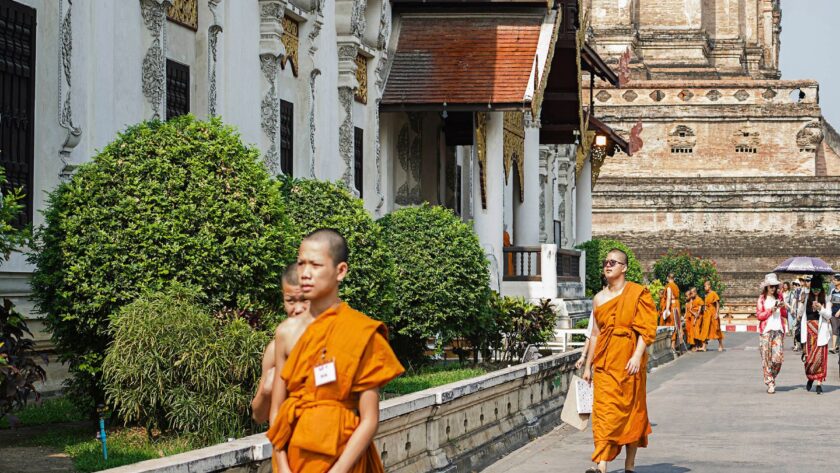
The best things to do in Chiang Mai follow one easy rhythm.
You see temples in the morning, eat a bowl of khao soi at lunch and end up at a market at night. Thailand’s northern capital sits about 700 km north of Bangkok. King Mangrai founded it in 1296 as the seat of the Lanna kingdom, and a square moat still wraps the old city. Inside are dozens of Buddhist temples, above it rises the sacred mountain of Doi Suthep, and the hills around it hide waterfalls and rescued elephants.
So which temples are worth an early alarm? Which day trips earn their place on a three or five day plan? When should you go to dodge the smoke season, and when is the lantern festival? And where do you get a vegan khao soi, the north’s curry noodle soup, without finding egg noodles in it?
We’ve pulled all of it together, from temples to markets to places to eat that we’ve checked one by one.
We haven’t made it to Chiang Mai together yet, so this is a research piece rather than a trip report. In November 2026 we checked fees and dates with national park notices and local news, history in encyclopaedias, and restaurants against their own menus or websites, or at least two independent listings where they have none. Where sources disagreed, we say so.
Things to do in Chiang Mai’s Old City: temples, gates and the moat
The Old City is the best place to start in Chiang Mai, a walkable square of roughly 1.5 by 1.5 km inside the moat. You can cross it on foot in a day, with a temple on nearly every corner. Most vegan restaurants are either inside the walls or a few minutes from them. The main gate is Tha Phae on the east side, where Tha Phae Road runs down towards the Ping River.
| Thing to do | Where | Time needed | Vegan food nearby |
|---|---|---|---|
| Wat Chedi Luang | centre of the Old City | 1 hour | Goodsouls Kitchen, Aum Vegetarian |
| Wat Phra Singh and Wat Chiang Man | west and north of the Old City | 1 to 2 hours | Reform Kafé by the North Gate |
| Wat Phra That Doi Suthep | mountain above town, 15 km | half a day | Anchan in Nimman on the way back |
| Warorot market (Kad Luang) | between the walls and the Ping River | 1 to 2 hours | Asa Vegan Kitchen on Tha Phae Road |
| Sunday Walking Street | from Tha Phae Gate, Sunday evening | an evening | Begin Vegan on the eastern moat |
| Doi Inthanon | 70 km south-west | a full day | pack food from town |
| Elephant Nature Park | north of the city | half to full day | pack food from town |
Wat Chedi Luang, the broken chedi
Wat Chedi Luang is the Old City’s most striking temple because of its huge brick chedi with the top missing. Building began in the 14th century, and by the mid-15th century it stood 82 metres tall, the largest structure in all of Lanna. In 1545 an earthquake brought down roughly the upper 30 metres, and it has looked that way ever since. From 1468 to 1551 the Emerald Buddha, now in Bangkok, sat in one of its niches.
Come early before the tour groups and walk all the way round, as each side looks different. Right next door is Wat Phan Tao, a small teak temple and one of the most photogenic wooden temples in town. Goodsouls Kitchen on Sinharat Soi 3 is a few minutes’ walk away for lunch.
Wat Phra Singh and Wat Chiang Man
Wat Chiang Man is the oldest temple in Chiang Mai, built by King Mangrai himself in 1297. Look for its chedi with fifteen life-sized brick elephants emerging from the base. Wat Phra Singh, at the western end of Ratchadamnoen Road, draws crowds for its Lanna-style halls and is one of the city’s most visited temples.
Wat Phra Singh and Wat Chiang Man make one easy walk with lunch at Reform Kafé, a fully vegan garden restaurant by the northern Chang Phueak Gate. Cover shoulders and knees in temples and take your shoes off before entering the prayer hall. A scarf or light trousers in your bag saves renting a sarong.
Walls, gates and the moat
Only the brick corner bastions and gates of Chiang Mai’s old walls survive, but the moat still runs around the entire Old City. A walk along the water is best late in the afternoon when the heat drops. Tha Phae Gate is the hub for festivals and the Sunday market. Chiang Mai Gate in the south has an evening food market, and Chang Phueak Gate in the north is known for local street food.
First-day tip: Take a songthaew (the red shared pick-up trucks) or a Grab to Wat Chedi Luang in the morning and walk the rest of the Old City. It’s quicker than finding parking, and every junction brings another temple.
Chiang Mai on our vegan map
13 places, 8 fully vegan. Tap a pin to see the details.
Loading the map…
- 100% vegan
- Vegetarian
- Stays
- Sanctuaries & charities
Doi Suthep and the Monk’s Trail: the temple above Chiang Mai
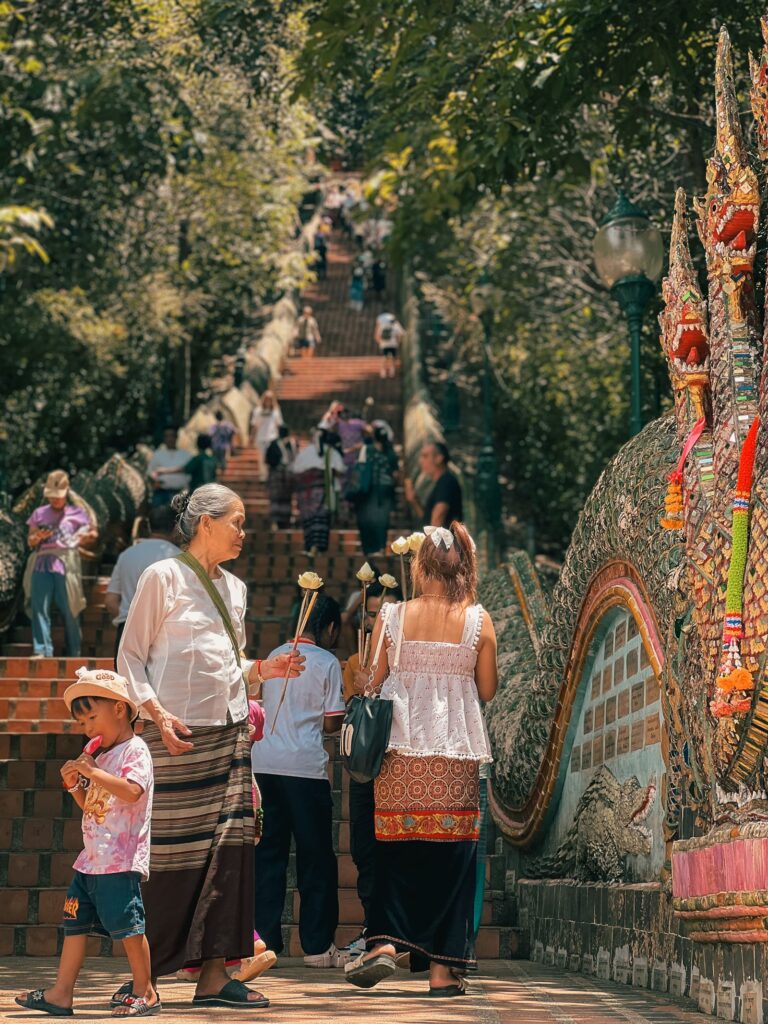
Wat Phra That Doi Suthep is Chiang Mai’s most famous temple, 15 km from town and 1,073 metres up the mountain of the same name. Tradition dates its founding to 1383. On a clear day you see the whole city spread across the valley. It’s a pilgrimage site for Thai visitors, so dress as you would for any temple and keep your voice down.
Getting up to Doi Suthep
A road runs all the way to Doi Suthep, and a songthaew from Chang Phueak Gate or a Grab will take you up. From the car park you either climb 309 steps lined with naga serpents or ride the funicular. The temple is wheelchair accessible too, which makes it doable for older travellers and families with pushchairs.
Walkers can take the Monk’s Trail, a forest path from the Chiang Mai University side of town up to Wat Pha Lat and on towards Doi Suthep. Wat Pha Lat is a small temple by a waterfall in the forest, and many travellers like it more than the main one. The trail is steep and hard work in the heat, so bring water and start early.
What it costs to visit
Driving up to Doi Suthep temple on the main road does not trigger the national park fee. Since 1 October 2025, Doi Suthep–Pui National Park charges foreign visitors 100 baht per adult and 50 baht per child, but only in specific areas. These include the Pha Lat Nature Trail (the Monk’s Trail), Huai Kaew and Wang Bua Ban waterfalls and the village of Doi Pui.
Fee confusion: Several travel sites say you pay 100 baht every time you visit Doi Suthep. According to the Chiang Mai CityLife report on the new park fees, the temple and Wat Pha Lat by the main road are free of the park fee. You pay on the trail and at the waterfalls. Sources disagree on the small entry fee at the temple itself, so carry some change.
Chiang Mai markets: from Warorot to the Sunday Walking Street
Markets matter as much as temples in Chiang Mai, and there’s at least one on every day of the week. By day it’s the sprawling Warorot market by the river, at night the Night Bazaar, and at weekends two famous walking streets. For vegans, markets are an adventure because a lot of the food uses fish sauce, but fruit, coconuts and stalls with a yellow flag are safe bets.
Warorot (Kad Luang), where locals shop
Warorot, known locally as Kad Luang or “big market”, is Chiang Mai’s main market district between the eastern walls and the Ping River. Lonely Planet notes it has been a trading hub since the city was founded in 1296. You’ll find dried fruit, tea, spices, fabric and northern Thai snacks. It’s the place for souvenirs that didn’t come off a T-shirt production line.
The Sunday and Saturday Walking Streets
The Sunday Walking Street is Chiang Mai’s biggest market, every Sunday evening from Tha Phae Gate along Ratchadamnoen Road. The road closes to traffic and fills with craftspeople, food stalls and buskers. The Saturday Walking Street on Wua Lai Road, just south of the Old City, is smaller, calmer and known for its silverwork.
Arrive soon after dark, because later both streets get so packed you move at a shuffle. For food, look for fruit shakes, grilled corn, mango with sticky rice (ask whether the coconut sauce is dairy-free, it usually is) and stalls marked “jay”.
The yellow flag: A stall or restaurant with a yellow flag and red lettering reading เจ (“jay”) cooks to the Thai jay tradition, meaning no meat, fish, eggs or dairy. Jay food also leaves out garlic and onion. It’s the safest choice for vegans at any market, though asking never hurts.
Vegan Chiang Mai: the best places to eat
Chiang Mai is the easiest city in Thailand for vegan food. Fully vegan cafés and restaurants cluster in the Old City and Nimman, and a vegan khao soi costs about the same as a coffee back home. We checked every place below in November 2026 against its own website or menu where it has one, otherwise against at least two independent listings. You’ll also find them, with opening hours, on our vegan map of Chiang Mai.
Khao soi: the northern soup that usually hides egg
Khao soi is a coconut curry soup with boiled and deep-fried crispy noodles, pickled mustard greens, shallots and lime. Chin Haw Muslim traders from south-west China brought it to northern Thailand, which is why it’s classically made with chicken or beef. The detail vegans need is a different one. The traditional northern version uses egg noodles.
In fully vegan restaurants you don’t need to worry. At a regular stall, ask for rice noodles and check that the curry paste has no shrimp paste. These four places come up most often for vegan khao soi in Chiang Mai.
| Where | Area | Status | Price | What to expect |
|---|---|---|---|---|
| Begin Vegan | eastern moat, Moon Muang Rd | plant-based Thai | about 65 to 89 baht | one of the cheapest khao soi in the Old City |
| Goodsouls Kitchen | Old City, Sinharat Soi 3 | fully vegan | from about 140 baht | khao soi on its own menu |
| Reform Kafé | by the North Gate | fully vegan | mid-range | garden restaurant at Green Tiger House |
| Aum Vegetarian | by Chiang Mai Gate | vegetarian | budget | family-run, vegan khao soi, daily 11:00 to 20:00 |
Fully vegan cafés and restaurants in the Old City
Goodsouls Kitchen is the Old City’s most ambitious vegan restaurant, open daily from 08:00 to 22:00. It does Western brunch and northern Thai classics, and it’s a good pick when you’re travelling with someone who eats meat. Reform Kafé in the garden of Green Tiger House is the calmer choice for a long lunch, with Thai curries and a much-loved mushroom burger that wins over non-vegans.
Begin Vegan on Moon Muang Road by the eastern moat is where you go to eat well for very little. Time Out lists it as open from 09:00 to 22:00 and says the staff will explain what’s vegan and what’s only vegetarian. A few minutes’ walk away on Moon Muang Soi 9, Rad Rabbit Vegan Pizzeria bakes vegan pizza and serves vegan eggs Benedict at breakfast.
Asa Vegan Kitchen at 217 Tha Phae Road is a café with a yoga studio upstairs, open daily from 09:30 to 19:00, serving French toast and smoothie bowls. Free Bird Café on Sirimangkalajarn Soi 9 is a fully vegan café with Burmese and Shan cooking whose profits fund Thai Freedom House, a school for refugee families. It’s closed on Mondays.
Vegan food in Nimman and a cheap mall lunch
Imjai Vegan is the only fully vegan stall in the basement food court of MAYA mall on the edge of Nimman. Rice with three dishes costs about 55 baht, and it’s a useful air-conditioned lunch when it’s raining or smoky outside. Anchan Vegetarian in Nimman is a vegetarian restaurant known for its purple butterfly pea flower pad thai. Sources disagree on its closing days, so check before you go.
In Chiang Mai you don’t hunt for vegan food. You just decide between a 65-baht khao soi by the moat and a long brunch in a garden.
A vegan Thai cooking class at May Kaidee
May Kaidee runs a vegan Thai restaurant on Chang Moi Kao Road and, a short ride away across the Ping River, a cooking school on Charoen Muang Road Soi 2. It has been teaching Thai cooking for more than 30 years. The main class starts at 09:00 and 14:00 and covers soups, curries and stir-fries. Short on time? A two-hour express class runs in the afternoon.
On Wednesday afternoons there’s a tofu-making class, from raw soybeans to the pressed block.
A May Kaidee class is the ideal plan for a mixed group, because nobody ends up as “the one who can’t eat that”. The Chiang Mai school teaches Monday to Saturday and the restaurant closes on Saturdays, so check both before you plan the day.
Day trips from Chiang Mai: mountains, waterfalls and elephants
The best day trips from Chiang Mai are Doi Inthanon, Thailand’s highest mountain, the Bua Thong “sticky” waterfall and a visit to an elephant rescue park. Each takes half a day to a full day, so a five-day stay fits two. Pack food from town, as options in the hills are thin.
Doi Inthanon, the roof of Thailand
Doi Inthanon is Thailand’s highest mountain at 2,565 metres, and its national park entrance is around 70 km south-west of Chiang Mai. Expect cloud forest, waterfalls, cool air even in the hot months and, according to Thai National Parks, around 500 recorded bird species. Thai National Parks lists entry at 300 baht for adults, though that figure dates from 2022. Bring a jacket, as it’s much colder at the top than in town.
Bua Thong, the sticky waterfall
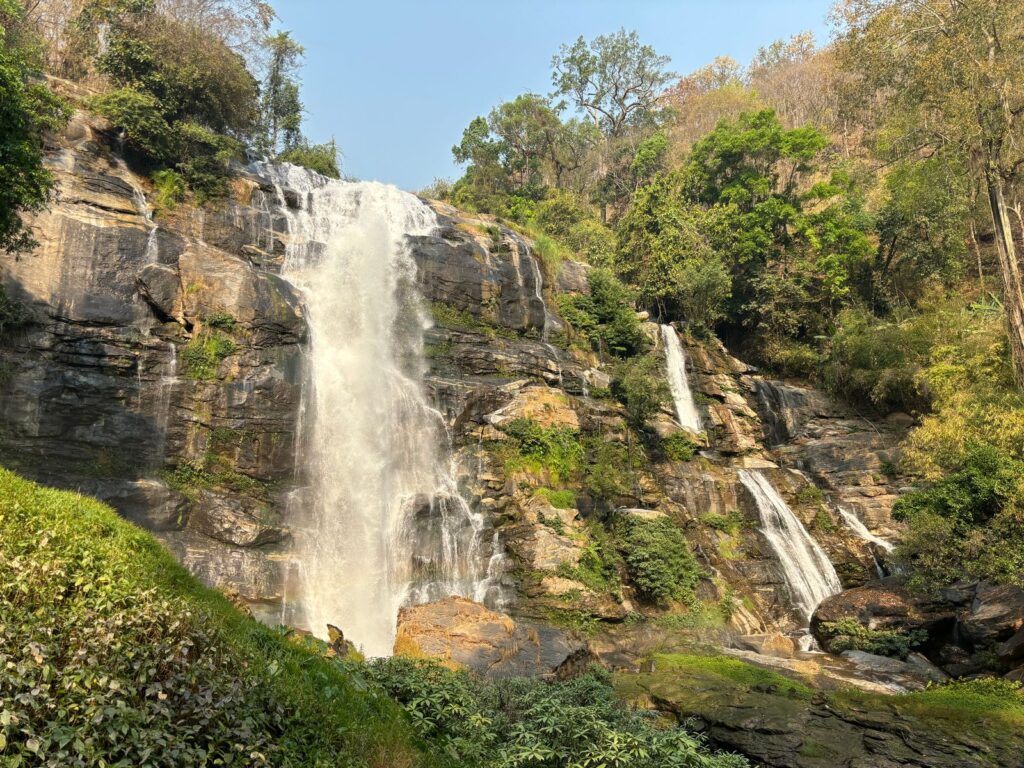
Bua Thong waterfall, nicknamed the Sticky Waterfall, is about an hour and a half north of Chiang Mai. Its limestone deposits stop algae from growing, so you can climb up it barefoot against the flowing water. It’s one of the few trips that kids and adults enjoy equally.
Elephants: only where nobody rides them
An ethical elephant visit near Chiang Mai means a rescue park where you watch the animals, not one where you ride or bathe them. Elephant Nature Park north of the city was founded by Saengduean “Lek” Chailert and is home to elephants rescued from street begging, tourist rides and circuses. Half-day and full-day visits are built around observing the herd as it roams, bathes in the river and rolls in the mud.
Book directly on the park’s website. Plenty of roadside “sanctuaries” still sell elephant bathing, which is stressful for the animals. Elephant Nature Park is also on our vegan map as an animal-friendly place to visit.
Read next: Thailand for vegans
Heading to Bangkok or the islands too? How to order without fish sauce, where the fully vegan restaurants are around the country and what changed with visas is all in our article Is Thailand vegan friendly?.
Things to do in Chiang Mai with kids, at night and when it rains
Chiang Mai is a gentle city that works well with kids and on rainy days. In the evening, life moves to the markets and the river. When it rains, a cooking class, an air-conditioned mall and temples you can shelter in will save the day.
Chiang Mai with kids
With kids, the winners in Chiang Mai are the Bua Thong sticky waterfall, the elephants at Elephant Nature Park and evening markets with fruit shakes. The Old City is flat and fine with a pushchair, though pavements are narrow. Doi Suthep has a funicular, so small legs don’t have to manage all 309 steps.
Things to do in Chiang Mai at night
Chiang Mai nights belong to the markets. There’s the Walking Street at Tha Phae Gate on Sundays, Wua Lai on Saturdays and the Night Bazaar on Chang Klan Road every day. The Night Bazaar is mostly souvenirs, so for food head to the evening market at Chiang Mai Gate. For dinner, Goodsouls Kitchen and Rad Rabbit both stay open until 22:00.
Things to do in Chiang Mai when it’s raining
When it rains in Chiang Mai, take a cooking class, head to MAYA mall for lunch at Imjai Vegan, or book a Thai massage. The rainy season runs roughly from June to October, but it usually means heavy afternoon showers rather than all-day rain. You can still see temples in the morning and duck inside for food later.
When to visit Chiang Mai
The best time to visit Chiang Mai is November to early February, when it’s dry, clear and pleasantly warm. From mid-February to April comes the “burning season”, when farmers burn fields and smoke settles over the city. June to October brings rain, green hills and lower prices.
| Months | Weather | Best for |
|---|---|---|
| November to early February | dry, warm days, cool mornings | first visits, the lantern festival |
| mid-February to April | hot, smoke from field burning | best avoided, especially with kids or asthma |
| May | hot, first rains | a transition month |
| June to October | afternoon showers, green landscapes | cheaper, quieter trips |
Smoke in the burning season
Smoke in Chiang Mai from February to April is a real health issue, not a minor nuisance. Air quality regularly passes unhealthy levels in those months, and Chiang Mai often appears among the world’s most polluted cities in March. If you have to go then, keep an air quality app open and pack a proper mask.
Yi Peng and Loy Krathong, the lantern festival
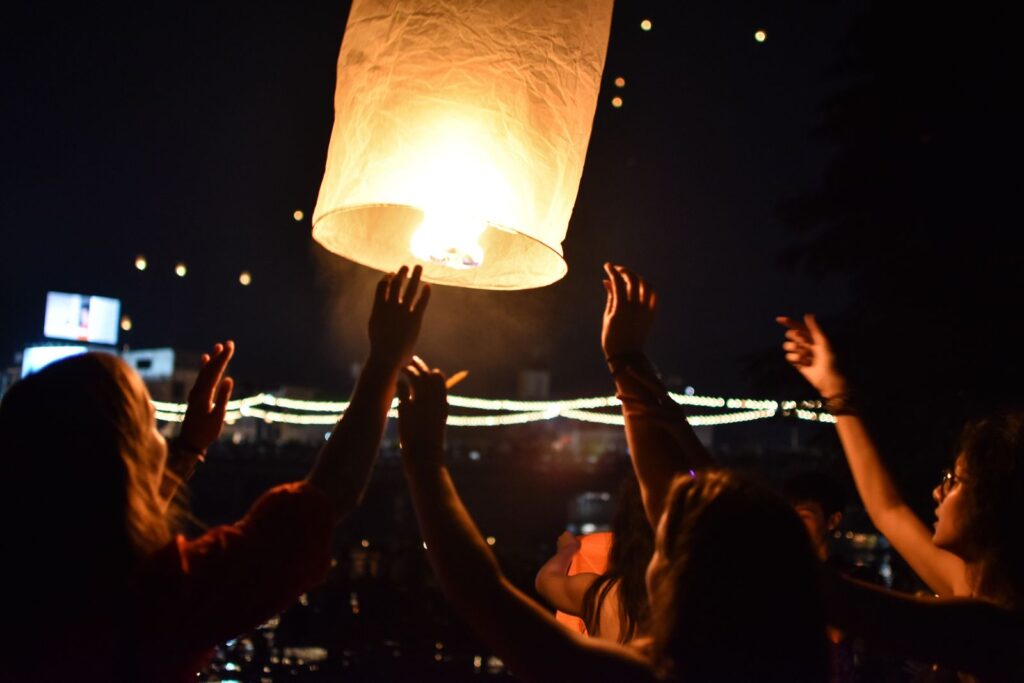
Yi Peng is celebrated in Chiang Mai every year at the November full moon. In 2026 the celebrations run from 23 to 25 November, with the main night on Tuesday 24 November. Thousands of lanterns hang across the city, krathong baskets float on the Ping River and Tha Phae Gate is the centre of it all. The mass lantern releases you’ve seen in photos are ticketed events outside town, in places like Mae Jo, and they sell out far in advance.
Book festival accommodation early and check your flight close to departure, as Chiang Mai airport adjusts its schedule on lantern nights.
Getting to Chiang Mai and where to stay
Most travellers reach Chiang Mai via Bangkok, then fly or take the overnight train north. There are no regular direct flights from Europe, so you’ll connect somewhere. On a long-haul flight, pre-order your vegan meal, which we explain in our guide to the vegan airline meal code VGML.
The night train from Bangkok
The overnight train from Bangkok to Chiang Mai takes roughly 12 to 13 hours and is an experience in itself. Express trains leave in the evening and arrive in the morning, which saves you a night in a hotel. Lower berths sell out first, so book ahead. Bring your own food, as you can’t rely on vegan options in the dining car.
Visas and the arrival card
Since 15 September 2026, many nationalities, including UK and EU passport holders, can enter Thailand visa-free for 30 days instead of 60. Within three days before arrival you must fill in the online Thailand Digital Arrival Card (TDAC). It’s free, so ignore sites that charge for it.
Where to stay in Chiang Mai
The best area for a first visit to Chiang Mai is the Old City, with temples and vegan restaurants within walking distance. Nimmanhaemin, or Nimman, is the modern district of cafés and malls below Doi Suthep. If you want quiet, stay by the Ping River.
Two places to stay with fully vegan kitchens stand out in Chiang Mai. Green Tiger House near the North Gate describes itself as Chiang Mai’s first plant-based hotel, with 32 rooms and a vegan breakfast menu from Reform Kafé. Away Chiang Mai Thapae Resort near Tha Phae Gate is a four-star, vegan and alcohol-free resort with its own Moreganic restaurant. For more fully vegan stays worldwide, see our list of 25 fully vegan hotels.
How much does Chiang Mai cost?
Chiang Mai is one of the cheapest places in Thailand to travel, especially for food. A vegan lunch starts at about 55 baht, and even the city’s smartest vegan restaurant rarely charges more than a few hundred baht for a main. Your biggest costs will be flights and, in high season, accommodation.
| What | Cost | Note |
|---|---|---|
| rice with three dishes, Imjai Vegan | about 55 baht | MAYA food court |
| vegan khao soi, Begin Vegan | about 65 baht | one of the cheapest in the Old City |
| khao soi, Goodsouls Kitchen | from about 140 baht | fully vegan |
| Monk’s Trail, Doi Suthep–Pui waterfalls | 100 baht adult, 50 child | since October 2025 |
| Doi Inthanon | about 300 baht adult | 2022 figure, check |
| songthaew around town | a few dozen baht | agree the price first |
We checked all prices and opening hours in this article in November 2026. Restaurants in Thailand change fast, so check opening times before you go.
Thai phrases for vegans in Chiang Mai
A few Thai words open every kitchen in Chiang Mai. The most useful is “gin jay”, which staff know and which means food without animal products. Fish sauce and oyster sauce turn up in almost everything, so mention them separately.
| English | Thai (transliteration) | When it helps |
|---|---|---|
| I eat vegan (jay) food. | gin jay | at the start of any order |
| no fish sauce | mai sai nam pla | soups, salads and stir-fries |
| no oyster sauce | mai sai nam man hoi | stir-fried greens and noodles |
| no egg | mai sai khai | khao soi, noodles and fried rice |
| vegetarian | mangsawirat | when the cook doesn’t know jay |
| Thank you (woman / man speaking). | khob khun kha / khob khun khrap | always |
At a stall, the yellow flag with เจ on it helps too. When you see one, point at it and say “jay?”.
Why Chiang Mai is the best place to start Thailand as a vegan
We think Chiang Mai is the best place to start Thailand if you don’t eat meat. Not because of one restaurant, but because here eating and sightseeing never pull against each other. Picture Wat Chedi Luang in the morning, khao soi by the moat at lunch and a market at night. The one thing you really have to get right is timing, so come between November and February and skip the spring smoke. Where would you head first in Chiang Mai, the temples or straight to the khao soi?
Frequently asked questions
What are the top things to do in Chiang Mai?
The top things to do in Chiang Mai are the Old City temples, Wat Phra That Doi Suthep on the mountain above town and the Sunday Walking Street. In the Old City, start with Wat Chedi Luang, Wat Phra Singh and Wat Chiang Man. Add a vegan cooking class and day trips to Doi Inthanon, the Bua Thong sticky waterfall or Elephant Nature Park.
How many days do you need in Chiang Mai?
Three days cover the Old City, its temples and Doi Suthep. Allow five if you want Doi Inthanon, an elephant rescue park and a cooking class as well.
When is the best time to visit Chiang Mai?
November to early February is best, with dry weather and clear air. Mid-February to April brings heavy smoke from field burning, and June to October has afternoon rain but green scenery and lower prices.
Is Chiang Mai vegan friendly?
Yes, Chiang Mai is one of the most vegan-friendly cities in Asia. Fully vegan restaurants like Goodsouls Kitchen, Reform Kafé and Free Bird Café are in the Old City, and vegan khao soi starts at about 65 baht. At stalls, look for the yellow flag marked jay.
What can you do in Chiang Mai when it’s raining?
Take a Thai cooking class, have lunch in the MAYA mall food court, book a Thai massage or visit temples in the morning before the afternoon showers. Rain in Chiang Mai usually comes as heavy afternoon downpours rather than all-day drizzle.
Newsletter
Get our free e-books
Join the newsletter and download Our Vegan Christmas Kitchen straight away, 10 recipes for Czech cookies, gingerbread and vánočka. Then once a month, new places from the vegan map and new articles. Unsubscribe with one click.