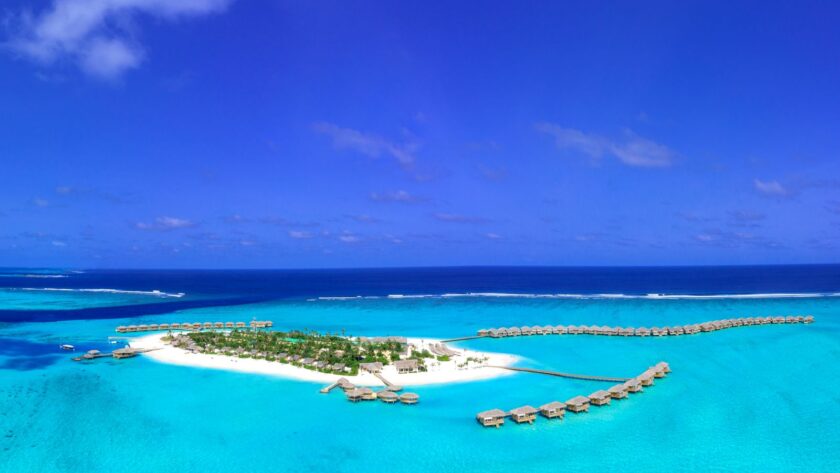
Planning a vegan Maldives trip means planning around tuna. The water is warm, the sand is white and mantas and turtles swim a few metres off the beach. But Maldivian cooking is built on fish, and at a resort you have one hotel kitchen for the whole week, because there is nowhere else on the island to eat. If that kitchen doesn’t know you’re vegan, you can spend seven days eating rice and side dishes at luxury restaurant prices.
At the same time, a few resorts run entire plant-based restaurants. On the cheaper local islands, guesthouse families will cook you a coconut pumpkin curry if you ask in advance. You can eat very well here as a vegan, you just have to plan it differently from, say, Thailand.
Should you book a resort or a guesthouse on a local island? Which vegan resorts in the Maldives actually have a plant-based restaurant, and which just have “a vegan option” on the menu? Where does fish hide in Maldivian food? What does the trip really cost once the taxes nobody mentions are added, and when should you go to avoid the rain? This article covers all of it, including the email worth sending a resort before you book.
We haven’t made it to the Maldives together yet, so this isn’t a trip diary. It’s a carefully researched overview. In October 2026 we checked the entry rules with the Maldives Immigration service, the taxes with the Maldives Inland Revenue Authority and the seasons with the Maldives Meteorological Service. For each resort we looked for its own website or at least two independent sources. For every restaurant we tell you whether it is fully plant-based, vegetarian, or just has vegan options.
Vegan Maldives: resort or local island?
For a vegan, choosing between a resort and a local island is the biggest decision of a Maldives trip, because it decides who cooks for you all week. At a resort it is one hotel kitchen that can make almost anything if you ask in advance. On a local island it is a family guesthouse and a few local cafés, cheaper and simpler, with less choice.
Resorts: one island, one kitchen
A Maldives resort usually takes up a whole private island. Breakfast, lunch and dinner happen in that one hotel’s restaurants, and you only leave on a paid boat trip. Big resorts employ professional chefs, for whom a lentil or coconut curry is usually no trouble. If the kitchen won’t cooperate, though, there’s nowhere else to go.
A resort makes sense for vegans mainly when it has its own plant-based or vegetarian restaurant, or when it confirms in writing that it will cook for you outside the buffet. You’ll find those resorts in their own section further down.
Local islands: guesthouses, home cooking and bikini beaches
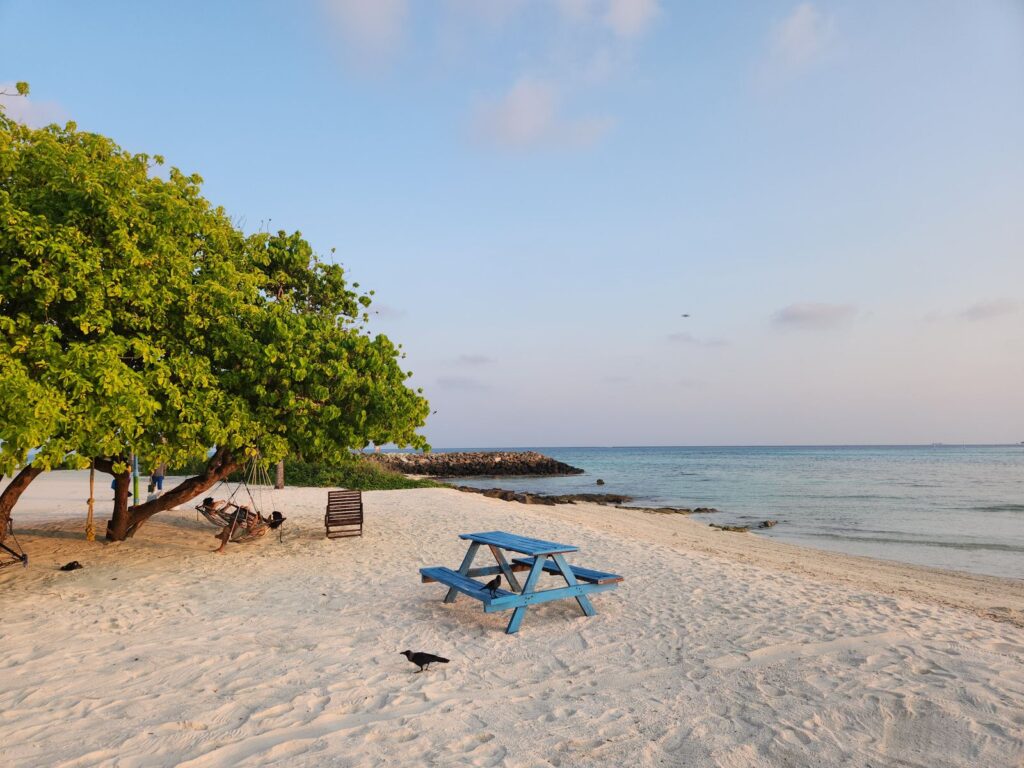
A local island is an inhabited island where Maldivians live and where visitors stay in small guesthouses. Some of the best known are Maafushi, Thoddoo, Dhigurah and Rasdhoo. A room costs a fraction of a resort villa.
Local rules of a Muslim country apply, though. There is no alcohol on local islands, and swimwear is only allowed on a designated beach known as a bikini beach.
On a local island you eat what your hosts cook, and local food puts fish in almost everything. You can also sit down in a café for a vegetable curry and flatbread for a few dollars, which you won’t find at a resort.
| What matters | Resort | Local island |
|---|---|---|
| Who cooks for you | one hotel’s restaurants | your guesthouse and local cafés |
| Vegan choice | wide, if arranged in advance | simple, curry, rice, flatbread, fruit |
| Price | high, plus taxes on top | low |
| Alcohol and swimwear | no restrictions | no alcohol, swimwear on bikini beach only |
| Airport transfer | speedboat or seaplane | shared speedboat or public ferry |
| Best for | honeymoons, mixed groups, total rest | smaller budgets, snorkelling, local life |
Plenty of travellers combine both, spending the first few nights on a local island and the last two or three at a resort. On the island you taste real Maldivian food, and at the resort you no longer need to ask about fish at every meal.
Maldives on our vegan map
4 places, 2 fully vegan. Tap a pin to see the details.
Loading the map…
- 100% vegan
- Vegetarian
- Vegan options
See every place from this article on our vegan map.
Is Maldivian food vegan? Where the fish hides
Most traditional Maldivian food is not vegan, because it rests on three staples of coconut, fish and starches like rice, taro and breadfruit. Coconut and starches are fine for vegans, but fish, mostly skipjack tuna, also turns up where you can’t see it. Maldivian cooking is close to Sri Lankan and South Indian food, so if you know rice and curry, you’ll find your way around quickly.
Fish almost everywhere: mas huni, garudhiya and valhoamas
The best-known Maldivian breakfast, mas huni, is finely chopped tuna mixed with coconut, onion and chilli. Garudhiya, a clear fish broth with boiled tuna, is often called the national dish. The most important curry, mas riha, is made with fresh tuna. Gulha, the fried snack balls served with tea, are filled with coconut, tuna and chilli.
The hardest ingredient to spot is valhoamas, or Maldive fish. It is tuna that has been boiled, smoked and dried in the sun until it turns into a hard, dark block.
It gets grated into sauces, sambals and “vegetable” dishes as seasoning. Making it also produces rihaakuru, a thick, dark fish paste. You won’t spot either in a spicy curry, so always ask.
Watch out for eggs too. Bis means egg in Dhivehi, so bis riha is egg curry. The fried pastries called bis keemiya look like samosas, and besides cabbage and carrot they usually contain hard-boiled egg. Some guides recommend them as a vegetarian snack, but they usually aren’t vegan.
What to eat: roshi, pumpkin curry and fish-free mashuni
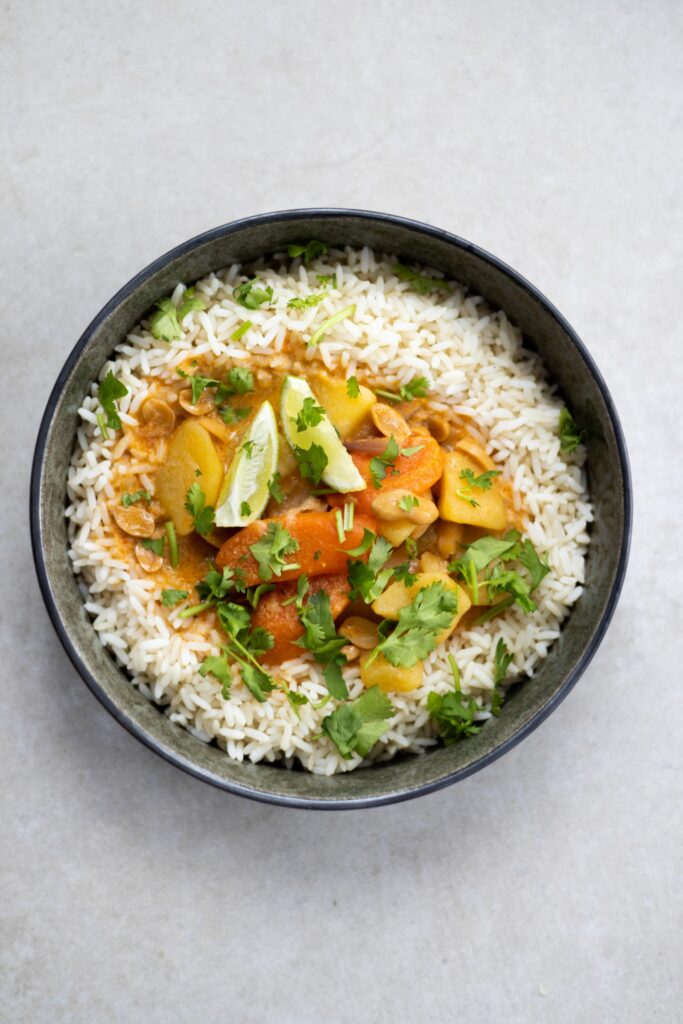
Roshi is a thin flatbread Maldivians eat at breakfast and with curry. Served with lonu miris, a fiery paste of chilli, onion and lime, it makes a simple vegan meal. Tharukaaree riha is a mild coconut vegetable curry, usually with pumpkin, aubergine, okra or sweet potato. Boshi mashuni is a banana flower salad with coconut, curry leaves and lime, where the flower takes the place of tuna.
Mas huni can also be made without fish, for example with pumpkin or greens mixed with coconut and onion. Some guesthouses and cafés on local islands offer this version anyway, and elsewhere you can simply ask. Lentil dhal goes with everything and, thanks to the many Indian cooks, is made almost everywhere. For something sweet, try bondibaiy, a cardamom rice pudding, but ask whether it is cooked with coconut milk only.
| Dish | What it is | Vegan? |
|---|---|---|
| Mas huni | tuna with coconut, onion and chilli | no, but a pumpkin version exists |
| Garudhiya | fish broth with tuna | no |
| Gulha | fried balls filled with tuna | no |
| Bis keemiya | fried cabbage pastries | usually not, they contain egg |
| Roshi with lonu miris | flatbread with chilli paste | usually, ask about fish |
| Tharukaaree riha | coconut vegetable curry | yes, ask about Maldive fish |
| Boshi mashuni | banana flower salad | usually, ask about fish |
| Dhal | lentil curry | usually, ask about ghee |
Travelling with someone who eats meat? Order tharukaaree riha with roshi and lonu miris together at dinner. It is everyday Maldivian food, and anyone who likes heat will love the chilli paste.
Sri Lankans also add Maldive fish to coconut sambol. How to ask about it in Sinhala, and what else to look out for, is in our guide to vegan food in Sri Lanka.
What you eat in the Maldives is mostly decided at home, by what you write to the hotel.
Vegan Maldives resorts with a plant-based restaurant
We found two Maldives resorts with a fully plant-based restaurant, plus several with a vegetarian restaurant or clearly labelled vegan dishes. These are luxury hotels for honeymoons and big anniversaries, and dinner there is often charged separately or included only in pricier meal plans. Before you book, check directly with the hotel that the restaurant will be open during your stay, because menus and opening days change with the season.
Soneva Fushi: Shades of Green
Shades of Green is the fully plant-based restaurant at Soneva Fushi, tucked into a quiet corner of the island next to the vegetable gardens. The resort’s own dining page describes it as a plant-based menu shaped by the gardens. The tasting dinner runs to six courses, and each menu is built around a colour or a single vegetable cooked several ways. According to the sources we found, dinner isn’t served every night, so book your evening as soon as you arrive.
One&Only Reethi Rah: Botanica
Botanica is the plant-based restaurant at One&Only Reethi Rah, with a menu created by American chef Matthew Kenney, one of the best-known names in vegan cooking. It opened in 2021, as announced at the time by Visit Maldives, the official tourism board. According to its current profile on Luxa Terra, the kitchen is still fully plant-based, most of the produce comes from the resort’s own gardens, and you dine outdoors under the palms. We couldn’t check the resort’s own website, so confirm the menu by email before you go.
Atmosphere Kanifushi: Just Veg
Just Veg at Atmosphere Kanifushi in Lhaviyani Atoll is a vegetarian, not fully vegan, restaurant. It was one of the first purely vegetarian restaurants in the Maldives and serves meat-free and fish-free Mediterranean, Arabic and Indian dishes, and also cooks vegan and Jain dishes. Reviewers say the chefs happily make other dishes on the menu vegan. Dinner at Just Veg is included in the resort’s Platinum Plus all-inclusive plan, but check how many dinners there the plan covers when you book.
Hurawalhi: Junk Food Kitchen
Junk Food Kitchen (JFK) at Hurawalhi is not a vegan restaurant but an “upscale fast food” spot. On its dining page, the resort says vegans and meat lovers will both enjoy it. It suits a mixed group where one person wants a burger and the other its plant-based version. JFK is one of the restaurants you can use on Hurawalhi’s meal plans without booking ahead.
| Resort | Restaurant | Type | Check before booking |
|---|---|---|---|
| Soneva Fushi | Shades of Green | fully plant-based | which nights dinner is served |
| One&Only Reethi Rah | Botanica | fully plant-based | that the kitchen is still fully plant-based |
| Atmosphere Kanifushi | Just Veg | vegetarian, vegan menu | dishes made without dairy for you |
| Hurawalhi | Junk Food Kitchen | vegan options | what’s vegan during your stay |
We didn’t find a fully vegan hotel in the Maldives during our checks. If you’d rather spend your holiday somewhere where everything is vegan, take a look at our list of 25 fully vegan hotels around the world.
How to arrange vegan food at a Maldives resort
Arrange vegan meals at a Maldives resort by email before you book. Ingredients reach remote islands by boat from Malé, and the kitchen needs time to order plant milk, tofu or pulses. If you write two weeks ahead, there’s a good chance the chef will have a menu ready for you.
The resort vegan email
We call it the resort vegan email, and we send the same one to every hotel where we’ll be eating mostly from one kitchen.
It has three parts. First, say you’re vegan and list what you don’t eat, because not every chef knows that honey, ghee and Maldive fish count. Second, ask whether the kitchen will cook for you outside the buffet and whether that costs extra. Third, ask for written confirmation.
Copy and paste: “We are vegan, so we don’t eat meat, fish, seafood, Maldive fish, eggs, dairy, ghee or honey. Can your kitchen prepare vegan meals for us outside the buffet during our stay? Is there any extra charge? Please confirm in writing. Thank you!” Save the reply on your phone and show it at your first dinner.
If the resort replies vaguely (“of course we have vegetarian dishes”), ask again, specifically about breakfast. Resort breakfasts are usually buffets, and that’s where vegans most often end up with fruit and toast. A good answer sounds like tofu, dhal or roasted vegetables cooked for you in the morning and plant milk on the table.
All-inclusive or half board?
All-inclusive is only worth it for vegans in the Maldives when the resort confirms it will cook for you. À la carte prices on remote islands are high and taxes are added to the bill. Half board with paid lunches therefore often costs more than all-inclusive. Travellers report paying eight to twelve dollars for a bottle of water at dinner. But if the all-inclusive is built around a buffet with nothing vegan, you’re paying for food you won’t eat.
How to negotiate it all, and what to watch for at a hotel buffet, is covered in detail in our guide to eating vegan at an all-inclusive resort. In the Maldives it matters even more, because a resort island has no restaurant round the corner to fall back on.
Vegan food on a local island: eating at a guesthouse
On a local island, vegans eat well mainly thanks to their guesthouse hosts, who will cook vegetable curry, dhal and roshi if you message them in advance. We didn’t find a fully vegan restaurant on any local island during our checks. Local cafés (hotaa) are cheap, but most dishes contain fish, so you’ll need to ask every time.
Maafushi, Thoddoo and Dhigurah
Maafushi in South Malé Atoll is the best-known local island, with the widest choice of guesthouses, cafés and excursions. It is also the busiest and has no house reef of its own, so snorkelling means a boat trip. A shared speedboat from the airport costs around 25 to 30 US dollars per person and is usually arranged by your guesthouse.
Thoddoo is nicknamed the fruit island because fruit and vegetables are grown in its fields. Fruit and vegetables here don’t have to arrive by boat. Dhigurah in South Ari Atoll is known for its long sandbank beach and for snorkelling trips with whale sharks.
Breakfast, half board and what to pack
Guesthouses on local islands usually offer breakfast, half board or full board rather than all-inclusive. For vegans, half board with breakfast and dinner at the guesthouse is the most practical, because that’s where it’s easiest to talk to the cook. Send your hosts the same resort vegan email and ask whether they can make pumpkin mas huni instead of tuna for breakfast.
Small shops on local islands stock rice, pasta, tinned pulses, biscuits and fruit. Plant milk, tofu or vegan spreads are hard to find, so if you like milk in your morning coffee, pack long-life or powdered plant milk. For the long flight it’s worth pre-ordering a vegan meal, and we explain how in our guide to the vegan airline meal (VGML).
On a local island, ask two questions about every curry, one about tuna (mas) and one about dried Maldive fish (valhoamas). A curry that looks like pure vegetables is often seasoned with fish.
Things to do in the Maldives: mantas, whale sharks and snorkelling
Most people come to the Maldives for the sea. You’ll spend most days with a snorkel, on a boat or on the beach, meeting whale sharks, mantas and turtles in the wild.
Whale sharks in South Ari Atoll
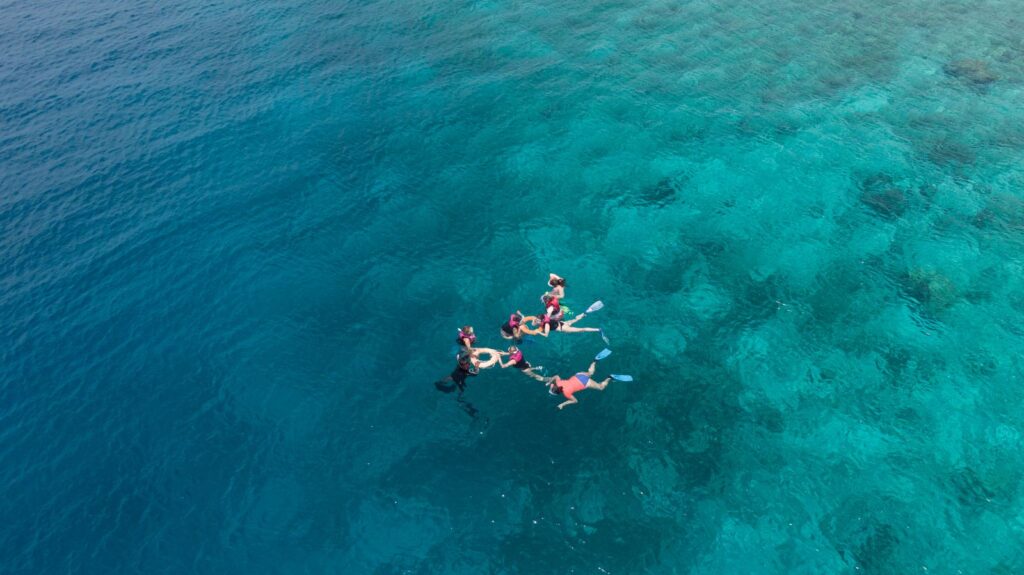
South Ari Atoll is one of very few places in the world where whale sharks stay all year. According to the Maldives Whale Shark Research Programme, the sharks here are mostly young males, which use the South Ari Marine Protected Area as a kind of nursery. Trips go out from the local island of Dhigurah and from nearby resorts.
The whale shark is the largest fish in the world and harmless to people. When you snorkel with one, don’t touch it and keep a distance of several metres, as local rules require. Only take photos without flash.
Manta rays at Hanifaru Bay
Hanifaru Bay is a small bay in Baa Atoll, which is a UNESCO Biosphere Reserve. From June to November manta rays gather here to feed on plankton, with the biggest numbers from late July to October, according to Maldives Magazine’s manta guide. Diving in the bay is banned. You can only snorkel, with a licensed guide and in limited numbers.
If mantas are your priority, stay in Baa Atoll and travel in the summer months. If you want the most reliable weather, go from January to March and plan around the year-round whale sharks of South Ari instead.
Best time to visit the Maldives
The driest and sunniest time in the Maldives is January to March. The Maldives Meteorological Service calls it the dry northeast monsoon and treats December and April as transition months. Travel sites usually stretch the dry season from December to April and name February and March as the driest months.
The wet southwest monsoon runs from about mid-May to November, according to the Maldives Meteorological Service. It rains more, but mostly in short heavy showers that clear quickly. Temperatures stay between 25 and 32 °C all year. From January to March the islands average 10 to 11 hours of sunshine a day, compared with 7 to 9 hours in the other months.
| When | Weather | Best for |
|---|---|---|
| January to March | dry, most sunshine | reliable weather if higher prices don’t bother you |
| December and April | transition months | Christmas and Easter holidays |
| mid-May to November | wet monsoon, short heavy showers | saving money if you don’t mind rain |
December works well if you don’t mind a transition month and peak prices around Christmas. If you’re weighing the Maldives against other warm escapes, we compared them side by side in our guide to winter sun destinations where you can eat vegan.
How much does a Maldives holiday cost?
A Maldives holiday ranges from a budget week in a local island guesthouse to many thousands for a resort villa over the water. The difference comes mostly from accommodation, the airport transfer and the taxes added at the end, which brochure prices often leave out.
Taxes and charges the price list doesn’t show
Resort prices are often shown with two plus signs (“++”), meaning taxes are not included. A 10% service charge is added, plus the tourism goods and services tax (TGST), which the Maldives Inland Revenue Authority raised from 16% to 17% on 1 July 2025. A cocktail or lunch at a resort really costs almost a third more than the menu says.
On top of that comes the green tax. Since 1 January 2025 it has been 12 US dollars per person per night at resorts, hotels, liveaboards and larger guesthouses. Guesthouses and hotels on inhabited islands with 50 rooms or fewer charge 6 dollars. Children under two are exempt.
A week at a resort for two people therefore adds 168 dollars in green tax alone.
Budget: local island or resort
In a simple Maafushi guesthouse, a double room with breakfast costs around 100 dollars a night, according to the Czech travel site Loudavým krokem. A meal in a local café costs a few dollars and the speedboat from the airport 25 to 30 dollars per person. At a resort the money goes on the room and the meal plan. A seaplane transfer to a distant atoll can cost hundreds of dollars per person, so check that price before you book the room.
| Item | Local island | Resort |
|---|---|---|
| Green tax (per person per night) | 6 US dollars (up to 50 rooms) | 12 US dollars |
| Service charge and TGST | depends on the guesthouse | 10% + 17% on “++” prices |
| Airport transfer | speedboat to Maafushi 25 to 30 dollars | speedboat or seaplane, ask first |
| Food | guesthouse and local cafés, cheap | meal plan or expensive à la carte |
Last-minute all-inclusive deals to the Maldives look tempting, but for vegans they’re a gamble. With cheaper resorts you often can’t tell whether the kitchen can manage more than buffet side dishes. If you spot a good deal, send the resort vegan email before you pay and only book once a specific answer comes back.
Getting there: flights, IMUGA and island transfers
Every international visitor lands at Velana International Airport next to the capital, Malé, and continues by boat or seaplane. From Europe most people fly with one change, usually in the Gulf or Istanbul, with airlines such as Emirates, Qatar Airways and Turkish Airlines.
Visa and the IMUGA declaration
Tourists get a free 30-day visa on arrival in the Maldives. According to Maldives Immigration, you need a passport valid for at least one month, a return ticket, a prepaid booking at a registered property and enough money for your stay. Every traveller, children included, must complete the IMUGA traveller declaration online, no earlier than 96 hours before arrival. It is free, so ignore any website that charges for it.
Speedboats, ferries and seaplanes
Local islands near Malé are served by shared speedboats costing tens of dollars and by slower public ferries, which are cheaper but only run on some days. On Friday, the main day of rest in the Maldives, public ferries don’t run and fewer shared speedboats do. For a Friday arrival, arrange a transfer in advance or plan a night in Malé or neighbouring Hulhumalé. Distant resorts are reached by seaplane, landing straight on the water.
Sri Lanka and the Maldives in one trip
Sri Lanka and the Maldives are neighbours, and combining them makes a lot of sense for vegans. Sri Lanka has rice and curry in every canteen and a handful of vegan cafés, and the Maldives gives you a week on the beach. Direct flights between Colombo and Malé take about an hour and a half, so you can spend your first week in Sri Lanka and the second by the sea.
Local rules and customs in the Maldives
The Maldives is a Muslim country, and on local islands the rules are kept more strictly than at resorts. Away from the bikini beach, cover your shoulders and knees, whether you’re a woman or a man. You can’t bring alcohol into the country at all, not even from airport duty free. At resorts, cocktails and wine flow freely.
You won’t find pork on local islands, and guesthouse hosts usually understand the word “vegetarian”. Just add that you also don’t eat fish, eggs or dairy.
Landing on a Friday? Book a night in Hulhumalé near the airport. You won’t be chasing the last boat, and you can head to your island rested the next morning.
A few Dhivehi words for ordering
The official language of the Maldives is Dhivehi, but English works at resorts and guesthouses. Rather than whole sentences, it helps to know a few words that appear in dish names and tell you what’s inside. Pronunciation is approximate and spellings in Latin script vary between sources.
| Word | Meaning | Where you’ll see it |
|---|---|---|
| mas | fish, tuna | mas huni, mas riha |
| valhoamas | dried Maldive fish | in curries and sauces |
| bis | egg | bis riha, bis keemiya |
| riha | curry | tharukaaree riha (vegetable) |
| roshi | flatbread | at breakfast and with curry |
In practice the most reliable phrase is the English “vegetarian, no fish, no Maldive fish, no egg, no milk”. The word “vegan” is understood mainly at resorts, and on local islands it’s safer to list the ingredients one by one.
Tropical, with vegan food beyond the hotel
If the Maldives feels too dependent on a single hotel kitchen, try Thailand, where vegan food is on every street. Read our answer to is Thailand vegan friendly.
Is the Maldives worth it for vegans?
Yes, as long as you sort out the food before the room. The safest choice is a resort with a plant-based restaurant like Shades of Green or Botanica. The cheapest is a local island guesthouse that will cook you coconut curry and pumpkin mas huni. Either way, send the email before you book and ask two questions about every curry, one about tuna and one about Maldive fish. We’d skip a last-minute all-inclusive deal unless the kitchen has confirmed it can cook vegan.
Have you been to the Maldives as a vegan? Which resort or guesthouse fed you best? Tell us in the comments.
Frequently asked questions
Is the Maldives vegan friendly?
Yes, if you plan ahead. Several resorts have plant-based or vegetarian restaurants and will cook vegan meals when asked in advance. Traditional Maldivian food relies heavily on tuna and dried Maldive fish, so on local islands you’ll eat mostly vegetable curry, dhal and roshi cooked by your guesthouse.
Which Maldives resorts are best for vegans?
Soneva Fushi (Shades of Green) and One&Only Reethi Rah (Botanica) both have fully plant-based restaurants. Atmosphere Kanifushi has Just Veg, a vegetarian restaurant with a vegan menu included in its all-inclusive plan. Always confirm by email that the restaurant is open during your dates.
Can you eat vegan on a local island in the Maldives?
Yes, mainly through your guesthouse, which can cook vegetable curry, dhal and roshi if you tell them in advance what you don’t eat. In local cafés, ask about tuna and dried Maldive fish with every dish, because both turn up in curries that look vegetarian.
Is Maldivian food vegan?
Mostly not, because tuna is the core of Maldivian cooking, from mas huni to garudhiya and gulha. Vegan options include roshi with lonu miris, coconut vegetable curry, banana flower salad (boshi mashuni) and pumpkin mas huni, as long as no Maldive fish is added.
When is the best time to visit the Maldives?
January to March is the driest, sunniest period, with December and April as transition months. The wet southwest monsoon runs from mid-May to November, bringing short heavy showers and lower prices. Temperatures stay between 25 and 32 °C all year.
Newsletter
Get our free e-books
Join the newsletter and download Our Vegan Christmas Kitchen straight away, 10 recipes for Czech cookies, gingerbread and vánočka. Then once a month, new places from the vegan map and new articles. Unsubscribe with one click.