The best things to do in Warsaw fit easily into a long weekend. You can walk an Old Town rebuilt brick by brick after 1945 and see the Royal Castle. Then ride up to the 30th-floor terrace of the Palace of Culture and spend an afternoon in the Warsaw Rising Museum. What most lists leave out is that Warsaw keeps turning up in world top-ten rankings of vegan-friendly cities. You can eat pierogi, a breaded cutlet and a bowl of ramen without a single animal product, even on a Sunday.
Poland’s capital is also easier to reach than people think. There are several direct day trains from Prague, a direct sleeper that rolls into the city centre at breakfast time, and since March 2026 another through service via Kraków. Still, most travellers skip it and head straight for Kraków.
Is Warsaw worth visiting, or is it just a grey business city?
How many days do you need? What can you see for free, and where can you eat well when one of you is vegan and the other isn’t? And why should you never leave your grocery shopping until Sunday in Poland? We’ve answered all of it below.
We haven’t made it to Warsaw together yet, so this isn’t a trip diary. In October 2026 we read every restaurant’s own menu, checked the sights on their official websites and looked up the trains in the timetable. Places we couldn’t confirm are still open didn’t make the list, even though other guides still recommend them.
Is Warsaw worth visiting?
Yes, Warsaw is worth visiting, especially if you like 20th-century history, modern museums and good food at fair prices. German forces almost wiped the city off the map in 1944, and Poles rebuilt it after the war. You see that story everywhere, from the Old Town squares to the Warsaw Rising Museum.
Warsaw is not Kraków, though. Don’t expect one compact medieval centre. The Old Town is small and reconstructed, and the rest of the centre is wide boulevards, the Stalin-era Palace of Culture and glass towers.
If you want romance, our guide to eating vegan on a weekend in Kraków is the better fit. If you want to understand modern Poland and eat well while you do, Warsaw is the place.
How many days in Warsaw?
Two to three days in Warsaw is right for most people. In two days you can cover the Old Town, the Royal Route, one big museum and Łazienki Park. Keep a third day for a second museum, the Praga district across the Vistula and a long lunch. If you arrive on the night train, your first day starts at 8 a.m.
Warsaw on our vegan map
9 places, 7 fully vegan. Tap a pin to see the details.
Loading the map…
- 100% vegan
- Vegan options
- Hotels with a vegan breakfast
See every place from this article on our vegan map.
Things to do in Warsaw: Old Town and the Royal Route
The first things to do in Warsaw are the Old Town, the Royal Castle and the Royal Route, which run into each other and make an easy half-day walk. The Historic Centre of Warsaw has been on the UNESCO World Heritage List since 1980, precisely because of how carefully it was rebuilt after the war.
The Old Town and the Mermaid
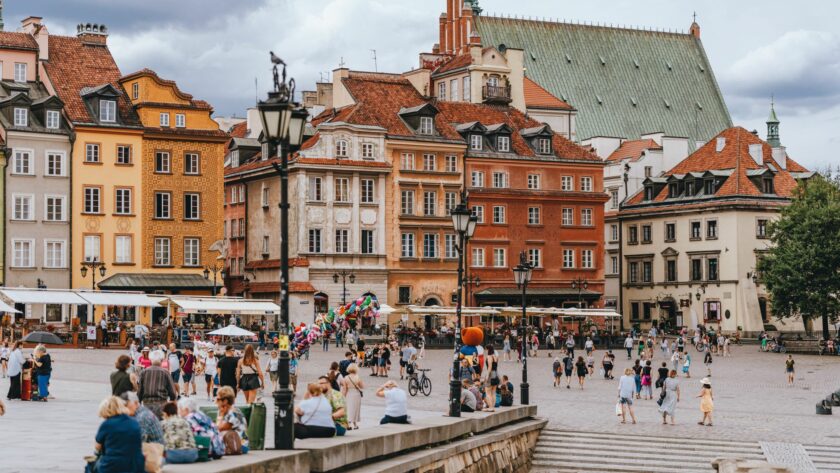
Warsaw’s Old Town (Stare Miasto) looks medieval, but most of its houses date from after 1945. Builders used old paintings, photographs and plans to recreate the houses, churches and walls that disappeared in 1944. At its heart is the Old Town Market Square, with a statue of the Mermaid (Syrenka), the symbol of the city that also appears on Warsaw’s coat of arms.
From the square a short street leads to the Barbican, a surviving piece of the old city walls. Beyond it is the New Town (Nowe Miasto), quieter and with fewer tour groups. The whole Old Town is small, and an hour is enough even with photo stops.
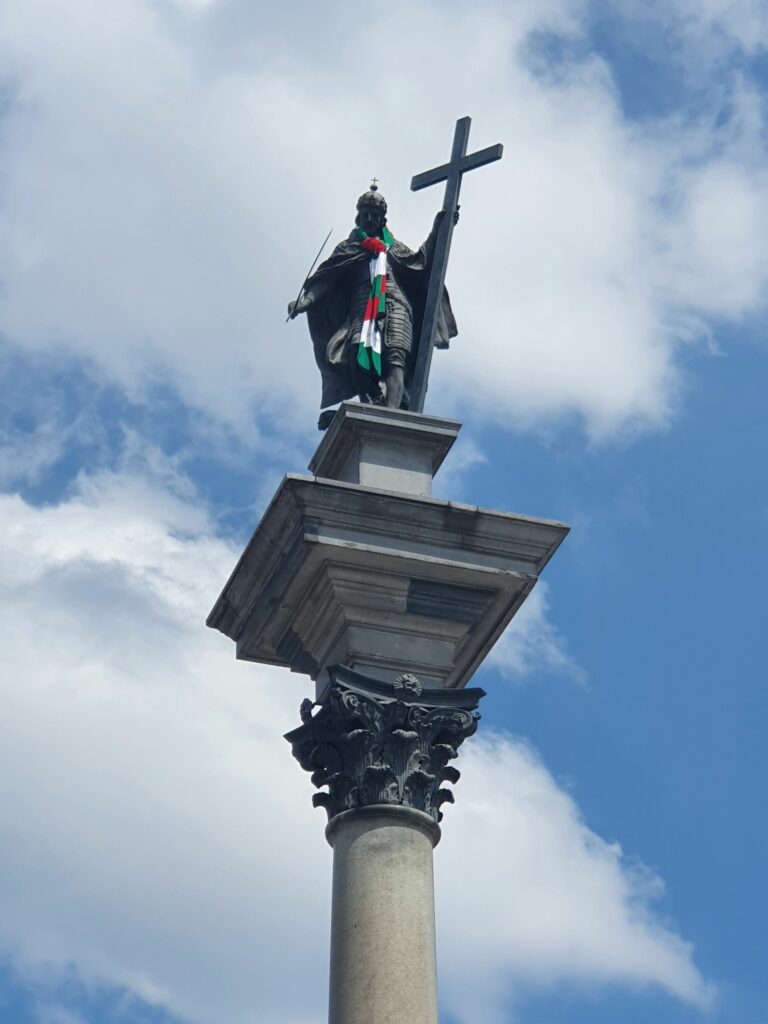
The Royal Castle, for 1 złoty if you’re 8 to 26
The Royal Castle (Zamek Królewski) on Castle Square is the best place to understand what Warsaw lost and how it came back. The former seat of Polish kings was destroyed during the war, and today’s building is a post-war reconstruction. Inside you’ll find the royal apartments, the old parliament chambers and the Canaletto paintings that helped guide the rebuilding.
According to the Royal Castle’s official ticket page, a regular ticket with audio guide costs 60 zł (about €14) for one route (Royal or Museum), or 95 zł for both. Citizens of the EU, Switzerland and EFTA aged 8 to 26 pay just 1 zł with proof of age. On Wednesdays a shortened route is free for everyone, and on Mondays the castle is closed.
Tip for students and young travellers: The 1 zł Royal Castle ticket applies to every EU, Swiss and EFTA citizen aged 8 to 26, not only Poles. Bring your ID card or passport. If you visit on a Wednesday, a shortened route is free for everyone (free tickets are limited and handed out at the ticket office on the day).
The Royal Route: Krakowskie Przedmieście and Nowy Świat
The Royal Route (Trakt Królewski) is Warsaw’s grand promenade, running south from the Royal Castle along Krakowskie Przedmieście and Nowy Świat. It’s lined with palaces, churches, the university and cafés. It’s the nicest walk in the city and also the natural way from the Old Town into the centre, where most of the vegan restaurants are.
Keep going south and you’ll eventually reach Łazienki Park. The full route is long, so take a tram or bus back if your feet give up.
What to see in Warsaw beyond the Old Town: museums and the Palace of Culture
Beyond the Old Town, the top sights are the Warsaw Rising Museum, the POLIN Museum, the Palace of Culture and Science with its viewing terrace, and the Neon Museum. If you only have time for one big museum, choose by what you care about more, the war or the history of Polish Jews.
The Warsaw Rising Museum
The Warsaw Rising Museum at Grzybowska 79 tells the story of the 63 days in 1944 when Warsaw rose against the German occupation. It’s interactive, loud and emotional, and even people who don’t like museums usually leave shaken. Allow at least two to three hours.
Tickets cost 35 zł (about €8), or 30 zł reduced. The museum is closed on Tuesdays. It opens 8:00 to 18:00 on Monday and Wednesday to Friday, and 10:00 to 18:00 at weekends.
POLIN Museum of the History of Polish Jews
POLIN stands in the former Jewish district, opposite the Monument to the Ghetto Heroes, and tells a thousand years of Jewish life in Poland, not only the Holocaust. The building itself is one of the most striking modern structures in the city. According to the museum’s official pages, it is closed on Tuesdays and the core exhibition is free on Thursdays.
The Palace of Culture and its 30th-floor terrace
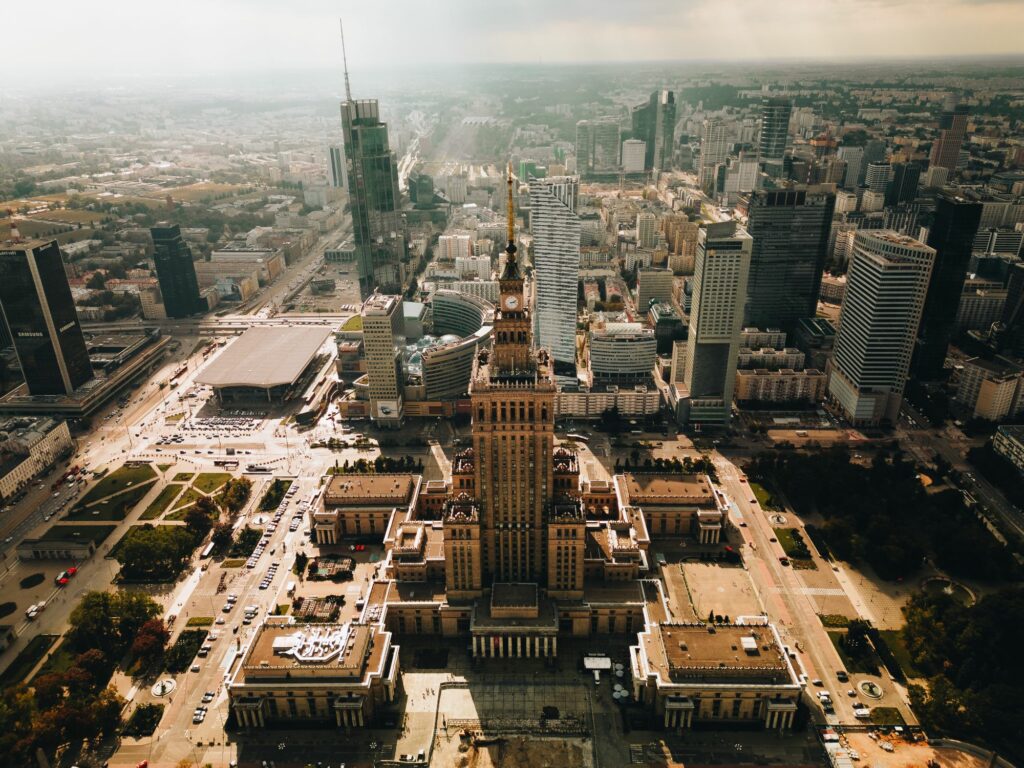
The Palace of Culture and Science (Pałac Kultury i Nauki) is Warsaw’s most famous and most argued-about building (it was the tallest until Varso Tower overtook it in 2021). It went up between 1952 and 1955 as a “gift” from the Soviet Union. Locals still joke that the best view of Warsaw is from its terrace, because that’s the only place you can’t see the Palace.
According to the Palace’s own website, the viewing terrace is on the 30th floor, 114 metres up, and open daily from 10:00 to 20:00. The lift gets you there in 19 seconds. Go in the evening, when the towers around it light up.
The Neon Museum, now inside the Palace
The Neon Museum (Neon Muzeum) collects old Cold War-era neon signs and is one of Warsaw’s best-loved small museums. Most guides still place it in the Praga district. According to the Neon Museum’s visitor page, it is now on the 4th floor of the Palace of Culture, entrance from Marszałkowska Street.
Tickets cost 28 zł (about €6.50) and it opens daily from 11:00.
Right next to the Palace stands the white box of the Museum of Modern Art (MSN), which opened on 25 October 2024. After twenty years without a permanent home the museum finally has one, and the Palace and the museum now face each other like two eras of the same city.
Free things to do in Warsaw. The Old Town, the Royal Route, Łazienki Park and the Vistula boulevards cost nothing. A shortened Royal Castle route is free on Wednesdays, POLIN’s core exhibition on Thursdays, and in summer there are free Sunday Chopin concerts in Łazienki. A whole weekend in Warsaw can cost very little in entry fees.
Things to do in Warsaw outside the centre: Łazienki, the Vistula and Praga
When you’ve had enough of museums, head to Łazienki Park, the boulevards along the Vistula or across the river to Praga. This is where Warsaw shows that it’s not just a city of history but somewhere people actually like living.
Łazienki Park and the Chopin concerts
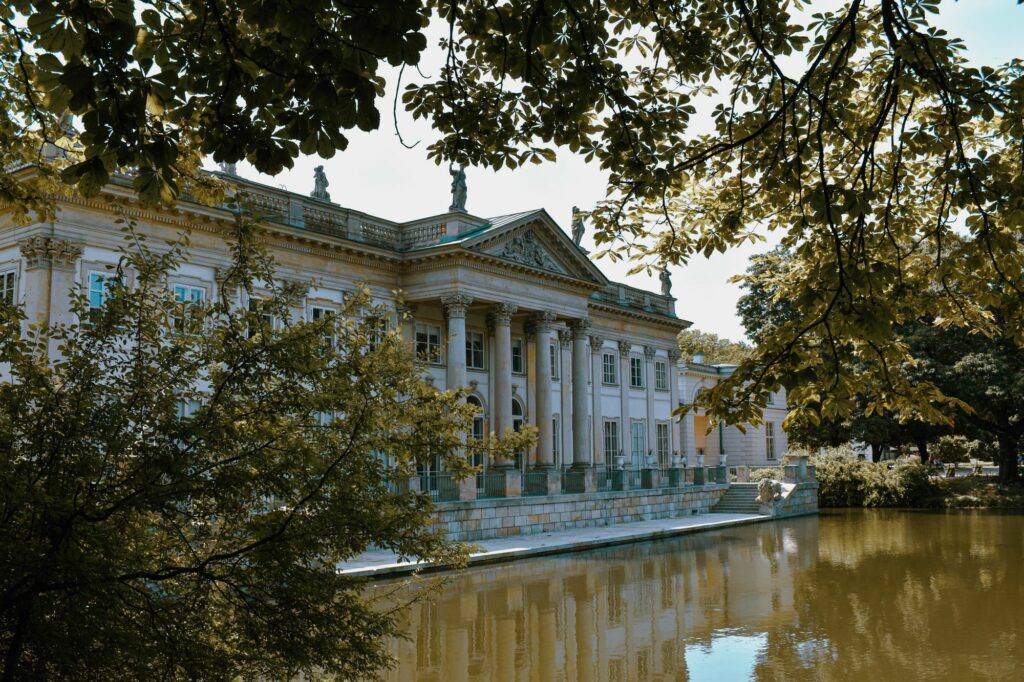
Łazienki Królewskie is Warsaw’s largest park, with the classical Palace on the Isle, an orangery and the Fryderyk Chopin Monument. It’s the perfect place for an afternoon walk between two meals. You don’t need a ticket for the gardens.
In summer, free concerts of Chopin’s music are played under his monument every Sunday. In 2026 the concerts ran every Sunday from 5 July to 27 September, at 12:00 and 16:00, according to the Chopin Foundation. If you’re visiting in summer, plan your Sunday around it.
The Vistula boulevards
The left bank of the Vistula is lined with new boulevards (Bulwary Wiślane), with benches, bars and steps down to the water. On summer evenings locals come here for a drink, and the opposite bank has sandy beaches. It’s the best place to sit with a takeaway from one of the vegan places in the centre.
Praga, the other bank
Praga is the district on the right bank of the Vistula, which was damaged less in the war, so its old tenements, courtyards and street art survived. Today it’s popular for bars, clubs and galleries in old factories. Saska Kępa, the neighbouring district by the river, also has a branch of Vegan Ramen Shop, so you can combine a trip across the river with dinner.
Where to eat vegan in Warsaw
Eating vegan in Warsaw is easy, because the city has dozens of fully plant-based places. Most of them sit in the centre, between the Old Town and the Palace of Culture. In rankings of the world’s most vegan-friendly cities, Warsaw made the top ten in both 2019 and 2022. Here are the six places we checked in October 2026.
| Restaurant | Area | Fully vegan? | What to order (price) | Open |
|---|---|---|---|---|
| Vege Miasto | Muranów, near the Old Town | yes | pierogi (35 zł), lunch set (36 zł) | Mon 12–18, Tue–Sun 12–21 |
| Lokal Vegan Bistro | Śródmieście, Krucza 23 | yes | soy schabowy cutlet (39 zł) | Mon–Sat 12–21, Sun 12–20 |
| Vegan Ramen Shop | Muranów, Saska Kępa, Mokotów | yes | Spicy Miso ramen (48 zł) | no reservations |
| Youmiko Vegan Sushi | Muranów | yes | seasonal sushi sets | delivery and pick-up, check seating |
| Eter Vegan Bakery | Śródmieście, Hoża 5/7 | yes | pączki, croissants, bagels | Mon–Fri 8–20, Sat–Sun 9–20 |
| Veganda | Śródmieście, plac Zbawiciela | no, some dishes vegetarian | soy schabowy, pho | daily, lunch to evening |
Vege Miasto: pierogi without the cheese
Vege Miasto at Aleja Solidarności 60A is a 100% plant-based restaurant serving Polish food, a short walk from the Old Town. Pierogi cost 35 zł (about €8) and come in several fillings, including ruskie with potato and tofu, sauerkraut with forest mushrooms, and red lentil. Potato pancakes with crispy breaded oyster mushrooms are 39 zł.
The best value is the daily lunch set. Soup and a main cost 36 zł, or 28 zł for the main alone. It’s open from 12:00 to 21:00 Tuesday to Sunday, and until 18:00 on Mondays.
Lokal Vegan Bistro: a cutlet like grandma made
Lokal Vegan Bistro at Krucza 23 cooks Polish classics plant-based, and its signature is the schabowy, a breaded cutlet made here from soy. On the autumn 2026 menu it comes with crushed potatoes, a leek and carrot slaw and mizeria (a creamy cucumber salad) for 39 zł (about €9), exactly like a Polish Sunday lunch. The autumn 2026 menu also has a pumpkin soup.
The bistro is run by a social cooperative and doesn’t take bookings. It’s open 12:00 to 20:00 on Sundays and until 21:00 the rest of the week.
Vegan Ramen Shop: three branches, no bookings
Vegan Ramen Shop is a small Warsaw chain of fully vegan ramen bars. It has three branches, in Muranów at Jana Pawła II 52/54, in Saska Kępa at Finlandzka 12a and in Mokotów at Narbutta 83. A bowl costs 48 zł (about €11) to eat in. They call the Spicy Miso their “evergreen”, and if you like heat, the Tantan-men comes with house tahini, chilli oil and Sichuan pepper.
They don’t take reservations, so expect a short wait at dinner time. If you’d rather not queue, they deliver through Wolt.
Youmiko Vegan Sushi
Youmiko Vegan Sushi serves only vegan sushi, and the menu changes with the seasons and with whatever vegetables are at their best. After a change of owner, Youmiko now works from the Pasaż Muranów arcade (Al. Jana Pawła II 45A). Its site says it started with delivery and pick-up only, so check whether you can sit down before you go.
Eter Vegan Bakery: pączki for breakfast
Eter Vegan Bakery at Hoża 5/7 is a vegan bakery and café baking croissants, bagels, focaccia and above all pączki, Poland’s beloved filled doughnuts. Everything it bakes is vegan. It opens at 8:00 on weekdays and 9:00 at weekends, which makes it the obvious breakfast stop. Prices aren’t listed online.
Veganda: good food, but read the menu
Veganda on plac Zbawiciela is a popular plant-based restaurant, but it isn’t 100% vegan. Its menu marks dishes as either “vegan” or “vegetarian”, and the vegetarian ones contain cheese, labneh or crème fraîche. The soy schabowy, the pho and the Korean-style cauliflower are vegan. Ask when you order, or stick to the “vegan” label.
In Warsaw, a vegan and a non-vegan don’t have to choose between Polish food and plant-based food. Pierogi, schabowy and pączki come in both versions, and both are good.
Polish food: what’s vegan and what to watch out for
Traditional Polish cooking is built on potatoes, cabbage, mushrooms, beetroot and flour, so a lot of it works without meat. The catch is in the details, such as lard, butter, sour cream and twaróg, a fresh curd cheese. Here’s what to order and what to be careful with.
Pierogi ruskie are not vegan
Pierogi are Polish filled dumplings, and you’ll find them everywhere in Warsaw. Watch out for the most popular kind, pierogi ruskie. Their classic filling is potato with twaróg, so they’re neither vegan nor dairy-free, even though they look like “just potato”. That’s why Vege Miasto makes theirs with tofu.
Pierogi with sauerkraut and mushrooms (z kapustą i grzybami) are usually free of meat and cheese, but ordinary restaurants may top them with bacon or onions fried in butter. The dough can contain egg. Unless you’re in a vegan restaurant, always ask.
Schabowy, placki and barszcz
Schabowy is a breaded pork cutlet that Poles eat for Sunday lunch with potatoes and cabbage. You’ll find the vegan version at Lokal Vegan Bistro and Veganda. Placki ziemniaczane, potato pancakes, usually contain egg, but Vege Miasto makes them without.
Barszcz czerwony, clear red beetroot soup, is meat-free in many families on Christmas Eve, but restaurants often make it with meat stock the rest of the year. Ask before you order it.
Tip for mixed couples: If you’re travelling with someone who eats meat, take them to Lokal Vegan Bistro for the schabowy. It looks and tastes like a classic Polish plate from grandma’s kitchen. For breakfast, pączki from Eter are indistinguishable from any Polish bakery’s.
Sundays in Poland: shops closed, restaurants open
Poland has had a ban on most Sunday retail trading since 1 March 2018, so most supermarkets and shops are closed on Sundays. Restaurants, cafés, bakeries, pharmacies, petrol stations and station shops are exempt. All six places on our list are open on Sundays.
In 2026 only a few Sundays are trading days, and the last ones are 6, 13 and 20 December before Christmas. Many Żabka convenience stores open on Sundays thanks to an exemption for owners who serve customers themselves, so drinks and snacks for the journey are never far away.
Tip for the journey home: Leaving Warsaw on a Sunday? Buy food for the train in a supermarket on Saturday, or take something from Eter or Vege Miasto. Our guide to travelling vegan, even with a non-vegan partner has more ideas for eating well on the road.
Getting to Warsaw: the Prague to Warsaw train and other routes
The Prague to Warsaw train takes about eight and a half to nine hours direct, with several direct day trains, and there is also a direct night train that arrives in the city centre in the morning. Flying is faster, but the train saves you a night in a hotel. Times and prices below are for November 2026. The timetable changes on 13 December 2026, so check the Czech national timetable (IDOS) before you book.
| Service | Leaves Prague | Journey time | From | Notes |
|---|---|---|---|---|
| RegioJet, direct | 9:41 | about 8 h 20 min | 399 CZK (about €16) | usually the cheapest |
| ČD and PKP Intercity EuroCity, direct | 6:08, 10:08, 14:08 | about 8 h 45 min to 9 h | varies | Silesia and Cracovia trains |
| ČD EuroNight, direct sleeper | 22:16 | arrives 8:08 | depends on berth | check on cd.cz which berths go to Warsaw |
| Leo Express via Ostrava and Kraków | twice a day | about 9 h | varies | through service since 1 March 2026 |
| FlixBus | several a day | 8.5 to 12 h | 579 CZK (about €24) | slower and dearer than the train |
By day train
The cheapest option is usually RegioJet’s direct train, which takes about 8 hours 20 minutes from Prague to Warsaw and costs from 399 CZK (about €16) in November 2026. ČD and PKP Intercity run direct EuroCity trains (Silesia, Cracovia) several times a day, leaving Prague at 6:08, 10:08 and 14:08. ČD’s Včasná jízdenka Evropa advance fares are usually much cheaper than the standard fare.
By night train
The most comfortable option is the ČD EuroNight sleeper. It leaves Prague at 22:16 and reaches Warszawa Centralna at 8:08, right in the centre next to the Palace of Culture. Check on cd.cz which couchette or sleeper berths are bookable to Warsaw. Either way you save a night’s hotel and walk straight to breakfast at Eter.
Leo Express via Kraków
Since 1 March 2026 Leo Express has run Prague, Ostrava, Kraków and Warsaw twice a day in each direction, according to the Czech Embassy in Warsaw. From Prague it leaves at 12:23 and 21:23, and trains from Warszawa Centralna to Prague leave at 7:28 and 22:52 (November 2026). It’s a good choice if you want to combine Warsaw with Kraków, about two and a half hours away.
From Brno, by air and by bus
There’s no direct train from Brno to Warsaw. The simplest route is a train to Ostrava, then a change onto one of the Prague to Warsaw trains, and IDOS will show the connection for your date.
There are direct flights from Prague to Warsaw, but once you add the airport transfers you save less time than you’d think. FlixBus takes 8.5 to 12 hours from 579 CZK, so it’s only worth it if the trains are sold out.
Getting around Warsaw
The metro, trams and buses all use the same tickets. A 20-minute ticket costs 3.40 zł, a 75-minute ticket 4.40 zł and a 24-hour ticket 15 zł (about €3.50), according to the city’s Warsaw 19115 information centre. The centre between the Old Town and the Palace of Culture is easy to cover on foot.
Where to stay in Warsaw
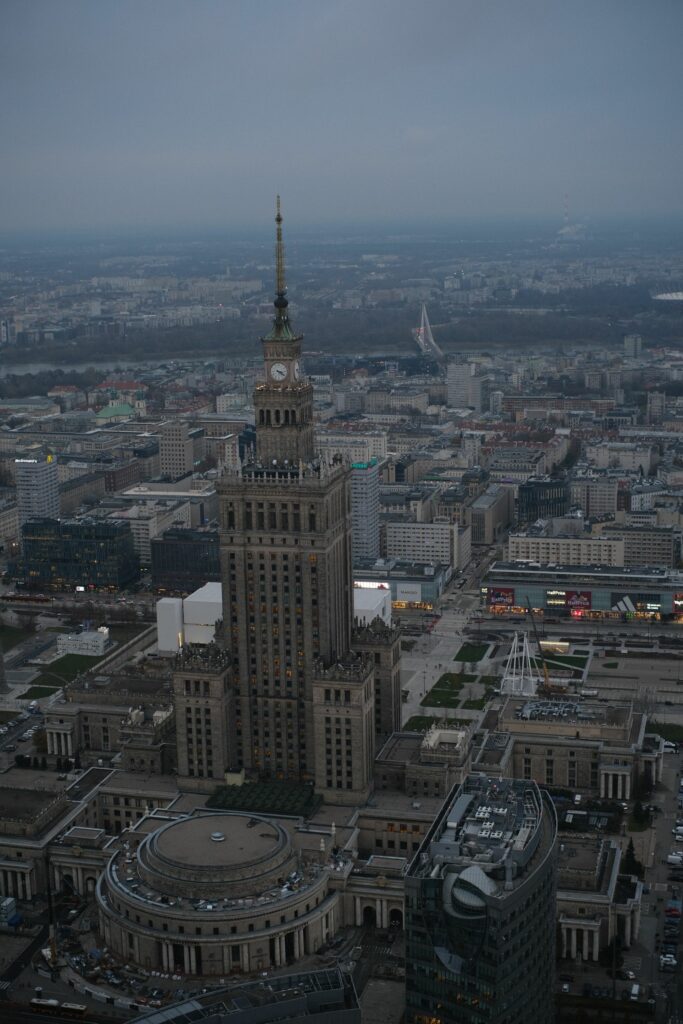
The best area to stay in Warsaw is Śródmieście, the centre between the Palace of Culture and Nowy Świat. From there you can walk to the Old Town, to Warszawa Centralna station and to most of the vegan places on our list, including Lokal Vegan Bistro and Eter.
For quieter, prettier streets you can stay in the Old Town or the New Town, though rooms cost more and evenings are busier with tourists. Praga, across the river, is cheaper and more alternative, with trams and the metro into the centre. If you arrive on the night train, pick a hotel near the station so you can drop your bags first thing.
Is Warsaw expensive?
Warsaw is not expensive by Western European standards. It’s cheaper than Vienna or Berlin and a little pricier than Kraków. Museum tickets are modest and a vegan lunch in a restaurant costs about €8 to €11. We converted prices at the Czech National Bank rate of 15 October 2026, when €1 bought about 4.37 zł.
| Item | Price in zł | About in € |
|---|---|---|
| RegioJet train Prague to Warsaw (one way) | n/a | from €16 |
| Vege Miasto lunch set (soup and main) | 36 zł | €8 |
| Ramen at Vegan Ramen Shop | 48 zł | €11 |
| Schabowy at Lokal Vegan Bistro | 39 zł | €9 |
| Royal Castle, one route (EU citizens aged 8–26) | 60 zł (1 zł) | €14 (€0.25) |
| Warsaw Rising Museum | 35 zł | €8 |
| Neon Museum | 28 zł | €6.50 |
| 24-hour public transport ticket | 15 zł | €3.50 |
Over two days you’ll spend roughly €65 to €80 per person on food, entry fees and city transport, not counting accommodation or the train. If you’re under 27 and visit on a Wednesday, the castle costs almost nothing.
Best time to visit Warsaw
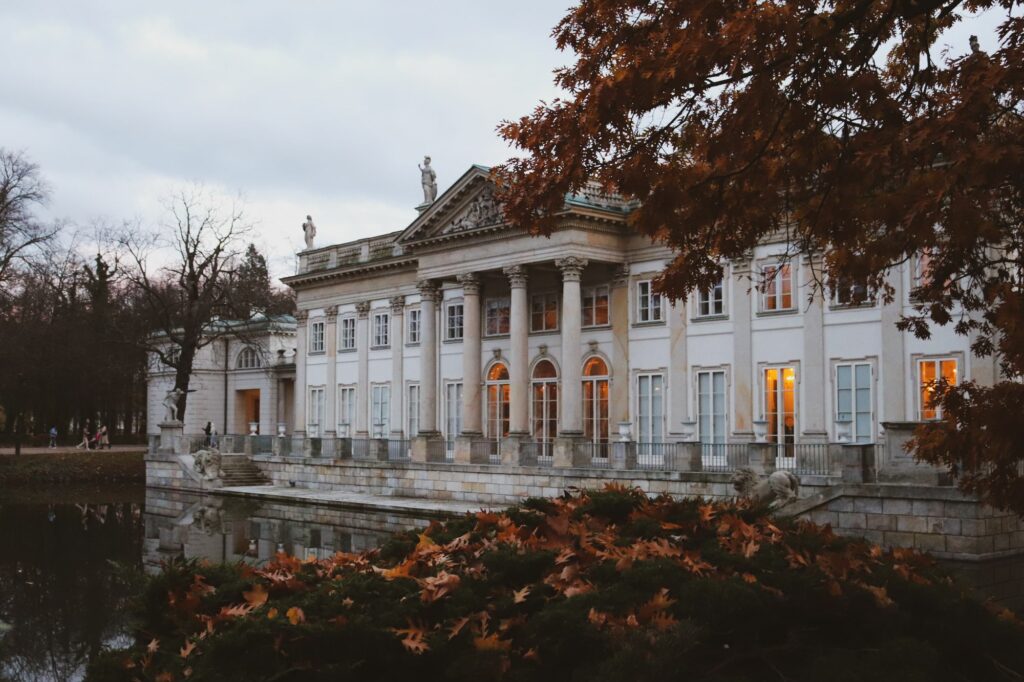
The best time to visit Warsaw is May to September. The Vistula boulevards are open, the free Chopin concerts play in Łazienki on summer Sundays and you can eat outside. September is ideal, warm but quieter than July.
December is the other good time. The Christmas market by the Barbican and Castle Square ran from 21 November 2025 to 6 January 2026 with free entry, according to the Warsaw culture portal PIK. The 2026 dates hadn’t been announced yet when we checked.
If you’re planning a multi-city Advent trip, see our pick of the best Christmas markets in Europe for vegans.
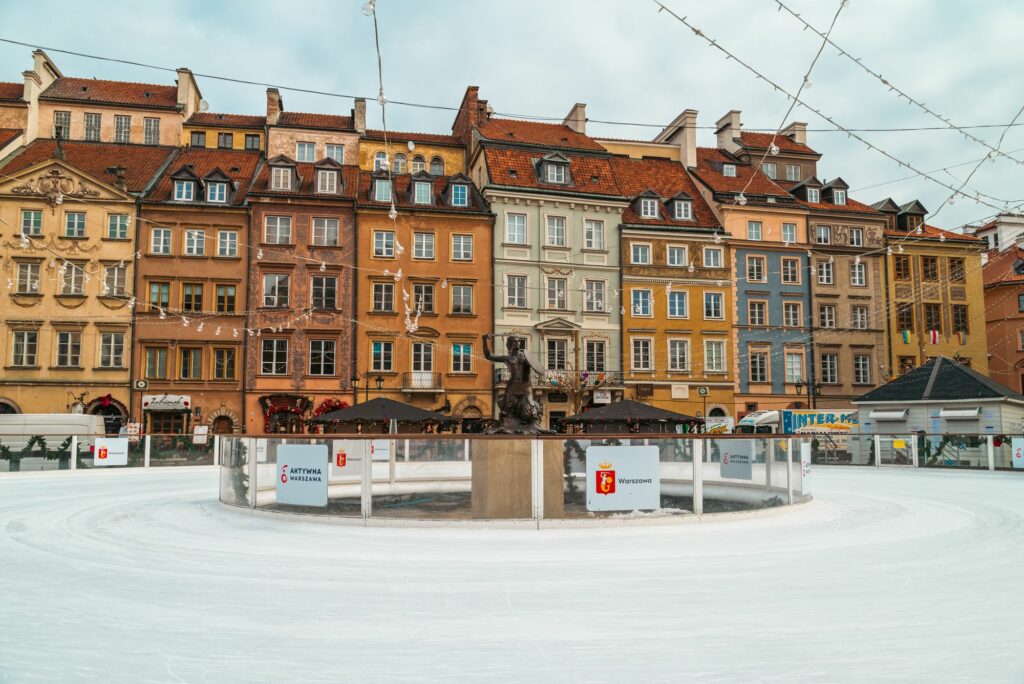
In winter, pack warm. Warsaw has a continental climate, and January and February bring frost and wind. The upside is that museums and restaurants are open all year.
Read next
Warsaw is one of the 16 cities in our round-up of vegan city breaks in Central Europe, all reachable from Prague by train. If you want to stay in Poland, vegan Wrocław, with its best restaurants and tips pairs well with Warsaw. And if you’d like to add the sea, see our guide to things to do in Gdańsk.
Polish phrases for vegans
Most Warsaw restaurants will understand English, but a few Polish phrases help in bakeries, milk bars and Żabka. Watch out for “wegetariańskie”, which means vegetarian, not vegan, and often includes cheese, egg or butter.
| Polish | Say it like | English |
|---|---|---|
| Jestem weganinem / weganką. | YES-tem veh-gah-NEE-nem / veh-GAN-kohn | I’m vegan (male / female). |
| Czy to jest wegańskie? | chih toh yest veh-GAHN-skyeh | Is this vegan? |
| Bez mięsa, bez nabiału, bez jajek. | bez MYEN-sah, bez nah-BYAH-woo, bez YAH-yek | No meat, no dairy, no eggs. |
| Czy jest w tym ser albo twaróg? | chih yest f tim ser AHL-boh TVAH-rook | Is there cheese or curd cheese in it? |
| Czy to jest na maśle? | chih toh yest nah MAHSH-leh | Is it cooked in butter? |
| Poproszę wersję wegańską. | poh-PROH-sheh VER-syeh veh-GAHN-skohn | The vegan version, please. |
Our verdict
Warsaw is, for us, the most underrated weekend you can reach from Prague by train. It’s a bit further than Wrocław and far less romantic than Kraków, but for vegans it’s easier than both. Two days cover the Old Town, the castle and one big museum, and in between you eat pierogi, a schnitzel-style cutlet and ramen with no compromises at all. The best plan is the night train in, breakfast at Eter and a Sunday in Łazienki Park.
If you’re travelling with someone who eats meat, Warsaw is a great place to show them that vegan food doesn’t mean missing out. Have you been to Warsaw, or have you always gone straight to Kraków? Tell us in the comments.
Frequently asked questions
What are the top things to do in Warsaw?
The top things to do in Warsaw are the Old Town and Market Square, the Royal Castle, the Royal Route, the 30th-floor terrace of the Palace of Culture and Science, the Warsaw Rising Museum and the POLIN Museum. Add Łazienki Park, the Vistula boulevards and the Praga district if you have a second day. The Royal Castle is free on Wednesdays.
How many days do you need in Warsaw?
Two to three days are enough for Warsaw. Two days cover the Old Town, the Royal Route, one major museum and Łazienki Park, and a third day lets you add a second museum and the Praga district at a relaxed pace.
How long is the train from Prague to Warsaw?
The direct RegioJet day train from Prague to Warsaw takes about 8 hours 20 minutes and costs from 399 CZK (about €16) in November 2026, and ČD and PKP run direct EuroCity trains several times a day. The ČD EuroNight sleeper leaves Prague at 22:16 and arrives in Warsaw at 8:08. The timetable changes on 13 December 2026, so check before you book.
Is Warsaw vegan friendly?
Yes, Warsaw is one of the most vegan-friendly cities in Europe and made world top-ten rankings in 2019 and 2022. Fully vegan places include Vege Miasto, Lokal Vegan Bistro, Vegan Ramen Shop, Youmiko Vegan Sushi and Eter Vegan Bakery. In ordinary restaurants, watch out for pierogi ruskie, which are filled with curd cheese.
Are shops open on Sundays in Poland?
Most shops and supermarkets in Poland are closed on Sundays, because a Sunday trading ban has applied since 2018. Restaurants, cafés, bakeries, pharmacies, petrol stations, station shops and many Żabka stores stay open. In December 2026 the trading Sundays are 6, 13 and 20 December.
Where can I buy vegan groceries in Warsaw?
The easiest place to stock up cheaply is Lidl, which sells its own vegan range, Vemondo, in Poland too. Plan your big shop for Saturday, because Poland’s Sunday trading ban keeps most supermarkets shut on Sundays. If you get caught out, many Żabka convenience stores open on Sundays and are fine for drinks and snacks for the train.
Featured photo: Egor Komarov, Pexels.
Newsletter
Get our free e-books
Join the newsletter and download Our Vegan Christmas Kitchen straight away, 10 recipes for Czech cookies, gingerbread and vánočka. Then once a month, new places from the vegan map and new articles. Unsubscribe with one click.