Berlin is just under four hours from Prague by direct train, and for vegans it’s the easiest big city in Europe. Most lists of things to do in Berlin agree on the basics. The Brandenburg Gate, the Reichstag dome, what’s left of the Berlin Wall and Museum Island.
What they rarely mention is the vegan food. You can get a vegan currywurst at a stand that has been trading since 1980, a vegan döner on Thursdays and a vegan schnitzel every Monday.
Berlin also changes faster than the guides written about it. Famous vegan restaurants that big travel sites still recommend in 2026 have closed. The best-known museum on Museum Island is shut until June 2027. And some guides still say the train from Prague takes about four and a half hours, when the direct train actually takes 3 hours 58 minutes.
Is Berlin worth visiting if you don’t love big cities? What should you see in a weekend, and what’s free? Where do you eat vegan when your travel companion eats meat?
Which area should you stay in, how expensive is Berlin, and when do the Christmas markets open? Read on.
We haven’t been to Berlin together yet, so this isn’t a trip diary. In October 2026 we read every restaurant’s own menu and opening hours. We also checked the sights on their official websites and the train times in the official Czech journey planner. Anything we couldn’t verify, we left out.
Is Berlin worth visiting?
Yes, Berlin is worth visiting, especially if you’re into 20th-century history, museums and food. The war, the divided city and the fall of the Wall are visible on the street. Many of the best things to do in Berlin are also free, from the Reichstag dome to the East Side Gallery.
Berlin isn’t Prague or Vienna, though. Don’t expect one compact old town you can stroll through in an afternoon. The city is huge and made up of neighbourhoods that each feel completely different.
The sights are mostly in Mitte. The food, cafés and nightlife are in Prenzlauer Berg, Friedrichshain, Kreuzberg and Neukölln.
Who won’t love Berlin? If you want cobbled lanes and Baroque façades, you’ll be happier in Dresden, which sits on the same train line. Berlin is for people who want to understand how a city rebuilt itself after the war and after 1989, and who want to eat well while they’re at it.
Berlin on our vegan map
30 places, 24 fully vegan. Tap a pin to see the details.
Loading the map…
- 100% vegan
- Vegetarian
- Vegan options
- Sanctuaries & charities
See every place from this article on our vegan map.
Things to do in Berlin’s centre: Mitte and Museum Island
The top things to do in central Berlin are the Brandenburg Gate, the Reichstag dome and the Memorial to the Murdered Jews of Europe. Add Museum Island and the TV Tower on Alexanderplatz. They’re all in the Mitte district, linked by the Unter den Linden boulevard. You can walk the whole loop in a day if you skip the museums.
Brandenburg Gate
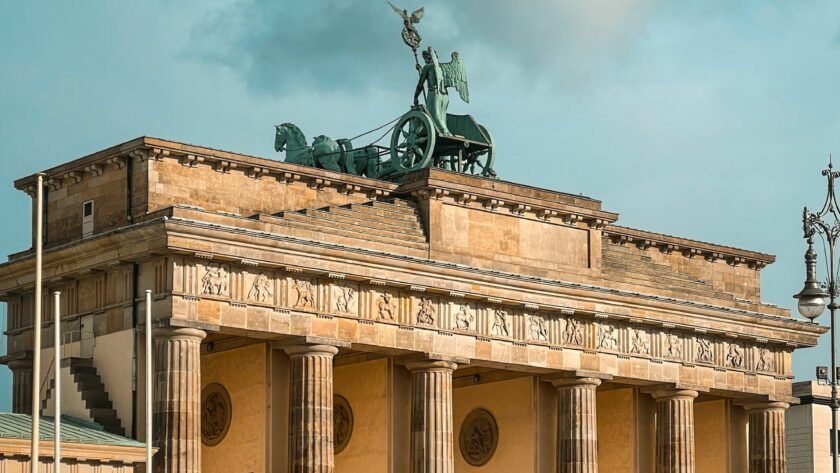
The Brandenburg Gate is Berlin’s most famous landmark, and during the city’s division it became a border gate nobody was allowed to pass through. According to Berlin’s official city portal, Carl Gotthard Langhans built it between 1788 and 1791, inspired by the Acropolis in Athens. Johann Gottfried Schadow added the Quadriga, the chariot with the goddess of victory on top, in 1793.
You may read elsewhere that the gate dates from 1734. That was an older customs gate on the same spot, not the one you see today.
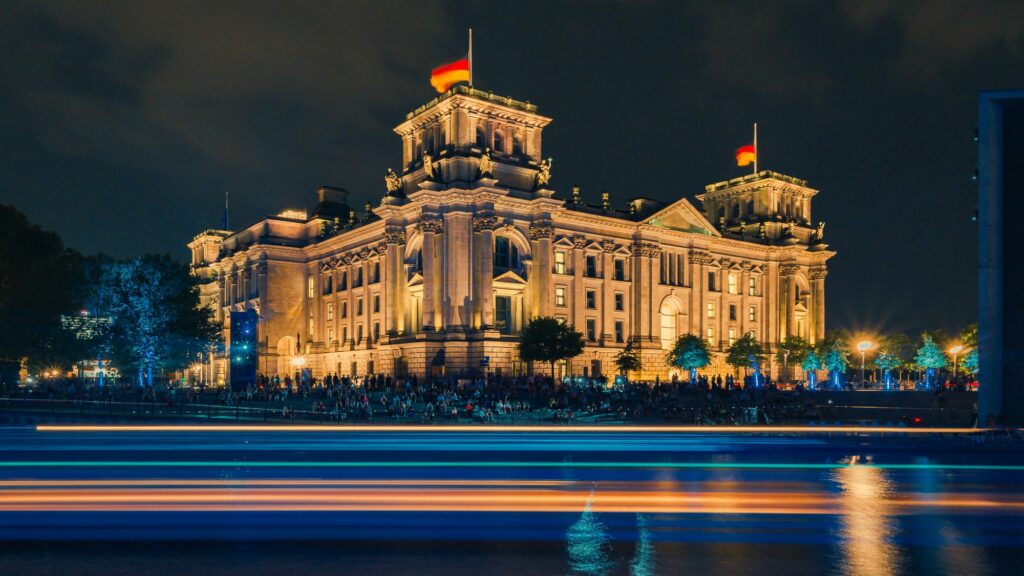
The Reichstag dome
The glass dome on top of the Reichstag, home of the German parliament, is free to visit, but you must register online in advance. The Bundestag lets visitors in every 15 minutes, with last admission at 21:45. From the dome and the roof terrace you look out over the government quarter and the Tiergarten park.
The dome sometimes closes for maintenance, for example from 19 to 30 October 2026, but the roof terrace stays open. It’s also closed all day on 24 December and from 16:00 on New Year’s Eve. Register at least a few days ahead, because slots go quickly.
Memorial to the Murdered Jews of Europe
The Memorial to the Murdered Jews of Europe is a field of concrete blocks a short walk from the Brandenburg Gate, open free of charge 24 hours a day. According to the foundation that runs it, it was designed by architect Peter Eisenman and opened on 10 May 2005. Underneath the field of stelae is an information centre, also free.
People walk between the blocks slowly and quietly. It’s a place of remembrance, not a photo playground.
Museum Island and Berlin Cathedral
Museum Island is a group of five museums on the northern tip of an island in the River Spree, and it has been a UNESCO World Heritage Site since 1999. Its most famous exhibit is the bust of the Egyptian queen Nefertiti in the Neues Museum. Right next door stands Berlin Cathedral with its big green dome, which sits above the crypt of the Hohenzollern rulers of Prussia.
Watch out for the Pergamonmuseum, which many guides still list as a highlight. According to the Berlin State Museums, it has been closed for renovation since October 2023. Part of the building, including the Pergamon Altar, reopens on 4 June 2027, and the full museum only in 2037.
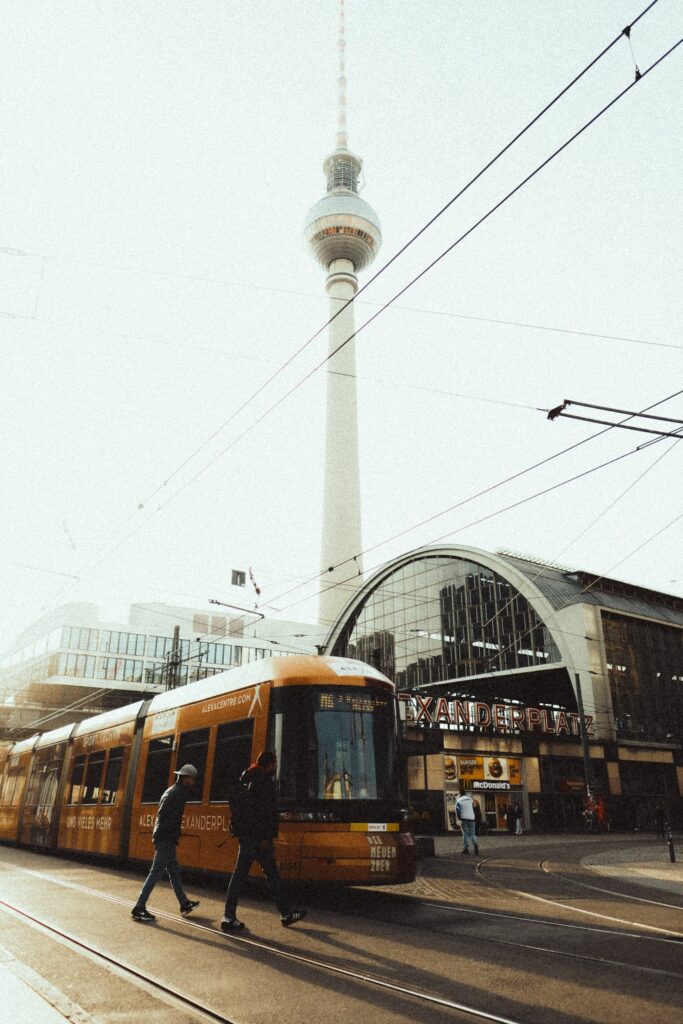
TV Tower on Alexanderplatz
At 368 metres, the TV Tower on Alexanderplatz is the tallest structure in Germany, and its observation deck at 203 metres shows you the whole city. According to the TV Tower’s own website, tickets bought online start at €20. For a free view, the Reichstag dome does the job. For a view with the Reichstag in it, pay for the tower.
Things to do in Berlin: tracing the Berlin Wall
The Berlin Wall divided the city from 1961 to 1989, and three places explain it best today. Bernauer Straße shows you what the border actually looked like, and the East Side Gallery is the longest stretch still standing. The Topography of Terror tells the story of the Nazi regime on the site of its headquarters. All three are outdoors or free.
Berlin Wall Memorial on Bernauer Straße
The Berlin Wall Memorial on Bernauer Straße is the best place to understand how the border worked. According to visitBerlin, the city’s official tourism portal, it keeps 70 metres of the original Wall with a watchtower, plus an open-air exhibition about the people who tried to escape. There’s also a documentation centre with a viewing platform over the whole border strip.
East Side Gallery
The East Side Gallery is the longest surviving section of the Berlin Wall, 1,316 metres long, running along the Spree in Friedrichshain. visitBerlin calls it the longest open-air gallery in the world. In 1990, 118 artists from 21 countries painted it. The most famous murals show Brezhnev and Honecker kissing and a Trabant car bursting through the Wall.
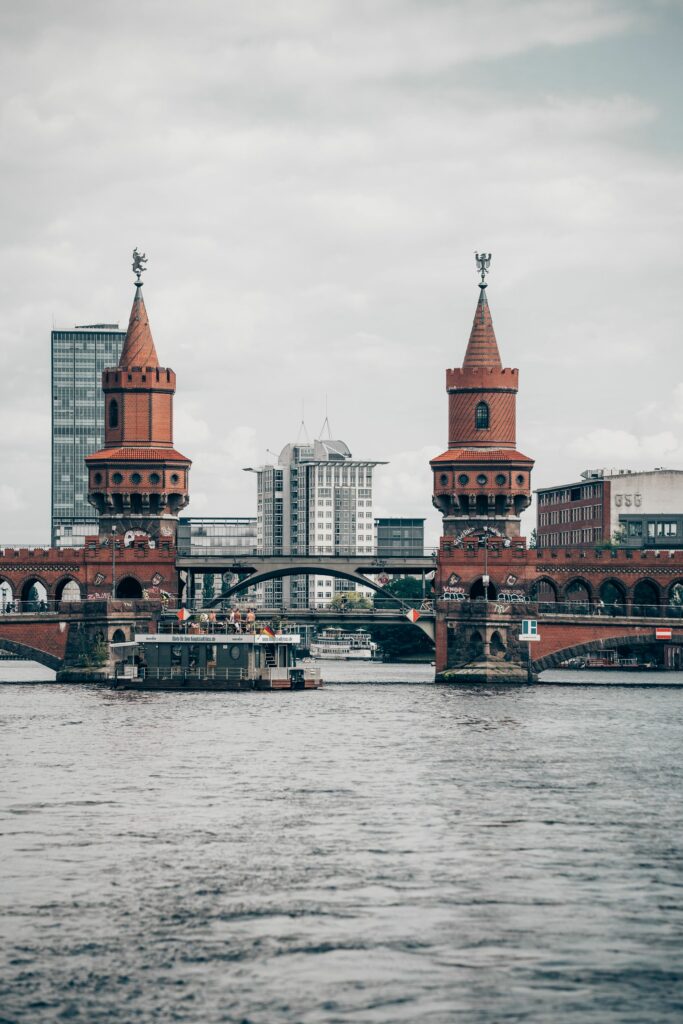
The gallery is outdoors on Mühlenstraße and needs no ticket. Walk it from Ostbahnhof station towards the Oberbaum Bridge.
At the far end, by Warschauer Straße station, there’s a Curry 36 stand selling vegan currywurst, and a little further on the fully plant-based REWE supermarket.
Topography of Terror
The Topography of Terror is a documentation centre on the site where the Gestapo and SS had their headquarters under the Nazis. According to its website, it’s open daily from 10:00 to 20:00 and entry is free. Right next to it on Niederkirchnerstraße stands the longest surviving stretch of the outer Wall, the side West Berliners could see. You get two chapters of Berlin history in one place.
Berlin beyond the sights, where locals spend the weekend
You get to know Berlin best away from the big sights, in the places Berliners go at the weekend. The former Tempelhof airport, the Sunday flea market in Mauerpark and the cafés of Prenzlauer Berg, Kreuzberg and Neukölln cost nothing and show you how the city actually lives.
Tempelhofer Feld, a park on a runway
Tempelhofer Feld is a former airport that closed to flights in 2008 and became a huge public park of 355 hectares. People cycle and rollerblade along the old runways and fly kites. The park sits between Neukölln and Tempelhof and opened on 8 May 2010. Seasonal opening hours are on the park’s official website.
Buy food on the way, because the choice inside the park is small. If you’re coming from Neukölln, stop at the Sfera café and take something sweet for your picnic blanket.
Mauerpark on a Sunday
Mauerpark in Prenzlauer Berg is a park on the former border strip, and on Sundays it’s the liveliest place in Berlin. A big flea market has run there every Sunday since 2004. From spring to late autumn, Sunday afternoons bring open-air karaoke in the amphitheatre, in front of thousands of people.
From Mauerpark you can walk to the Försters restaurant, so your Sunday can end with a vegan dinner.
Free things to do in Berlin. The Reichstag dome (with registration), the Brandenburg Gate, the Memorial to the Murdered Jews of Europe, the East Side Gallery, the Topography of Terror, Tempelhofer Feld and Sunday at Mauerpark all cost nothing. You mainly pay for museums and the TV Tower, so your first day in Berlin costs almost nothing.
Berlin food classics, made vegan
Berlin’s three most famous dishes, currywurst, döner and schnitzel, all come in vegan versions, and they’re the real thing rather than a sad substitute. Currywurst at a stand that has been an institution since 1980, döner on Thursdays and schnitzel every Monday. If you’re travelling with someone who eats meat, this is where you both order at the same counter.
Currywurst at Curry 36
Curry 36 is the legendary currywurst stand on Mehringdamm in Kreuzberg, and its website says it was one of the first chains to add a vegan sausage. The sausage is made from wheat and soy protein and prepared separately from animal products. The Curry 36 ketchup is vegan, and you can ask for vegan mayo with your chips.
Besides Mehringdamm, Curry 36 has stands at Zoo station, Berlin Hauptbahnhof and Warschauer Straße. Prices aren’t on the website, but it’s quick, cheap food you eat standing up.
Döner and schnitzel at Försters
Döner is as sacred in Berlin as currywurst, and you can get a vegan one on Thursdays at Försters. This 100% vegan restaurant in Prenzlauer Berg runs a “Döner Donnerstag” (döner Thursday) and a “Schnitzeltag” every Monday. On Mondays you can order a Wiener schnitzel with lingonberries for €17.
Berlin’s famous vegetable kebab from Mustafa’s Gemüse Kebap isn’t vegan, because according to the Berlin press it comes with feta. If you want to try it, ask whether they’ll make it without the cheese and with a sauce that has no yoghurt.
In Berlin, vegans and meat-eaters don’t have to argue about where to go. At the currywurst stand, everyone orders their own sausage and the sauce is the same for both.
Where to eat vegan in Berlin
You can eat vegan in practically every Berlin neighbourhood. We picked six places that we checked on their own websites in October 2026, including menus and opening hours. Five of them are fully vegan, and at Curry 36 the vegan sausage is prepared separately.
| Place | Area | Fully vegan? | What to order (price) | Open |
|---|---|---|---|---|
| Försters | Prenzlauer Berg | yes | soy roulade with pumpkin and gratin (€20), Monday schnitzel (€17) | daily 16–22 |
| Sfera | Neukölln | yes | spicy udon carbonara (€14), potato salad with smoked tofu (€15) | closed Tue, Sun 10–16 |
| Curry 36 | Kreuzberg + 3 stations | no, vegan sausage cooked separately | vegan currywurst and chips | daily |
| Brammibal’s Donuts | several, incl. Hauptbahnhof | yes | doughnut of the month (about €4.90) | Hbf daily 7–21 |
| Vincent | Hauptbahnhof | yes | burgers from €8.99 | daily 8–20 |
| Die Vegane Fleischerei | Prenzlauer Berg | yes | schnitzel or Leberkäse roll | Mon–Sat 11–19, closed Sun |
Försters: German pub food, only vegan
Försters on Dunckerstraße 2A is a 100% vegan restaurant serving German home cooking, and it’s the best dinner in Berlin if you want something typically German. The autumn menu has a soy roulade in red wine sauce with baked pumpkin and potato gratin for €20, and a soy schnitzel with wild mushroom sauce for €18. For dessert there’s a hazelnut tiramisu for €10.
It’s open every day from 16:00 to 22:00, weekends included. Its own website says it wants to win over everyone, vegan or not, so it’s ideal for a mixed couple or family.
Sfera: vegan brunch with Czech roots
Sfera on Schudomastraße 44 is a fully plant-based café and bistro in Neukölln, founded by a Czech woman called Jana. It sits in the Böhmisches Dorf (Bohemian Village), a neighbourhood founded in 1737 by Protestant refugees from Bohemia. According to its website, it bakes Czech pastries “like your babička might have made (only plant-based)” and pours Moravian natural wines from winemakers Veverka and Jiří Bárta.
Weekends are for brunch. The summer and autumn 2026 menu has a spicy udon carbonara with celeriac bacon and smoked tofu for €14. There’s also a young potato salad on sourdough with smoked tofu for €15. It’s closed on Tuesdays, open 10:00 to 16:00 on Sunday, Monday and Wednesday, and until 22:00 from Thursday to Saturday.
Sfera is currently crowdfunding to cover an unexpected tax bill (its GoFundMe was running in autumn 2026), so check its Instagram that it’s still open before you go. For Czech travellers in particular, it’s a small taste of home in the middle of Berlin.

Brammibal’s Donuts and Vincent: food straight off the train
Brammibal’s Donuts is a fully vegan doughnut chain, and according to its website it opened Europe’s first all-vegan doughnut shop in 2016. It has a branch right inside Berlin Hauptbahnhof, at Europaplatz 1 on the ground floor, open daily from 7:00 to 21:00. For every Strawberry Sprinkles doughnut it gives €0.50 to non-profits, and its website says that has raised over €500,000.
In the same station’s food court you’ll find Vincent, a 100% plant-based burger chain from Hamburg. It’s open daily from 8:00 to 20:00, and a classic hamburger costs €8.99. If you arrive from Prague hungry, you don’t even need to leave the station.
Die Vegane Fleischerei: a vegan butcher’s
Die Vegane Fleischerei on Kastanienallee 40 is a vegan butcher’s shop with a takeaway counter in Prenzlauer Berg. It sells plant-based sausages, Leberkäse, schnitzel rolls and packaged cold cuts to take home. It’s open Monday to Saturday from 11:00 to 19:00 and closed on Sundays.
For a late breakfast or a takeaway lunch for Mauerpark, it’s the most practical address in the area.
REWE voll pflanzlich: a fully plant-based supermarket
For train snacks, try REWE voll pflanzlich on Warschauer Straße 33 in Friedrichshain. The REWE chain opened it in April 2024 as its first fully plant-based supermarket in Germany, on the site of the former Veganz vegan supermarket. At opening it stocked more than 2,700 plant-based products.
According to its own website, it’s open Monday to Saturday from 7:00 to 23:00. It’s closed on Sundays, like almost every shop in Berlin.
Tip for mixed couples: If you’re travelling with someone who eats meat, take them to Försters on a Monday for schnitzel with lingonberries. It looks and tastes like a classic German pub plate. For something quicker, Curry 36 works, where everyone orders their own currywurst with the same sauce. For which other German classics are (and aren’t) vegan, see our traditional German food for vegans.
Our closed-but-still-listed check: what’s gone in Berlin
Some of the vegan places that Berlin guides still recommend in 2026 have closed. Our closed-but-still-listed check is a list of places we looked up on their own websites or in the news in October 2026 and found shut. Before you follow an old article to any of them, check here.
- Kopps, a vegan restaurant in Mitte, has been closed since 1 March 2024.
- FREA, a zero-waste vegan restaurant in Mitte, has closed for good and now only does catering.
- Swing Kitchen closed all its German branches, including Berlin, in summer 2025.
- Veganz on Warschauer Straße closed in December 2023, and REWE took over the site.
- The Pergamonmuseum is closed and partly reopens on 4 June 2027.
According to its own website, Kopps closed on 1 March 2024 and won’t reopen. FREA says on its website that the restaurant is permanently closed and that it continues only with catering and events.
If you’re after a vegan fine-dining dinner, several of Berlin’s best-known addresses of that kind have closed, but not all of them. You may read online that Lucky Leek has gone, because its old .de domain is dead, yet Lucky Leek is very much open, with a seasonal tasting menu from Wednesday to Sunday evenings. Book ahead. For everyday eating, though, Berlin is still the easiest big city in Europe.
Our Sunday table: where to eat in Berlin on a Sunday
On Sundays you can eat vegan in Berlin with no trouble, but you can’t shop, because shops and supermarkets are closed. Our Sunday table brings together the opening hours from each place’s own website in October 2026. The exception among shops is station shops, which Berlin rules allow to sell goods for travellers.
| Place | Sunday | Watch out for |
|---|---|---|
| Brammibal’s, Hauptbahnhof | 7:00–21:00 | nothing, open on public holidays too |
| Vincent, Hauptbahnhof | 8:00–20:00 | nothing, open daily |
| Sfera | 10:00–16:00 | closed on Tuesdays |
| Försters | 16:00–22:00 | opens late afternoon |
| Curry 36 | open | hours vary by stand |
| Die Vegane Fleischerei | closed | open Mon–Sat 11–19 |
| REWE voll pflanzlich | closed | shop on Saturday |
Here’s the best Sunday plan. Brunch at Sfera, an afternoon at Tempelhofer Feld or the Mauerpark flea market, then dinner at Försters. If you’re heading home early, grab a doughnut from Brammibal’s or a burger from Vincent at the station.
How to get from Prague to Berlin by train, bus or car
The direct train from Prague to Berlin takes 3 hours 58 minutes, the bus about 4.5 to 5.5 hours, and by car you drive the D8 motorway via Dresden. The train is the fastest option, and advance tickets start at around 420 CZK (about €17). We checked times and prices in October 2026 for a typical November weekday.
| Mode | Journey time | Price from | Note |
|---|---|---|---|
| Direct ČD/DB train | 3 h 58 min | 420 CZK / €17 (advance fare) | roughly every 2 hours, last around 16:30 |
| RegioJet bus | 4 h 30 min | 379 CZK | no faster than the train |
| FlixBus | about 4 h 10 min to 5 h 45 min | from about 390 CZK depending on the date | frequent, including overnight |
| Car | depends on traffic | Czech motorway vignette + fuel | low-emission zone in the centre |
The Prague to Berlin train, via Dresden
The train is the most comfortable way to get from Prague to Berlin. Direct trains run by Czech Railways (ČD) and Deutsche Bahn leave Prague main station and follow the Elbe valley via Ústí nad Labem and Dresden to Berlin Hauptbahnhof. There’s a direct train roughly every two hours from early morning to late afternoon (the last leaves around 16:30), with fewer on some days because of engineering works.
ČD sells its cheapest advance fares in limited numbers, so it pays to book a few weeks ahead. A new timetable starts on 13 December 2026, so if you’re travelling after that, check the connection in the official IDOS journey planner. You can also split the trip with a night in Dresden, as the train stops there after 2 hours 19 minutes.
Arrival tip: You can eat vegan at Berlin Hauptbahnhof before you even step outside. There’s a Curry 36 stand with vegan currywurst, Brammibal’s Donuts open daily from 7:00 and Vincent burgers in the food court. It works for the return trip too, as the food choice on the train is limited.
By bus
RegioJet and FlixBus buses take about 4.5 to 5.5 hours from Prague to Berlin, so you won’t save any time over the train. The upside is frequent departures and low fares, with RegioJet from 379 CZK and FlixBus from about 390 CZK depending on the date. The bus makes sense if you want to travel overnight or can’t find a train that suits you.
By car, and Berlin’s low-emission zone
By car you take the D8 motorway from Prague via Ústí nad Labem, and after the border you continue via Dresden to Berlin. German motorways are free for cars. Berlin’s centre is a different story.
According to the city authorities, the whole centre inside the inner S-Bahn ring is a low-emission zone, and you can only drive in with a green emissions sticker. The easiest option is to leave the car outside the centre and use public transport.
Where to stay in Berlin: the best areas for vegans
For a first visit, the best area to stay in Berlin is Mitte or Prenzlauer Berg, where both the sights and vegan food are close. Friedrichshain and Kreuzberg suit you if you want bars in the evening. Neukölln is the cheapest and most local, but the sights are a longer ride away.
| Area | Best for | Vegan food nearby |
|---|---|---|
| Mitte | first visit, sights on foot | Brammibal’s and Vincent at Hauptbahnhof |
| Prenzlauer Berg | quieter stay, cafés, Mauerpark | Försters, Die Vegane Fleischerei |
| Friedrichshain | East Side Gallery, nightlife | REWE voll pflanzlich, Curry 36 at Warschauer Straße |
| Kreuzberg | food, bars, multicultural feel | Curry 36 on Mehringdamm |
| Neukölln | lower prices, local life, Tempelhof | Sfera |
Wherever you stay, add the city tax to the room price. According to Berlin’s finance department, it has been 7.5% of the room price since 1 January 2025.
Hotels in Mitte are closest to the sights but tend to cost the most. On a budget, look in Neukölln or Friedrichshain near an S-Bahn station, from where you’re in the centre in a few minutes.
Is Berlin expensive?
Berlin isn’t a cheap city, but a weekend there costs less than you might expect. Many of the sights are free, and vegan food ranges from a doughnut for under €5 to dinner for €20. Your biggest cost will be accommodation plus the city tax.
Here’s what to budget for. The train from Prague costs from 420 CZK one way if you book ahead. A TV Tower ticket starts at €20, while the Reichstag dome, the memorials and the East Side Gallery are free. A burger at Vincent is €8.99, a weekend brunch at Sfera €14 to €15, and dinner at Försters €17 to €20.
For getting around, a 24-hour ticket is the best deal, costing €11.20 according to BVG, Berlin’s transport company. A single ticket costs €4.00 and is valid for two hours. If you take three or more rides in a day, the 24-hour ticket already works out cheaper.
Best time to visit Berlin
The best time to visit Berlin is May to September, when average daily highs sit around 20 to 25 °C and you can eat outside. Based on 1991–2020 averages, July has a high of 25 °C and January only about 3 °C. December brings the Christmas markets, but it’s often grey, with rain or snow on about 16 days on average.
In winter, focus on museums, the Reichstag dome and long dinners. In summer, it’s Tempelhofer Feld, Sunday at Mauerpark and brunch outdoors.
Berlin Christmas markets 2026
Most Berlin Christmas markets open on 23 November in 2026. According to visitBerlin, the season officially doesn’t start before 22 November. The exception is the Winterwelt at Potsdamer Platz, which kicks off on 31 October.
These are the 2026 dates for the biggest markets, according to visitBerlin.
- WeihnachtsZauber at Gendarmenmarkt from 23 November to 31 December 2026
- Christmas market at Charlottenburg Palace from 23 November to 27 December 2026
- Christmas market at Alexanderplatz from 23 November to 26 December 2026
- Spandau Christmas market from 23 November to 22 December 2026
- Winterwelt at Potsdamer Platz from 31 October 2026
Berlin’s separate vegan Christmas market has no confirmed date for 2026, so at the regular markets ask at each stall. We compare which European Christmas markets are best for vegans, and what to watch out for, in our guide to the best Christmas markets in Europe.
Read next
Berlin is one of the stops in our big overview of vegan-friendly cities in Central Europe, covering 16 cities you can reach by train from Prague, with vegan scores and Sunday opening hours. It also ranks second in our list of the top 10 vegan-friendly cities, right behind London.
German phrases for vegans
In Berlin you’ll get by in English almost everywhere, but a few German phrases help at the bakery, the currywurst stand or the market. Note that “vegetarisch” means vegetarian, not vegan, and vegetarian dishes often contain cheese, egg or butter.
- I’m vegan. Ich bin Veganer / Veganerin. (ikh bin vay-GAH-ner / vay-GAH-ner-in)
- Is this vegan? Ist das vegan? (ist dass vay-GAHN)
- A vegan currywurst, please. Eine vegane Currywurst, bitte. (EYE-nuh vay-GAH-nuh CURRY-voorsht, BIT-tuh)
- No meat, no milk, no egg. Ohne Fleisch, ohne Milch, ohne Ei. (OH-nuh flysh, OH-nuh milkh, OH-nuh eye)
- No cheese and no yoghurt sauce, please. Ohne Käse und ohne Joghurtsoße, bitte. (OH-nuh KAY-zuh oont OH-nuh YO-goort-zoh-suh, BIT-tuh)
On menus, look for “vegan” and “pflanzlich” (plant-based). At döner stands it’s worth asking, because a vegetable kebab almost always comes with cheese and yoghurt sauce. For more tips on travelling with someone who isn’t vegan, see our guide on how to travel vegan.
Berlin is a city where vegans don’t have to explain themselves
For us, Berlin is the best foreign weekend you can take from Prague as a vegan without planning a single meal. The train is direct, many of the sights are free, and you can have a vegan currywurst at the station. For where to eat in Prague before you leave or when you get back, see our vegan restaurants in Prague by neighbourhood.
If we had to give one piece of advice, it would be this. Don’t trust old restaurant lists, because Berlin’s food scene moves fast. Spend the mornings on the Wall and in Mitte, the evenings in Prenzlauer Berg and Neukölln, and save Sunday for brunch at Sfera with its Czech founder.
Have you been to Berlin? Which vegan place would you recommend, and which Berlin spot do you think every guide misses?
Berlin FAQ
Is Berlin worth visiting?
Yes, Berlin is worth visiting, especially for history, museums and food. Many of the top sights are free, including the Reichstag dome, the Brandenburg Gate and the East Side Gallery. It suits travellers who prefer a big, varied city to a picture-perfect old town.
Is Berlin expensive?
Berlin isn’t cheap, but many sights are free. A 24-hour public transport ticket costs €11.20, and a vegan burger or brunch costs €9 to €15. Accommodation is the biggest expense, plus a 7.5% city tax.
What is the best area to stay in Berlin?
For a first visit, the best area to stay in Berlin is Mitte or Prenzlauer Berg, close to the sights and to vegan restaurants. Neukölln and Friedrichshain are cheaper and more local. Every stay adds Berlin’s 7.5% city tax.
How long is the train from Prague to Berlin?
The direct train from Prague to Berlin takes 3 hours 58 minutes and runs roughly every two hours from early morning to late afternoon. Advance Czech Railways tickets start at 420 CZK (about €17). Buses take 4.5 to 5.5 hours and cost from 379 CZK.
Is Berlin vegan friendly?
Yes, Berlin is one of the most vegan-friendly cities in Europe. Fully vegan options include Försters, Sfera, Brammibal’s Donuts, Vincent and Die Vegane Fleischerei. The legendary Curry 36 stand also sells a vegan currywurst.
Featured photo: Mohammed Shaheen, Pexels.
Newsletter
Get our free e-books
Join the newsletter and download Our Vegan Christmas Kitchen straight away, 10 recipes for Czech cookies, gingerbread and vánočka. Then once a month, new places from the vegan map and new articles. Unsubscribe with one click.