
Homemade vegan almond butter is one of those things that’ll make you wonder why you didn’t start making it at home years ago. All you need is three ingredients, a food processor and about 15 minutes. The result is creamy, fragrant almond butter with no added sugars, palm oil or unnecessary additives that you’ll find in most shop-bought versions. Plus, you can flavour it however you like, whether that’s vanilla, cinnamon or cocoa.
How long do you need to blend almonds before they turn into butter? Do you need to roast them first? And what kind of blender do you actually need? You’ll find answers to all of these questions below, along with tips for variations and detailed nutritional information.
Why you’ll love this recipe
Homemade almond butter is simple, healthy and tastes incomparably better than anything from the supermarket.
- Just 3 ingredients: almonds, a pinch of salt and vanilla extract. No added oils, sugars or preservatives.
- Ready in 15 minutes: 10 minutes of roasting the almonds and 5 minutes of blending. That’s the entire recipe.
- Naturally gluten-free and vegan: suitable for people with coeliac disease, dairy allergies and anyone on a plant-based diet.
- Packed with healthy fats and protein: two tablespoons contain roughly 7 g of protein and 18 g of healthy unsaturated fats.
- Endless variations: add cocoa for a chocolate version, maple syrup for extra sweetness, or chilli for a spicy twist.
Once you try the homemade version, you won’t want to go back to shop-bought.
Interesting facts about almonds and nut butters
Almonds are technically seeds, not nuts. The almond tree (Prunus dulcis) is related to peaches, apricots and cherries, and the almond “nuts” are actually the kernels inside the fruit, similar to stone fruit pits. California is the world’s largest producer of almonds, accounting for roughly 80% of global production. Growing a single almond requires about 12 litres of water, making almonds one of the most water-intensive crops.
Nut butters have a surprisingly long history. Peanut butter, the predecessor of all modern nut butters, was patented by Canadian chemist Marcellus Gilmore Edson back in 1884. Almond butter has been growing in popularity in recent years, mainly because it contains more vitamin E, calcium and iron than peanut butter. Two tablespoons of almond butter provide roughly 25% of the recommended daily intake of vitamin E.
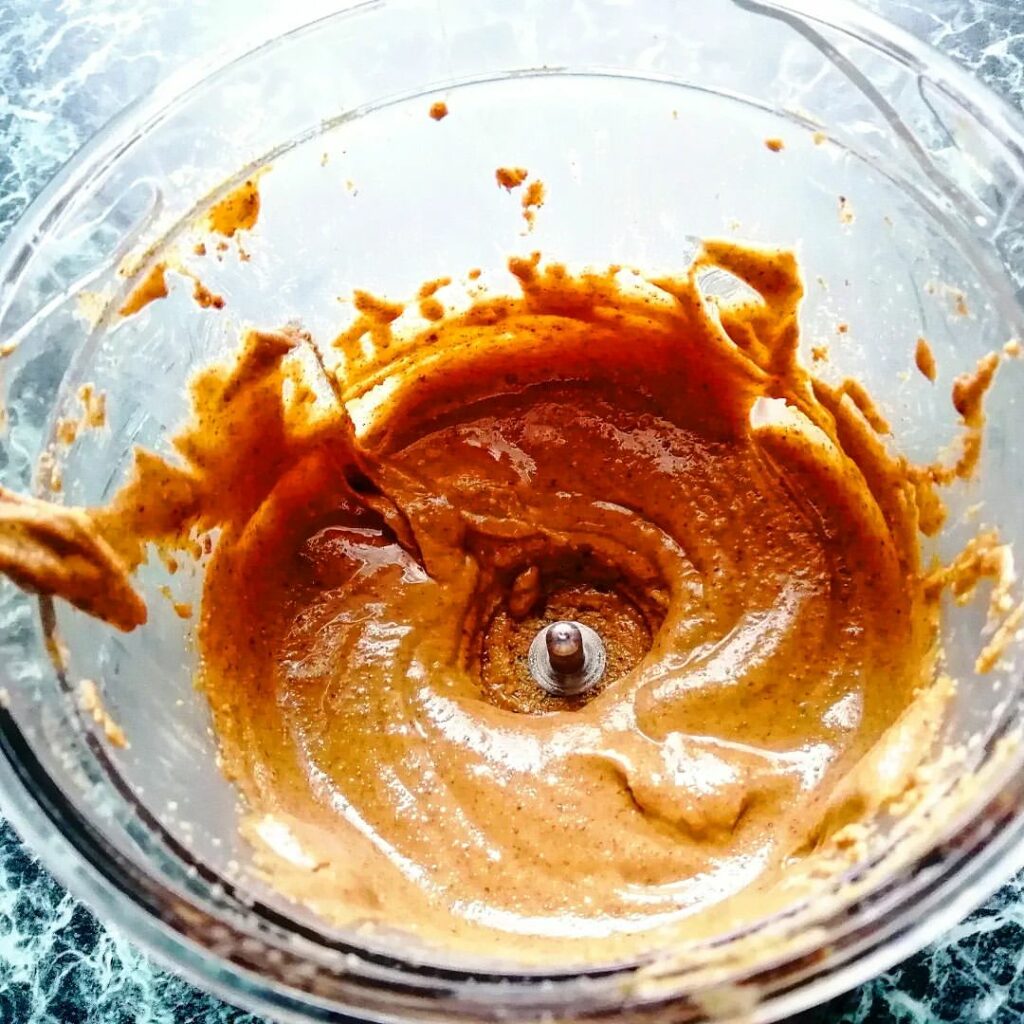
When making almond butter at home, a fascinating process takes place. First the almonds are ground into flour, then they clump together into a thick ball, and only then do the natural oils begin to release, transforming the mixture into smooth, creamy butter. The whole process takes 8–15 minutes of continuous blending. Patience is key, because stopping the processor too early is the most common reason why homemade almond butter “doesn’t work out”.
Health benefits of almond butter
Almond butter isn’t just tasty. It’s one of the most nutritionally valuable foods you can add to your diet.
Heart-healthy fats make up the largest portion of almond butter. Approximately 65% of the fat in almonds consists of monounsaturated fatty acids (the same type found in olive oil), which are proven to lower LDL cholesterol and support cardiovascular health. Studies published in the Journal of the American Heart Association confirm that regular almond consumption can reduce the risk of heart disease.
Vitamin E is present in almonds in exceptionally high concentrations. Two tablespoons of almond butter contain approximately 8 mg of vitamin E, which represents about 50% of the recommended daily intake. Vitamin E is a powerful antioxidant that protects cells from free radical damage and supports skin health.
Magnesium and calcium in almond butter support bone health and the nervous system. Two tablespoons contain roughly 90 mg of magnesium (22% of the daily value) and 110 mg of calcium. Magnesium also helps regulate blood sugar levels and supports quality sleep.
Nutritional values
One serving (2 tablespoons, roughly 32 g) of homemade almond butter contains approximately these values.
| Nutrient | Amount per serving |
|---|---|
| Calories | ~196 kcal |
| Protein | 7 g |
| Carbohydrates | 6 g |
| Fat | 18 g |
| Fibre | 3.5 g |
Approximate values per serving. Actual amounts may vary depending on specific ingredients and quantities used.
Vegan homemade almond butter
Ingredients
- 200 g almonds
- 1 tsp vanilla extract
- pinch of salt
Instructions
- Spread the almonds on a baking tray and roast at 180°C (350°F) for about 10 minutes. Let them cool until just warm, not hot.
- Transfer to a food processor and blend until you reach the desired consistency. This takes 8–15 minutes. The almonds will go from flour, to a ball, to smooth butter. Be patient.
- Add the salt and vanilla extract and blend again briefly to combine. Store in a sealed jar in the fridge for at least 2 weeks.
Tips and variations
The basic recipe can be adapted in dozens of ways, giving you a different result every time.
- Chocolate almond butter: add 2 tablespoons of cocoa powder and 1 tablespoon of maple syrup while blending. The result tastes like Nutella, only much healthier.
- Cinnamon version: add 1 teaspoon of ground cinnamon. Brilliant on toast with banana or stirred into porridge.
- Crunchy version: set aside 2 tablespoons of roughly chopped almonds before blending and stir them into the finished butter.
- Raw version: skip the roasting and blend the almonds raw. It’ll take a few minutes longer, but the flavour will be more delicate.
- Storage: keep in a sealed jar in the fridge, where it will last at least 2-3 weeks. If oil separates on the surface, that’s completely natural, just stir it back in.
An important tip on choosing a blender: a food processor with a powerful motor (at least 600W) is ideal. A countertop blender can work but you’ll need to stop and scrape down the sides more often. A stick blender simply isn’t powerful enough for almond butter.
What to serve with almond butter
Almond butter is incredibly versatile and works in dozens of combinations, from breakfast to desserts.
The most classic way to enjoy it is on toast or fresh bread, perhaps on a slice of homemade rye bread, topped with banana slices and a sprinkle of chia seeds. It also works brilliantly stirred into smoothies, porridge or as a dip for apple and pear slices. You can add it to baking too, for instance in protein brownies or chocolate tahini cookies.
For a quick snack, simply spread almond butter on rice cakes, sprinkle with a touch of sea salt, and you’re done.
Frequently asked questions
What blender do I need for homemade almond butter?
A food processor with a motor of at least 600W is best. A countertop blender can work, but you’ll need to stop and scrape down the sides more frequently. A stick blender unfortunately isn’t powerful enough for processing whole almonds into butter.
How long does it take to blend almond butter?
The entire process takes 8-15 minutes of continuous blending with occasional pauses to scrape down the bowl. The almonds go through several stages: first flour, then a rough ball, and finally smooth butter. The key is patience and not stopping the processor too early.
Do you need to roast almonds before making almond butter?
Roasting isn’t strictly necessary, but we recommend it. Heat releases the natural oils from the almonds, so they turn into creamy butter more easily and the whole blending process is faster. Roasted almonds also have a more pronounced, nutty flavour. Raw almonds work too, but blending will take 3-5 minutes longer.
How long does homemade almond butter last?
Stored in a sealed jar in the fridge, homemade almond butter lasts at least 2-3 weeks, sometimes longer. If oil separates on the surface, that’s completely natural, just stir it back in. You can also store almond butter at room temperature, but it stays fresh longer in the fridge.
Is almond butter healthier than peanut butter?
Both are nutritionally valuable, but almond butter contains more vitamin E, calcium and iron. Peanut butter has slightly more protein. If you’re not allergic to either, both are excellent choices. Almond butter is also suitable for people with peanut allergies (though not tree nut allergies).
Homemade almond butter is one of those recipes where simplicity wins. Three ingredients, one food processor and a result that tastes better than anything you can buy in a shop. Once you make it yourself, you’ll understand why so many people say they never went back to store-bought. If you’re looking for more simple homemade recipes, check out our vegan avocado hummus, which is equally quick and addictive. And if you enjoyed this recipe, share it with friends so they can spread some proper butter too.
Newsletter
Get our free e-books
Join the newsletter and download Our Vegan Christmas Kitchen straight away, 10 recipes for Czech cookies, gingerbread and vánočka. Then once a month, new places from the vegan map and new articles. Unsubscribe with one click.