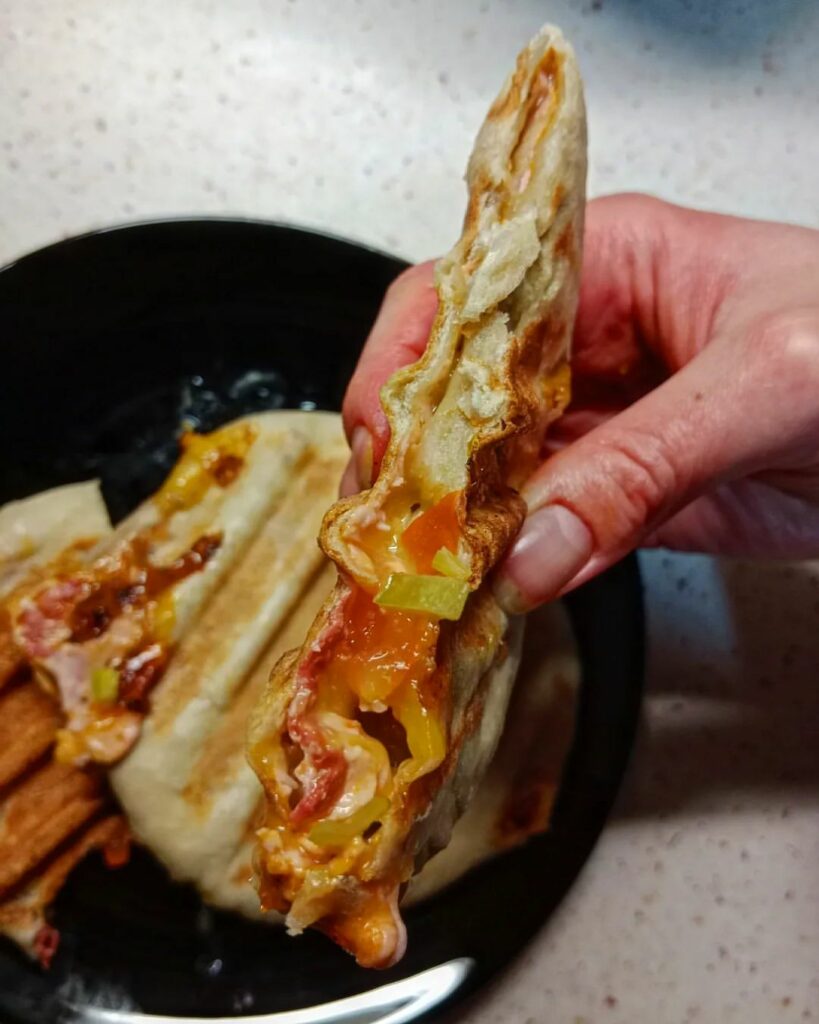
Vegan homemade panini pizza is one of those recipes you will love from the very first try. The dough comes together with just a handful of pantry staples, and the result is a batch of crispy, hand-sized little pizzas that are ready on the grill in about five minutes. No delivery wait, no complicated shaping, no specialist equipment beyond a panini grill or a sturdy frying pan.
How do you make the dough from scratch? Which vegan cheese melts best on a panini? Can you skip the grill entirely? And what do you do with the leftover dough? We have covered all of that below.
Why you will love this recipe
Homemade panini pizza is a smart way to enjoy pizza whenever you feel like it, without planning ahead or waiting for takeaway.
- Simple dough with everyday ingredients – all-purpose flour, water, yeast, salt and olive oil. Nothing fancy.
- Ready in 5 minutes on the grill – once the dough has risen, you have pizza on the table faster than any delivery service.
- Perfect hand-held size – no slicing, no mess, everyone gets their own.
- Toppings are entirely up to you – tomato sauce, vegan cheese, peppers, mushrooms, olives, whatever is in the fridge.
- One batch makes 8 pieces, and the second half of the dough keeps in the fridge for the next day.
Best of all, it tastes like something from an Italian trattoria, made at home for next to nothing.
Interesting facts about panini pizza
The word “panini” is the plural of the Italian “panino”, which simply means “small bread” or “little roll”. In Italy, panino originally referred to a filled bread roll. It was the English-speaking world that started using “panini” as a catch-all term for a pressed, grilled sandwich. Technically, saying “one panini” is like saying “one breads” – but we will keep that between us.
Pizza itself has its roots in Naples, where it was eaten by working-class people as a cheap, filling meal. In 2017, UNESCO inscribed traditional Neapolitan pizza-making on the list of Intangible Cultural Heritage of Humanity. The core idea has not changed: simple dough, fresh ingredients, as few unnecessary steps as possible. That is exactly what this recipe is about.
The yeast in the dough works by feeding on the sugars in the flour and producing carbon dioxide as a byproduct. That gas is what makes the dough puff up and creates a light, airy texture once cooked. Fermentation during proving also improves digestibility, the enzymes present help break down gluten and phytic acid, making minerals like iron, magnesium and zinc easier for the body to absorb.
A panini grill or press creates an effect that a standard oven struggles to replicate, intense heat from two sides at once causes the surface to caramelise immediately, while the inside stays soft and chewy. That is why the result is so satisfyingly crispy, even though it only takes five minutes to cook.
Health benefits
At first glance it is “just pizza”, but this homemade version has clear advantages over shop-bought alternatives. It is made from clean, simple ingredients, and each one brings genuine nutritional value.
Olive oil is one of the healthiest cooking fats available. It is rich in monounsaturated fatty acids (particularly oleic acid), which help lower LDL cholesterol and support heart health. It also contains antioxidants including oleuropein and hydroxytyrosol, which have anti-inflammatory properties. Multiple studies have linked regular olive oil consumption to a reduced risk of cardiovascular disease.
The tomato base (ketchup or tomato paste) is an excellent source of lycopene, a powerful antioxidant from the carotenoid family. Unlike most nutrients, lycopene is not destroyed by heat, in fact, processed tomatoes (ketchup, paste, sauce) contain it in a form that the body absorbs far more efficiently than from fresh tomatoes. Research suggests that lycopene may help reduce the risk of prostate, lung and breast cancers and protects cells from free radical damage.
The yeast dough itself has benefits too. Fermentation during proving reduces the phytate content of the flour, so minerals like iron and zinc are better absorbed. If you swap some of the white flour for wholemeal, you also gain fibre and B vitamins. And compared to most commercial bread products, there are no preservatives, emulsifiers or hydrogenated fats anywhere in sight.
Nutritional values
Estimated values per one panini pizza piece (out of 8), with tomato ketchup as the base and no additional toppings.
| Nutrient | Amount per serving |
|---|---|
| Calories | ~210 kcal |
| Protein | 5 g |
| Carbohydrates | 38 g |
| Fat | 4 g |
| Fibre | 1.5 g |
Approximate values per serving. Actual figures depend on specific ingredients and the amount and type of toppings used.

Vegan Homemade Panini Pizza
Ingredients
- 500 g all-purpose flour
- 300 ml warm water
- 2 tsp salt
- 1 packet of dry yeast 7 g
- 2 tbsp olive oil
Instructions
- Mix all the dry ingredients together, pour in the water and knead the dough. Add the olive oil and knead again until smooth.
- Cover the bowl with a clean kitchen towel and leave to prove for approximately 1 hour, until doubled in size.
- Divide the proved dough in half. Roll one half out into a rectangular shape. Place the other half in a covered bowl and refrigerate for up to 24 hours to use the next day.
- Divide the rolled-out dough into 8 equal pieces. Top each piece with ketchup or tomato paste, vegan cheese, and your choice of vegetables.
- Place on a preheated panini grill and cook for approximately 5 minutes, until golden and crispy.
Notes
Tips and variations
The recipe is deliberately straightforward, which is exactly what makes it so adaptable. Here are some ideas for tweaking it to suit your mood, your fridge, or the season.
- Wholemeal version: Replace 30-50% of the flour with wholemeal flour. The dough will be slightly denser but more flavourful and nutritious.
- No grill needed: Bake the pizzas in an oven preheated to 220 °C (fan 200 °C) for 8-10 minutes, or cook them in a dry cast-iron pan with a lid for 3-4 minutes per side.
- Leftover dough: Keep the second half in a sealed container in the fridge for up to 48 hours. Leave it at room temperature for an hour before rolling it out.
- Different bases instead of ketchup: Try pesto, tomato paste with garlic, hummus or simply olive oil with dried oregano.
- Soy-free vegan cheese: Cashew cheese or coconut oil-based vegan cheese both melt well. Or skip the cheese entirely and go heavy on the vegetables.
Panini pizzas are best eaten straight off the grill while they are still crispy. If you do have leftovers, store them in the fridge and reheat briefly in the oven at 180 °C the next day.
What to serve with it
Panini pizza is a complete meal on its own, but with a little creativity you can turn it into a proper lunch or light dinner spread.
- Serve alongside a simple rocket salad with cherry tomatoes and a drizzle of balsamic vinegar. A creamy dip works brilliantly here – our vegan avocado hummus is ready in five minutes and pairs perfectly with the crispy dough.
- For a proper Italian feel, add a glass of sparkling water with lemon or a homemade basil lemonade.
- If you have leftover dough, use it the next day to make vegan focaccia – the same yeast base transforms into an entirely different bread with rosemary and coarse salt.
These mini pizzas also make fantastic finger food for a gathering or a picnic – everyone grabs their own piece and there is no slicing or serving required. When you want a full-size pie instead, try our homemade wholemeal vegan pizza or the smoky pulled jackfruit pizza.
Frequently asked questions
How do you make vegan panini pizza at home?
Start with a simple yeast dough made from all-purpose flour, dry yeast, salt, water and olive oil. After about an hour of proving, roll the dough out, cut it into 8 pieces, top each one with tomato ketchup or paste, vegan cheese and your choice of vegetables, then press and grill for approximately 5 minutes. The full step-by-step method is in the recipe above.
Can you make panini pizza without a panini grill?
Yes, absolutely. You can bake the pizzas in a preheated oven at 220 °C (fan 200 °C) for 8-10 minutes, or cook them in a dry cast-iron or non-stick frying pan with a lid for 3-4 minutes per side. A grill gives the crispiest result, but the oven and pan methods both work very well.
Which vegan cheese melts best on panini pizza?
Vegan mozzarella or a shredded vegan cheese designed for melting works best. If you do not have any, cashew cream cheese or silken tofu blended with a little lemon juice and salt are good alternatives. You can also skip the cheese entirely and use more vegetables or a generous spread of hummus as the base.
How long does panini pizza dough keep in the fridge?
Proved dough stored in a sealed container will keep in the fridge for up to 48 hours. Before using it, leave it at room temperature for about an hour so it relaxes and is easier to roll out evenly.
Is homemade vegan panini pizza healthy?
Compared to shop-bought or restaurant pizza, homemade vegan panini pizza is a significantly healthier option. It contains no preservatives, hydrogenated fats or animal products. Olive oil provides healthy monounsaturated fats, the tomato base is rich in lycopene, and the fermented dough is easier to digest than commercial bread. Total calorie content depends on the toppings you choose.
Vegan homemade panini pizza proves that great food does not need to be complicated. A little flour, a little patience while the dough rises, and a few minutes on the grill – that is genuinely all it takes. The results are so good that one batch never quite feels like enough. Have you tried making panini pizza at home? Let us know in the comments what toppings you went with, and tag us on Instagram if you give it a go!
Newsletter
Get our free e-books
Join the newsletter and download Our Vegan Christmas Kitchen straight away, 10 recipes for Czech cookies, gingerbread and vánočka. Then once a month, new places from the vegan map and new articles. Unsubscribe with one click.