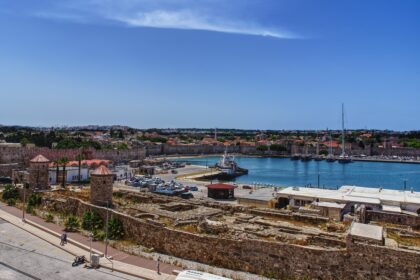
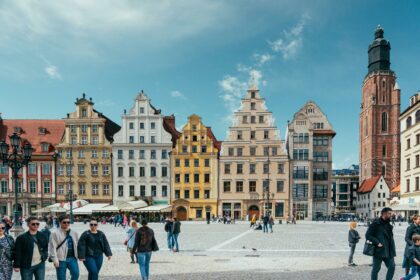
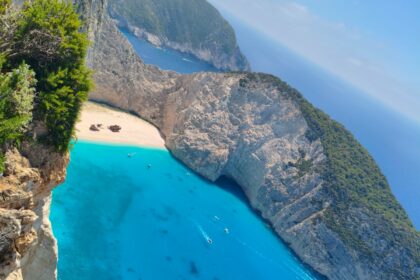
Santorini. Just the name conjures images of iconic white villages perched on dramatic cliffs above the deep blue caldera. We were lucky enough to visit this Cycladic jewel in person and fell for it immediately. We loved it so much we went back a second time, determined to explore every corner of the island.
This is not just another Greek island. Santorini is in a class of its own, thanks to its fascinating history and breathtaking scenery. You might be surprised by just how easily and enjoyably you can holiday here as a vegan. In this guide, we want to show you that combining a visit to such a famous destination with a vegan lifestyle is not only possible, it’s genuinely wonderful. For a wider look at where else to go, what to eat and what it costs, see our overview of holidays in Greece.
If the Greek islands have your heart, take a look at our piece on what to see and where to eat vegan on Zakynthos, another island that won us over. Or, for a greener island in the Ionian, see our rundown of vegan Corfu.
We’ve put together a complete picture of Santorini, packed with practical advice and tips from our own trips. We’ll take you through the planning, show you the most beautiful places worth visiting, and of course tell you where to find the best vegan restaurants and accommodation options. Come with us and discover the magic of this extraordinary island.
Where Is Santorini? Geography and the Basics
So, where exactly is Santorini? Geographically, you’ll find it in the southern part of the Aegean Sea, as the southernmost island of the Cyclades archipelago. Think of it as a radiant pearl among the Greek islands, one that stands out through its entirely unique character and beauty. Its location makes it an accessible destination, especially if you fly.
If you look at a map, Santorini’s unusual crescent shape immediately catches the eye. And there’s a reason for it! The whole island is essentially the remains of an enormous volcanic crater (a caldera) that collapsed into the sea after a massive eruption thousands of years ago. That’s also why Santorini’s beaches are so distinctive.
As for where the main action and the most famous spots are: the hub is the capital, Fira, which sits right on the edge of the caldera, and then of course the magical Oia at the northern tip, famous for its dreamlike sunsets. For nightlife, Kamari is where things come alive.
On the practical side, the currency is the euro (€). The official language is Greek, but here’s the good news: you can get by in English almost everywhere without any trouble at all.

Santorini on our vegan map
8 places, 1 fully vegan. Tap a pin to see the details.
Loading the map…
- 100% vegan
- Vegetarian
- Vegan options
- Stays
- Sanctuaries & charities
See every place from this article on our vegan map.
Getting to Santorini: Flights and Transport
The most common and convenient way to reach this dreamy island is, of course, by air. Santorini International Airport has the code JTR (Thira airport) and during the main tourist season, direct flights operate from many European cities, including Prague and Vienna, which is great news!
We’d recommend keeping an eye on flight prices and booking well in advance, especially if you’re heading to the island in July or August when demand is at its peak. Being flexible with your travel dates can save you a significant amount of money.
An alternative worth considering, particularly if you’re travelling from Athens or planning to visit several Greek islands, is the ferry. The crossing takes longer (from Piraeus port near Athens it can be anywhere from 5 to 8 hours depending on the type of vessel), but it offers a different kind of experience and some beautiful views along the way. As with flights, it’s worth booking tickets in advance, especially for the faster catamarans, which tend to fill up quickly. Combining several Cyclades? See our comparison of Naxos or Paros, two islands with several ferries a day from Piraeus.
When to Go to Santorini: Weather and the Best Time to Visit
Timing your trip well can make a real difference to your overall experience. The ideal time depends entirely on what you’re after, whether you want scorching sun and swimming, a calmer atmosphere for exploring, or perhaps the island in full bloom.
Spring (May to early June)
For many travellers, spring is the most beautiful time of year. The island comes alive with colour and flowers, temperatures are very pleasant (usually around 20 to 25°C), which makes it perfect for hiking and sightseeing without the brutal heat. The sun shines reliably, but the tourist crowds are noticeably smaller than in summer.
Summer (late June to August)
This is peak season. Expect typical Santorini weather: maximum sunshine and high temperatures that often climb above 30°C, along with beautifully warm sea water. It’s the ideal time for beach lovers and swimmers. You do have to factor in the biggest tourist crowds, higher prices, and the possibility of strong winds.
Autumn (September to early October)
Autumn is another fantastic choice, and possibly the most enjoyable answer to the question of when to visit. Temperatures are still warm but no longer exhausting, the sea stays beautifully heated from the summer, and the tourist numbers thin out considerably. You’ll enjoy plenty of sunshine and a relaxed, romantic atmosphere ideal for both exploring and unwinding.
Off-Season (late October to April)
During these months, Santorini reveals its quieter, rawer face. The weather is cooler and more changeable, with a greater chance of rain and wind. Tourists are few and far between. The major downside is that many hotels, restaurants and shops close and transport links (flights, ferries) are reduced. This is really only for a specific kind of traveller seeking solitude.
Every season has its own unique charm and its own quirks. When deciding, think about what matters most to you personally: whether that’s your tolerance for heat, your budget, a need for peace and quiet, or a preference for a lively atmosphere.

Santorini Holiday: Last Minute or Plan Ahead?
As vegans, or generally as travellers with specific requirements, planning independently often makes the most sense. You have full control over flights, accommodation and your own itinerary. That said, sometimes a great last-minute deal is just too good to pass up.
That was exactly what happened to us. On two separate occasions, we took advantage of a Santorini last-minute deal through Exim Tours. In both 2023 and 2024, it came to roughly 11,000 CZK per person.
The first time, we stayed at Kamarela Studios, which had a brilliant location just a short walk from the beach in the Kamari resort. The second time, we chose Ira Studios. It was a bit further from the beach (about a 1.5km walk), but the big bonus was a private pool right on site, which we really appreciated.
Neither place was particularly luxurious, both were fairly simple. But for sleeping and resting between adventures, they were absolutely fine. Our experience shows that last-minute can be a good and cost-effective option, as long as you’re flexible and not expecting five-star luxury.

What to See and Do on Santorini
Santorini may not be huge, but it has so much to offer! Wondering how best to get around and what to do to make the most of it? There are several ways, from organised tours to renting your own transport. Each has its pros and cons, and we’ve tried both!
On our first visit, we opted for a comfortable guided island tour by air-conditioned car with a brilliant local guide called Mike. It was great as we learned loads of fascinating things, didn’t have to worry about parking (Mike was a pro at that), and in the summer heat, air conditioning was priceless. If you prefer comfort and commentary, it’s a fantastic option.
On our second holiday, we rented a quad bike (ATV). And that was absolutely brilliant! We could stop literally wherever we felt like it, explore less-visited tracks, and ride around the whole island at our own pace. It’s a wonderful way to explore Santorini independently. Local buses are another alternative, cheap but with schedules and routes that won’t suit everyone.

Places on Santorini We’d Recommend
The question of what to see on Santorini keeps every visitor busy. There really is so much to choose from! From the iconic cliffside towns above the caldera to the volcanic beaches below. Thanks to the quad, we criss-crossed the whole island and got a real feel for where we loved it most and where we’d send you without hesitation.
Personally, we were most captivated by the lively atmosphere of the capital Fira with its narrow lanes and stunning views. We also felt very much at home in the resorts of Perissa and Kamari on the east coast. There’s more space, a more relaxed vibe, and plenty of great tavernas and bars right by the water. So if you’re wondering what to visit on Santorini, these places are absolutely not to be missed.
And what about the famous Oia at the northern tip? Yes, it’s beautiful and wonderfully photogenic, no question. But we have to be honest: it felt extremely crowded and a bit performative. The masses of people, particularly at sunset, can be exhausting, and prices are higher than elsewhere. In our view it’s perhaps a little overhyped, but still worth seeing (ideally outside peak hours).
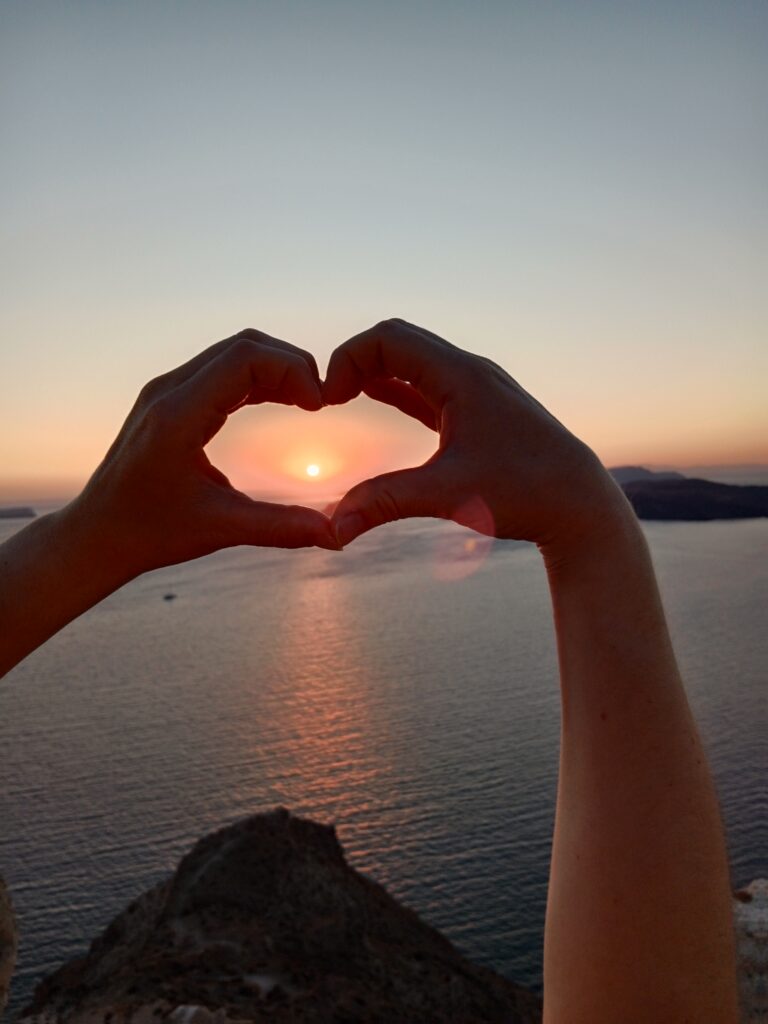
When it comes to sunsets, we have a tip for you. Instead of fighting the crowds in Oia, try tracking down the “Heart of Santorini” (Srdce Santorini), a rocky formation with a small chapel near the village of Megalochori. The sunset view from there is absolutely magical and intimate, and in our opinion one of the best on the whole island. Don’t forget your camera!
Unforgettable Activities and Experiences
Beyond the classic sightseeing and beach days, there are so many other things to do on Santorini to create truly unique memories. We treated ourselves to a few special experiences that we still think about fondly, and one of them had a deeper meaning too. Looking for something a bit different?
On our first visit, we booked a soak in a hot tub carved directly into the rock, with a breathtaking view over the caldera. It came with an enormous fruit platter and a drink of our choice. We picked mojitos, but in that heat they quickly turned into warm mint tea with rum! And as if that wasn’t enough, the wind was so strong we kept worrying our towels would blow into the sea. But the view and the experience were absolutely worth it.
On our second holiday, we wanted to do something meaningful for the local community and animals, so we visited the SAWA Santorini animal rescue shelter. We brought some food as a donation and spent an afternoon walking the dogs waiting for their forever homes. It was an incredibly moving and meaningful experience that we’d recommend to any animal lover.
We had a similarly moving day later in Greece on Zakynthos, where we visited the Zante Strays shelter and spent time with the rescued dogs.
There are of course many other popular activities too, such as caldera boat trips to the volcano and hot springs, or visits to local wineries for tastings of Santorini’s unique wines (just note that not all may be 100% vegan-friendly, so it’s worth checking in advance). The choice is entirely yours, depending on what appeals to you most.

Santorini: Vegan Food and Accommodation
You might be surprised by just how well you can eat as a vegan on Santorini! Greek cuisine is thankfully full of vegetables, pulses and olive oil, so many traditional dishes are either naturally vegan or can easily be adapted.
Definitely try fava (a split pea puree, usually vegan but worth double-checking), various salads (watch out for feta!), gemista (stuffed vegetables, just make sure the rice filling isn’t mixed with meat) and briam (roasted vegetables).
Don’t hesitate to ask the staff whether something is vegan. They’re almost always very helpful. More and more places now mark vegan dishes directly on their menus, and some even have a dedicated vegan menu. Best of all, you’ll also find fully specialised vegan restaurants and places with a really generous vegan selection.

Our TOP Vegan Restaurants on Santorini (Personally Tested!)
The range of places with vegan options genuinely impressed us. Here are our personal favourites from both stays, which we can recommend with total confidence:
The Finch
You’ll find it in Kamari (it’s closed on Wednesdays). Not a fully vegan place, but they have a vegan menu. It became our absolute favourite spot on the island. We went back twice in a single day (yes, it was that good). Their pancakes with avocado or peanut butter are divine, and the vegan burger, pizza and toast are all brilliant too. An absolute must.

Pomodoro
Ask and they’ll bring you a separate vegan menu. They have a wonderful owner and his adorable dog Snoopy, who greets you enthusiastically at the door and wins you over immediately. We also have a funny story from here: we tried to order a Margarita cocktail and the waiter almost brought us a Margherita pizza! It all got sorted quickly and we all had a good laugh about it.
TRANQUILO
A total vegan gem in Perissa! You’ll find everything from amazing smoothies and breakfasts (including a brilliant omelette) to traditional Greek dishes in plant-based form. The vibe is wonderfully relaxed, and what’s particularly brilliant: they have their own section of beach with comfortable sun loungers and bean bags that you can use for free when you order something. Perfect for a whole day of blissful relaxation.
Mango Bar
A great spot in Kamari with a gorgeous view of the beach. Excellent cocktails and a few vegan food options on the menu. A lovely bonus: your drink often comes with a small free snack, like a little bowl of crisps or popcorn, which always goes down well. Ideal for a late-afternoon drink watching the sea.

Veganissimo
As the name says, this is a fully vegan restaurant right in Fira. We had the most incredible vegan souvlaki that tasted completely authentic, followed by fantastic baklava with even more fantastic homemade ice cream. If you want the certainty of 100% vegan food and traditional Greek flavours, head here.
Take a Wok
A small fast-food counter in Kamari where you build your own wok: choose a base (noodles or rice), pile on the vegetables, add tofu if you like, and pick one of the vegan sauces. This means you can easily create a perfect vegan bowl exactly to your taste. We have to say: this was one of the best and most delicious meals we had on the whole island.

You can also find vegan food and drinks easily in local shops, including one right in Kamari. There’s even a Lidl on the island, which we treated as a fun day-trip destination one afternoon.
Where to Stay on Santorini
Is there a vegan hotel on Santorini? If you’re looking for a fully vegan experience down to the accommodation, there is the MOD Santorini Vegan Boutique Hotel. We’d heard great things and wanted to visit at least for a meal to soak up the atmosphere, but at the time their restaurant was only open to hotel guests. Good news since then: non-residents can now book breakfast or a set menu, as long as you reserve 24 hours ahead.
For general accommodation, the options are plentiful. We stayed in studios (as mentioned above) and having your own kitchenette or at least a fridge is often a real advantage as a vegan. You can buy local fruit and vegetables and prepare your own breakfast or snacks. Apartments and studios are very common on Santorini and very reasonably priced.
What about an all-inclusive Santorini holiday? We’d be a little cautious here. It’s definitely possible at MOD Santorini. Some other hotels do try and may offer vegan options, but the selection may not be as varied or exciting as when you explore the brilliant vegan restaurants and spots we’ve just told you about.
If varied and authentic food is a priority for you, going independently will almost certainly give you more freedom and better culinary experiences.
Frequently Asked Questions about Visiting Santorini
We have more Santorini content worth exploring: read about our day volunteering at SAWA Santorini and why ethical travel at SAWA Santorini is worth adding to your trip. For more vegan travel ideas, take a look at our vegan guide to Vienna, the best summer holidays for vegans, and our top 10 vegan-friendly cities.
We’ve heard about earthquakes on Santorini at the start of 2025. What’s the current situation?
Yes, around the turn of January and February 2025, there was increased seismic activity (an earthquake swarm) that drew considerable attention. The good news is that this intense phase is now considered to be over and the situation has stabilised significantly.
Is it safe to travel to Santorini now? What is happening in Santorini?
Generally yes. The island is open for tourism and most locations are operating normally. That said, it’s worth remembering that Santorini lies in a seismically active area. It’s important to follow the guidance of local authorities, respect any temporary restrictions, and keep an eye on current travel advisories from your country’s foreign ministry.
Are there still any restrictions in place due to the earthquake?
The general state of emergency has been lifted. However, yes, for safety reasons (primarily the risk of landslides), temporary access restrictions remain in place for certain specific areas, until mid-May 2025. This includes the Old Port in Fira, parts of the ports of Ammoudi and Armeni below Oia, and some cliff-top walking paths. Always check the current situation on the ground when you arrive.
What should I do if an earthquake hits while I’m on holiday in Santorini?
Above all, stay calm. If you’re indoors, quickly take shelter under a sturdy table or next to an interior load-bearing wall, away from windows (“Drop, Cover, Hold On”). If you’re outside, move to open ground away from buildings and cliff edges. Do not use lifts. Follow instructions from local authorities (emergency number 112) and make sure you know your hotel’s emergency procedures.
Was the recent earthquake connected to the volcano? Is there a risk of eruption? When did the Santorini volcano last erupt?
According to experts, the early 2025 activity was predominantly tectonic in origin (movement of tectonic plates) rather than directly magmatic from the main caldera. The risk of a volcanic eruption is considered low. The famous, enormous eruption that created today’s caldera happened long ago in history, approximately around 1600 BC.
Newsletter
Get our free e-books
Join the newsletter and download Our Vegan Christmas Kitchen straight away, 10 recipes for Czech cookies, gingerbread and vánočka. Then once a month, new places from the vegan map and new articles. Unsubscribe with one click.