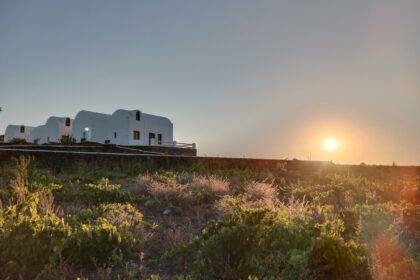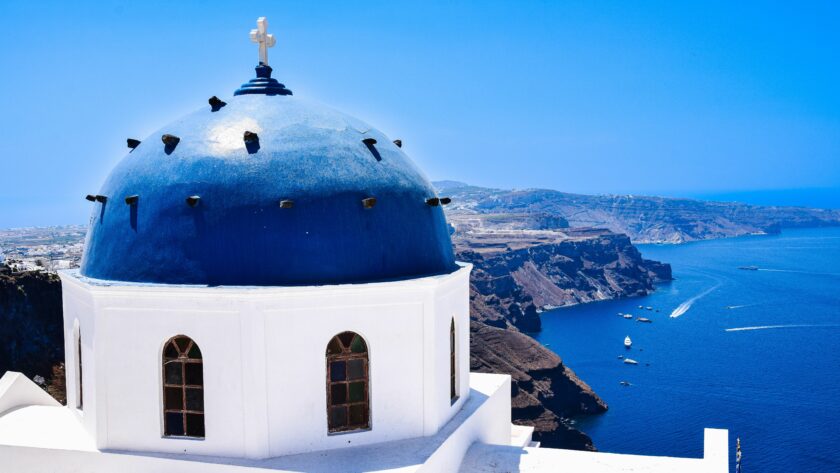
Greece is the holiday people go back to. Not the one they tick off, the one they repeat, often to the same island and sometimes to the same taverna. There are cheap flights from almost everywhere in Europe, a sea that stays swimmable well past the point most of the continent has given up on summer, and food that manages to please the adventurous eater and the fussy one at the same table. The trouble starts when you actually try to book. There are thousands of islands and every website recommends a different one.
So where should you actually go if you want quiet rather than nightlife? Which month gives you warm water without the August crowds and the August prices? How much should you realistically budget for a week? And what does someone order in a taverna if they don’t eat meat, cheese or eggs, without living on side salads for seven days? We’ve been to Santorini and Zakynthos ourselves and researched the rest properly, so here’s the version we’d give a friend.
One thing up front, because most Greece holidays guides skip it entirely. Greek cooking is already largely plant-based, not by modern design but because of the Orthodox fasting calendar. Once you know a single Greek word, ordering stops being a negotiation. We’ll get to it.
Where to go in Greece
According to the Greek national tourism organisation, Greece has around 6,000 islands and islets, of which only about 227 are inhabited. Roughly ten of those account for the overwhelming majority of holidays. Don’t try to work out which is most beautiful, because that question has no answer. Choose based on how you want to spend your days.
| Destination | Best for | Getting there | Plant-based options |
|---|---|---|---|
| Crete | A first trip, two weeks, mountains and sea in one place | Direct flights across Europe | The best in Greece |
| Rhodes | The longest season, history, reliable October sun | Direct flights, long season | Very good |
| Corfu | Green landscape, families, short transfers | Direct flights, ferry from Italy | Good |
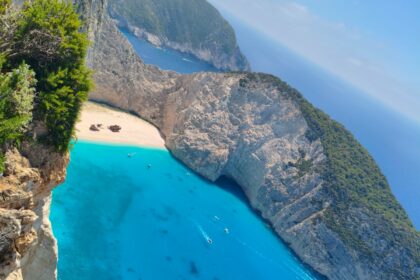
| Zakynthos | Beaches, turtles, a shorter stay | Direct seasonal flights | Good in resorts, thinner elsewhere |
| Kefalonia | Quiet, a hire car, far fewer people | Seasonal flights, or via Athens | Moderate, plan to self-cater |
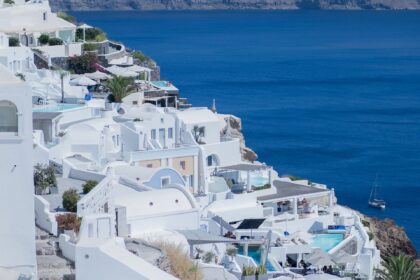
| Santorini | A short romantic trip, views over swimming | Flights and ferries | Good but expensive |
| Athens | A city stop, two days either side of an island | Year-round flights | Easily the widest choice |
Crete, if it’s your first time
Crete is the largest Greek island and the only one where you can spend a fortnight and still have places left over. It has mountains, gorges, an empty south coast and resorts where you’ll never need a car. It also has more restaurants with plant-based options than anywhere else in the country by a wide margin, running into the hundreds, which no other island comes close to. Cretan cooking leans on pulses, olive oil and wild greens more heavily than the rest of Greece, so nothing you order will feel like a special request. We’ve covered it properly in our vegan guide to Crete.
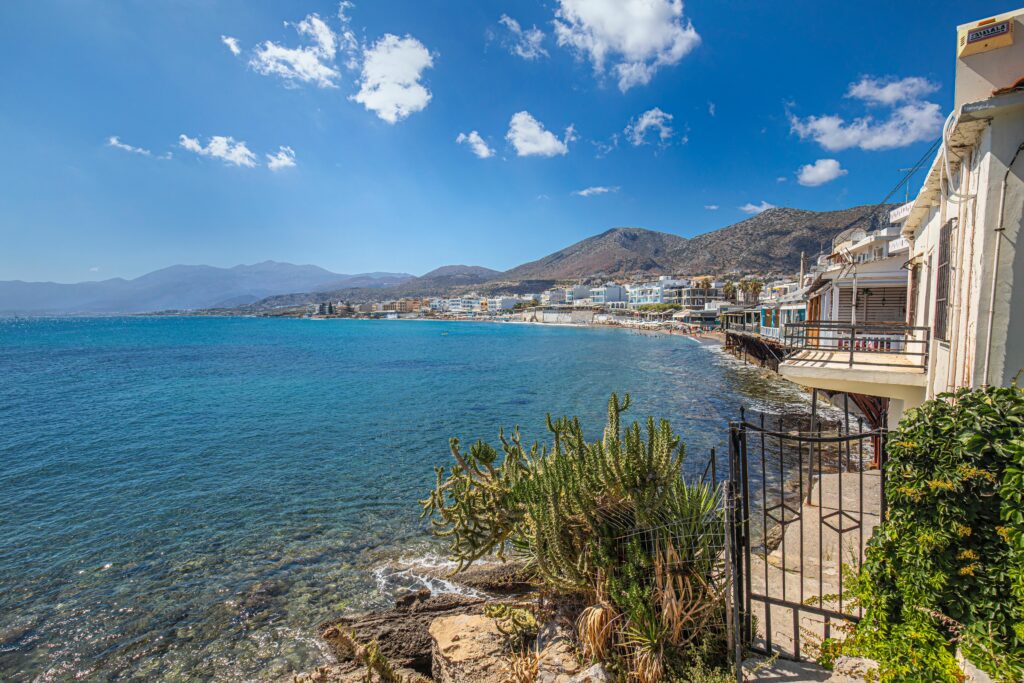
Rhodes, if you’re travelling outside high summer
Rhodes has the longest season of any Greek island. While other places start shutting up in mid-October, here the tavernas are still open and the sea is still warm. One practical warning about Rhodes Old Town, because it catches people out. Plenty of places in the narrow lanes look traditional but run tourist menus at tourist prices. Walk two streets back from the main run and the same meal costs close to half. More in our guide to vegan Rhodes.
Tip: If you’re choosing an island mainly on late-season weather, go south and east. Crete and Rhodes stay reliably warmest into October. The Ionian islands like Corfu and Kefalonia cool down sooner and get more autumn rain.
Corfu and Kefalonia, for green instead of bare rock
The Ionian islands look nothing like the Aegean ones. They get more rain, so they stay green even in August, and the landscape feels closer to Italy than to the whitewashed Cycladic postcard. Corfu is the most accessible and best equipped of them, with a UNESCO-listed old town and a genuinely large restaurant scene. Kefalonia is the opposite, a place where you’ll see almost nothing without a hire car, but where September beaches can be close to empty. We’ve written up both vegan Corfu and Kefalonia.
Zakynthos and Santorini, the two we know first-hand
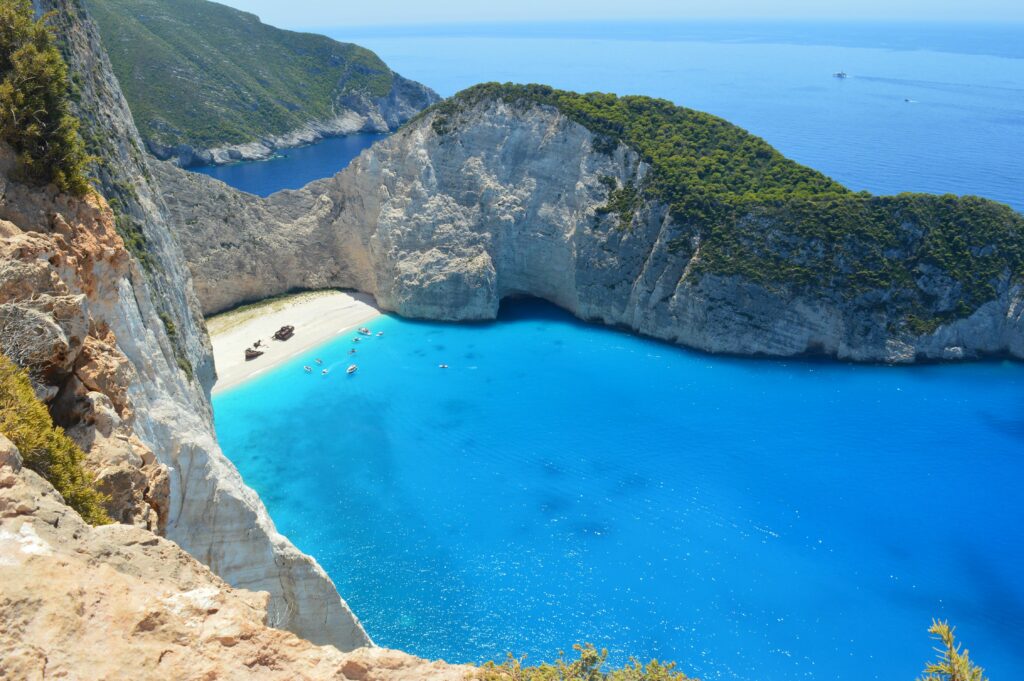
These two we know from actually going, not from research. On Santorini we spent a day volunteering at Sawa Santorini, a sanctuary for rescued animals, and it was comfortably the most memorable part of the trip. On Zakynthos the thing that stayed with us was the work being done for the island’s street dogs, which we gave its own article about Zante Strays. We’d suggest making room for both, even on a trip that’s mostly about the beach.
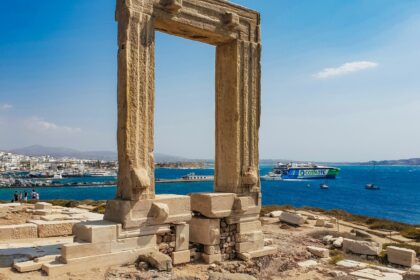
Practical detail on both islands, including where to eat, is in our write-ups of Santorini and Zakynthos. Santorini comes up again under budget, because it’s the most expensive place in Greece and that’s worth saying plainly rather than burying. If you want the Cyclades without Santorini prices, we’ve compared two neighbouring islands in Naxos or Paros: beaches, things to do and vegan food.
Athens, even if only for two days
Athens gets skipped by people heading straight for the sea, which is a mistake worth correcting. It has the best plant-based eating in Greece by a distance, because alongside the traditional tavernas there’s a whole layer of dedicated vegan bistros, cafés and places doing Greek street food in plant-based versions. Mushroom or seitan gyros, which you will not find in a beach resort, is an ordinary menu item here.
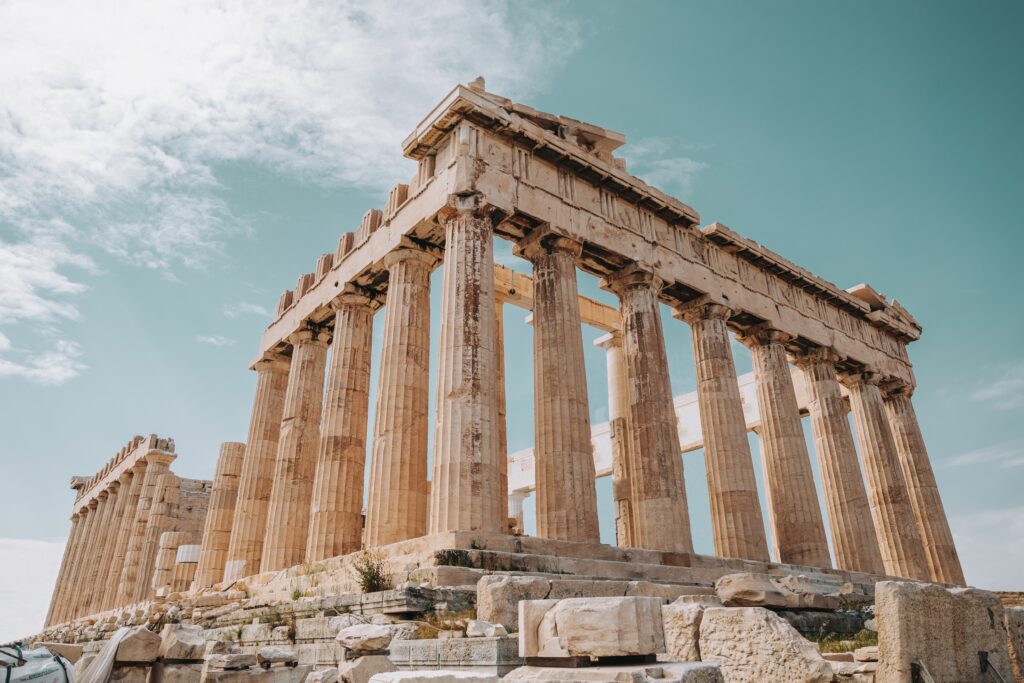
It makes most sense when you’re changing to a domestic flight or a ferry anyway. Two days either side of an island week is well spent, the port of Piraeus is a short metro ride from the centre, and the Acropolis is a morning. If you’re going in July or August, be realistic about the heat. The city bakes, and sightseeing is an early-morning activity.
Getting there and getting around
In summer there are direct flights from most of Europe to Crete, Rhodes, Corfu, Zakynthos, Kos and Athens. Outside the season that shrinks quickly and Athens becomes the year-round entry point, with a domestic connection onwards. Fares are lowest in May, early June and from late September, when the same route can cost half what it does in August.
Once you’re there, the choice is ferries or domestic flights. Ferries are cheaper, more frequent than people expect between the larger islands, and pleasant in decent weather, though sailings between smaller islands can drop to every other day. In peak season the popular routes out of Piraeus sell out, so book ahead if your plans are fixed. Domestic flights cost more but turn a seven-hour crossing into forty minutes, which is worth it if you’re combining two distant islands in one trip.
One thing worth knowing before you plan an ambitious route. Island hopping looks effortless on a map and is slower in practice, because connections often route back through Athens rather than running island to island. Two islands in a week is comfortable. Four is a travel holiday, not a beach one.
When to go and what the weather does
Most people travel in July and August because of school holidays, and those are simultaneously the two worst months for price, heat and crowds. If you aren’t tied to term dates, early June and the second half of September are the sweet spot.
| Month | Air | Sea | What it’s like |
|---|---|---|---|
| May | 22 to 26 °C | 19 to 21 °C | Ideal for walking, sea for the hardy |
| June | 27 to 31 °C | 22 to 24 °C | The best compromise, prices still sane |
| July and August | 30 to 36 °C | 25 to 27 °C | Priciest, busiest, genuinely hot in the south |
| September | 26 to 30 °C | 24 to 26 °C | Warm sea, far fewer people |
| October | 18 to 25 °C | 21 to 23 °C | Swimming mostly in the first half, excellent prices |
September is our pick, including for people whose holiday is mainly about swimming. The sea is at its warmest in late August, touching 27 °C around Rhodes, but by September it has only dropped a degree or two while half the crowds and a good chunk of the price have gone. In October you can still swim properly on Crete and Rhodes, with the sea holding around 21 to 23 °C, though by the end of the month you’ll want a jumper in the case and a plan for a rainy day.
Tip: Out of season, some restaurants close too, and dedicated plant-based places are often small independents that shut earliest. If you’re travelling in October with a particular spot in mind, message them on social media first. They usually reply within a day.
What a week in Greece costs
Greece uses the euro. It stopped being the cheapest corner of the Mediterranean some years ago, but away from the resort strips and away from Santorini, eating well still costs sensible money.
| Item | Typical price | Notes |
|---|---|---|
| Main course in a taverna | €9 to €15 | Nearer the bottom away from resorts |
| Vegetable meze to share | €4 to €7 each | The cheapest way to eat properly |
| Street gyros | around €5 | Vegetable or chip versions exist |
| Coffee | €2.50 to €4 | Plant milk often costs extra |
| A day’s supermarket shop | €8 to €12 per person | Much less if you’re cooking |
| Spending money per person per week | €350 to €600 | Excluding flights and accommodation |
That spending range is deliberately wide. Eat dinner in a seafront taverna every night and drink on the beach through the afternoon and you’ll reach the top of it or pass it. Take an apartment with a kitchen, have breakfast in and eat out every other evening and you’ll come in well under. On Santorini and Mykonos add twenty to thirty per cent, because the gap between those two and the rest of the country is real.
How to do Greece cheaply
The biggest saving isn’t in penny-pinching once you’re there, it’s in when you go. The same hotel on the same island can cost a third less in late September than in early August, with the sea at almost exactly the same temperature. If you aren’t tied to school terms, that single decision outweighs everything else on this list.
Beyond that, a few simple things work. Self-catering accommodation instead of half board, since breakfast from your own supplies is both cheaper and better. Restaurants one street back from the water, where prices routinely drop by a third. Large bottles of water from a supermarket rather than small ones from a beach bar. And book any hire car from home, because in season the on-the-spot price climbs while the choice shrinks. The most expensive week you can construct in Greece is August on Santorini with caldera-view dinners. The cheapest is September in a self-catered apartment on a quieter island, and the gap between them is easily threefold.
Greek food is already half plant-based
This is the part most guides to Greece leave out, and it matters more than any restaurant list. The Greek Orthodox Church observes fasting on roughly 180 to 200 days a year. Fifty days before Easter, forty before Christmas, and most Wednesdays and Fridays on top. During a fast there is no meat, no dairy and no eggs. Which means Greeks spent centuries developing a cuisine that had to work without animal products, not as an occasional exception but as an ordinary part of the year.
The result is that a great many classic Greek dishes are plant-based by accident. Not adapted for vegans, just built that way from the start. And there’s a single word for them.
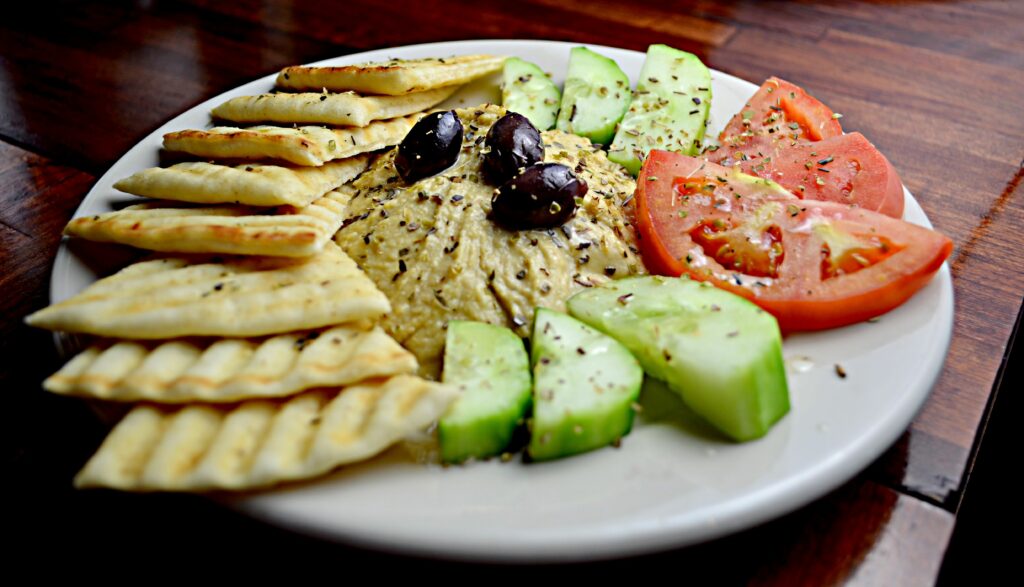
Learn one Greek word and ordering stops being a problem. The word is “nistisimo”.
Fasting food, understood by every Greek, including ones who have never heard the word vegan
Ask for vegan food in a taverna and you may get a blank look, particularly from older staff on smaller islands. Ask whether they have anything nistisimo, meaning fasting food, and everyone understands immediately. It’s a word Greeks have used their whole lives.
Important exception: “Nistisimo” is not a synonym for vegan. Orthodox fasting permits honey, and it also permits molluscs and cephalopods, so a fasting dish can contain octopus, squid or prawns. Use the word to make yourself understood, then check the specific dish.
What to order in a taverna
This is the core list, and you’ll find most of it in practically any taverna from Corfu to Rhodes. Most needs no adjustment at all, and the rest needs one sentence.
| Dish | What it is | Watch out for |
|---|---|---|
| Fasolada | Thick bean soup, often called the national dish | Almost always plant-based |
| Gigantes plaki | Large white beans baked in tomato sauce | Sometimes topped with cheese, say so first |
| Gemista | Tomatoes and peppers stuffed with rice and herbs | Tourist versions sometimes add mince |
| Briam | Oven-baked vegetables, close to ratatouille | A safe order |
| Fava | Yellow split pea purée with olive oil and onion | Safe, just check nothing is added on top |
| Melitzanosalata | Roasted aubergine dip | Yoghurt is sometimes added |
| Dolmadakia | Stuffed vine leaves | A meat version exists, always ask |
| Horta | Boiled wild greens with lemon and oil | A safe order, very Cretan |
| Revithia | Chickpeas braised or baked with herbs | A safe order |
| Skordalia | Potato and garlic dip | Usually dairy-free, worth confirming |
The category worth memorising is lathera. It literally means “in oil” and covers vegetable dishes braised in olive oil, which is exactly what you’re after. Ask what they have from the lathera today and you’ll be handed a list.
What looks safe but isn’t
A few things trip people up. Tzatziki is yoghurt-based, so no. Taramosalata looks like an innocent pink dip but is made from fish roe. Spanakopita, the spinach pastry, normally contains feta, although a fasting version without it does exist. And a Greek salad will be made without feta anywhere you ask, but you do have to ask, because otherwise the cheese arrives as standard.
Breakfast, the one genuine weak spot
If plant-based eating in Greece has a weakness, it’s breakfast. Lunch and dinner are handled by the fasting tradition, but the Greek breakfast is built on yoghurt, cheese, eggs and sweet pastry, which is precisely the wrong list. In hotel buffets you can end up on bread, tomatoes, olives and fruit, which is fine for three days and less fine after that.
There are two fixes. Bring your own oats and buy plant milk locally, which is the simplest route and available in any decent supermarket. Or eat what Greeks actually eat on the way to work, which is koulouri, a sesame-crusted bread ring sold on street corners and normally free of animal products. Add a Greek coffee or a freddo espresso and breakfast costs about two euros.
Good news if you’re travelling with people who aren’t vegan. Greek food is one of the few cuisines where nobody has to negotiate. A table covered in meze satisfies everyone and nobody spends the meal auditing who is eating what. If you’re heading somewhere with a mixed group on a package, we’ve written separately about eating vegan in all-inclusive resorts.
All-inclusive and where to stay
Greece is a huge all-inclusive market, and the honest position is that plant-based quality varies more between hotels here than almost anywhere else. Large resorts on Crete and Rhodes tend to label buffet items and often run a separate section. Smaller family-run hotels on Zakynthos or Kefalonia frequently don’t label anything, but are far more willing to cook something to order if you mention it on day one.
Choosing between all-inclusive and self-catering comes down to one rule. On Crete, Rhodes and Corfu you can take all-inclusive and you’ll still eat out regularly, because there’s plenty around you worth leaving for. On Kefalonia and the quieter mainland coast, take an apartment with a kitchen, because the options outside are thinner and doing without a fridge makes everything harder.
Read next: The best summer holidays for vegans, where we compare Greece with the other Mediterranean options and work out where it’s worth going if plant-based food is the deciding factor.
Shopping in Greek supermarkets
If you have a kitchen, Greek supermarkets will not let you down. Lidl operates across Greece just as it does elsewhere in Europe, with its own plant-based lines, so tofu, plant yoghurts, hummus and plant milks need no hunting. Prices are broadly European, and fresh vegetables are considerably cheaper than in most of northern Europe.
Of the Greek chains you’ll mostly meet AB Vasilopoulos and Sklavenitis, both perfectly good. The real finds, though, are the small general stores and the markets, where olives, dried beans, tahini, dairy-free halva and fresh produce cost a fraction of supermarket prices. Tahini halva is worth singling out, because it’s one of the few traditional Greek desserts that contains no animal products as standard, precisely because it was historically eaten during fasts.
If you’re driving or want to bring supplies for travel days, we’ve put together a guide to vegan food for travelling, including what survives a long journey without refrigeration.
Greece with children
Greece is one of the easiest countries in Europe to take children to, and that holds for children who don’t eat animal products. Greeks are fond of children in a way that visitors sometimes find startling, and nobody in a taverna minds a child running between tables or ordering nothing but chips and bread.
Practically, the reliable options are chips, rice, pasta with tomato sauce, bread with olive oil, gemista without the meat version, and fruit, which is everywhere and cheap. Melons, peaches, figs and grapes in August and September cost a fraction of what they do further north. The best islands for families are Corfu and Crete, both with shallow beaches, short airport transfers and plenty of infrastructure. Kefalonia and Santorini are harder work, Santorini because of the steps and cliffs, Kefalonia because nothing is reachable without a car.
What to pack and sort out beforehand
Greece is in the EU and the Schengen area. Check your own passport and health cover requirements before travelling, since these differ depending on where you’re coming from and have changed in recent years for UK travellers. The currency is the euro, cards are accepted almost everywhere, but carry cash on smaller islands and in small tavernas, where the card machine occasionally “isn’t working”.
Three things people forget. Water shoes are useful on a lot of Greek beaches, which are more pebble than sand. Sun cream is noticeably pricier in resorts than at home, so bring it. And if you’re going somewhere small and you take plant milk in your coffee, pack a carton for the first day or two until you find a supermarket. For hopping between islands, ferry timetables and bookings across all the Greek operators are in one place on Ferryhopper.
Ferry tip: High-speed catamarans get cancelled in strong wind far more often than the big conventional ferries. If you’re connecting to a flight, leave a full day between your last ferry and your departure. It’s the single most common way a Greek island trip goes wrong.
Useful Greek phrases
English works nearly everywhere tourists go. Even so, a few words help, and one of them genuinely changes your holiday. Greeks respond warmly to any attempt at their language, mangled pronunciation included.
| English | Greek | Pronunciation |
|---|---|---|
| Do you have any fasting dishes? | Έχετε νηστίσιμα φαγητά; | EH-heh-teh nee-STEE-see-ma fa-yee-TA |
| I’m vegan | Είμαι βίγκαν | EE-meh VEE-gan |
| I don’t eat meat, milk or eggs | Δεν τρώω κρέας, γάλα, αυγά | then TRO-o KREH-as, GA-la, av-GA |
| Without cheese, please | Χωρίς τυρί, παρακαλώ | ho-REES tee-REE, pa-ra-ka-LO |
| Thank you | Ευχαριστώ | ef-ha-ree-STO |
| Hello | Γεια σας | YA sas |
If you only keep one, keep the first. The word nistisima opens doors that the English word “vegan” will knock on without answer.
So is Greece worth it?
Greece is one of the few places where you can turn up without a plan for food and still eat well. A cuisine that goes without meat and dairy for 180 days a year is quietly doing the work for you, and nobody has to be asked to make an effort. Add islands to suit every kind of holiday, a sea that’s still warm in late September, and prices that outside Santorini remain reasonable.
If we had to name one place to start, it would be Crete in the second half of September. The most choice, the warmest water, the fewest people. Where are you thinking of going? Tell us in the comments which island you keep going back to, or what worked best for you in Greece.
FAQ
How many islands does Greece have?
Official Greek sources give roughly 6,000 islands and islets, with only about 227 inhabited. Other counts range from around 1,200 to 6,000 depending on the minimum size used to define an island.
Is Greece hot in October?
Warm rather than hot. Expect 18 to 25 °C, with the south and the Dodecanese at the top of that range. The sea holds around 21 to 23 °C, so swimming is comfortable in the first half of the month, especially on Crete and Rhodes. By late October the Ionian islands cool quickly and some hotels and tavernas close for the winter.
Is Greece vegan friendly?
Yes, and it’s among the easiest countries in Europe. Orthodox fasting, observed for roughly 180 days a year, produced an entire category of traditional dishes made without meat, dairy or eggs. Ask for “nistisima” dishes, then confirm the particular one contains no honey or seafood.
What currency does Greece use, and how much should I bring?
The euro. Budget roughly €350 to €600 per person per week for food, transport and activities, excluding flights and accommodation. Self-catering brings you below that, while Santorini or Mykonos will push you above it.
Greece or Spain, which is better for a holiday?
For beaches and a warm sea into late September, Greece wins. Spain is stronger for combining a city with the coast and has a bigger dedicated vegan restaurant scene in its major cities, which we cover in our guide to whether Spain is vegan friendly. For traditional food that happens to be plant-based without anyone trying, Greece is ahead of both Spain and Italy.
Featured photo: AXP Photography, Pexels.
Newsletter
Get our free e-books
Join the newsletter and download Our Vegan Christmas Kitchen straight away, 10 recipes for Czech cookies, gingerbread and vánočka. Then once a month, new places from the vegan map and new articles. Unsubscribe with one click.